Melissa Miranda Is Cooking Toward Home




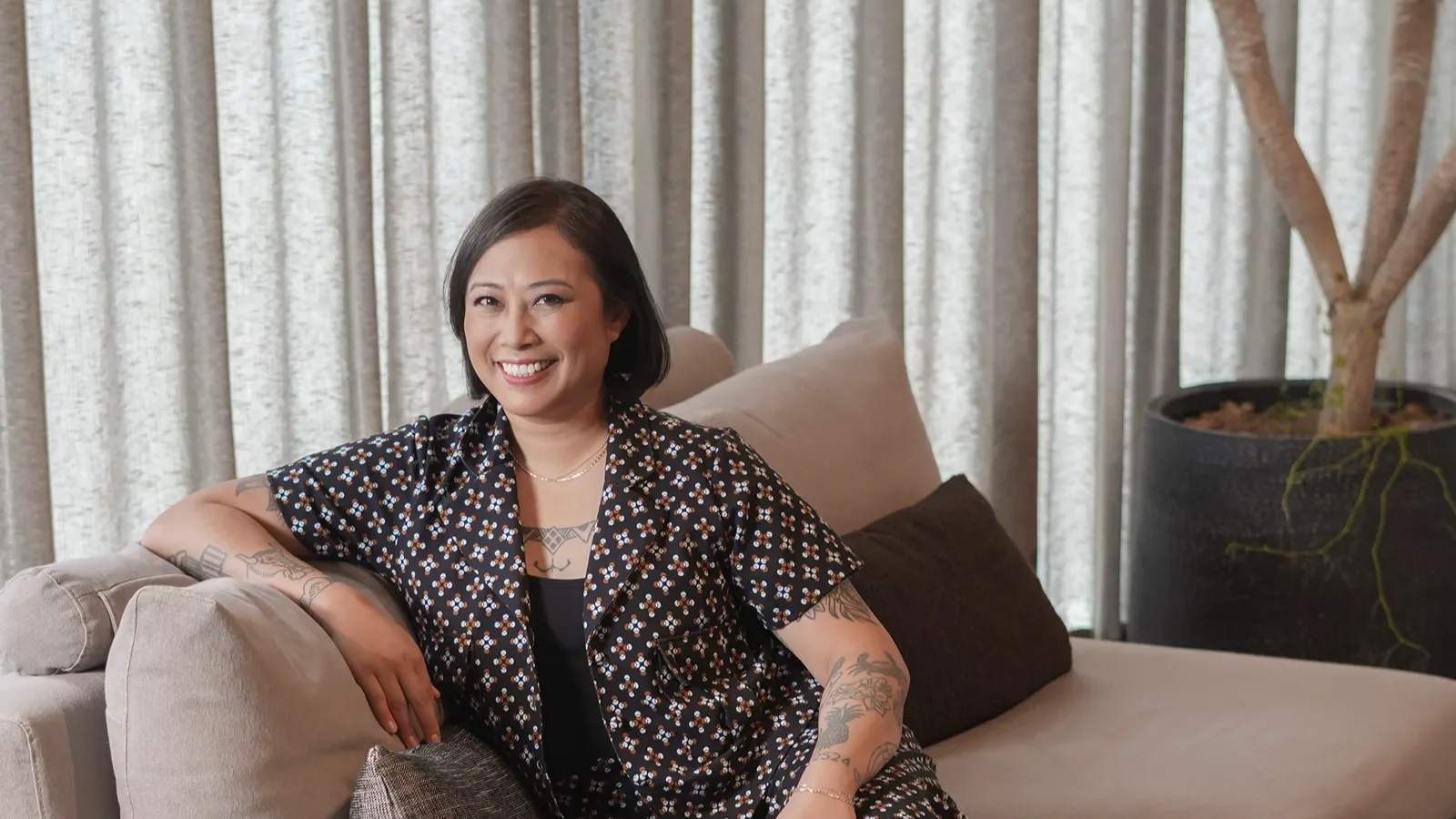
Pinakbet is a dish that some might not, understandably, love at first sight. It’s the Ilocano vegetable stew of bitter melon, eggplant, and squash, a muddy orange and green collage pungent with bagoong. Melissa Miranda knows this; she herself disliked it as a child.
“I hated it because it was mushy,” she says. “I hated the bitter melon.” But as her understanding of vegetables deepened—how to cook them properly, how to balance what can seem, to the uninitiated, like confrontational flavor—she came to see pinakbet as a thesis statement, keeping ingredients authentic and deviating in technique when inspiration hits. (Article continues after the video.)
Video:
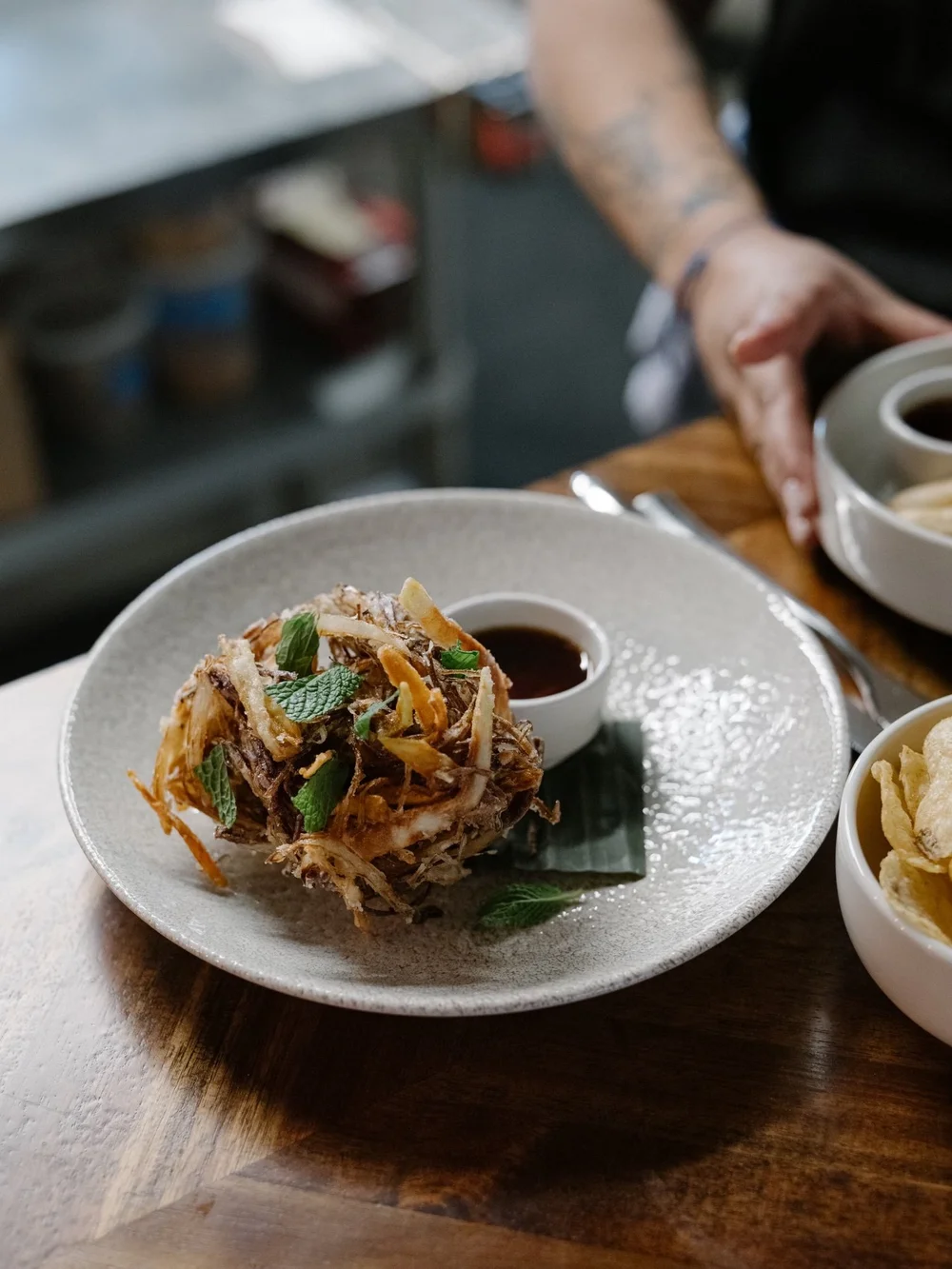
Her pinakbet puts forward slices of sweet potato, okra, and eggplant fried in tempura batter, and pickling the bitter melon.
“When they see our pinakbet, it might look different,” she says, “but once you bite into it, the flavors of nostalgia are there. People are surprised, but also excited.”
That tension between the familiar and the reinterpreted, between honoring a tradition and making it fully, unapologetically your own is the animating force behind everything Melissa has built at Musang, her restaurant in the Beacon Hill neighborhood of Seattle, the corner of the city where she was raised and where the Filipino community has long put down roots. Born and raised in Seattle, she studied sociology at the University of Washington on a path toward social work but drifted into restaurants almost by accident, falling in love, she says, with the culture, the camaraderie, and the particular quality of hospitality that felt instinctively Filipino to her. “When you’re in a restaurant, people really look out for each other,” she says. “There’s this idea of hospitality that’s very Filipino in nature.”
She went to Italy, where she spent nearly six years studying cooking at a culinary school and working in professional kitchens. Her stint turned out to be formative. Italian cuisine and Filipino cuisine, she discovered, share a fundamental philosophy: reverence for the ingredient, for seasonality, for the kind of simplicity that is actually very difficult to achieve.
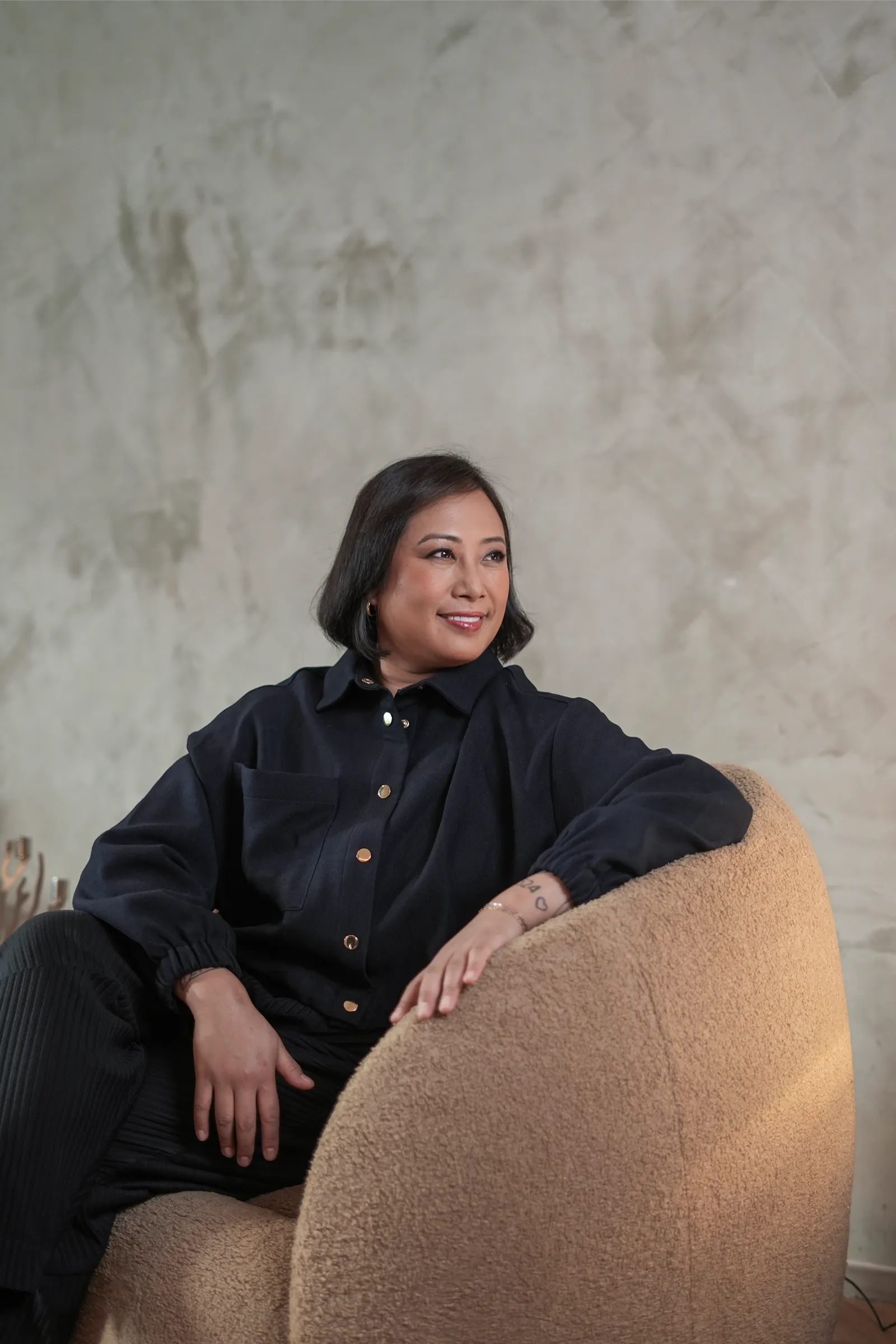
“I think there are a lot of similarities with Filipino food and Italian food,” she says. “Afritada is so similar to cacciatore!”
When she was homesick, she improvised by substituting artichoke hearts for banana hearts, red wine vinegar for when rice wine vinegar was unavailable. The creative problem-solving of the diaspora kitchen, it turned out, was excellent culinary training.
What she brought back to Seattle was an ethos: freshness, seasonality, and an absolute refusal to sand down the edges of Filipino flavor for an audience that might not yet know what it was encountering. “If we’re presenting fish, we’re going to present you a whole fried fish. We’re not going to fillet it for you,” she warns. “You’re going to learn how to eat it with your hands.” Dishes are named in Tagalog first on the menu. Bagoong is used for its smell as much as its taste. “People should start learning that as well,” she says. It is, in her way, a pedagogical endeavor—a restaurant that teaches as it feeds.
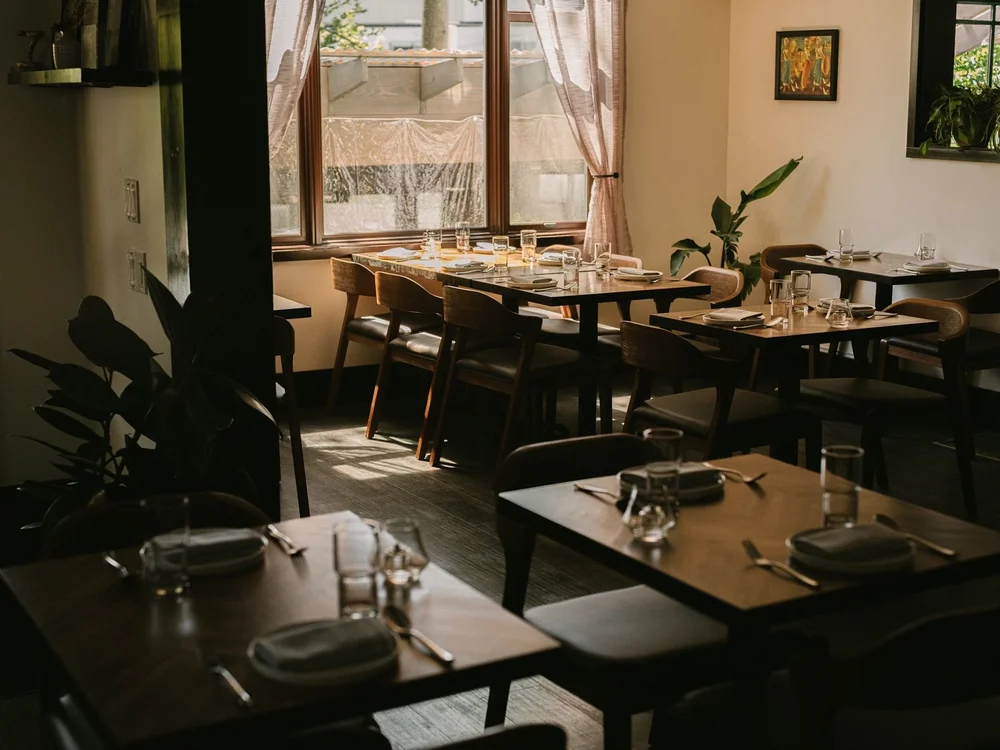
Musang began as a pop-up in 2016, serving silogs for brunch, until Melissa opened a permanent space in Beacon Hill in January 2020. She found the right space that possessed that feeling of comfort and nostalgia a Filipino home can bring.
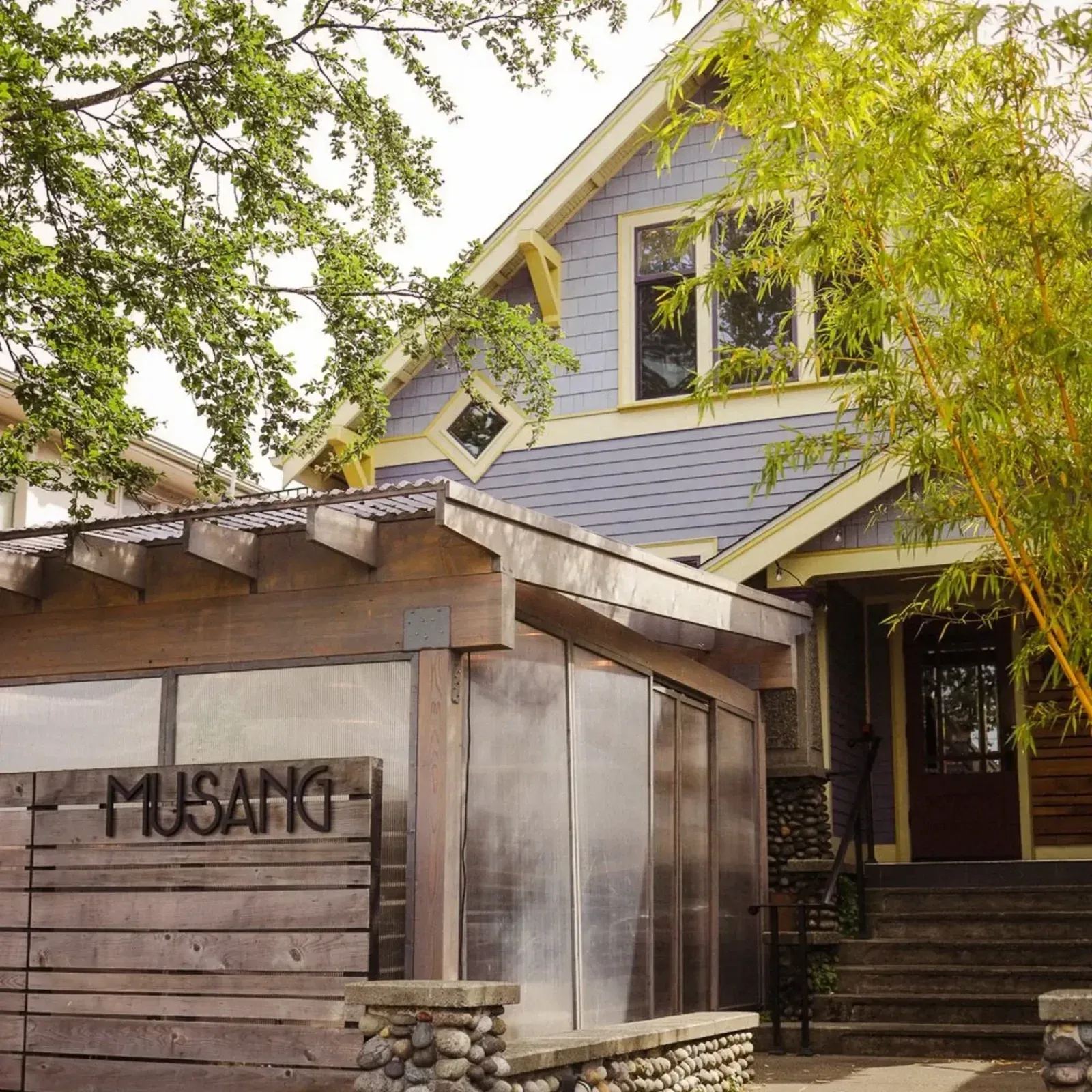
“The inspiration was just like heritage homes in the Philippines,” Melissa says. “A lot of dark wood, white walls, just feeling the warmth. When we built it, that was the intention—it’s not just a restaurant; you’re really walking into a home.” (That includes a playlist of ‘90s R&B and hip-hop, the music of her youth.) The timing, however, was unfortunate: after a successful three months, the pandemic forced the dining room to shut down. Melissa’s response was to open a community kitchen to the neighbourhood, sustaining the effort for months and raising upwards of $80,000 (Php 4.9 million) for the program. It was an act that made clear, early on, that Musang was always going to be about more than the food on the plate. “We were really able to show the Filipino kindness and spirit of community; [that] we weren’t just about profit, but we were about making sure people were fed.”
The accolades followed in due course. A best new restaurant recognition during the global COVID-19 pandemic, Food & Wine’s Best New Chef in 2022, a James Beard Award nomination for Best Chef: Pacific and Northwest in 2023, 2025, and again this year, making her one of the most visible and celebrated Filipino-American culinary voices in the country.
“I think the hope,” she says of what this visibility means for Filipino food, “is that we can continue the work of the many people who came before us. And if we can at least bring the spotlight more to it, then they’ll be honored too.” She invokes Amy Besa and Romy Dorotan as foundational figures in her culinary formation, elders in a lineage she honors through her work. She finds a common mission with many other Filipino chefs today: convey that Filipino food is “more than just what people think Filipino food is,” she says. “We are a country of regional Filipino food; it’s not just [mainly from] Luzon or the Visayas. There’s northern Mindanao, southern Mindanao…we really need to start doing the research and being more open to understanding what the foods are from our regions.”
The question of authenticity is one she returns to without defensiveness. It’s a question that a broad range of second-generation Filipino-American chefs abroad ponder—and many diners as well. It doesn’t destabilize her, but she does not pretend it does not exist. “I know what I learned from them is authentic. It is traditional, because they are from here, from the Philippines to America. But is my flavor profile enough to be Filipino?”
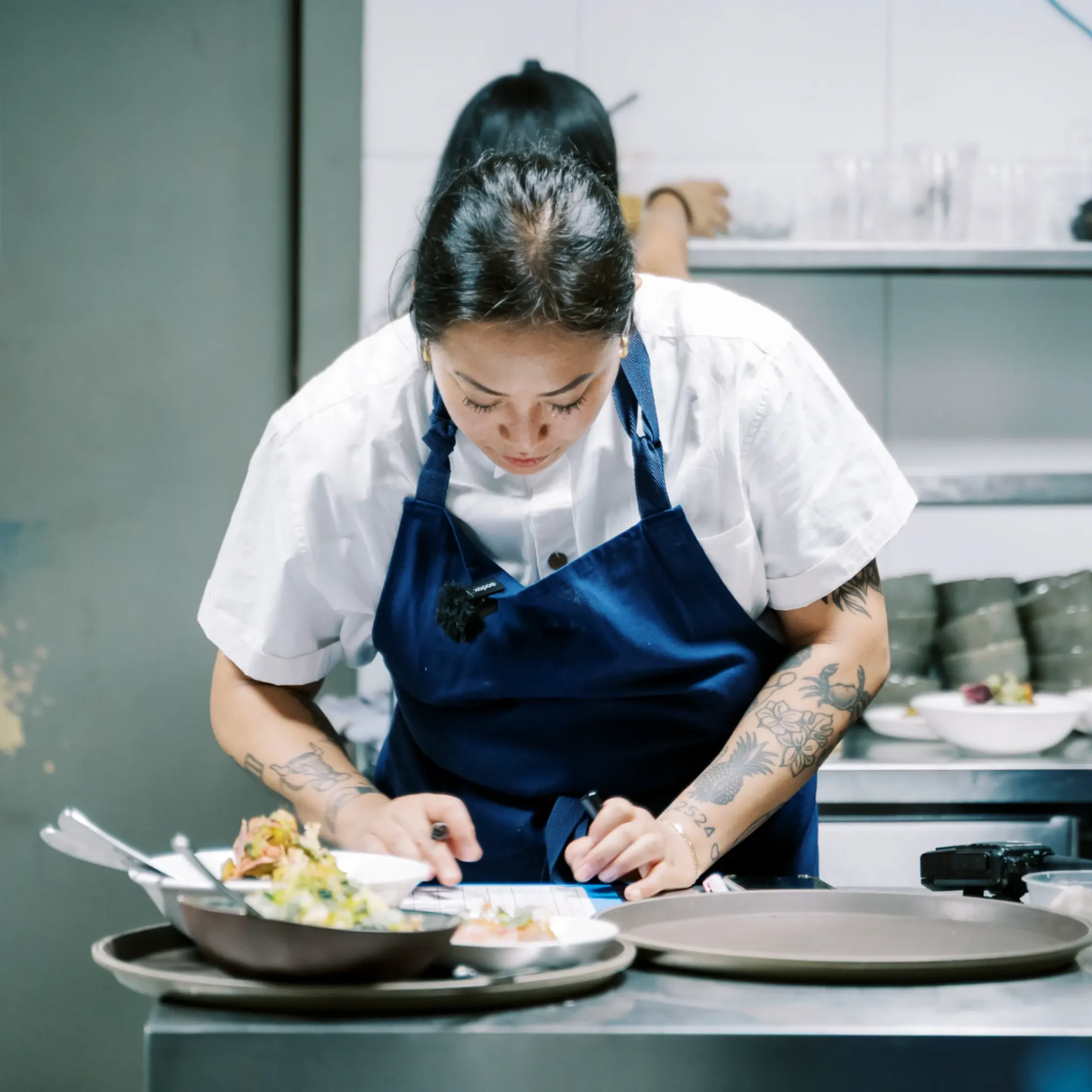
She underestimates herself; there’s no question that her version of Filipino food is a specific and a powerfully legitimate one, noted by the most influential award-giving bodies in the world. It’s the version of a daughter honoring her father—the OG “Musang,” who was given the nickname by friends because his black Mustang’s “T” had fallen off the grille (and, serendipitously, also is the name of a species of wild cat in Filipino)—who learned to cook from his lola and cooked dinners, who taught Melissa how to clean squid at five, and who organised his mise en place with a flair his daughter has inherited and passed on to her own team.
Every day at Musang, before service begins, the kitchen and front-of-house gather for a pre-shift meeting, where one of her chefs will share a story about a dish they made, where it comes from, what it means, and maybe how their grandmother made it.
It is a quick rite, but it is the engine of everything: the idea that the meal being served is not just a product, but a memory being transferred from the hands that first made it to a table full of strangers who might, if they are lucky, recognize something in it that they hadn’t known they were missing.
This article originally appeared in Robb Report Philippines Muse Issue, July 2026.
Filmed and shot at Valcucine, The Proscenium, Rockwell Center, Makati City. Special thanks to Valcucine.
Video Credits:
Editor and DOP: Aqi Ticzon
Writer and Line Editor: Kimberly Rocha-Delgado
Videographer: Gian Escamillas
Photographer: Bliss Mabini
Hair and Makeup: Jinx Aggabao
FAQs
Melissa Miranda is the chef-owner of Musang, a Filipino restaurant in Seattle’s Beacon Hill neighborhood. She was named a Food & Wine Best New Chef in 2022 and a James Beard Award finalist in 2024.
Musang is in Beacon Hill, Seattle, a neighborhood with longstanding ties to the city’s Filipino community.
Musang began as a pop-up in 2016 before opening a permanent restaurant in January 2020.
She preserves familiar Filipino flavors while experimenting with technique. Her pinakbet, for example, combines tempura vegetables with pickled bitter melon.
Studying and working in Italy reinforced her appreciation for fresh ingredients, seasonality, and simplicity—principles she also recognizes in Filipino cuisine.