Inside the Gravity-Defying Rise of Watch Prices




Watch prices, if you haven’t noticed, have gone crazy. Not just at the high-end, not just in the primary market, not just on gold models. They have increased on everything, everywhere, seemingly all at once.
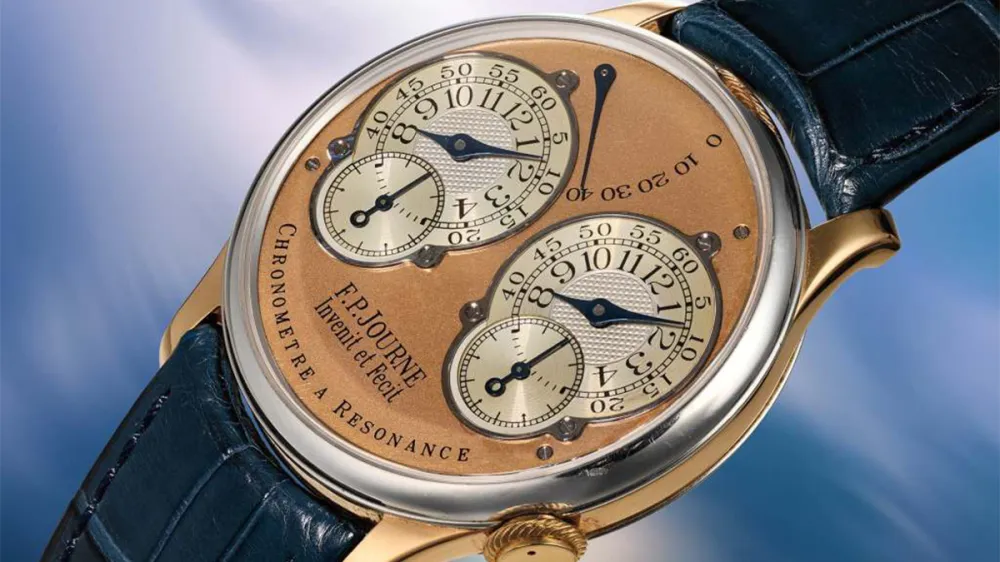
The phenomenon has been most notable at auction, where sales now regularly feature timepieces that break the once-rare million-dollar barrier. That’s true of small, online-only sales—such as Marteau & Co.’s third auction this month, which set a world record for the independent watchmaker Kari Voutilainen when his Regulator Decimal Repeater sold for $1,966,718—as well as major global sales, like Phillips’s June auction in New York, which achieved a total of $75.8 million, including 16 watches that fetched more than $1 million, one of which was a record-breaking F.P. Journe that hammered at over $13.9 million.
Two days after the Phillips sale, Paul Boutros, the house’s deputy chairman and head of watches in the Americas, said even he was taken aback by the numbers. “I was thinking we had a shot at breaking $50 million overall,” he told Robb Report. “That was my hope—just to get to 50. And we did almost $76 million. I’m still trying to process it all.”
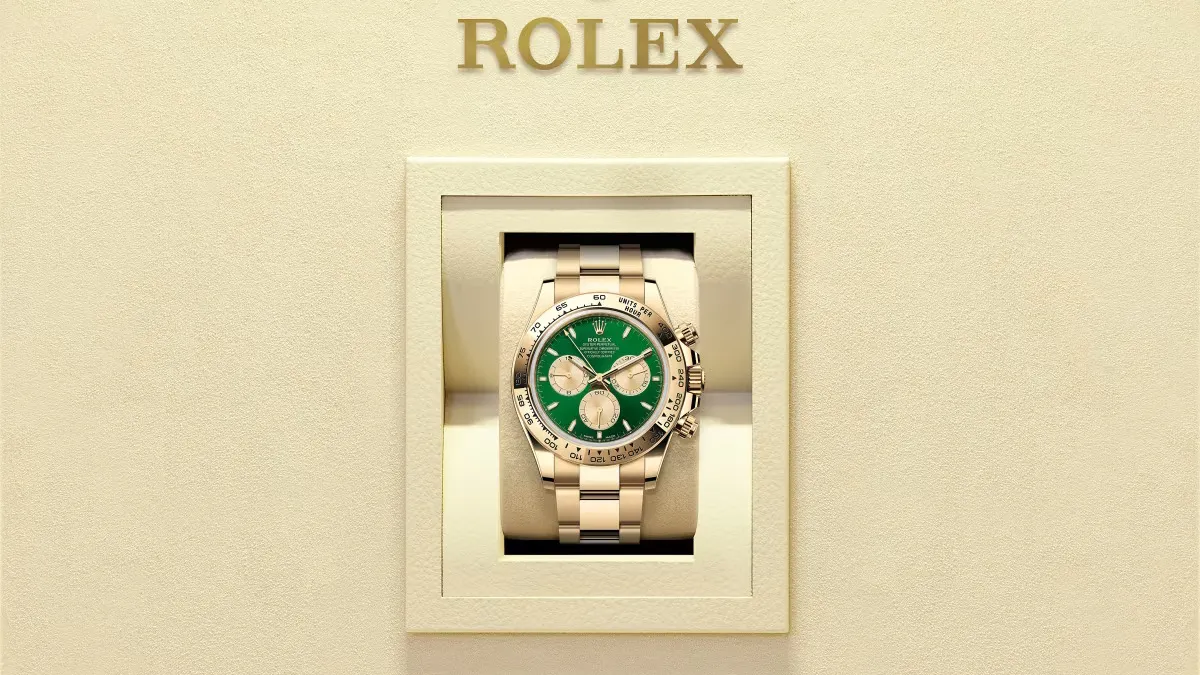
The market for new watches is where most collectors have felt the pinch. Rolex, for one, has increased prices four times since January 2025. The latest increase, announced earlier this month on gold and two-tone models, is said to have caught people off-guard. But it’s hardly shocking in the current context. At Watches and Wonders Geneva in April, pricing was a sore yet all-too-recurring subject—for brands and collectors alike. Many brand executives cast blame on rising costs, especially the price of gold, and the falling dollar for the spate of price increases they’ve enacted over the past year.
“We took what, between 15% and 18% change of currency in one year?” Bertrand Meylan, CEO of MELB Subsidiaries, owner of the brands H. Moser & Cie. and Hautlence, says. “That’s quite unprecedented. It’s not easy to deal with. You usually try to wait and see if it’s going to stay there or not, but after a while you have no choice but to adapt.”
Meylan certainly has a point. In 2022, the U.S. dollar and Swiss franc traded at near parity. At H. Moser, that meant the brand’s entry-level Pioneer model, at 14,500 Swiss francs, was roughly $14,500. Today, the same model is closer to $18,000.
But ballooning costs aren’t the only factor contributing to the dramatic upswing in retail prices. Since the pandemic, many brands have intentionally implemented a strategy known as premiumization, which Oliver R. Müller, the founder of the watch consultancy LuxeConsult near Lausanne, Switzerland, defines as “elevating your brand so that its perceived value allows you to charge a substantial premium compared with a brand not commanding the same brand equity.”
“Let’s put it bluntly,” Müller says. “The growth of the Swiss watch industry post-Covid was only marginally driven by organic growth.”
And yet herein lies the paradox: Despite the seemingly never-ending price hikes, the chorus of collector complaints, and the very real sense that prices have become completely disconnected from what most buyers perceive to be watches’ true value, the market appears to be bearing the increases just fine.
“It’s much easier to sell a watch at $100,000 than 10 watches at $10,000 or 100 watches at $1,000 because you’re talking to a sophisticated buyer,” William Massena, founder of Massena LAB, says. “Because the guy who buys a $100,000 watch knows what he’s buying and you don’t have to justify it.”
By way of example, Massena notes that in 2023, his brand introduced a monopusher chronographChronographA watch complication that incorporates a stopwatch function, controlled by pushers on the case and displayed on small subdials. Originally developed for timing events, the chronograph remains popular for itsGo to Chronograph Glossary in collaboration with the independent watchmaker Sylvain Pinaud. “We did 10 watches and they were 130,000 Swiss francs a pop,” Massena says. “I sold them in 56 minutes.
“Two years ago, at Geneva Watch Days, we released the Maxigraph, a chronographChronographA watch complication that incorporates a stopwatch function, controlled by pushers on the case and displayed on small subdials. Originally developed for timing events, the chronograph remains popular for itsGo to Chronograph Glossary monopusher made for sailing,” Massena adds. “The maker, Albishorn, reduced the thickness and added a complication on top to create a retrograde hand and a little time indicator disc. We priced it at $4,950. We thought, ‘This is going to fly, we are going to be overwhelmed with people recognizing the value of this product.’ It took me a year to sell them.”
The takeaway for many brands that have had similar experiences goes something like this: “Screw value products. We’re going to the high-end.” It’s an understandable reaction, but where does it end?
“We’re making watch collecting a rich man’s sport,” says Massena. “To make a case in gold, it’s $10,000. You have to sell your watch for at least $50,000 to $60,000. You still have to put a movement in there, put on a strap, ship it. At the end of the day, $50,000 to $60,000 is basically the average annual salary of an American. And a tourbillon at a quarter million dollars is basically the price of an average house.”
But even the wealthiest buyers are reconsidering their purchases, says Jason Gong, the founder of the watch community Complecto. “I’m in a lot of chat groups and in so many of those groups, there’s an endless string of new watch alerts,” he explains. “It never ends. For some communities with a higher concentration of collectors who are affluent, you’re still shopping. But even people collecting at that tier—there is fatigue. Their thing is, ‘If I’m going to spend that kind of money, I’d rather spend $200,000 on a Simon Brette or Romain Gauthier, a high-end, difficult-to-acquire independent than a Patek Philippe grand complicationGrand ComplicationA watch combining several of the most difficult mechanical functions, typically a perpetual calendar, minute repeater, and chronograph. Grand complications represent the summit of watchmaking skill, and these rare, multi-year,Go to Grand Complication Glossary. For collectors that have money to spend, it’s been a pivot away from the mainstream brands and their unrelenting price hikes.”
Take Joyce Solano, a collector in New York City, who strikes a sanguine tone about the impact of all those hikes. “I’ve actually become a bit more experimental in trying either some of the watch brands that are more independent, or watch brands that have more of an ‘entry level,’” she says. “This has been the first year where I started to purchase Tudors. I had never considered Tudor because I thought Rolex would be my base and then I’d move up. I think it’s helped me become a little bit more diversified and my collection is better for it.”
Ultimately, however, what it all suggests is that Massena’s warning may already be a reality. The question now is whether the collectors who remain—and the brands still chasing them—are enough to sustain the trade in the inevitably costlier years to come.
Frequently Asked Questions
Watch prices are rising because of a mix of higher material costs, currency shifts, brand strategy, and sustained demand from wealthy collectors. Swiss watch executives have pointed to the rising cost of gold and the weaker U.S. dollar as major factors, while consultants also point to premiumization, a strategy that allows brands to charge more by elevating their perceived value.
No. Prices have increased across much of the watch market, from gold and two-tone models to entry-level pieces and auction-grade rarities. Collectors are feeling the increases in both the primary retail market and the secondary auction market.
Rolex has raised prices four times since January 2025. The latest increase affected gold and two-tone models and surprised many collectors, though it fits into a broader industry pattern of rising luxury watch prices.
Premiumization is an industry strategy where watchmakers intentionally elevate their brand equity and perceived value. This allows them to demand a substantial price premium without relying on organic volume growth.
Many affluent watch collectors are experiencing fatigue. Instead of buying mainstream brands, consumers are increasingly pivoting toward independent watchmakers or exploring value-driven, entry-level luxury alternatives.
This article originally appeared in Robb Report US.