Playing with Time: The Traditionnelle Vacheron Constantin Twin Beat Perpetual Calendar




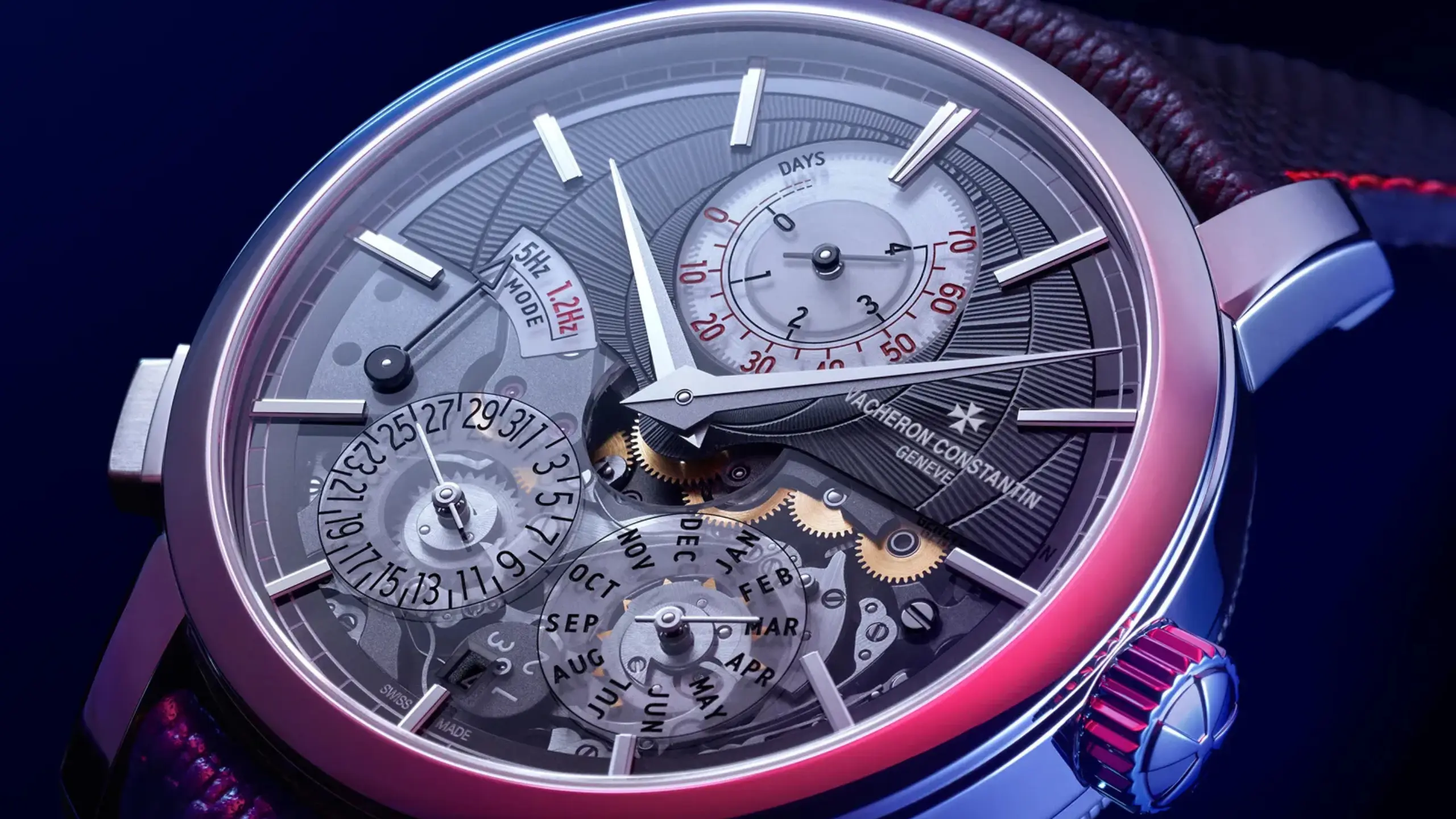
I swear I would get this watch just to play with it and to teach people things about wonderful chiming watches.
This is the new Traditionnelle Vacheron Constantin Twin Beat Perpetual Calendar, with a hand-wound Calibre 3610QP. It is a perpetual calendar, which means it will take into account leap years and be accurate without intervention until the year 2100. It will display, besides the time, the date, the month, and where in the four-year leap year sequence it is, and adjust the date and month accordingly.
That is a wonderful complicationComplicationAny function on a mechanical watch beyond telling the hours, minutes, and seconds, such as a calendar, chronograph, moon phase, or tourbillon. Complications demonstrate a watchmaker's technical skill, and moreGo to Complication Glossary, but it brings with it the challenges of keeping your watch running or taking the sometimes challenging journey of resetting the watch yourself or bringing it to your authorized distributor to set it for you. There are various answers to that particular question, and this is what Vacheron Constantin decided to do a few years back with the original, launched in 2019. This new one brings an increased level of technical ability as well as a fresh new look. And a whole new way to have some fun.
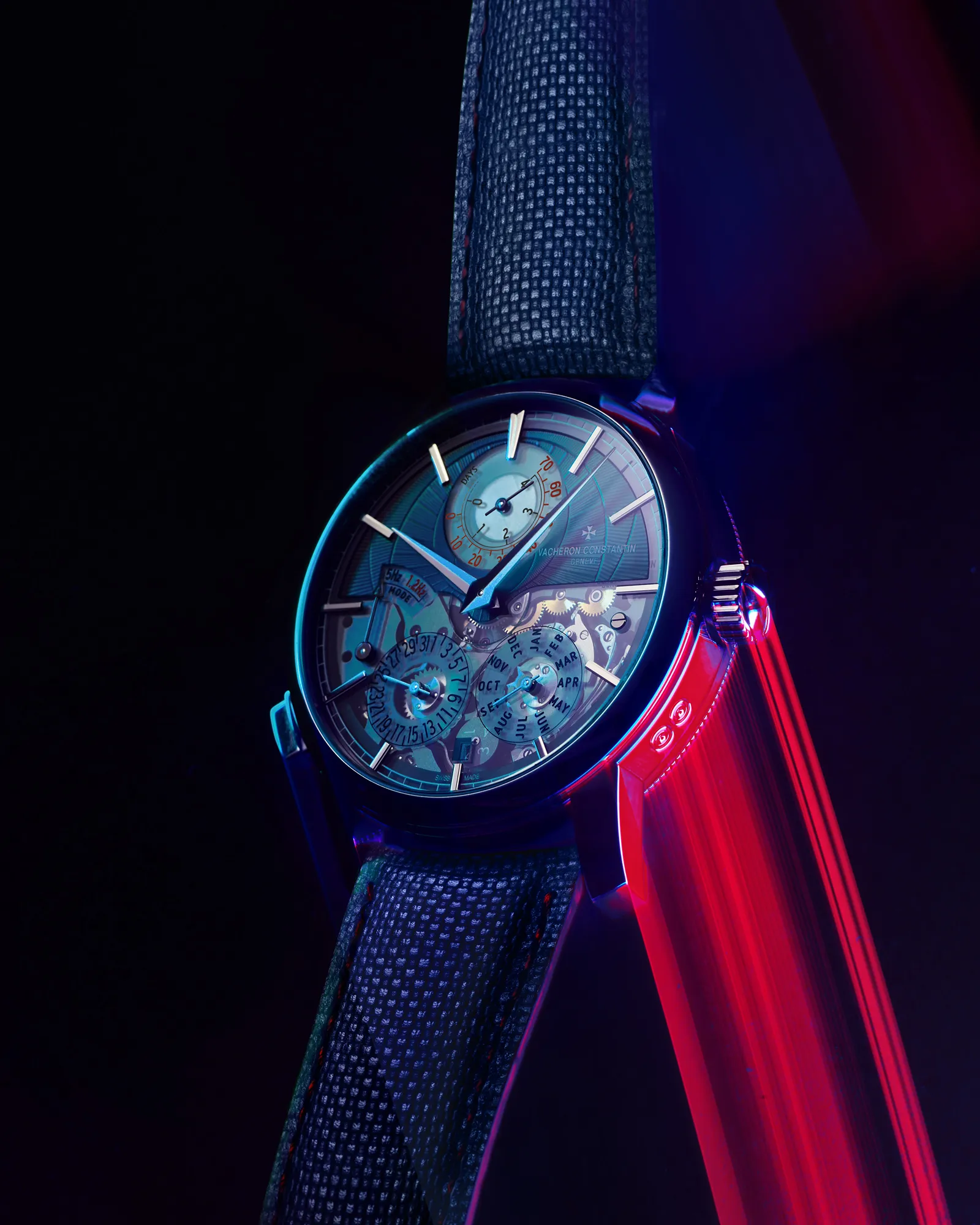
You could start out a conversation in a very posh room by saying, “This watch doesn’t even measure time in the same way as any other watch in this room.” And then you could proceed to explain why. “Most modern watches operate at the 4 hertz level, which is equivalent to 28,800 vibrations per hour or roughly eight ticks per second. That is a modern standard. It’s kind of considered the sweet spot for most regular watches.” Don’t overemphasize “regular”; let your listeners get there themselves. It will be even more impressive.
Then you point to the front of this new watch, and on it you will show them a pointer that gives you a couple of different choices. There is an arrow pointing to either 5 hertz or 1.2 hertz on a small subdial at around 8 o’clock on the dial, with a push button right below it. “While all the others are operating at 4 hertz,” you say, “this one can go even quicker for more accuracy, or even calmer to be relatively zen.” You say this while clicking the button beside the indicator.
Then you flip the watch over and do the same, pointing out how one regulator stops when the other starts, how one moves slower and the other faster as you push the button. Then you say, “Those other watches, if they even have one of these, they only have one. I can choose between two hearts.”
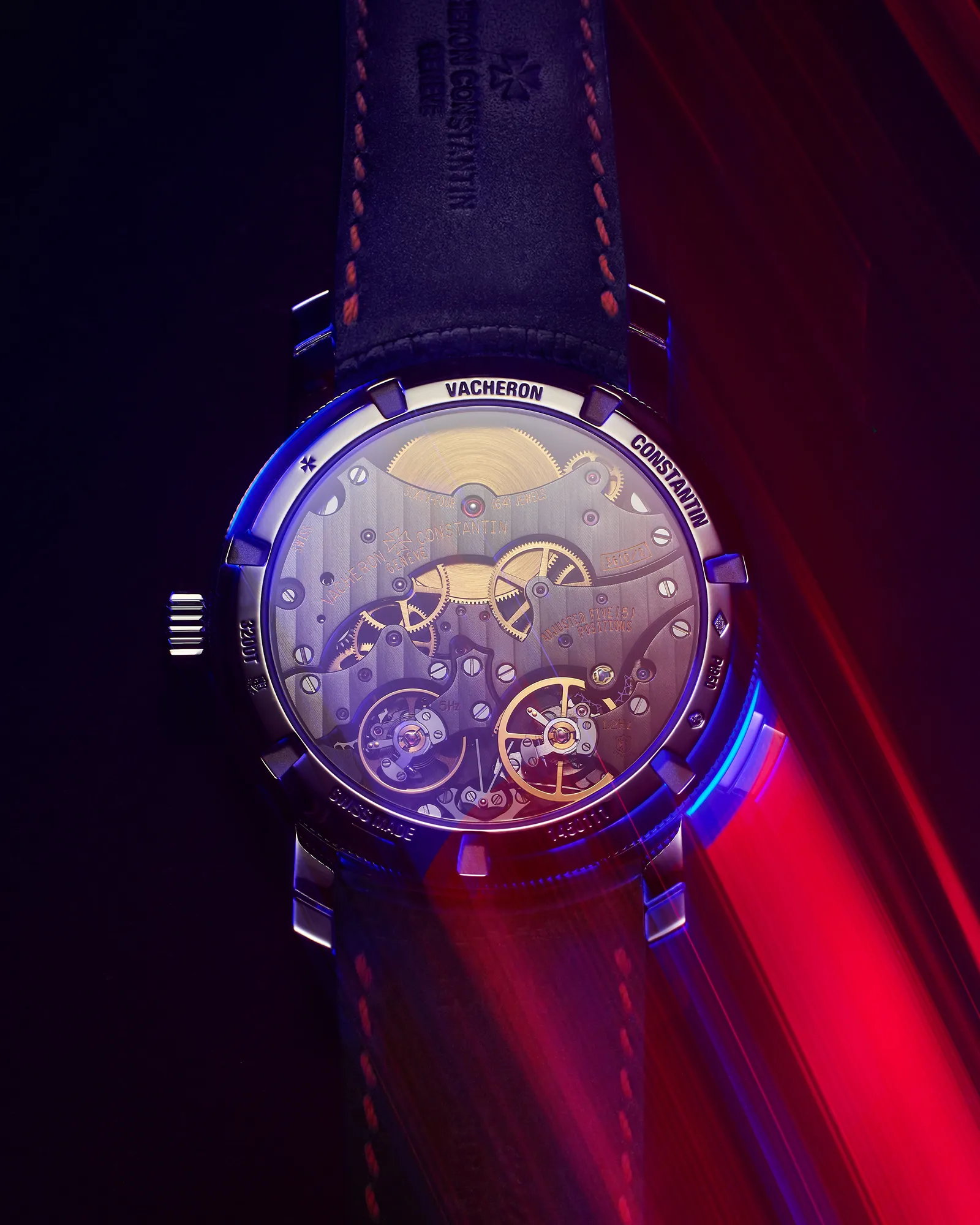
As you switch between 1.2 hertz and 5 hertz, you will show them that they operate at different speeds. Then you explain that 5 hertz is roughly 36,000 vibrations per hour or around 10 ticks per second. “That,” you would say, “is a high-beat system for watches that want to be particularly precise and consistent.” Then you flip it back to the dial side and say, “A smoother second hand.” Then you wait for the question.
The question would be, “Why, then, do you want to go to 1.2 hertz?” Which lets you explain further. “Vintage watches,” you would say, “would generally operate between 2.5 and 3 hertz, which is around 18,000 to 21,600 vibrations per hour, or five or six ticks per second. That’s kind of the tick-tock sound that a lot of us grew up with. That is a slower pace. That is calmer. It also produces less stress on the older-type metals and has lower service needs on watches, but it is more susceptible to movement by your arm. This watch will go even lower than that, operating at 1.2 hertz, which is around 8,640 vibrations per hour or 2.4 ticks a second. Much slower. The reason for this is that this watch will run accurately for decades if wound correctly at the 1.2 hertz range. Do you see that subdial at the top?”
“This new one brings an increased level of technical ability as well as a fresh new look. And a whole new way to have some fun.”
You would point to the subdial at 12 o’clock. “That 70, where most watches would say hours, this says days. This watch will run for 70 days at 1.2 hertz. So when you store it in your safe, which you should because it’s quite rare, you don’t have to think about it for a couple of months. That’s important because this watch has to take into account the shorter and longer months and even the leap years. So when it’s in your safe, or your private banking safety deposit box, it will just stay accurate. Then when you want to use it, you click it and go to 5 hertz, and then you’ll see that it matches what looks like a four-day power reserve, which is still nothing to sneeze at.”
“So,” you would say, pointing to a crowd of people who must have some very, very nice watches, “this watch can be more accurate than anything in the room, can last longer than anything in the room, and will act as I wish it to, and still be perfectly spot on when it goes to one of my grandkids. Who will have a note telling them to go to Geneva for me in 2100.”
This article originally appeared in Robb Report Philippines’ Watches and Jewelry Issue.
FAQs
It is a hand-wound perpetual calendar powered by Calibre 3610QP, displaying the time, date, month, and leap-year cycle while automatically accounting for varying month lengths through 2100.
The watch lets the wearer switch between two operating frequencies, 5 Hz and 1.2 Hz. One regulator stops as the other begins, allowing the movement to prioritize either higher-frequency timekeeping or extended autonomy.
The 5 Hz mode runs at 36,000 vibrations per hour for greater precision and consistency, while the slower 1.2 Hz mode reduces energy consumption dramatically when the watch is being stored.
In 1.2 Hz mode, the watch can run for up to 70 days. When switched to 5 Hz, its power reserve is approximately four days.
A long power reserve helps the watch continue tracking the date, month, and leap-year cycle while it is stored, reducing the need to reset the perpetual calendar after long periods without wear.