A Century of the Oyster




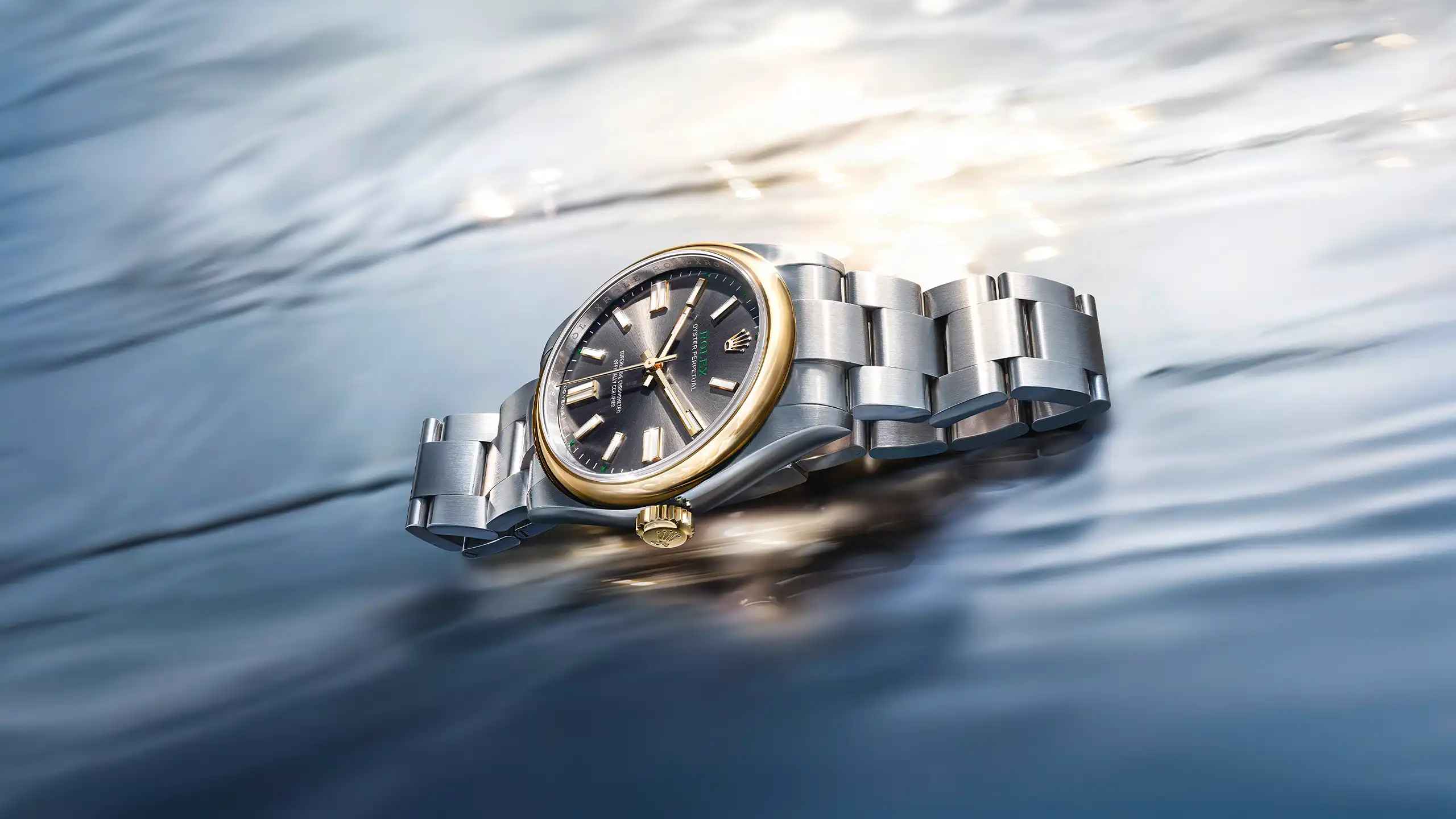
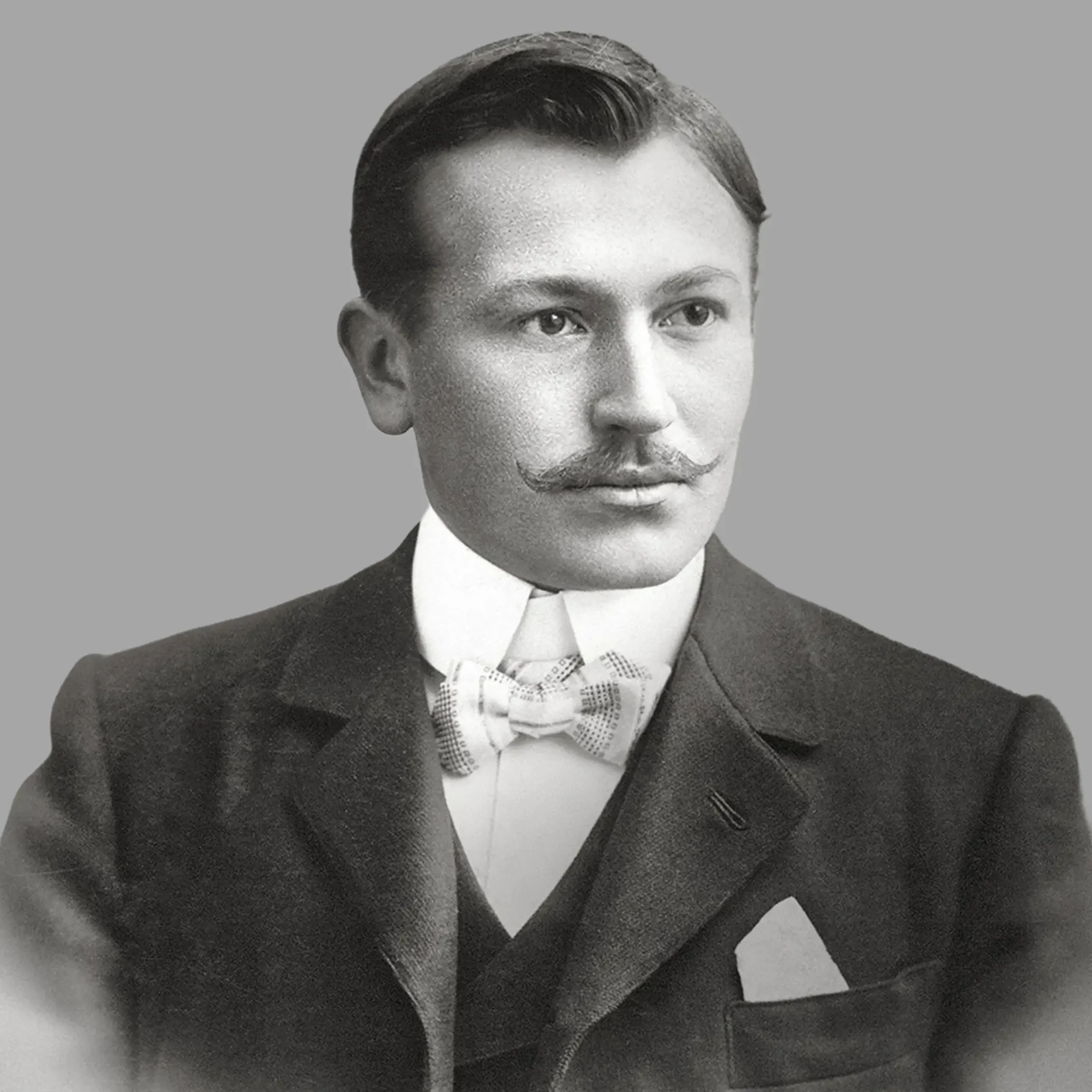
This year marks the 100th anniversary of the creation of the Oyster by Rolex. The watch, the company behind it, and the institution Rolex would become all began with Hans Wilsdorf, who was not a watchmaker. He was a visionary who saw possibilities where others did not and who felt, in many ways, a sense of responsibility that others did not. That sense of responsibility may have been shaped by his own experience. Wilsdorf lost his parents at an early age and endured a difficult childhood. Those early hardships fostered resilience, self-reliance, and stewardship, values that would later become closely associated with the company he built.
Let’s look at the landscape of watchmaking 100 years ago, in 1926, when the founder of Rolex had just introduced his new creation, the Oyster. The world was entering an era in which accurate timekeeping was becoming increasingly personal rather than being reserved for the rich or the powerful.
Travel by sea had become much safer thanks to the invention and development of marine chronometers, which could keep accurate time even without a consistent point of reference or landmark. Personal timepieces were also becoming far more common. Their place, however, was still in the pocket rather than on the wrist. They were larger and far more prone to problems and inconsistencies.
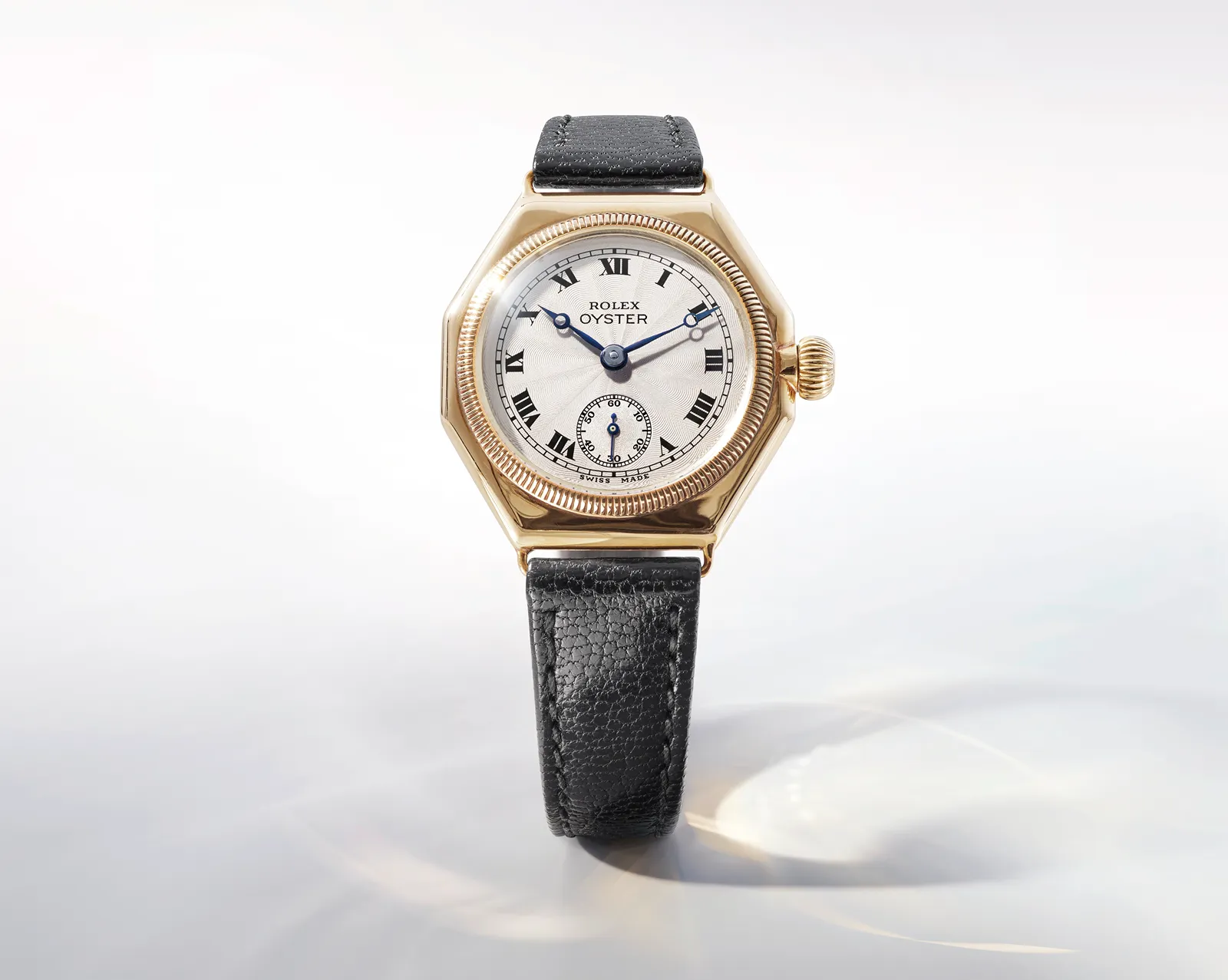
There were already watches that could be worn on the wrist. There were attempts to make watches and timepieces smaller, and there were efforts to make them more impervious to the elements and more consistent in operation. But these advances had never been brought together in a cohesive way. What Wilsdorf recognized before the launch of the Oyster in 1926 was that all of these technologies were necessary but had not yet been combined into a single watch. Just like watchmaking itself, different crafts, technologies, and industries had to come together to create what we now take for granted: a watch worn on the wrist that works continuously and reliably.
He identified three major challenges and turned them into three defining achievements that advanced his vision: precision, waterproofness, and self-winding. Timepieces of the era were becoming increasingly precise, but greater consistency was still needed. They also remained inconvenient to use because they were designed to be carried in the pocket rather than worn on the wrist. A self-winding mechanism would make them more independent by reducing the need for manual winding, frequent opening of the watch case, and repeated use of the crown.
The challenges of precision and self-winding went hand in hand with a third: waterproofness. In reality, however, it was not only water that had to be kept out. A better description might be imperviousness, because the goal was to protect the movement not only from water but also from dust, moisture, and the outside environment.
This was a world where cities, and even towns, were still dirty and dusty, making protection of the movement a practical necessity.
Wilsdorf addressed an assembly of watch retailers in January 1927 and declared, “Gentlemen, we make the best wristwatch in the world.” He was not referring to a single feature. He was speaking to people who understood all of these challenges and made their living selling watches. He had launched the Oyster just a few months earlier, in 1926, and was now setting out to explain what he had created and why it mattered.
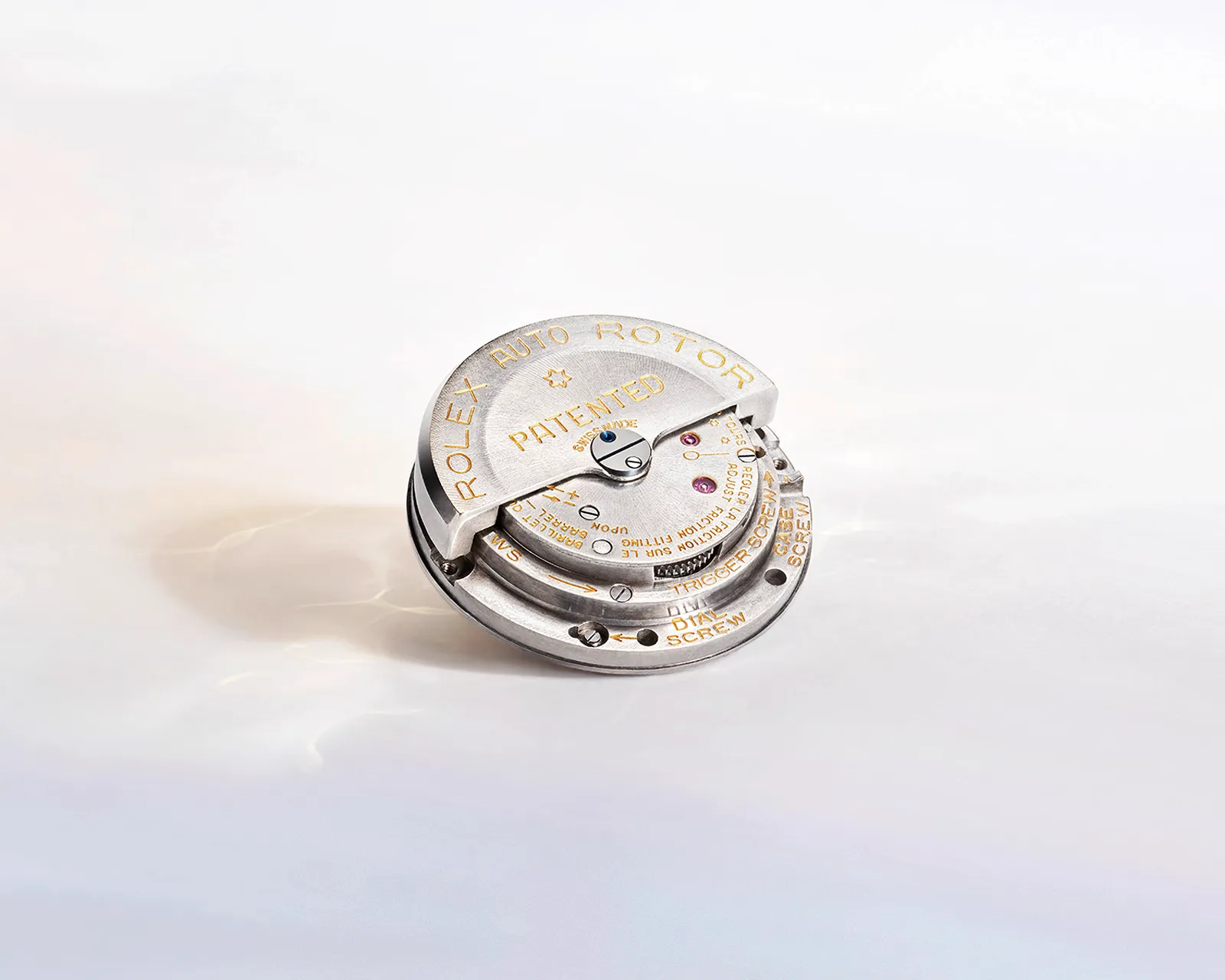
That first watch was a combination of strengths. It was smaller, yet could match the precision of the large marine chronometers. It was fully waterproof and dustproof. It was not yet self-winding. That came a few years later, in 1931, with the invention of the Perpetual rotorRotorThe weighted, semicircular metal piece in an automatic watch that spins freely with the wrist's movement to wind the watch's mainspring. Rotors are often beautifully decorated with engravings or madeGo to Rotor Glossary, giving rise to the designation Oyster Perpetual, or OP. Remember that all of this happened a century ago, without the benefit of modern lubricants, sealing materials, or advanced manufacturing machinery. From a technological standpoint, what Wilsdorf achieved was as much about vision and process as it was about engineering. He recognized that it was possible to create a smaller, more precise timepiece that could be worn every day and made accessible to far more people.
In a move that would be completely recognizable to the watch industry today, he went directly to the people who would sell his product, the watch retailers, and explained why it mattered during that January 1927 meeting. At the time, watches were still regarded as technological marvels rather than branded luxuryLuxuryA lifestyle defined by exceptional quality, craftsmanship, exclusivity, and sophistication, encompassing the finest products, services, and experiences that represent the highest standards of refinement and excellence.Go to Luxury Glossary goods, so customers placed their trust not only in the watch itself but also in the retailer who sold it and helped maintain it if problems arose. In many ways, this reflected how clocks and marine chronometers had spread around the world. Timepieces, like many other goods, were often purchased from shops near ports, where imported products first arrived. Early timepieces frequently bore no name other than that of the ship’s chandler or retailer who sold them.
One of the things everyone associates with Rolex is how effectively it tells its story. Today, we look back on it as one of the world’s great brands. But again, look back to 1927. Wilsdorf still had to explain to the public why his invention mattered. He did not rely solely on the retailers who sold his watches. He wanted to control his own vision and his own story, and, in doing so, build his own brand. Look around today and see how important that still is across industries.
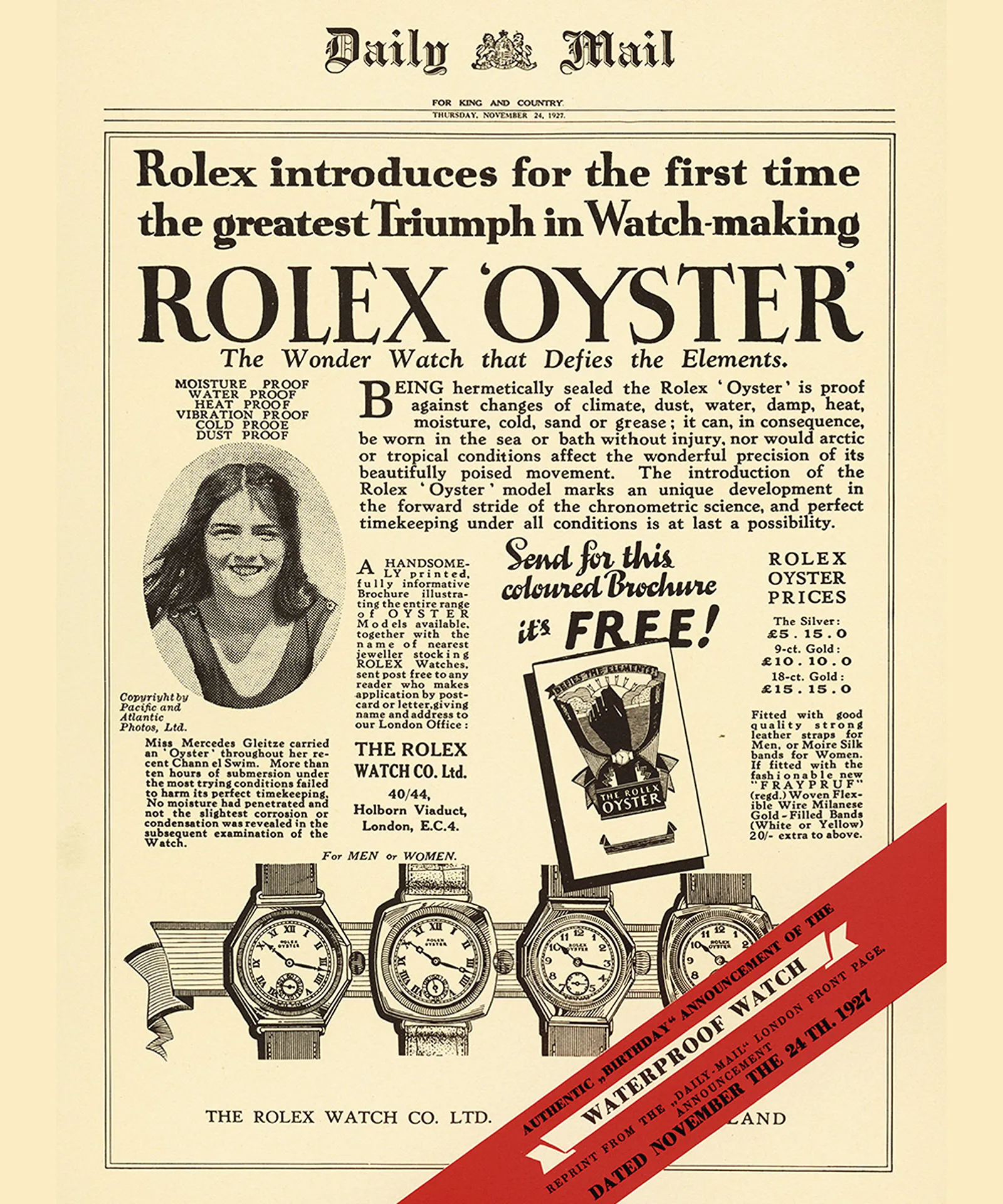
In 1927, a young woman named Mercedes Gleitze made headlines with her attempt to swim the English Channel. Around her neck, suspended from a ribbon, she wore an Oyster. After more than 10 hours in the water, when she stepped onto dry land, the watch was still in perfect working order. Naturally, this attracted enormous attention, and for many that would have been enough. But once again, Wilsdorf saw beyond what others saw and brought different ideas together. He took out a full-page advertisement in London’s Daily Mail, proclaiming “the greatest triumph in watchmaking.” Many regard this as the beginning of the relationship between celebrities and brand ambassadors. That, however, understates its significance. More than anything, it showed Wilsdorf’s instinct for combining innovation with communication.
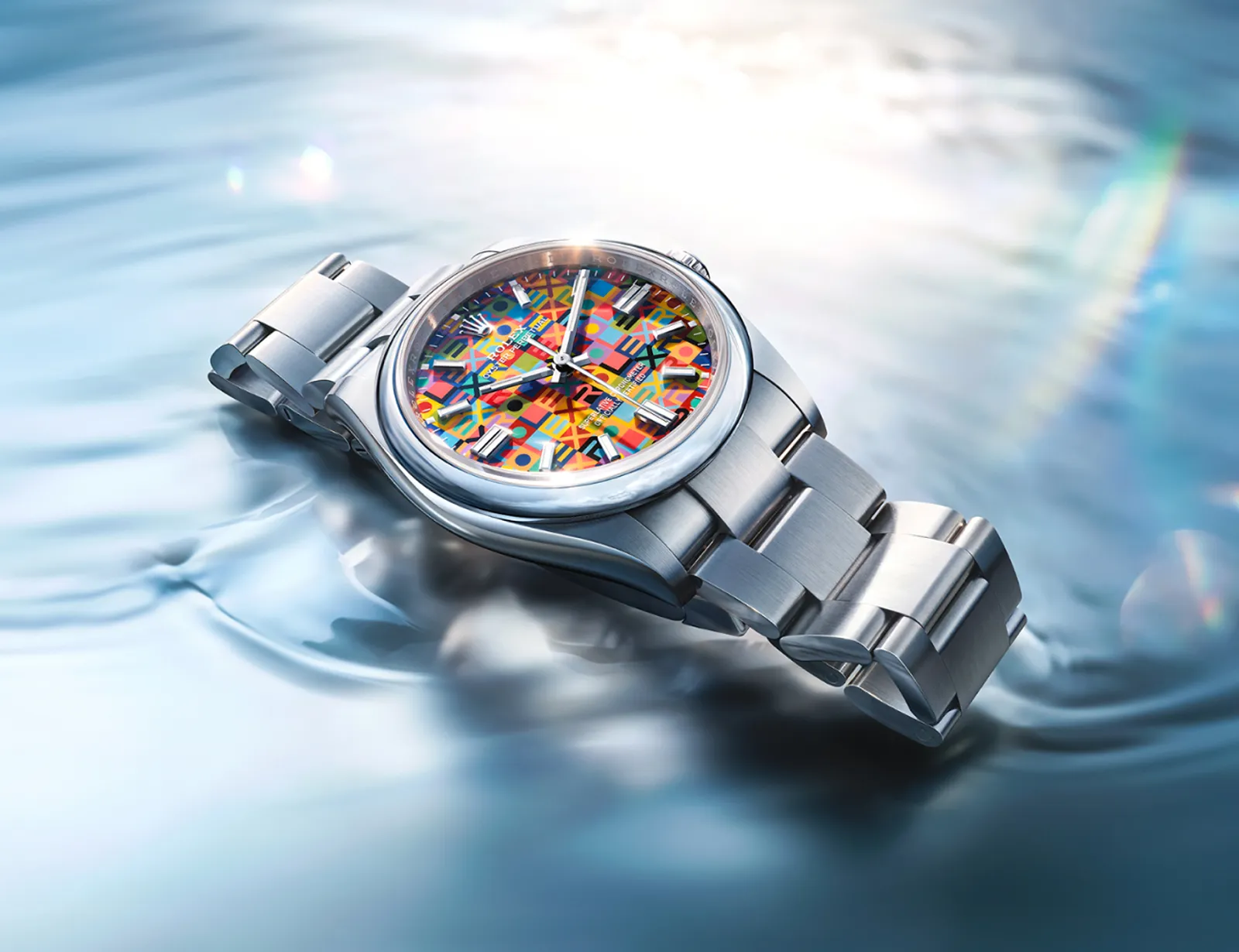
All of this happened nearly 100 years ago, and much of what followed was built on the strengths established by that first Oyster. Look at how relatively small it was, yet how it came to define strength, robustness, consistency, and precision. Its case, its technology, and the vision behind it became the foundation for watches such as the Submariner, Explorer, and Milgauss, followed by models with additional functions, including the GMT-Master, the Daytona, and, more recently, the Yacht-Master II.
While many of these watches have become associated with celebrities and people of influence, they began as practical answers to specific needs.
What Rolex did was build on those strengths, creating watches designed for specific purposes: expeditions, diving, keeping track of a second time zone for pilots, timing laps on a racetrack, or resisting magnetism for scientists. While we take all of this for granted today, there is little question that having this level of precision readily available played an important role in enabling many, if not most, of the technologies that followed.
Now, remember that Wilsdorf lost his parents at an early age, and consider what that meant for someone living more than 100 years ago. He had to see possibilities where others did not. He had to recognize strengths and bring them together to create something others had not yet imagined. That is exactly what happened with the creation of the Oyster, then the Oyster Perpetual, and ultimately the institution that grew from them.
But what I think is the key point is that Wilsdorf had vision. He had the ability to pursue that vision, and he had, or at least felt, the responsibility to protect it and use it for something greater. This is important because Rolex, as we know it today, may best be described as a philanthropic foundation that happens to sell watches. It is a global organization that affects lives and industries far more than most people realize. When it chooses to support a scientist, an entrepreneur, or an artist, and for every one you see there are many more you do not, it is helping them grow. It provides tools, education, and access, and in return expects them to help others do the same. For all the glamour associated with the brand, it is this low-key commitment to excellence and responsibility that leaves the deepest impression.
So the 100th anniversary of the Oyster is, in many ways, only the beginning of the story. Wilsdorf saw possibilities, brought different strengths together, orchestrated them, and allowed them to grow. More importantly, he made sure that they would continue long after his own involvement.
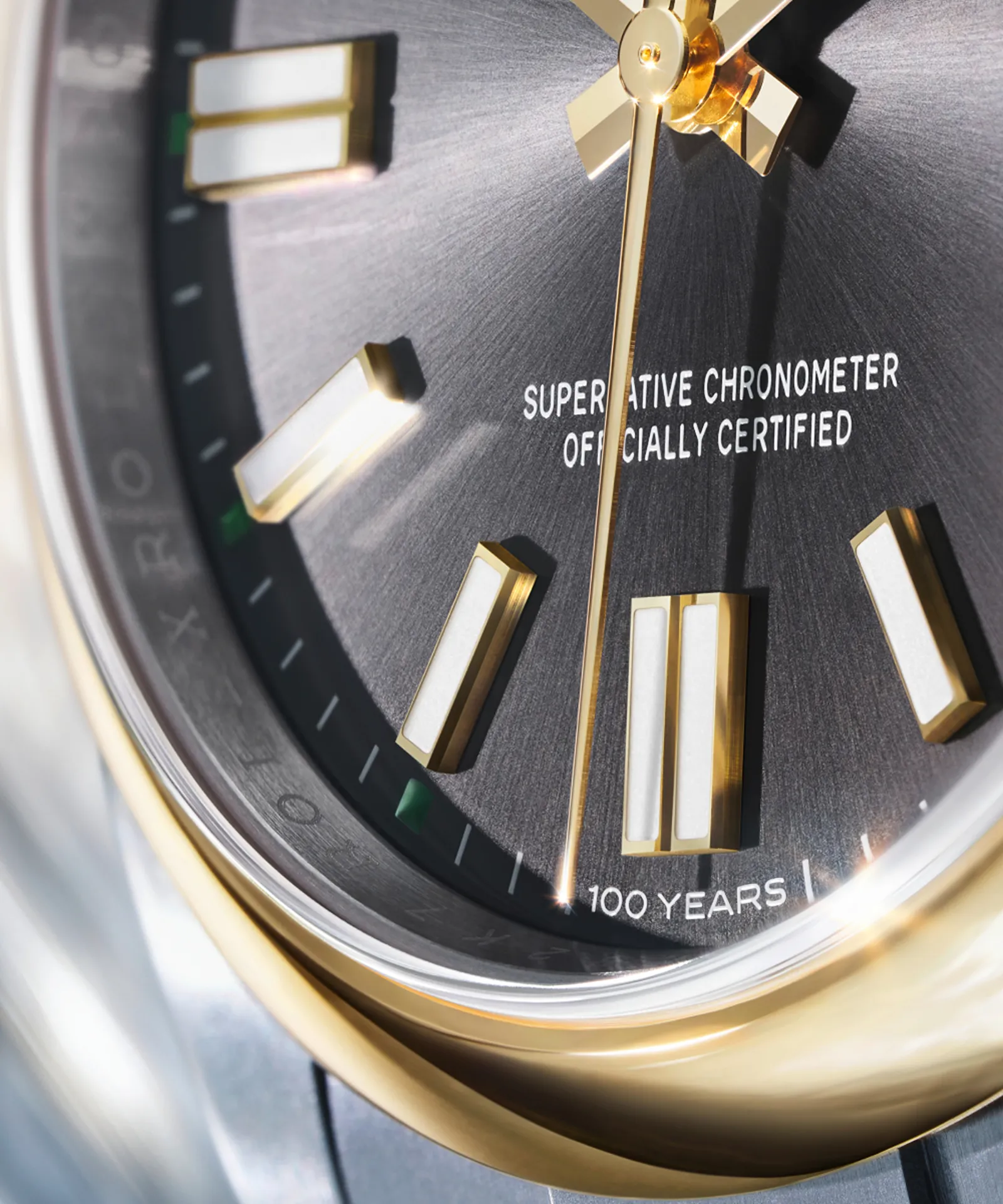
The Oyster often evokes the idea of a shell protecting the pearl within, something precious that grows over time. I see it a little differently. I think of it as creating an environment where even the smallest grain can be surrounded, nurtured, and given the opportunity to grow into something of value. Ultimately, I don’t think Rolex is about watches. The story of Rolex is a story about people.
This article originally appeared in Robb Report Philippines’ Muse Issue, July 2026.
FAQs
Rolex introduced the Oyster in 1926. In 2026, the watch marks its 100th anniversary as one of the most important milestones in the history of the wristwatch.
The Oyster brought together precision, waterproofness, dust protection, and everyday wearability in a wristwatch, helping establish the standards that modern mechanical watches still follow.
The Oyster was developed under Rolex founder Hans Wilsdorf, whose vision centered on creating a precise, reliable, and practical wristwatch that could withstand everyday use.
The original Oyster debuted in 1926 with a waterproof and dustproof case. In 1931, Rolex introduced its self-winding Perpetual rotor, leading to the Oyster Perpetual designation.
The Oyster’s robust case and emphasis on precision became the foundation for models including the Submariner, Explorer, GMT-Master, Milgauss, and Daytona, each developed around specific professional or sporting needs.