Paul Syjuco, Fine Jeweler: A Quarter of a Century On
to keep a dying craft alive.




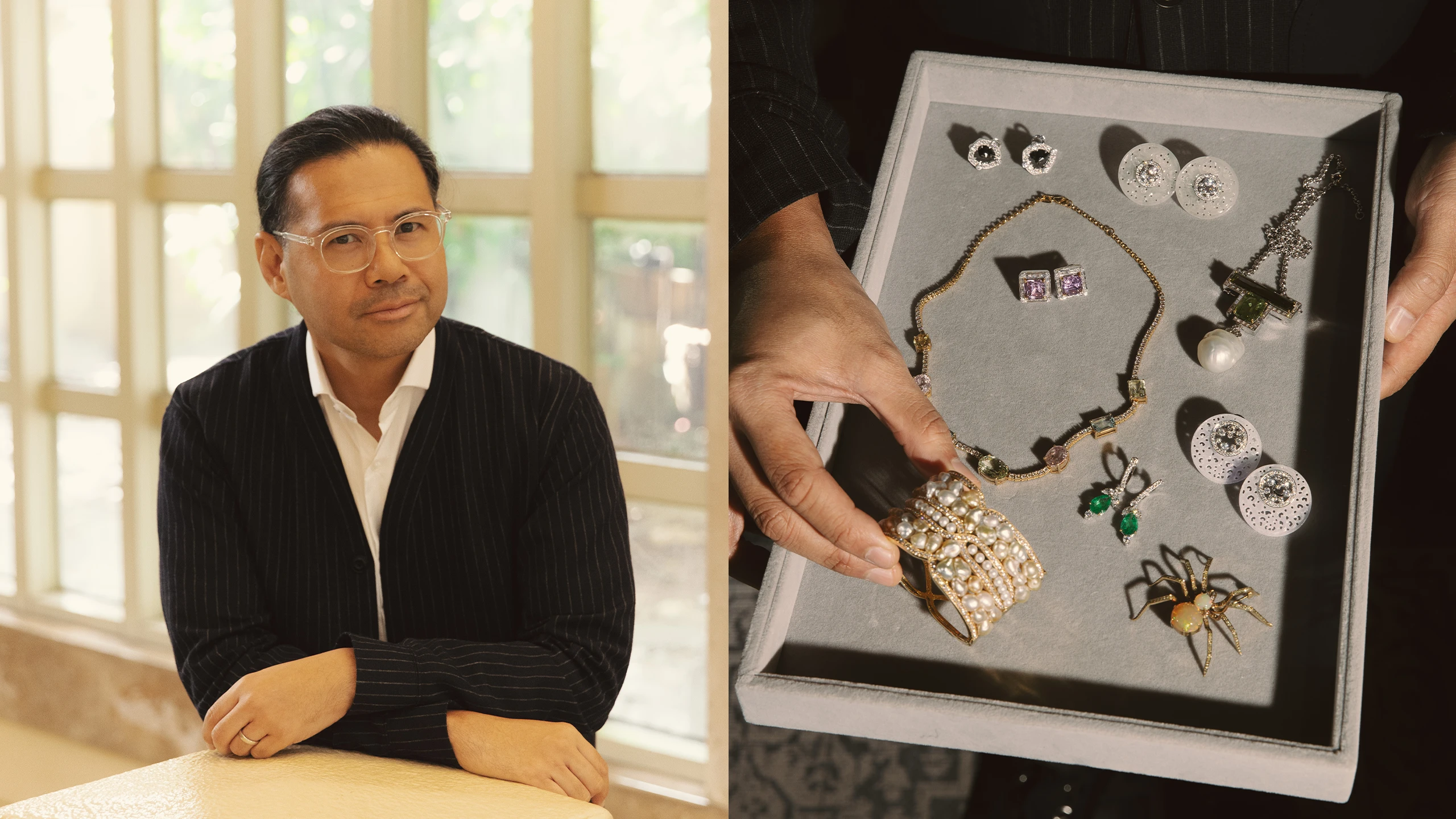
When Paul Syjuco was in high school, he thought about pursuing a career in government, shaping public policy, perhaps, or working with the Asian Development Bank. He shrugged off the idea of ever getting involved in the family jewelry business started by his grandmother, and later joined by his mother.
And so Paul studied business economics at university, which led to his first job as a financial analyst for a local investment house, before he moved on to consumer bank marketing. “But the call to create was much stronger, as I was always interested in the arts,” says Paul. And before he knew it, he had been roped in as a third generation jeweler.
“It was a struggle because corporate is pretty different from running a family business. It’s 24/7, and of course, there’s friction, but I just found my way, I just found myself. I’ve always known that I wanted to do something with an artistic outlet,” says Paul. “So during my time, I said, ‘we have to change things. We have to do something of our own.’ And so we decided to focus on design. We can’t simply import and trade. Every jeweler uses the same gold, diamonds, and gemstones. We chose to focus on design and on differentiating our pieces from everyone else.”
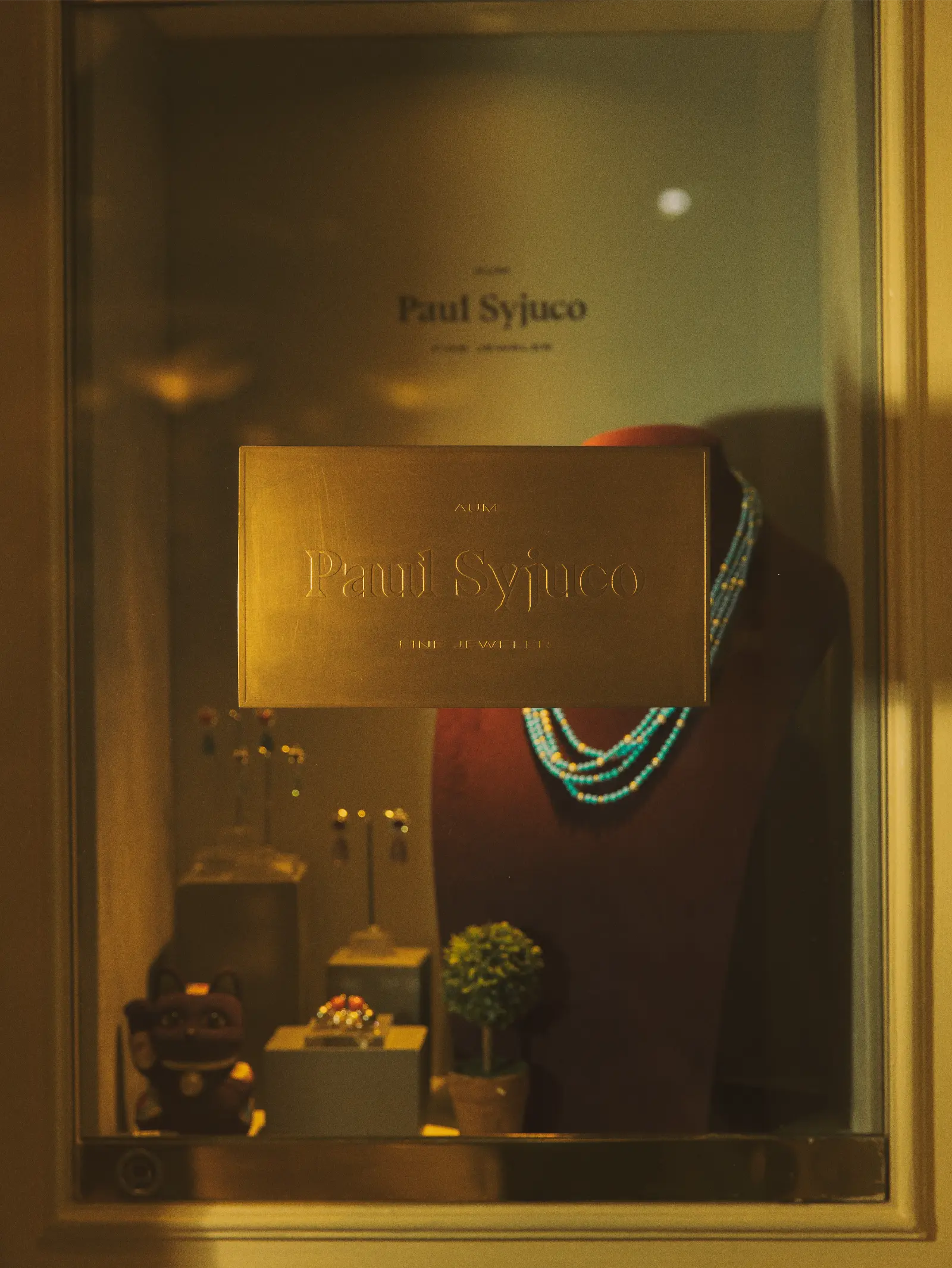
Paul opened his first shop in Quezon City in 2000, a quarter of a century ago. Today, we’re at his second location, an intimate boutique tucked in the quiet hallway beneath the bustling lobby of the Peninsula Manila, that he opened in 2014.
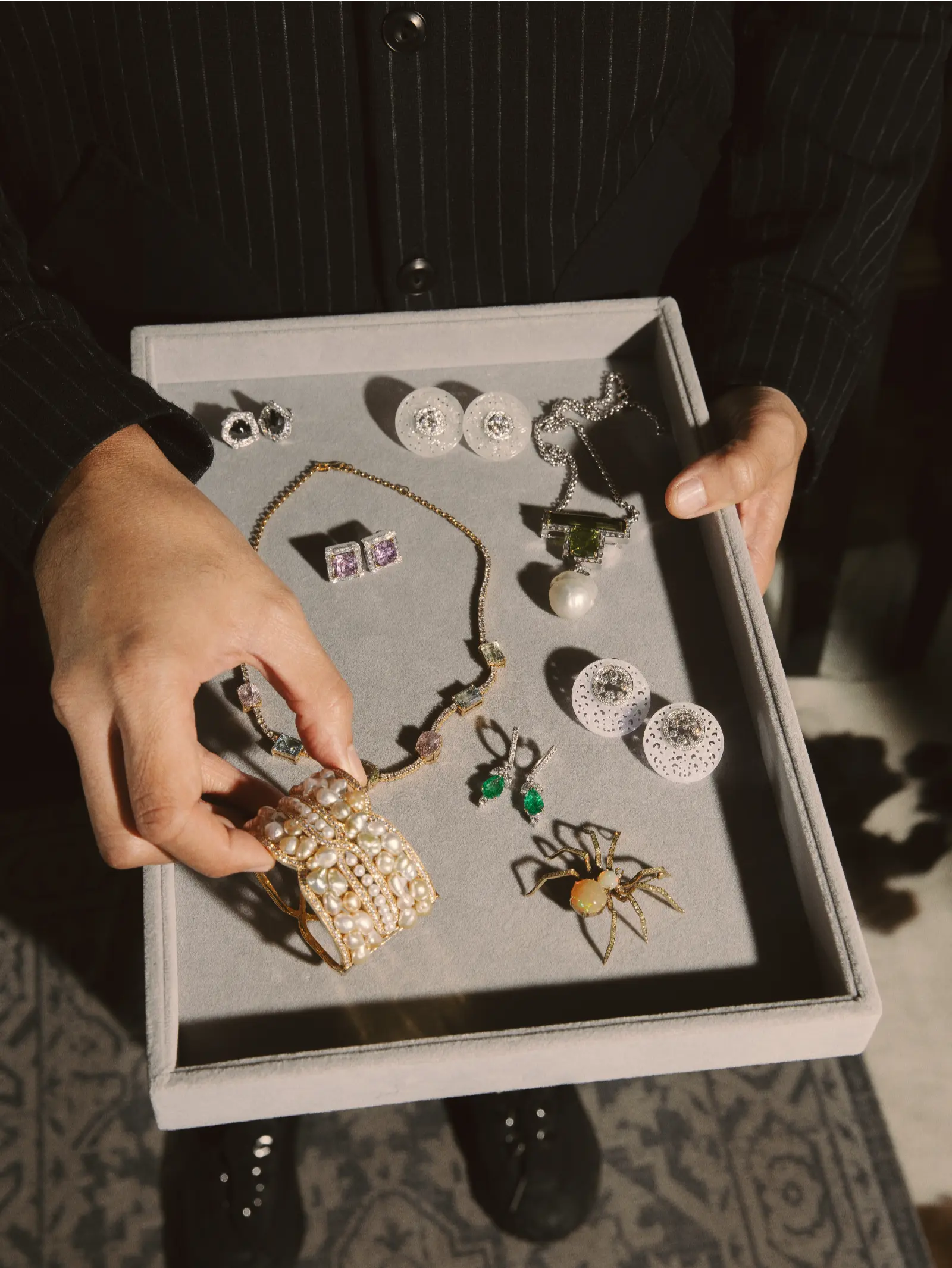
Exquisite creations are ensconced in this jewel box of a space—a serpentine ring that wraps sparkling diamonds around one’s finger; amethysts, peridots, citrines and diamonds, a mix of family birthstones, in a striking pair of commissioned earrings; dainty emeralds and diamonds in a delicate leaf motif; a confection of a necklace with pastel-hued aquamarines, yellow beryls, and pink kunzites.
Outside, a sign reads Paul Syjuco, Fine Jeweler. Aum, the shop’s name, is in tiny letters above his own. Paul’s first jewelry collection was far from traditional, mostly silver with gold accents, and a more contemporary slant.
“They were art pieces, and my first collection was actually launched in an art gallery. Back then, my pieces were on display at Firma, locally, and were also carried by galleries in Singapore and Shanghai.”
“My first fine jewelry commission was a ring that my uncle asked me to redesign for him. I put together a diamond and a ruby and set them in an angular nut (as in nut and bolt)-shaped band. A modern toi et moi,” he says, referring to a ring style that dates back to Napoleon Bonaparte’s proposal to his wife Josephine in 1796. The design includes a band with two center stones, usually of the same or contrasting shapes and colors, an emblem of togetherness.
Paul revisited the same ring again last year, when his uncle sent it back to him, and he added two blue sapphires on the side. “I appreciate how the design held up over the years. And when I think about it now, I’m grateful how my uncle entrusted a young kid to recreate his heirloom pieces,” Paul says.
Over the years, Paul’s work has moved steadily toward refinement. “I’ve simplified my designs over time,” he says. “I like designing things that are simple—not simplistic—but things that seem like they’ve not been designed at all,” he says. “And it’s quite a challenge, because this is fine jewelry, not fashion. I design things to last.”
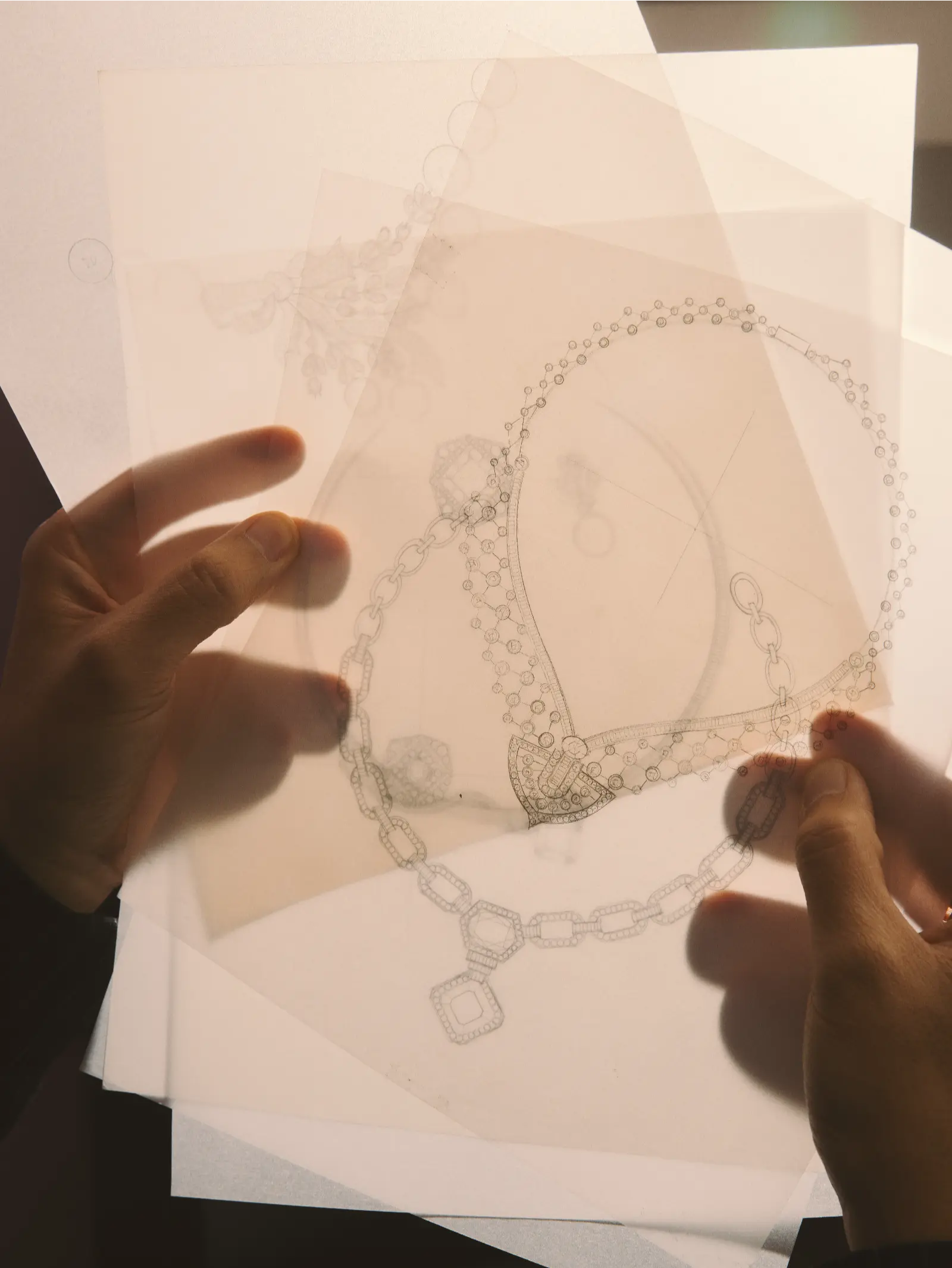
The concepts for his designs usually start off with the stones themselves: their color, their shape, and texture igniting ideas. “Sometimes it starts out slow, but when you find that one thing…it just flows,” says Paul, who still sketches his designs by hand. “I do things the old-school way, which is like technical drawing. I draw to scale, and it acts like a blueprint. When I give it to our craftsmen at our workshop, it’s a one-to-one ratio. I show them the exact idea I want them to work on, how I want it to be in actual form.”
Paul says sometimes he can create an inspired design in five minutes, while others can take three to five revisions over a span of weeks.
“The complexity of design also dictates how long it takes to create the actual piece. So normally a simpler design would take a couple of weeks, but some larger pieces have taken months,” he says.
The Syjuco atelier is vertically integrated; every painstaking step from Paul’s design to casting, stone-setting, polishing, finishing, and everything else in the production cycle is done in-house. Every jewelry piece is a one-offOne-OffA single, unique item created for one client, with no duplicates, such as a custom car, watch, or yacht. One-offs offer the highest exclusivity, and commissioning one requires working closelyGo to One-Off Glossary, each individually designed and created.
“If someone asks us to make another one, I tell them it depends on whether we have the same materials, but we can make something with that feel or that direction. We never make the same piece twice,” he says.
Paul says some clients arrive with bespoke requests, others with photos, and others leave everything up to him. “It’s usually a back and forth, but sometimes they just say, ‘It’s up to you,’ which is actually a lot harder because there are no parameters, but also, much more intriguing,” he says. Over the years, many of his early clients have become repeat customers across generations.
“It’s eye-opening because sometimes I work with the parents and then the parents introduce me to their kids because they’re getting married, and then the kids have their own kids, and then they want to buy for their special milestones,” Paul says. “I didn’t intend for us to be a legacy jeweler, but it seems like we’ve come full circle.”
“I want to create timeless pieces, iconic ones, pieces that are meant to last,” he says. “I always look at fine jewelry that way, not as a seasonal thing. It’s something you pass on to the next generation, and you have to think of the design that way.”
Paul revels in his work, calling it “work and play together.” “I really enjoy it. It’s become my life,” he says. “Sometimes it’s a love-hate thing. After I release a collection, I’m so drained. But traveling helps me. My wife and I are both creative people, and we like traveling to feed our minds. It really does make a difference.”
What lies ahead in the next 25 years? “I think about that: Who do I pass it on to? Will my nephews be interested? Should I pass it on to our people? In Japan, many don’t have families, so they pass on their businesses to heirs who are not relatives. After 25 years, you do think about those things,” he says.
“Our main goal is to keep this art of jewelry making alive. The longer I’m in this industry, the more I realize that it’s not about me, it’s not just about design, but it’s about keeping this dying craft alive—and even improving it.”
This article originally appeared in Robb Report Philippines’ Watches and Jewelry Issue, August 2025.