Why Watches and Jewelry Are Stealing the Spotlight at Auction




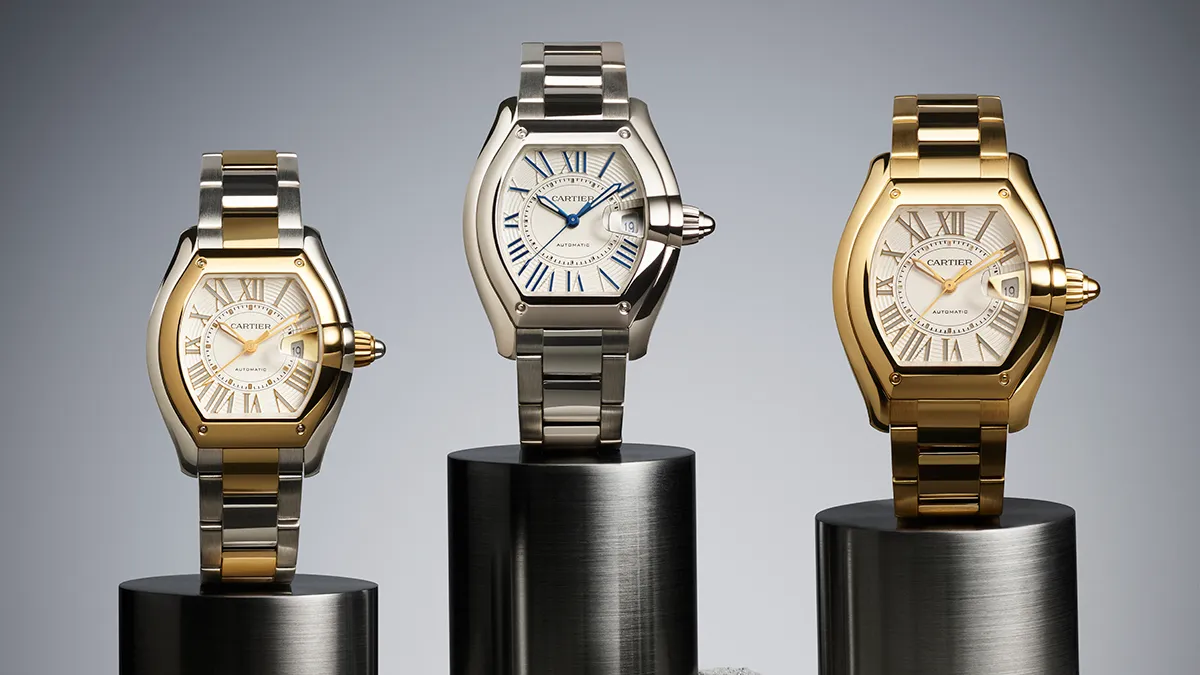
For a long time, fine art was the undisputed headliner of the auction world. Sure, jewelry and watches had their moment in the catalogue (cue some headline featuring a glittering Cartier piece made for a beautiful cover image) but they were rarely the story. They were treated as the supporting cast in many ways. That’s changing these days, and the shift isn’t subtle.
While the art market claws its way back from two bruising years, luxuryLuxuryA lifestyle defined by exceptional quality, craftsmanship, exclusivity, and sophistication, encompassing the finest products, services, and experiences that represent the highest standards of refinement and excellence.Go to Luxury Glossary categories, watches and jewelry, in particular, have slowly become the auction world’s most reliable growth engines. The numbers tell the story plainly enough.
Global art sales edged up 4 percent in 2025 to an estimated $59.6 billion, according to the Art Basel and UBS Global Art Market Report 2026, and public auction sales improved 9 percent to $20.7 billion. A recovery, yes, but one that needs further context. It follows a 2024 in which the global art market fell 12 percent and auction sales cratered by 25 percent.
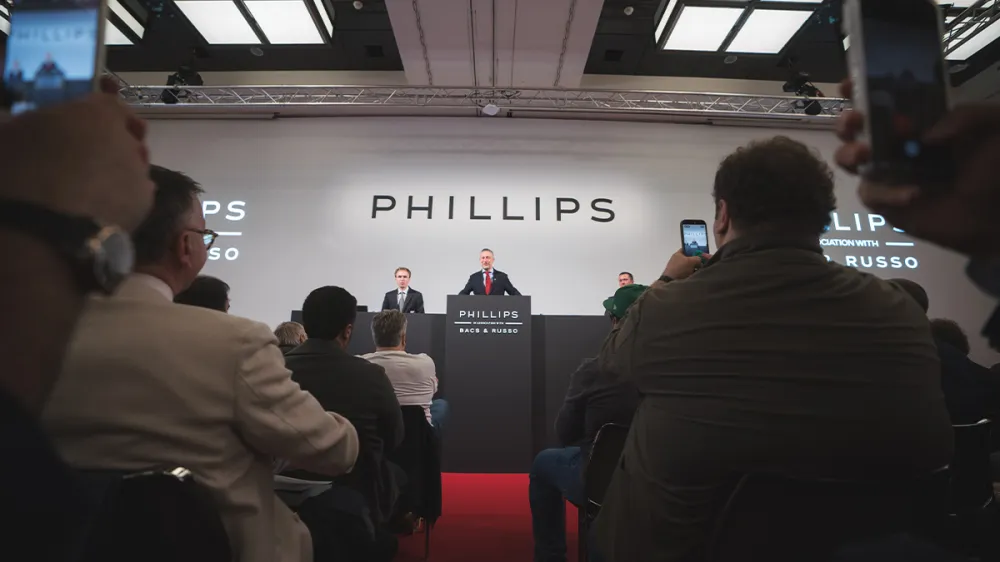
Luxury, nonetheless, hasn’t needed to be careful. Christie’s posted $6.2 billion in projected global sales for 2025, up 6 percent overall, but its luxury cluster—jewelry, watches, handbags, wine, and their kin—surged 17 percent to $795 million. That’s more than double the growth rate of its total auction business, and it left the 20th and 21st Century Art category, which rose a respectable 6 percent, looking a little like the quieter sibling at the dinner table.
Likewise, Sotheby’s told a nearly identical story. Its luxuryLuxuryA lifestyle defined by exceptional quality, craftsmanship, exclusivity, and sophistication, encompassing the finest products, services, and experiences that represent the highest standards of refinement and excellence.Go to Luxury Glossary division climbed 22 percent in 2025 to $2.7 billion, which is the highest total in the company’s history for the category. Watch sales hit a record $193.6 million, up 22 percent, while worldwide jewelry revenue rose 18 percent to $317.7 million.
Phillips, long the room where serious watch collectors feel most at home, surpassed $290 million in annual watch sales, also a house record. During its spring season alone, it sold $113.8 million worth of watches with a 99 percent sell-through rate, a figure that would make most art specialists quietly uncomfortable.

So what’s actually happening here? Three things, mostly. The first being legibility. A great painting can be canonical and still be nearly impossible to price in a jittery market. But a vintage Patek Philippe or a signed Cartier jewel comes with a clearer grammar, so to speak: model, reference, metal, stone, provenance, production numbers, comparable past results. There’s still taste and myth and genuine emotion involved, but there’s also a shared vocabulary that makes pricing feel less like guesswork in a sense.
The second is portability. Watches and jewelry compress value into something that can be worn, insured, transported, and understood across borders. Now that we’ve reached a period of sustained, high interest rates and geopolitical uncertainty, that matters more than it once did, where a museum-worthy canvas may define a room or a rare Rolex can cross a border in a carry-on bag.
The third is audience, and this may be the most important factor of all. Christie’s also reported that luxury was once again its primary entry point for new buyers in 2025, accounting for 38 percent of first-time buyers, ahead of 20th and 21st Century Art at 33 percent. Nearly half of all new bidders and buyers were millennials or younger. The pipeline into auction culture is no longer necessarily a painting. It may be a Cartier Crash, a Van Cleef & Arpels necklace, or a diamond with the kind of provenance that makes understatement seem rude.
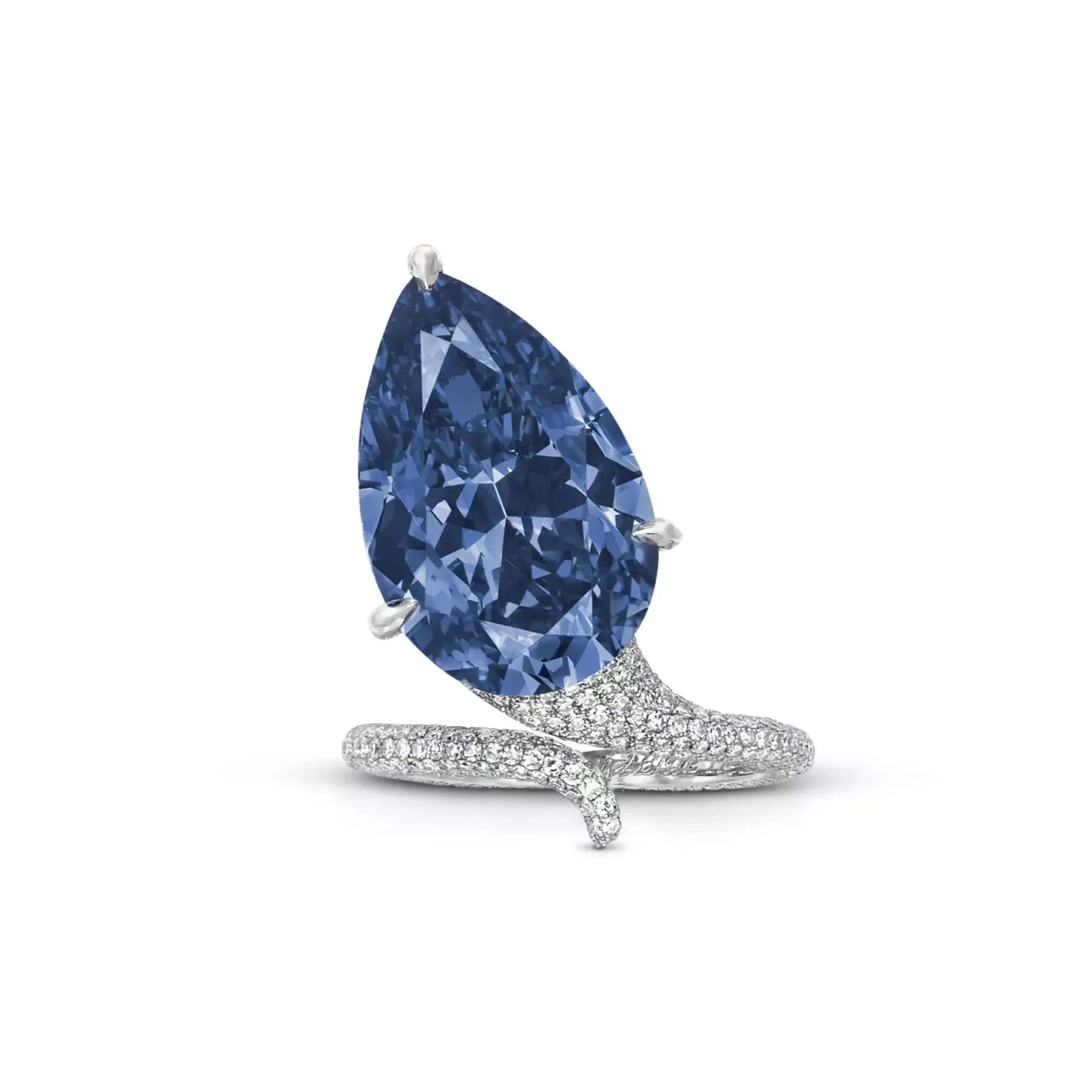
The individual moments have been suitably theatrical. Christie’s sold the Mellon Blue—a 10.57-carat fancy vivid blue diamond—for $25.6 million in Geneva, the highest jewelry lot sold at auction in all of 2025. A Winter Egg by Fabergé, meanwhile, achieved $30.2 million in London, setting a new auction record for the maker. These are the lots that people talk about.
Of course, none of this actually signals the end of art’s reign. The 2025 recovery, modest as it is, suggests the market is finding its footing. But the center of gravity at auction is genuinely evolving. The so-called “trophy economy” has broadened its definition of what a trophy can be. Art still carries the weight of cultural capital, and perhaps always will. But watches and jewelry now offer something that sits comfortably beside it: scarcity and value that don’t require a white cube to make their case.