This 28.88-Carat Jwaneng Is the Star of Sotheby’s Luxury Week




Our concept of collecting is evolving, and auction houses are moving along with it. At Sotheby’s, that shift takes shape in LuxuryLuxuryA lifestyle defined by exceptional quality, craftsmanship, exclusivity, and sophistication, encompassing the finest products, services, and experiences that represent the highest standards of refinement and excellence.Go to Luxury Glossary Week, a multi-city series of sales spanning Hong Kong, Geneva, London, Paris, and New York. The format brings together high jewelry, watches, handbags, wine, and other categories into a single, curated offering, reflecting how today’s collectors engage across disciplines rather than within a single lane.
The series folds together live theatre and digital access with ease, mirroring the habits of a new generation of buyers who are as comfortable bidding from a phone as they are raising a paddle in a saleroom. The breadth is deliberate: high jewelry sits alongside handbags, watches, and wine as adjacent expressions of value. Still, even within that spectrum, certain lots exert a gravitational pull. This season, it begins with a diamond.
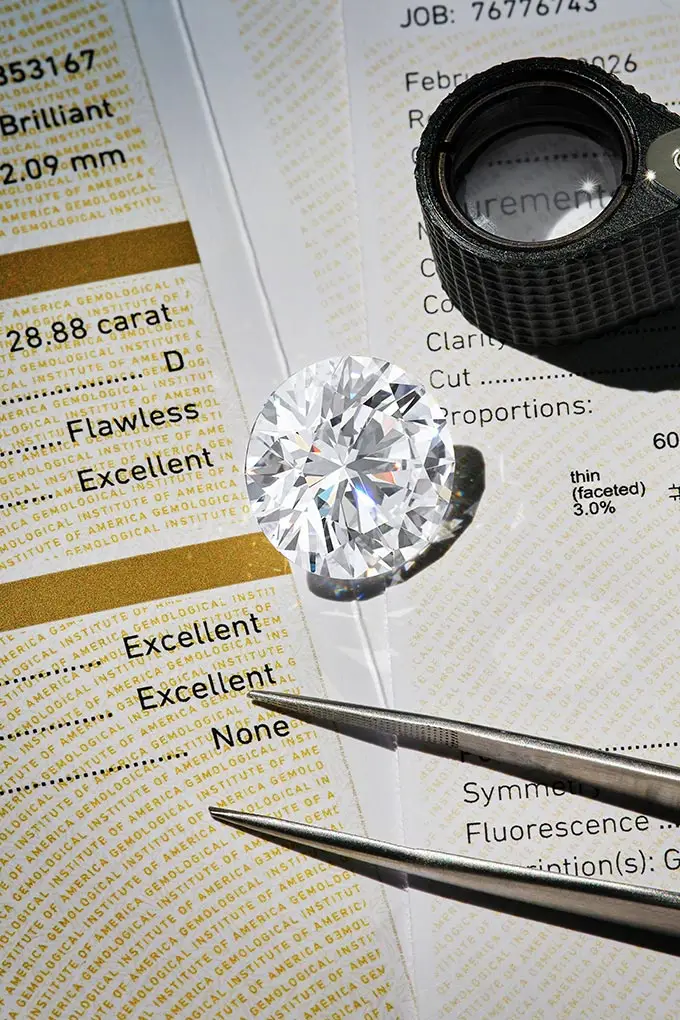
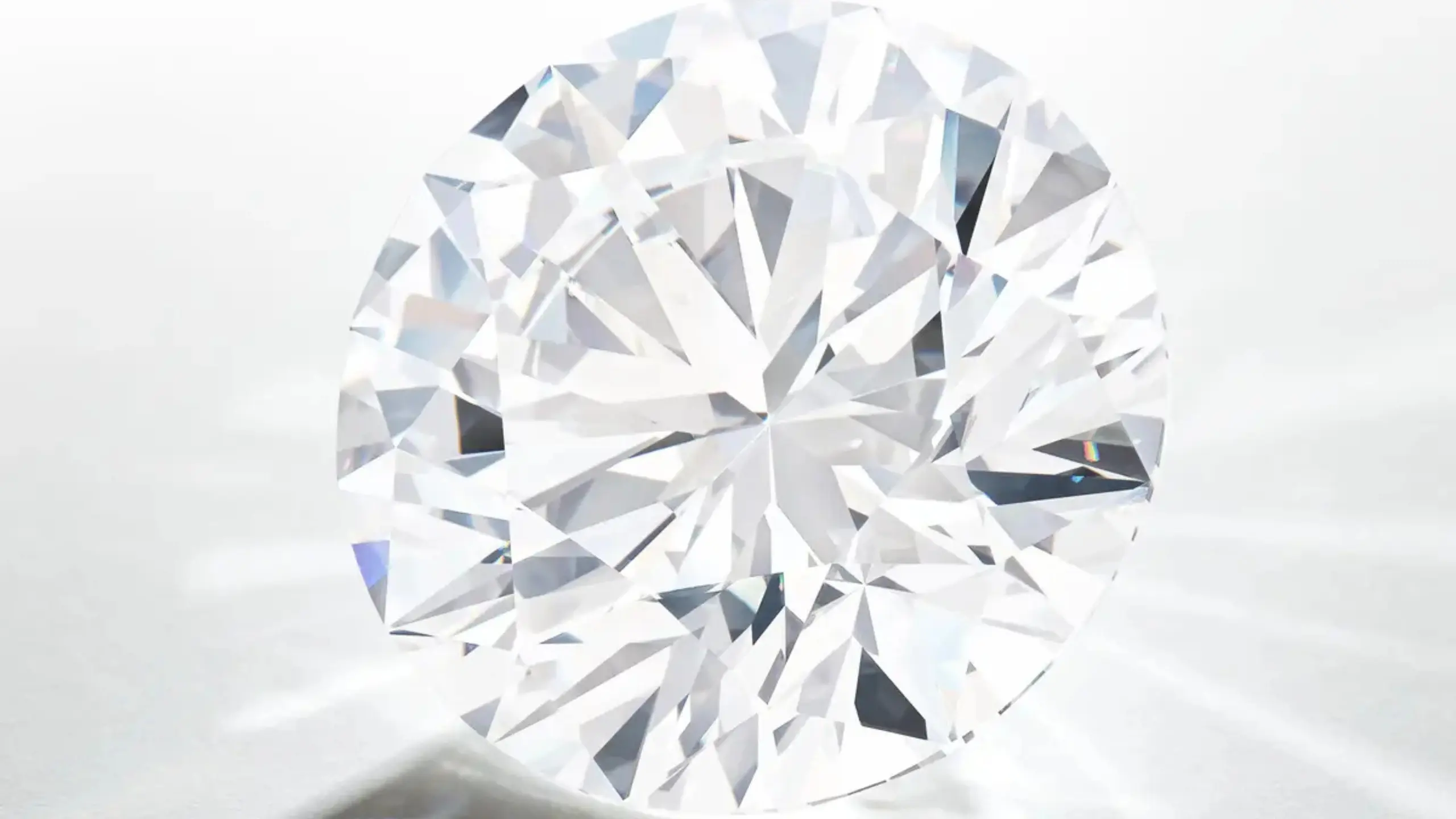
The De Beers Jwaneng 28.88 arrives with quite the pedigree. Cut from a 114.83-carat rough diamond unearthed in Botswana’s Jwaneng mine, the stone now exists as a 28.88-carat round brilliant of D color and Flawless clarity. Being a Type IIa diamond, it belongs to the chemically purest class, a category that historically accounts for only a small fraction of the world’s most important stones. Irresistible, really.
If the Jwaneng diamond represents a kind of unheard-of purity, the season’s colored stones offer something closer to personality. A 7.63-carat fancy blue diamond ring pairs crystalline depth with a VVS1 clarity, while a 4.63-carat fancy intense purplish pink diamond leans into saturation, its violet undertones adding some interesting dimension.
Likewise, Kashmir sapphires make an appearance. Mined briefly in the late 19th and early 20th centuries, it remains among the most coveted precisely because there aren’t going to be any more in existence. The 15.33-carat example offered this season, untreated and vividly blue with the velvety “silk” that defines the origin, in a sense, feels like a closed chapter of an old world. Colombian emeralds operate differently. Their internal gardens (those inclusions that would be flaws in any other stone) become signatures of identity.
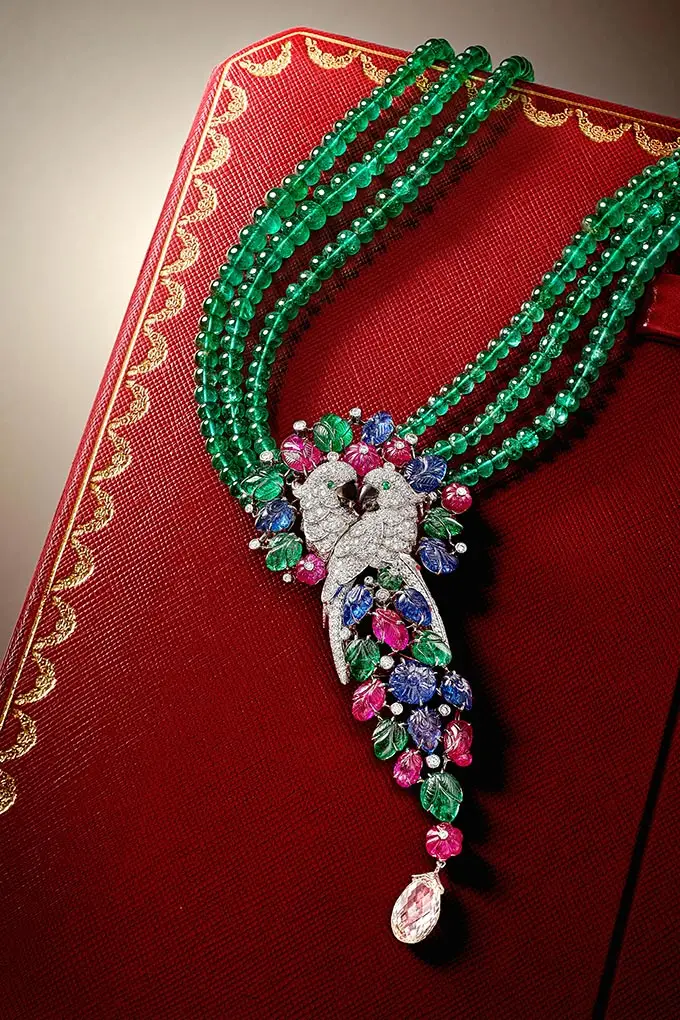
Signed pieces make authorship explicit. A Cartier Tutti Frutti necklace stands as one of the sale’s defining highlights, folding Mughal-inspired carved gemstones into a distinctly Parisian rhythm. Yes, the motif is familiar, but its pavé diamond parrots, emerald beads, and a briolette pendant coalesce into something that pays homage to its legacy.
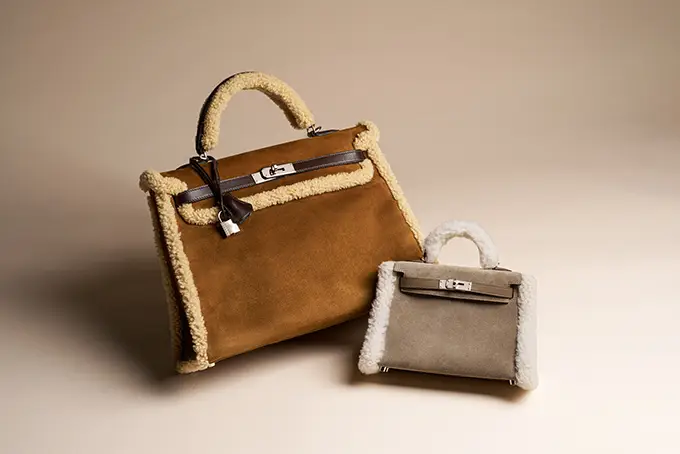
The same principle extends, perhaps unexpectedly, to handbags. Hermès’ Broderie Collage Kelly 25 Sellier, constructed from Swift leather and panels of alligator and crocodile in an almost painterly arrangement, remains a knockout piece. Elsewhere, Teddy Kelly variants introduce texture and levity, while the playful and slightly surreal Kelly Doll reminds collectors that even the most codified icons can still accommodate humor.
The High Jewellery live sale takes place tomorrow, 23 April in Hong Kong, alongside online auctions for Fine Jewellery (15–29 April) and Handbags and Accessories (14–28 April).