The 7 Coolest New Watches That Dropped in January





January turned out to be a great month for watch collectors. LVMH Watch Week went ahead again like clockwork, with nine of the French luxuryLuxuryA lifestyle defined by exceptional quality, craftsmanship, exclusivity, and sophistication, encompassing the finest products, services, and experiences that represent the highest standards of refinement and excellence.Go to Luxury Glossary conglomerate’s maisons presenting their latest creations. TL;DR: More than 20 new timepieces from Hublot, TAG Heuer, Zenith, and the like. (We’re particularly fond of Bulgari’s bejeweled Tubogas Manchette, Tiffany’s sporty Timer chronograph, TAG Heuer’s retro-style Seafarer, and Louis Vuitton’s elevated Escale Worldtime watches.) Fortunately, debuts weren’t limited to the houses helmed by Bernard Arnault. Several other watchmakers—not owned by LVMH—released noteworthy models, many of which now live in our heads rent-free.
Piaget made every horophile of the ‘80s swoon with a new two-tone Polo. Jacob & Co. delivered both mechanics and aesthetics, unveiling the world’s fastest tourbillonTourbillonA watch complication invented around 1801 by Abraham-Louis Breguet that rotates the escapement in a cage to counter the effects of gravity on accuracy. Tourbillons are mesmerizing and very difficultGo to Tourbillon Glossary and a stealthy dual-time watch with MAD Paris. Omega launched the Speedmaster Moonwatch in black and white colorways, plus a Seamaster in honor of the Winter Olympics. Gerald Charles gave us the meteorite-dialed Maestro we didn’t know we needed. MB&F introduced us to the stunning successor of the LM Sequential Evo. And H. Moser & Cie. dropped a new Endeavour with a skeletonized flying tourbillon.
Below are the best watch releases of the month.
Jacob & Co. x MAD Paris The World Is Yours Dual Time Zone
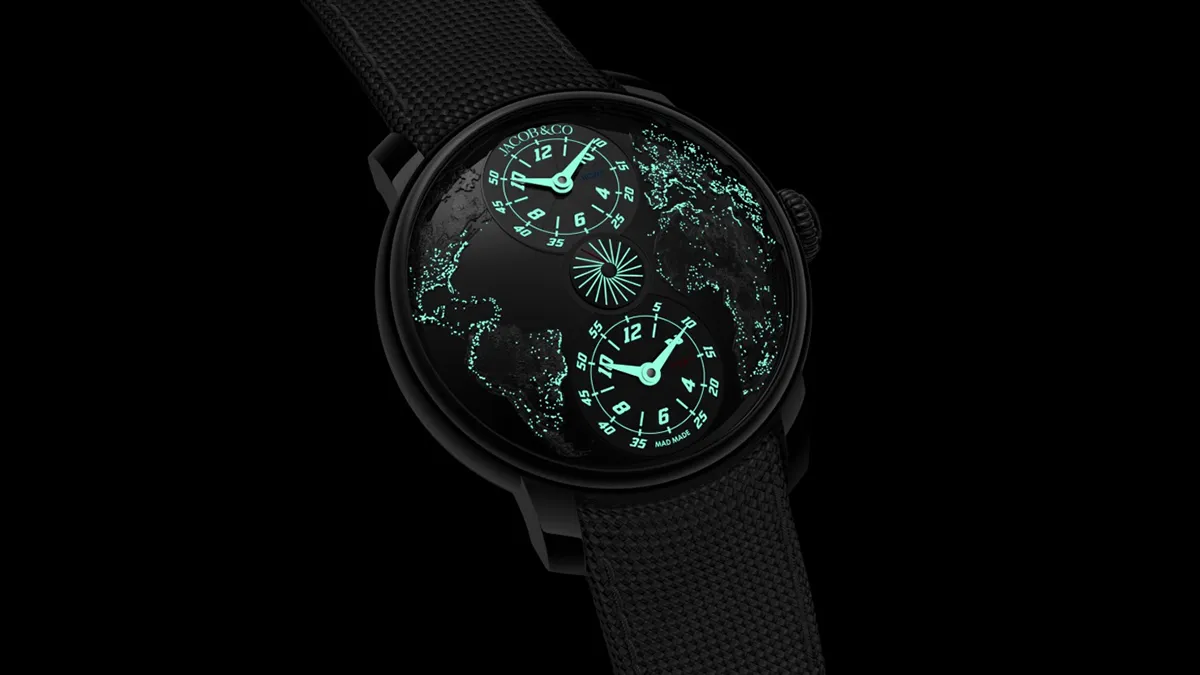
Jacob & Co. started off January by making horological history, unveiling the world’s fastest tourbillon. It then capped off the month by dropping a collab piece with MAD Paris. The Parisian customization house reimagined the World Is Yours Dual Time Zone, dressing it almost entirely in its signature black. Within the 43 mm black steel case lies a black titanium dial with an intricately engraved world map covered in hundreds of SuperLumiNova dots that glow in the dark. Jacob & Co. likens the effect to the sparkling city lights one might see from a plane at night. The two subdials, which can be set separately to show hours and minutes at home and away, feature MAD’s signature typeface. The house’s logo also appears in the Indian Ocean on the caseback. Just 101 examples will be made, with price upon request.
MB&F LM Sequential Flyback Evo
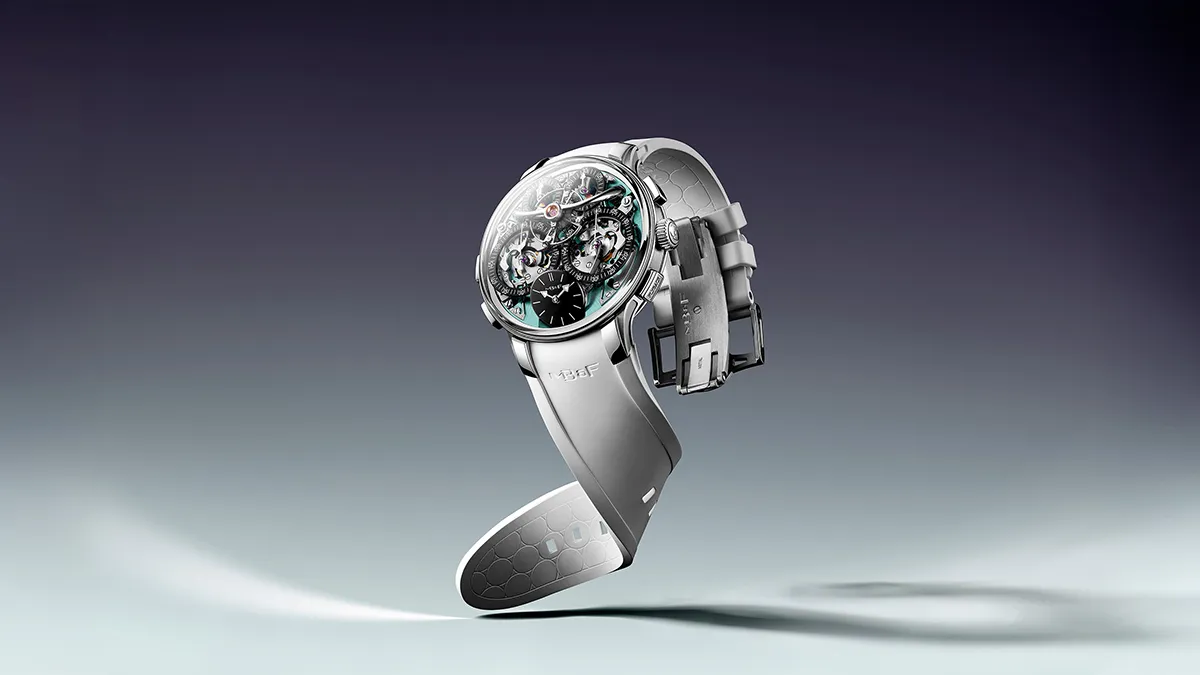
MB&F gave us a stop watch on steroids in January. The successor to the award-winning LM Sequential EVO, the newcomer is equipped with Stephen McDonnell’s innovative double chronographChronographA watch complication that incorporates a stopwatch function, controlled by pushers on the case and displayed on small subdials. Originally developed for timing events, the chronograph remains popular for itsGo to Chronograph Glossary but offers a new flyback function for each counter. A pusher called the Twinverter controls both chronographs at once, making it easy to start or stop them simultaneously, or start one and stop the other in tandem, or restart them while they’re running. “You could be in the kitchen making pasta on one side and putting something in the oven on the other side,” MB&F’s Charris Yadigaroglou told Robb Report. That isn’t the only change: The 44 mm titanium case houses a new tilted dial that is supposed to enhance readability—if you can stop staring at the innerworkings, that is. The dial plate is bright aquamarine, adding a pop of color to an otherwise steely piece. You can pick one up for $230,000.
H. Moser & Cie. Endeavour Tourbillon Skeleton
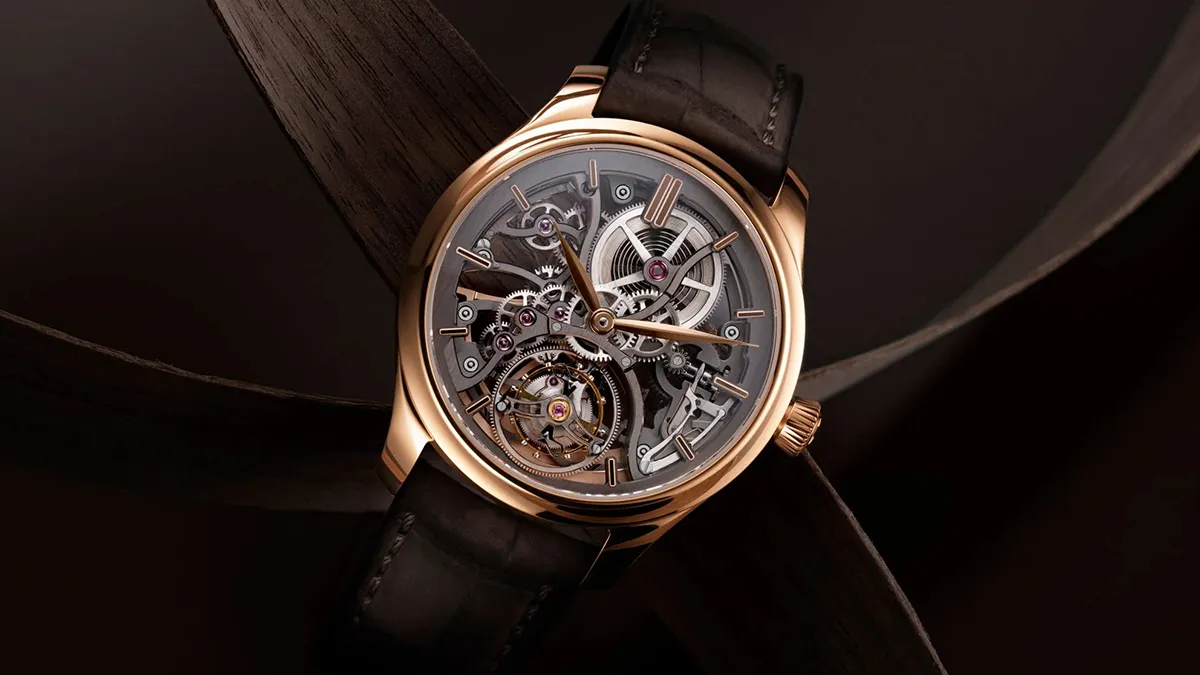
H. Moser & Cie put yet another spin on the Endeavour in January. The classic model, which has been given minimalist dials, erasers for hands, and even a digital display, received a skeletonized flying tourbillonTourbillonA watch complication invented around 1801 by Abraham-Louis Breguet that rotates the escapement in a cage to counter the effects of gravity on accuracy. Tourbillons are mesmerizing and very difficultGo to Tourbillon Glossary this month. Inside the 40 mm red-gold case, the open-worked dial spotlights the in-house Calibre HMC 814 with a one-minute flying tourbillon and a double hairspring sitting at 6 o’clock. Sapphire crystals front and back mean you can appreciate the movement from all angles. Shell out $99,600 and it’s yours.
Hublot x Yohji Yamamoto Classic Fusion All Black Camo
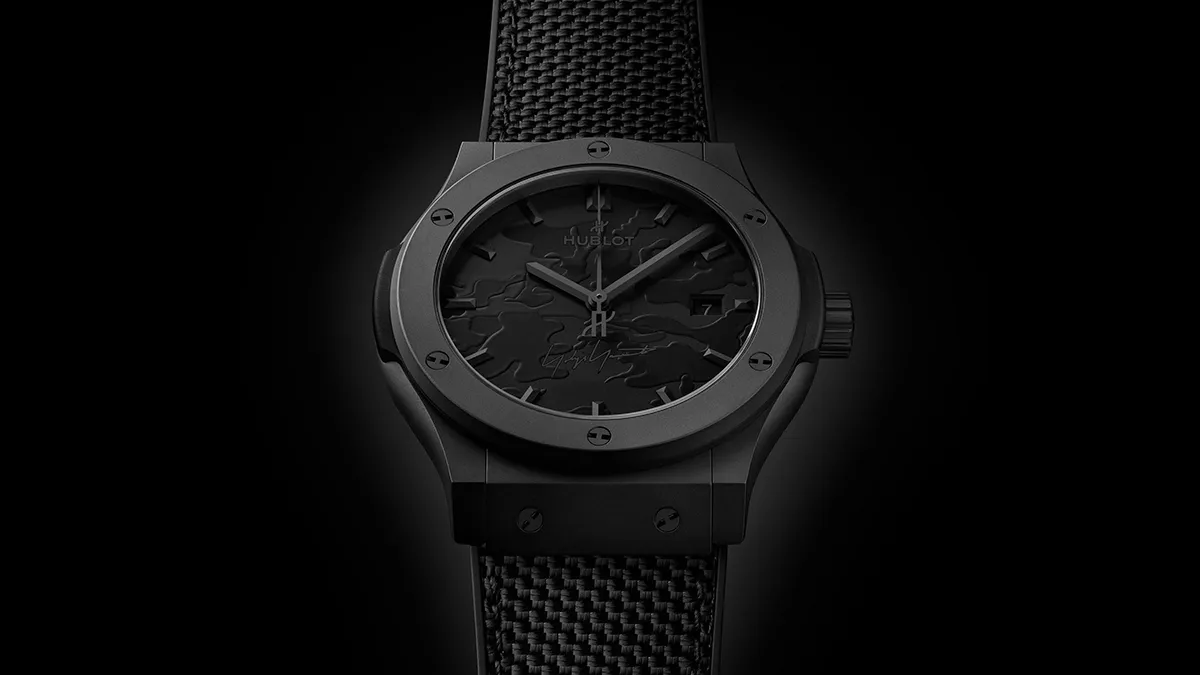
In addition to the many, many Big Bangs it unveiled at LVMH Watch Week, Hublot dropped a cool collab timepiece with Yohji Yamamoto in January. This is the fourth time the duo has teamed up, but the first time they have reimagined the Classic Fusion. The newcomer is a study in black, a shade that Yamamoto says is “modest and arrogant at the same time.” At the center of the 42 mm black ceramic case lies a black-on-black camouflage dial with Yamamoto’s signature above 6 o’clock. The strap is another nod to the Japanese designer, with fabric and rubber reflecting his tactical couture. Flip it over, the smoked sapphire caseback glimpses the in-house automatic movementAutomatic MovementA mechanical watch movement powered by a rotor that winds the mainspring through the natural motion of the wearer's wrist, removing the need for a battery. Prized by collectors forGo to Automatic Movement Glossary (Caliber MHUB1110). Limited to 300, the piece retails for $12,700.
Piaget Polo 79 Two-Tone
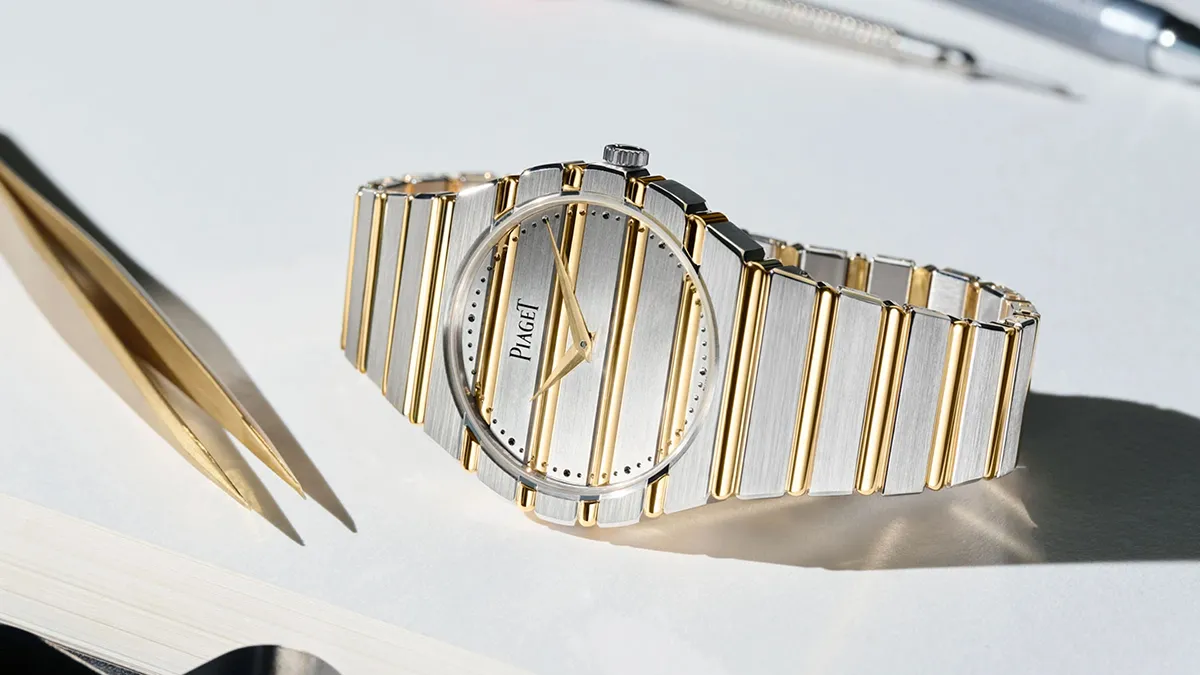
Piaget started off 2026 by taking us back to the 1970s. The Swiss watchmaker dropped a two-tone Polo in January to the delight of style-savvy collectors everywhere. Piaget’s Polo revival began in 2024, when it unveiled a new model based on the 1979 original. The aptly named Polo 79 was the spitting image of its predecessor, with the signature gadroons (stripes) running horizontally across the case, dial, and bracelet. It did, however, gain a larger 38 mm case, a new movement (the in-house automatic caliber 1200P1), and some other refinements. It was first offered in gold, then white gold, and now a mix of the two. Gold on gold is actually one of the original configurations from 1979. The Polo 79 Two-Tone is the most expensive of the trio, with a retail price of $91,000.
Omega Speedmaster Moonwatch in Black and White
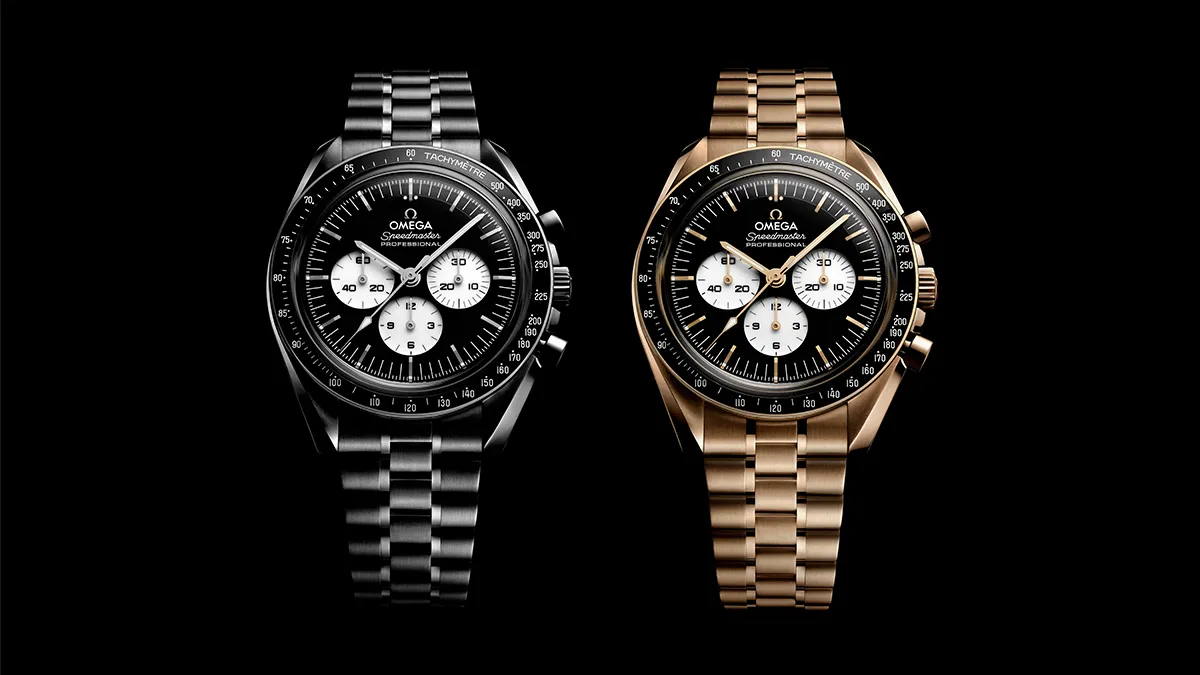
Omega gave a classic chronograph the reverse panda treatment in January. The Swiss watchmaker unveiled two new iterations of the Speedmaster Moonwatch, both of which feature a fresh inverted dial. Available in steel or 18-karat Moonshine gold, the 42 mm chrono showcases a mirrored black lacquer dial with contrasting white registers and a two-tone tachymeter scale on the bezel. The minute track on the main dial is white, while minute tracks on the subdials are black. This enhances the reversed aesthetic and increases legibility, according to Omega. All other components—including the Master Co-Axial cal. 3861 inside—remain pretty much unchanged, because why mess with perfection. The gold example costs $49,300, while the steel reference retails for $10,400.
Gerald Charles Maestro 2.0 Meteorite

Gerald Charles took the Maestro into the stratosphere—or maybe even higher—this month, unveiling a new riff on the iconic, octagonal-shaped model. The aptly named Maestro 2.0 is the first in the collection to feature a small seconds display and also the first to be decked out with space rock (meteorite). It does, however, retain the original’s 39 mm seel case, stepped bezel, and signature “smile” at six o’clock. You can pick between two versions: one features a “Darkblast” steel case and dark meteorite dial with red accents; the other, a polished steel case and a silver meteorite dial with gold accents. Both are priced at $28,400.
This article originally appeared in Robb Report US.