Azuma Farm Koiwai: The Space Between




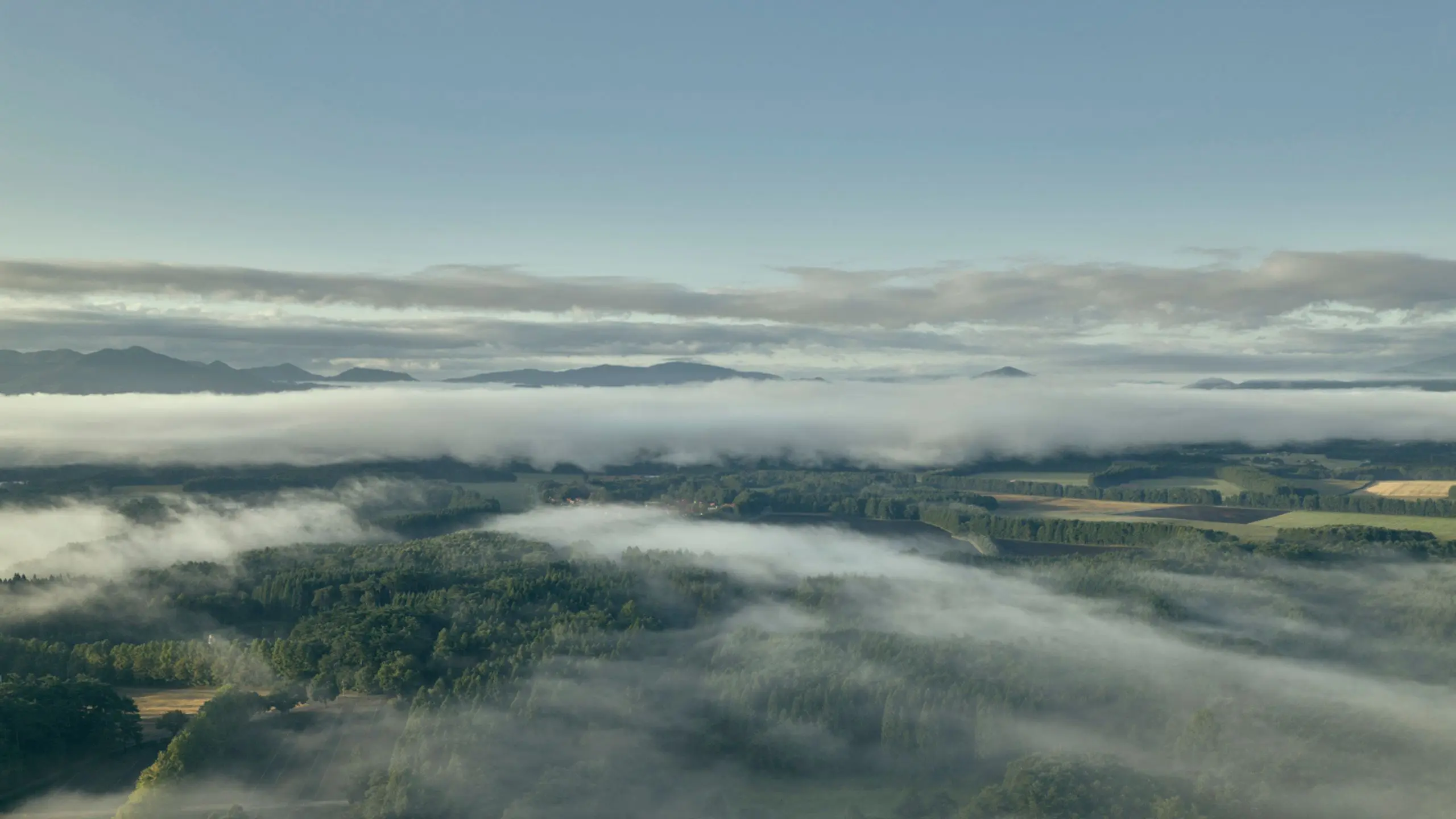
Azuma Farm Koiwai, a new retreat set within the grounds of the historic Koiwai Farm in Japan’s Iwate Prefecture, sits inside one of Japan’s oldest agricultural landscapes, where forests, pastureland, and a cluster of Meiji-era farm structures designated as National Important Cultural Properties have been maintained for more than a century. At most luxuryLuxuryA lifestyle defined by exceptional quality, craftsmanship, exclusivity, and sophistication, encompassing the finest products, services, and experiences that represent the highest standards of refinement and excellence.Go to Luxury Glossary resorts, the instinct is to build outward: more structures, more amenities, and more visible gestures of arrival. But at Azuma Farm Koiwai, the defining architectural move may be what was deliberately left untouched.
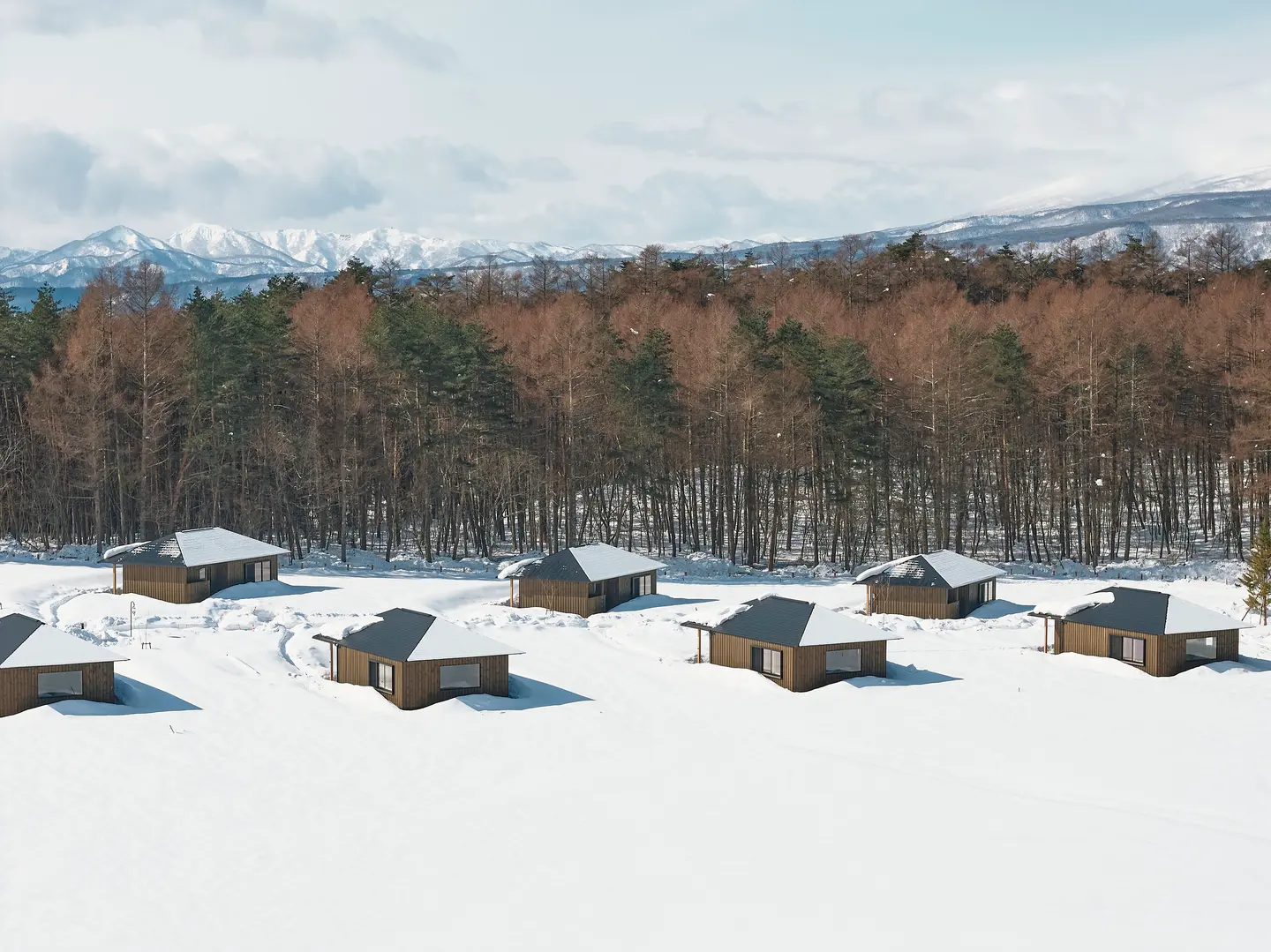
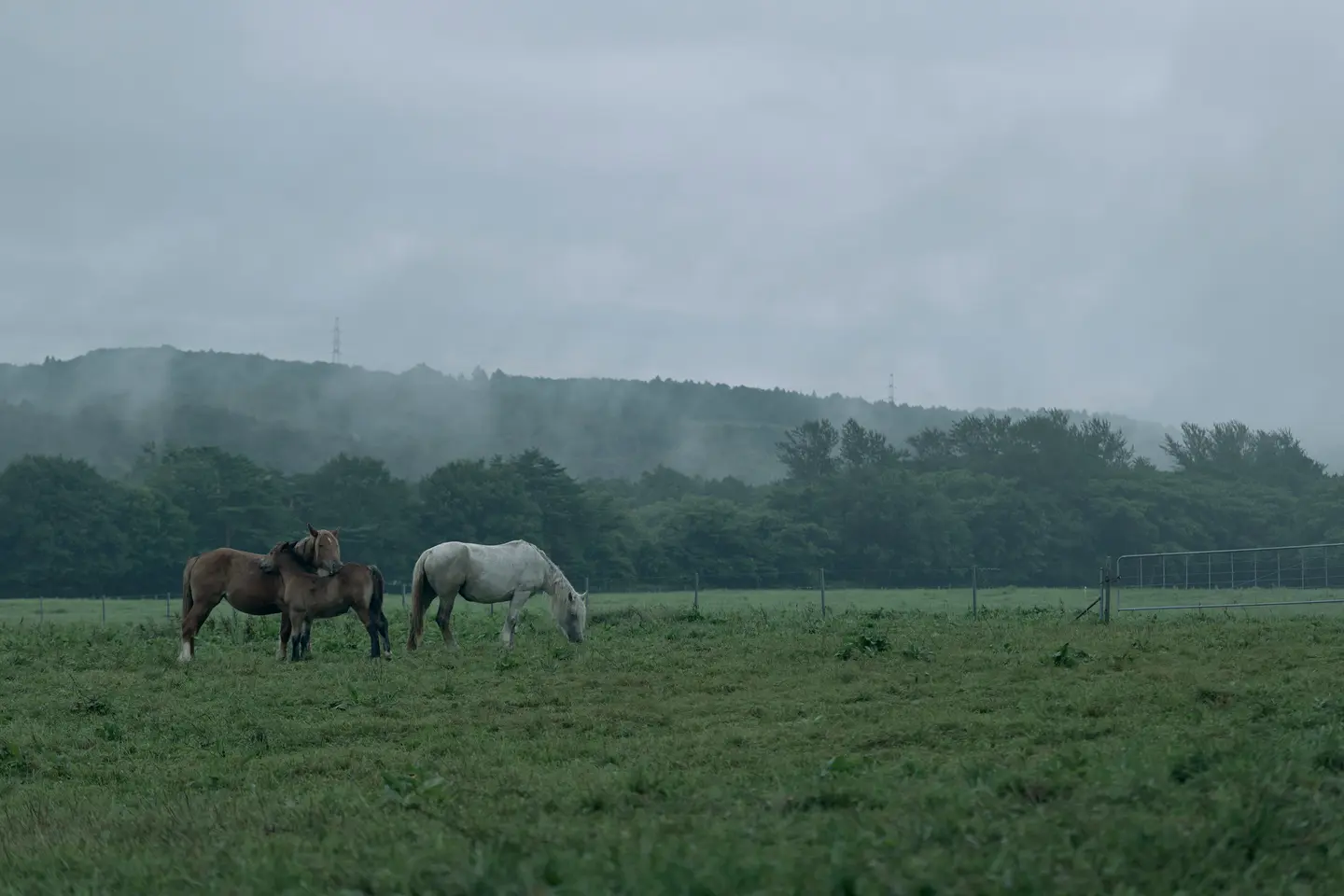
Sweeping, open pasture sits at the center of the property; there is no attempt to overwhelm the landscape with architecture. Instead, a sparse collection of 24 villas and shared buildings recede into the edges of the site, allowing the terrain itself to remain visually dominant. The effect is unusual the longer one considers how hospitality projects are typically conceived.
For Fumitomo Hayase, CEO and founder of Naru Developments and the key figure behind the project, that composure reflects his broader philosophy toward architecture and land, where design responds to, instead of imposes on, the topography of a specific place. The project is less interested in presenting rural Japan as an aesthetic backdrop than in asking what hospitality might look like if it genuinely emerged from the logic of the land itself.
“Each place demands its own approach. But the most important consideration was finding a site where development would not require cutting down trees or dramatically altering the land itself.”
Underlying his thinking is the Japanese architectural concept of the engawa proposed by Japanese architect Kisho Kurokawa in the ‘80s: transitional, liminal architectural zones that exist between opposites—inside and outside, public and private, blurring the lines between structure and landscape.
“It is outside, yet not entirely outside, inside, yet not entirely inside,” he explains, illustrated by Azuma Farm Koiwai’s masterplan which places pastureland at the center of the property.
“But these are not empty voids,” he says. “I hope they become spaces, while seemingly empty, nevertheless filled with something intangible.”
It is statements like these that reveal how 12 years of working alongside Adrian Zecha at Aman has shaped his perspective. Zecha is clearly an influence—not to mention a co-founder of Naru Developments—and Hayase is reverential.
Naru Development’s company philosophy, rather than imposing its own vision on it, is anchored in listening to what a place desires innately and giving it form, a philosophy Hayase attributes as the most important one he learned from Zecha.
“I came to understand that the most important things cannot truly be expressed in words—they must be felt,” he says. “It is something you can only feel once you are standing on site. But if there is one thing I can say, it is that when you are somehow called to a place through fate or circumstance, the plan already exists there.”
Working with architect Shiro Miura (who also designed Azumi Setoda, the first resort by Naru Developments) perfectly articulates this very standpoint.
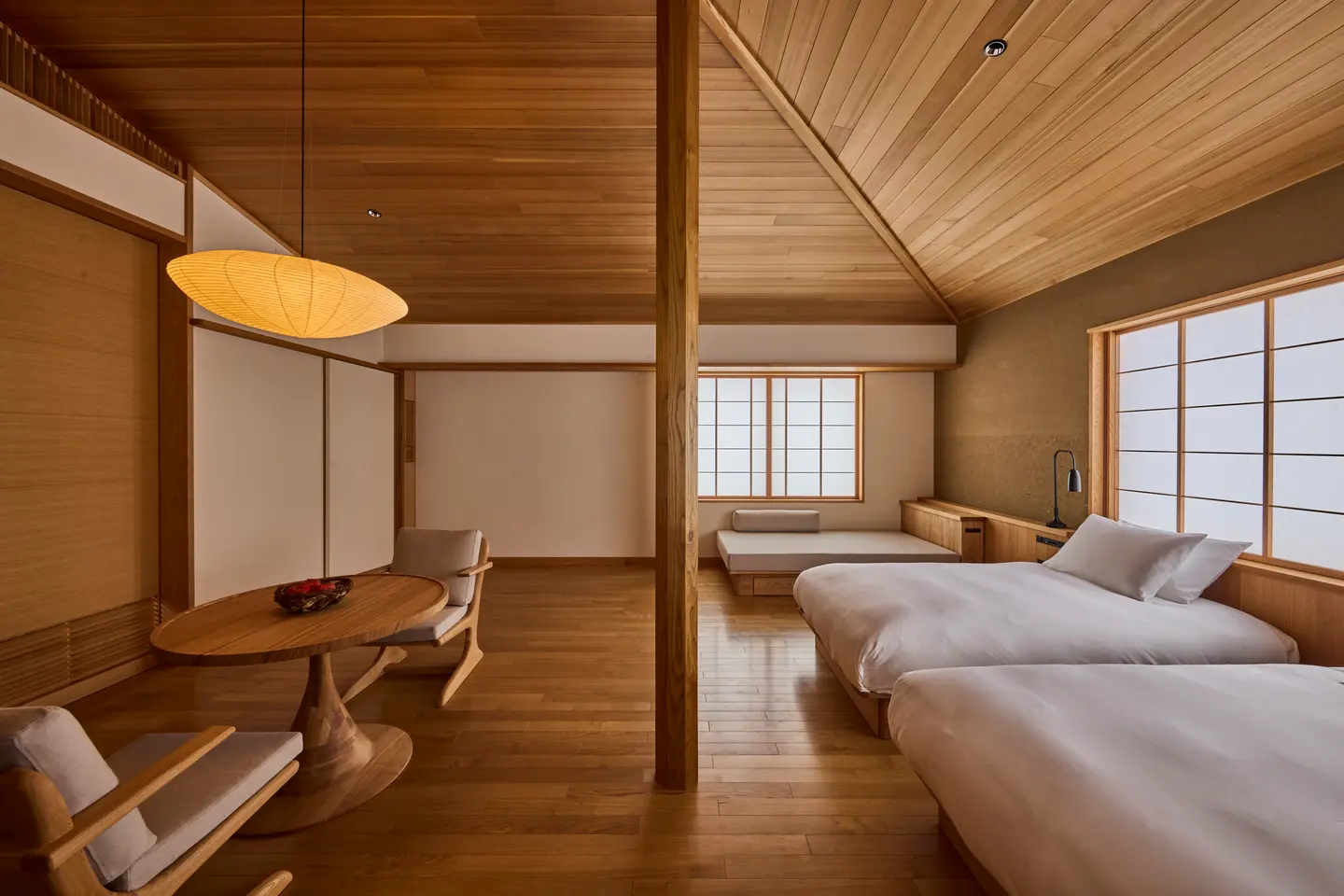
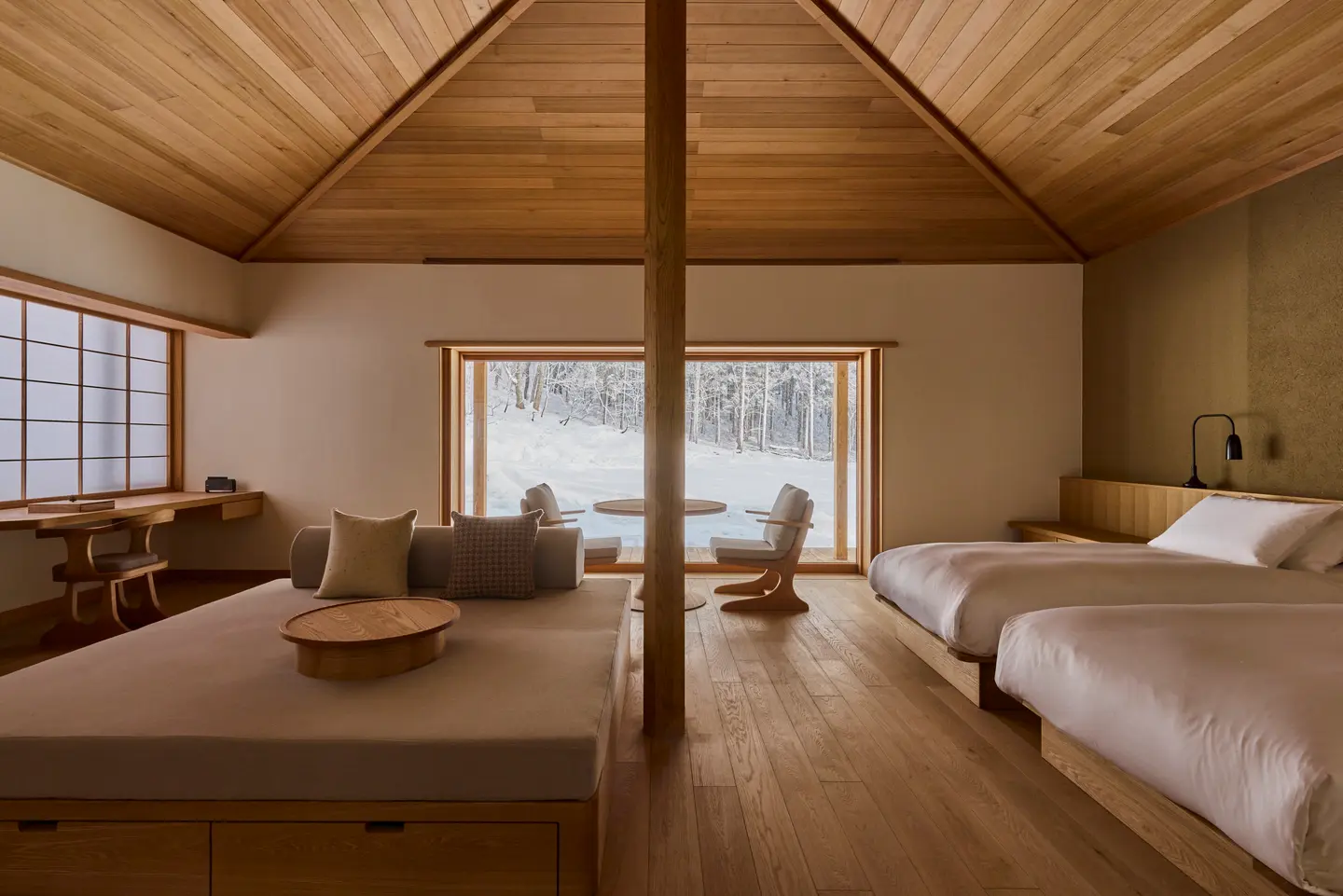
“Like many traditional craftsmen, he does not seek to express himself through architecture in the way many architects do,” notes Hayase. Miura specializes in sukiya architecture, an elegant, rustic style of building, which made him a perfect match for the resort. Recessed rooflines and truss features inherent in utilitarian structures like cowsheds reappear across the villas and communal buildings; the usage of locally-sourced wood like red pine, cypress, cedar, and chestnut also creates the continuity between agricultural functionality and hospitality design.
That relationship to land extends beyond the architecture itself. The project is also part of a broader attempt to reconsider how visitors move through, encounter, and ultimately understand Tōhoku, a region that has historically remained outside Japan’s main luxury tourism narrative, where only 1.5% of tourists visit. The partnership with the rail operator, JR East, which has been increasingly active in positioning destinations across the area, is partly an attempt to redirect attention toward a region still rebuilding after the 2011 earthquake and tsunami.
“Tōhoku is a treasure house of nature, traditional crafts, and food culture. We hope to introduce this still little-known region to the world and cultivate more admirers of Tōhoku,” says Hayase. Yet Hayase is careful not to frame this as mass tourism expansion. “Our intention is not to encourage overtourism,” he says, “but rather to help maximize the economic value contributed by each visitor to the local community.”
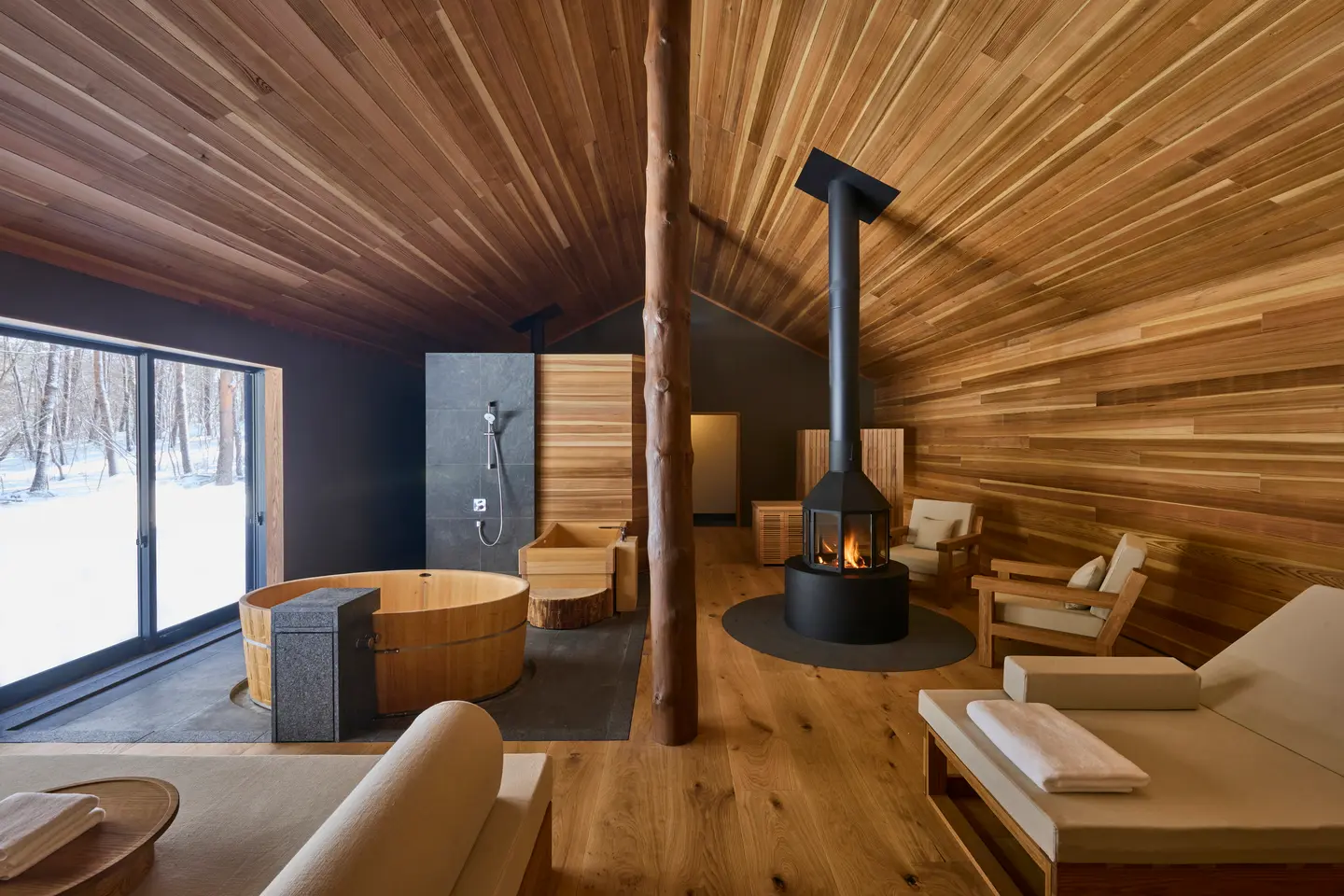
The connection between land and local community and guest is further deepened by the resort’s programs that include cycling tours or horseback riding through the farm, excursions to Ninohe, known for traditional lacquerware and sake production, as well as other cultural activities that acquaint guests with art forms and crafts characteristic of northern Japan. While the environment itself promotes wellness—research has pointed to activities like forest bathing and grounded, nature-centered environments as healing—three private bathing pavilions are available, with a natural hot spring pavilion opening later this year.
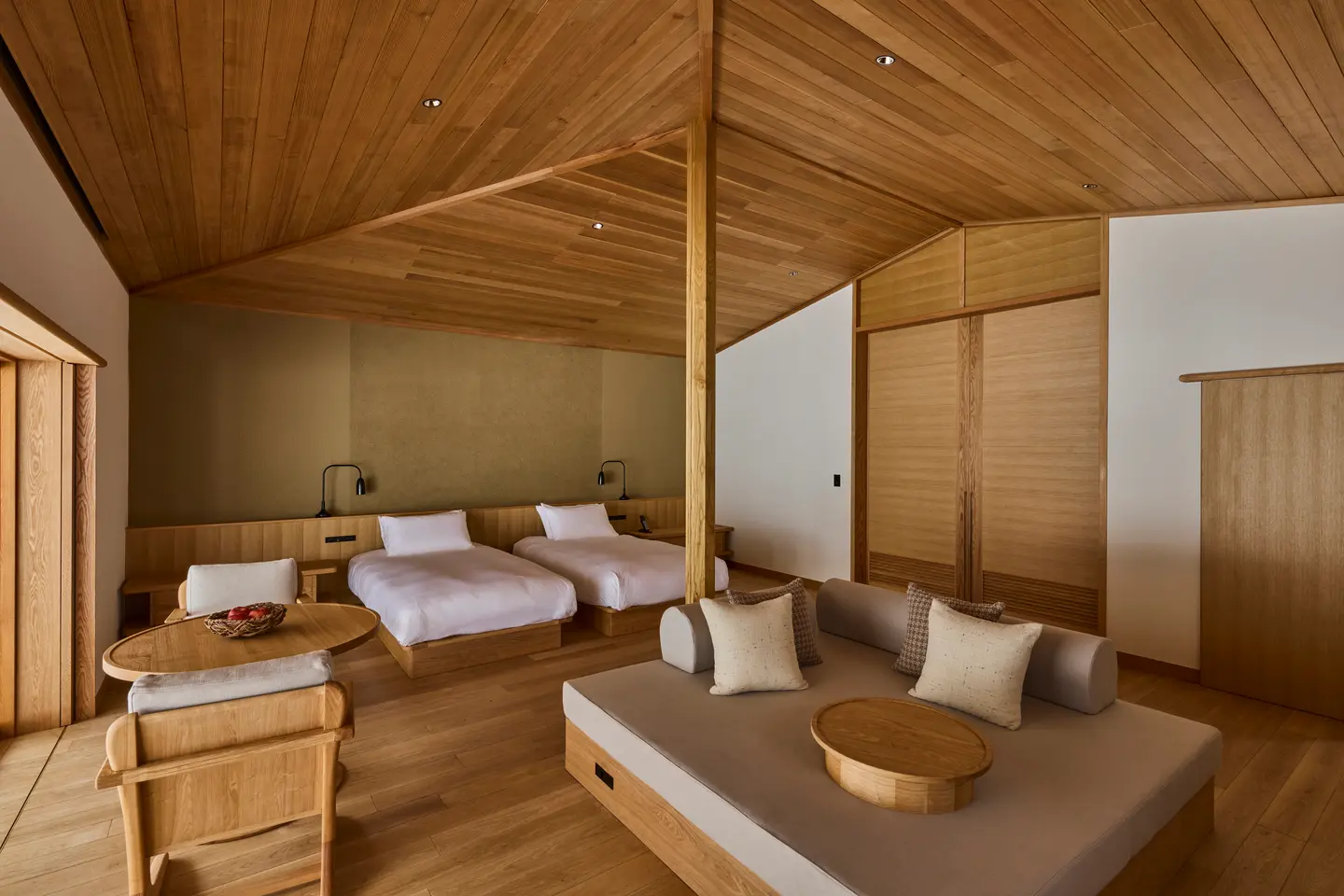
Twenty-two Forest Villas and two larger Garden Villas with views toward Mount Iwate were simply the outcome of studying what the site could accommodate. Still, the intimacy is clearly intentional in another sense. “Because we aim to create something akin to inviting friends into a private guesthouse, the scale naturally becomes intimate,” he says.
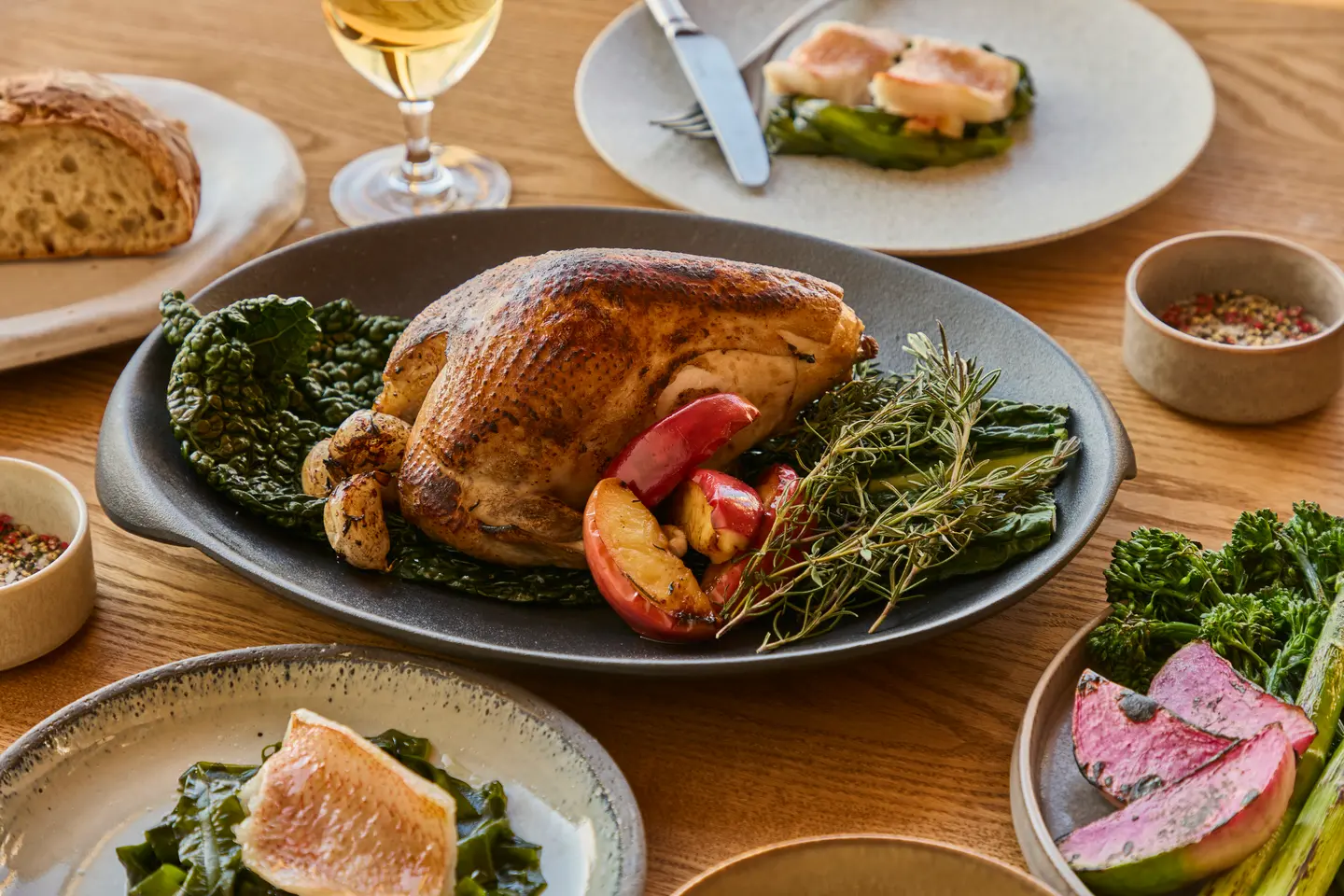
A guesthouse of friends who live extremely well, however. The culinary programme avoids the limiting script of hyper local, stringent Japanese fine dining or over-the-top theatrical gastronomy and instead prioritizes each season’s produce. The resort’s chef, Yoshitaka Oyama, highlights the agricultural richness of the region itself, constructing multi-course dinners that shift with the seasons and daily harvests. Guests staying longer can dine at Okibi, an intimate, charcoal-grill pavilion.
Azuma Farm Koiwai feels unusually timely. Much of contemporary luxuryLuxuryA lifestyle defined by exceptional quality, craftsmanship, exclusivity, and sophistication, encompassing the finest products, services, and experiences that represent the highest standards of refinement and excellence.Go to Luxury Glossary hospitality still revolves around separation: the removal of friction, noise, and unpredictability from daily life. Hayase, however, appears more interested in harmony than escape, not only between architecture and landscape.
“One of the most important things I have learned is the importance of creating spaces that feel truly harmonious,” he says, reflecting on years spent working alongside Adrian Zecha. “Not only in terms of the architecture itself but also in the relationship between the guests, the staff, and the environment around them.”
Despite its expansive setting, Azuma Farm Koiwai remains intentionally intimate. For international travelers, that balance between familiarity and specificity becomes essential. Modern hospitality, Hayase notes, still requires global standards of comfort, security, privacy, and ease, and what Hayase hopes to express through hospitality and specifically in the farm is not a generalized image of Japan, but the distinct character of each region and the histories embedded within it. “Through these connections with the rest of Asia, each region developed its own distinct culture,” he says.
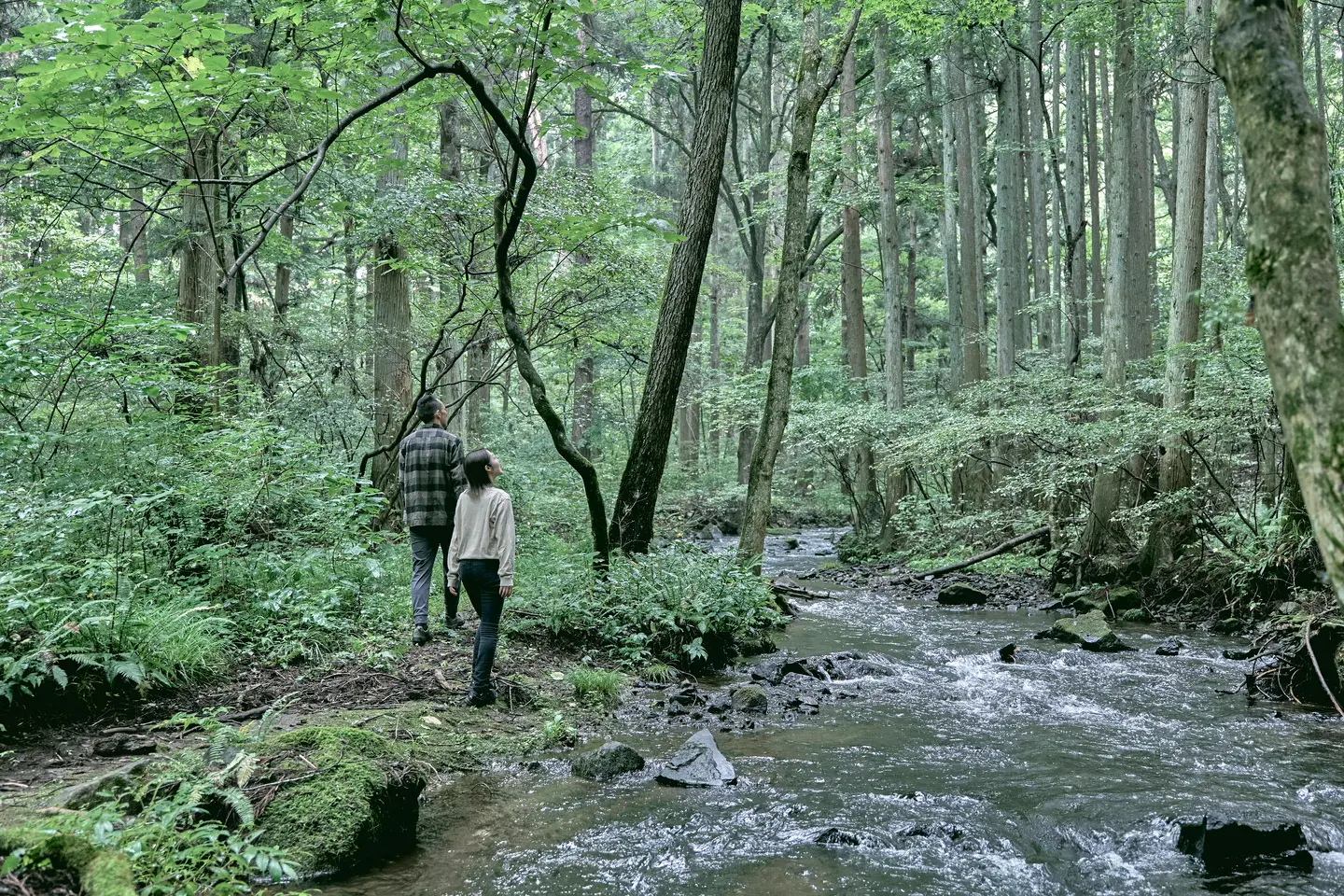
That philosophy finds its clearest expression in the idea of spaces that exist between boundaries: neither fully inside nor entirely outside, neither public nor private, but suspended somewhere in between.
“Japan is an island nation at the far eastern edge of Asia,” he says, “and it has been shaped not only by Asian influences, but also by cultures from much farther west, often in ways we ourselves do not fully realize.
“I hope that both travelers visiting Japan and Japanese people themselves can come to sense these connections, and feel how deeply we are all linked to one another,” Hayase says. “In a way, it is much like the engawa, a place in between.”
Azuma Farm is now taking reservations for stays beginning April 23, 2026. For reservations, guests can visit https://azumafarms.com/.