Lagen: The Island Beckons Again


Arriving by boat on the sparkling waters of El Nido’s Bacuit Bay always makes me catch my breath. We’d been to Palawan several times in recent years, and I thought that perhaps this time it would feel very matter-of-fact.
But no. The limestone cliffs, some bare, others covered in canopies of green, are as spectacular as ever. For the nth time, the sight of them makes my heart dance. And it signals the start of a few wonderful days away from the hubbub of Manila.
This time, we’re also back at Lagen.
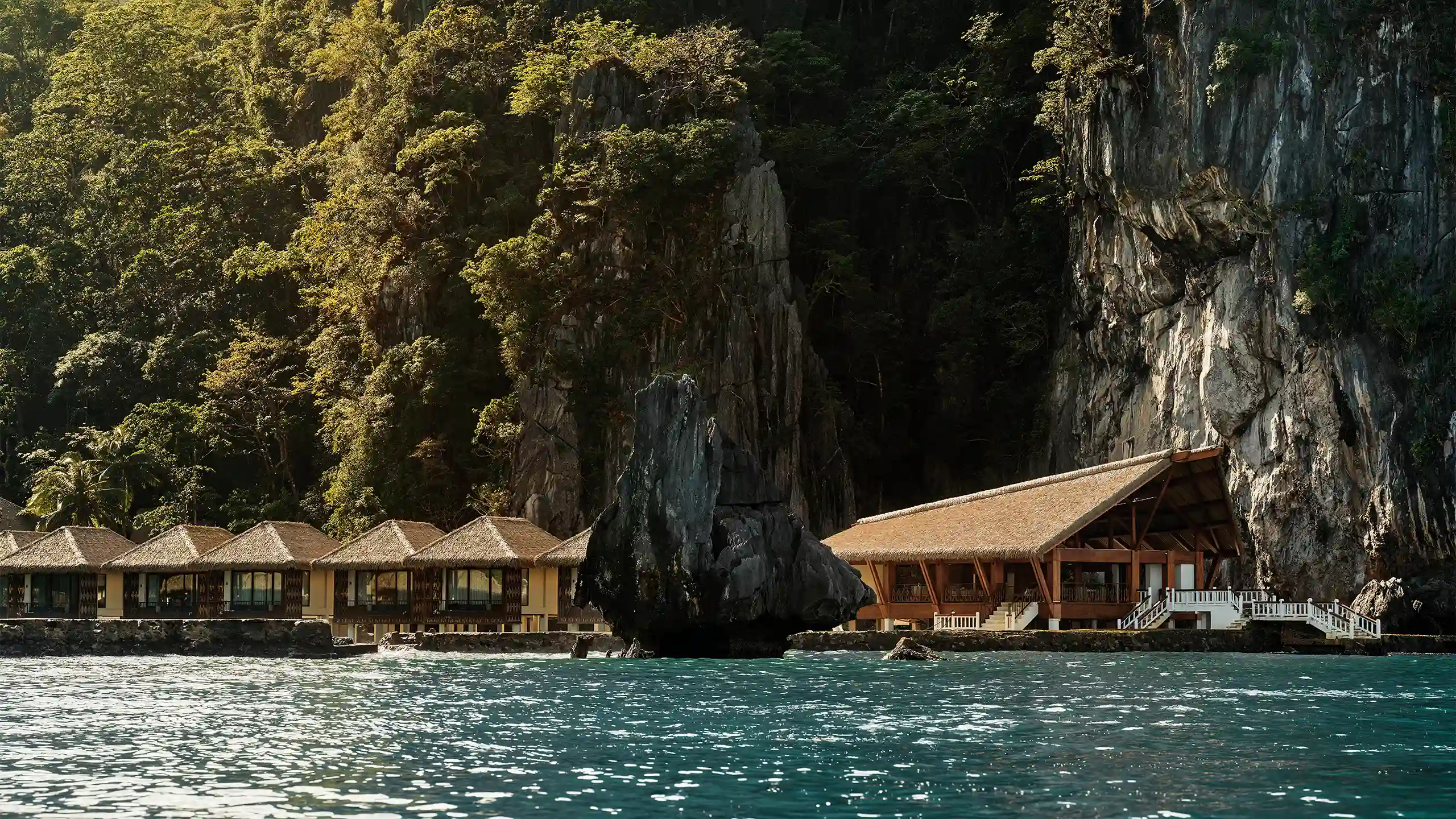
We make our way into the familiar cove embraced by vertical limestone and lush ancient rainforests, with thatch-roof villas hovering over the water. It looks the same, and yet different. And we realize there is now a wide stretch of sandy beach where cottages used to be.
The minute we dock, we are enveloped in a melody of welcome at The Boat House, which instantly takes loads of accumulated stress off our shoulders, all whisked away by the smiling islanders along with our luggage.
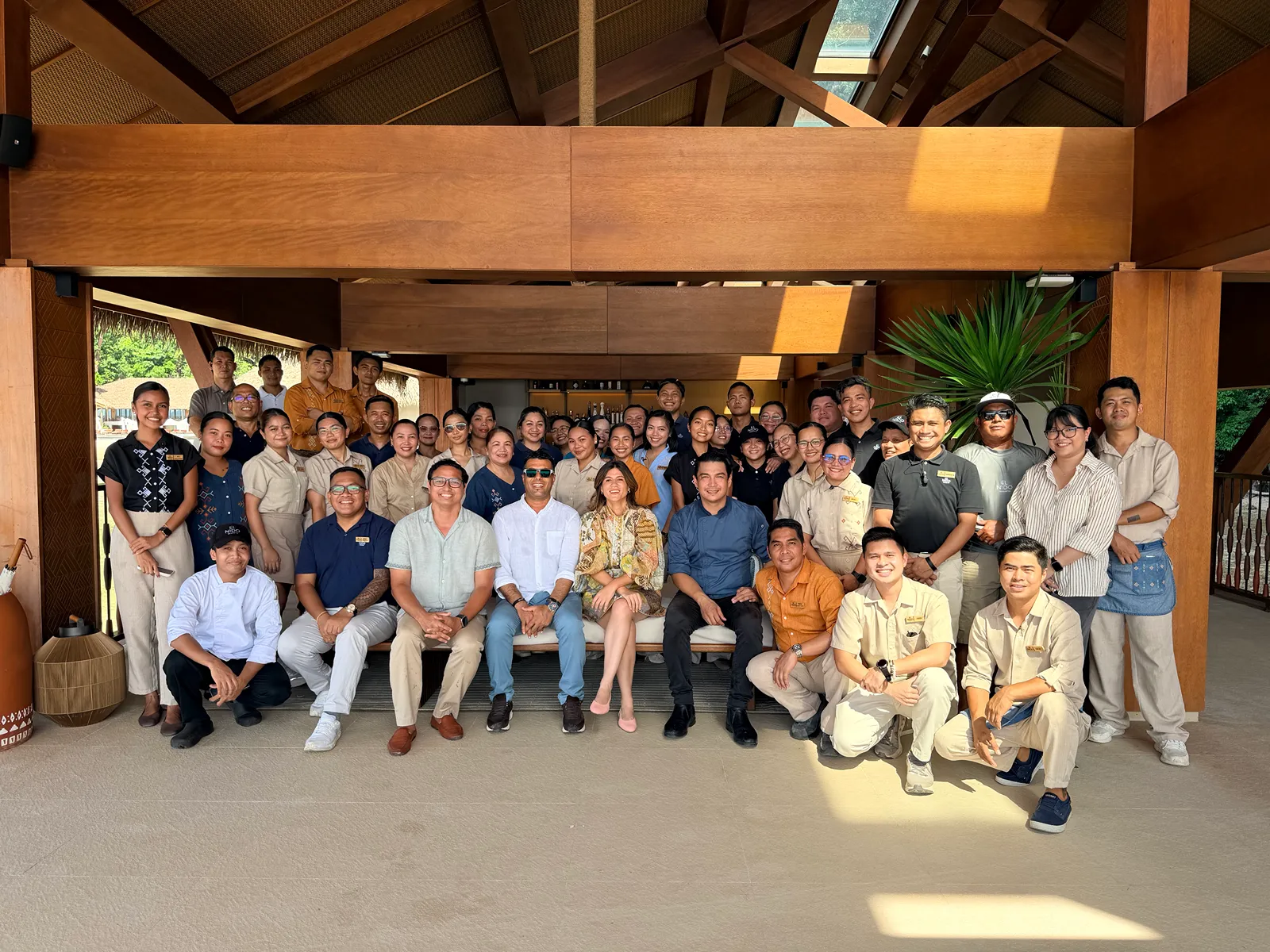
Ayala Land Hospitality’s Creative Director Paloma Urquijo Zobel de Ayala and her team welcome us with cool drinks and warm smiles. We are home in paradise. At least for the next few days.
The Boat House is open to the elements, connecting the indoors to the sea. Its roof is inspired by the traditional paraw boat, reflecting the seafaring heritage of the local Cuyonon people. The interiors are anchored by huge posts of natural timber, with woven ceilings, carved railings, and outdoor walls clad in stone detailed with local woven motifs.
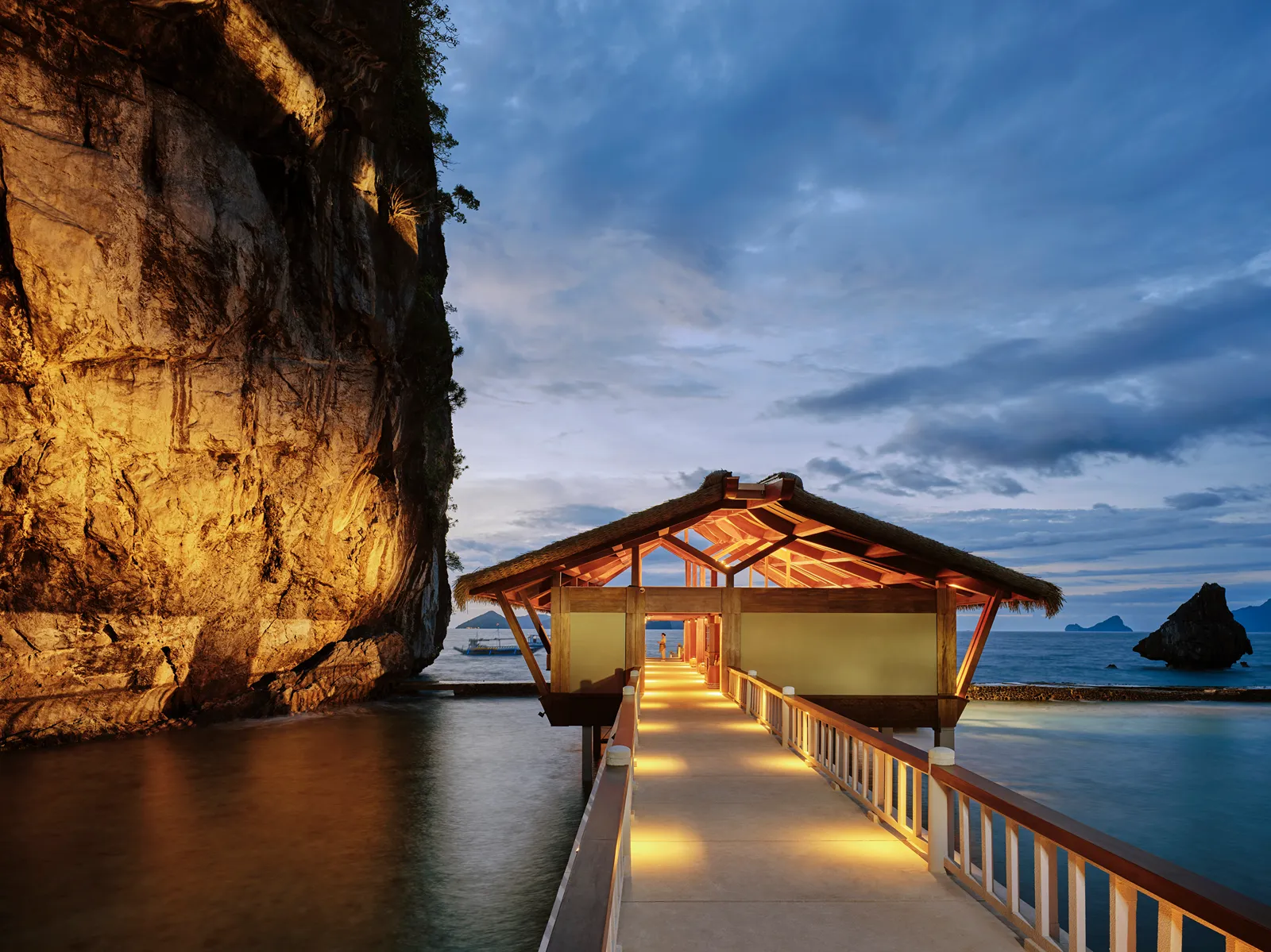
We head down the beach to our rooms. We can easily walk from one end of the resort to the other, everything contained in the intimacy of the cove.
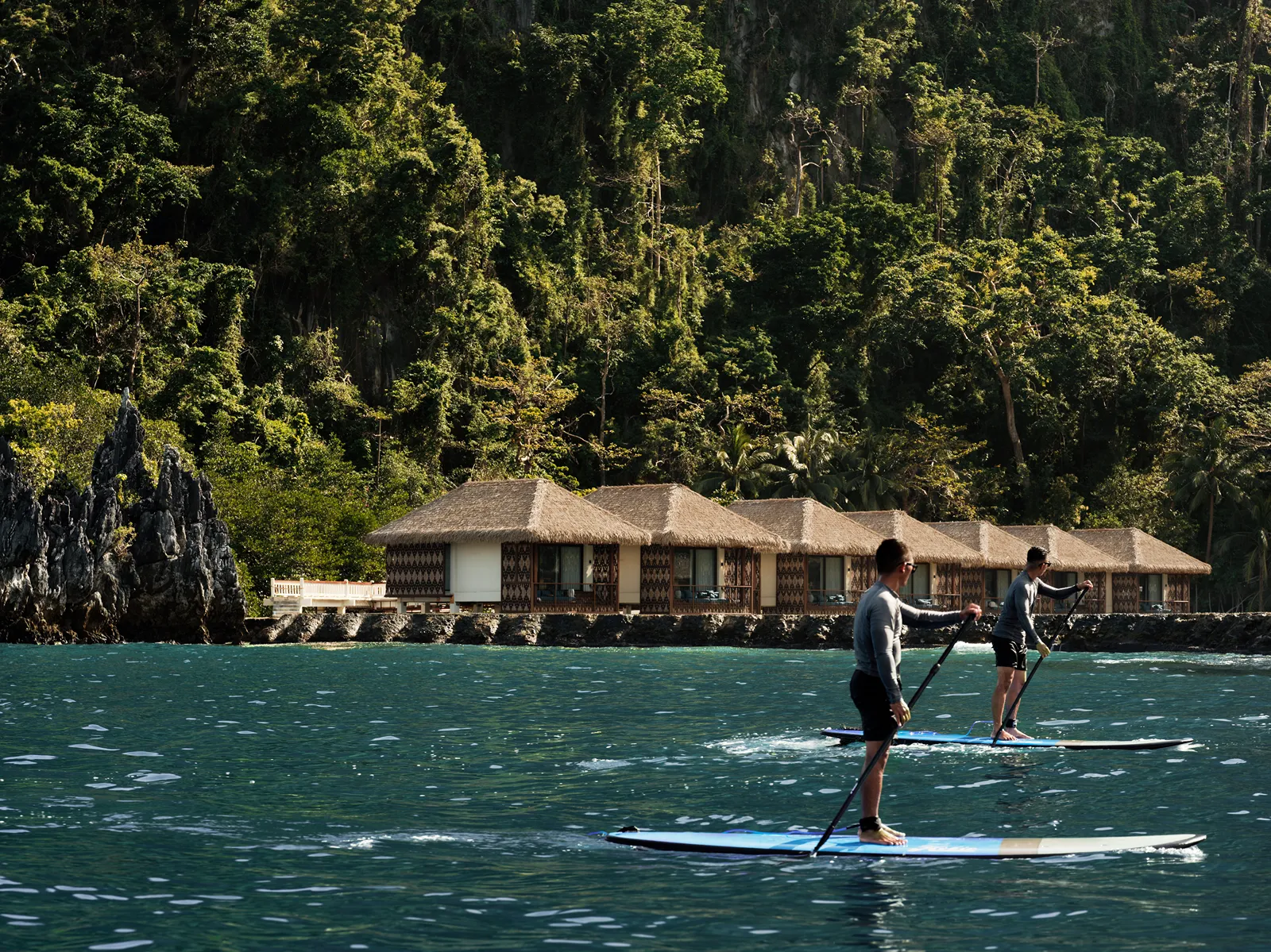
The most significant change at Lagen is the number of rooms, reduced from 51 to 42, which gives the resort even more room to breathe. Forest rooms and suites have balconies looking out into the wild, while water villas on stilts have sunken lounges that almost kiss the sea.
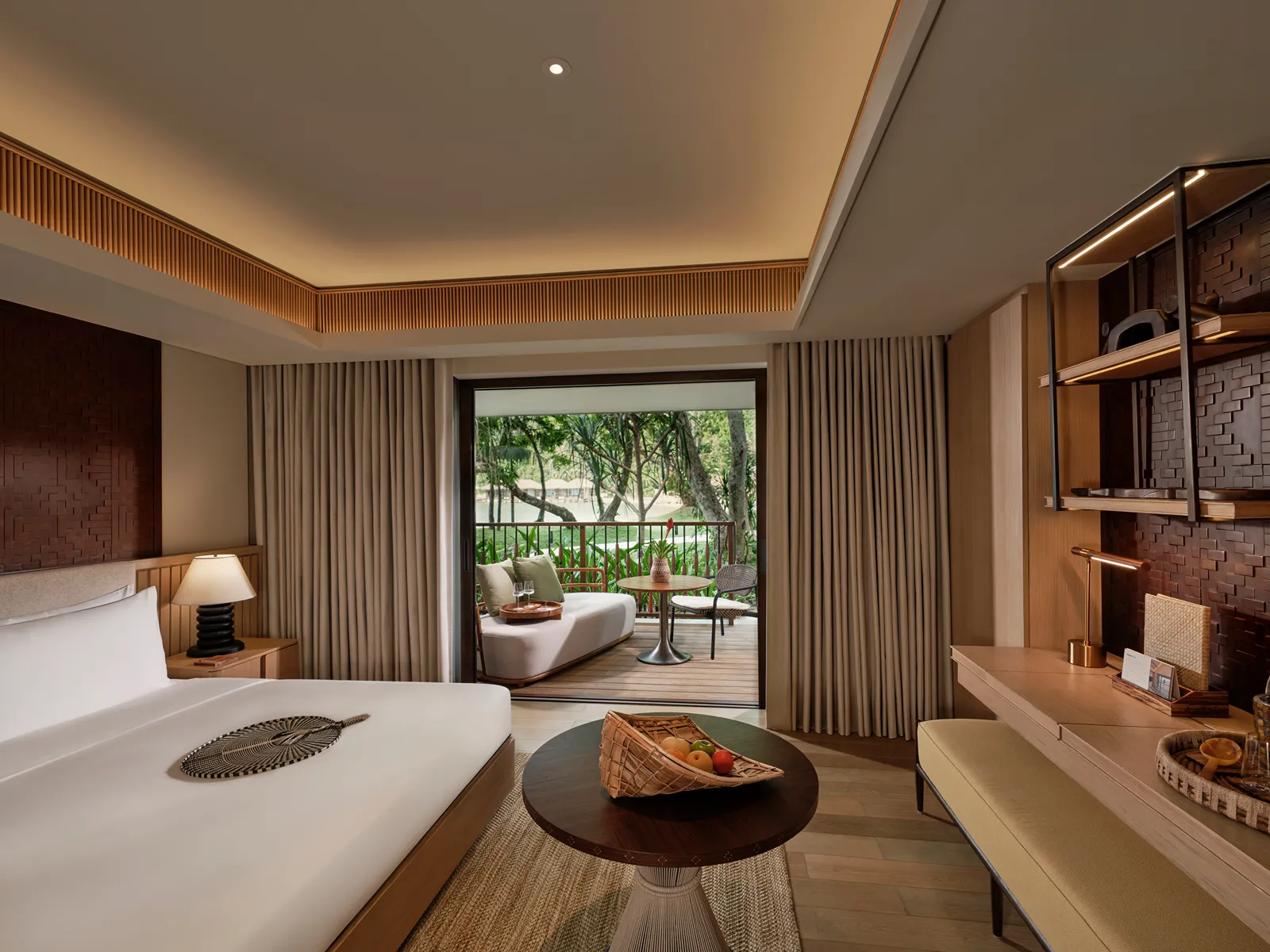
Filipino architecture and design references abound: the bahay kubo, patterns drawn from the Giyangganan weaving tradition of the Batak, and indigenous patterns connected with the Tagbanua, Tausug, and Maranao.
The interiors are the work of a large team that includes WATG, Wimberly Interiors Studio, Henning Larsen, and Ayala Land Hospitality’s Creative Team, led by Paloma. The team worked with craftsmen from across the islands, among them clay brickmakers, wood carvers, and T’boli weavers.
Settled in my room with a view of the granite cliffs, I am delighted with all the little details that subtly honor Filipino craftsmanship: the abaca floor covering, the etchings carved on the walls, the ceramic soap dispensers and banig pockets for toiletries, the large woven paypay on the bed for languid days in the lounge, the wooden treat dishes and embroidered napkins. Then there is the bandana on the bed to use as a hair tie or whatever else we want to do with it, the his-and-hers buri hats in the closet, and a banig bag for the beach.
Our individual Lagen itineraries have been customized based on our personal preferences. My first activity is a weaving workshop with Nuno, one of the locals, who, with his wife Pagasa, owns a shop, Ka Likha Soul Creations, in Kalye Artisano, El Nido. We had visited his shop just before heading to the dock, and were fascinated by their collection of tribal-inspired jewelry, items made of natural materials and found objects, and mystical smudge sticks, incense, and other items that evoke nature spirits and mythology.
Nuno hands us orbs and strips of bamboo, then deftly demonstrates how to twist them this way and that to create a beautiful dreamcatcher. Of course our end products look nothing like it, but we are proud of them nonetheless, and we pack away our treasures with a new respect for Nuno and fellow weavers.
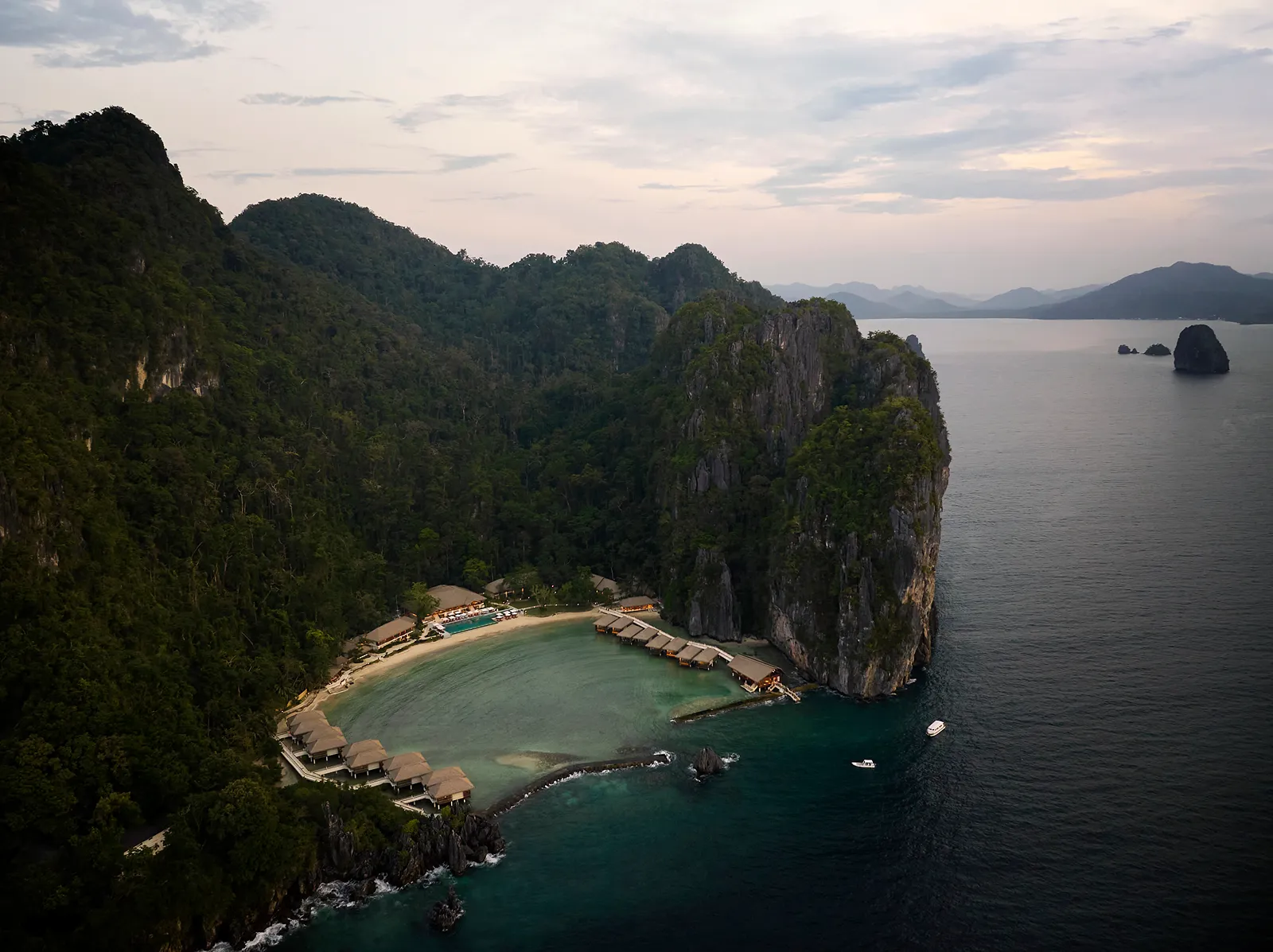
“The limestone cliffs, some bare, others covered in canopies of green, are as spectacular as ever. For the nth time, the sight of them makes my heart dance.”
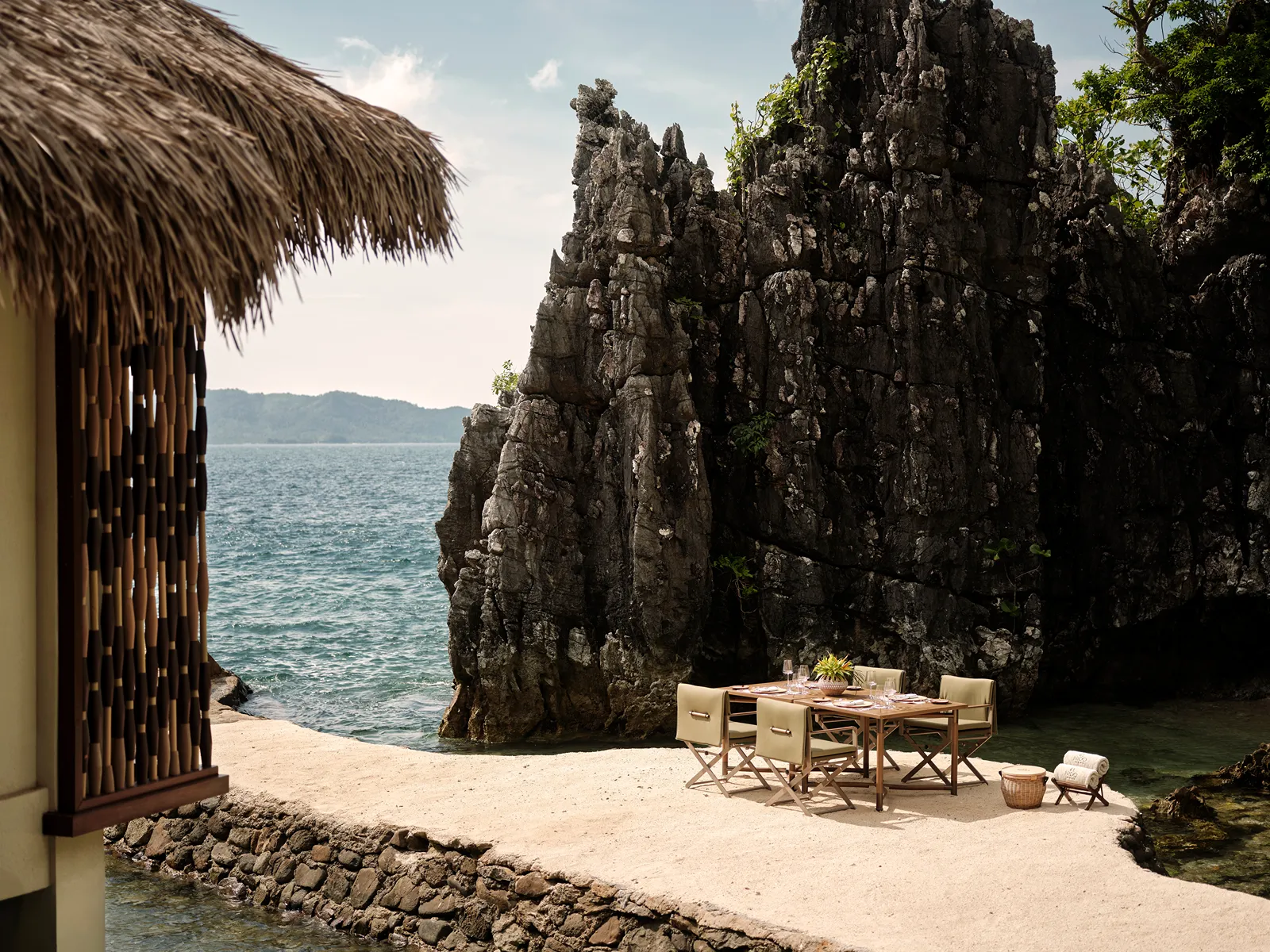
Then it’s off for sundowners at the beach, a few steps away. We have crisps topped with raw fish, avocado, and caviar; tarts with crab and fish roe; puffs filled with cream and fresh fruit served on bilaos lined with banana leaves; the bar set beneath a tree serves our choice of libations. As the sun sets over the mountains across the water, we take our seats for a candlelit dinner at a long table on the sand.
The parade of food by Chef Rick begins: kinilaw of freshly caught fish with mango salsa and caviar; seafood adobo of lobster, crab, and shrimp with trout roe and béarnaise; and marbled A5 Japanese wagyuWagyuA Japanese beef breed celebrated for intense marbling that creates a buttery, melt-in-the-mouth texture, graded on a scale where A5 is the highest. Wagyu is a luxury dining staple prizedGo to Wagyu Glossary cooked à la bistek Tagalog, with a calamansi-soy glaze and charred onions.
Mike, who leads the servers, and whom I remember from a previous visit to Miniloc because he sang for us after dinner service, then picks up his guitar and sings with gusto.
After dinner, we’re led down another candlelit path to a clearing where an open-air movie theater has been set up. We settle in comfortably with popcorn and drinks to watch the 1957 film “Badjao” directed by National Artist Lamberto Avellana, which won several international awards.
When I turn in for the evening, I find a hand-carved wooden bird on my bed, with wishes for a good night’s sleep.
There was heavy rain, thunder, and lightning throughout the night, I’m told the next morning at the spa. I confess I’d slept through it all. I spend the first half hour in the hot and cold plunge pools, and the sauna, hydrating myself with fresh buko juice, before I surrender myself to a massage and fall asleep again to the sound of the rain.
When I awaken, the rain has stopped, and I decide to forego breakfast and take advantage of who-knows-for-how-long-we-have-this sunshine.
A friend is paddleboarding, and another is swimming, but I just float on the surface of the sea, admiring the clouds, the sky, and the spectacular granite cliffs.
For lunch, the team prepares platters of charcuterie and a salad of burrata and ripe red tomatoes. Pizzas topped with mozzarella and prosciutto, seared tuna and capers, or wild mushrooms and artichokes are fired in the brick oven. Then there’s a basketful of freshly caught fish, simply roasted and served with salt and a splash of lemon.
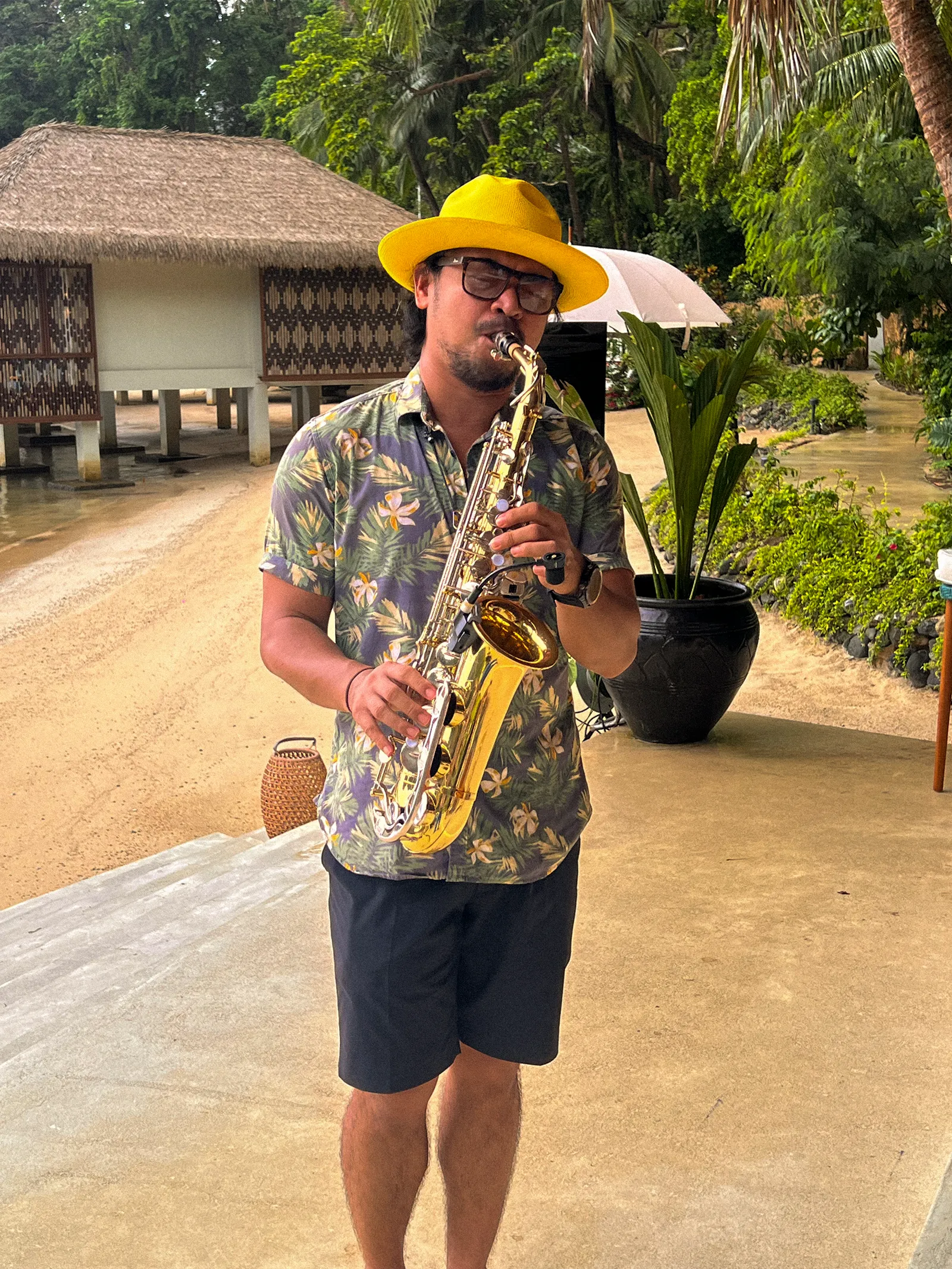
A musician in a bright yellow hat alternates between playing the saxophone and DJing house music amid the pitter-patter of rain. What a vibe.
Mid-afternoon, when the skies clear again, we head off to the Small Lagoon, which, I tell anyone who asks, is the most beautiful place on the planet. The crowds of tourists are done for the day, so as we kayak through the turquoise waters into the narrow corridor of limestone that opens up to the lagoon, we find that we are fortunate to have it all to ourselves. The rains have cleansed and refreshed the inlet and it is truly exquisite.
On the way back to the resort we make a stop to do some snorkeling to spot sea turtles and schools of fish in various colors, and then head home as the skies open again with rain.
When we dock, we’re informed by the disappointed team that our planned cave dinner has been cancelled due to the weather. Not to worry, we say, there is always next time. We head to the cave anyway, to see what we’ll be missing. We’re told it was discovered fairly recently, hidden behind overgrown vegetation. It’s the stuff of my childhood imagination, a mountain lair with rock formations created millions of years ago.
Back on the beach, the team has set up easels and palettes of colors, and our friends are painting the granite rocks in the twilight, as we head to our room to prepare for the evening.
Later, as we gather for drinks paired with street food—balut, kwek kwek, and barbecue—at the Boat House, we see Nuno again, this time with Pagasa, his wife. They’re creating music with their band KAWAGIS AlternaTRIBU, combining tribal rhythms, percussion, and traditional instruments such as the kusyapi, gangsa, and kubing with modern electronic beats.
With a backdrop of angry skies streaked with lightning and rumbling with thunder, we raise our arms, stomp our feet and dance to their ethnic yet contemporary sound.
It’s our last night on the island, and at dinner we celebrate with more food and wine and friendship, albeit in the main hall and not in the cave. It’s still raining and we choose to think of the raindrops as blessings, millions and millions of them.
The next day my alarm goes off bright and early. I’m tempted to shut it off and go back to sleep, but I call the adventure center, and am told that yes, my birdwatching tour is happening as scheduled, and Gian, the conservation officer, is waiting for me. It seems I’m the only one who dragged myself out of bed so early, and Gian and I walk around the resort, binoculars in tow.
El Nido, after all, means “the nest,” named for the swiftlets that make their homes in the crevices of its limestone cliffs, their edible nests prized in Chinese cuisine as a delicacy and, supposedly, an aphrodisiac.
We see the swiftlets immediately, high up in the cliffs, darting about, looking for food for their young.
As we walk about the resort, Gian, with his eagle eyes, pun intended, excitedly points out various species perched in the treetops or flying about. We spot several Pacific Swallows and a Palawan Sunbird, a few Common Ioras, a Green Imperial Pigeon, and the one bird I wanted to see, an ivory-beaked Palawan Hornbill. Worth getting up early for, I think.
This time, I make it to breakfast, where I have a plate of mangosteen, ensaymadas just out of the oven, tapsilog, and a bowl of steaming Vietnamese noodles. Since I can’t decide what I want, I ask for all of them.
We then gather at a hall with a high triangular roof that serves as a chapel for weddings, or in this case, a space of mystical creation.
We find Pagasa awaiting us, her inked arms ringed with ethnic bracelets, sitting amid wooden bowls filled with rocks and crystals, plates with flowers, seeds, leaves, and roots, mortars and pestles, and glass jars filled with powders and spices, and mysterious things.
“I’m not a witch, but some people call me bruha,” she says.
She shows us how to crush and grind different elements that release a myriad of scents, as we create the incense and smudge sticks tied up with string we had seen in her shop of curios a few days earlier.
Then it’s time for one last ritual, as Daisy, one of the locals, invites us to put together an offering of gratitude to the sea, which she says is deeply respected as the source of life, livelihood, protection, and abundance.
We’re handed little boats of bamboo, into which we put gifts from the land, including rice, which symbolizes nourishment and abundance; coconut, for life and nourishment; salt, for purification and preservation of what is good; mongo seeds, for resilience; corn, for abundance; bananas, for fertility and sustenance; black rice, for heritage; talisay seed, for strength and protection; apapot, for healing and well-being; dungon seed, for endurance and shared hope that nature will continue to flourish.
We then walk across the beach and past the water villas to a tiny cove nestled between the mangroves and the sea, the favorite swimming spot of Paloma’s mother, hence, the name, Bea’s Cove.
We place our little boats into the water, and as we release them, we express our gratitude for our holiday in paradise, the bounty of the ocean, the abundance of our experiences. We pray for a safe journey home, good health, protection, and peace, and watch as they sail off into the open sea.
This article originally appeared in Robb Report Philippines’ Watches and Jewelry Issue.
FAQs
Lagen has reduced its room count from 51 to 42, creating more space and privacy while introducing refreshed villas, suites, and public areas with stronger Filipino design references.
Forest rooms and suites feature balconies overlooking the landscape, while water villas on stilts include sunken lounges positioned close to the sea.
The interiors were developed by a team that includes WATG, Wimberly Interiors Studio, Henning Larsen, and Ayala Land Hospitality’s Creative Team led by Paloma Urquijo Zobel de Ayala.
Experiences include weaving workshops, kayaking at Small Lagoon, snorkeling, birdwatching, spa treatments, outdoor dining, cultural performances, and nature-based rituals.
The resort draws from the bahay kubo, indigenous weaving traditions, local craft, and materials made by Filipino artisans, including T’boli weavers, wood carvers, and clay brickmakers.