The Complete History of the A. Lange & Söhne Lange 1 Watch




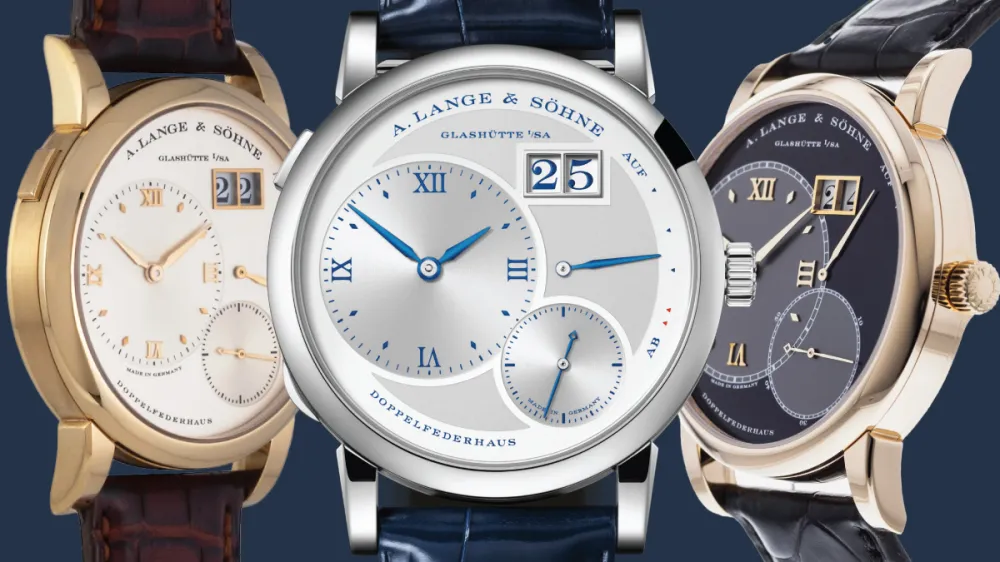
V.E. Day, May 8th, 1945. Germany has surrendered to the Allies. In the final chaotic hours of the War, Soviet fighter-bombers attack a retreating German column in Glashütte, destroying the factory of a local watchmaker, A. Lange & Söhne.
Established by Ferdinand Adolph Lange in 1845, his eponymous business had lasted—spookily—exactly one-hundred years. Following Soviet occupation, the business was nationalized as Mechanik Lange & Söhne VEB in 1948 and later absorbed into Mechanik Glashütter Uhrenbetriebe (GUB) in 1951.
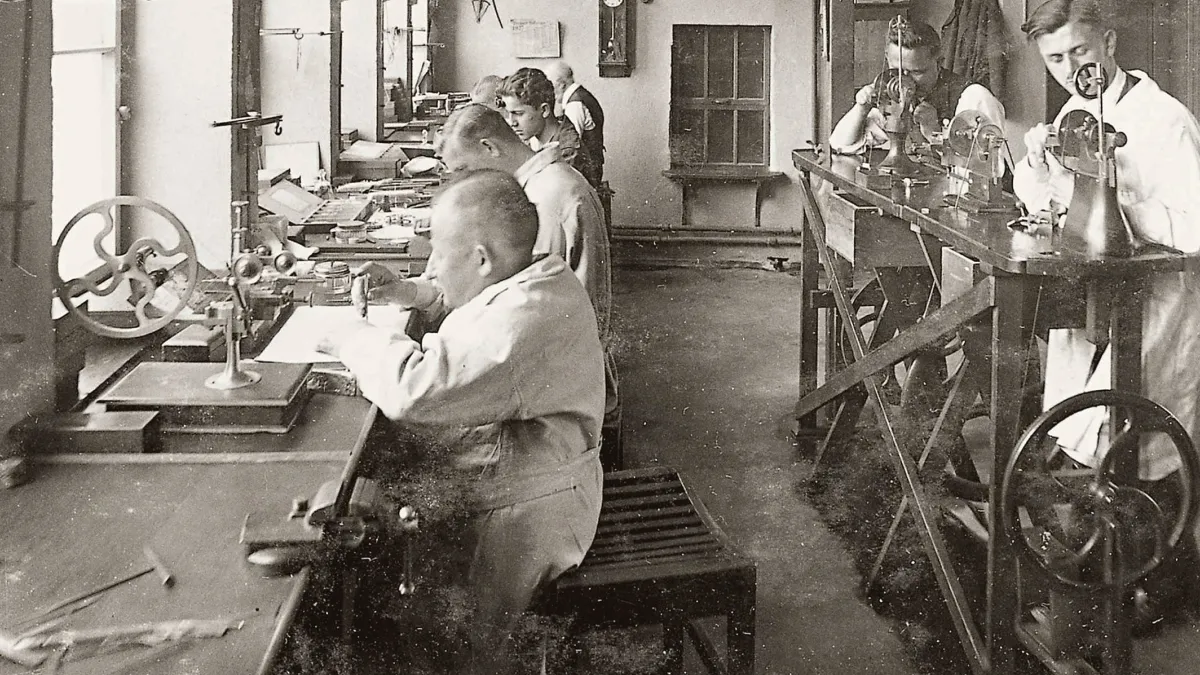
But for the dream of one man, that might’ve been the end of the Lange story. Walter Lange, born in Dresden in 1924, always hoped to take over ownership of his family’s business. However, in 1942 he was conscripted into the German military and badly injured on the Russian front in 1945. Arriving back in Glashütte in April of that year, he was cruelly witness to the destruction of the Lange manufactureManufactureA watchmaking term for a company that designs and produces most of its movements and components in-house, rather than relying on outside suppliers. Being a true manufacture signals deep expertise,Go to Manufacture Glossary. He fled his prescribed fate at the hands of the Russian occupation—that of a uranium miner—and found refuge in West Germany. Plans to start a new watch company using his family name there were unsuccessful.
However, Walter Lange was a patient man. Following German reunification in 1990, he approached Hartmut Knothe, a Lange factory veteran, to reestablish his family business. Lange then brought in Günter Blümlein, head of I.W.C. and Jaeger-LeCoultre, and an old hand in Swiss watchmaking, to advise the new venture, secure funding, and help develop a fresh product line. A. Lange & Söhne was incorporated on December 7th, 1990—exactly 145 years to the day after Lange’s great-grandfather Ferdinand Adolph Lange established the company in 1845.
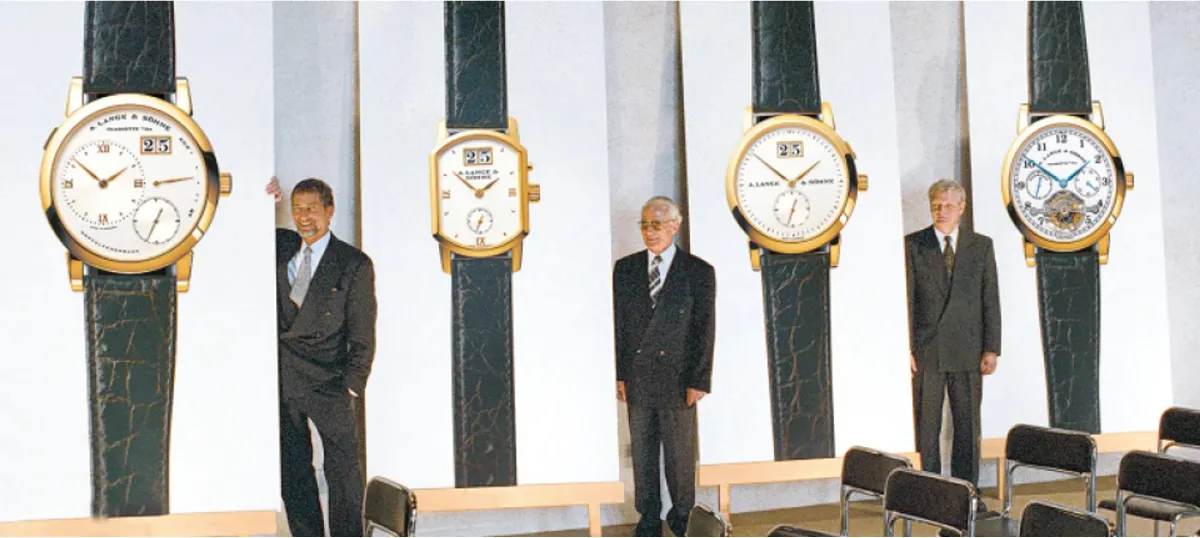
In October of 1994, Lange, Blümlein, and watch seller and author Martin Huber debuted the first four new A. Lange & Söhne models to the world in the Royal Palace near the Semperoper opera house in Dresden. The location was significant: Three of the new models featured a novel, dual-disc “outsize date” complication inspired by the Five-Minute Clock in the Semperoper—a clock designed by master watchmaker Johann Christian Friedrich Gutkaes, Ferdinand Adolph Lange’s master.
These new models—the Saxonia dress watchDress WatchA slim, understated timepiece designed to slip beneath a shirt cuff, with a simple dial and a leather strap or fine bracelet. The dress watch emphasizes elegance over function, andGo to Dress Watch Glossary, the Arkade rectangular ladies’ watch, the Lange 1, and the Tourbillon “Pour le Mérite”—quickly took the horological world by storm for their in-house movements, unique dial layouts, novel complications, and the expert-level finishing. But it was the Lange 1—a watch whose round, precious-metal case contained an oddly asymmetric dial arrangement—that came to define modern A. Lange & Söhne, rendering the marque synonymous with the very idea of haute horlogerie not only in Germany, but throughout the world.
The Lange 1 Case
A veteran of the German and Swiss watchmaking worlds, Günter Blümlein had a significant hand in the shaping of the Lange 1 into the icon it became almost immediately upon its 1994 debut. A stunning amalgam of historical influence and modern engineering, it is a model that has captured the imaginations of successive collectors—one whose carefully considered proportions, sumptuous precious-metal cases, and innovative dial design endear it to all who encounter it. Though its dial is perhaps its most striking attribute, its case is no less important.
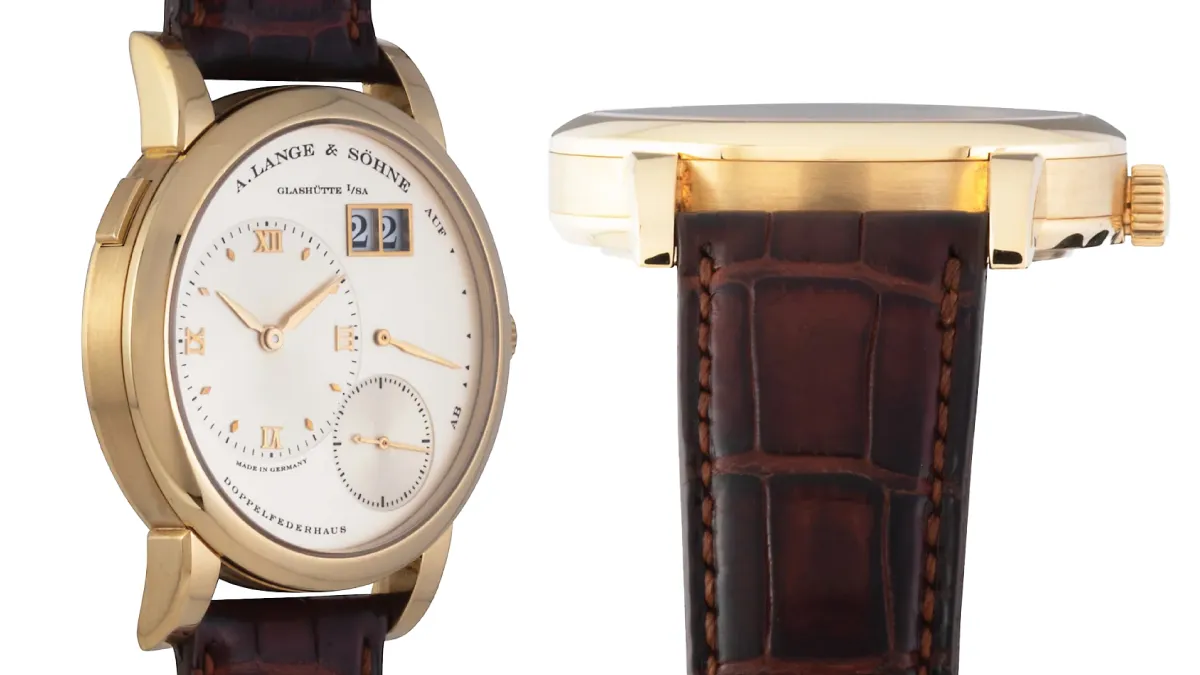
Upon its debut, the Lange 1 reference 101.001 measured 38.5 mm in yellow gold and featured a solid case back—to be swapped for a sapphire case back within a year. The case itself is a work of art: Measuring just 9.8mm tall, it features a polished bezel and caseback ring combined with a brushed caseband, the net effect of which is not only contrast, but a visual slimming of the watch. The notched lugs are mirror-polished, curved, and beveled, providing further contrast and lending the entire assemblage a slight pocket watch inspiration. (This surface treatment also extends to the 10 o’clock date corrector.)
The Lange 1 Dial
Beneath a sapphire crystalSapphire CrystalAn extremely scratch-resistant, clear, transparent material used to cover luxury watch dials, produced synthetically from aluminum oxide. Sapphire crystal ranks near diamond in hardness, and it keeps a watch faceGo to Sapphire Crystal Glossary is the Lange 1’s pièce de résistance, a dial whose asymmetric layout has since been oft imitated—but never equaled. What seems at first like willy-nilly playfulness is actually carefully ordered design inspired by the rule of thirds, a governing aesthetic principle of fine arts that subdivides a canvas or object into nine equal parts along two horizontal and two vertical lines. Using this rule, objects within the “canvas” are portrayed or located along the left- or right-hand third, leaving the other two thirds vacant. The pleasing visual effect in play—a similar effect to that achieved using the golden ratio—is a large part of what gives the Lange 1’s dial its timeless quality and beauty.
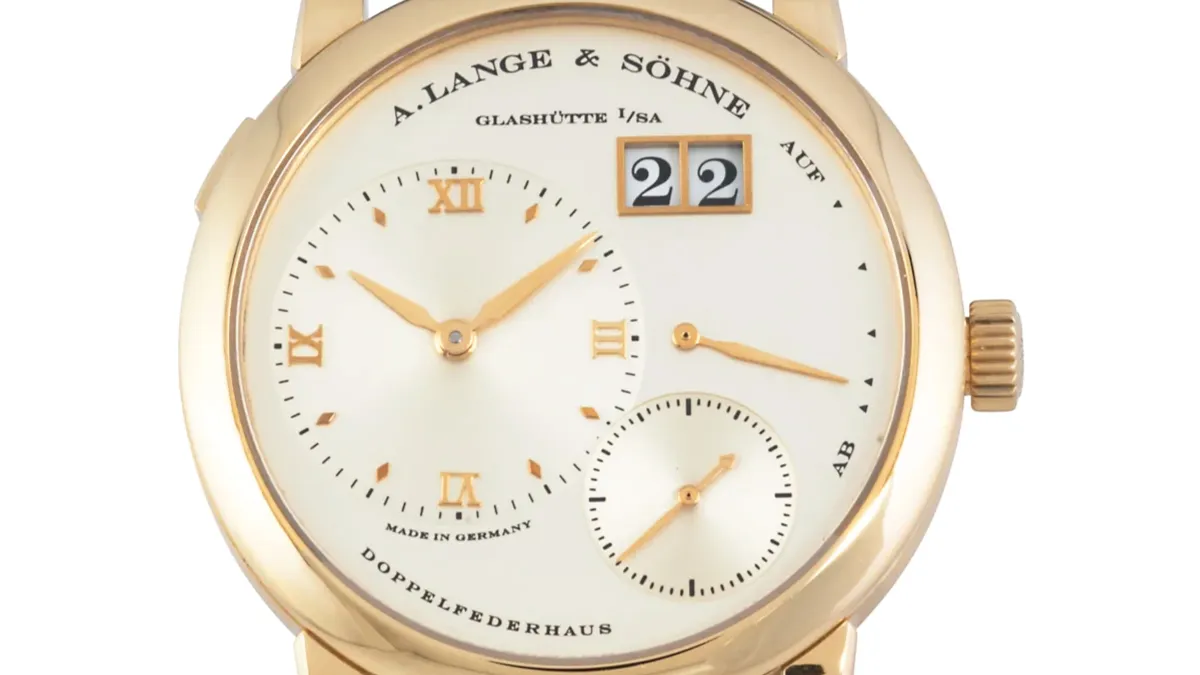
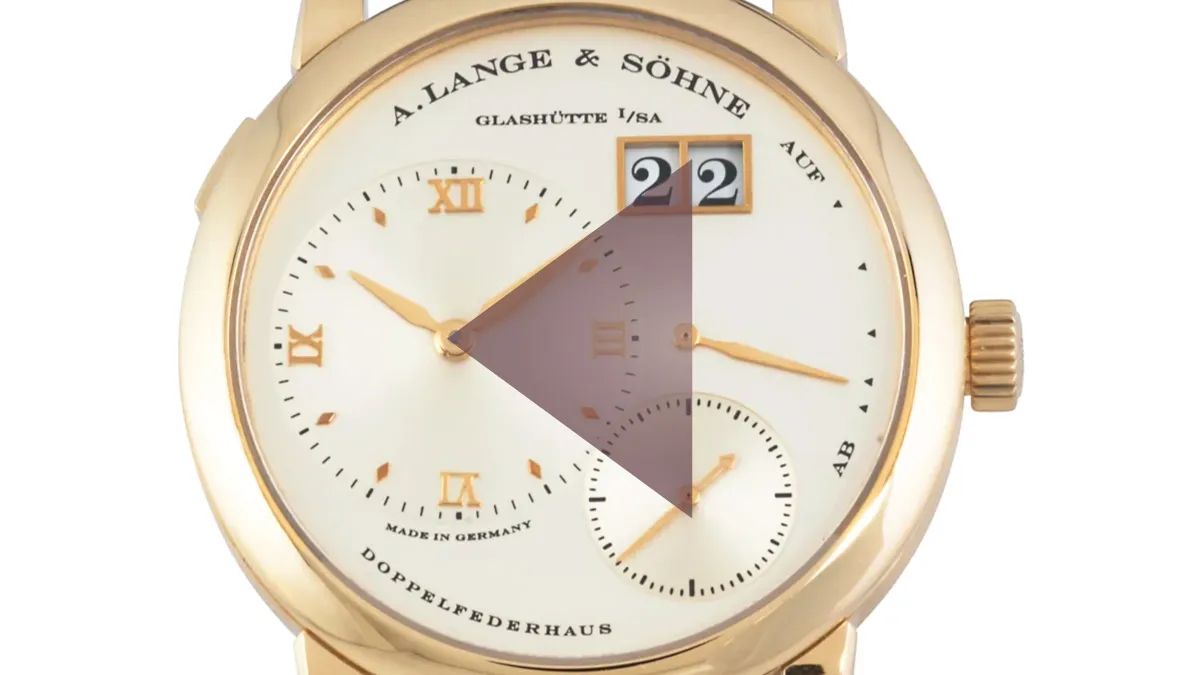
Look again at the Lange 1 dial while keeping the rule of thirds in mind: Though the dial is obviously circular rather than rectangular, each “object” therein—the main timekeeping dial, the outsize date, the sub-seconds counter—is situated along a farthest third of the dial real estate, leaving the remainder open for the other objects. If one were to then superimpose an equilateral triangle within the dial center with its base facing right, one would find that the triangle’s corners perfectly intersect the center of each object; the power reserve then emanates from the center of the triangle’s base, facing rightward, while text is left to the dial periphery. The result is a beautiful representation of the time in almost classical Grecian proportions, yet suffused with Teutonic strength.
Every detail is considered, down to the dial typography—look closely and you’ll notice that the ampersand connecting “Lange” and “Söhne” features a flattened top to better meld with the dial curvature. This dial typography is also well weighted and conveys a sense of classicism mixed with more modern sensibilities. The outsize date complication, meanwhile, has come to define Lange’s aesthetic, but its positioning on the dial is equally important: Located at 1 o’clock, its window is proportioned according to the golden mean of 1.618 and is machined from the same metal as the watch case. The rotating discs of the “digital” display actually overlap beneath the dial and can be seen as the date changes over between 10 PM and 2:30 AM.
The Lange 1 Movement
After the dial, the feature of the Lange 1 that most impressed the horological world was certainly its masterfully conceived and finished movement, the Caliber L901.0. So designated due to its 1990 development date and its position as the first Lange 1 movement, it borrowed the gear train from sister brand Jaeger-LeCoutlre’s Caliber 822, albeit in heavily modified form. Details were taken from the pocket watches once made by A. Lange & Söhne before 1945 — chief among them was a silver three-quarter plate, gold chatons, blued screws, a hand-engraved balance cock, and Glashütte ribbing, a Teutonic take on Cötes de Genève. While the three-quarter plate obscures much of the movement components, its superb finishing nevertheless excites all who come in contact with it.
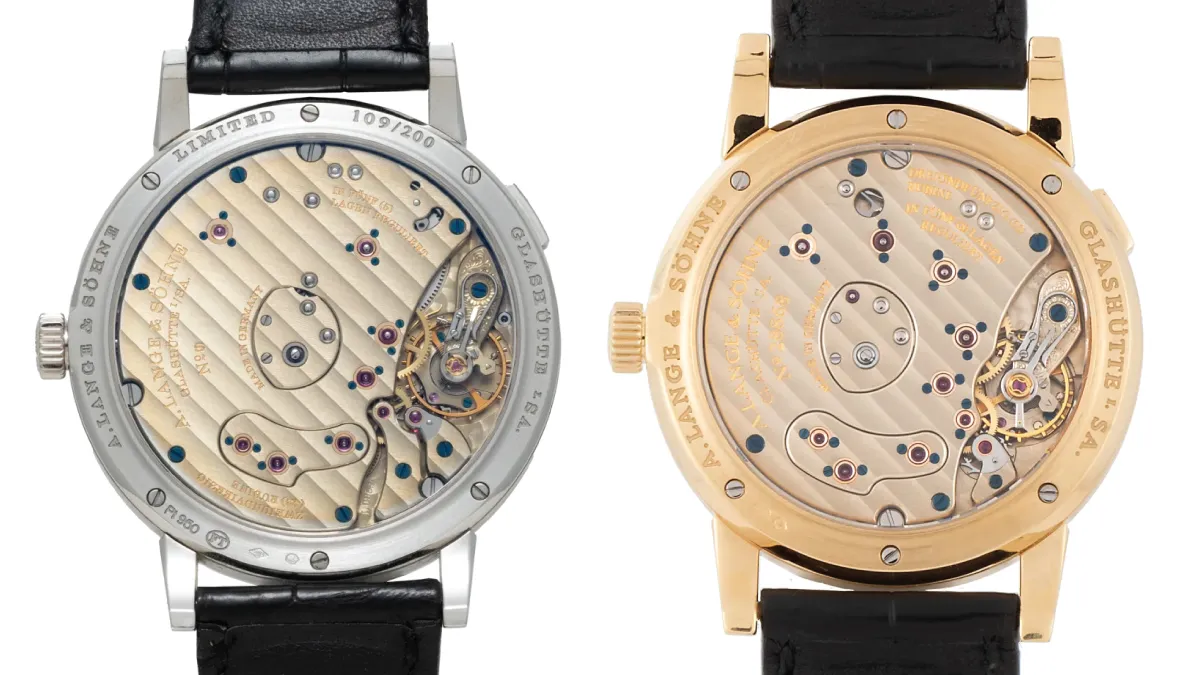
Speaking of which: On the very first Lange 1 models, those who did come in contact with the movement were largely watchmakers, as a solid caseback obscured it from view. Within a year, however, Lange began transitioning to sapphire casebacks in order to offer the owner a window into the magnificent world of the highly finished movement ticking away within. (One will take immediate note of the free-hand engraving work on the balance cock—such delicate work is part of the reason that the firm makes just 5,000 or so timepieces per year.) As regards chronometry, the Caliber L901.0 features 53 jewels, features a double barrel with 72 hours of power reserve, and beats at 3 Hz.
The Impact of the Lange 1
Despite incredible hardship, Walter Lange never allowed the dream of reviving his family business to die. Over the course of his lifetime, he waited for the right opportunity, and pounced during the reunification of Germany in 1990. Günter Blümlein, in turn, poured his heart and soul into seeing Lange revived in most dramatic fashion, as did star watchmaker Kurt Klauss and several other significant horological personalities.
Ultimately, the Lange 1 was so bold, so beautiful—so distinctly German—that it came to define the country’s modern watchmaking. Glashütte, once the national watchmaking capital, came roaring back to life in the 1990s due in no small part to Lange’s success. (NOMOS was likewise founded in 1990 and produced Bauhaus-inspired watches at a very different price point than Lange, but there’s little doubt that Lange’s explosion in popularity helped solidify Glashütte’s reputation as a modern horological haven, much as it was in the 19th century.)
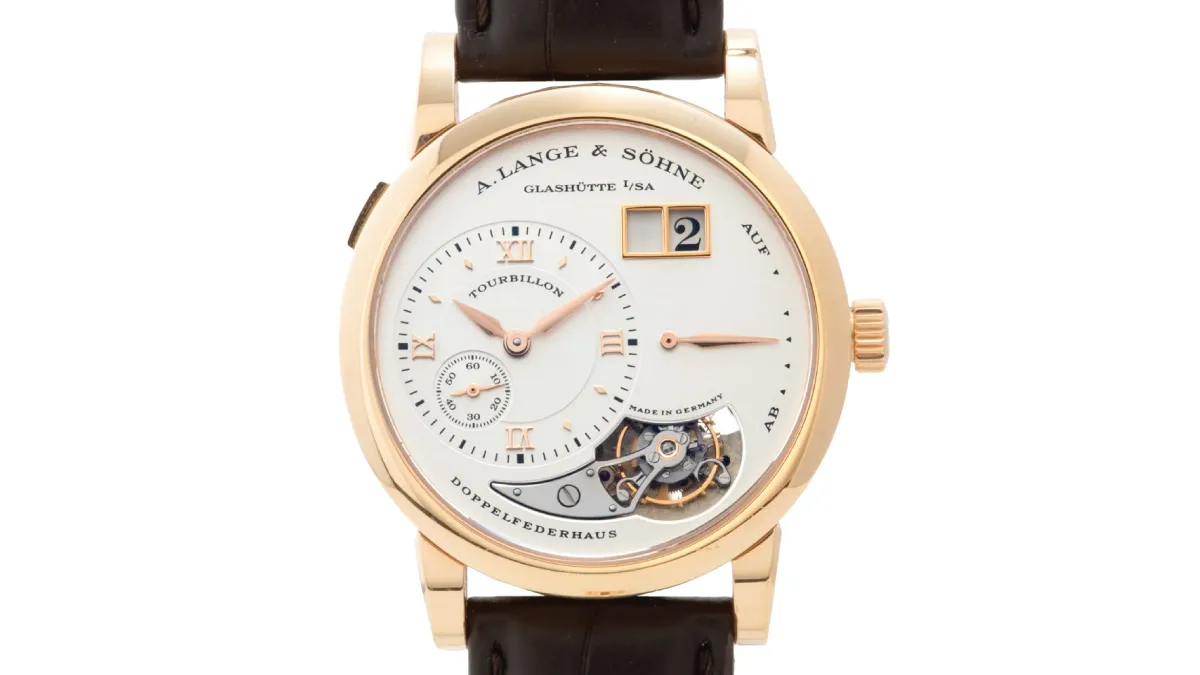
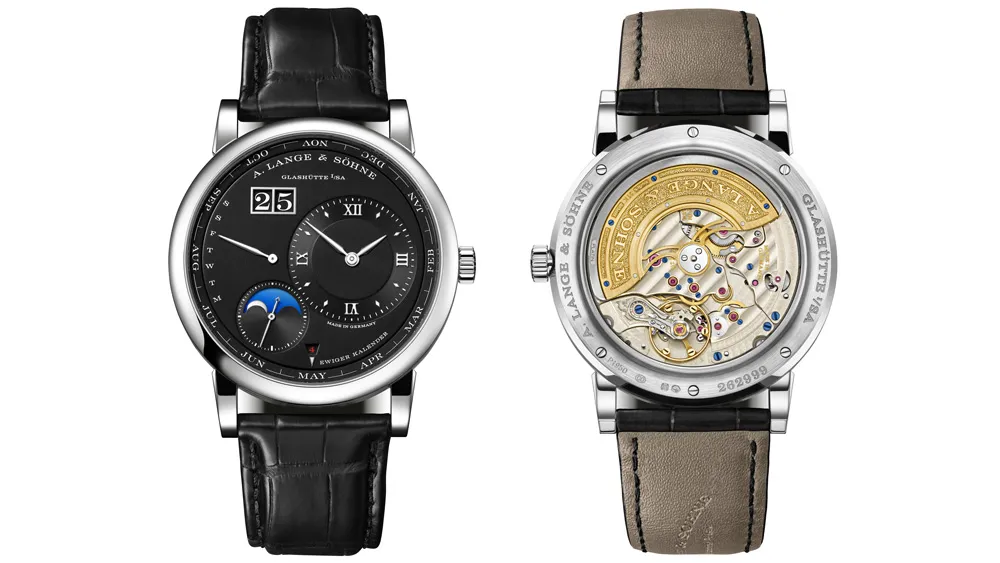
It is said that imitation is the sincerest form of flattery: Look around and you’ll find several copycat brands who have latched onto the Lange 1 design and attempted to market it as something unique. Alas, the brainchild of Blumlein, Klauss, and Lange himself remains a design treasure—a special amalgam of classical inspiration and contemporary savoir-faire. In the years since its 1994 debut, the Lange 1 has not only evolved but spouted a wide-reaching collection, with models that include moon-phase displays, second time zone displays, tourbillons, and even perpetual calendars. While the watch’s case size has increased or decreased to accommodate these different complications, the watch’s proportions have remained largely static over the past 30 years, leading to high recognizability and instant identification of any such watch as a Lange 1.
1997 Lange 1 Pink Gold/Black Dial Reference 101.031
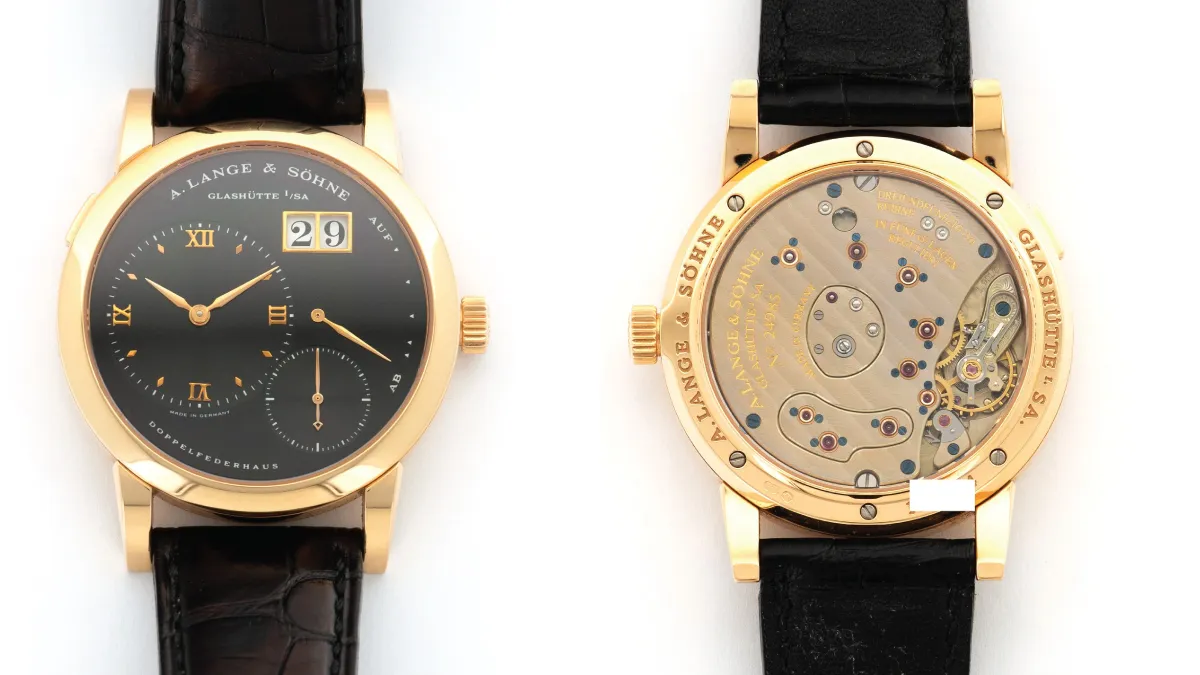
The first instance of pink gold in the Lange 1 collection, the reference 101.031 paired its striking precious-metal case to a black dial and featured a sapphire caseback.
1998 Lange 1A Reference 112.021
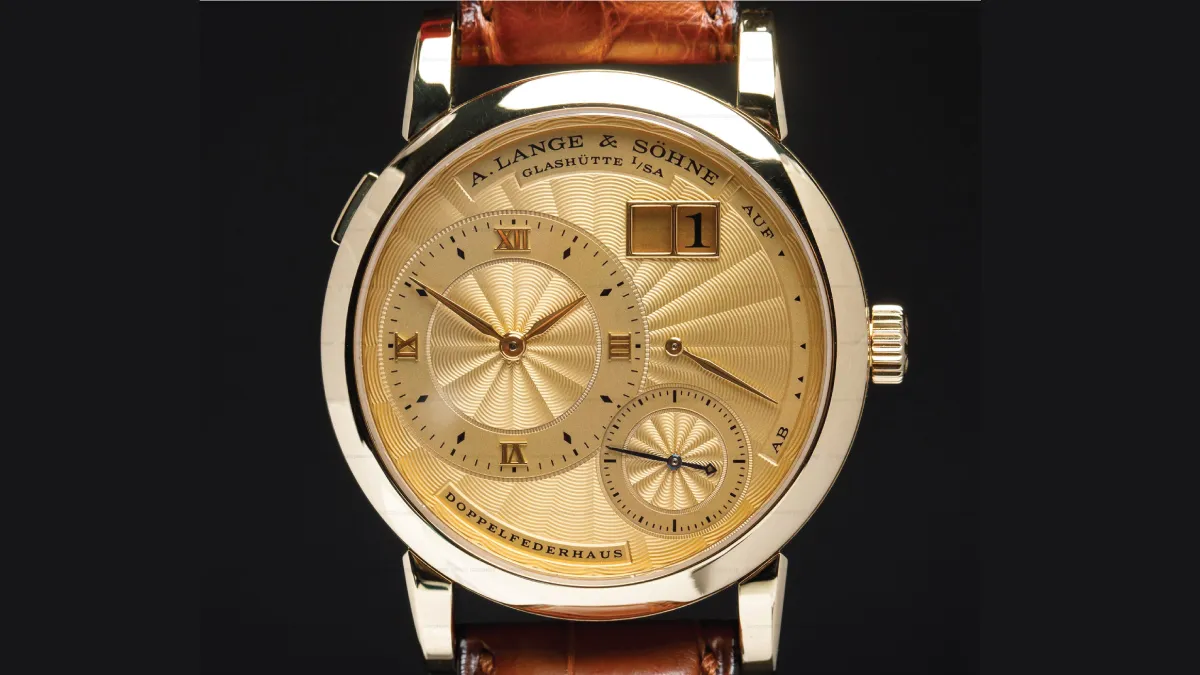
This 100-piece limited editionLimited EditionA product produced in deliberately restricted numbers, often numbered, signed, and distinguished by special materials or design. Limited editions create scarcity, urgency, and desirability, and they are common across watches,Go to Limited Edition Glossary, produced to celebrate the establishment of a second building at the Lange manufacture, featured a stunning, engine-turned gold dial and a gold case.
1998 Lange 1 Stainless Steel Reference 101.026
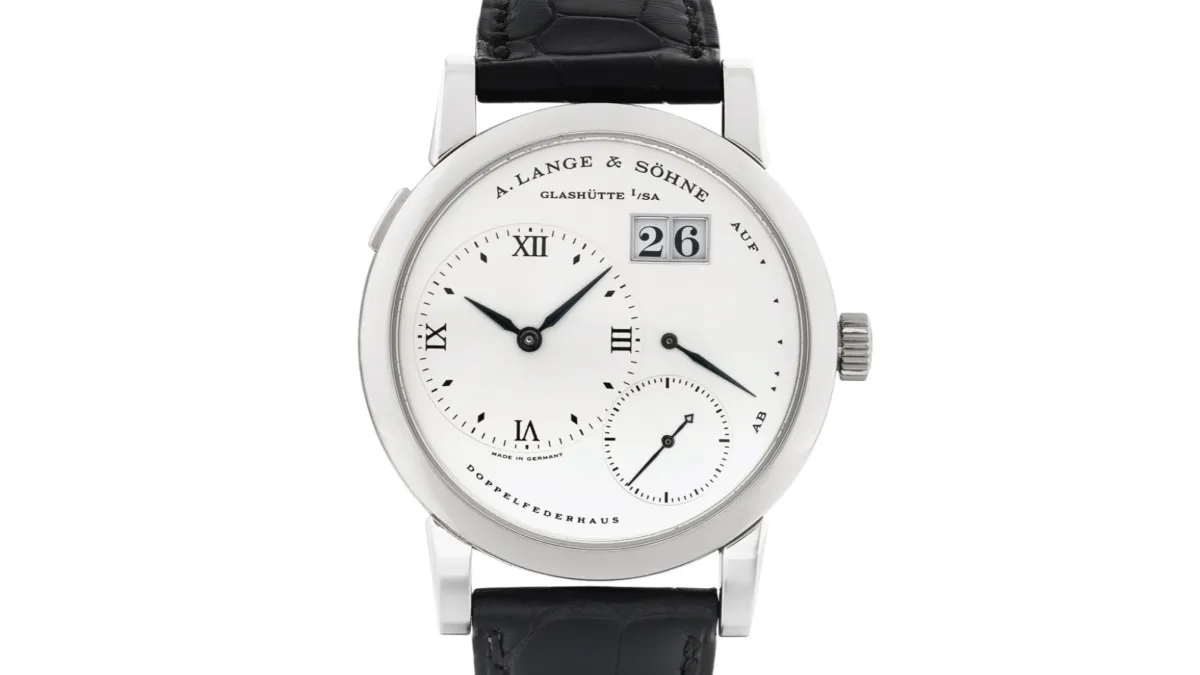
While the Lange 1—much like the Patek PhilippePatek PhilippeA Swiss watchmaker founded in Geneva in 1839 and widely regarded as among the most prestigious in the world, known for complications, hand finishing, and its slogan about passing watchesGo to Patek Philippe Glossary Calatrava—is largely a precious-metal affair, certain examples were made in steel, and are highly coveted.
2000 Lange 1 Tourbillon
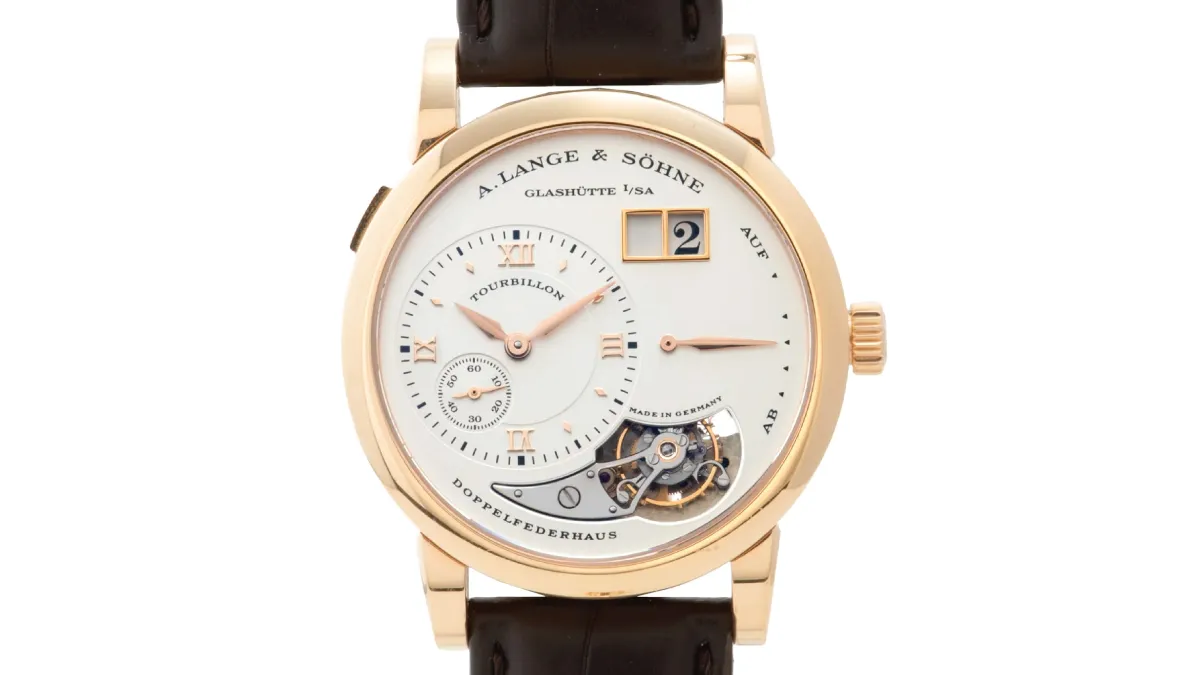
The first tourbillonTourbillonA watch complication invented around 1801 by Abraham-Louis Breguet that rotates the escapement in a cage to counter the effects of gravity on accuracy. Tourbillons are mesmerizing and very difficultGo to Tourbillon Glossary-equipped Lange 1 celebrated the coming of the new Millennium in 2000. 250 pieces were produced in rose gold and another 100 were made in platinum.
2002 Lange 1 Moonphase (Cal. L901.5)
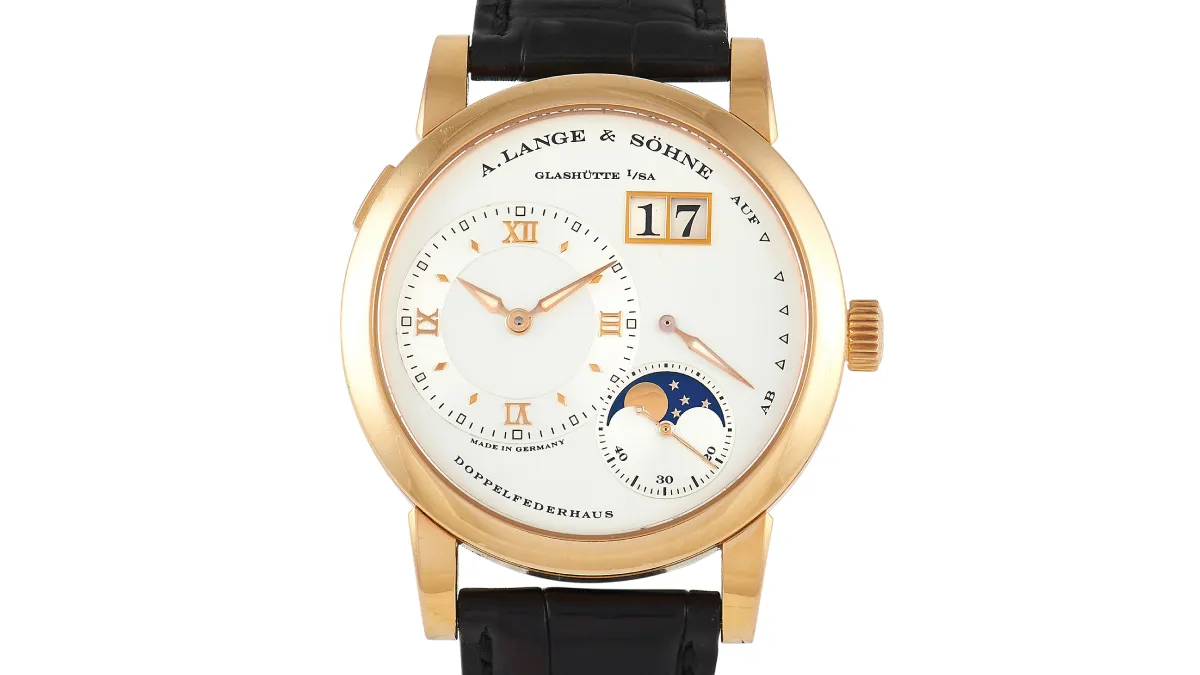
Two years after the TourbillonTourbillonA watch complication invented around 1801 by Abraham-Louis Breguet that rotates the escapement in a cage to counter the effects of gravity on accuracy. Tourbillons are mesmerizing and very difficultGo to Tourbillon Glossary debuted, Lange released a Lange 1 with a moonphase display. Retaining the 38.5mm case, it placed the display within the sub-seconds dial.
2003 Grand Lange 1 (Cal. L901.0)
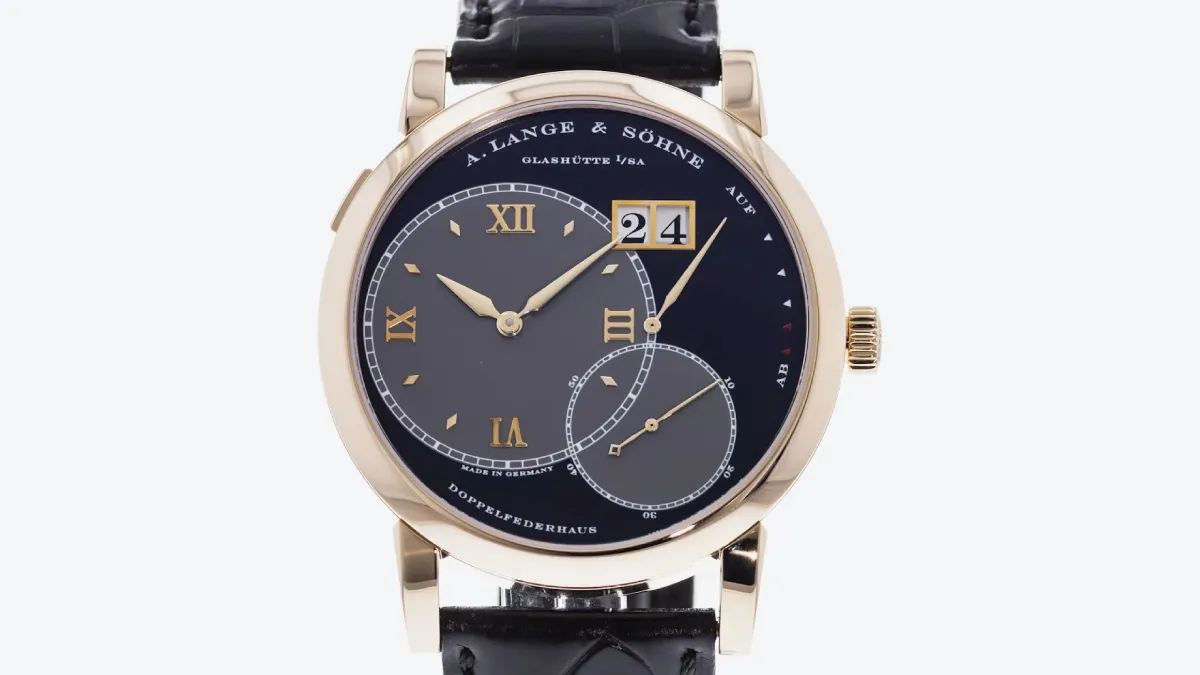
The Grand Lange 1 upsized the original Lange 1 case to 41.9mm in order to satisfy the desires of clients who wished for a larger timepiece. The size was reduced to 40.9mm in 2012.
2005 Lange 1 Timezone
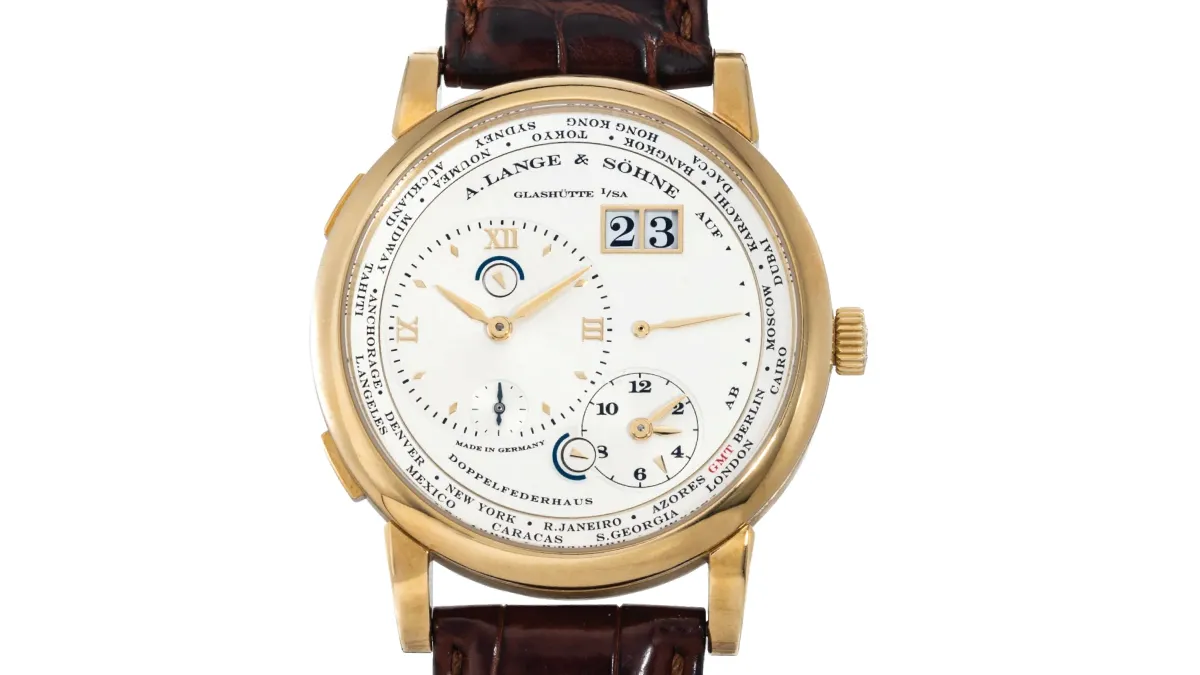
Yet another complication was added to the mix in 2005 when Lange debuted the Lange 1 Timezone. The two time displays can be instantly swapped using a special pusher.
2010 Lange 1 Daytmatic
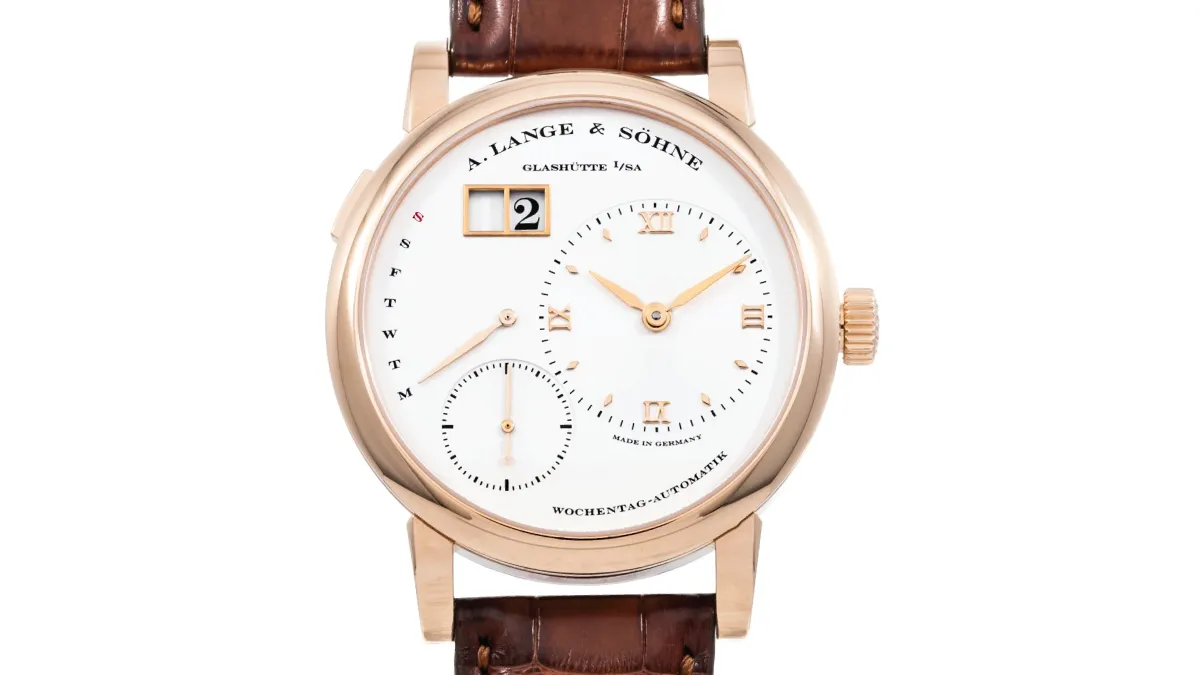
The Daytmatic was the first automatic Lange 1. The dial layout is flipped, and one will notice the power reserve display has been swapped for a retrograde date display.
2012 Lange 1 Tourbillon Perpetual Calendar
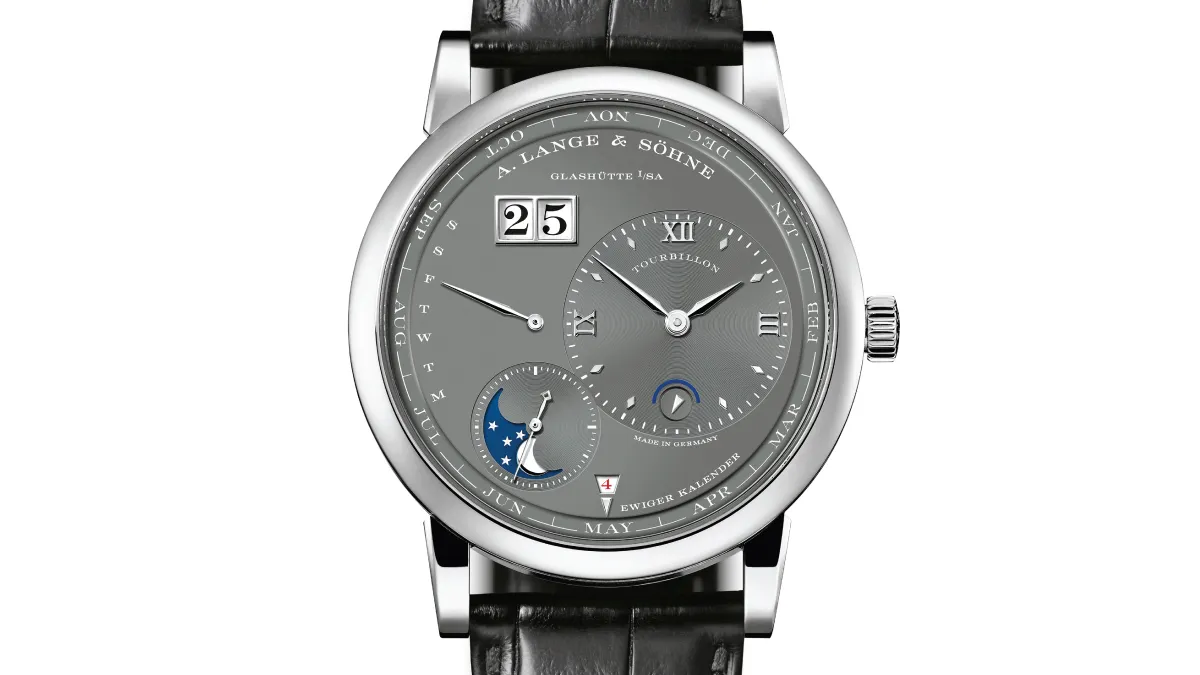
This Lange 1 take on the quantieme perpetuel doesn’t try to fit everything within the watch’s precious dial real estate — rather, the tourbillon must be viewed via the caseback.
2015 Lange 1 (Cal. L121.1)
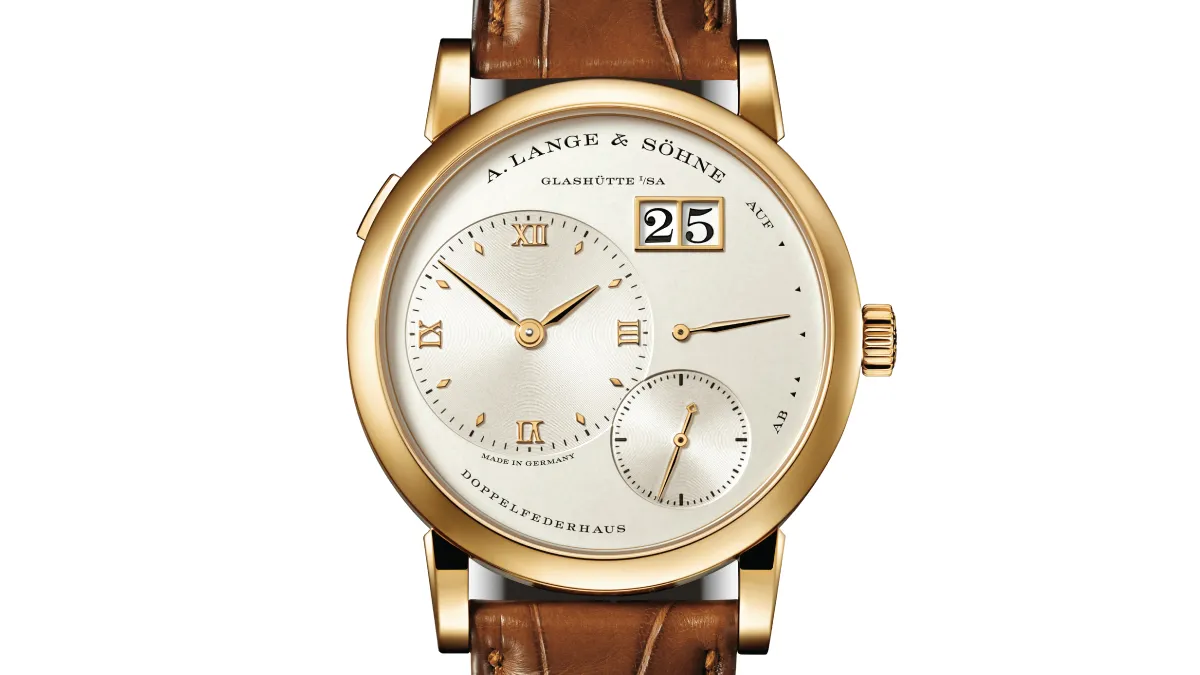
In 2015, Lange updated the movement in the Lange 1 with the Caliber L121.1, which offered a more modern free-sprung balance wheel, now located next to the crown.
2019 Lange 1 25th Anniversary Edition Reference 191.066
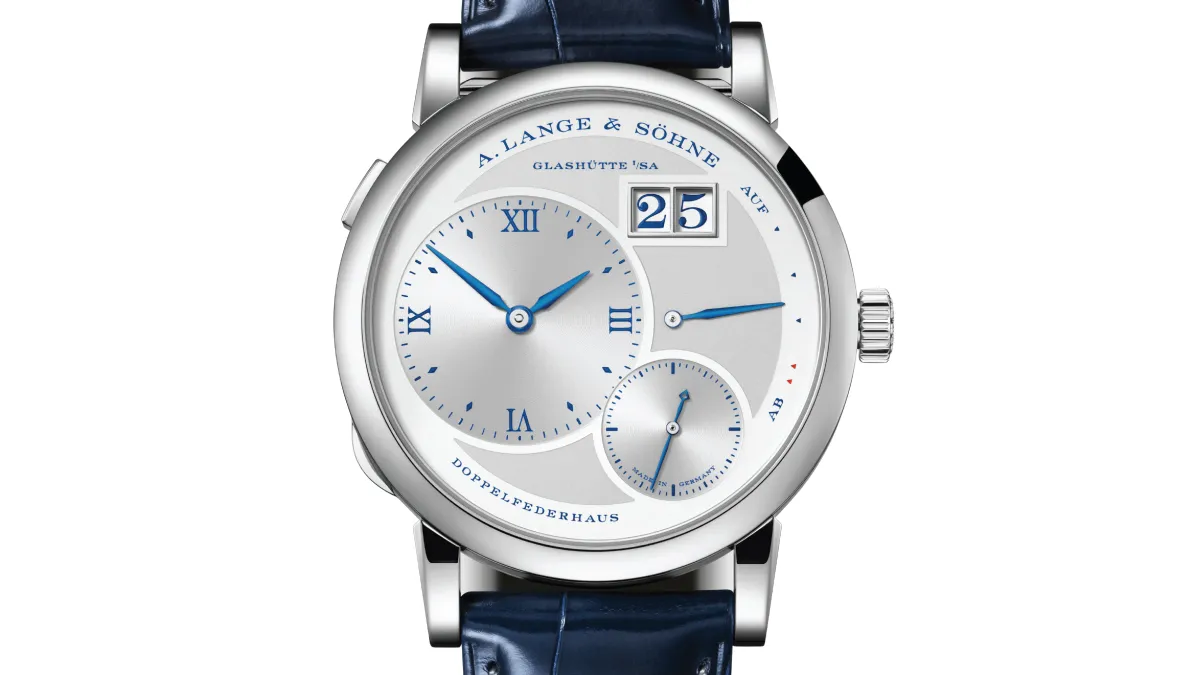
In celebration of 25 years of Lange 1, the maison offered an anniversary edition limited to 250 pieces with a solid,hinged caseback depicting the manufacture in Glashütte.
2024 Lange 1 30th Anniversary Editions References 191.062 and 191.063
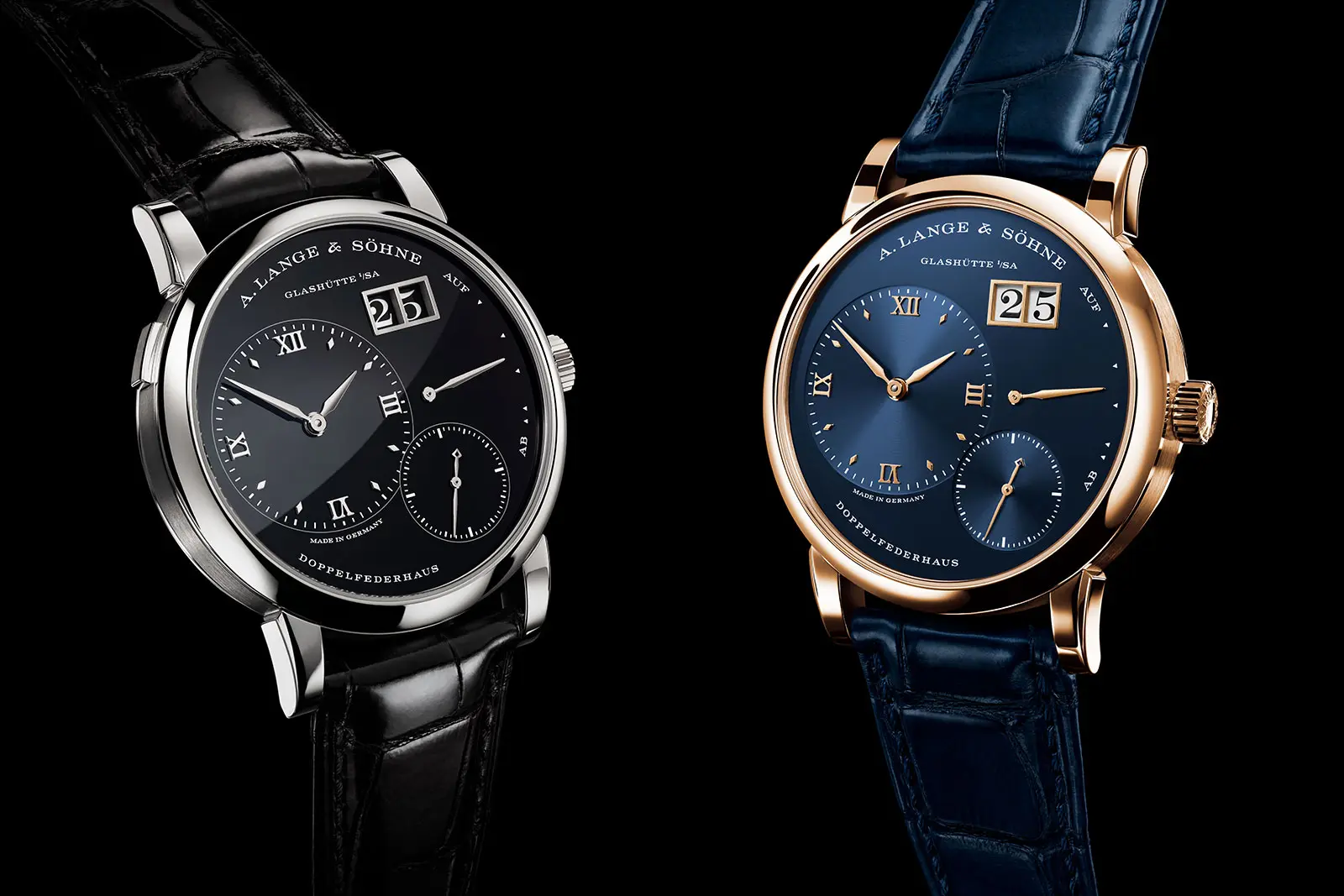
A. Lange & Söhne marked the Lange 1’s 30th anniversary with platinum and black onyx and pink-gold and blue versions, each limited to 300 pieces. Matching Little Lange 1 editions, References 181.062 and 181.063, were limited to 150 pieces each.
2026 Lange 1 Tourbillon Perpetual Calendar “Lumen” Reference 720.035FE
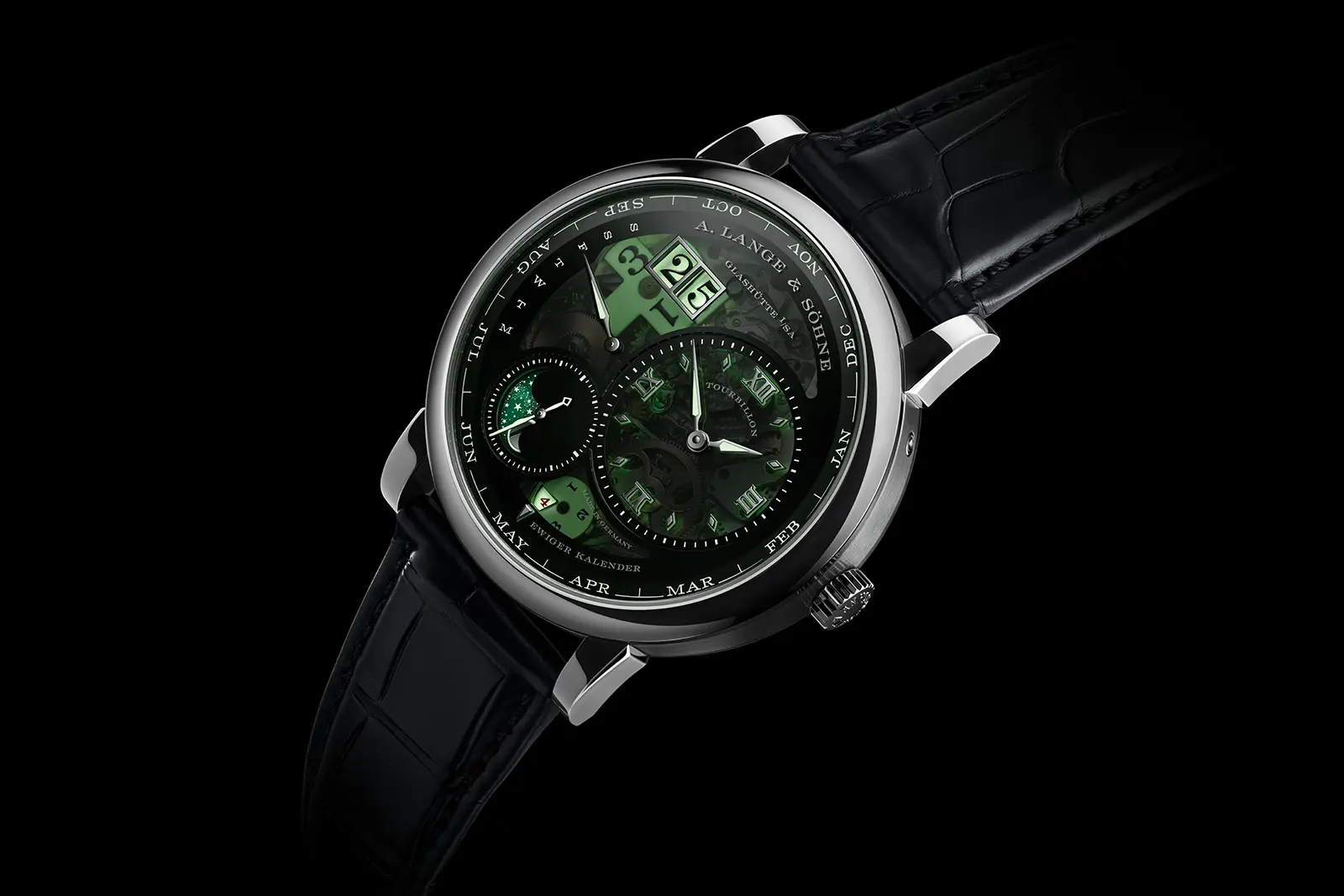
Limited to 50 pieces, this platinum model combines a tourbillon and perpetual calendar with a semi-transparent sapphire dial that allows its displays to charge under UV light and glow in the dark.
Frequently Asked Questions
Introduced in 1994, the Lange 1 helped revive German watchmaking after reunification and established A. Lange & Söhne as one of the world’s leading haute horlogerie brands. Its asymmetric dial, outsize date, and meticulously finished movement have made it a modern icon.
The Lange 1’s distinctive dial follows the rule of thirds, creating a balanced yet unconventional layout. Its signature outsize date was inspired by the historic Five-Minute Clock at Dresden’s Semperoper opera house, a landmark closely tied to the brand’s heritage.
Over the past three decades, the Lange 1 has expanded into a family of watches that includes moon-phase models, dual-time versions, tourbillons, perpetual calendars, and anniversary editions. Despite these additions, the collection has retained the proportions and design language that made the original famous.
The original model is powered by the manual-wind Caliber L901.0, featuring a 72-hour power reserve. It integrates traditional German elements like a three-quarter plate and hand-engraved balance cock.
Yes, highly rare stainless steel variants of the reference 101.026 were produced in limited quantities during the late 1990s. These pieces remain exceptionally coveted by vintage watch collectors worldwide.
With additional reporting by Bryle Suralta.
A. Lange & Söhne boutiques in Asia here.
This article originally appeared in Robb Report US.