What You Should Know About Peptides, the Fat-Burning, Muscle-Building Future of Longevity



What won’t we try to feel, perform, and look younger? While some aging-obsessed people transfuse the blood of their teenage offspring into their own, others are running away from canola oil as fast as their feet can carry them. So perhaps the legitimate research and efficacy of peptides—a new, or new-seeming, class of health and longevity products—explains why everyone is talking about them right now.
Peptides are naturally occurring. They exist in your body at this very moment. They are not foreign to your body, and they do not change how your body works.
“There’s a distinction between a peptide and a drug. Drugs are either synthesized or take a natural product and change it in some way. Drugs are meant to change your physiology— peptides are meant to enhance them,” says Dr. Chris Renna, founder of Lifespan Medicine, a preventative and longevity-focused clinic with outposts in California, Texas, and Florida.
They aren’t new, either. In 1922, Frederick Grant Banting and John Macleod discovered insulin—a peptide—and its potential as a therapy for diabetes. One hundred years later, more than 100 peptides are FDA-approved, with dozens more in clinical trials and perhaps hundreds available through both legitimate and dubious sources. Searches for peptides are up 550 percent this year alone.
From humble and virtuous beginnings, today, there are peptide compounds targeting outcomes like weight loss, mental health, muscle growth, cognitive performance, and virtually any other goal a person might strive for, or problem they’d like resolved.
But the peptide market is murky. Relative to the number of peptides available through licensed practices and online, very few have been rubberstamped by the FDA or other regulatory bodies. The rate of discovery, research, and regulation is thoroughly misaligned, leading to the creation of a peptide gray market that exists in legal limbo, where vials of peptide compounds must be sold with “Not for Human Consumption” stamped on them.
Here’s what you need to know to approach peptides in an informed, health-minded way.
What are peptides?

Peptides are short chains of amino acids that carry out loads of normal actions in your body. They are the stuff proteins are made of, and they have various uses in medicine, cosmetics, and performance
Dr. Belegui Sanchez, who spearheaded a peptide therapy program as head of the Revitalizing Medicine Health Unit at SHA Mexico, thinks of them as “biochemical keys.”
“They open up doors and pathways to allow our body to take different actions. We are activating natural responses in our body. It depends on our goals, our backgrounds, and our whole medical history to decide which doors to open,” Sanchez says.
Effectively, they are the messengers of cell-to-cell communication. If you introduce more of a peptide that tells cells in your pancreas to release insulin, your body will do so and naturally stabilize its blood-sugar level.
Jamie Gabel, physician assistant and clinical director of Advitam at the Shafer Clinic in New York City, says the difference between peptide therapies and traditional pharmaceuticals is complex but straightforward: one is natural, one is not. He uses an example where the desired outcome is weight gain to explain.
“If someone gets human growth hormone, you’re taking an exogenous or outside source of it. Whereas if I give you a growth hormone-releasing peptide, it’s going to signal your pituitary gland to get you to release your own growth hormone,” he says. “We’re initiating a natural feedback loop, rather than providing foreign materials to support a desired outcome.”
Is it safe to take peptides?

By and large, peptides are considered safe when taken under the supervision of a healthcare professional sourcing peptide compounds from accredited pharmacies (ask about USP standardization if you’re unsure). Despite the regulatory quagmire around them, peptides are naturally occurring substances, and taking them—again, with the guidance of a clinician or medical professional—is considered safe.
But every layer of expertise between you and peptides removed represents heightened risk. There are dozens of unaccredited online peptide pharmacies where, should you have a credit card and shipping address, virtually any peptide in any volume can arrive at your doorstep in under 48 hours. And though it’s common to swap info on “stacks”—the colloquial term for supplements and peptides one takes—online longevity communities and the like are not a suitable replacement for licensed clinicians.
“We get the whole picture of a patient before acting at all. Pathologies, family history, labs, functional assessments. Based on that, we can consider what we might do,” Sanchez says. “Because these are natural substances, people think they can just start using them with a little research on ChatGPT or TikTok. Yes, it’s going to trigger natural responses in your body, but it’s the same as anything—too much can be toxic or detrimental to your health.”
Bottom line: Do not treat yourself as a testing ground—work with a healthcare professional if you’re interested in what peptides can do for you.
Where can I get peptides (safely)?

Work with a clinician who has studied peptides and sources peptide compounds from well-vetted compounding pharmacies. Unfortunately, peptides are available all over the internet, sourced from compounding pharmacies in regions with even less oversight than the United States. These online sellers technically sell “research-grade” peptides, which makes it legal for them to sell.
“They’ll send it to you and it’ll be labeled ‘not for human consumption’ with a wink of the eye,” Renna says. “That is how they circumvent the [legality] issue.”
Your best bet is to get your peptides through a healthcare professional working with accredited compounding pharmacies, and to use them according to that professional’s guidance.
What are the peptides worth taking right now?
Below, a guide to the shots medical professionals believe can have benefits in the right cases.
Semaglutide (aka, Ozempic)
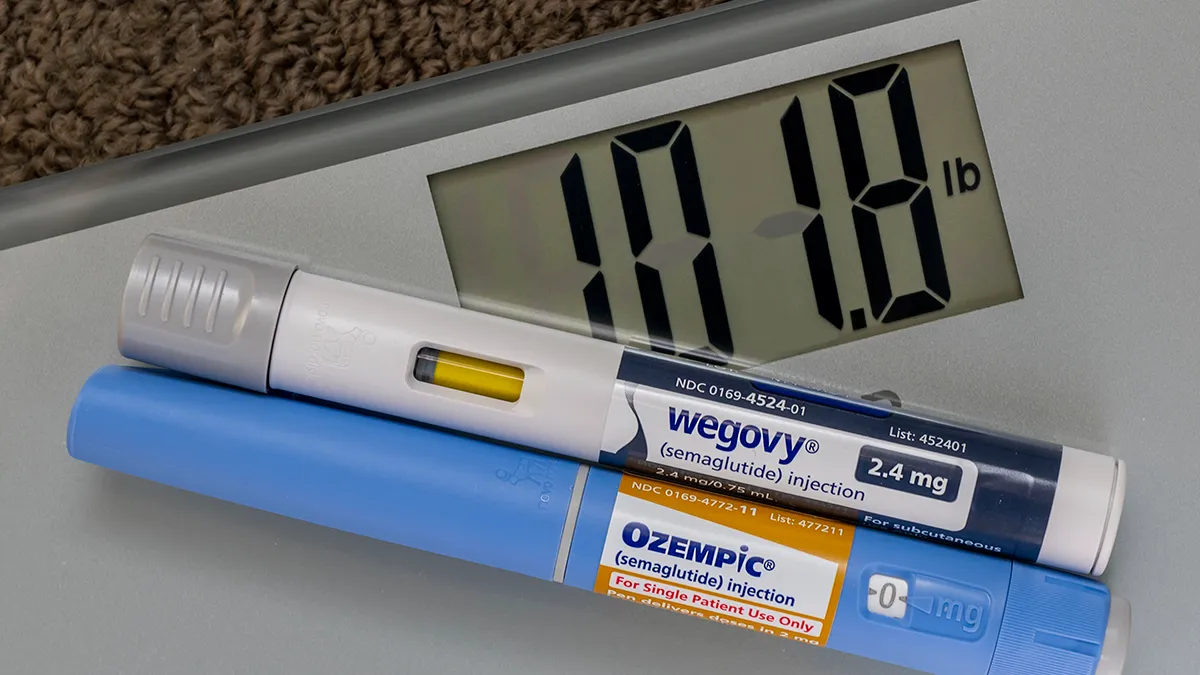
Whether you know the exact amino acid sequence that makes up your favorite compounded peptide or you just read magazines for the pictures, you know semaglutide, the technical name for the medication sold as Ozempic, Wegovy, and so on. The very brief history of semaglutide begins with its discovery and application as a diabetes therapy in 2017. In 2021, after researchers and clinicians observed significant weight loss in those taking it, it was reformulated in a higher dose for weight management and approved by the FDA. Since then, the market for the peptide has, without exaggeration, exploded. Combined, the companies behind Ozempic, Wegovy, and Rybelsus sold nearly $30 billion of the stuff in 2024. By 2030, that number is expected to exceed $100 billion.
It’s a GLP-1 receptor agonist, which means it mimics a gut hormone that stimulates insulin production, suppresses glucagon, and slows gastric emptying. There’s more to it than this, but the gist is your blood sugar holds at a stable level, and you feel significantly less hungry than you might otherwise.
More recently, semaglutide has been touted to solve, well, a lot. Several studies have linked it to slowing aging. Others have found it has a positive impact on patients with Alzheimer’s disease. There’s even growing evidence for its effectiveness as a treatment for alcohol addiction.
BPC-157

While GLP-1s remain the center of the public’s attention, BPC-157 is often likened to a gateway peptide, leading the health-serious toward peptides angled at optimization and longevity.
Derived from our very own gastric juices, BPC-157 is known to assist in tissue repair and healing ligaments, tendons, nerves, muscles, and skin. It promotes angiogenesis, or the formation of new blood vessels, and it has demonstrated anti-inflammatory effects across the body, from your joints to your gut.
“There’s even been some studies to suggest it can help with normalizing blood pressure, or even protect against some brain injuries,” Gabel says.
Gabel, who manages the metabolic or regenerative health needs of upwards of 450 patients, notes that the laundry list of potential benefits is one reason that makes it difficult to approach peptides with a cookie-cutter mindset. ”Because the peptides that your body makes perform many, many more tasks than people imagine,” he says. “Each one affects multiple signalling pathways.”
It can also be taken orally, though it’s widely understood that orally administered peptides are far less bioavailable than the standard subcutaneous ones.
Sermorelin

Sermorelin works by nudging the receptors in your pituitary gland responsible for secreting growth hormone. And while the most common goal for taking sermorelin and other growth hormone-focused peptides is increased muscle mass, it, like all peptides, isn’t a one-trick pony.
Gabel notes studies that have demonstrated growth hormone peptides may assist cells in improving cellular senescence, or the rate at which cells stop dividing. Senescence is connected to a host of age-related diseases and overall health.
“Let’s say a healthy 20-year-old person’s cell encounters a problem. If it can fix it, it does. If it doesn’t, it self-destructs. When you get older, it becomes stagnant and doesn’t do either, and the more of those that add up can lead to disease and aging more generally,” Gabel says.
Gabel notes that sermorelin, nor any peptide, will serve as the fountain of youth, but when used properly and under supervision, they can have a significant impact on the body.
GHK-Cu

GHK-Cu is a naturally occurring tripeptide that stimulates collagen and elastin production, processes that slow as we age, and is among the most commonly prescribed and sought-after peptides targeting skin health and appearance.
“It might be used in anti-aging treatments or post-procedure recovery. A drawback is possible irritation if a high concentration is used, so I wouldn’t recommend using copper peptides on damaged skin,” Dr. Noah Gratch, board-certified dermatologist at MDCS Dermatology in N.Y.C., says.
Selank

While muscle growth, recovery, weight loss, and skin health are the stars of most modern peptide therapies, momentum is building behind a new—or newly popular—category: mental health.
“I think for many years people were focusing a lot on losing weight or body composition [with peptides], but mental health plays a big role in our overall wellbeing,” Sanchez says.
Known for boosting cognition and reducing anxiety, Selank is at the forefront of the nootropic peptide movement.
“It can modulate brain activity and reduce hyperactivity in the brain, which can reduce anxiety and depression and rebalance dopamine receptors,” Sanchez says. “You can use them for a short period of time, too. Instead of taking medication for sleep or anxiety, nootropic peptides can be a good first attempt at fixing issues.”
Plus, it’s administered with a nasal spray, which is much less of a hassle than a shot, which is how most peptides are delivered to the body.
This article originally appeared in Robb Report US.