Martha Atienza’s New Silverlens Show Traces the Politics of a Disappearing Shore




Martha Atienza returns to Silverlens Manila with The Coconut Tree Methodology, her first solo presentation with the gallery since 2020. The exhibition brings together a new body of work anchored in the artist’s long-term engagement with the Bantayan Islands in Cebu, where she was partly raised and where much of her practice continues to unfold.
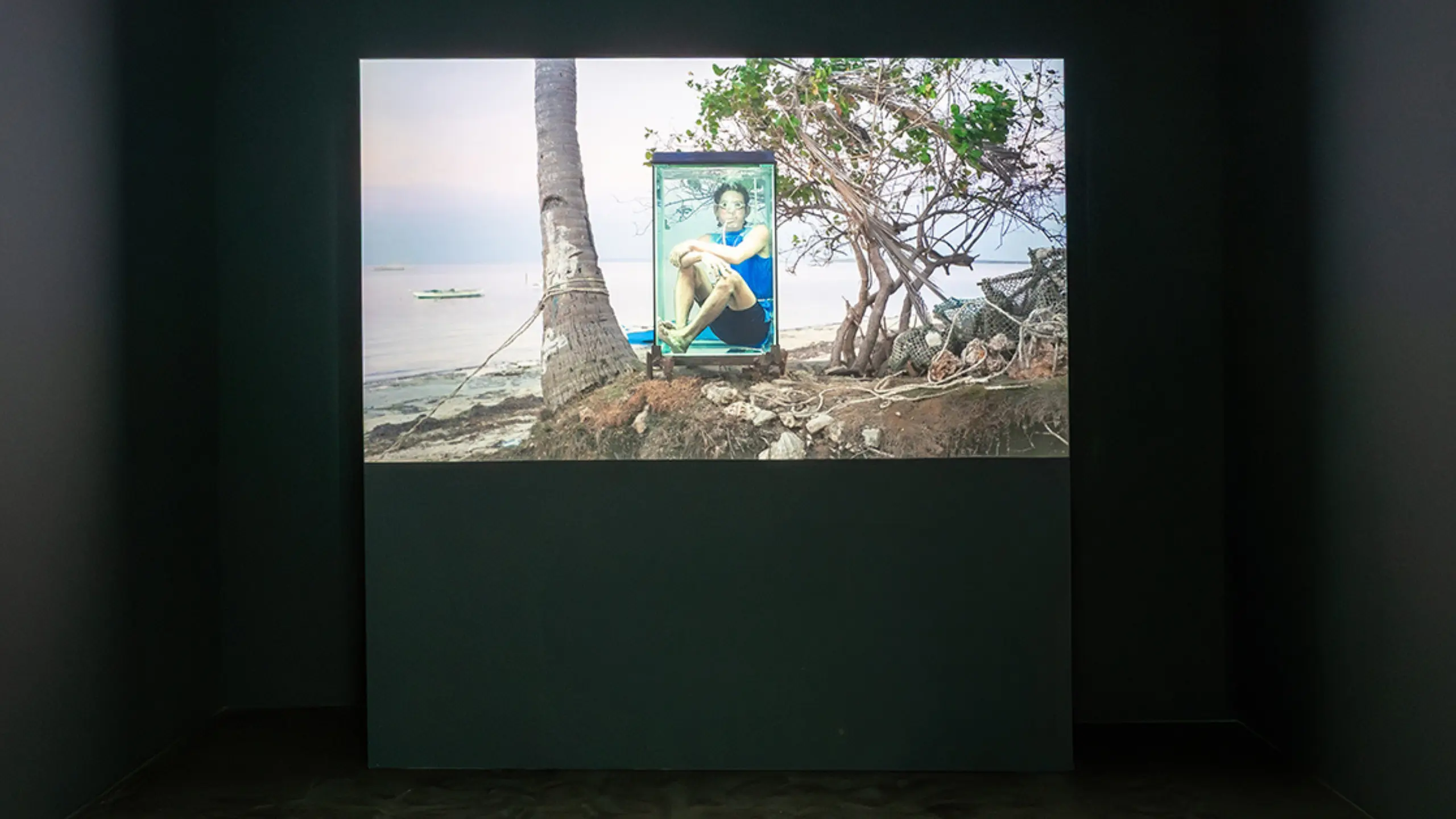
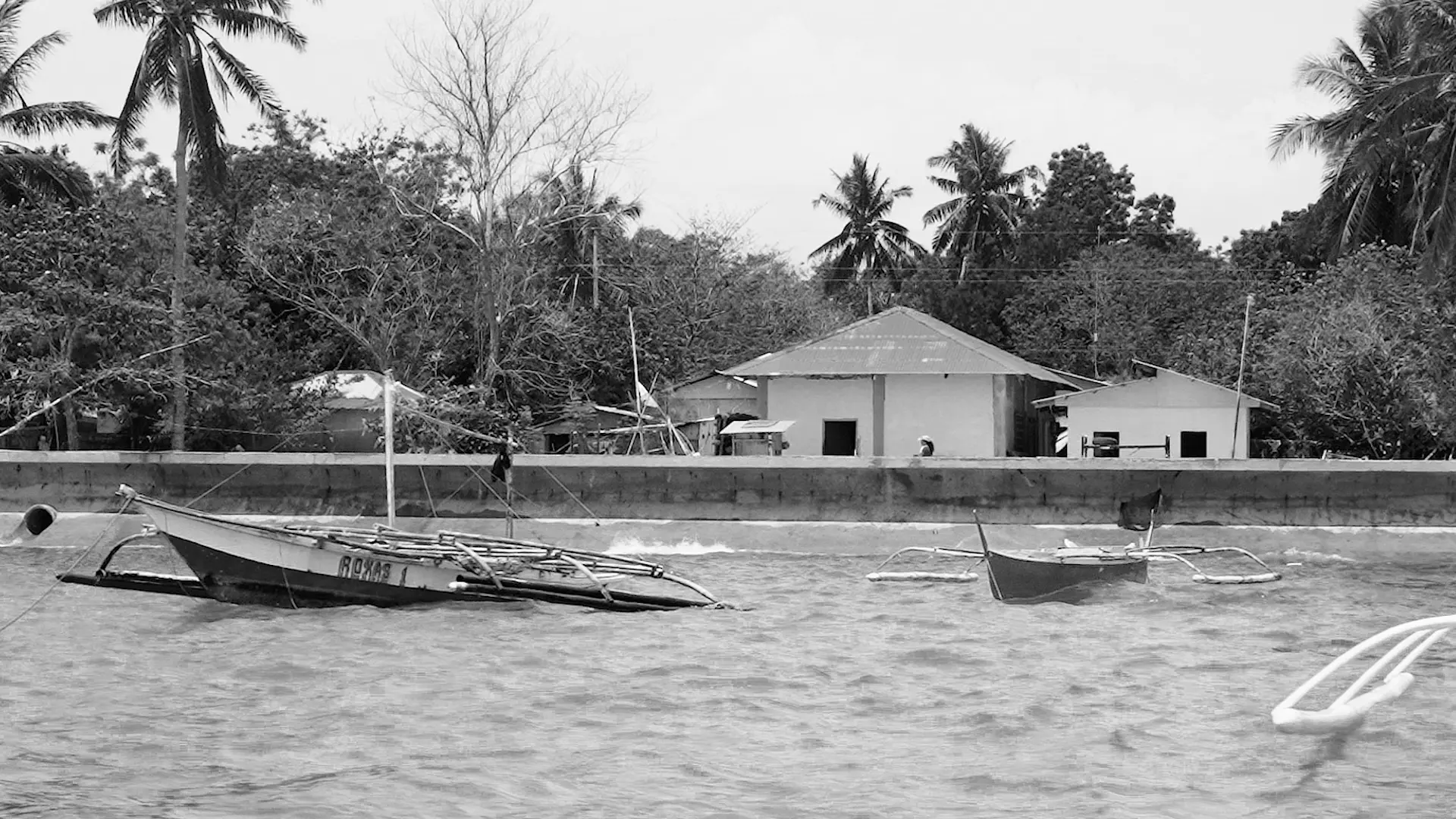
The Dutch-Filipino video and installation artist uses the exhibition to revisit a coastline she has documented before. In footage from 2019, an open shore appears marked by fallen coconut trees, their roots loosened by rising sea levels and coastal erosion. Meanwhile, in footage from 2026, the same stretch appears again, now with a seawall built into the landscape.
The before-and-after footage gives the exhibition its conceptual depth. For Atienza, the fallen coconut tree is proof that the landscape has already begun to register a crisis. From there, the work opens outward: shorelines are redrawn, communities are moved, and climate change reveals the social structures that decide who remains near the water.
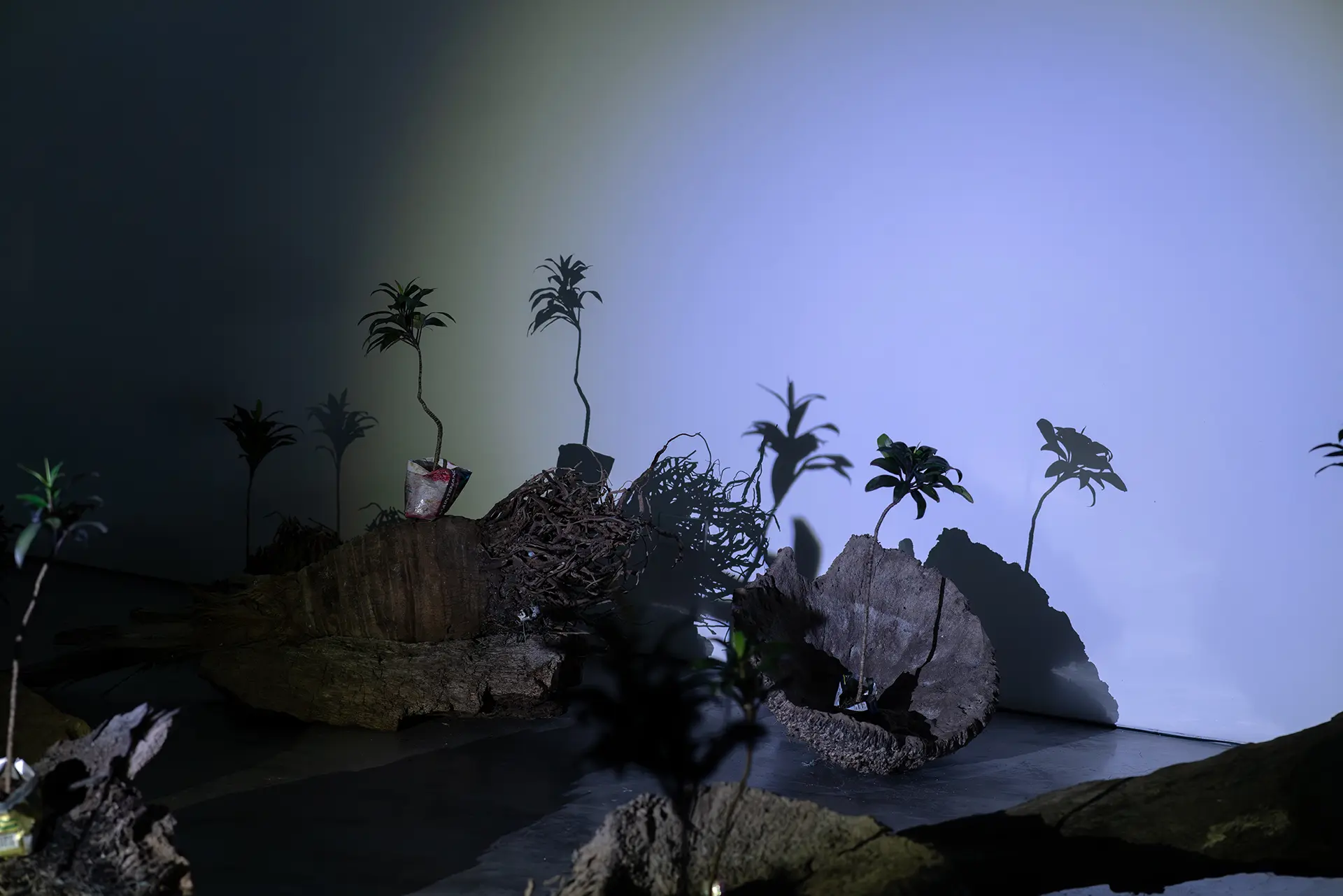
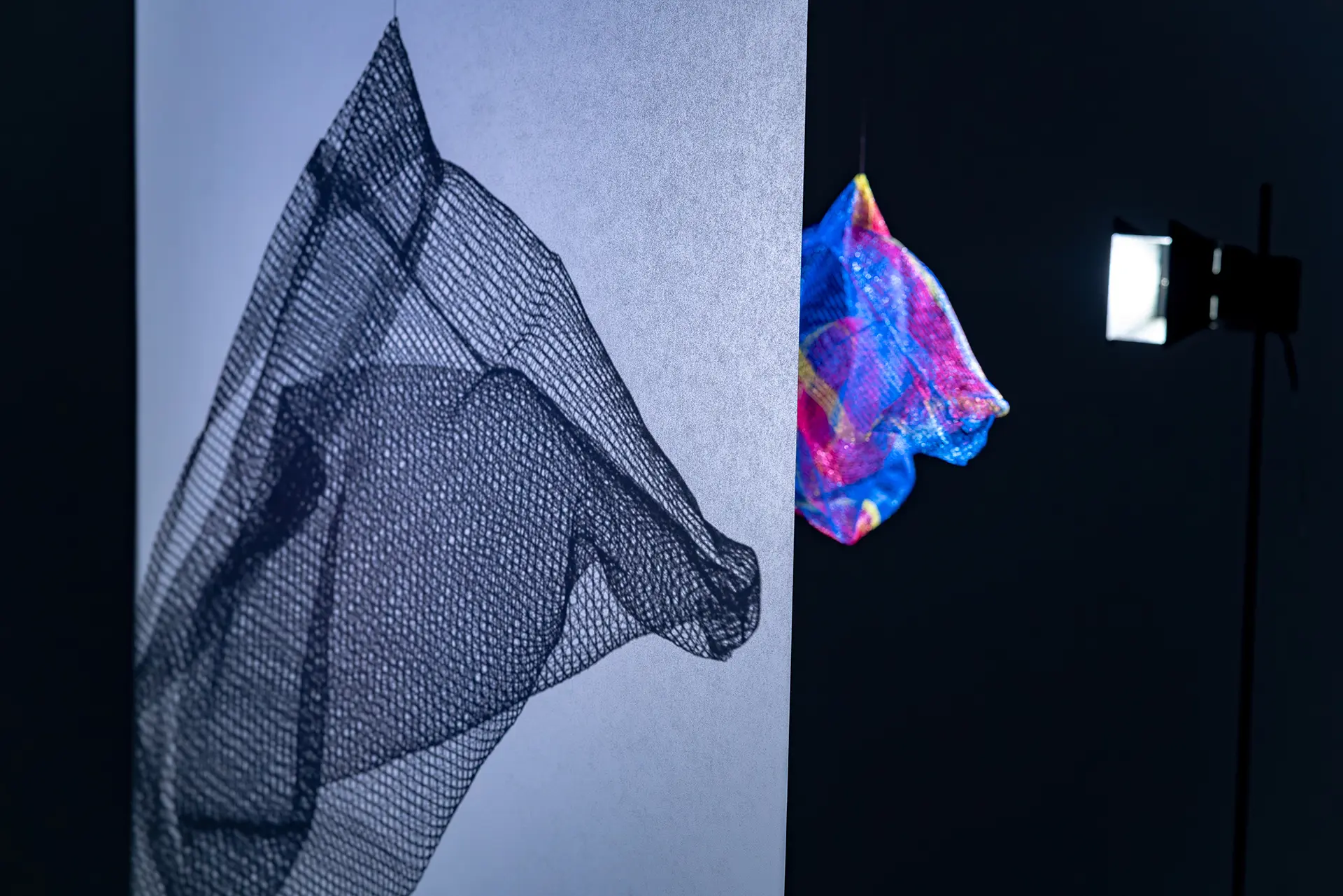
Atienza is concerned less with climate change as an isolated subject than with the social order it reveals. In the gallery, coconut trees, fishing nets, video, and installation elements suggest a coastline under pressure. A fisherman crouches inside an aquarium, caught between enclosure and exposure. Nearby, the sea stops functioning as backdrop and begins to read as contested ground. Nets throw ghostlike shadows across the space, while concrete appears as both safeguard and wound.
Atienza has filmed Bantayan since 2010, returning to it as the place from which much of her practice thinks. Her 2017 work “Our Islands 11°16’58.4” N 123°45’07.0”E,” which won the Baloise Art Prize at Art Basel, stages the Ati-Atihan festival underwater. The procession moves across a barren seafloor, folding religious ritual, political violence, and ecological depletion into a vision of Philippine history under pressure.
In The Coconut Tree Methodology, that pressure moves back to the shoreline. The drama is quieter, but no less severe: a coast hardens, trees fall, fishing communities are relocated, tourism advances, and private development redraws the terms of life by the sea. Atienza shows Bantayan as a place where that crisis becomes social fact.
Atienza’s work beyond the gallery is also central to the exhibition. In 2020, she formalized GOODLand, a Bantayan-based organization that works with communities, institutions, and local groups to archive intergenerational knowledge and apply it to the real-time effects of climate change. Among its initiatives is Adlaw sa Mga Mananagat, or FisherFolks Day, established in 2022. GOODLand also supports community efforts to secure marine protection in parts of the archipelago.
The “coconut tree methodology” is Atienza’s way of staying with a place until its fractures become visible. Ultimately, climate change, it posits, is a lived condition, unfolding through the contested ties between land, labor, policy, survival, and the sea.
Frequently Asked Questions
The Coconut Tree Methodology is a solo exhibition by Martha Atienza at Silverlens Manila that uses video, installation, fallen coconut trees, fishing nets, and coastal imagery to examine climate change, displacement, and community life in Bantayan Island.
The exhibition is on view at Silverlens Manila on Don Chino Roces Avenue Extension in Makati City.
The Coconut Tree Methodology runs until July 11, 2026.
For Atienza, fallen coconut trees act as material witnesses to coastal erosion, rising sea levels, and the broader social effects of climate change on Bantayan Island.
Martha Atienza is a Dutch-Filipino video and installation artist whose work explores ecology, community, development, and the relationship between people and place. She won the Baloise Art Prize at Art Basel in 2017 for Our Islands 11°16’58.4” N 123°45’07.0”E.