First Taste: Modern Indian Dining at Agni


Nestled in the creative space that is Comuna inside Makati, Agni announces itself discreetly. The newest restaurant from Ranjit Chimni, the force behind Mantra Indian Kitchen & Bar, opened only early this year, yet it already feels settled.
Agni comes from the same lineage as Mantra, but it resists comparison. Where Mantra is rooted in the comforts of northern Indian cuisine, Agni looks outward. Its focus is regional, drawing inspiration from across greater India, and its approach is modern without being performative. It’s an evolution shaped by focus and direction.

The restaurant seats about 25 diners across two levels, and that sense of limit defines the experience. The room is elegant without excess, calm without formality. It’s the kind of space that encourages attention to the food and drink and one that is meant for grown-up conversation.

That same sense of edit carries through to the menu. Structured around small and large plates, Agni encourages exploration. Instead of attempting a broad survey of Indian cuisine, the menu reads as a series of measured decisions, each dish grounded in regional tradition and sharpened through contemporary execution.
Among the small plates, the beef galouti kebab from Lucknow sets the tone early. It is remarkably soft, almost melting on contact with one’s tongue. Its richness is driven by beef fat rather than aggressive spice. Deeply flavorful, but composed, the small patties allow texture to do much of the work.
From Kerala, the jackfruit pepper roast stands out for being both flavorful and textural. The pepper is assertive but controlled, giving the dish structure without overwhelming it. Rather than trying to mimic meat, the jackfruit holds its own identity, resulting in a vegetarian plate that feels grounded and assured.
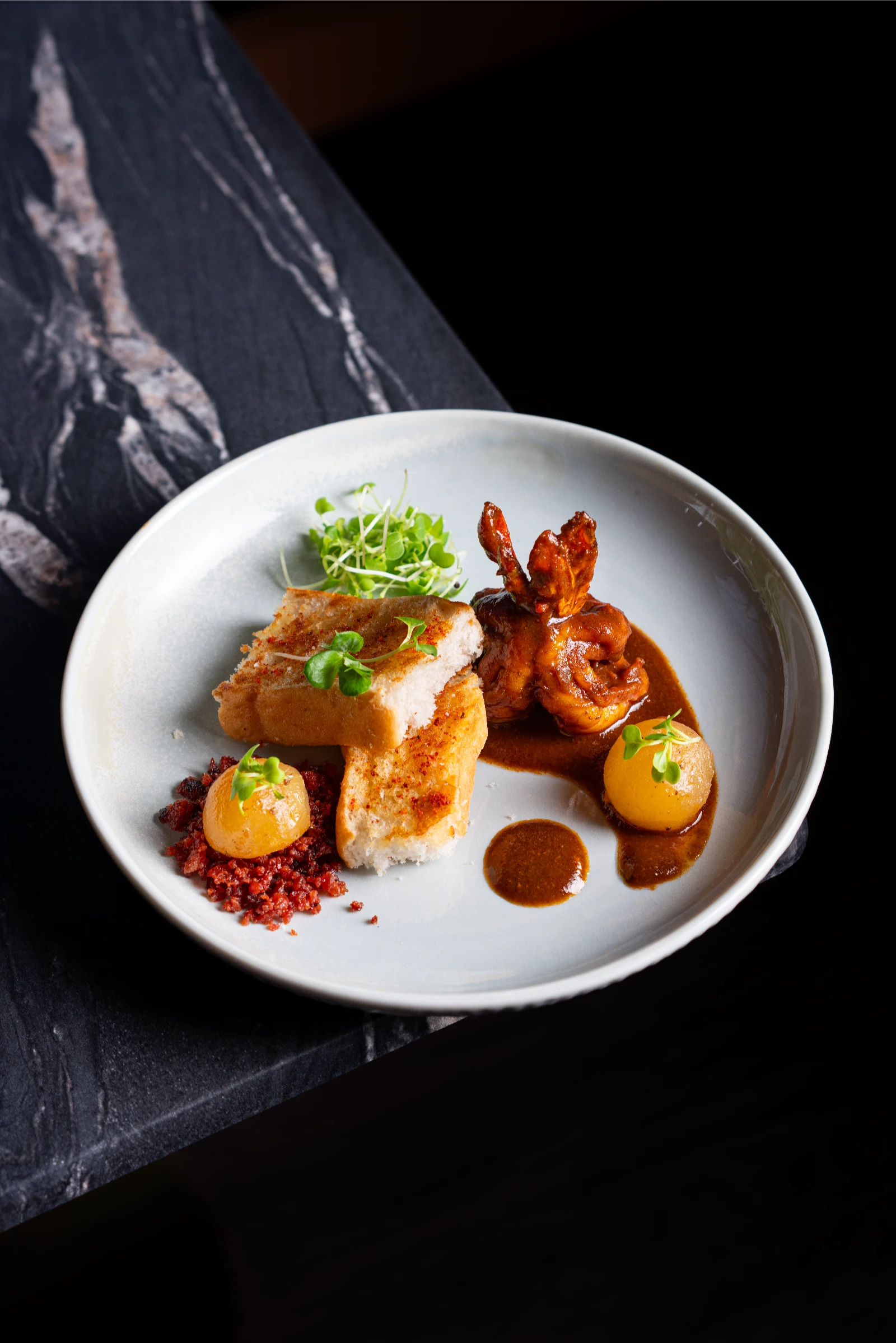
Other coastal small plates include an intense prawn vindaloo from Goa that was served in bite-size portions and paired with toasted brioche. Also of note was the Meen Pollichathu, a Keralan-spiced sea bass steamed and served in a banana leaf. Once opened, the aromas of the spices were immediately released while the fish remained moist and delicate.
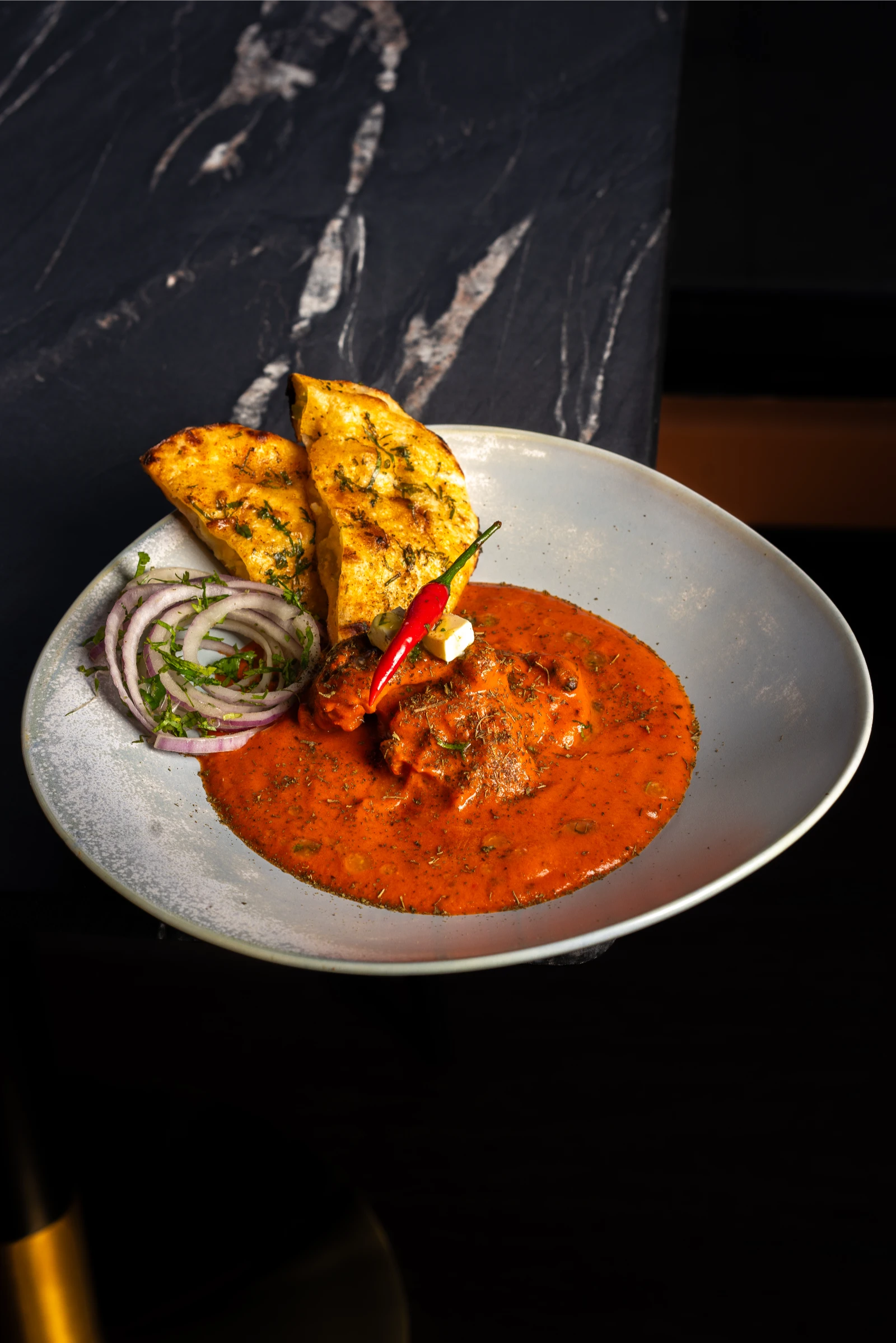
The menu opens up further with the large plates, where Agni’s confidence becomes even more apparent. The smoked butter chicken is particularly memorable, not for excess, but for how its richness is built. The sauce draws much of its creaminess from roasted cashews, an often overlooked but essential foundation of a good butter chicken. Rather than relying solely on cream or butter, the depth is achieved without heaviness. It is indulgent especially when paired with the chili cheese naan, which adds another layer of comfort and contrast.
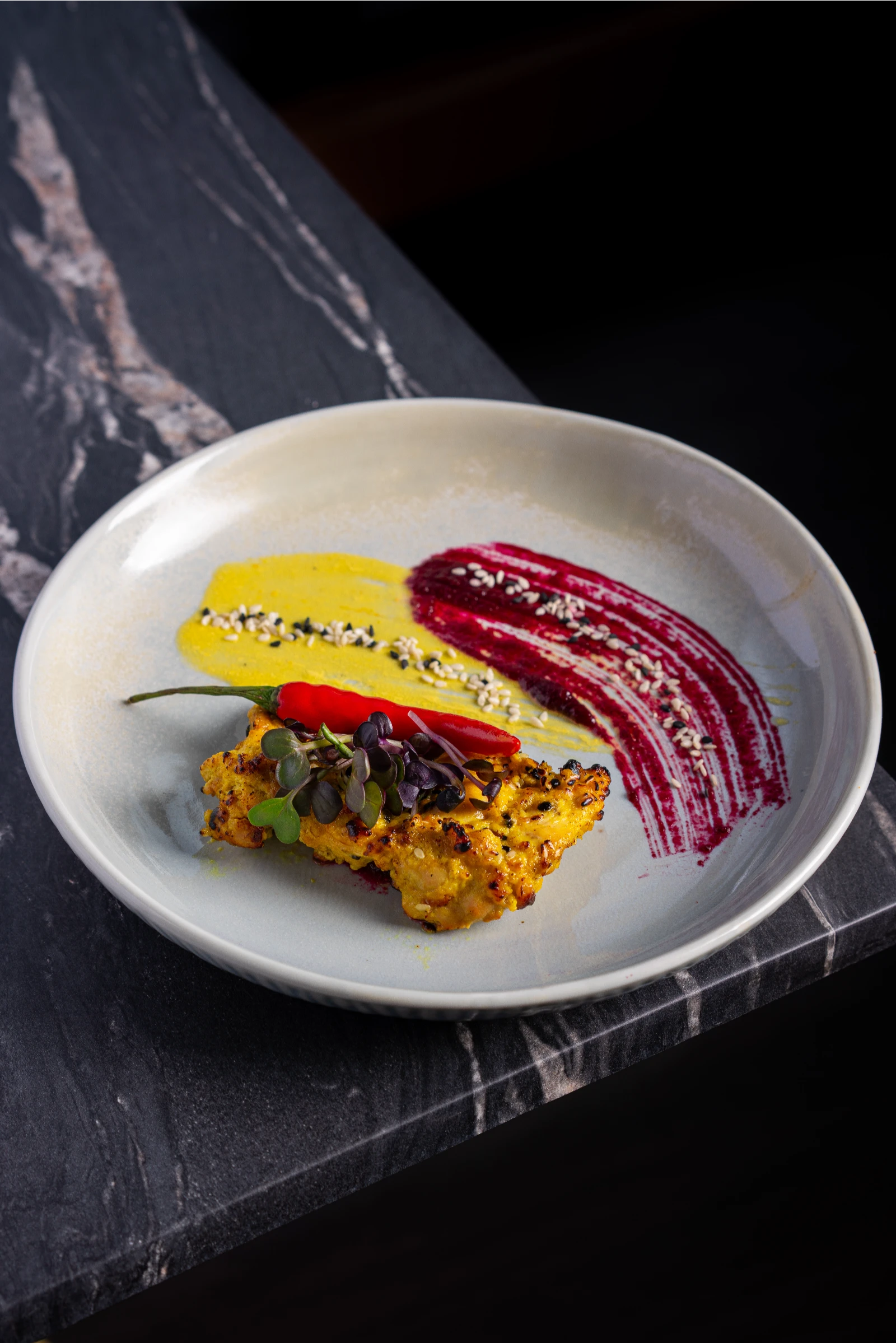
Equally compelling is the Lasoni Saag Burrata, a dish that leans into familiarity while sharpening it. The spinach is naturally creamy, sautéed with toasted garlic that adds warmth and dimension. Instead of the traditional and expected paneer, a house-made burrata is used, introducing a softer richness that works perfectly with the saag. It’s served with pudina paratha that is a necessary counterpart to the dish rather than an afterthought.
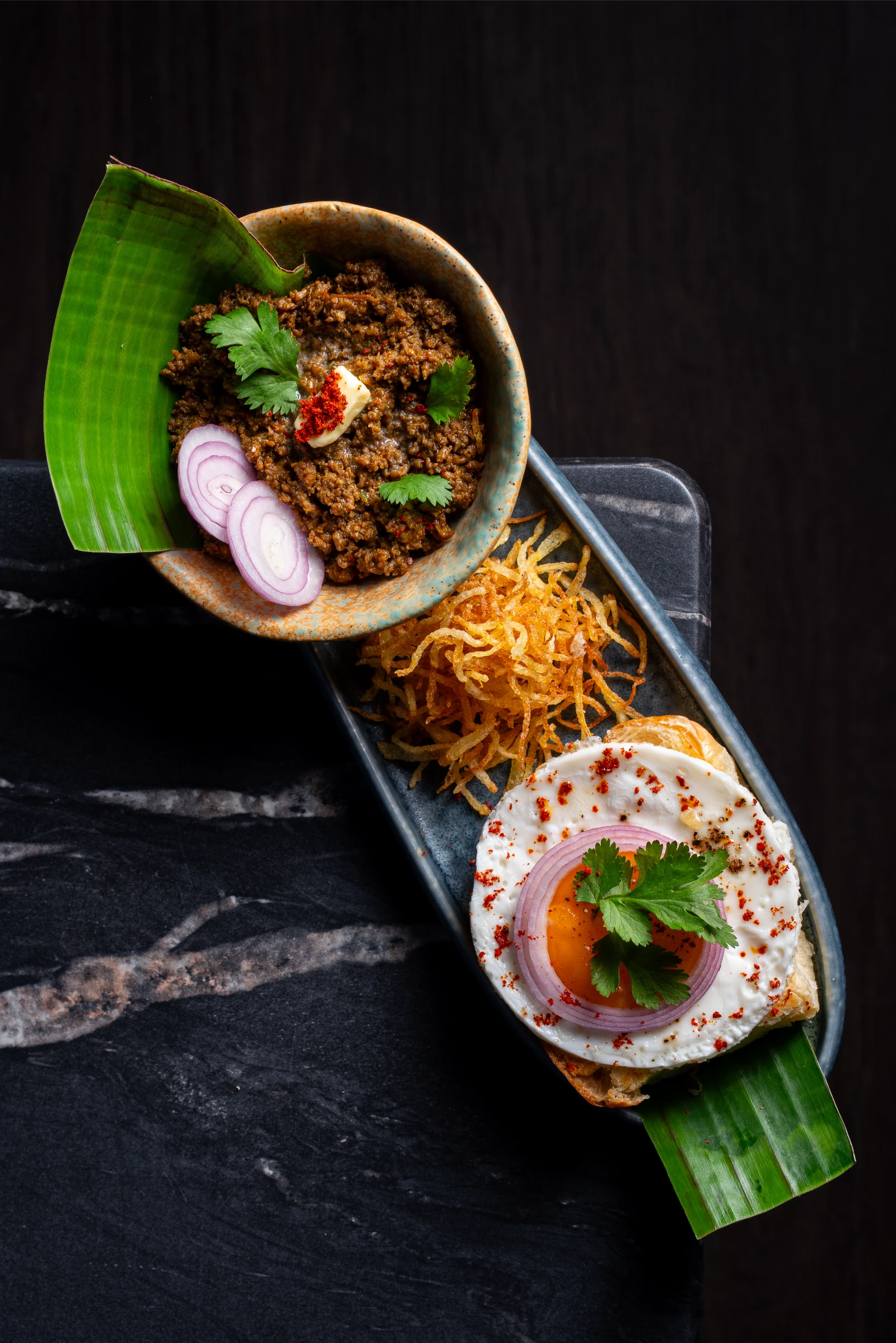
More indulgent still is the butter-poached lobster, presented delicately within the leaves of banana hearts and served with a soft rice biryani. It’s a low-key decadent plate, striking in presentation but controlled in execution. The lamb shank, meanwhile, has clearly emerged as a crowd favorite. It is slow-cooked, deeply savory, and anchors the menu.
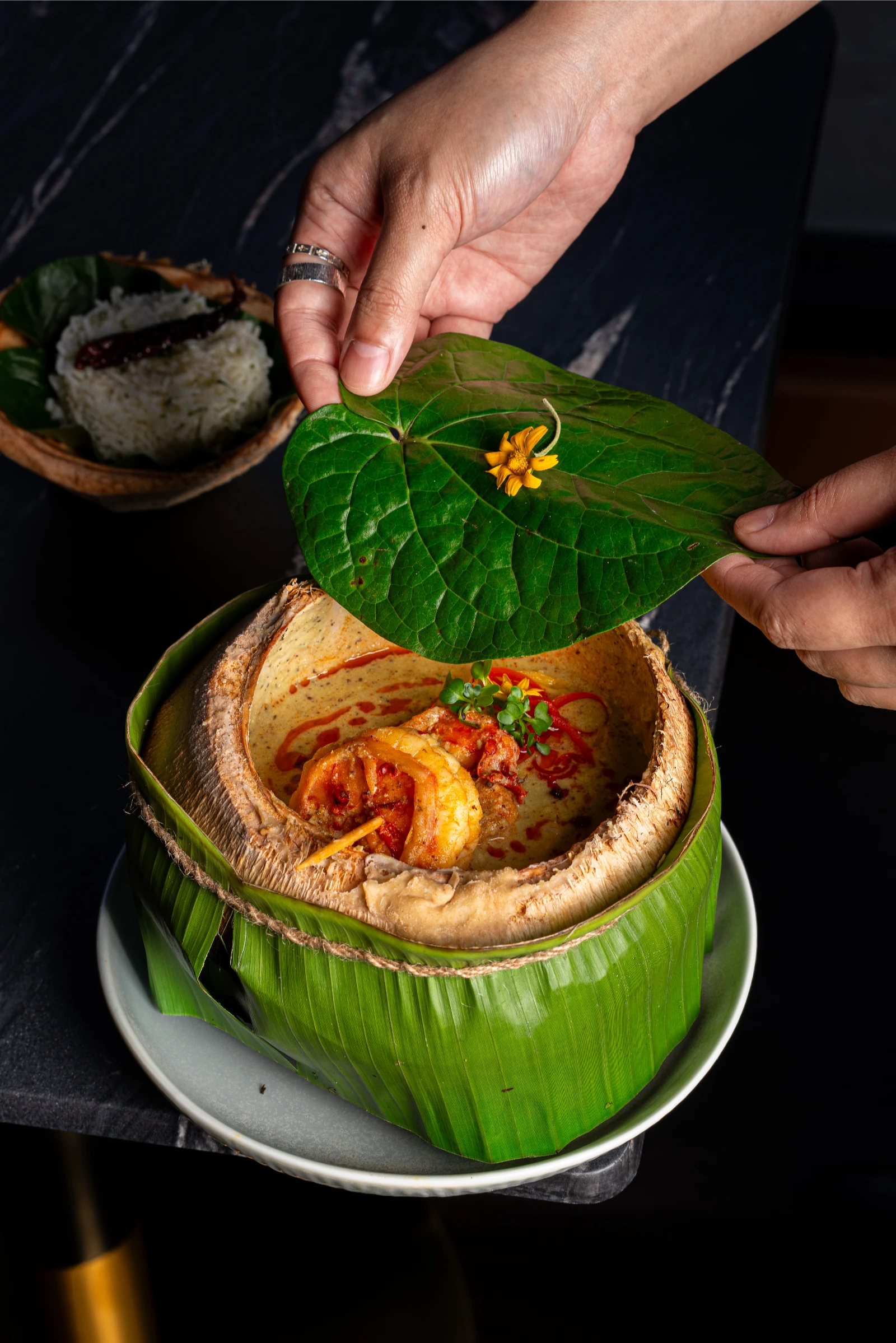
There is also room for curiosity at Agni. The Daab Chingri, a Bengali dish, is cooked with coconut meat inside a young coconut that is wrapped in a flour dough, leans distinctly sour, its character shaped by both black and yellow mustard seeds. As Chimni himself has noted, it’s an acquired taste and one that signals Agni’s willingness to embrace specificity rather than universal appeal.

The drinks program mirrors the food’s sensibility. Agni is distinctly cocktail-friendly, but with the same sense of discipline that defines the menu. Mirchi Verde, a cucumber and tequila cocktail, stood out for its clarity and balance. It was clean, refreshing, and particularly well suited to the food, cooling the palate without competing for attention.
Dessert closes the meal on a note of familiarity. A crème brûlée infused with South Indian filter coffee feels assured, while a classic kheer, or rice pudding, is perfumed with cinnamon and cardamom, and offers the kind of comfort that I love.

Agni is a compelling new dining destination not because it chases novelty, but because it knows when to stop. In a dining landscape that often asks Indian restaurants to choose between strict tradition and overt modernity, it occupies a considered middle ground.
Ground Floor, Comuna Building, 238 Pablo Ocampo Street, Makati. By reservation only: 0927.678.4041