Singular Manila: Spain, Dressed for Dinner


Spain has one of those cuisines that Filipinos believe they already know; nearly four centuries of colonial history will do that. And yet, sitting down to the tasting menu at Singular, Fernando Alcalá and Edu Fuentes’ restaurant in BGC, is a reminder of how much of Spain remains unknown to us: the interior plains of Castilla-La Mancha, the Moorish coastline of the Mediterranean, the Alboran seashore of Málaga. Focused and well-meaning, Singular serves the Spain that most Spaniards carry in their memory: regional and specific. And, in Alcalá’s hands, as calculated as a toreador head-to-head with the bull. (Singular doesn’t rest on Spanish clichés, but I can’t promise I won’t.)
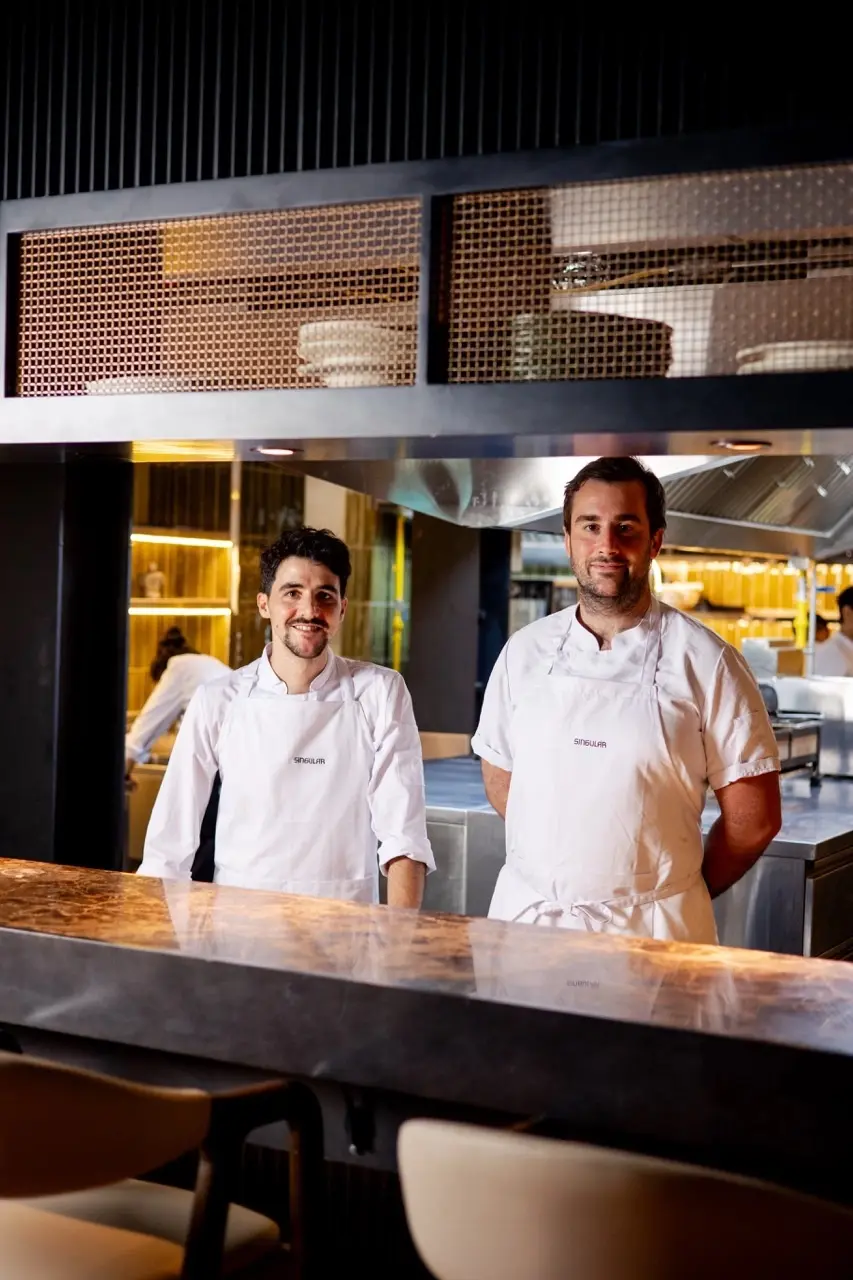
Fernando Alcalá did not take the conventional route to head chef through culinary school. A former law student from Marbella, he came to cooking late and is entirely self-taught. The accolades he’s received in his career since has proven it was worth the pivot: by 2019, the industry had taken notice. That year, he was named Cocinero Revelación at Madrid Fusion, a recognition that announced him as one of the most compelling new voices in the country. His restaurant Kava in Marbella earned a Michelin Bib Gourmand shortly after and a Repsol Sun in 2021. In Manila, his other, more casual concept Bolero received a Bib Gourmand distinction in 2025 and a place in the Michelin Guide.
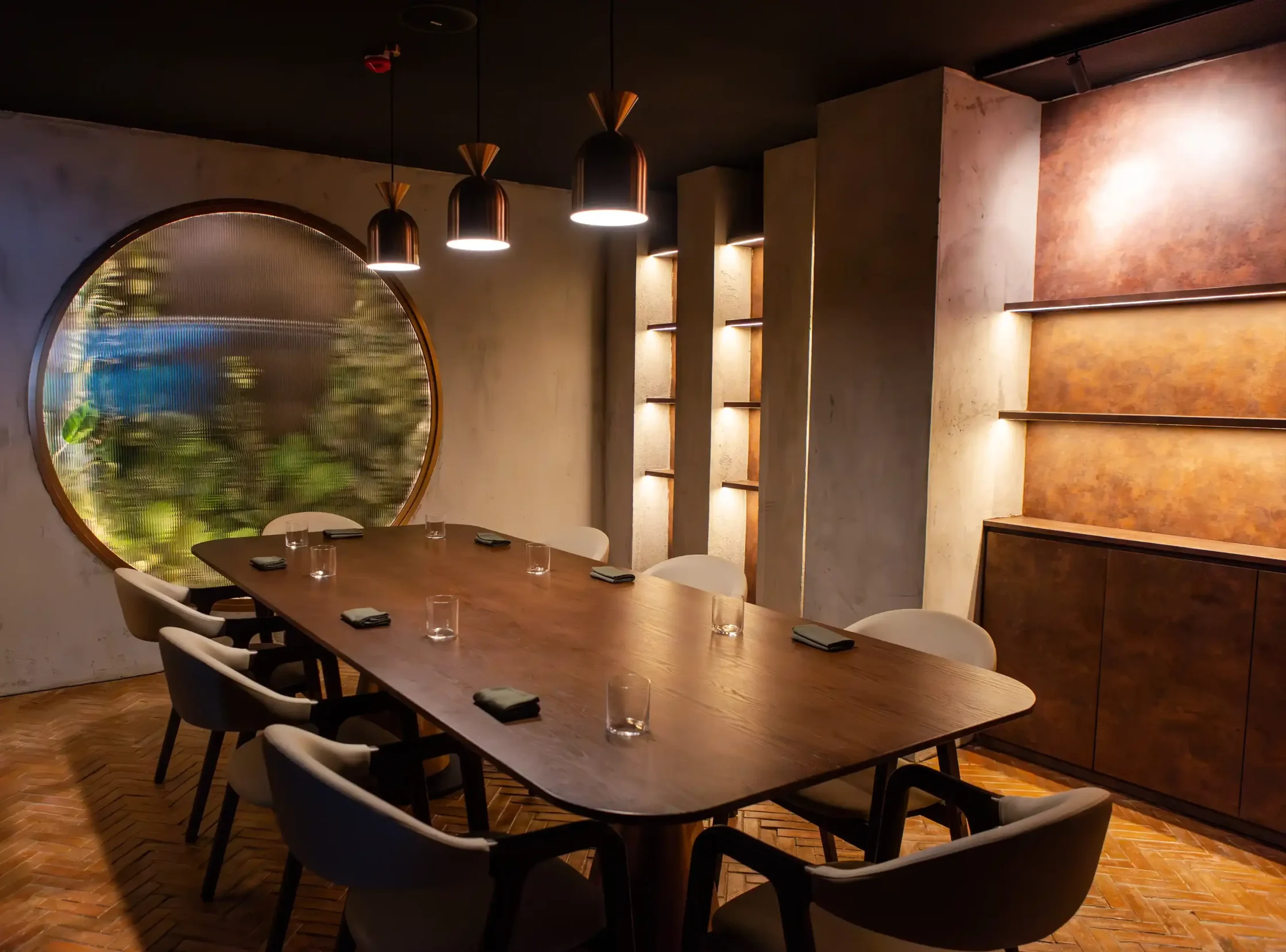
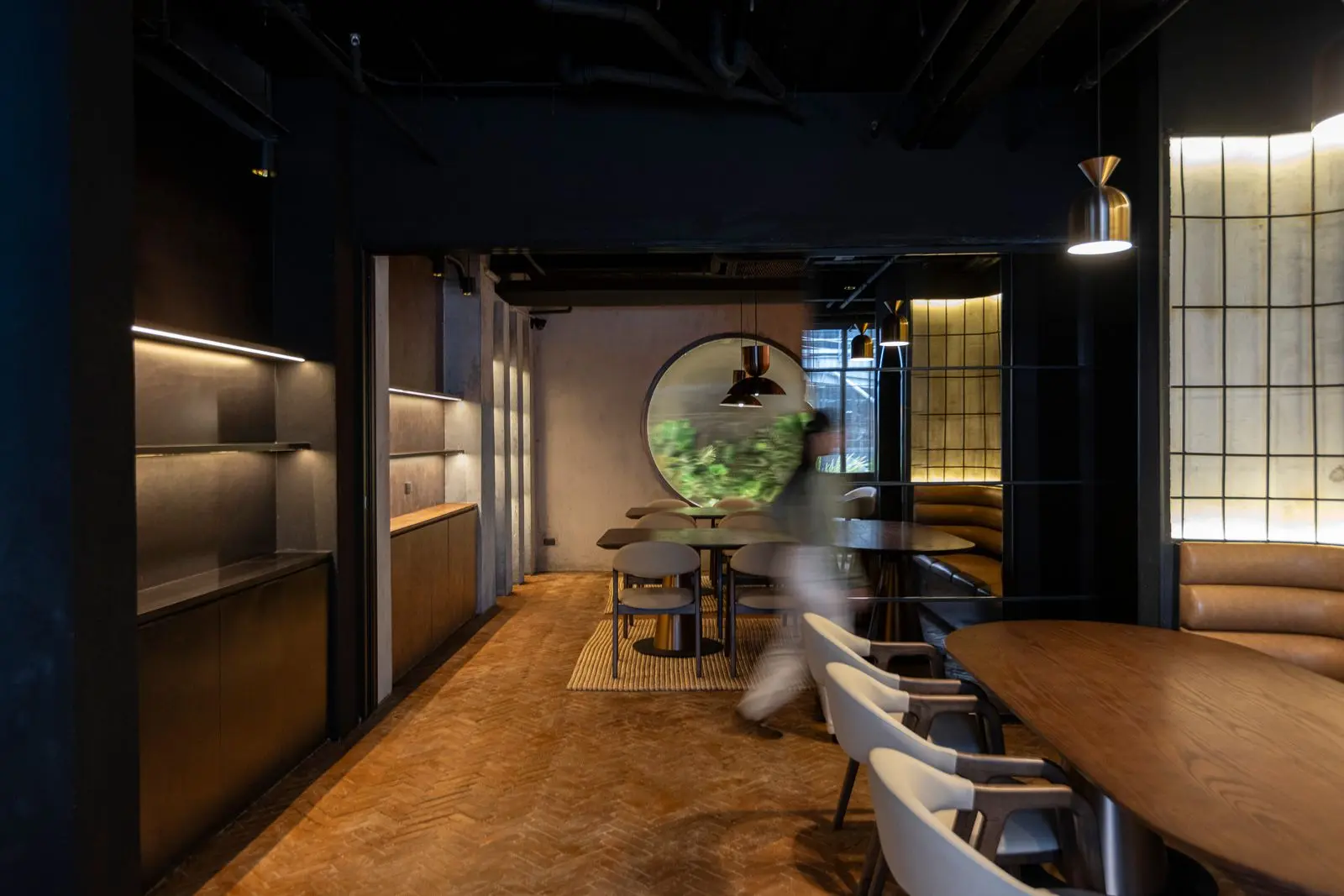
At Singular, the atmosphere is calm and low-lit, its interior design spare and tends toward mid-century modern, punctuated with a scattering of well-worn books with creased spines, rotary telephones, and other vintage objects on shelves, intimating that while we’re expected to see more modern cuisine on the tables, there’s a history it hews to. There’s a bar on the left that serves classic cocktails but also a well thought out selection of inspired cocktails with Spanish twists, of course, like the Sobremesa that references carajillo, and the Albero the rebujito, a straightforward drink I have surprisingly begun to appreciate more than sangria on these hot summer days.
The most brightly-lit area is the glossy, green-tiled kitchen. Open kitchens are really only for theater, and its usual regimented coldness quite honestly makes me tense, but I rather liked that instead of Singular’s cooks keeping to their stations in a soldierly fashion, I noticed that they would sometimes gather in small groups, usually led by Fuentes, over a dish, consulting with each other, deep in thought and conversation. (You don’t hear them.)
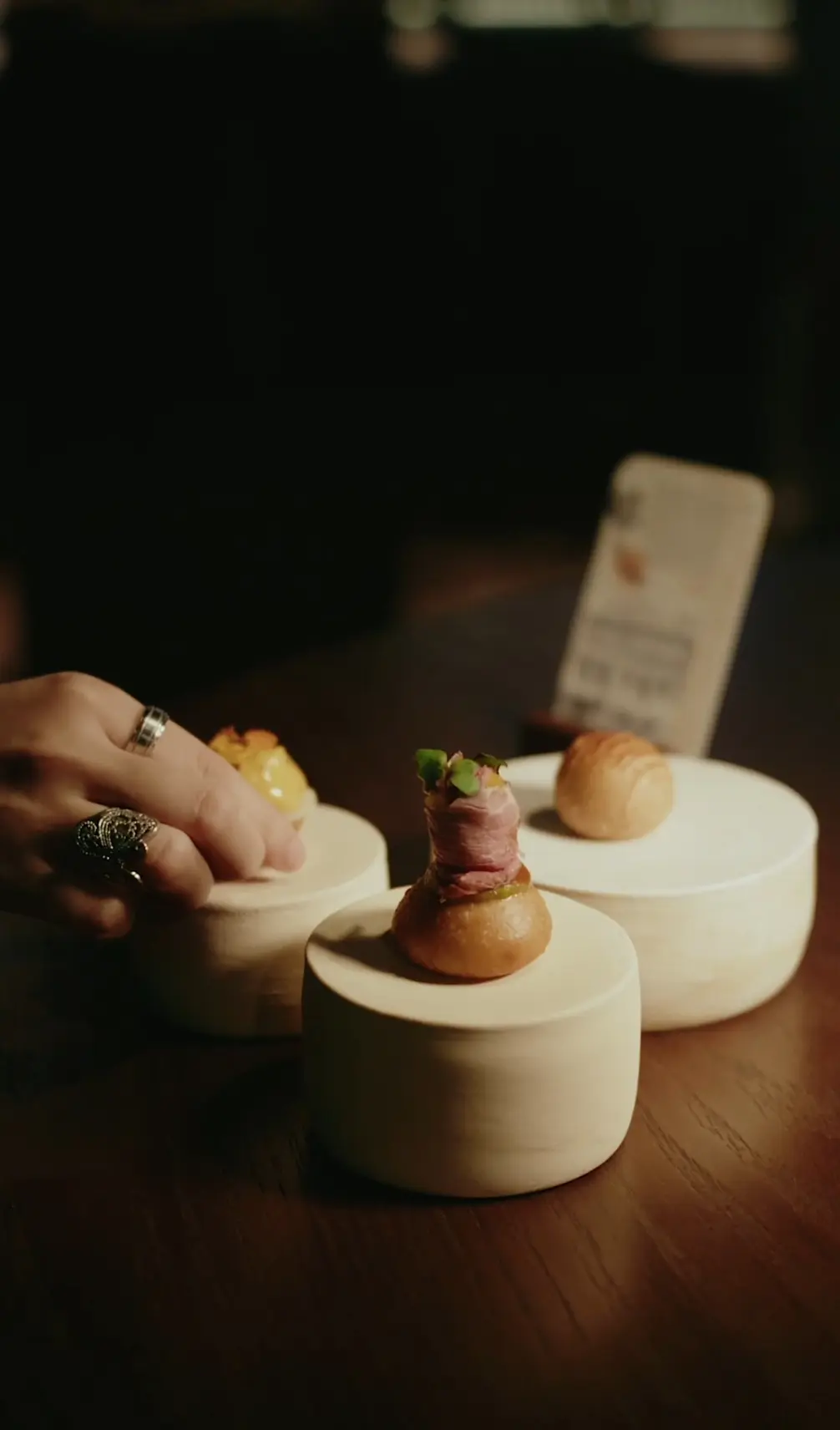
There are two menus: the 7-course Raices (“roots”; Php4,890+) and the 10-course Horizontes (“horizons”; Php7,980+). An a la carte menu lists a selection of dishes from Horizontes that one can order to supplement the shorter menu. Both the long and short menus read like a road trip through the parts of Spain that tourists rarely reach with one roundtrip ticket, each opening with a trio that sets the tone immediately—a bollo preñao, the stuffed bread roll of Asturias; mejillones en escabeche, mussels cured in the vinegar-bright brine; a serranito de pastrami, Alcalá’s wink at Andalucia’s beloved bocadillo, bite-sized and nowhere else made more dainty.
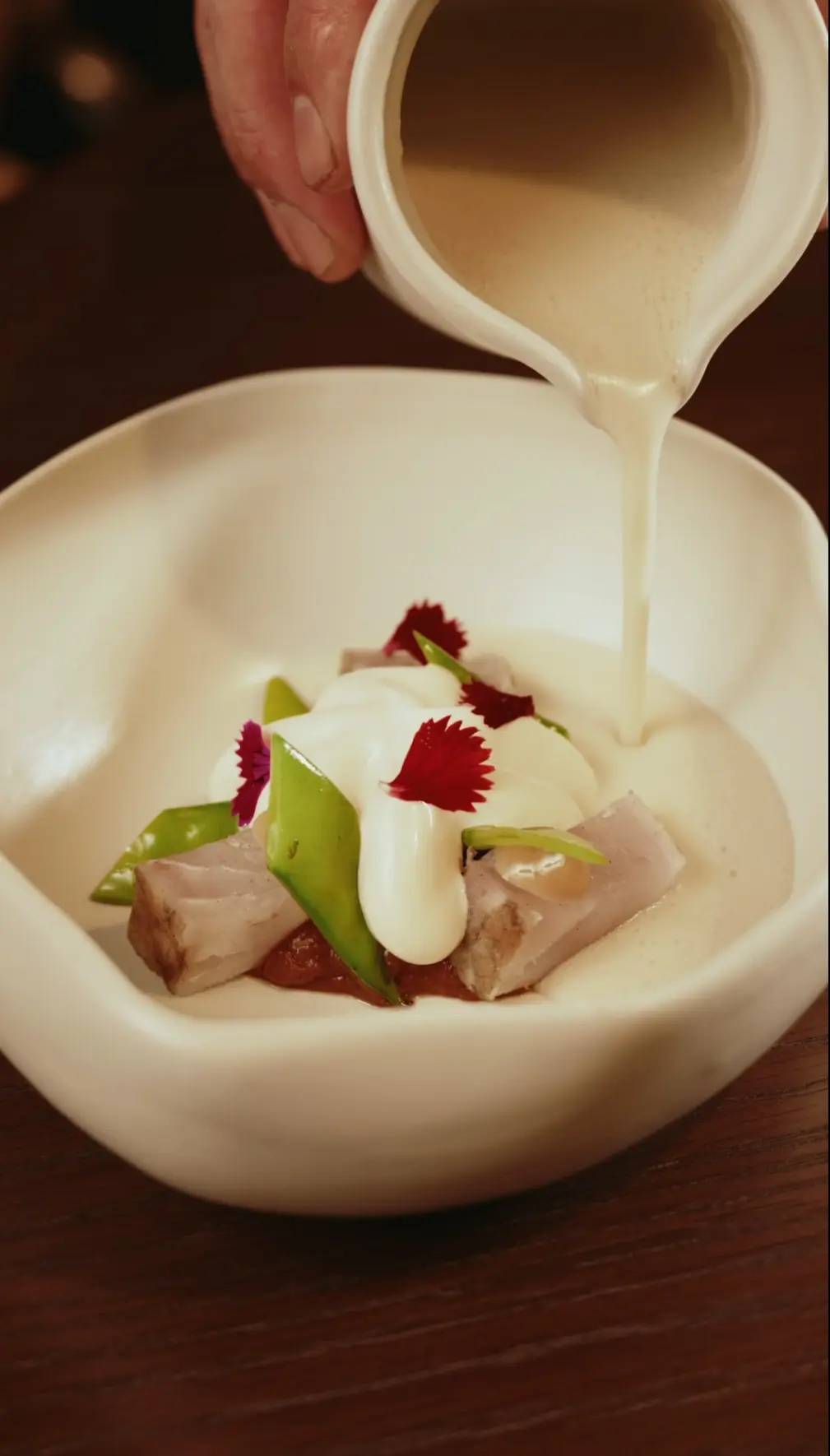
What follows is a confident, unhurried procession through the country’s coastal and interior traditions. The Atún con Pipirrana y Ajoblanco pays homage to the almadrabas of Cádiz, the ancient, hand-operated (and celebrated for its sustainability) bluefin tuna traps of the Strait of Gibraltar, pairing the fish with a delicious and delightfully frozen version of the cold almond-and-garlic soup of Moorish Andalucía.
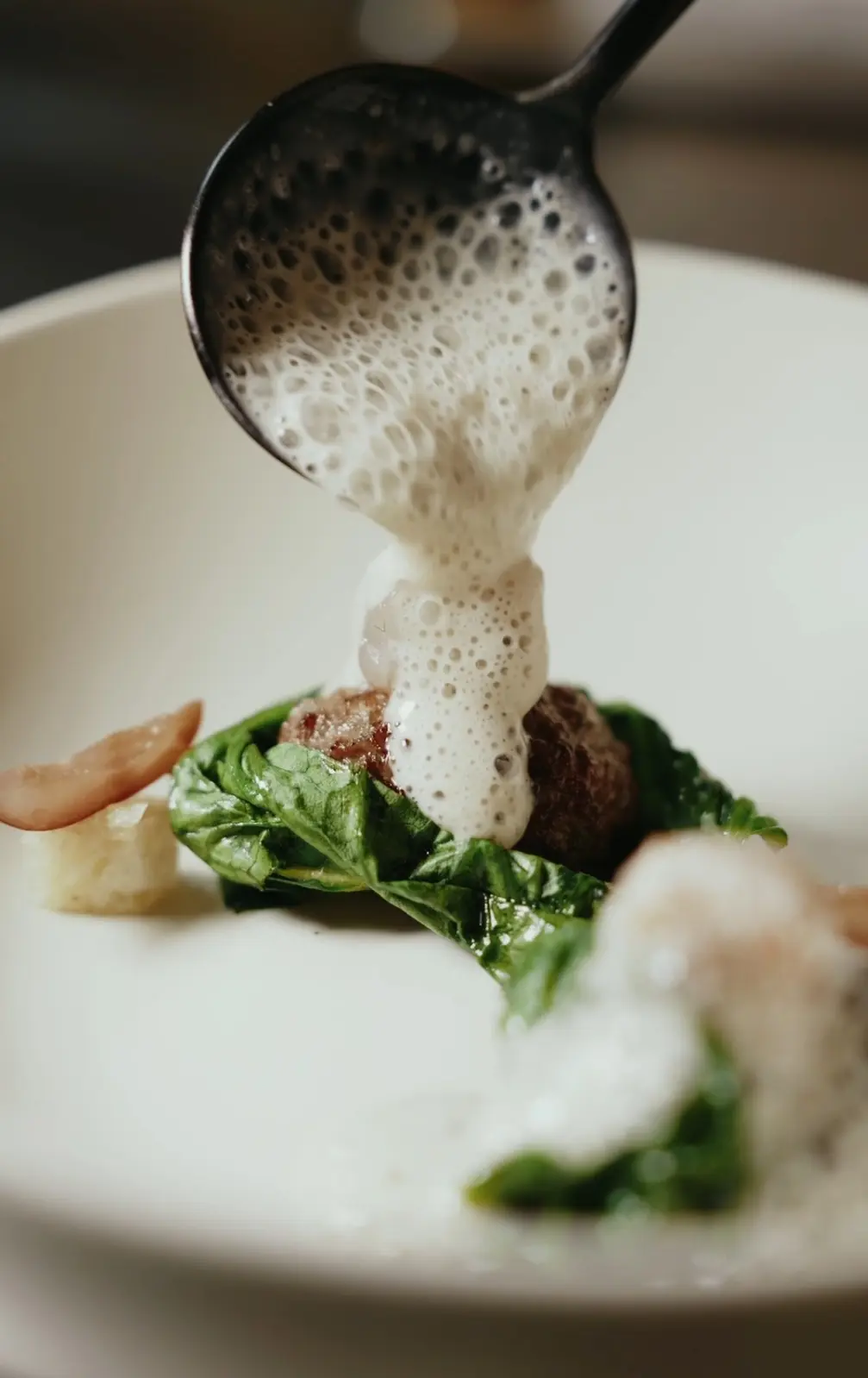
Next is the Caballa en Adobo con Gazpachuelo, Spanish mackerel cured in vinegar and spice, paired with a luscious clam emulsion, referencing the broth that has sustained working people along the Málaga coast for centuries. The exquisite Cordero Asado con Lechuga Alinada, grilled savory and tender lamb with lettuce and fermented grapes follows. Then the Mero Asado: grouper over creamy caldero rice with a pepitoria of almond, chicken, and squid—a dish that carries the full weight of Mediterranean Spain in its broth well.
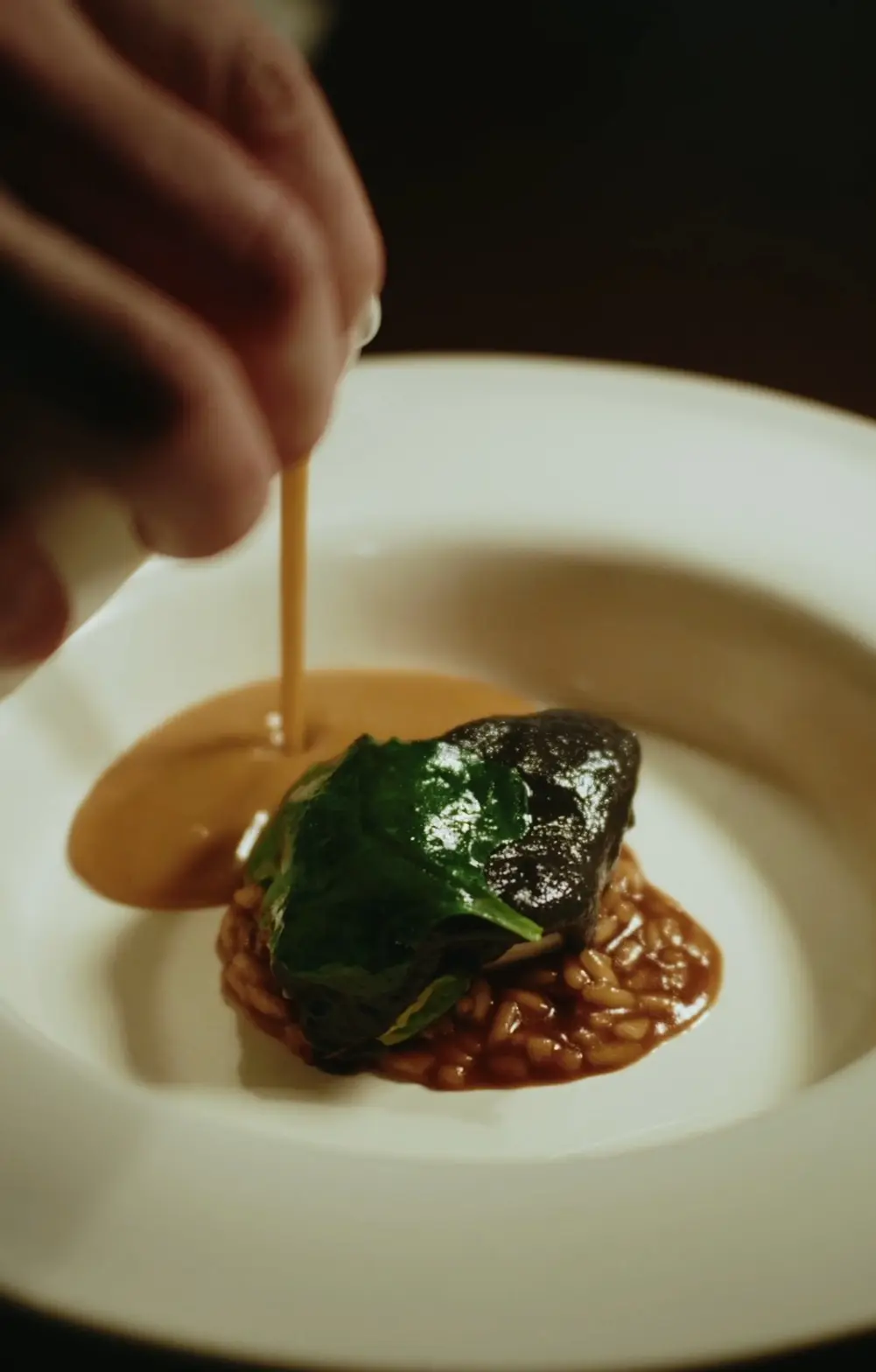
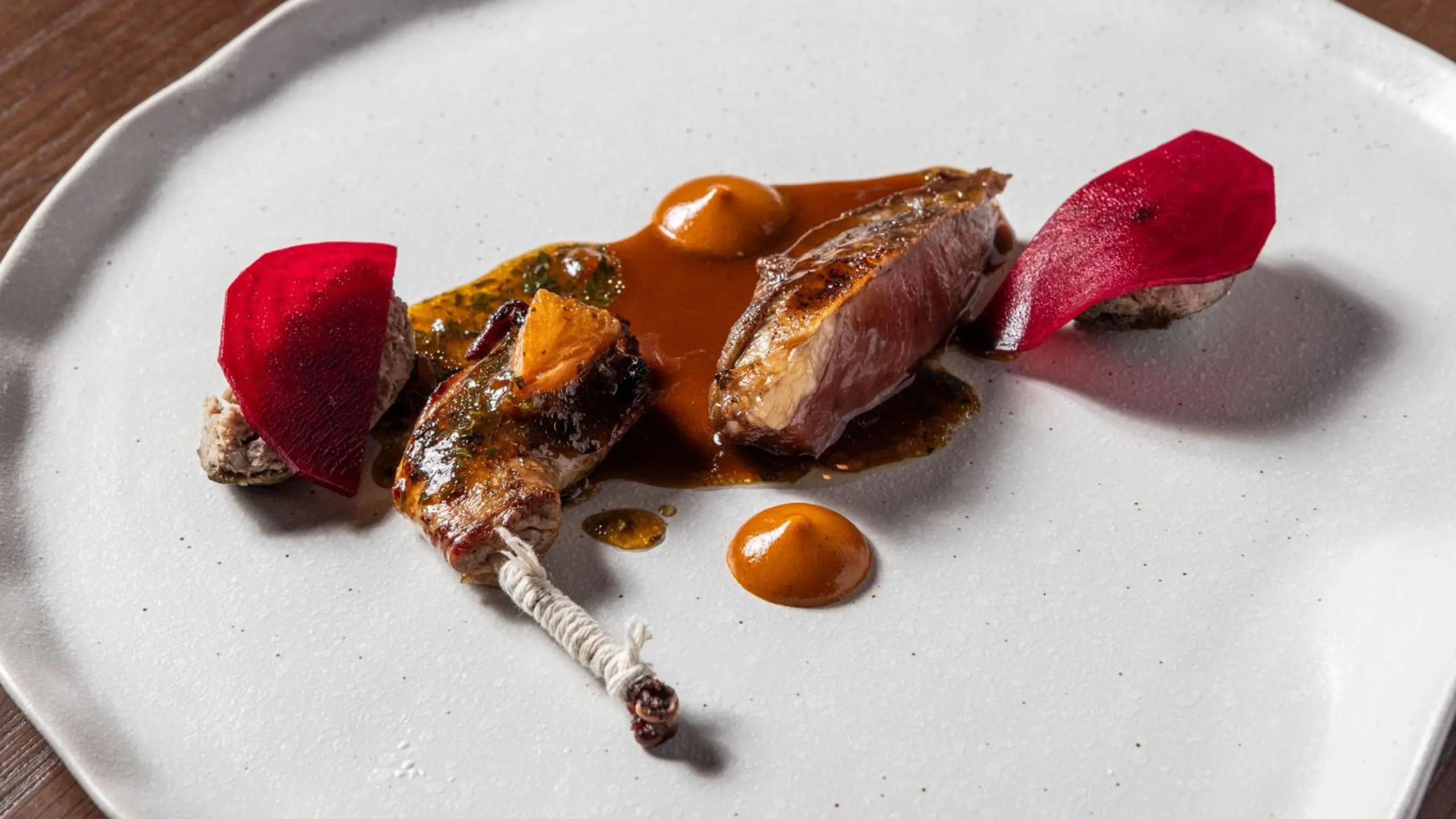
At this point, we were served the additional courses we ordered as I couldn’t resist the squab, and my companion, the lobster, which isn’t part of the Raices menu we chose. Each one is not to miss and only reveals something more personal still. The Sopa de Pescado de Mi Madre con Langosta—which translates to “my mother’s fish soup with lobster” and, not stopping there, topped with sea urchin—is the most nakedly autobiographical thing on the menu: a dish that takes one of the humblest, most domestic forms in Spanish cooking, with Alcalá honoring his mother by crowning it with a rich sauce and the finest things the sea can offer. The Pichón Asado con Escabeche de Naranja, squab with sausage and a sharp orange-and-vinegar sauce, belonging to the tradition of Spanish game cookery, was perfectly cooked and succulent; I was so glad I ordered this extra. Together, these two courses are the clearest statement of what Alcalá is doing at Singular: not modernizing Spanish food so much as honoring its deepest instincts, albeit dressed for a different room.
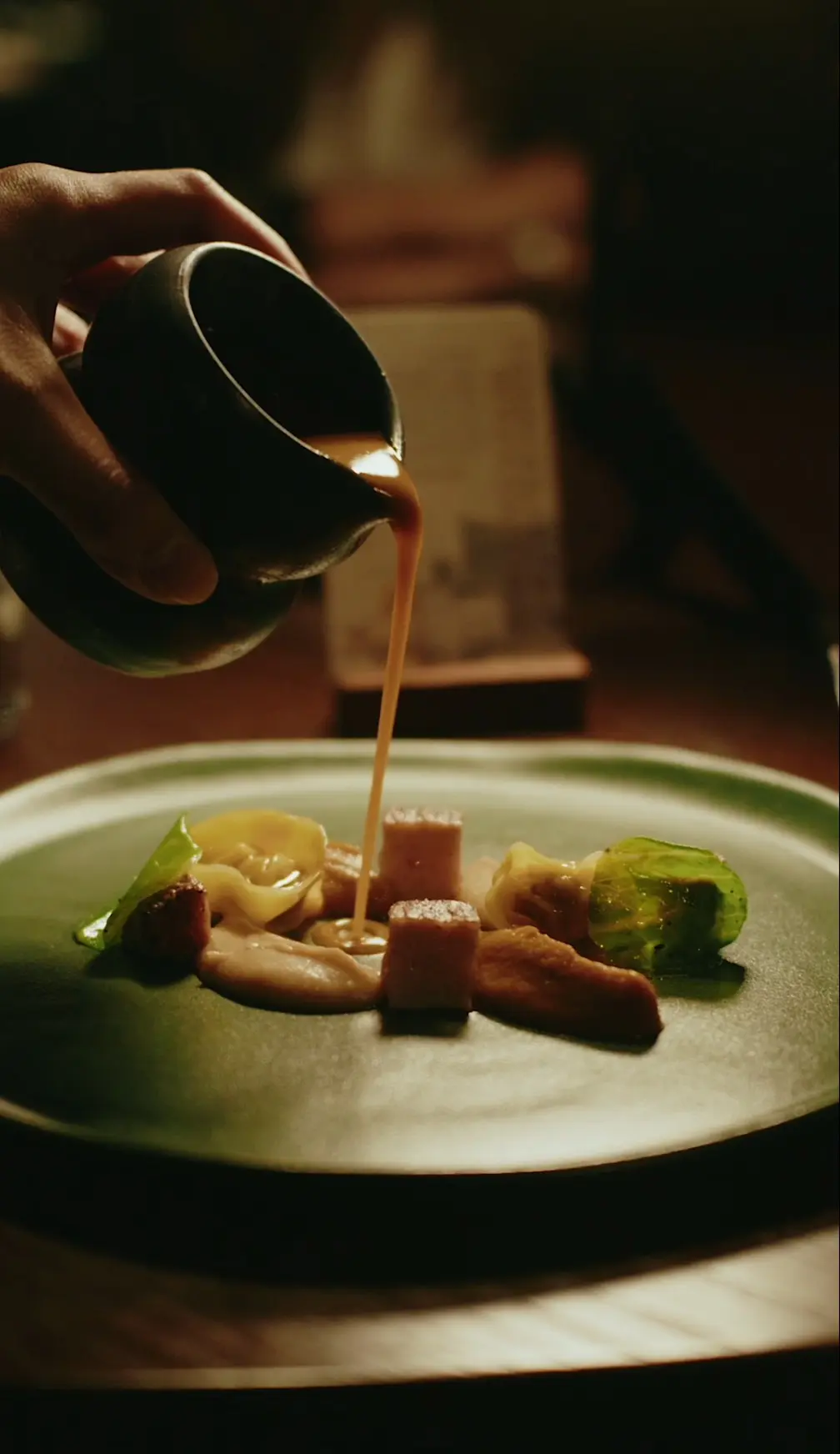
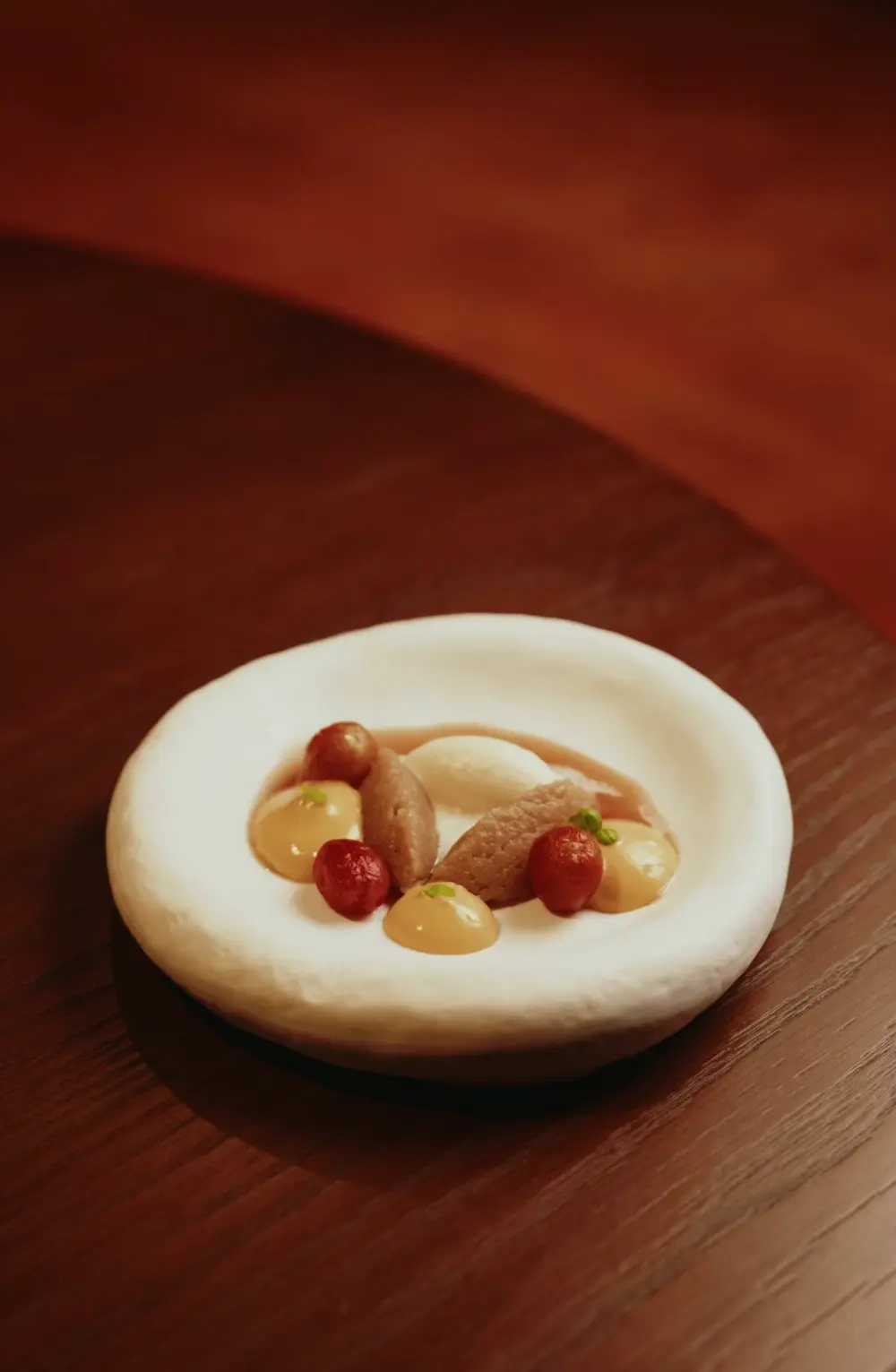
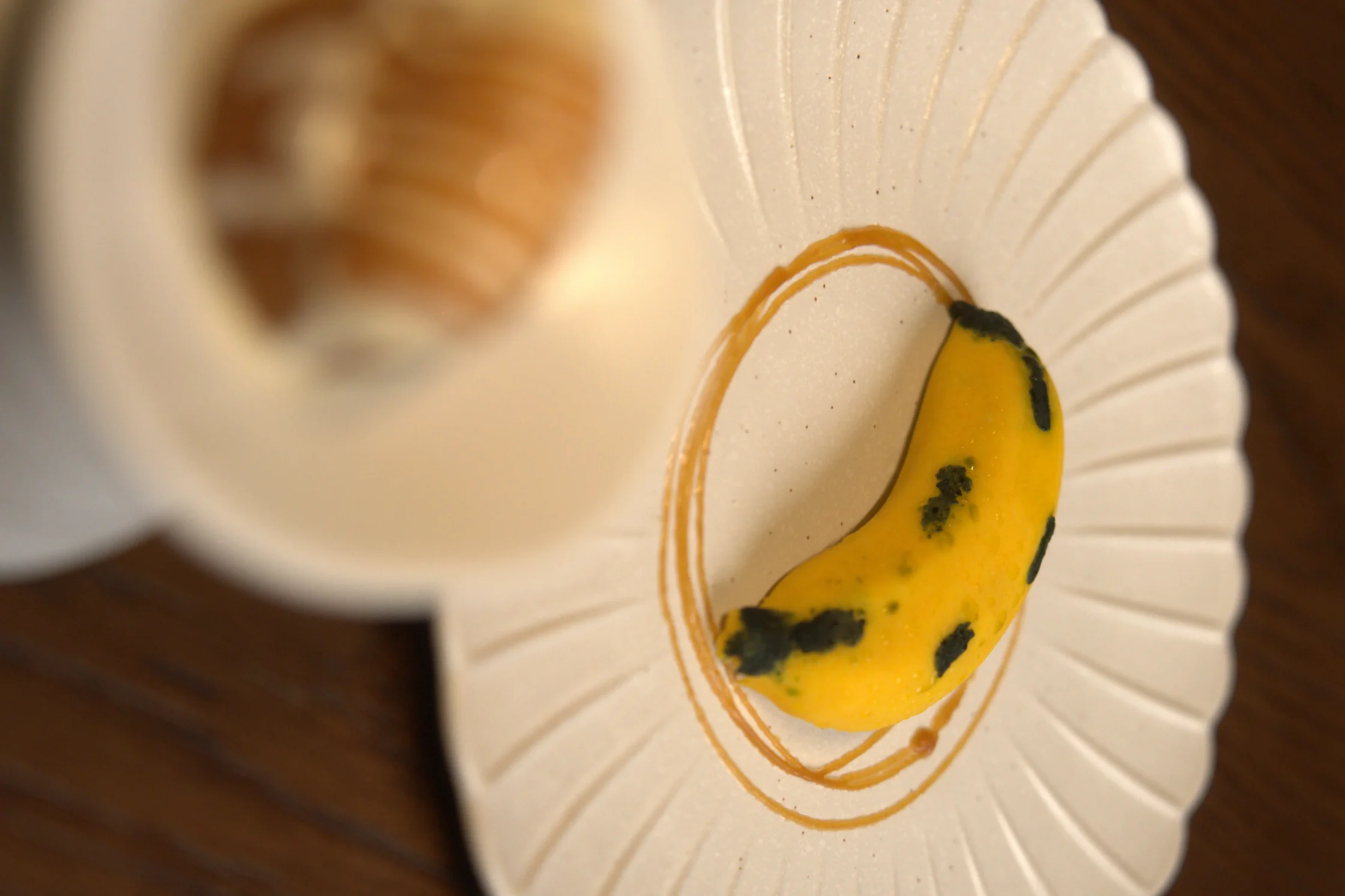
The Cerdo en Orza, where Ibérico pork is slow-cooked (for lack of a better description, perhaps can be described as prepared like confit) with dollops of velvety, flavorful pureed carrot and chickpeas on which a cocido broth is poured over. Cocido is really a pot dish, a rustic, hearty stew and one of my favorite things at a Sunday lunch, but here, it’s transformed by the quality of the meat and the patience of the technique. And then, dessert: Plátano de Canarias, a roasted banana, corn, and rum ice cream enrobed in white chocolate, shaped and painted to look like the real thing.
What Singular does brilliantly is dress the vernacular in evening clothes—taking the food of Spanish grandmothers and market stalls and rendering it with the technique of a chef who has clearly spent decades understanding those dishes before deciding how to remake them. The tasting menu is, in the end, an act of translation: from the rustic to the polished, from the roadside to the white tablecloth.
I must admit that while the traditional stews and soups that are reworked in the menu into sauces and emulsions are so good, so flavorful, and so spot-on, they’re so polished (disciplined?) that throughout the meal, I wondered if it was losing that soul, that feel of the comforting, slow-cooked, wood-fired, hands-in-the-pot spirit of Spanish home cooking. But if it does, even if for a millisecond, it’s not entirely unwelcome, either, because Alcalá’s cleverness and intelligence, not to mention his command of narrative and pacing in both storytelling and in his menu, impress.
What one finds oneself hoping, having eaten Alcalá’s elegant takes and Fuentes’ successful executions, is that one day they turn the tables entirely: set aside the tasting menu for an evening and cook the Spain they grew up eating. Not the trip through regions, but the arrival into a home that smells like garlic and almonds, like stews slowly bubbling over the stove, like fish curing in salt, and like lamb over a pit, its aroma and smoke blowing in through the windows. Alcalá has already shown us how well he knows Spain, but now we want to eat at his mother’s table—although, maybe, this is how he has orchestrated the corrida all along.
The Palace, 11th Ave, corner 38th St, Uptown Bonifacio, Taguig, 1634 Metro Manila. 0917 309 8027. singular.ph