Finding Rhythm at Flow, Chef Kevin Uy’s New Restaurant




It took me some time to write about Flow, the restaurant led by the young chef Kevin Uy that opened in Makati last December. Not because the experience was forgettable, but because it lingered with me in ways I couldn’t immediately articulate. I left intrigued, even slightly unsettled, in the way art sometimes asks you to sit with it before it reveals what it means to you.
I arrived expecting a familiar architecture to the meal, the kind of tasting-menu cadence my past dining experiences have unconsciously trained me to look for. Instead, Flow resisted those expectations. At first, the progression felt elusive, almost disjointed, as if the dishes were moving according to a current I wasn’t accustomed to. It was much later that I realized I had been searching for my own version of structure, while the restaurant was quietly inviting me into Uy’s reverent world.
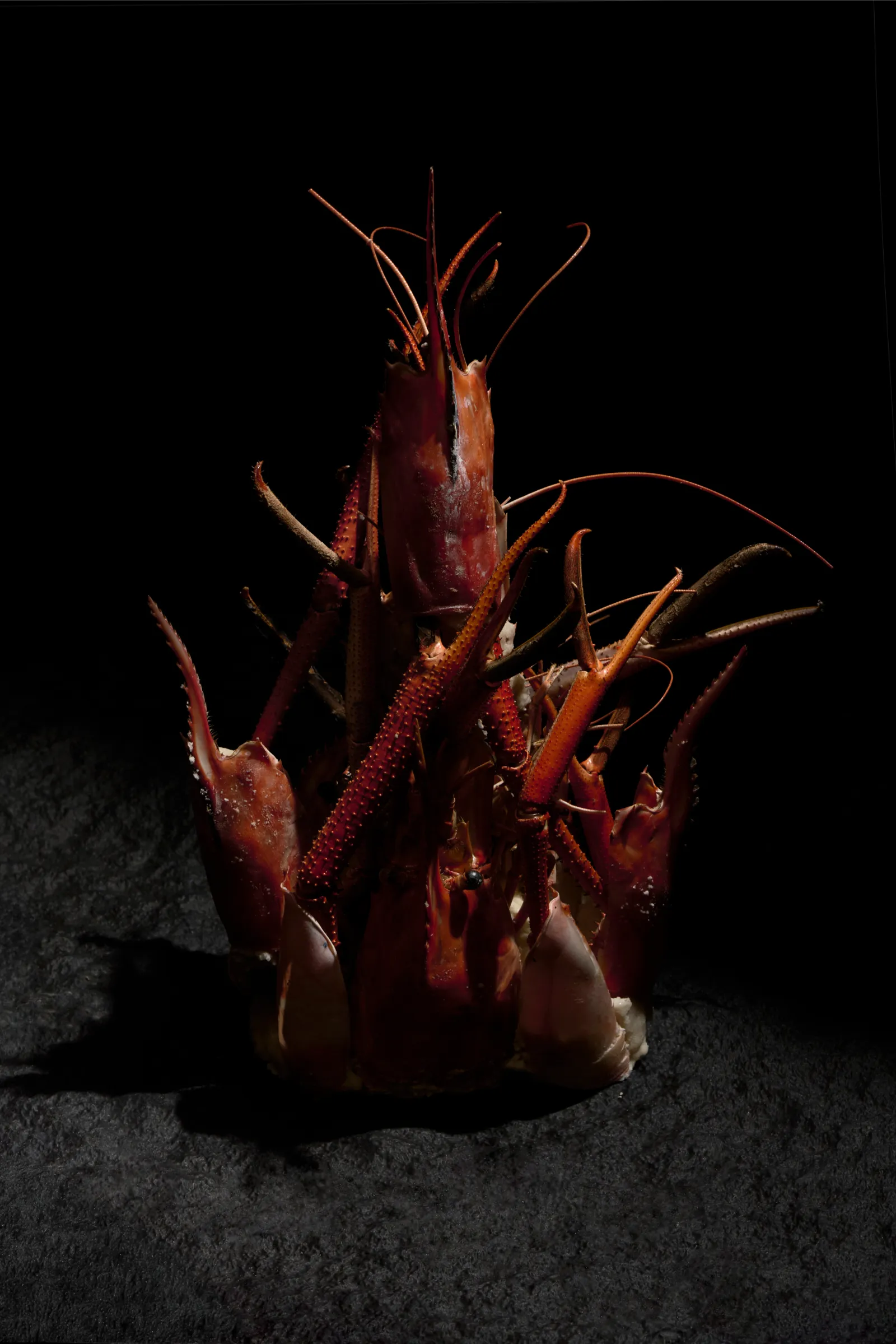
At Flow, cuisine is not built around a single exalted ingredient. It is built around ecosystems. Similar to the philosophy at Central in Peru, where Uy once worked, the cooking here considers the environment from which ingredients emerge. Shells, skins, cores, leaves, roots—everything has value, everything has context. Rather than crowning a lone star, the plate becomes a small landscape where components coexist. Nothing dominates; everything contributes. The result feels less like an arrangement and more like a natural occurrence. Flow, quite simply, celebrates biodiversity and does so with conviction.
The nine-course tasting menu is framed as “culinary biomes,” where dishes draw from coastlines, rivers, mountains, forests, and even cities. The references are both geographical and emotional. You sense a chef tracing the paths that formed him: Peruvian memories, Filipino roots, and the spaces in between.
That philosophy becomes clear early in the menu.
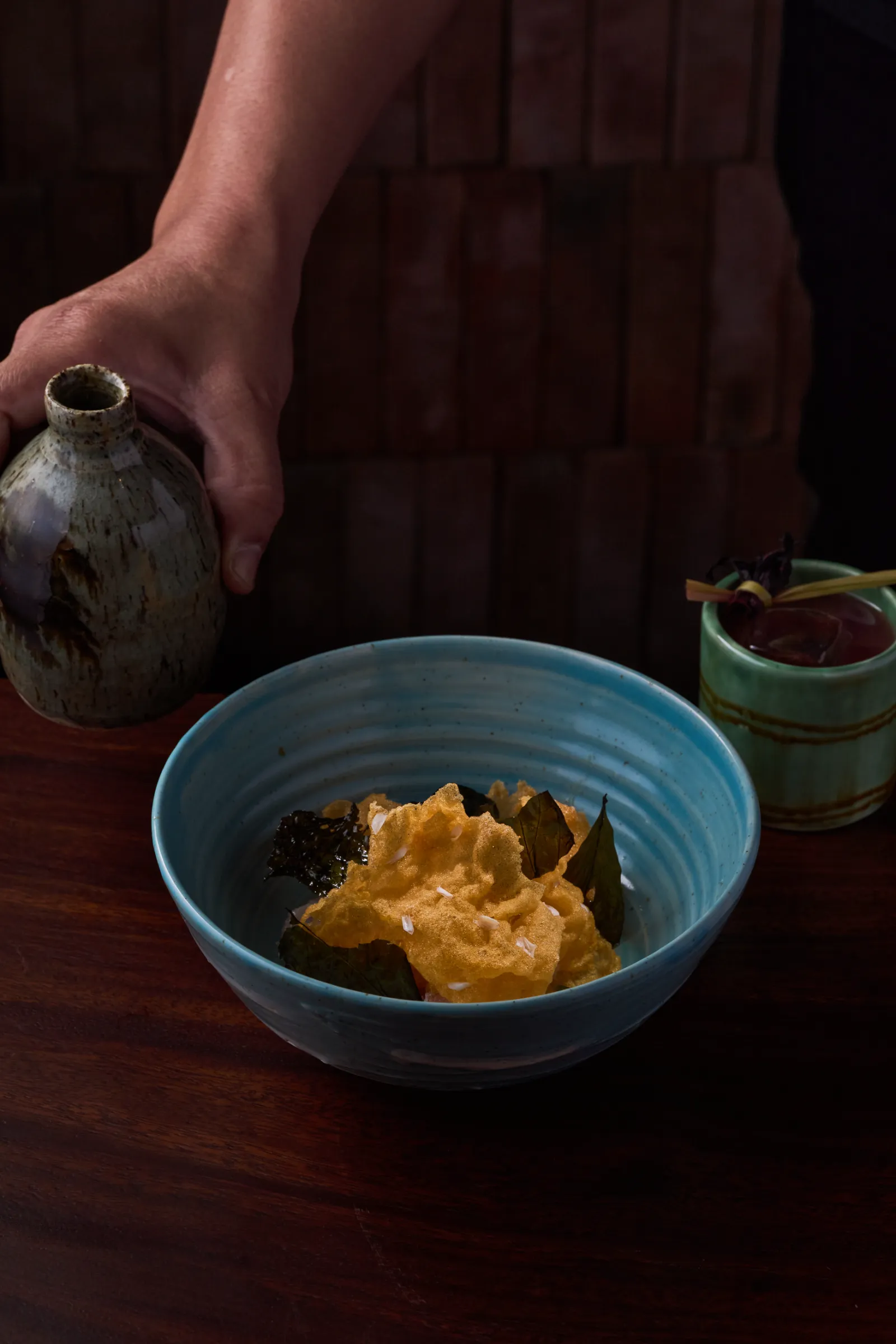
“Coastline” is one of the restaurant’s crowd favorites, a meditation on seaweed in different forms that evokes sand, rock, and water. Spirulina puffs represent the rocks, while a nori cracker is reminiscent of rough sand. A clear gel and pickled seaweed highlight the waters where they float.
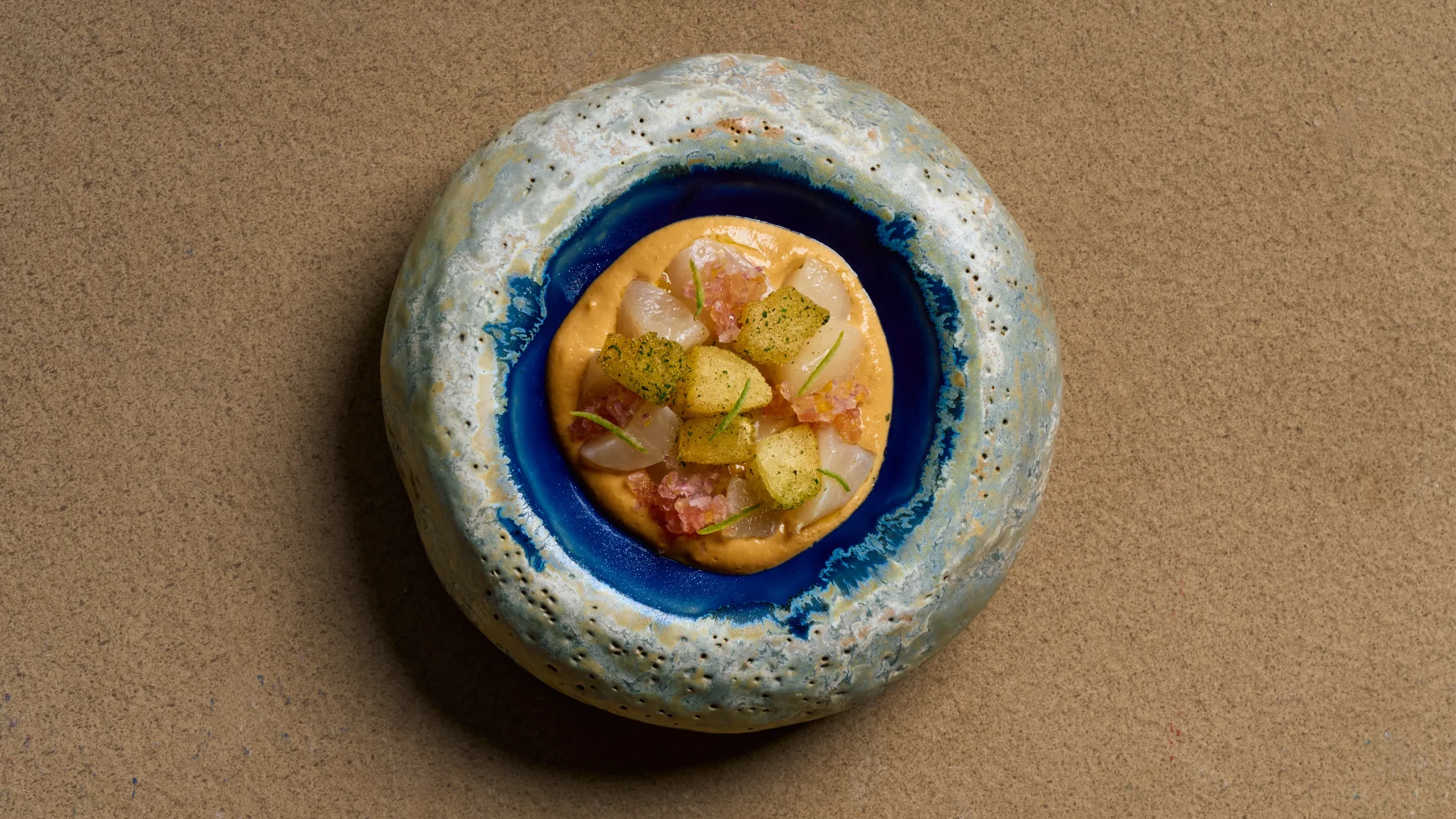
“Manila,” another favorite among diners, brings scallops, cassava, and uni emulsion together in a way that feels cosmopolitan—a melting pot of cultures, like the city itself in edible form. An uni emulsion is topped with scallops and fried cassava, finished with a granita made from indigenous souring agents.
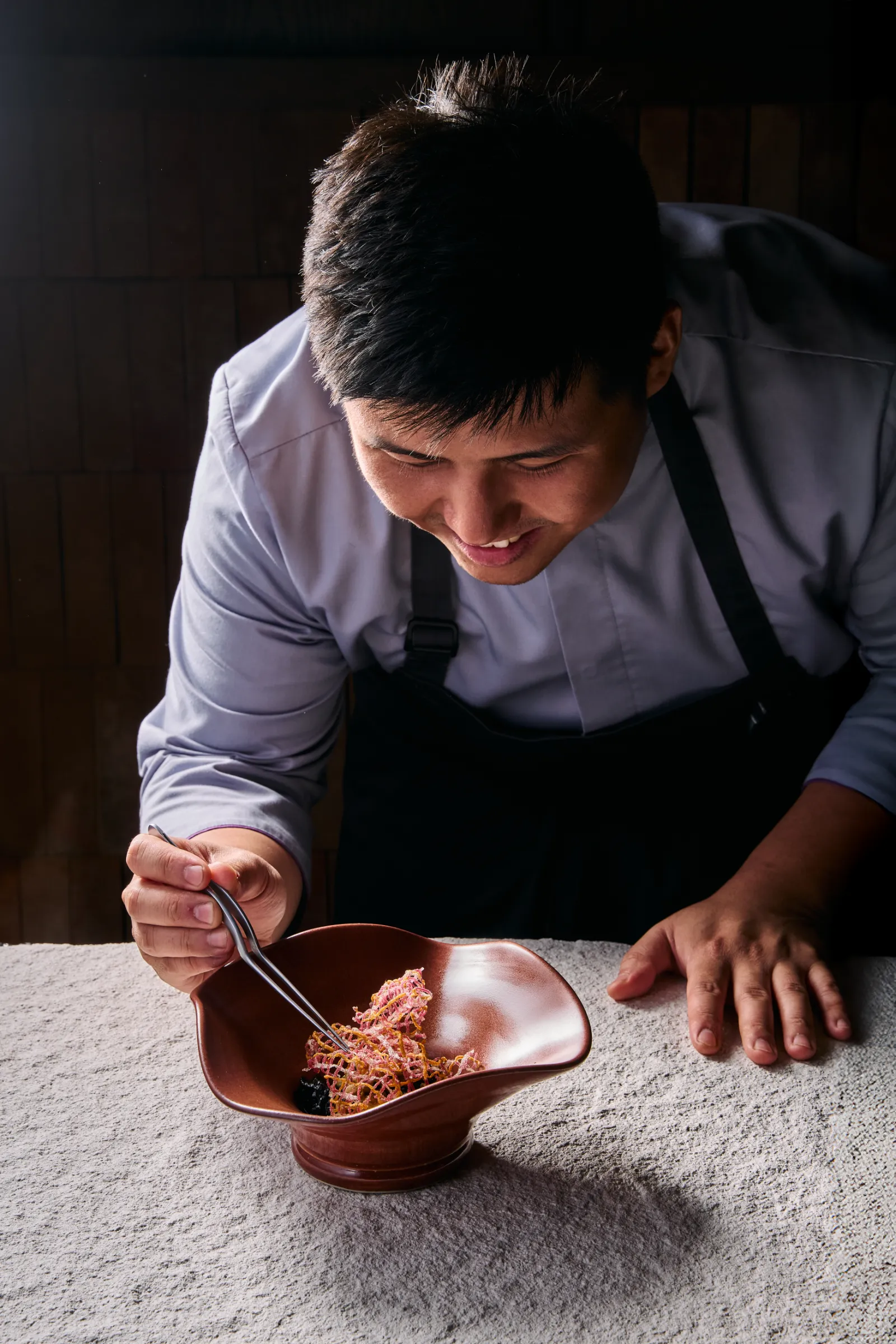
My own favorite, however, was “Mountain.” The dish arrives with confidence: beef cheek nestled beneath layers of corn in various textures, full of depth and warmth. There was something profoundly grounding about it, as if the dish had been drawn directly from earth and smoke.
Uy’s story threads through the menu. He grew up in a household where food was both comfort and exploration, and curiosity eventually led him to the Basque Culinary Center in San Sebastián. From there, he journeyed to Peru and spent five formative years at Central under chefs Virgilio Martínez and Pía León. There, he learned to think in terrains—coasts, rivers, mountains, farmlands—and to understand ingredients as part of broader cultural and geographic narratives. Somewhere along the way, he recognized how deeply Peru and the Philippines mirror one another: different countries on different continents, yet sharing a familiar spirit.
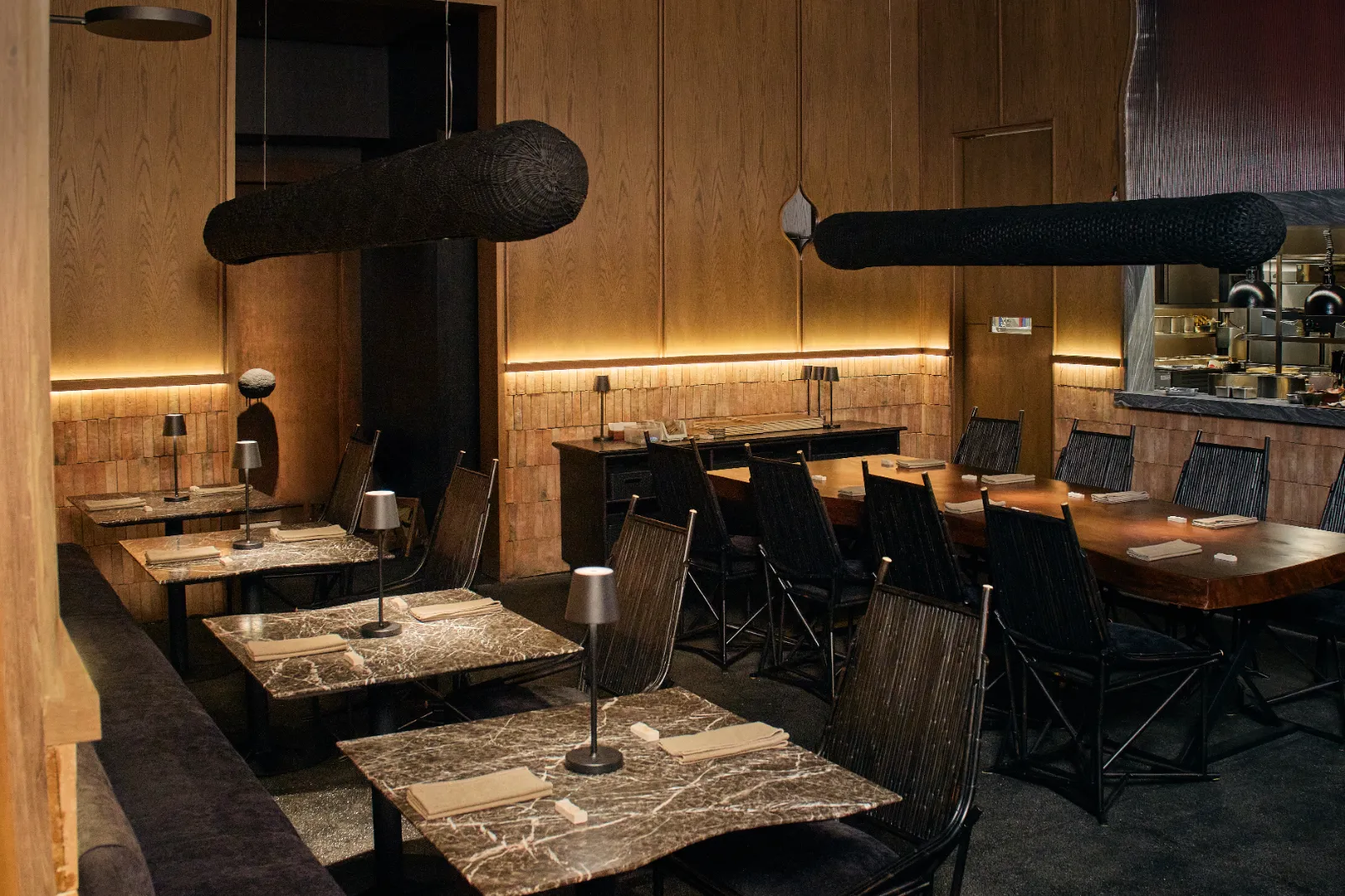
The restaurant space reflects that sensibility. Designed by Nazareno Architecture + Design, the entrance feels like a gentle descent into another world. Inside, stone, wood, woven textures, and softened light come together in an atmosphere that is warm yet composed. Raised glass vitrines hanging on the walls showcase ingredients in dramatic lighting. Even the plates participate in storytelling, crafted by 13 local potters including EJ Espiritu, Mia Casal, Joey de Castro, and Pablo Capati, each piece responding to a specific dish.
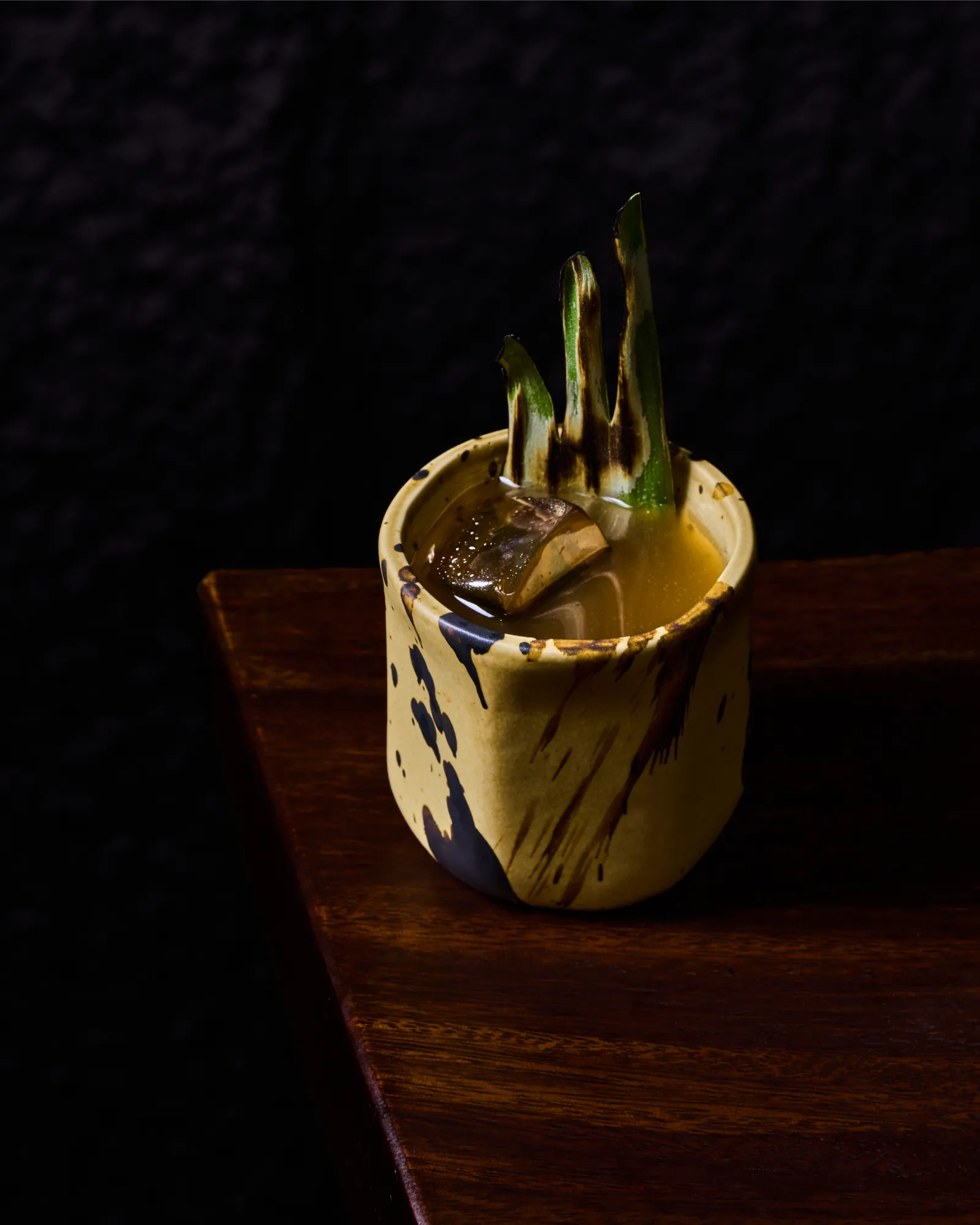
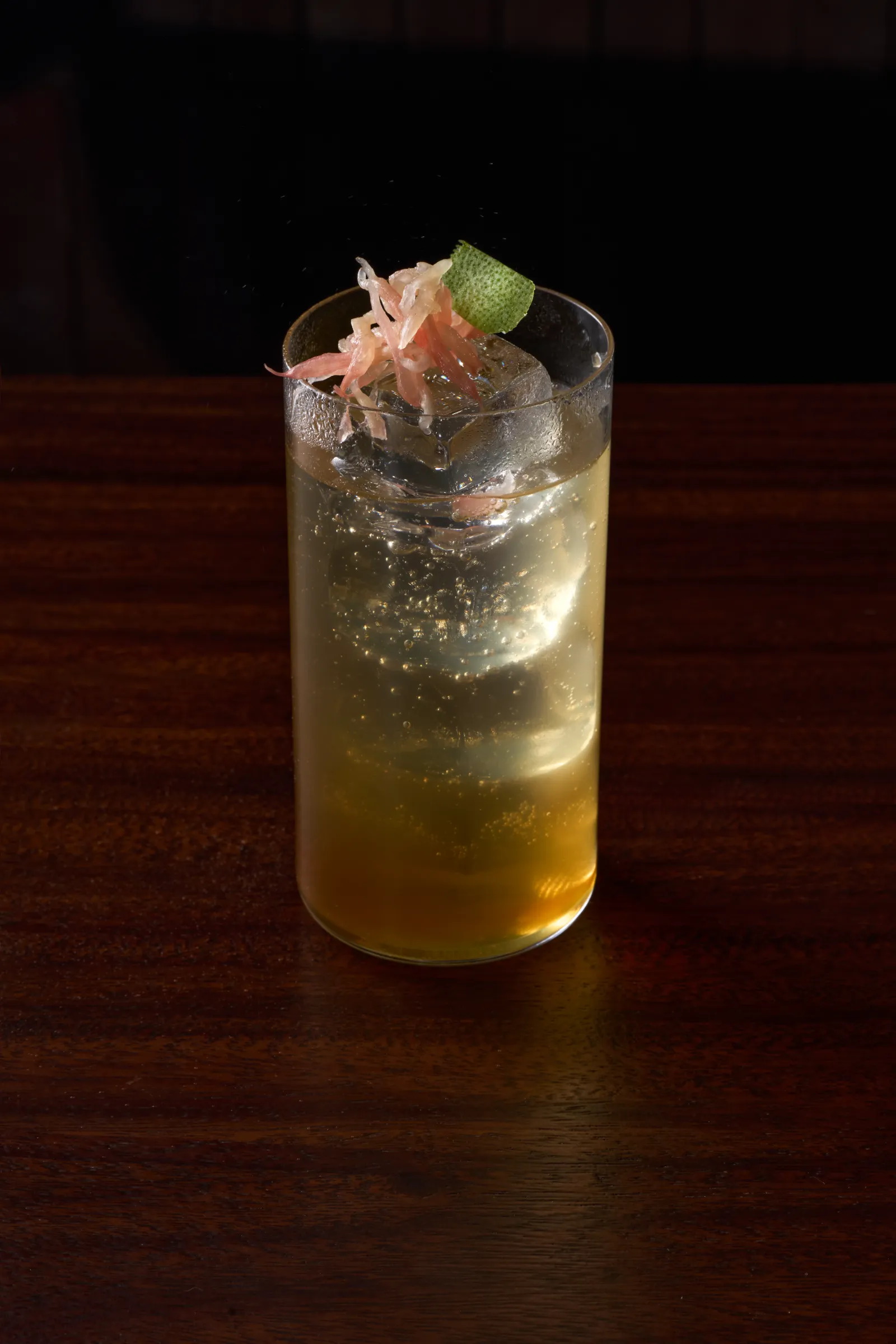
The five-course cocktail pairing follows the same philosophy. Rather than simply complementing flavors, the drinks extend the narrative of each course, echoing landscapes and ingredients with infusions, ferments, and surprises. It feels less like a separate program and more like another voice in the conversation.
Uy returned home intent on shaping his own language, and alongside his longtime friend and fellow executive chef, Gabriel Ong, he did exactly that. Their partnership feels like a balance of intuition and discipline, imagination and grounding.
Of the two desserts offered, the one that stayed with me was Yacon. Uy describes it as the clearest expression of what Flow stands for: one ingredient explored in its entirety. Skin, pulp, remnants—nothing discarded. Through technique, textures shift from crisp to creamy, from airy to dense, each revealing another facet of the same ingredient. The dish invites the diner to consider how far one ingredient can travel without becoming anything other than itself. It embodies the chef’s curiosity and respect all at once, and is both intellectual and deeply pleasurable. It left me curious long after the meal ended.
My experience at Flow ultimately taught me as much about myself as it did about the restaurant. I realized how strongly I gravitate toward familiar order, toward the comfort of expected crescendos in a meal. Flow did not follow that script. Instead, it asked me to release it, and in doing so, I began to appreciate the quiet logic of Flow’s rhythm.
Everything seems to harmonize without strain. It is inventive, assured, and technically confident. Yet it does not perform for attention. It invites you instead to listen—to ingredients, to landscapes, to the conversations between cultures.
Flow is a study of biomes and ecosystems, ingredients, and the relationships that sustain them; it is also the portrait of a young chef informed by multiple worlds and unafraid to write in his own hand.
Photos courtesy of Flow