Hanna Pettyjohn and the Artistic Practice of Shaping Transience




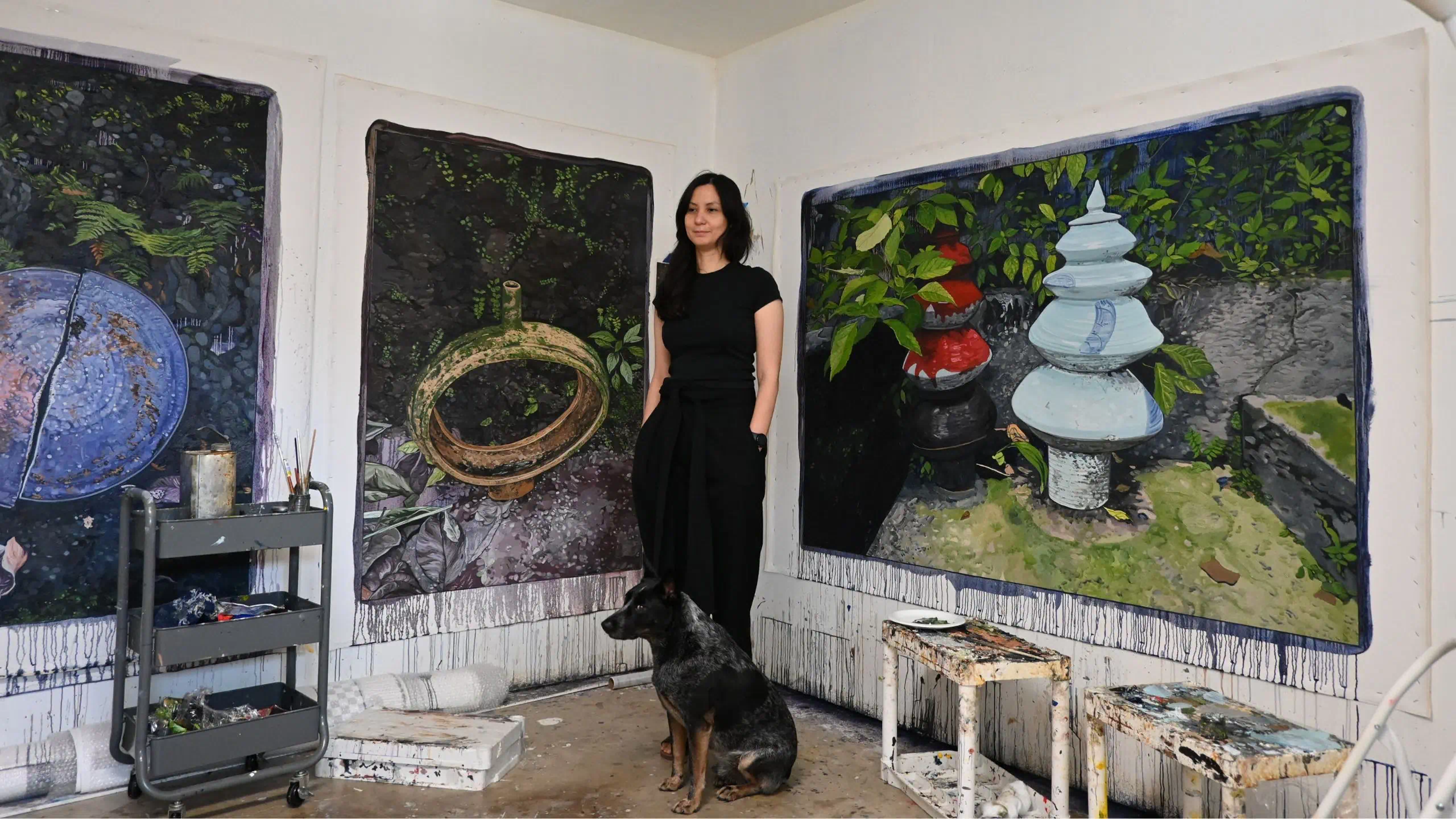
Hanna Pettyjohn possesses a penchant for bringing together the unlikely pairing of cameras and ghosts. The artist has a long-standing habit of documenting objects and their lives found inside her home in Mount Makiling, a home that doubles as the pottery studio of Jon and Tessy Pettyjohn, the artist’s parents and the pioneers of the revival of modern Philippine pottery. It doesn’t come as a surprise then, that Pettyjohn, along with her other sisters, have come to love the craft as well. But on the other hand, witnessing the different forms clay undergoes and the ever-transforming landscape of her parents’ workshop cemented transience as the unassuming anchor in Pettyjohn’s practice. This, of course, is balanced with the tenderness of her roots.
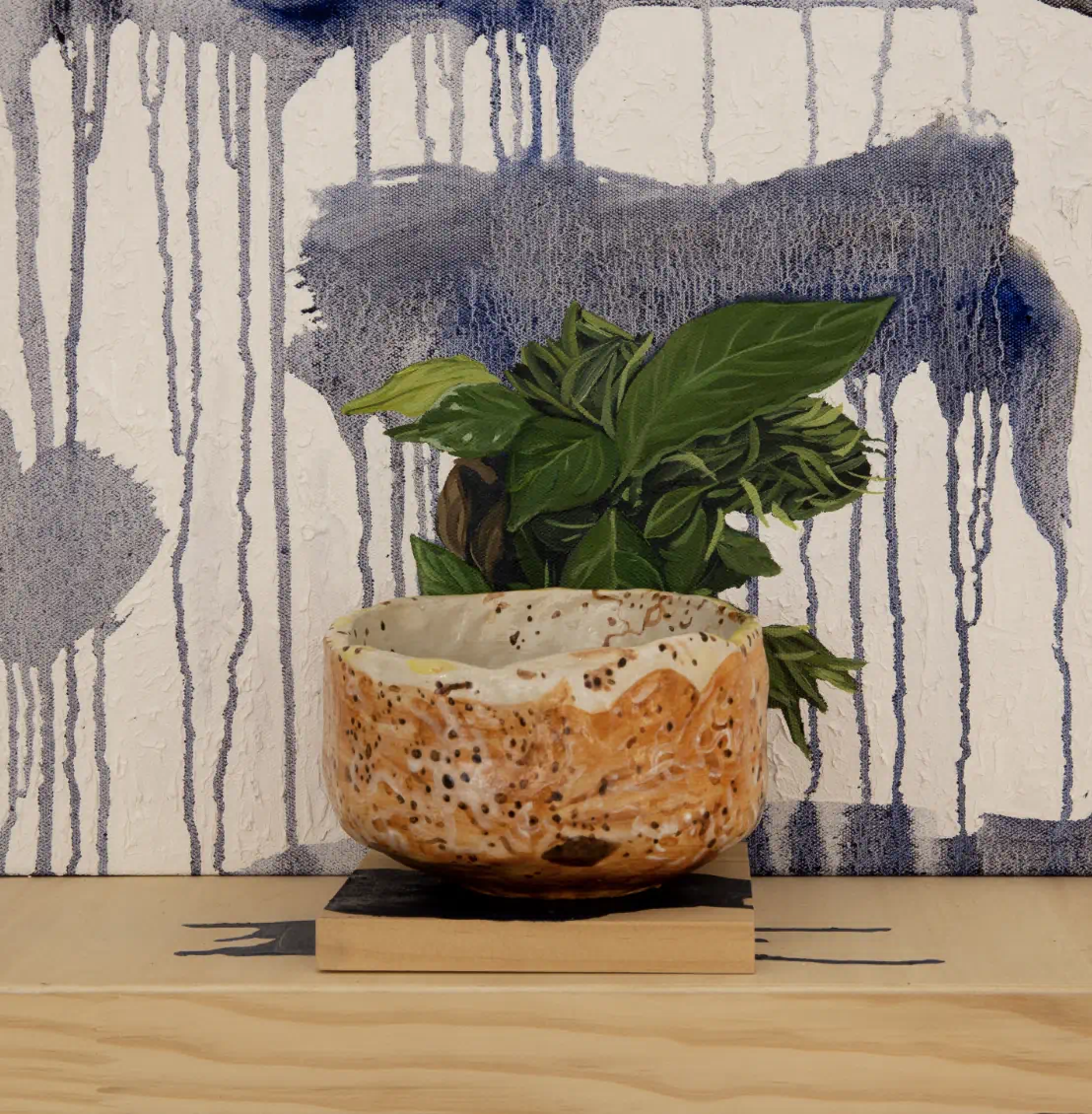
In her recent show at Mo_Space entitled “New Ghosts”, Pettyjohn populates the space with “references,” taking elements from mounds of photographs echoed in her paintings and sculptures, placed side-by-side. To Pettyjohn, the show is also an ode to Mount Makiling, a sleeping volcano, verdant, beautiful, and the inspiration behind many stories of diwatas and mythical creatures in Laguna, and, perhaps, another ghost the artist references in her works. This subtle reverence she demonstrates through “A Mountain’s Hands” series, where paintings of translucent blue glazes complement the brown, speckled high-fired clay sculptures.
Her main piece, “Production/Still (a reference),” is a 5 x 3.5-foot oil painting that further establishes Pettyjohn’s intent to amplify the impermanence of the original objects as she renders them in painterly strokes, a resistance to mimicking the realism in a photograph.
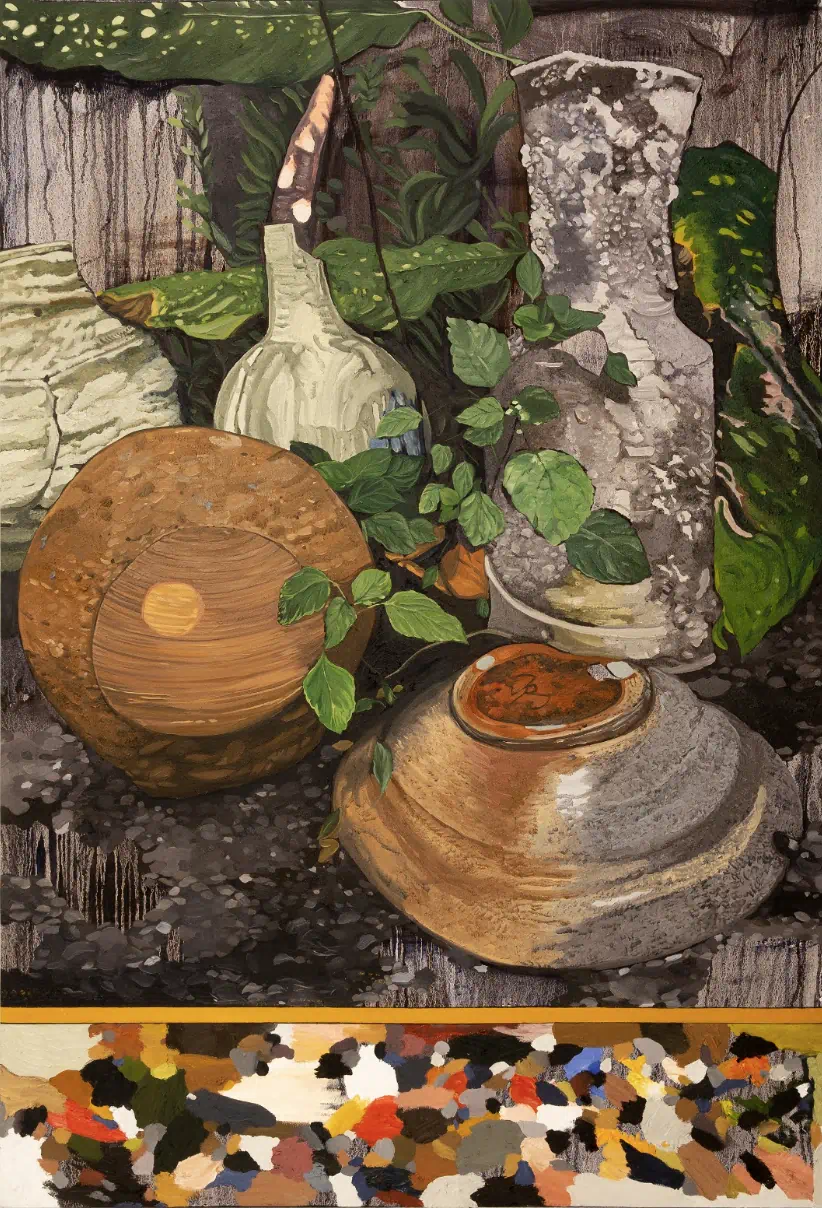
A graduate of the University of the Philippines, Pettyjohn approaches her practice as an autobiographical exploration on identity and transience, earning her a Thirteen Artists Award in 2015 from the Cultural Center of the Philippines. Currently based in Dallas, USA, her works have also been exhibited internationally: Taipei, Miami, Singapore and Hong Kong, contributing to the shaping community of Filipinos in the global diaspora.
Q. Growing up in a home that doubles as a studio/workshop is a very unique experience, even among artists. Can you share how this shaped your perception of art?
Growing up around my parent’s studio taught me so much about art and the importance of a good work ethic in your practice. Being able to see raw materials come to the house in sacks and boxes and all the stages they go through to become wonderful, shiny, functional ceramics was a big influence on me. It gave me such an appreciation for the importance of the process; to me this is as important as the work itself. This is something I always incorporate in my exhibitions—for example, in the drips on my canvases or using insignificant tools or studio detritus as subjects.
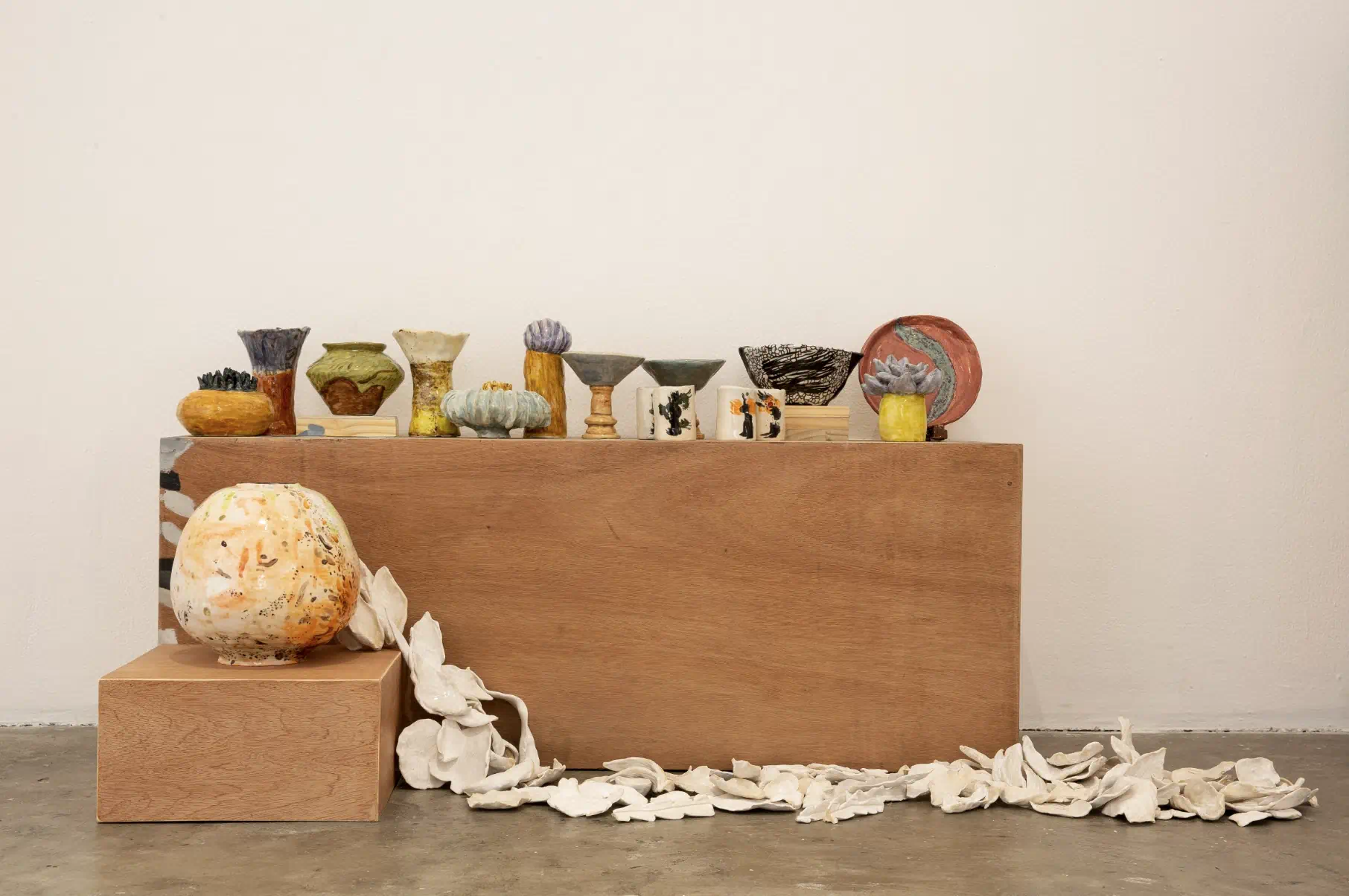
Q. Your process includes a number of transmutations from a site/an object’s original form to photographs to paintings and sculptures. How did you find your own process? Were there any challenges when you were only finding your way?
It really helped me to live away from home. I was able to come back and see everything with fresh eyes, objectively, and not take the place for granted. I was also able to study and work on ceramics independently, away from my parents, which both taught me how to pursue my own ideas and led me to appreciate their practice more.
Q. How do you imagine the mediums speak to each other? How do you filter through them and decide which gets to be exhibited? Have you ever included photographs in your shows?
I’m always thinking about how 2D and 3D works are different; how the concept changes when one subject is depicted on the canvas versus in the round. I don’t have all the answers yet, but I like exploring this question. In “New Ghosts”, I’m treating the ceramics as paintings, the “ground” or canvas just happens to be in the shape of the object I’m depicting. When it comes to deciding what to exhibit, I always like to make more work than I think I need, to be able to really [distill] everything [down] to the ones that best express the concept. I’ve never exhibited photos, but I’ve been thinking about it.
Q. Being part of the Filipino diaspora community and exhibiting your work internationally asks you to travel often and between places. How does traveling and this spirit of transience shape your philosophy as an artist? How has it evolved over the years, especially when more and more digital platforms emerge to “diminish the distance” between places?
Digital platforms definitely diminish the distance, as you said. It’s been wonderful to see how many artists have been getting exposure that they never would have had. I also think that it’s been helping this new and exciting interest in art from countries that were previously less exposed. Thinking of the world as a more connected place helps me gather my thoughts more seamlessly as I move from one place to another. I can see the place, Pansol, my parent’s workshop, a little more objectively and find a desire to tell that story in my work knowing that the audience could be from anywhere.
Q. As an artist, where do you see the future of art in the Philippines and the US heading? Where do you locate your practice in this future?
I really can’t say! We’re living in such strange times. I wonder if we’re going to become more insular and what that means. I’m always reassessing my practice and I hope there will always be a place for it.
New Ghosts runs through until August 9, 2026 at Mo_Space, 3rd floor, MOs Design Bldg, B2 9th Avenue, Bonifacio High Street, Makati City, 1634 Metro Manila; (02) 8403 6620. Visit their website here.
FAQs
Hanna Pettyjohn is a Filipino contemporary artist whose practice explores memory, identity, displacement and the emotional lives of objects.
Her work frequently examines transience, family history, domestic space, material memory and the relationship between people and their surroundings.
Growing up around her parents’ pottery studio exposed Pettyjohn to clay’s continual transformations, giving her a material vocabulary for impermanence and change.
Jon and Tessy Pettyjohn are ceramic artists associated with the revival and development of studio pottery in the Philippines.
Her family home and pottery studio on Mount Makiling provide both subject matter and emotional context, connecting landscape, domestic objects and inherited creative traditions.