A Pâté en Croûte Worth the Trouble




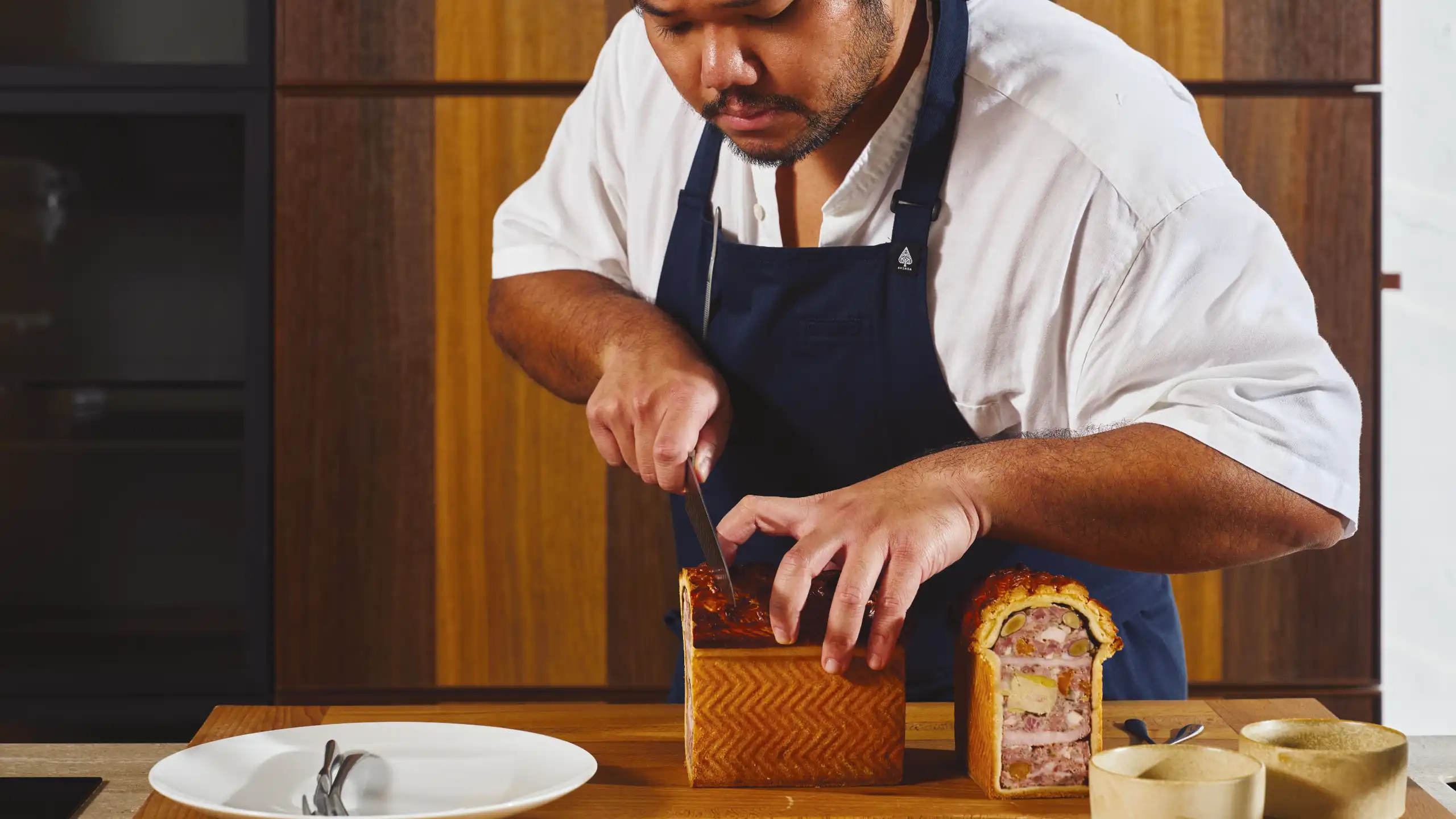
A pâté en croûte looks almost architectural once it’s sliced. That’s part of the trick. Few dishes in classical cuisine hide their labor this elegantly. Beyond the neat cross-section is a rigorous four-day sequence of curing, grinding, seasoning, folding, lining, baking, resting, draining, and filling. Chef Luis Locsin likes that the dish hides its difficulty so well. Or perhaps, more accurately, he likes that it doesn’t hide it from him.
(Article continues after the video.)
Video:
Locsin speaks of pâté en croûte with the wary affection of someone who knows how quickly it can punish confidence. Too much fat dulls the palate. A weak farce turns the slice timid. One crack in the pastry can send hours of work leaking onto the tray. At this point, he’s made close to a hundred of them, chasing the dish through every possible failure point: the seasoning, the pastry, the fat, the aspic poured only when the pâté is ready to receive it. Success is never guaranteed. Push too little and the whole construction falls flat. Push too hard and every bite pays for it. Something almost always goes wrong, and that seems to be part of the appeal.
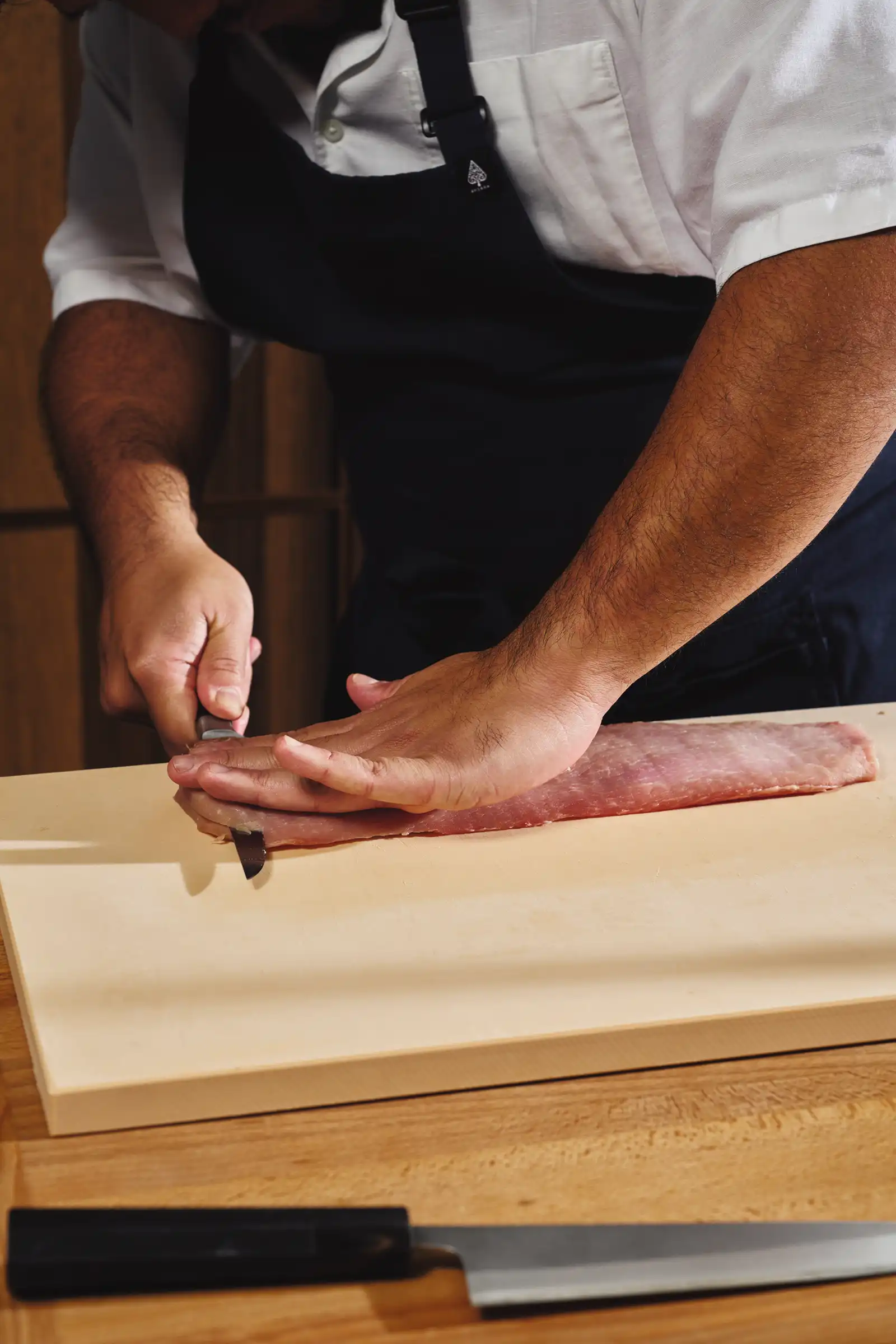
There’s an easy line to draw between Luis Locsin and his grandfather, National Artist Leandro Locsin, but the more useful connection is their method. The elder Locsin could take the idea of the humble bahay kubo and turn it into the Cultural Center of the Philippines, keeping that sense of lift and lightness. Luis, likewise, works with more perishable materials. In pâté en croûte, he takes a rustic French form built on offal, fat, pastry, and preservation, then tries to make it feel precise, composed, and somehow inevitable.
The version he favors now leans classical French, with chicken hearts and liver, cured pork loin, foie gras, port-soaked apricots, toasted almonds, pickled green peppercorns, brandy, parsley, and warm spices doing their slow, rich work (all the good stuff). He has gone elsewhere before, making Chinese-leaning versions, Filipino-inflected ones, even a pâté built around Japanese curry powder, sake, and mirin. But he keeps returning to the old-world framework because constraint gives the experimentation its charge. “If you work within the framework of the old school flavor profile,” he says, “you can be creative in different ways.” The limits are what make it interesting.
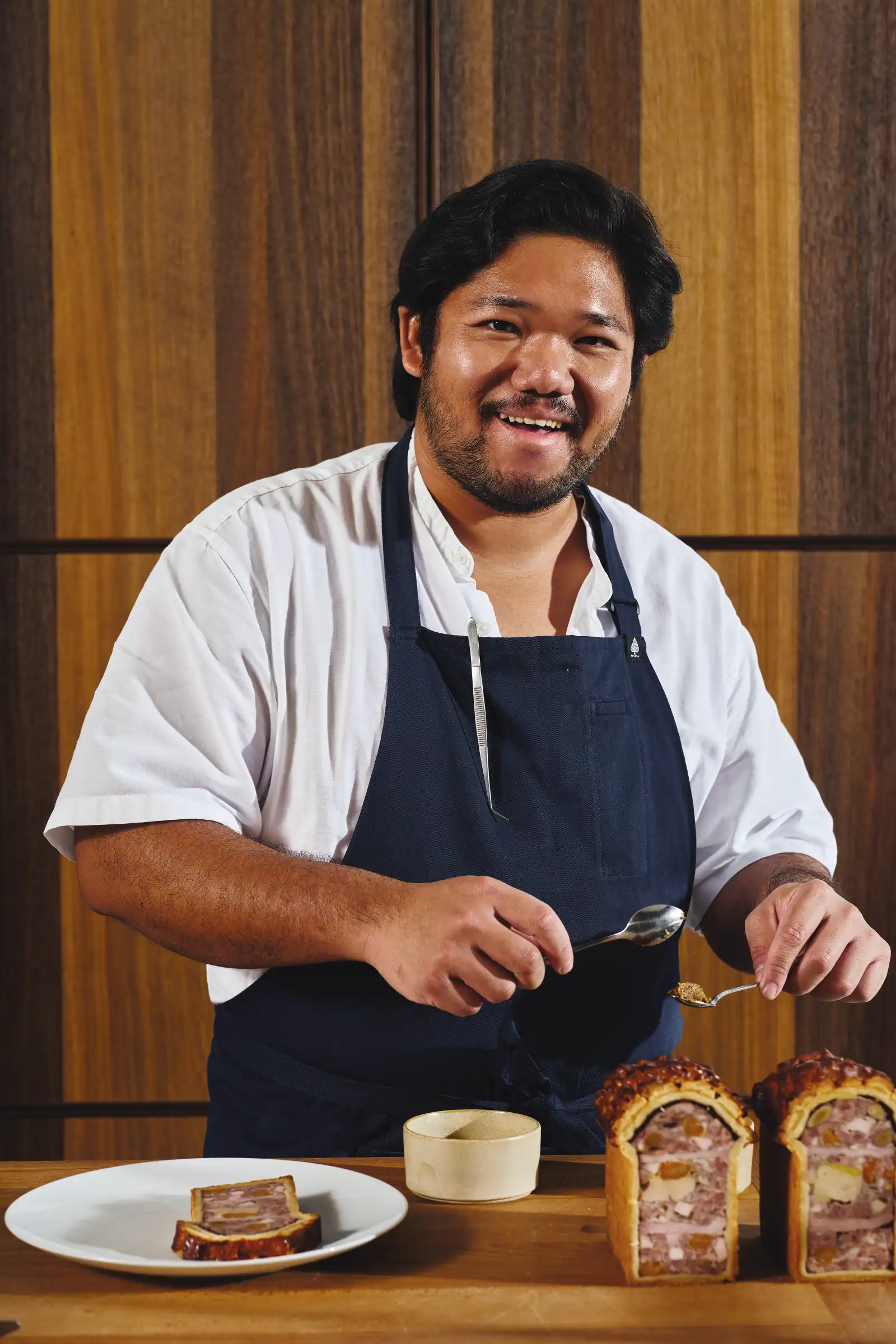
Fat has its own logic. The wrong kind coats the palate and buries the flavor. The right kind, cured separately and folded back in, survives the bake, giving the slice its marbled interior without smothering it. The pastry is just as deliberate. Drier than most hot-water crusts, it’s built to hold its crispness and crumble more like a biscuit than bread. An egg-yolk wash gives it color, a scalpel gives it detail, and the oven gives it that deep lacquered sheen. It’s part of the argument, really.
With its pastry, mathematics, charcuterie, timing, and theater, pâté en croûte gives Locsin an object worthy of pursuit. It must be technically correct, visually exact, and, after all that, still delicious. The dish has no patience for approximation. But then again, neither does he. Here’s how his pâté en croûte comes together.
Step By Step:
Step 1
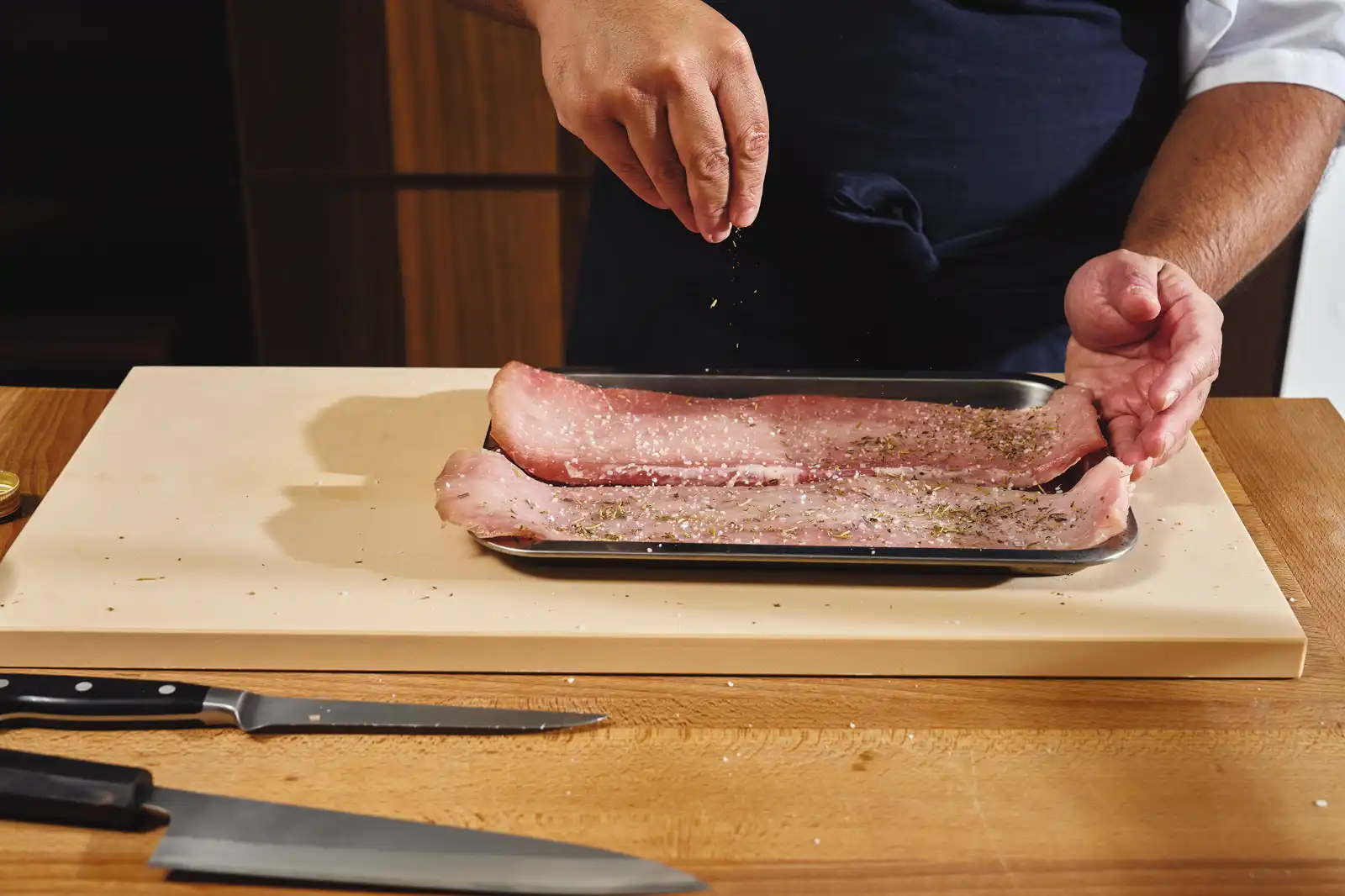
Pork, chicken liver, chicken hearts, and other cuts are seasoned with salt, alcohol, herbs, and warm spices to build the farce.
Step 2
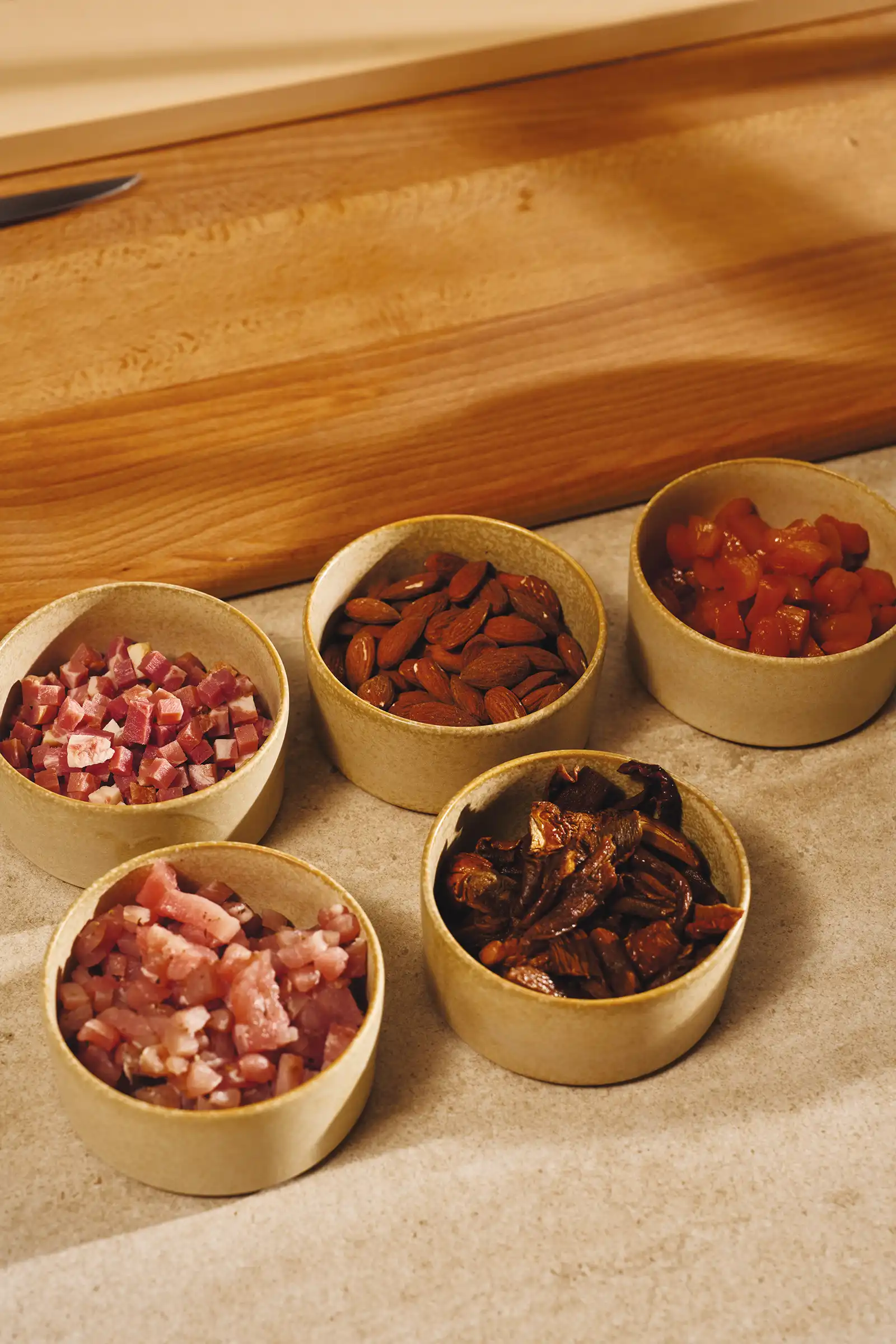
Foie gras, cured pork loin, apricots soaked in port, toasted almonds, and pickled green peppercorns are readied for layering.
Step 3
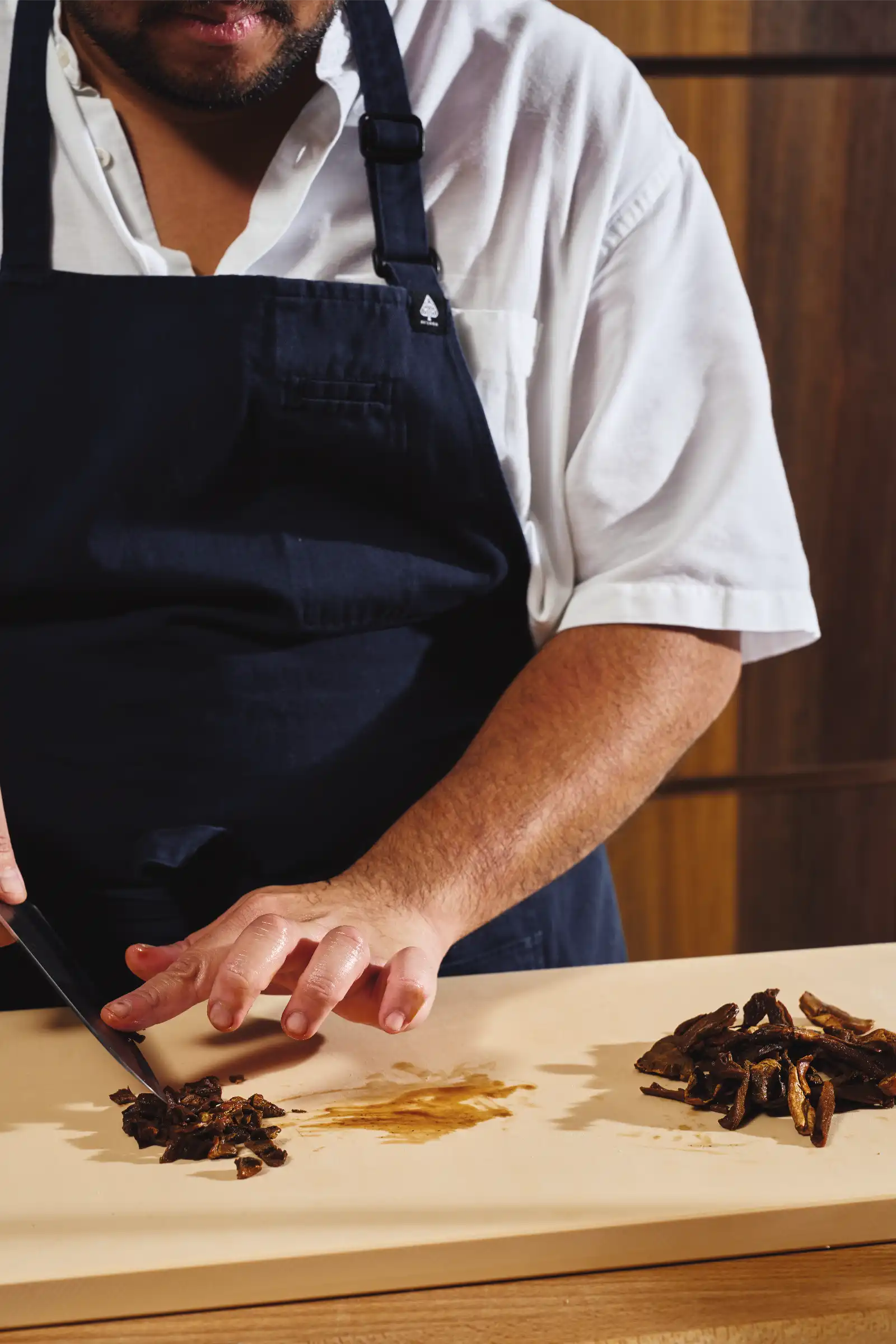
The base meat mixture is ground, seasoned, and adjusted for the right balance of lean meat, fat, texture, and flavor.
Step 4
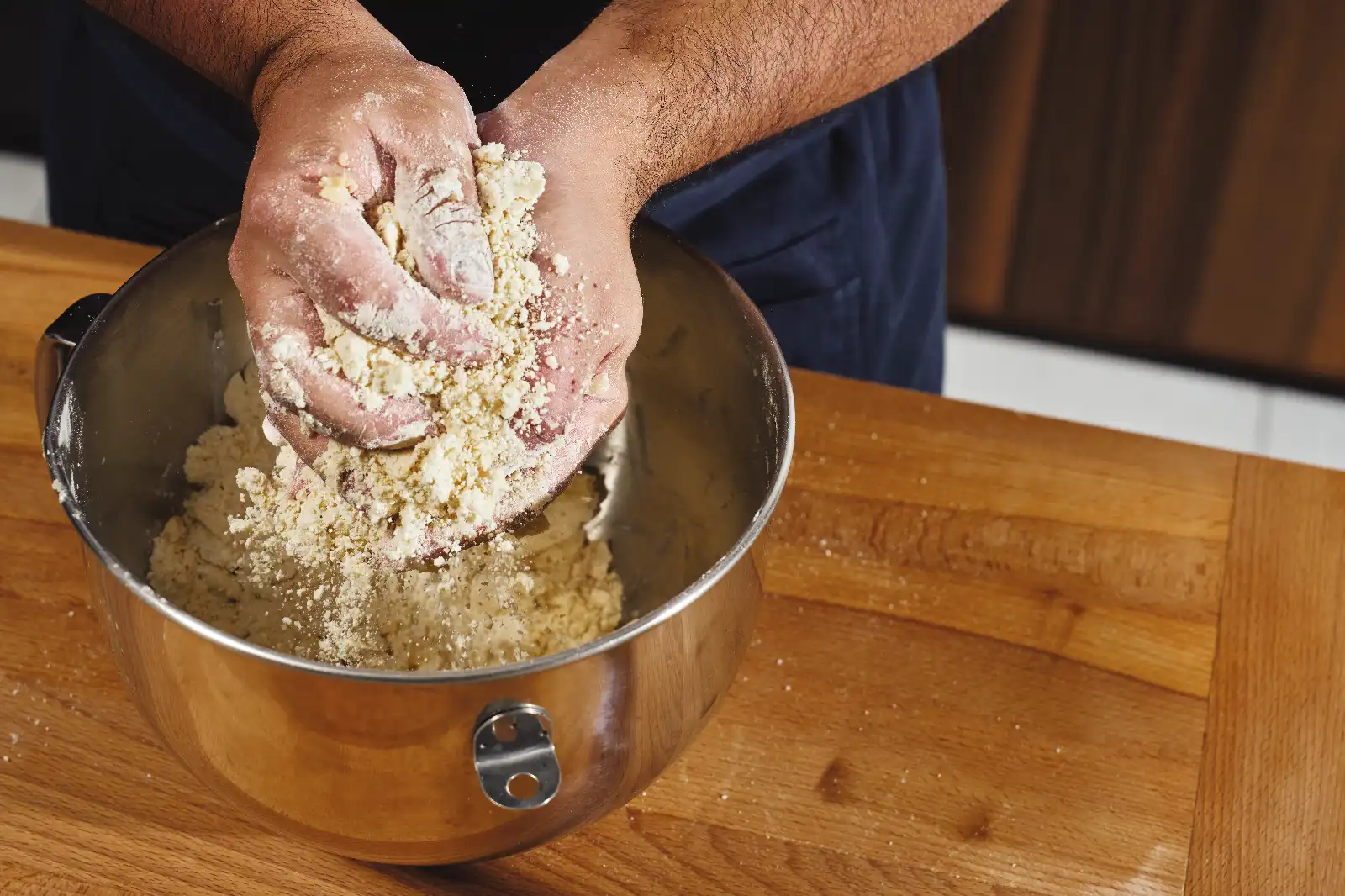
Locsin prepares his own dry hot-water crust, designed to stay crisp and crumble more delicately than a traditional bready shell.
Step 5
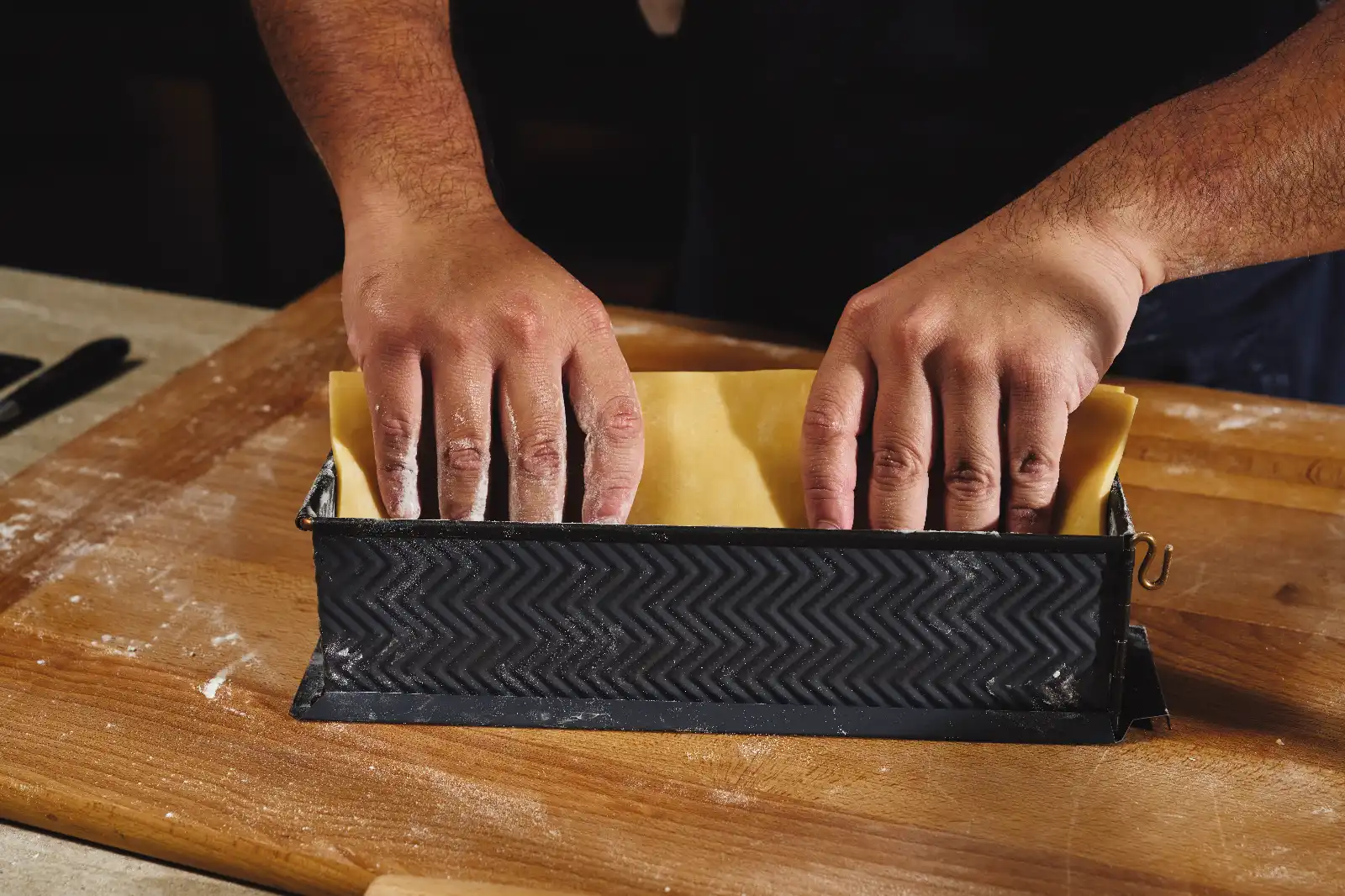
The dough is rolled out and fitted into the mold, creating the structure that will hold the pâté together during baking.
Step 6
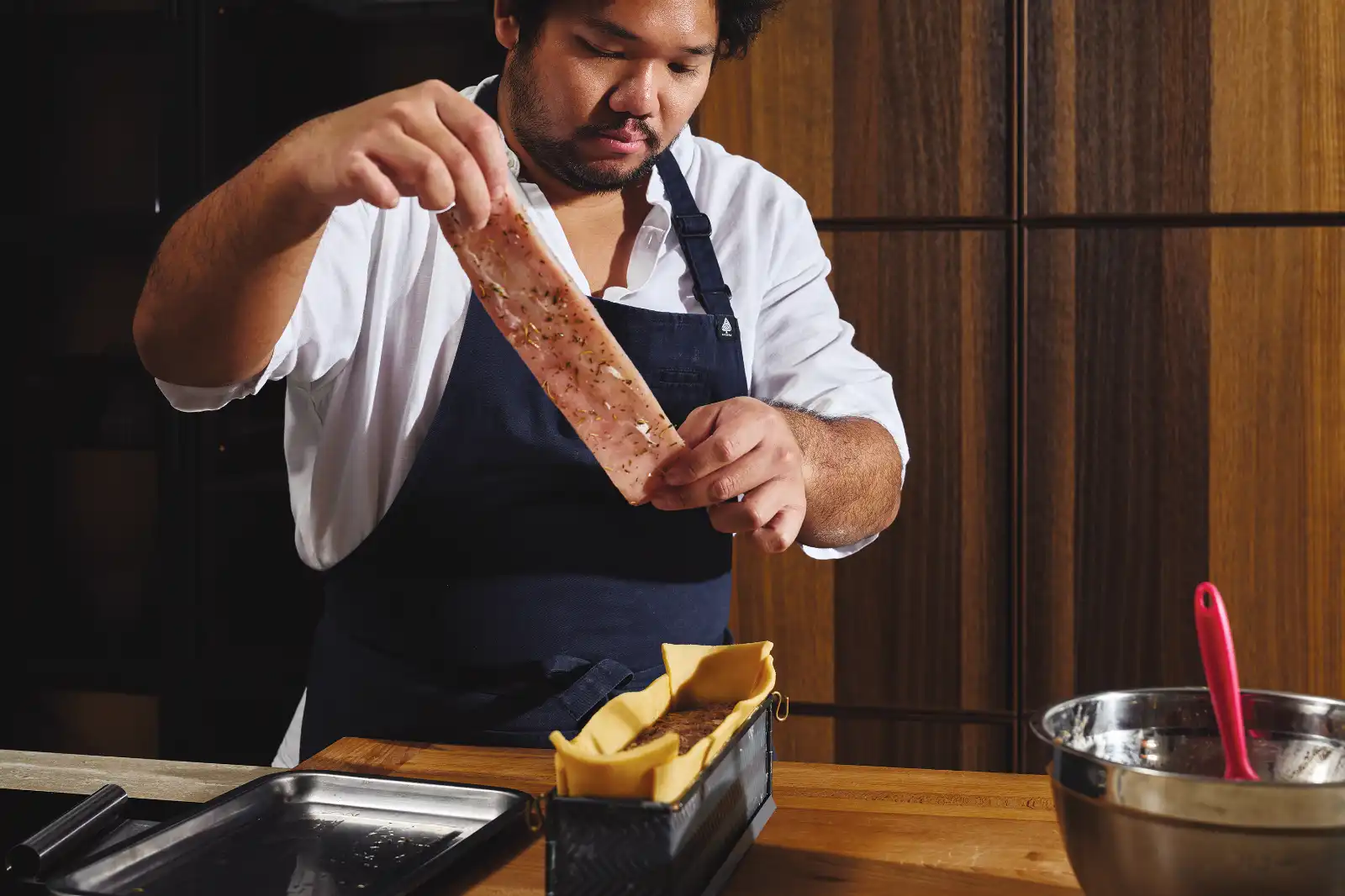
The farce and inclusions are packed into the pastry in deliberate layers, building both flavor and the finished cross-section.
Step 7
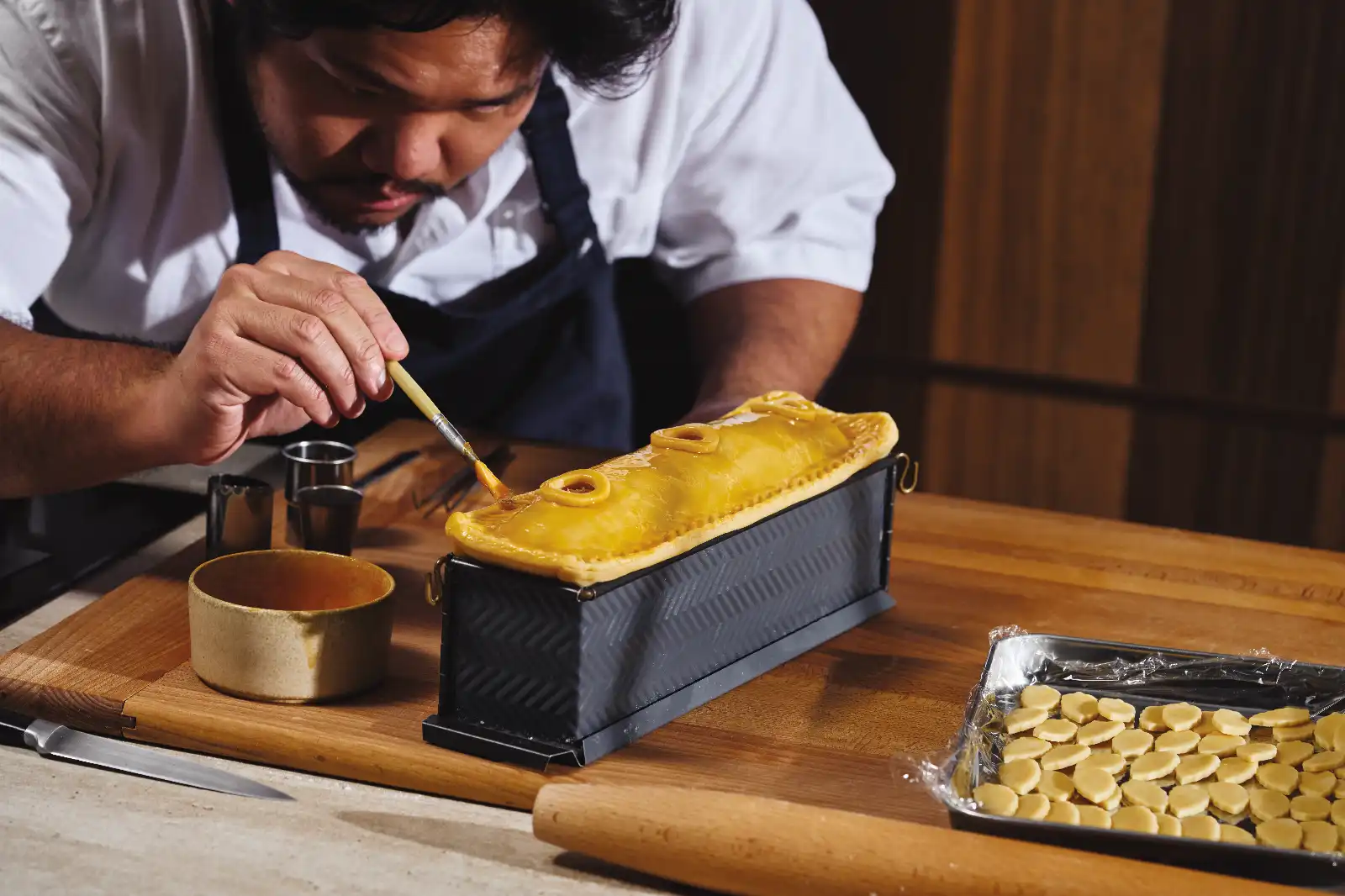
The pâté is enclosed, brushed with egg yolk, scored with a scalpel, and baked until deeply golden and varnished-looking.
Step 8
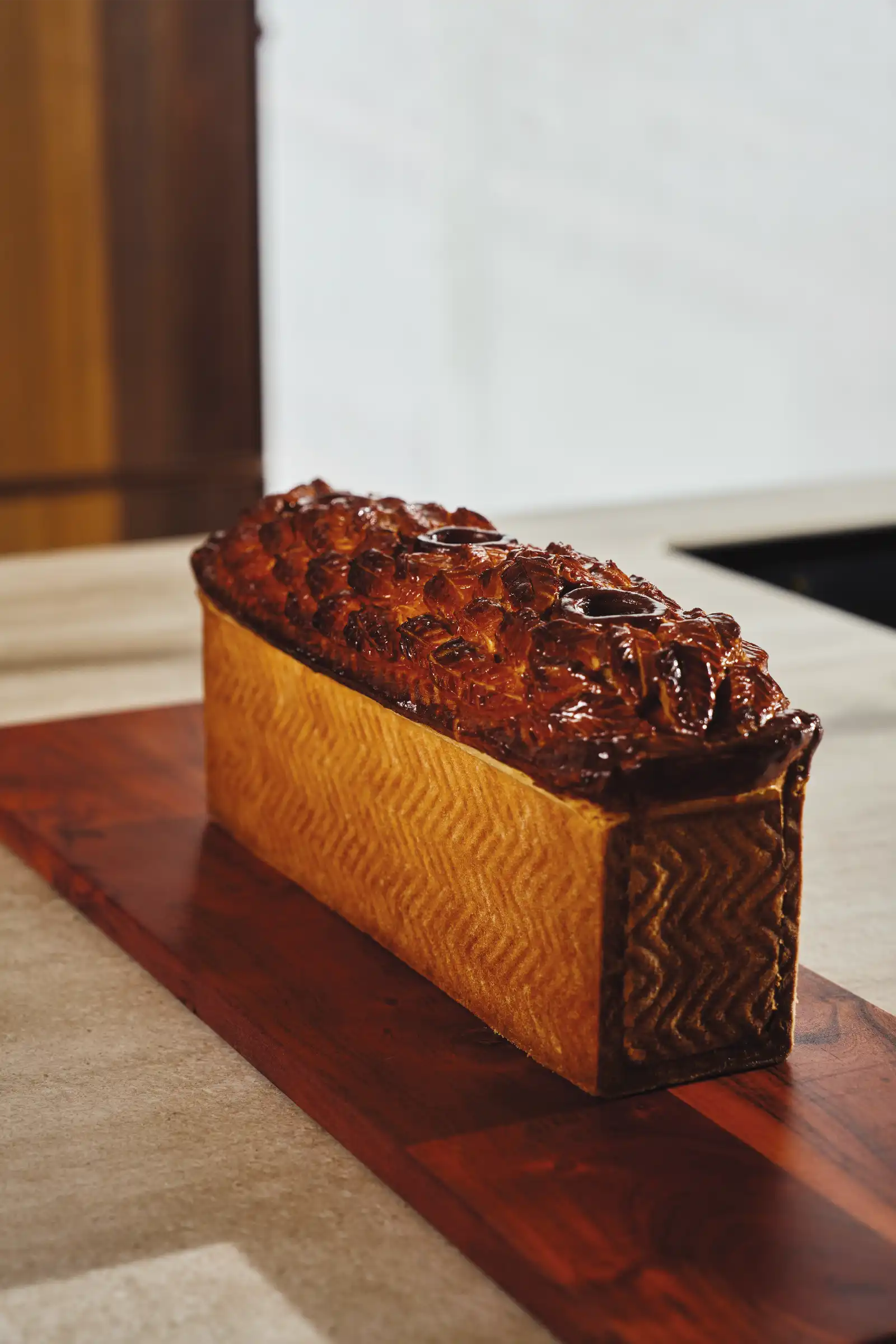
After baking, the pâté is cooled, drained of excess fat, and filled with mushroom-based aspic to bind the slice together.
FAQs
Pâté en croûte is a classical French charcuterie dish made by enclosing a seasoned meat filling, or farce, inside pastry. Once baked and cooled, aspic is poured into the crust to fill any gaps and bind the finished slice.
Luis Locsin’s pâté en croûte takes around four days to complete. The process includes curing and grinding the meat, preparing the pastry and inclusions, baking the pâté, resting it, draining excess fat, and filling it with aspic.
Locsin’s classical French version combines chicken hearts and liver, cured pork loin, foie gras, port-soaked apricots, toasted almonds, pickled green peppercorns, brandy, parsley, and warm spices inside a crisp hot-water crust.
This article orignally appeared in Robb Report’s Design issue.