At the Patek Philippe Museum, the Nautilus Gets the Retrospective It Deserves




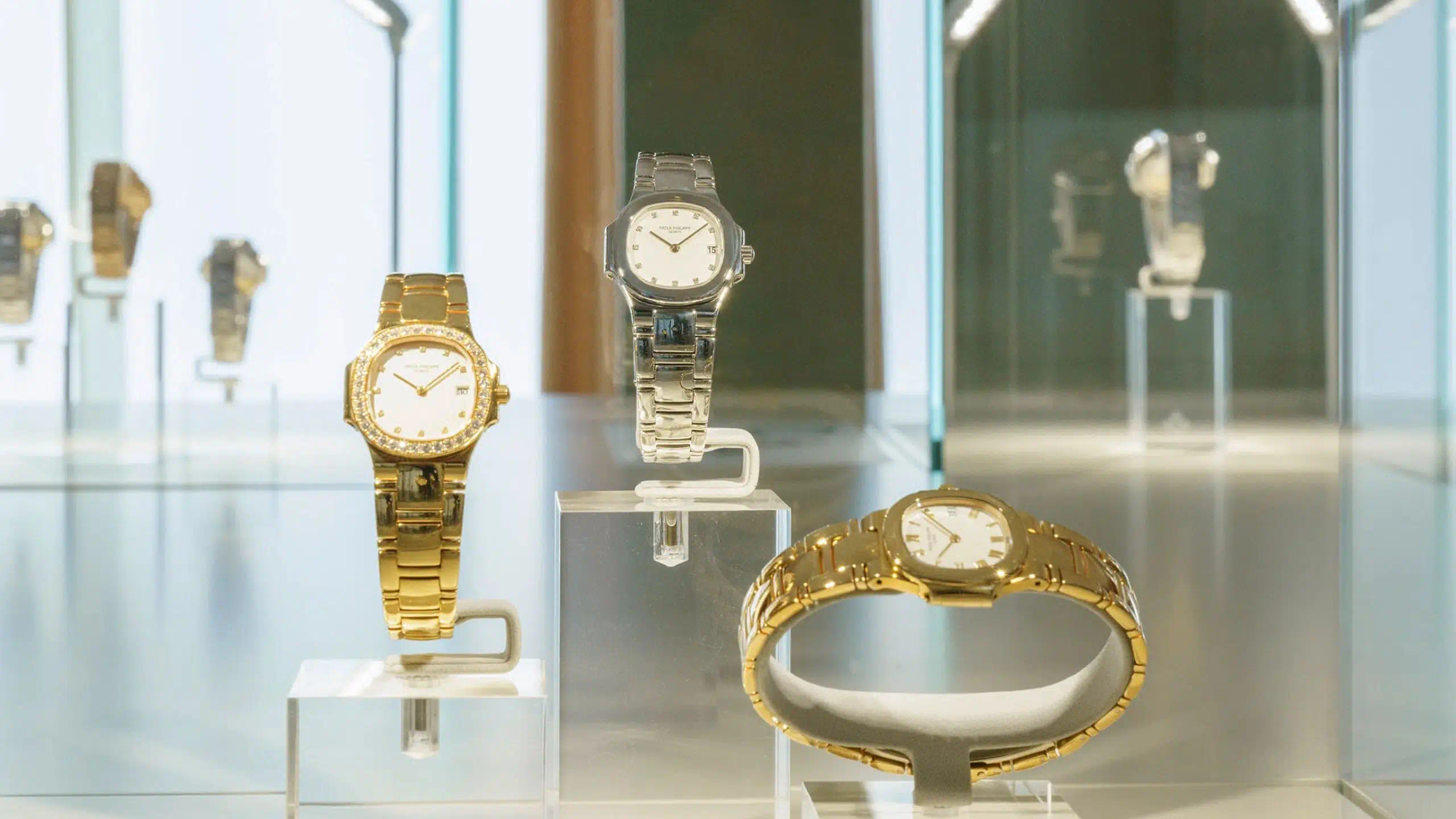
Few watches have experienced a reversal of fortune quite like the Patek PhilippePatek PhilippeA Swiss watchmaker founded in Geneva in 1839 and widely regarded as among the most prestigious in the world, known for complications, hand finishing, and its slogan about passing watchesGo to Patek Philippe Glossary Nautilus.
Today, it is among the most recognizable watches in the world, with waiting lists that have stretched for years and auction results that regularly attract global attention. Yet when it debuted in 1976, the Nautilus was viewed by many as an act of provocation. A luxuryLuxuryA lifestyle defined by exceptional quality, craftsmanship, exclusivity, and sophistication, encompassing the finest products, services, and experiences that represent the highest standards of refinement and excellence.Go to Luxury Glossary watch made of steel, larger than its contemporaries, and inspired by the porthole of an ocean liner, it challenged nearly every convention of high watchmaking.
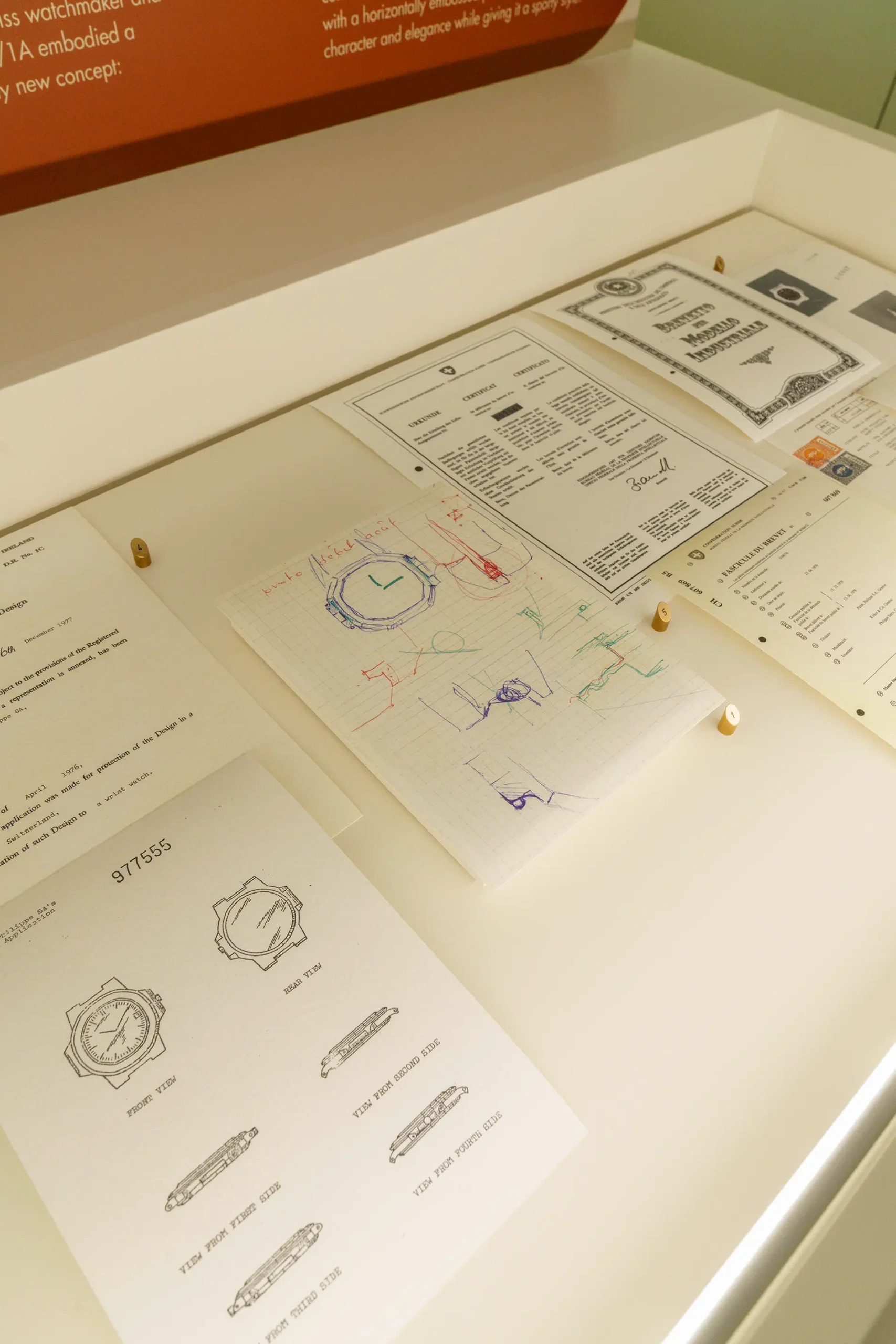
In 1974, Gérald Genta sketched what would become the Patek PhilippePatek PhilippeA Swiss watchmaker founded in Geneva in 1839 and widely regarded as among the most prestigious in the world, known for complications, hand finishing, and its slogan about passing watchesGo to Patek Philippe Glossary Nautilus over lunch at a restaurant near the Basel watch fair, after spotting Patek Philippe executives at a nearby table. The result, launched two years later, was one of the most consequential watch designs in history.
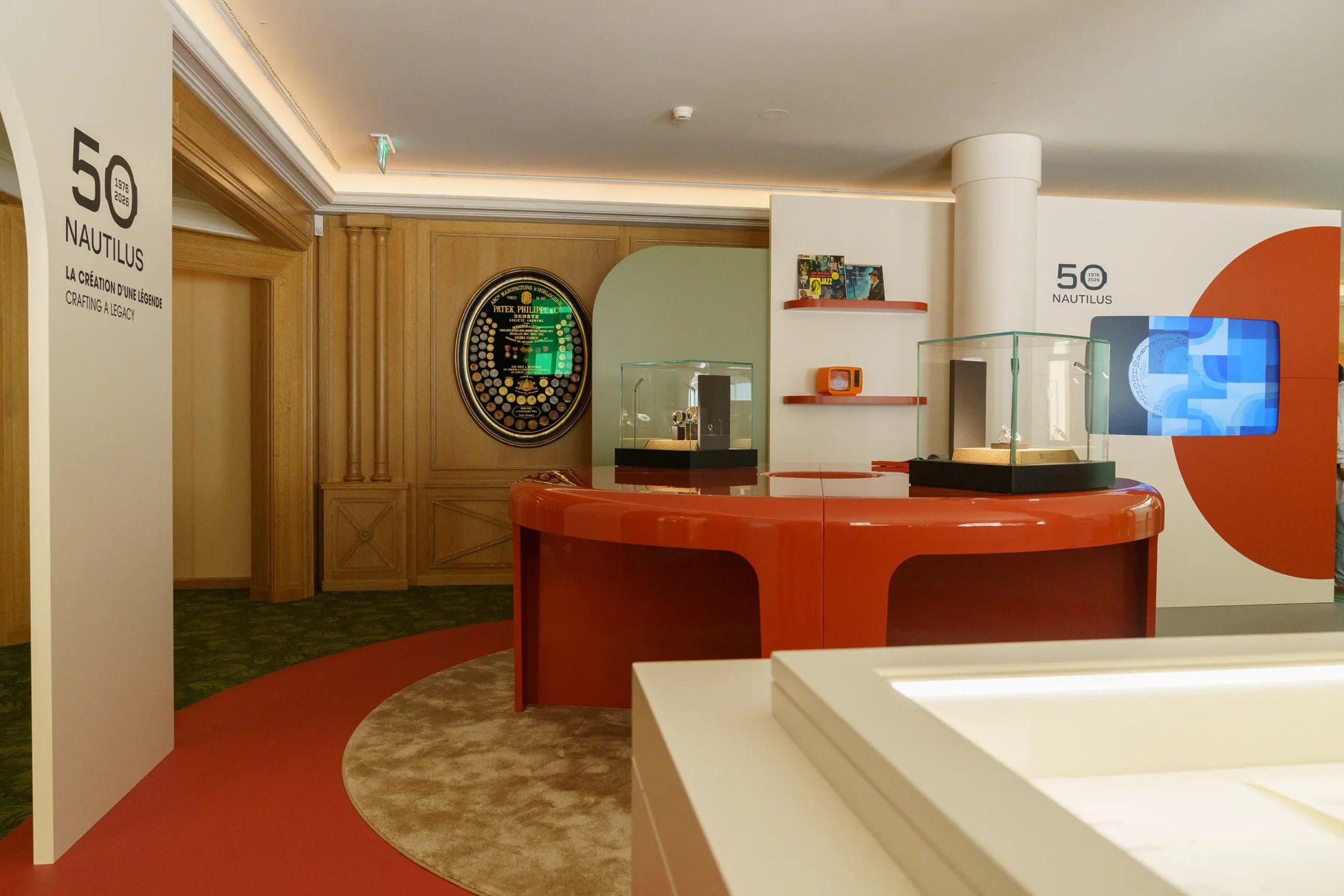
This summer, the Patek Philippe Museum in Geneva is revisiting that remarkable story through a new thematic exhibition dedicated to the Nautilus. Launched during the museum’s Open House Weekend on June 6 and 7, the exhibition traces five decades of the collection’s history through archival material and a carefully selected group of watches that defined its evolution from “enfant terrible” to one of the defining luxuryLuxuryA lifestyle defined by exceptional quality, craftsmanship, exclusivity, and sophistication, encompassing the finest products, services, and experiences that represent the highest standards of refinement and excellence.Go to Luxury Glossary objects of the modern era.
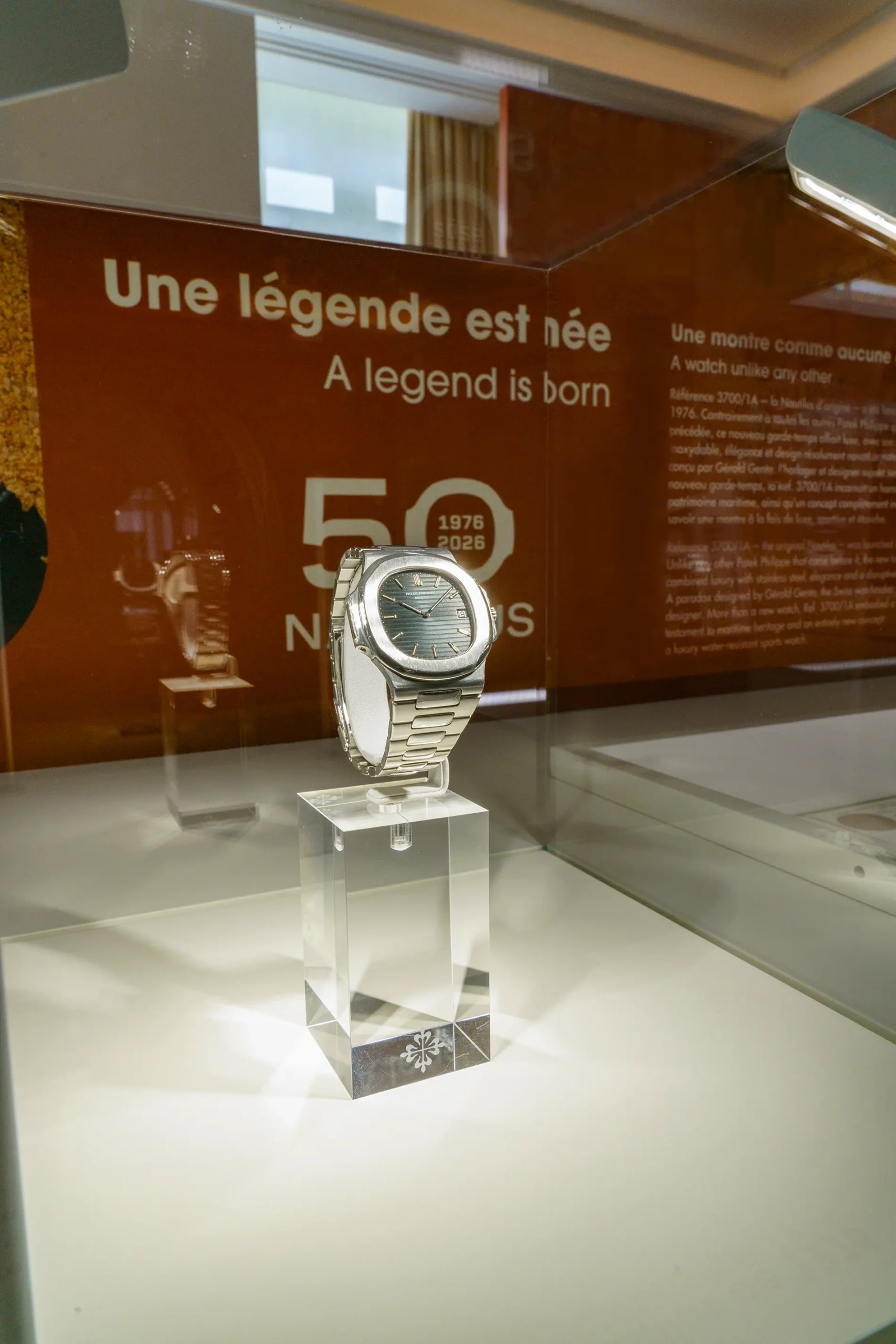
The story of the Nautilus is an interesting one. The quartz crisisQuartz CrisisThe period in the late 1970s and early 1980s when affordable, accurate Japanese quartz watches threatened the traditional Swiss mechanical industry. The Swiss watchmaking sector responded by emphasizing craftsmanship, heritage,Go to Quartz Crisis Glossary of the early 1970s, ignited by Seiko’s introduction of the first commercial quartz watch in 1969, had sent shockwaves through the Swiss watchmaking industry, making mechanical timepieces seem suddenly obsolete. Patek Philippe’s response was characteristically counterintuitive. Rather than retreat into the safety of its gold dress-watch heritage, the manufacture commissioned Genta—who had already designed the Audemars Piguet Royal Oak in 1972—to create its first steel sports watch, which was, back then, a radical brief.
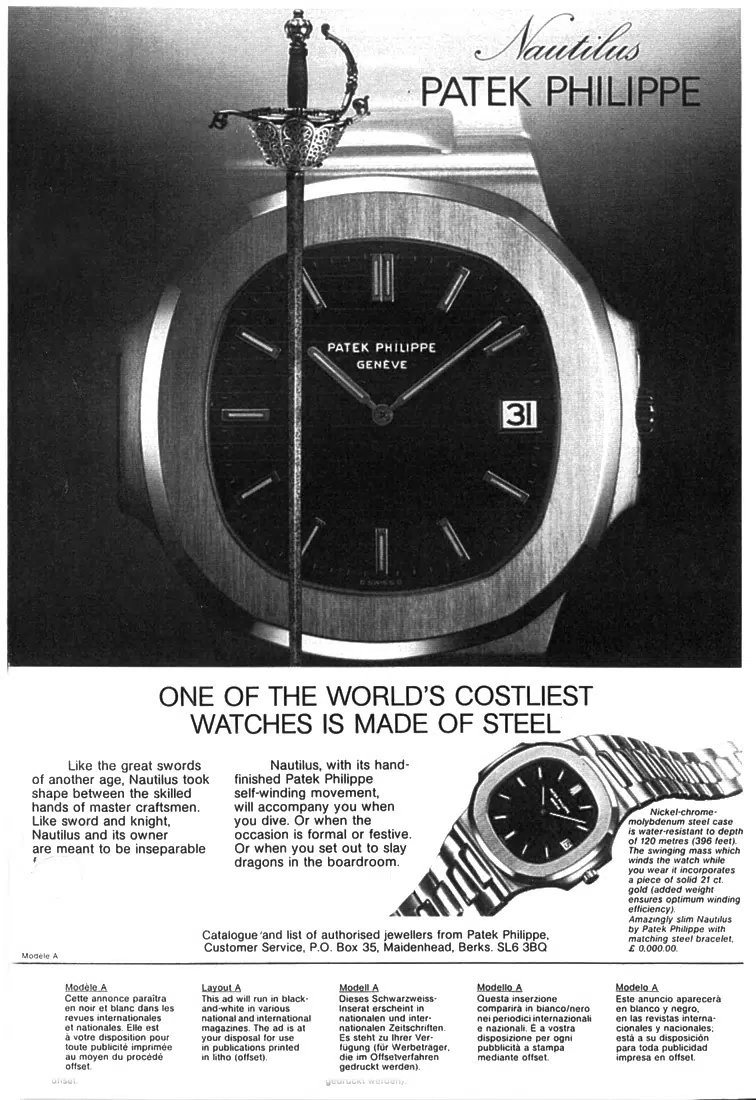
Launched in 1976 as Reference 3700/1, the Nautilus arrived with a case measuring 40mm in diameter and 42mm from lug to lug—considered unusually large for its era—a rounded octagonal bezel with softened corners, an integrated bracelet, and a price tag comparable to Patek PhilippePatek PhilippeA Swiss watchmaker founded in Geneva in 1839 and widely regarded as among the most prestigious in the world, known for complications, hand finishing, and its slogan about passing watchesGo to Patek Philippe Glossary’s own gold dress watches. The marketing line was as audacious as the watch itself: “One of the world’s costliest watches is made of steel.” The case construction was engineered with the same logic as the portholes that inspired it—a two-part design with lateral hinges and a bezel clamped by four screws, hermetically sealing the movement within. Function and form were, for once, genuinely inseparable.
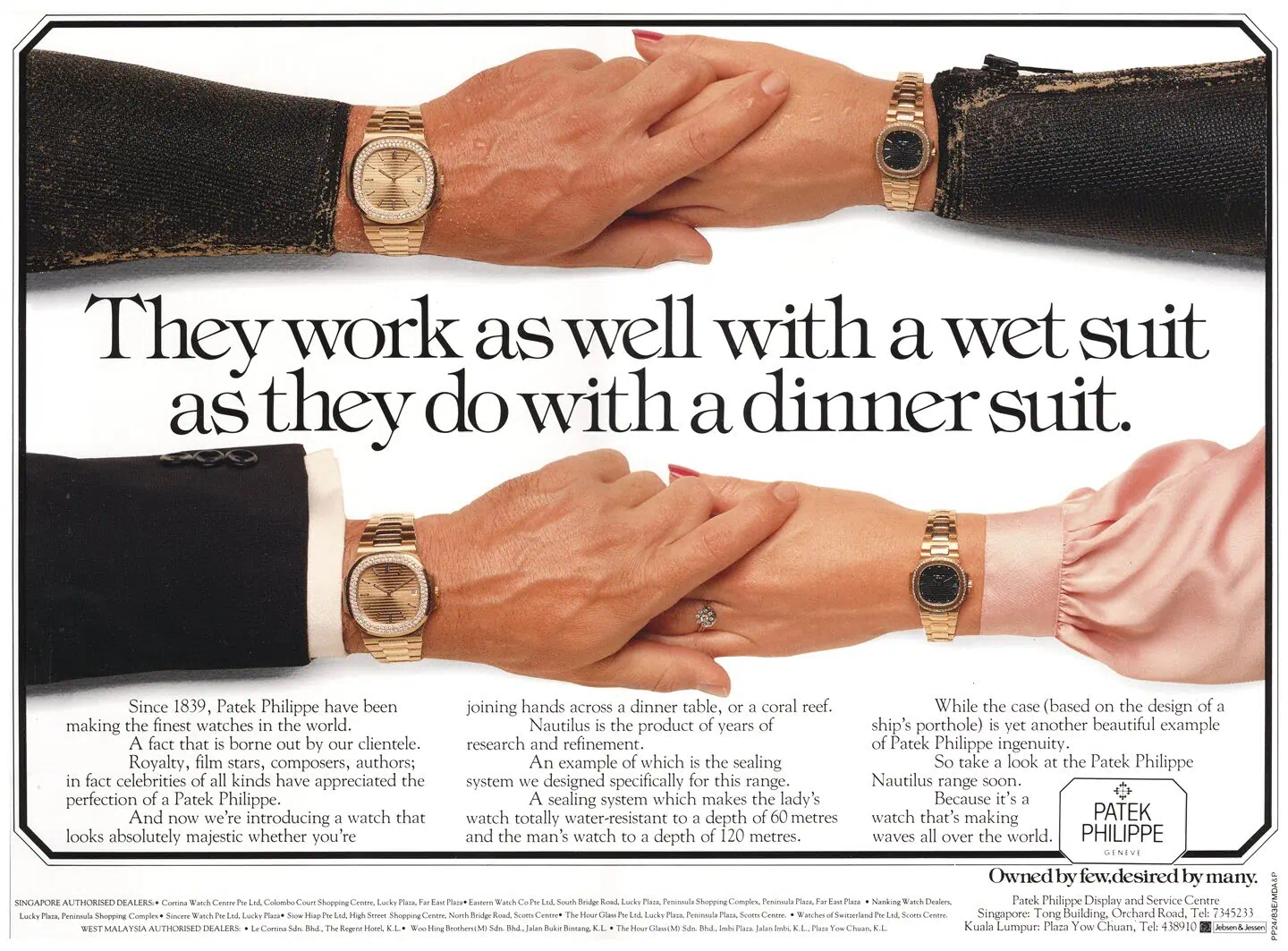
The market, initially, was unconvinced. The Nautilus’s success was gradual; it wasn’t until the women’s version arrived in 1979 that the collection gained real momentum, and the men’s steel model only broke through decisively toward the end of the 1990s. The Nautilus became one of Patek PhilippePatek PhilippeA Swiss watchmaker founded in Geneva in 1839 and widely regarded as among the most prestigious in the world, known for complications, hand finishing, and its slogan about passing watchesGo to Patek Philippe Glossary’s most recognizable models, its waiting lists stretching years and its secondary market values defying gravity. The discontinued steel Reference 5711 with blue dial now trades at approximately $135,000; the final green dial edition commands around $255,000.
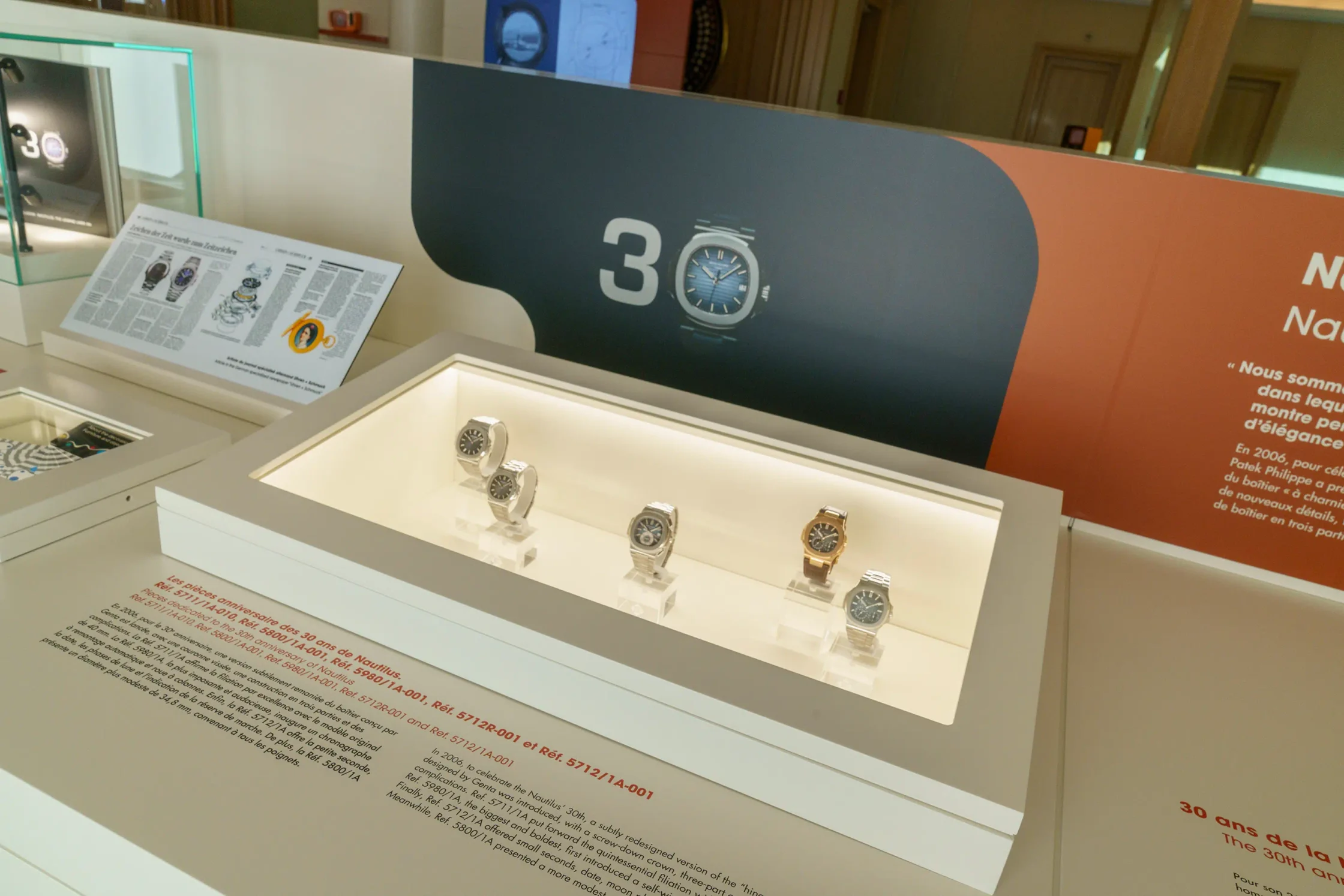
One of the exhibition’s strengths is its ability to show the Nautilus not as a static icon but as an evolving family of watches. Visitors can follow the progression from the original “Jumbo” model to later references, including complicated calendars, moon-phase displays, and the landmark in-house chronographChronographA watch complication that incorporates a stopwatch function, controlled by pushers on the case and displayed on small subdials. Originally developed for timing events, the chronograph remains popular for itsGo to Chronograph Glossary introduced during the collection’s 30th anniversary redesign in 2006. That relaunch represented one of the most significant moments in Nautilus history, introducing updated case construction, sapphire casebacks, larger dimensions, a new rose-gold variant, and the first self-winding Nautilus chronograph.
Seen together, these watches reveal how carefully Patek Philippe has managed the balance between continuity and change.
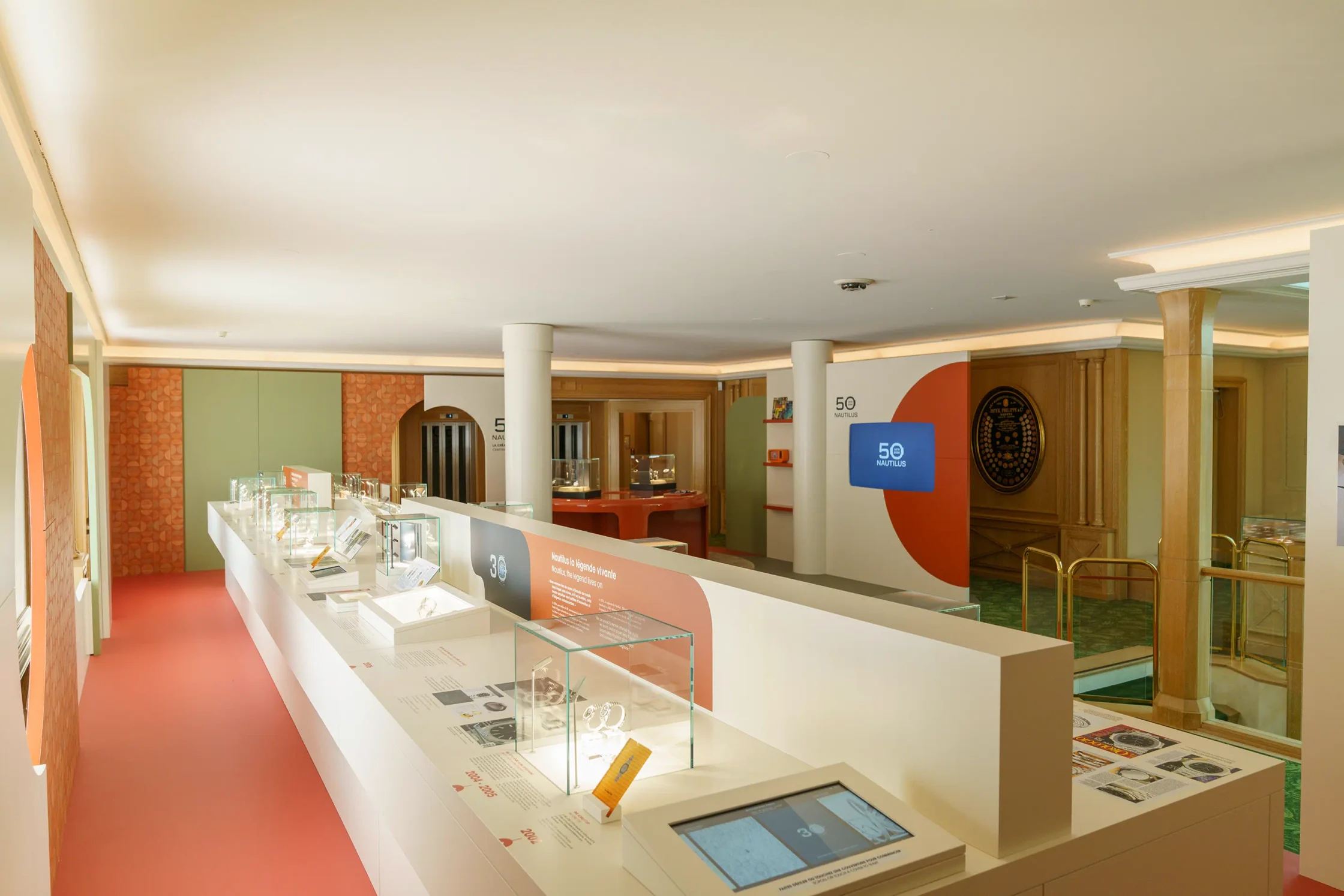
The timing of this exhibit is significant, too: While the Nautilus officially celebrated its 50th anniversary this year, its influence extends far beyond the confines of watchmaking. The model helped establish the luxury sports watch category as we understand it today, proving that elegance and durability could coexist within a single design.
The Geneva exhibition presents this historical journey alongside a curated selection of Nautilus references spanning each period of the collection’s iterations. For collectors and enthusiasts who cannot make the journey to Geneva, the exhibition runs through early 2027—ample time to plan a pilgrimage.
The Nautilus 50th Anniversary Exhibition runs at the Patek PhilippePatek PhilippeA Swiss watchmaker founded in Geneva in 1839 and widely regarded as among the most prestigious in the world, known for complications, hand finishing, and its slogan about passing watchesGo to Patek Philippe Glossary Museum, Geneva, from June 2026 through early 2027 at Rue des Vieux-Grenadiers 7, 1205 Genève, Switzerland. Visit their website here. The four limited-edition anniversary references are available through authorized Patek Philippe retailer, Lucerne Luxe.
Frequently Asked Questions
The exhibition explores 50 years of the Nautilus collection, tracing its evolution from its 1976 debut to its status as one of the world’s most sought-after luxury sports watches.
The exhibition is being held at the Patek Philippe Museum in Geneva, Switzerland.
The exhibition opened in June 2026 and will remain on view until early 2027.
The Nautilus helped define the modern luxury sports watch category by combining high-end watchmaking with a robust steel case and everyday wearability.
The original Nautilus Ref. 3700 was launched in 1976 and quickly became one of the most influential watch designs of the twentieth century.