King Air Makes First Real-World Garmin Autoland Emergency Landing




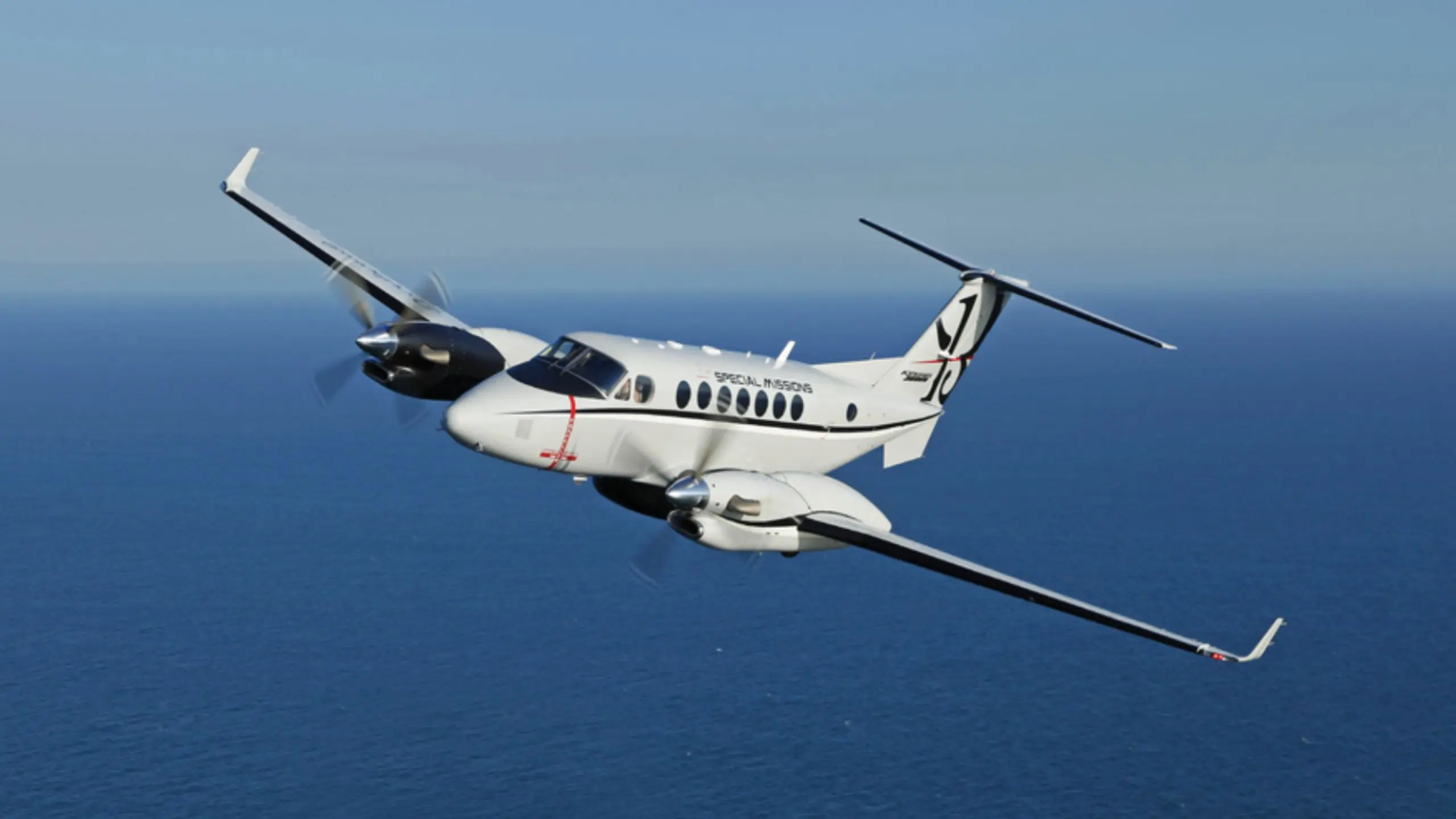
In late December, a Beechcraft King Air turboprop made a fully autonomous landing at a Colorado airport after a loss of cabin pressurization prompted the activation of an onboard emergency automation system. Aviation officials and industry analysts say the event marks the first publicly documented real-world use of Garmin’s Emergency Autoland system on a King Air aircraft.
The incident occurred on December 20 during a flight from Aspen toward the Denver area, when the aircraft suffered a rapid loss of cabin pressurization shortly after departure. The pilots donned oxygen masks, initiated emergency procedures, and activated Garmin’s Emergency Autoland system.
The system selected Rocky Mountain Metropolitan Airport in Broomfield and executed an automated descent, alerting air traffic control and prompting the clearing of nearby airspace. The King Air landed safely, shut down automatically, and required no medical response.
Garmin’s Emergency Autoland system is designed to manage every phase of flight following activation, including navigation, communications, approach, landing, braking, and engine shutdown. The technology has been certified on several aircraft types, including light aircraft and business jets, but real-world emergency activations have been rare and sparsely documented, particularly on turboprop platforms such as the King Air.
According to FlightGlobal, the pilots involved were not incapacitated at the time Autoland was engaged. Instead, the system was used as a precautionary measure after the pressurization failure introduced additional operational risk. Sudden cabin depressurization at altitude can lead to hypoxia, impaired judgment, and loss of consciousness if not managed quickly.
The King Air 200 involved in the incident is a widely used twin-engine turboprop common in charterCharterThe rental of a yacht, jet, or villa for a set period, often with crew included. Charters give travelers access to extraordinary experiences without the commitment of ownership, and demandGo to Charter Glossary, corporate, and utility operations. The aircraft routinely operates at altitudes where pressurization is essential, especially in mountainous regions such as the Rocky Mountains.
The Federal Aviation Administration has not indicated that the incident resulted from a broader mechanical defect, nor has it announced any enforcement action. As with similar events, the flight is expected to be reviewed as part of routine safety oversight.
Emergency Autoland differs from traditional autopilot systems in that it assumes complete control once activated, independently evaluating terrain, weather, runway suitability, and fuel status before executing a landing. Aviation analysts say the December landing demonstrates how automation is increasingly being positioned as a safety backstop rather than a replacement for pilot judgment.
The Embraer Praetor 600 is largest private jet where Emergency Autoland is approved for real-world use. Ultra-long-range jets such as the GulfstreamGulfstreamAn American manufacturer of long-range business jets, known for large cabins, speed, and range, and often considered a benchmark in private aviation. Models such as the G650 have long beenGo to Gulfstream Glossary G700 and Bombardier Global 8000, as well as large-cabin business jets, are not currently certified with emergency autonomous landing systems. Commercial airliners do employ CAT III autoland capabilities, but these systems are designed to assist pilots rather than replace them, requiring active crew oversight and decision-making. Garmin’s Emergency Autoland differs fundamentally in that it can independently assume control and complete a landing without pilot input in emergency situations.