‘A Floating Piece of History’: How the Gucci Family Restored This 214-Foot Sailing Yacht




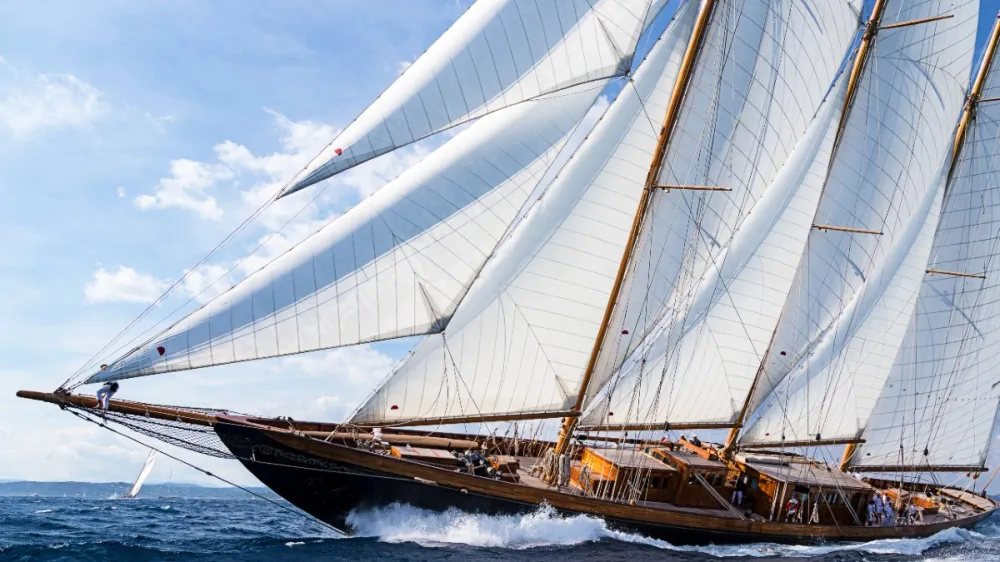
Allegra Gucci’s first palpable memory was aboard her family’s sailboat, the 214-foot Creole. As she recalls growing up, the world’s largest wooden sailing yacht formed a playful cocoon for water fights, running along hundreds of feet of teak decks, swallow dives into the ocean, and, at peak performance, adrenaline rushes as the boat thundered at full sail in the Mediterranean.
Fun and games belie this superyachtSuperyachtA large, luxurious vessel typically over twenty-four meters in length, crewed by professionals and equipped with high-end amenities. Superyachts symbolize luxury at sea, and the segment is covered extensively inGo to Superyacht Glossary’s stature. Creole is a head-turning behemoth with a crown of sails and an ink-black hull. Born in 1927, the boat is a work of genius from Charles E. Nicholson, the era’s greatest naval architect. “Creole is Nicholson’s masterpiece,” Gucci tells Robb Report in a rare interview, noting the boat has been in her family since her father purchased the then-dilapidated three-masted schooner in 1983, two years after she was born.
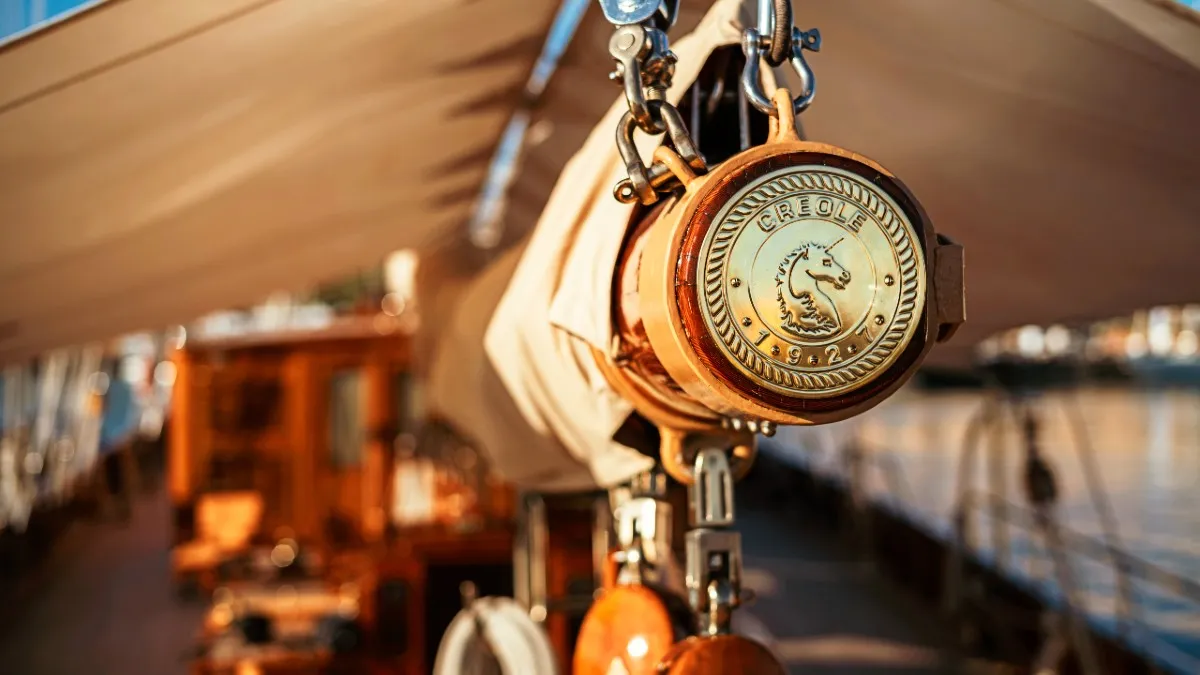
Having grown up cruising and racing Creole, Gucci remains both nostalgic and practical about the classic vessel. She views the majestic, nearly century-old schooner as a responsibility—her responsibility—to present to the world as its finest self. “She is iconic—you have to keep her like this,” says Gucci, noting the details that define Creole but also require an uncanny amount of maintenance. “The varnish, the brass, the lights, and the soul of the sailing yacht represent the history of naval architecture.”
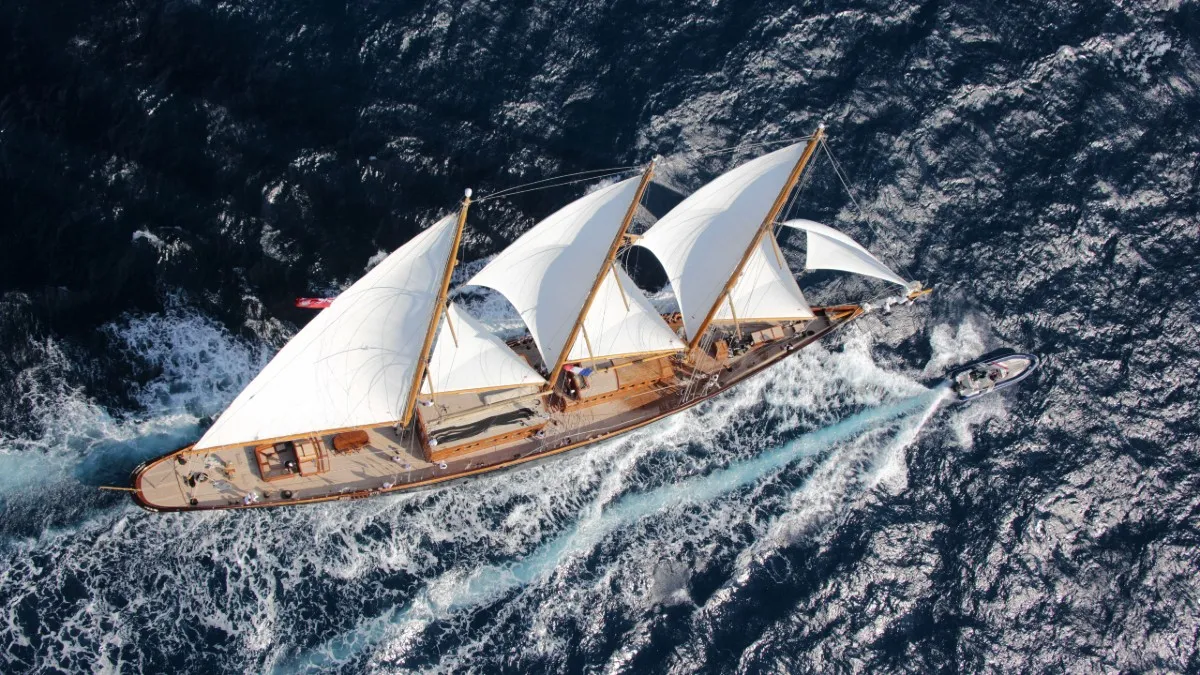
Creole also represents a rare combination of meticulously preserved maritime history and European glamor. Ranked among the most photographed yachts of all time, luminaries from Sophia Loren to Spanish King Juan Carlos have been snapped alongside her.
In her younger years, Gucci viewed Creole as simply her family vessel that defined the yachting season, with weeks typically spent aboard with parents, sister and crew in the Western Mediterranean. “One summer, we said ‘we’ll just follow the wind,’” she says. “We went to the Balearic Islands just enjoying the sailing, the wind and the sea. We could be free from everything, sailing day and night.”
Creole was indeed designed to cruise the world—fast. It’s capable of reaching 17 knots which, when pushed to its limits, seems more like a living, heaving beast than a boat. “With a full set of sails and perfect conditions,” Gucci says, recalling idyllic days of full-adrenaline sailing, “the energy the boat has is incredible.”
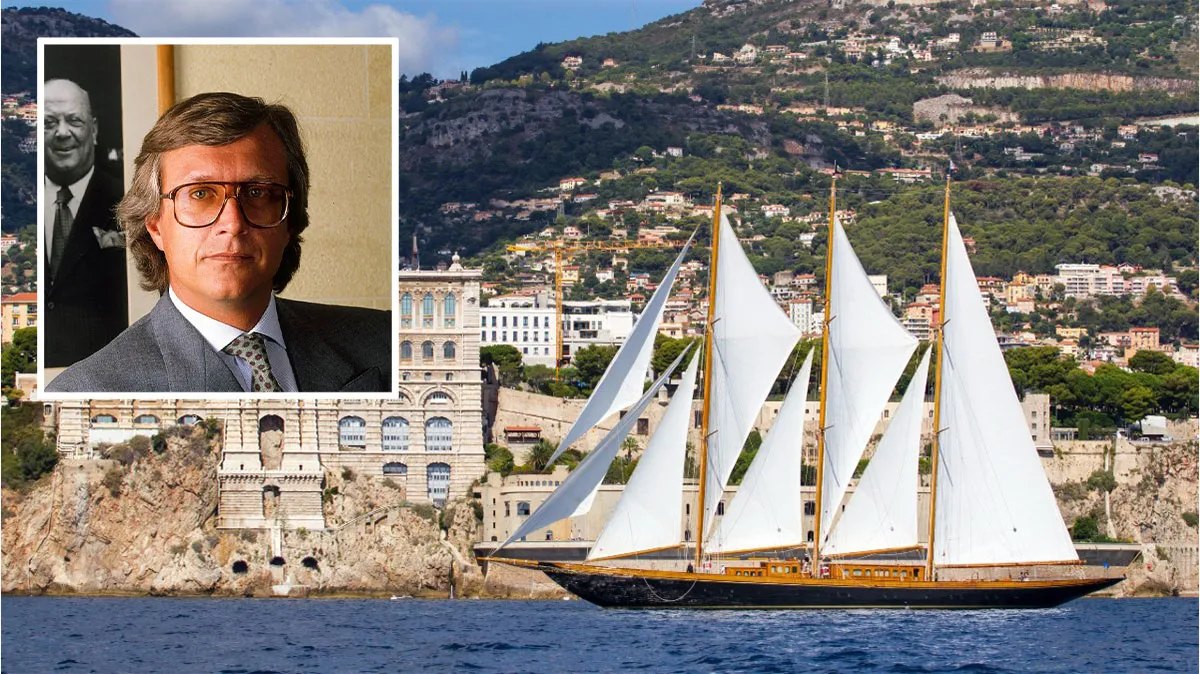
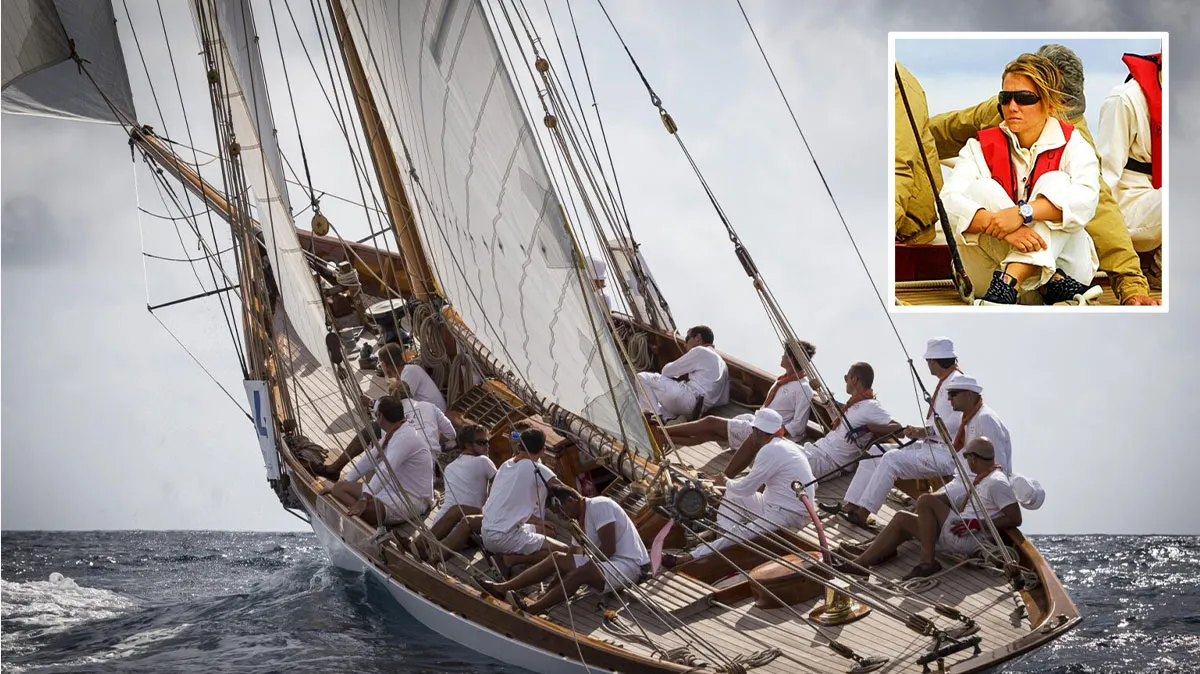
Now a veteran sailor, Gucci learned to race when she was 14 at the Monaco Yacht Club, often sharing racing dinghies with her older sister, Alessandra. The sisters routinely skippered Avel, a 60-foot Nicholson design also rescued by her father Maurizio, with a full crew, often racing against HSH Prince Albert’s flagship Tuiga. These magnificent sailing vessels are part of a very special class of restored vintage yachts that show up to race each other at Cowes Race Week or Monaco Yacht Week. “We always support the [Monaco] yacht club as you can really breathe in the passion of sailing there,” she says.
Creole’s history involved an interesting set of twists and turns, starting with its launch in the roaring twenties. Manhattan playboy Alexander Smith Cochran, “the richest bachelor in New York” and avid sailor, according to contemporary news accounts, commissioned the vessel to cruise the world. What the papers didn’t say was that Cochran was in poor health with tuberculosis.
When Cochran first saw his new vessel, which he named Vira, he took fright and ordered 10 feet lopped off the masts. Then another 10 feet. Cochran “begged me to agree to cut a third 10 feet,” said the naval architect Nicholson. “I had to conclude that his ill-health had lowered his nerve.” In the end, Vira bore no resemblance to the magnificent schooner Nicholson had created, but looked more like a low-masted motorsailer.
On Cochran’s inaugural voyage in Europe, the short-masted boat, which now had tons of extra ballast, rolled uncontrollably. The owner also couldn’t walk from the stern to bow without having a coughing fit. On what was supposed to be a dream cruise, Vira barreled through France’s Bay of Biscay, “most uncomfortable, pitching about,” as the owner wrote in his logbook. His final ship’s entry from Monte Carlo in February 1927 was faintly scribbled, “as if the writer’s pen were running out of ink,” wrote Yachting World. After the trip, the ailing Cochran placed Vira, before it could demonstrate its sailing prowess, on the brokerage market.
It would be more than half a century until the schooner realized its full potential, thanks to Gucci’s father, Maurizio, fashion mogul and the last family head of the house of Gucci. Between Cochran and Maurizio came a succession of eclectic owners: First, British major Maurice Pope, who also avoided sailing, using the engines almost exclusively to cruise. He renamed the boat Creole after a dessert his chef had created.
Fortunately for Pope and his guests, the schooner’s construction was ahead of its time. “Amidships, the engine room and fuel tanks were in a steel-plated, oil-tight compartment to avoid any oil smell creeping through to the accommodations,” wrote Nicholson. The original layout also featured unusual niceties like a “Ladies Stateroom,” a pantry, and even an officer’s mess.
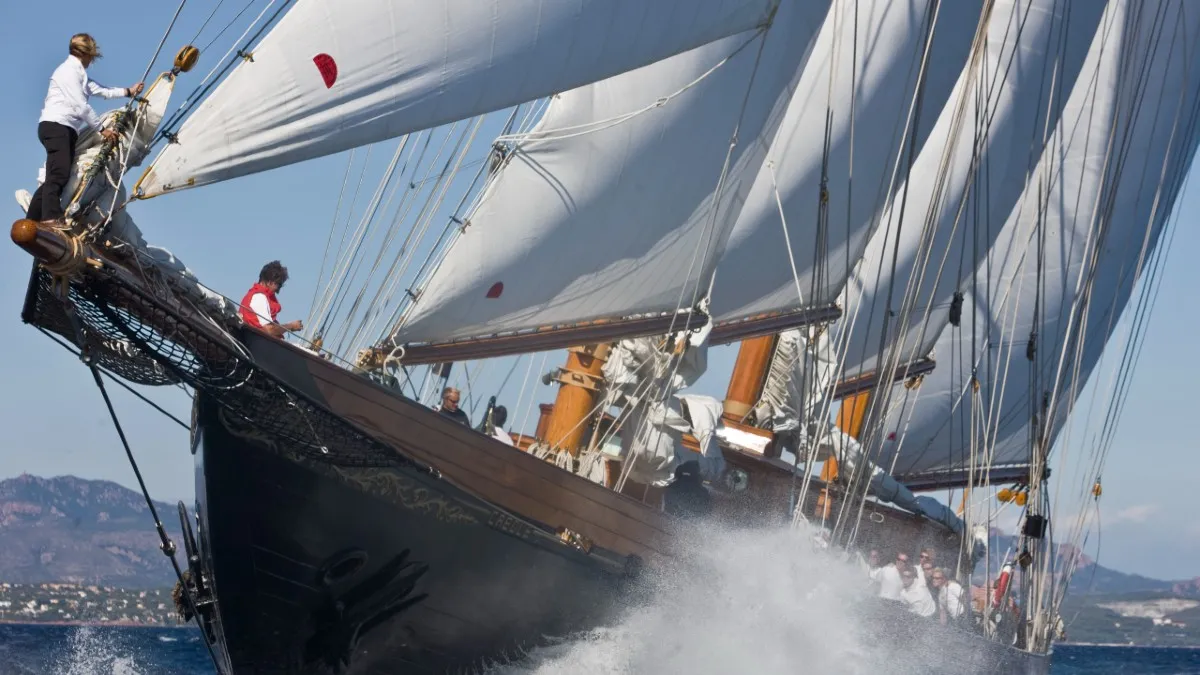
Third owner Sir Connop Guthrie restored the boat more closely to Nicholson’s original design and fulfilled Cochran’s uncompleted dream of cruising the Mediterranean from Capri to Corsica. The boat also won a number of regattas in the British Isles in the late 1930s, but war was looming across Europe.
During World War II, the British Admiralty requisitioned thousands of yachts. These included now-vintage sailing superyachts Marala and Malahne (still available for charterCharterThe rental of a yacht, jet, or villa for a set period, often with crew included. Charters give travelers access to extraordinary experiences without the commitment of ownership, and demandGo to Charter Glossary) as well as the largest boats built by the famed shipyard Camper & Nicholsons. Renamed Magic Circle, Guthrie’s schooner became a lowly minesweeper along the Scottish coast.
The era of post-war elegance belonged to Greek shipowners who scooped up surplus wartime cargo fleet for a song. Shipping oligarch Aristotle Onassis purchased a Canadian minesweeper for $30,000 and transformed it into Christina O, the world’s greatest classic motoryacht. In turn, his rival Stavros Niarchos bought Creole and put hundreds of thousands into restoring it. As proof of its rebirth, the vessel and new owner made the August 1959 cover of Sports Illustrated.
But Creole did not enjoy a long and happy life under the Greek owner. Nicholson’s son John said Niarchos “ruined her” by running the schooner too hard and fast as it were a motoryacht. There were other more serious considerations. After Niarchos’s first wife died aboard from an overdose of barbiturates, he never sailed the boat again. When his second wife also died of an overdose, Niarchos decided to part with the vessel for good.
In 1977, the Danish Navy purchased Creole to use as a training vessel. Part of its role was to rehabilitate drug addicts using a naval regimen—a noble yet undignified service for a generation-defining yacht. “When my father found Creole she was destroyed,” recalls Gucci. “He just fell in love and wanted to give her a second life.”
For the first time, the vessel that Nicholson had envisioned came slowly back to life, through an extensive six-year refit at multiple yards, Beconcini in Italy, Lurssen in Germany, and Astilleros de Mallorca. Designer Toto Russo created an interior (which had been gutted) that reflected the roaring twenties, installing period artwork through its six guest staterooms.
Gucci’s “first flash of memories, when I was really, really small,” were on board Creole. “Sailing in the 1990s, we had less yachts and more freedom to go wherever you like.” She isn’t a big fan of the new breed of flashy gigayachts. “The sea is very busy with superyachts of 100 meters-plus [328 feet],” she notes. “But they are more like floating buildings. You may have a wonderful experience, but you could be anywhere.”
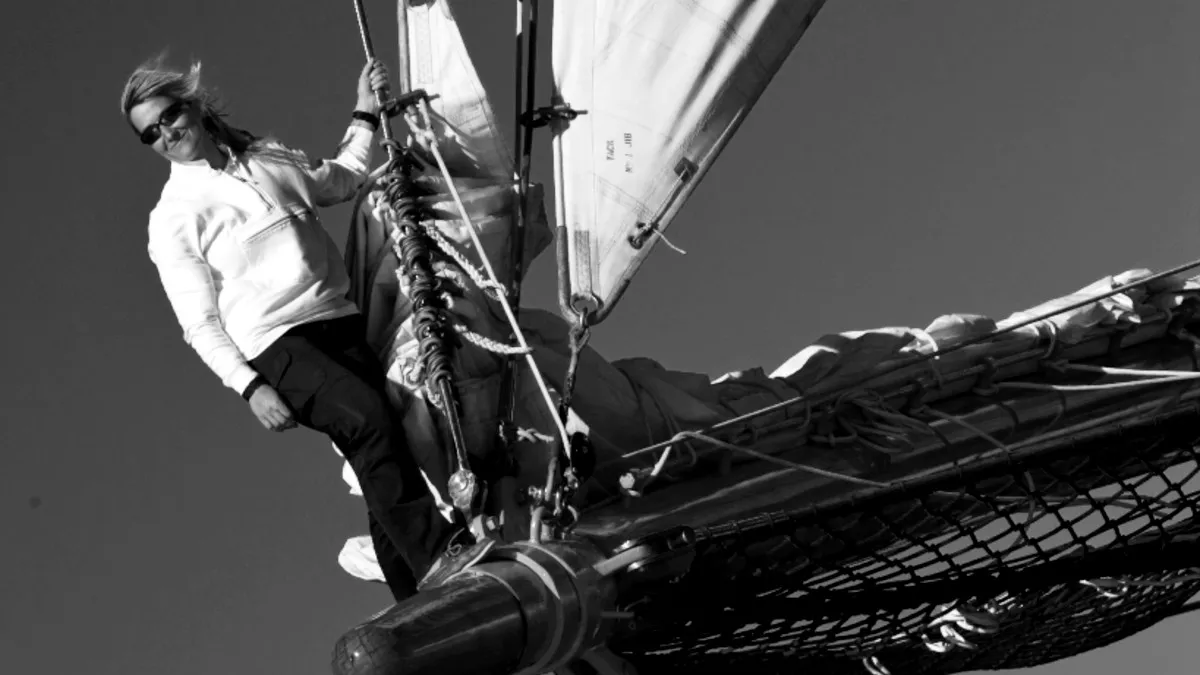
By contrast, classic wooden yachts like Creole really “speak” to sailors, says Gucci, especially when cruising at speed, cloth sails straining with wind, the boat heeling, crew working winches and lines, and in the distance, the Mediterranean coast. “You live the real yachting life then,” she says.
Gucci doesn’t view herself as the yacht’s owner. “I’m merely a custodian because Creole is the one that survived so many difficulties,” she says. Transient owners, global war, and years of neglect could’ve been the end of a long, unfulfilled sailing career.
Then came the yacht’s renaissance by her father, who saw beauty and sailing prowess inside a rotting hull. For the next four decades, relished and replenished by the Gucci family, Creole has lived its best life. “She is a floating piece of history,” says Gucci. “What’s even better, she still has many miles to sail.”
This article originally appeared in Robb Report US.