Four Seasons Explorer: Where Luxury Meets the Wild




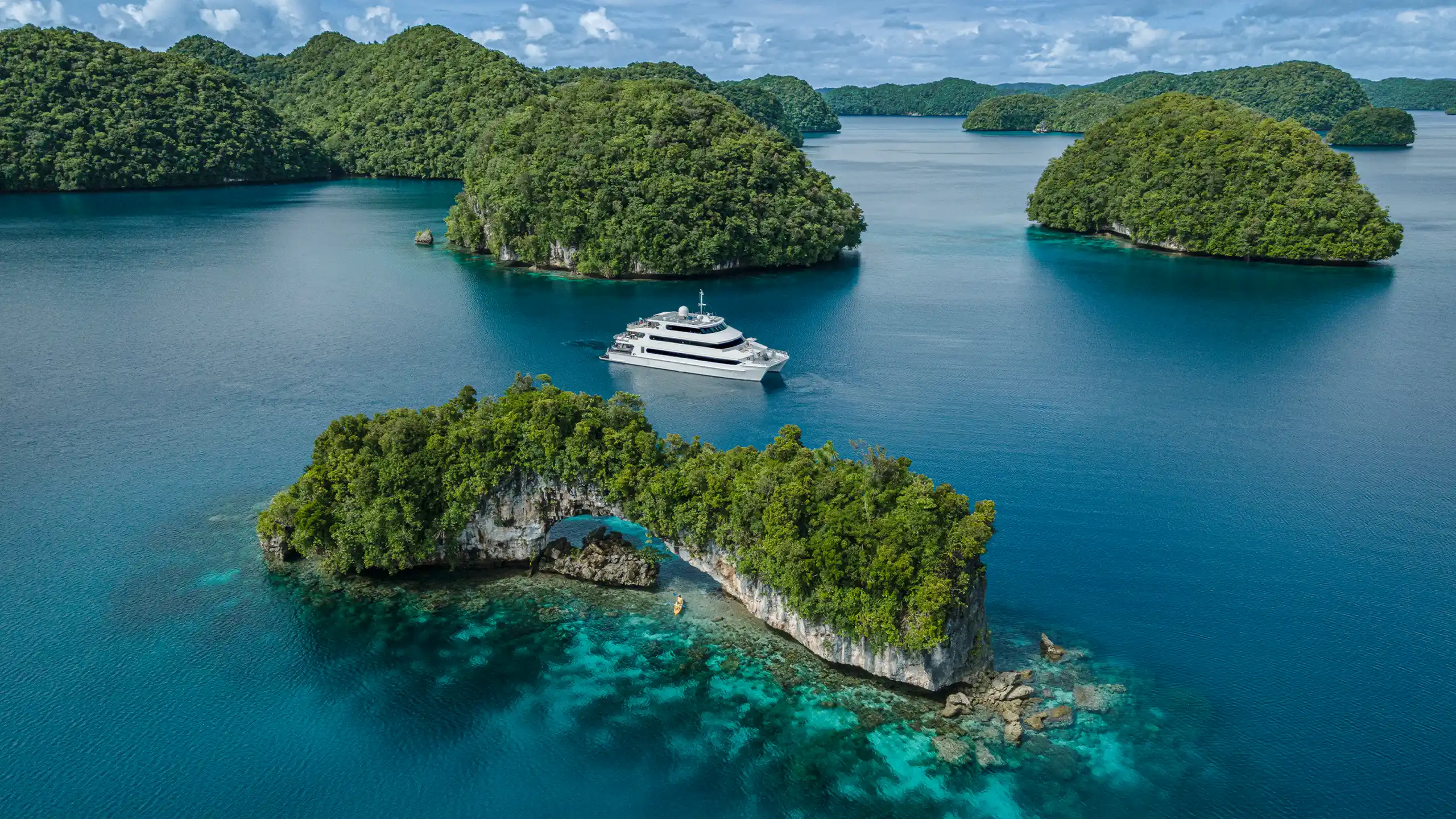
When describing Palau, paradise is a word that rolls off the tongue easily. The waters of Palau are impossibly clear, shifting from pale turquoise to deep cobalt, mirroring limestone cliffs that rise like ancient monuments from the sea. Palau kingfishers and swiftlets, two of 13 species endemic to Palau, fly unbothered above the trees, and the air is still and silent, the kind that hushes even your thoughts.
As I slip through the surface of the warm water of the Ulong Channel, “paradise” suddenly feels too soft a word for what the ocean offers here. The moment I steady my gaze, I’m surrounded by schools of parrotfish, Moorish idols, and butterflyfish moving with busy purpose. Neon corals are heaving with the current, with tiny fish taking shelter in even tinier nooks, and giant clams whose deep indigo and teal rims, speckled with flecks of mint green and fuchsia, slam shut as I swim by. A pair of Napoleon wrasse glides past. Below me, a shark emerges from the blue.
As strange as it seemed below sea level, Palau also feels familiar. The Philippines and Palau share the same tropical climate and an energy that only island nations possess. Still, even our geological birth story is the same, both owing their rugged topography and rich marine diversity to the ancient tectonic activity of the Pacific Ring of Fire, where shifting plates have sparked volcanic eruptions and undersea uplift, creating volcanic island chains, deep ocean trenches, and reefs. Our shared roots further intertwine in the Spanish colonial era, when the Philippines was colonized by Spain and Palau subsequently made part of the Spanish East Indies, later colonized by various foreign powers. Today, Palau has a population of 21,000 (including expats) with a democratic government, operating under a presidential system and a compact of free association with the United States.
But Palau manages its own internal affairs, the most remarkable of which is its commitment to environmental preservation. Palau has long been a leader in marine conservation, with initiatives like the world’s first shark sanctuary in 2009 and the Palau National Marine Sanctuary in 2020, which protects 80% of its exclusive economic zone from fishing and mining. Upon arrival, visitors must sign the “Palau Pledge” stamped onto their passports, signaling their entrance to hallowed ground and affirming their responsibility to respect the environment. Far from being a trendy, modern ideal imposed by policy, these measures are guided by a centuries-old way of life, summated by the core Palauan value, omengull, centered on respect and responsibility for nature.
More than just environmental awareness, omengull reflects a cultural ethic: the belief that people are stewards, not owners, of the land and sea. It guides everything from fishing practices to how visitors are welcomed. From a young age, Palauans are taught to take care of the environment even before they learn to take care of themselves—and this worldview underpins Palau’s pioneering conservation efforts and reinforces the idea that preservation is not a marketing ploy or strategy; it is identity.
Omengull is just as present aboard the Four Seasons Explorer, even though it’s far from the rugged or stripped-down experience one might expect from a typical liveaboard. Instead, it’s a floating sanctuary that marries the Four Seasons’ signature hospitality with a deep respect for the environment it sails through.
The dining program emphasizes local sourcing where possible, minimizing waste and showcasing the richness of the Pacific’s bounty with restraint and care. We had, of course, a lot of seafood. By seven o’clock in the evening, the aroma of lobster over a hot grill wafts through the al fresco dining area, beckoning guests to dinner. There would be plenty of fresh tuna, served in a ceviche or a poke bowl, or snapper steamed with aromatics. Root-to-stem cooking is meticulously practiced; nothing from a pumpkin is discarded, for example, its seeds and skin finding their way into the menu, and deliciously.
Guests are gently welcomed into this ethic not through lectures or rigid rules, but by subtle, consistent example. The crew speaks of marine life with wide-eyed enthusiasm, as if the miracle of what lies beneath the surface has just been revealed to them. Ikoo, the onboard videographer, accompanies every dive, filming the same channels time and again, but when he returns from every excursion, he speaks as though it were his first. Midday, brief presentations by a resident marine biologist educate guests on different topics, like Palau geology or spawning—an event that seasoned divers from all over the world travel to Palau to witness.
It’s omengull in action: not a set of instructions, but a way of being. Here, the greatest privilege isn’t just witnessing beauty, but participating in its protection.
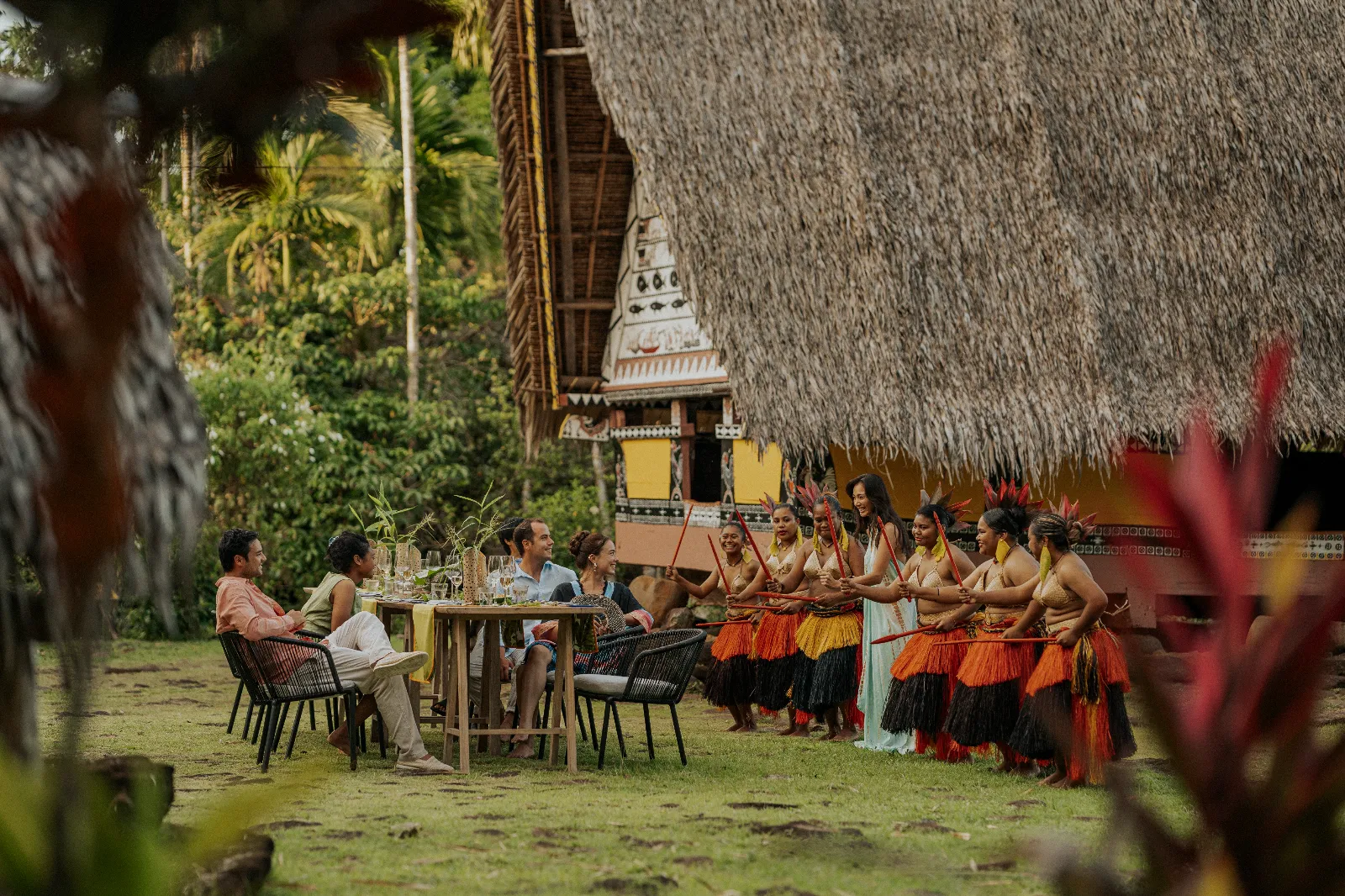
Unlike most liveaboards that run on fixed itineraries, the Explorer offers uncommon flexibility: guests can embark and disembark any day. Your journey can be as short as a few nights, perfect for sampling Palau’s sites high on any diver’s bucket list: the Blue Corner to spot hundreds of species of fish, dolphins, orcas, or hammerhead sharks; the German Channel to swim with the manta rays; or WWII wrecks in Pelelieu, depending on where the Explorer is anchored when you embark. One can also take the recommended six- or seven-night loop that explores the archipelago in totality, both above and below the water, including a visit to Airai Bai, a 100-year-old bai (meeting house) decorated with stunning, mythical motifs, or the Badrulchau Stone monoliths, both on Babeldaob Island.
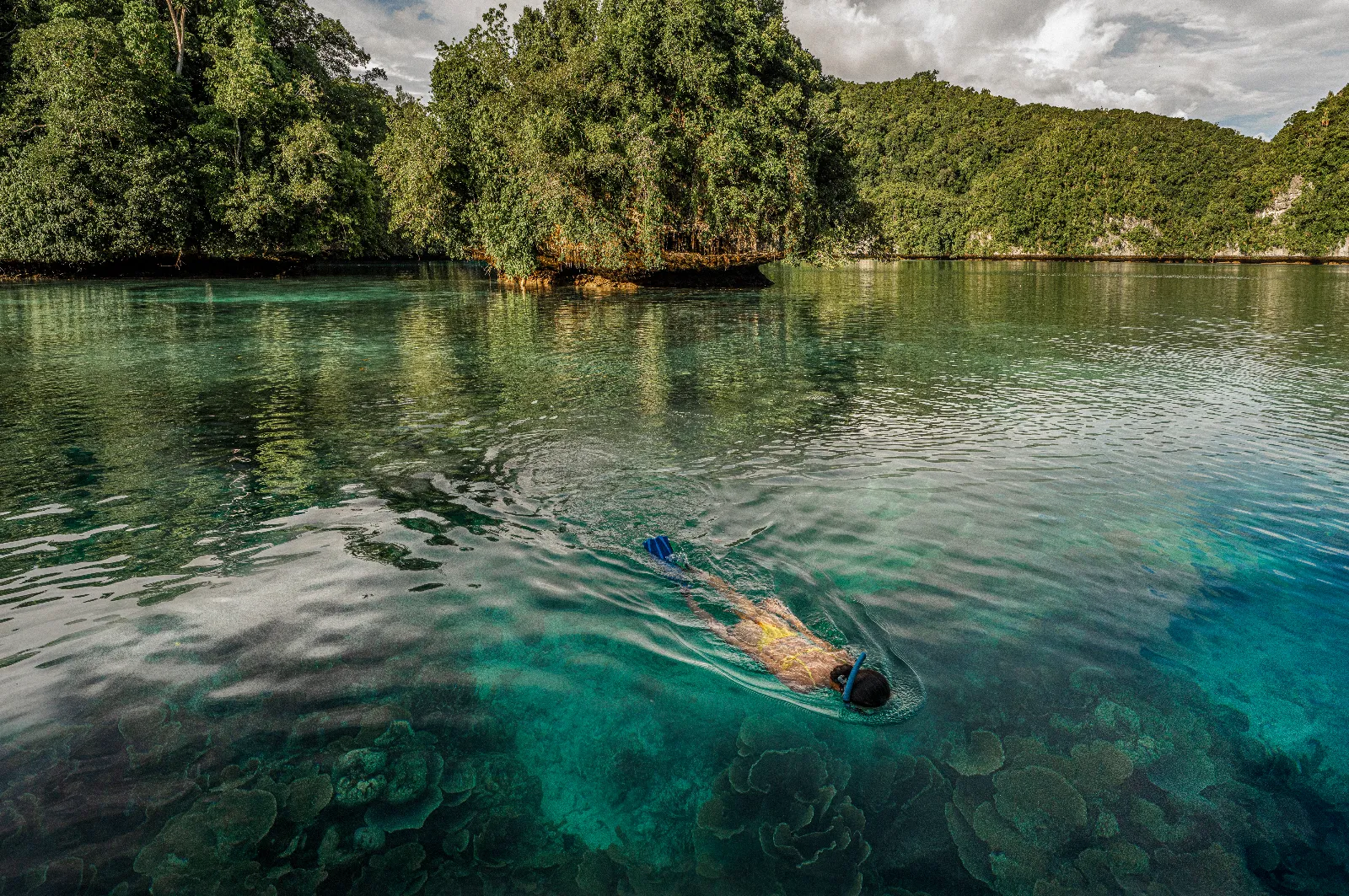
As someone who isn’t a certified diver, I was admittedly wary about joining a liveaboard, but the Four Seasons ensures that itineraries for non-divers are just as rewarding. My days were as packed as the divers’, and I could choose to make my itinerary as hectic or as leisurely as I wanted. I snorkelled twice a day, once visiting Mandarin Fish Lake, swimming under a limestone arch into a cove where cabbage coral was abundant and teeming with life. While I didn’t see any Mandarin fish (they are notoriously shy), corals, clams, schools of other fish, and the exhilaration of seeing colors, patterns, and combinations I never knew existed more than made up for it.
As a Four Seasons resort, albeit a floating one, the Explorer is fully and luxuriously equipped with the brand’s signature service, comfort, and attention to detail. I packed light, because on the Explorer, they have all the gear you need, from mask to fin. Before I could even grip the swim ladder of the tender at the end of a snorkel, my fins would be slipped off my feet and mask removed. I watched as divers stood by while the attentive staff strapped them into their gear and tanks. When we returned from our expeditions, my fellow “explorers” and I were greeted by lemongrass-scented cold towels, fizzy lemonade, and the port manager, Zack, eager to hear about our adventures.
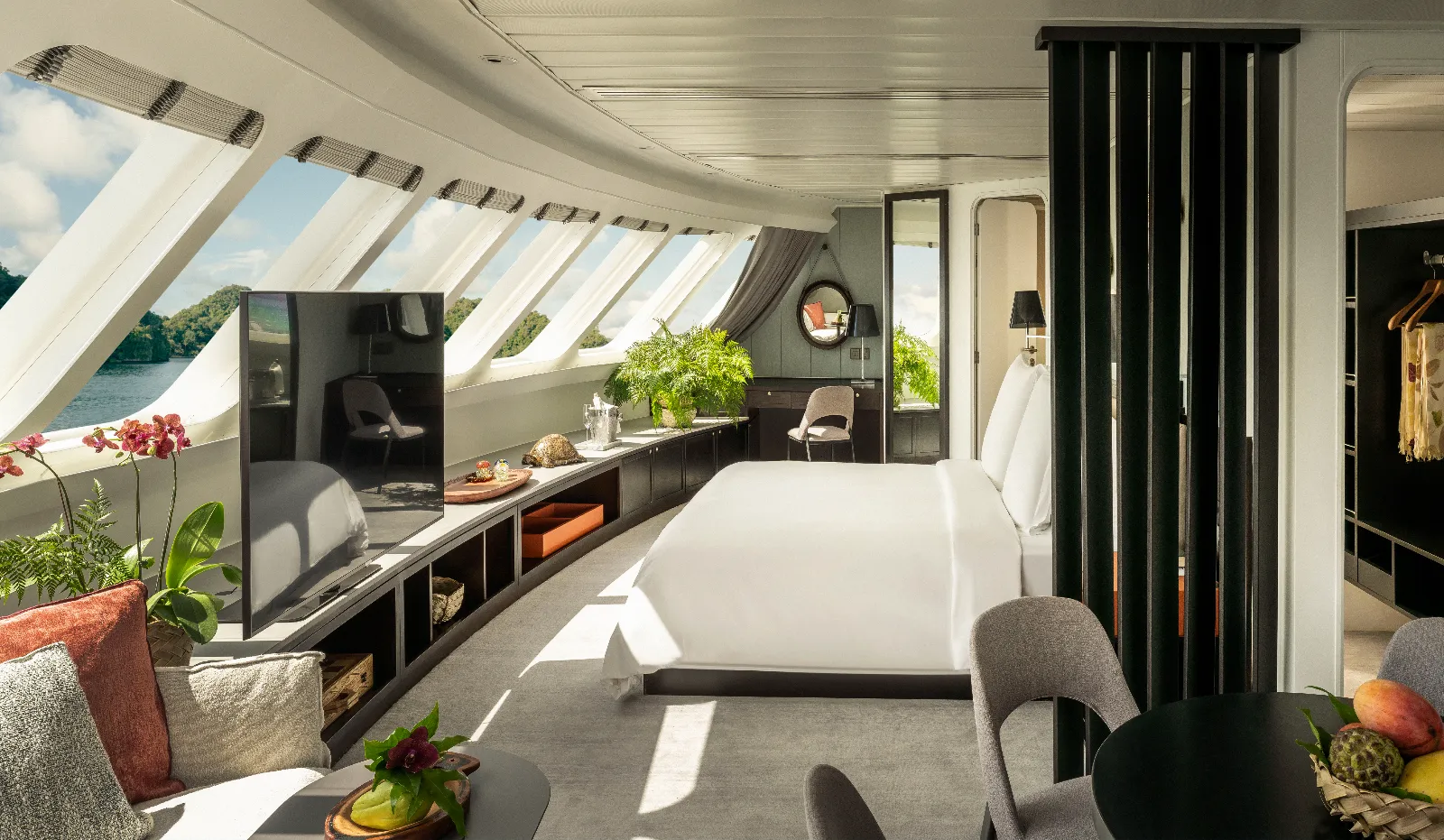
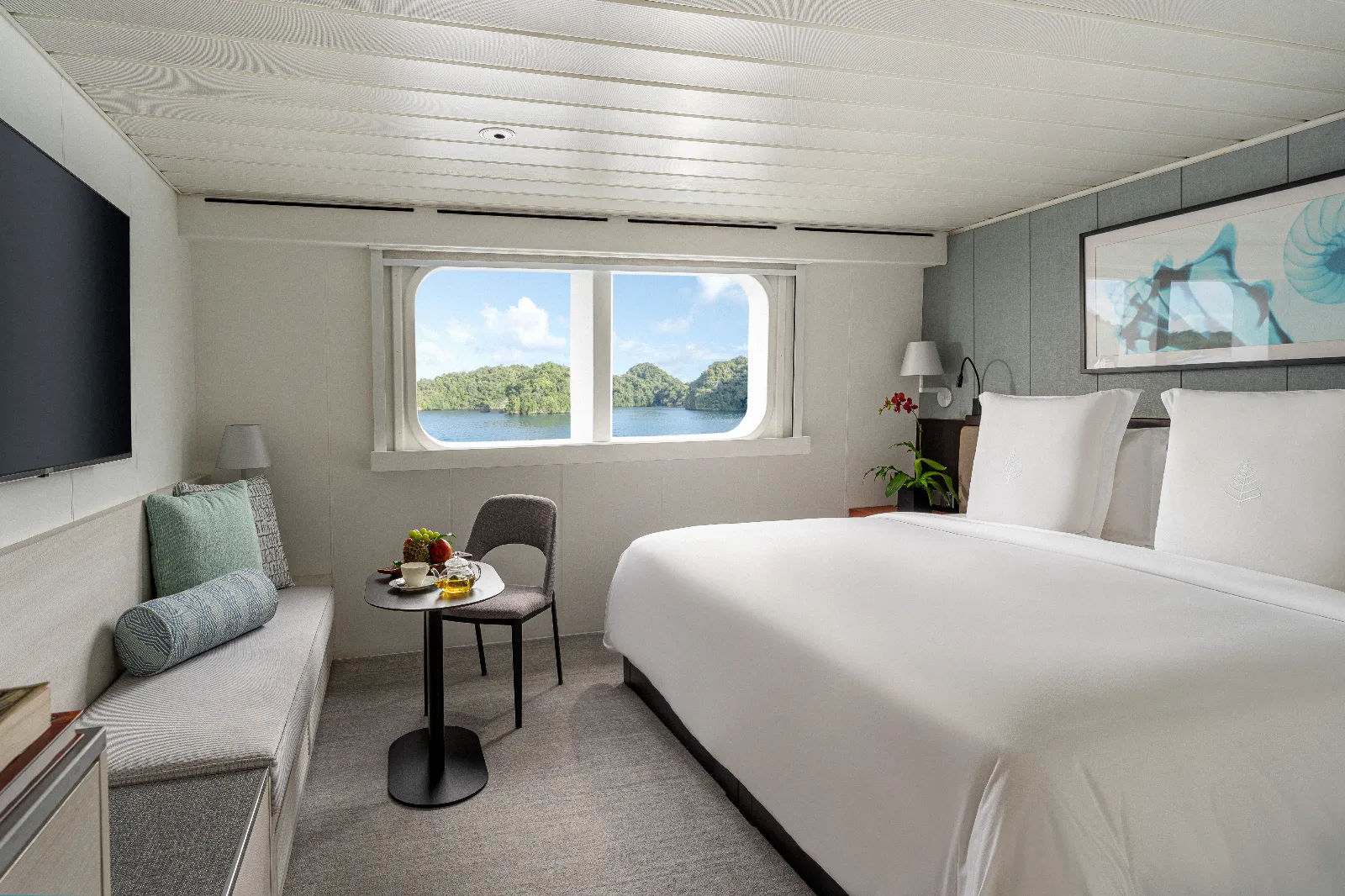
Each of the 10 staterooms and the expansive Explorer Suite (with its wraparound view and private sundeck) is surprisingly spacious and fully equipped. From the rainfall shower to the Four Seasons’ signature beddings (which, I can personally attest, provide the kind of sleep that is no less than therapeutic), everything is designed with the Four Seasons experience in mind. It makes it tempting to stay onboard: there is an indoor and outdoor bar, fresh snacks within arm’s reach, a library, satellite Wi-Fi, a spa, even a TV if you must, but the ocean calls. Birding at seven in the morning? Why not?
On our last night, the group dwindled to a total of four. We were chatting with the staff, joking around, congratulating one of them on a promotion. Kaan, the diver in the group, showed us his videos from two dives that day: torrents of silvery fish that stretched from the bottom of the ocean all the way up to the surface, stalactites on a cave dive, a turtle, and a shark or two. Ikoo, the onboard videographer, whipped out his own laptop, showing us his best footage since he joined the Explorer, and we marveled at his poetic cinematography and good luck.
The boat rocked gently as we lingered on the deck. By the time our trip was coming to an end, the crew felt like old friends. Maybe it was because of the close quarters, maybe it’s that Four Seasons stamp, but they were truly the warmest group I’d ever met. Inexplicably, for someone who never thought of herself as keen about snorkelling or diving, I found myself aching for one more swim.
Paradise suggests perfection without effort, but it is not without effort that Palau remains one. The sea surrounding these islands carries depth, history, and power—its beauty is not accidental, but fiercely protected. What looks like untouched wilderness is the result of generations of care, of values passed down, of omengull: the deeply held belief that nature is not ours to use, but ours to respect. The ocean here is pristine not because it has been spared, but because it has been defended, patiently, continually, and with deep love. It doesn’t invite escape; it invites reverence.
Palau is paradise, but it is also a compelling success story. The ocean doesn’t owe us safety. Or wonder. To swim in it, to live around it, is to submit, and it’s the unspoken truth you learn quickly in Palau: you are a guest. I see a whisper of a fish the size of a prayer and say my own, like a pilgrim at the edge of something holy. – Kimberly Rocha-Delgado
Onboard the Explorer
The Four Seasons Explorer is a 39-meter luxuryLuxuryA lifestyle defined by exceptional quality, craftsmanship, exclusivity, and sophistication, encompassing the finest products, services, and experiences that represent the highest standards of refinement and excellence.Go to Luxury Glossary catamaran that functions as a floating five-star resort. With only 11 cabins, it offers the exclusivity of a private yacht and the polish of the world-class hotel brand, complete with Four Seasons-trained staff and signature service.
How to get to Palau: Direct flights are available from Manila to Koror and back via United, twice a week.
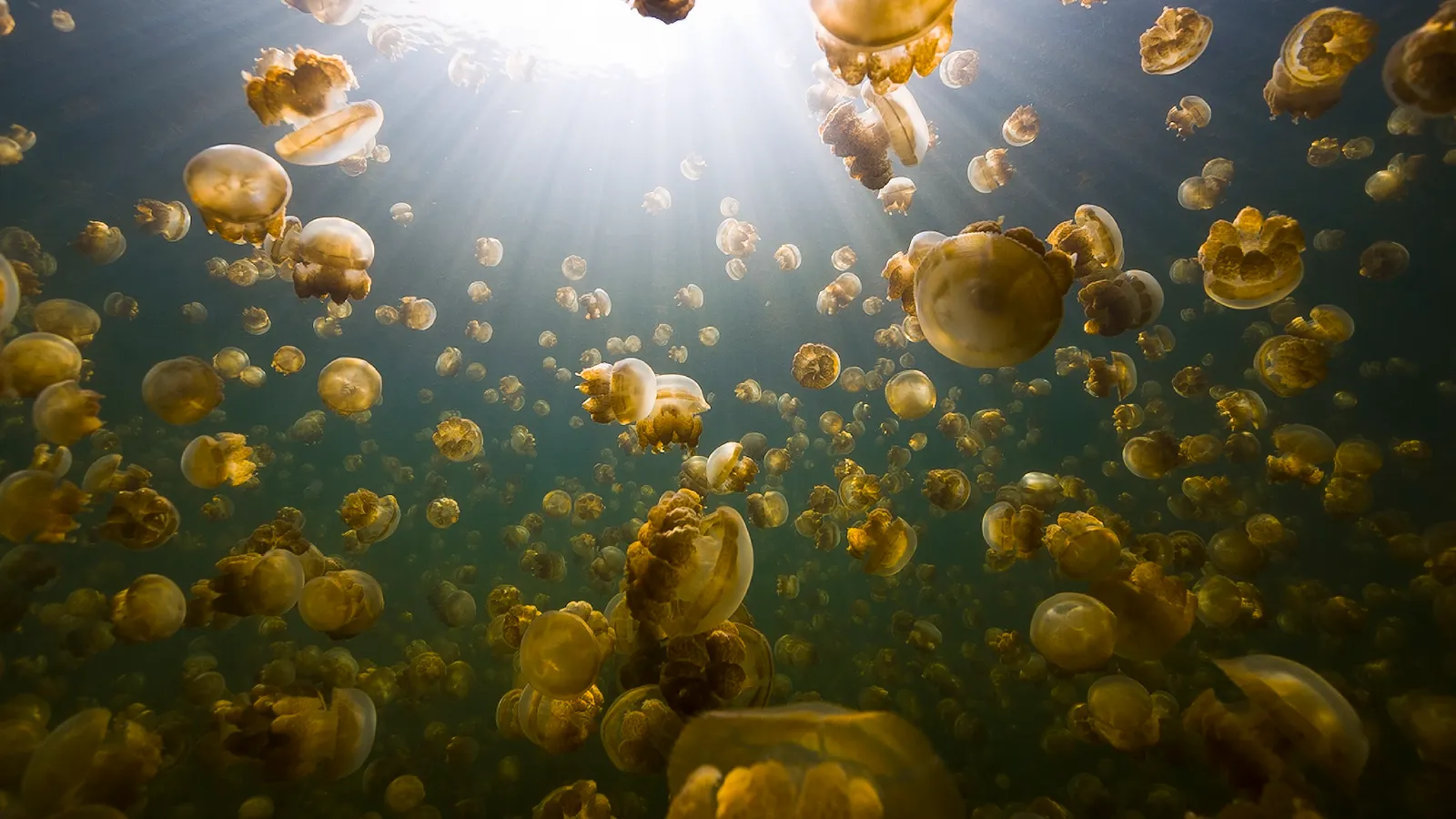
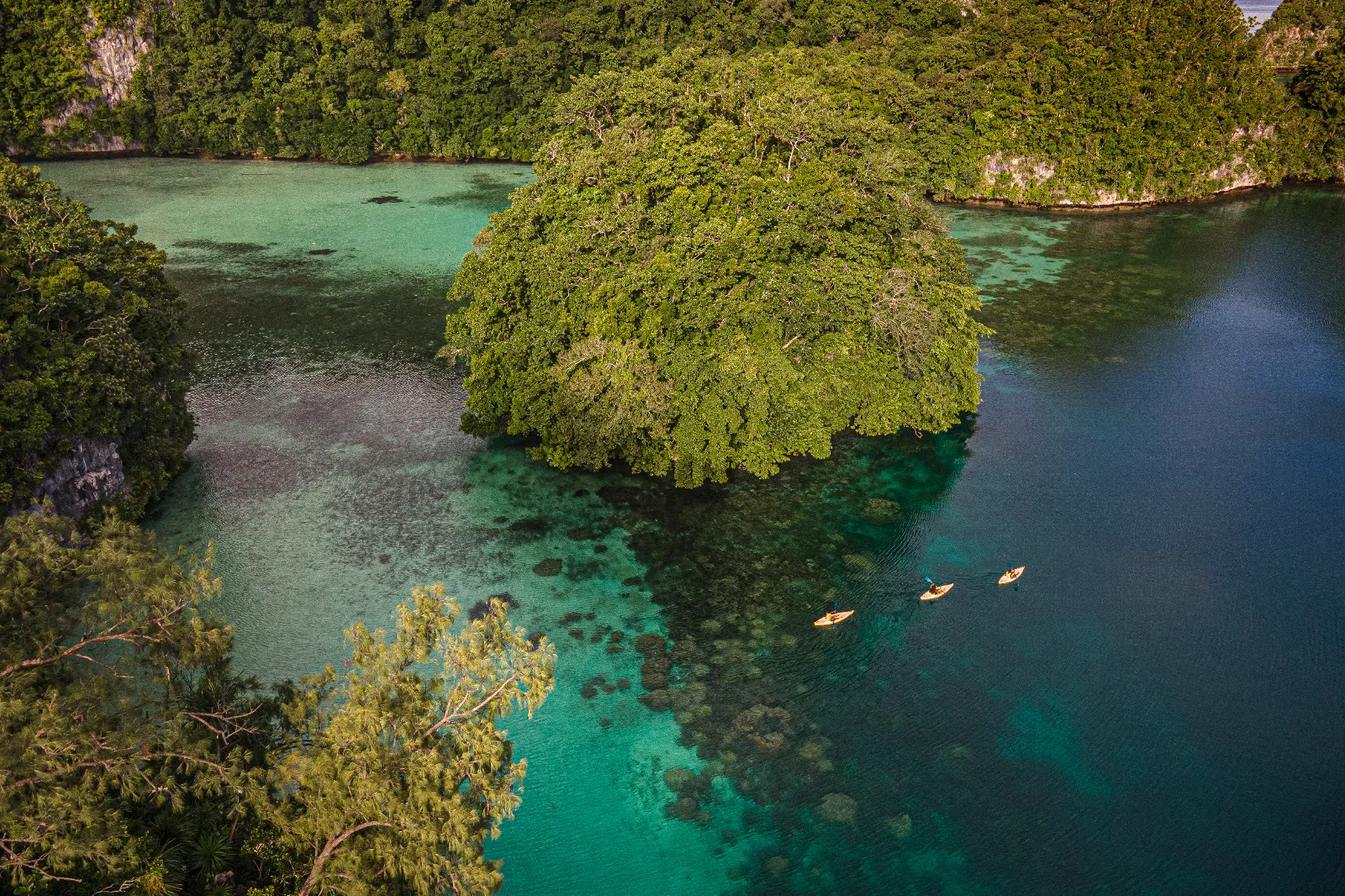
Itinerary: Guests can embark and disembark any day of the week, but we recommend its full six-night itinerary across Palau’s most breathtaking natural sites. Highlights include the UNESCO-listed Rock Islands, the legendary Jellyfish Lake, and diving in the Blue Corner or German Channel—two of the world’s top dive spots. Guests can snorkel, kayak, swim, or enjoy tender rides to remote beaches and cultural sites such as traditional bai meeting houses, ancient monuments, and WWII shipwrecks.
Diving program: A fully-equipped PADI 5-star dive center onboard allows for up to three dives a day with expert guides; non-divers can get certified onboard. Don’t bother to bring your gear; they have everything from masks to sunblock.
Not a diver? Palau’s vibrant reef systems, hidden lagoons, and inland lakes offer equally compelling snorkeling and paddleboarding experiences. Fishing excursions and guided nature walks on uninhabited islands are also offered.
Cruise control: Guests enjoy well-appointed staterooms with panoramic windows, a spa treatment room, an indoor lounge and bar, and al fresco dining under the stars. The executive chef creates rotating menus inspired by local Palauan ingredients and global flavors, tailored to guests’ preferences, and all included in your stay.
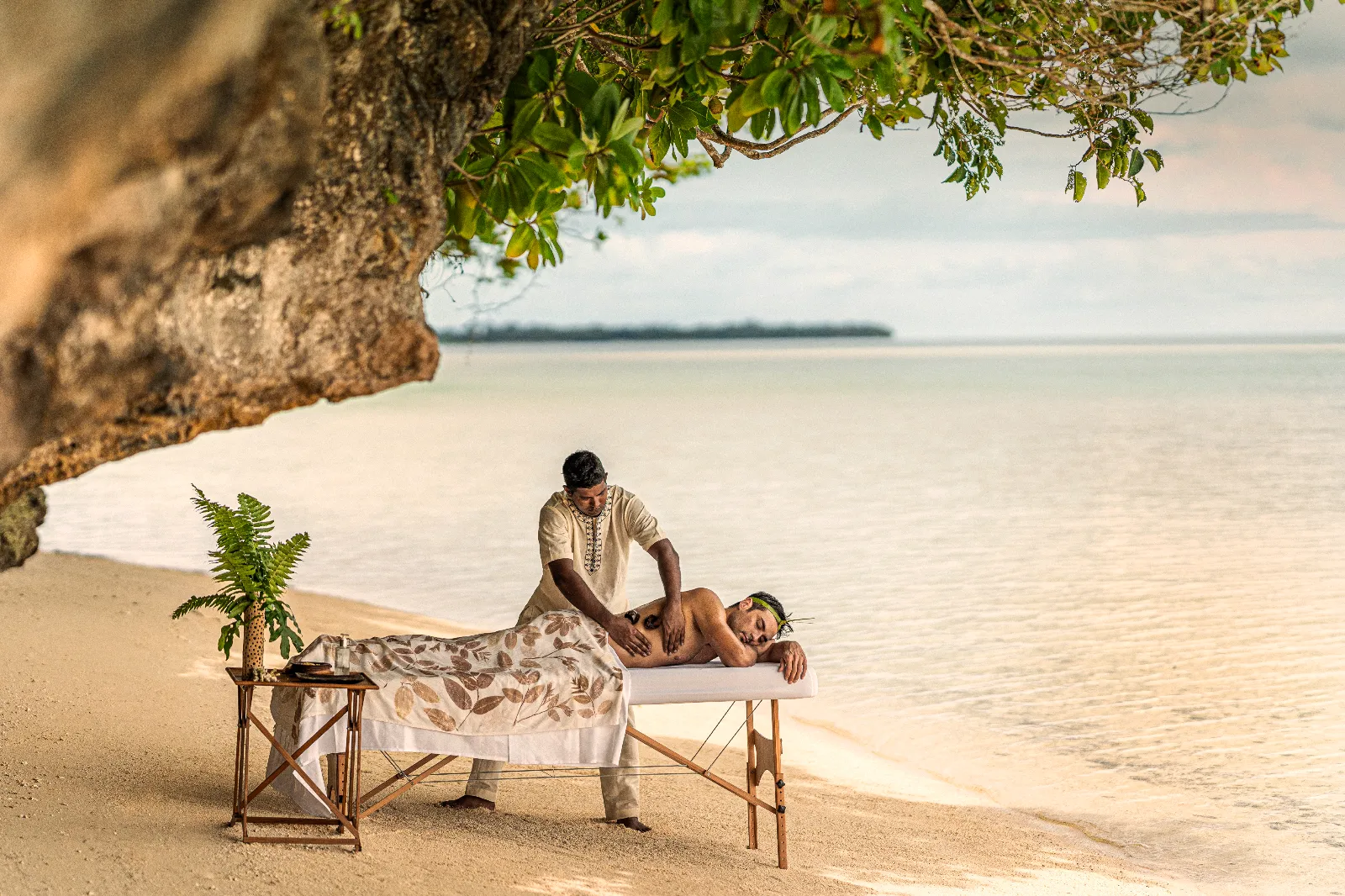
Five-star service: With a low guest-to-crew ratio, the experience feels deeply personal. Attentive but discreet, the multilingual crew includes dive instructors, a wellness therapist, a private chef, and naturalist guides—ensuring every day flows with ease and flexibility.
This article originally appeared in Robb Report Philippines’ Watches and Jewelry Issue, August 2025.