This Bonkers New Business Jet Is Aiming for Zero-Emissions Flight by 2030




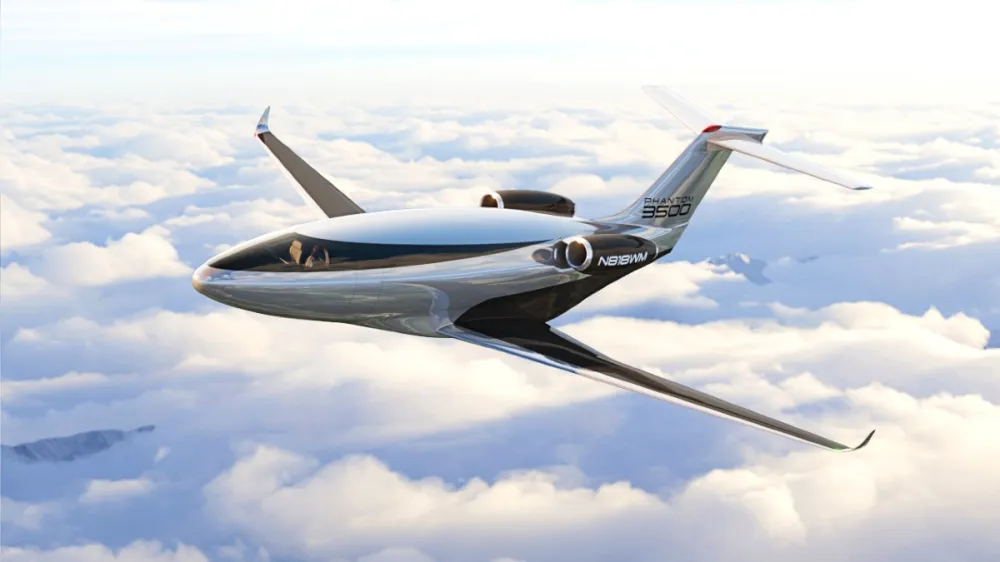
The Paris Air Show had some interesting records broken this year, including the Bombardier Global 7500’s record flight between Montreal and Paris at five hours, 30 minutes. Not to be outdone, competitor Gulfstream’s flagship G700 made its own record run from San Francisco to Paris Le Bourget in nine hours and 26 minutes. Otto Aviation also had a big announcement in the City of Light. If the brand can make its proposed new record stick, its Phantom 3500 business jetBusiness JetA private aircraft designed to carry executives and affluent travelers on their own schedules, avoiding commercial terminals and fixed timetables. Categories range from light jets to ultra-long-range models, and forGo to Business Jet Glossary would achieve net-zero carbon emissions about two decades before the rest of the industry. The company plans for its super-midsized Phantom 3500 to enter service in 2030, about 20 years before private aviation has made a collective pledge to reach net-zero carbon emissions.
The clean-sheet Phantom still has some way to go. The futuristic-looking aircraft was highlighted at a press conference in Paris announcing a new manufacturing facility in Florida. Otto describes the Phantom as an “A.I.-supported clean sheet design, with transonic super-laminar flow architecture and cutting-edge aerodynamics.”
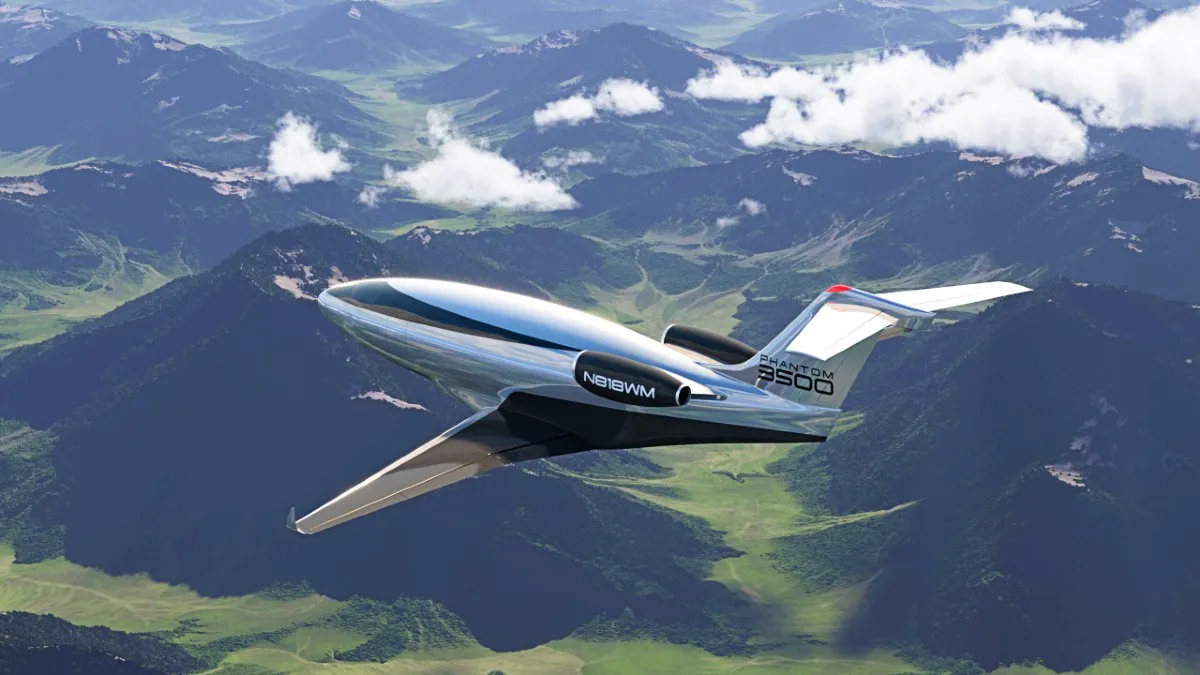
The startup says the business jet will fulfill these descriptors by using a laminar-flow design that smooths airflow over its raked wings and fuselage, thereby reducing drag. The aircraft also does away with conventional windows and instead uses high-definition digital displays Otto calls “Super Natural Vision.” An introductory video shows views of the sky overhead and landscape along the sides of the aircraft via the screens. The 3500 will be powered by two Williams FJ44 turbofan engines mounted at the rear of the fuselage.
Testing of a Phantom 3500 prototype is planned for 2027, with FAA certification and entry to market projected to happen about three years later. “By achieving carbon neutrality 20 years ahead of the 2050 target, we’re not just meeting expectations—Otto is redefining what’s possible in aviation,” said founder and CEO Paul Touw, who made the announcement about a new production facility that will open next year at the Cecil Airport in Jacksonville, Florida.
Florida Governor Ron DeSantis, who was at Sunday’s press conference at the Paris Air Show, said that Otto will receive a nearly $500 million incentive package from state and local authorities to create its headquarters in Jacksonville. The facility will be on an 100-acre parcel with an 850,000-square-foot manufacturing plant. Touw said Otto intends to build up to 1,600 Phantom 3500s between 2030 and 2040.

The Phantom 3500 will burn 60 percent less fuel than similar-sized jets. “The laminar flow design also allowed us to reduce the aircraft weight by half compared to competitors like the Citation 10 or Praetor 500,” Scott Drennan, Otto’s chief operating officer, told Robb Report. “The design’s efficiency means that all the components can be reduced. The engines and wings are smaller, and the fuselage is also much lighter.”
By burning sustainable aviation fuel, it will reduce emissions by 90 percent, adds Drennan. The 3500 is a super midsized business jet for space with nine passengers, with a cabin height of 6’5”, length of 23 feet and width of 7’6”. It will have a max cruise speed of 600-plus mph, cruise altitude of 51,000 feet, and maximum range of 3,500 nautical miles. Drennan says operating costs will be 50 percent less than its competitors’ super-midsized business jets, thanks to the smaller Williams engine.
The Phantom 3500 follows Otto’s earlier Celera 500L prototype, which completed testing in 2019. “That was a great demonstrator aircraft that proved our laminar airflow was practical,” says Drennan, noting the Phantom’s preliminary test phases will conclude in October. A sub-scale design has gone through wind-tunnel testing at both low and high speeds. “The tests matched our predictions within five percent,” he says. “The laminar-flow technology will cut drag by 35 percent compared to other aircraft.” Most of its tier-1 suppliers for major components like engines, avionics and landing gear are in place, he adds, so Jacksonville will be more of an assembly hub, rather than manufacturing every component from scratch.
“The Atlanta FAA office told us that they see ‘nothing new or novel’ about our aircraft, which stung for a few seconds,” says Drennan. “But it also meant a clear path to certification.”
This article originally appeared in Robb Report US.