Jean Arnault Got Watch Collectors to Take Louis Vuitton Seriously. He’s Just Getting Started.


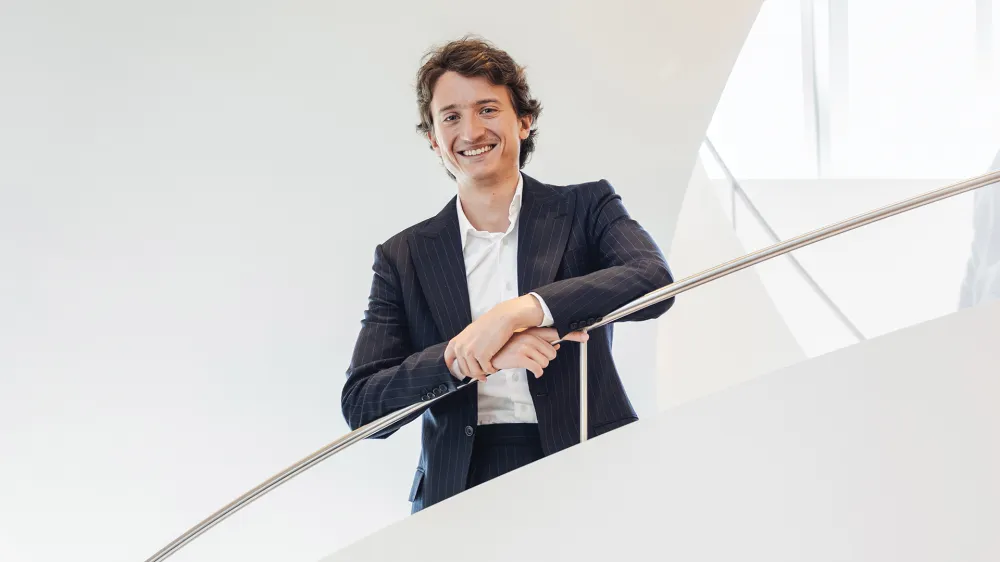
Jean Arnault was just 22 years old when he was handed the keys to Louis Vuitton’s watchmaking division. At an age when most of his contemporaries were still finding their footing in entry-level jobs—and perhaps making the most of their 20s after hours—Arnault was tasked with something considerably more daunting: changing the perception of Louis Vuitton watches from an afterthought into serious examples of high horology.
He was hardly unprepared. Fresh from earning a master’s degree in financial mathematics at M.I.T. (which itself directly followed a master’s in mechanical engineering from Imperial College London), he took the helm of Louis Vuitton watchmaking in 2021. As the youngest son of Bernard Arnault, the chairman and C.E.O. of LVMH, his appointment was perhaps unsurprising. As part of what appears to be a developing succession plan, all five of Arnault’s children now hold key roles across the LVMH empire. But the youngest inherited one of the more difficult mandates. In a few short years, he has completely restructured the organization, refined its design language, and doubled down on elevated watchmaking techniques that are increasingly commanding the attention of the cognoscenti—and transforming Louis Vuitton’s standing in the watch world.
Although the bar was high, he did not arrive without resources. Despite the fact that the watchmaking arm of Louis Vuitton accounts for less than 1 percent of the entire business’s revenue, according to a report by Morgan Stanley and LuxeConsult, Arnault is empowered with the kind of financial security that is often elusive at other companies setting their sights on a turnaround. He also has two built-in secret weapons: Michel Navas and Enrico Barbasini of La Fabrique du Temps (LFT)—a specialist movement-development company and watchmaking atelier acquired by LV in 2011. The two master watchmakers are widely regarded in horological circles as the crème de la crème, having honed their expertise at Patek Philippe, Audemars Piguet, Gérald Genta, and Franck Muller, between them.
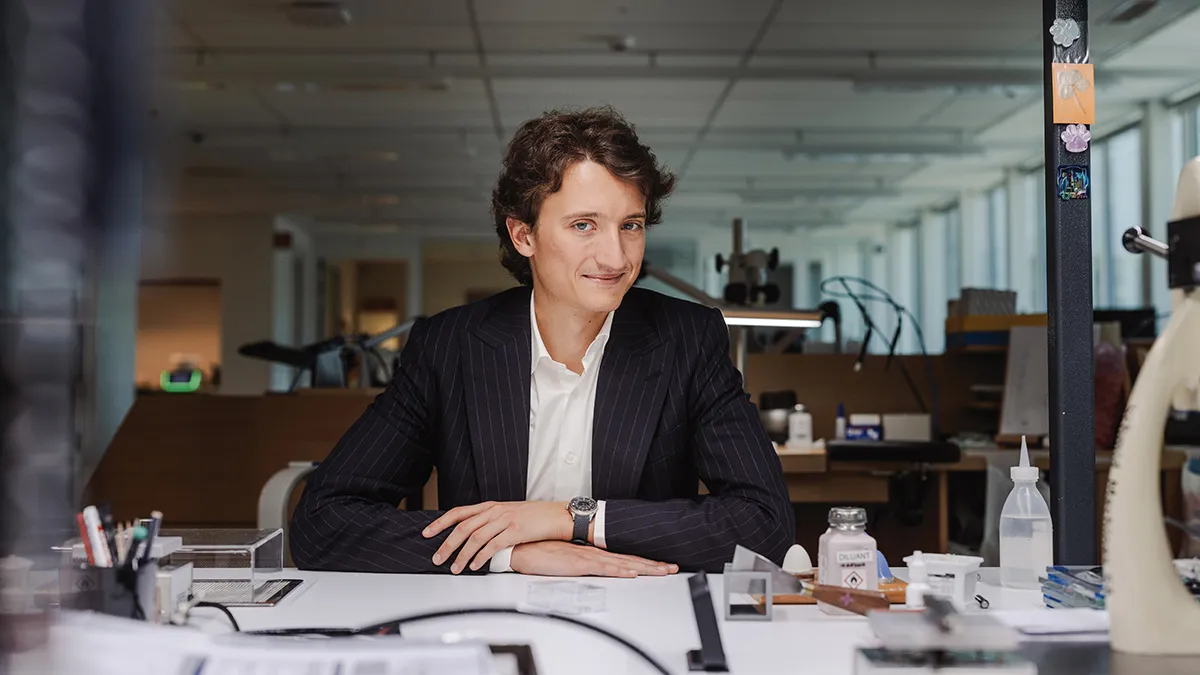
These are facts that are not lost on Arnault, who comes across as measured and forthcoming, with a cool confidence beyond his years. He is incredibly tall and lanky, in an impeccably fitted but understated navy pinstripe suit, and seems less comfortable with the fuss of a photo shoot. He promptly asks to wipe the makeup off once the photographer is finished. But he lights up when discussing even the tiniest technical details, confessing he has always had a passion for mechanics. “It is my first work experience altogether,” he concedes. “I ventured a little bit in the unknown in a way, but to be fair, it’s quite obvious the team around me is incredible.” The horological know-how was already unusually sophisticated, but it hadn’t yet translated into equivalent collector prestige. “They were sort of underused, in a way,” Arnault tells Robb Report during an interview at LFT headquarters in Geneva. “They were under-potentialized.”
That revelation first took shape when Arnault arrived at the manufactureManufactureA watchmaking term for a company that designs and produces most of its movements and components in-house, rather than relying on outside suppliers. Being a true manufacture signals deep expertise,Go to Manufacture Glossary at age 20, where he was put through an internship program meant to introduce young watchmaking hopefuls to the various roles and departments of the business. “We did the same tour [with him] as the others,” Navas recalls. “He went to the engineers, he went to the workshop of the designers and all the watchmakers… [he worked with] the tools, the screwdrivers, the pliers. He disassembled a watch. He assembled a watch.” But the master watchmaker says he was struck by the depth of knowledge Arnault already possessed. “He knows every brand. He knows every model,” Navas says. “I was talking with him about my stay in Patek Philippe. He said, ‘Oh, you worked in Patek Philippe?’ and I said, ‘Yes, seven years. I was in charge of the minute repeaters.’ He said, ‘Ah yes, the minute repeaters with the tourbillon. Yes, the 5016.’ He knows even the reference. He knows. It’s impressive.”
Passion is the secret sauce in this industry, and many others also say Arnault has it in spades. Drew Coblitz, a longtime collector based in Philadelphia who owns a Louis Vuitton Tambour, says he met Arnault at a lunch for Louis Vuitton watches through the 1916 Company and noticed his commitment to getting granular. “He does not keep himself up at the top, in a way,” Coblitz says. “He is all over all the areas…. I think what it does is it connects the watches to him instead of the overarching huge company that is the king of luxuryLuxuryA lifestyle defined by exceptional quality, craftsmanship, exclusivity, and sophistication, encompassing the finest products, services, and experiences that represent the highest standards of refinement and excellence.Go to Luxury Glossary, and I think that is maybe one of the single biggest differences between the new products and the old. He is so passionate and involved in it.”
Still, a bonafide interest in horology can only take one so far; a huge learning curve remained. Arnault credits Michael Burke, the former chairman and C.E.O. of Louis Vuitton, as a mentor who taught him essential business lessons about the precision of execution. “He was like, ‘O.K., your strategy on paper looks great, but let me see the prototype first before I say yes to anything,’ ” Arnault says of Burke’s guidance. “I would have thought, ‘O.K., let’s put the strategy together first and then make the product.’ He made us reverse it and, say, take a little bit more time initially, make the product, see what happens, and then we put everything into motion to make it happen. And he’s been instrumental in that.” He says his father reiterated the same philosophy. “I talked about it with my dad, who’s been saying always the same thing: ‘If the product is good, the sales will follow.’ ” And so, he says, he became obsessed with perfecting the watches.
“He knew that credibility in this space could not be bought—it has to be earned.”
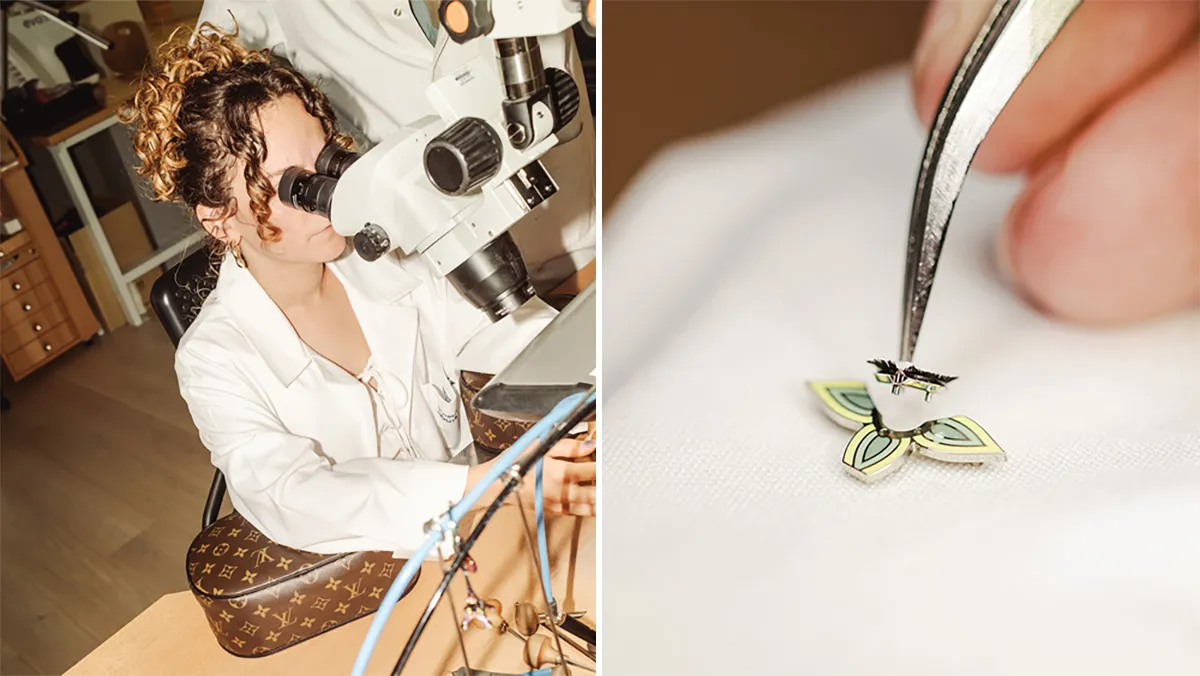
Elevating the product meant restructuring the company almost entirely. In a move that few companies of any kind make today, Arnault chose to significantly scale down the number of watches produced and hire more workers. Louis Vuitton was beginning to use the resources of a massive global luxury conglomerate to behave increasingly like an independent watchmaker. “We’ve pushed the boundaries a little bit more,” Arnault says. “So we went into more niche and extreme places—enameling, engraving, even in the C.N.C. side.”
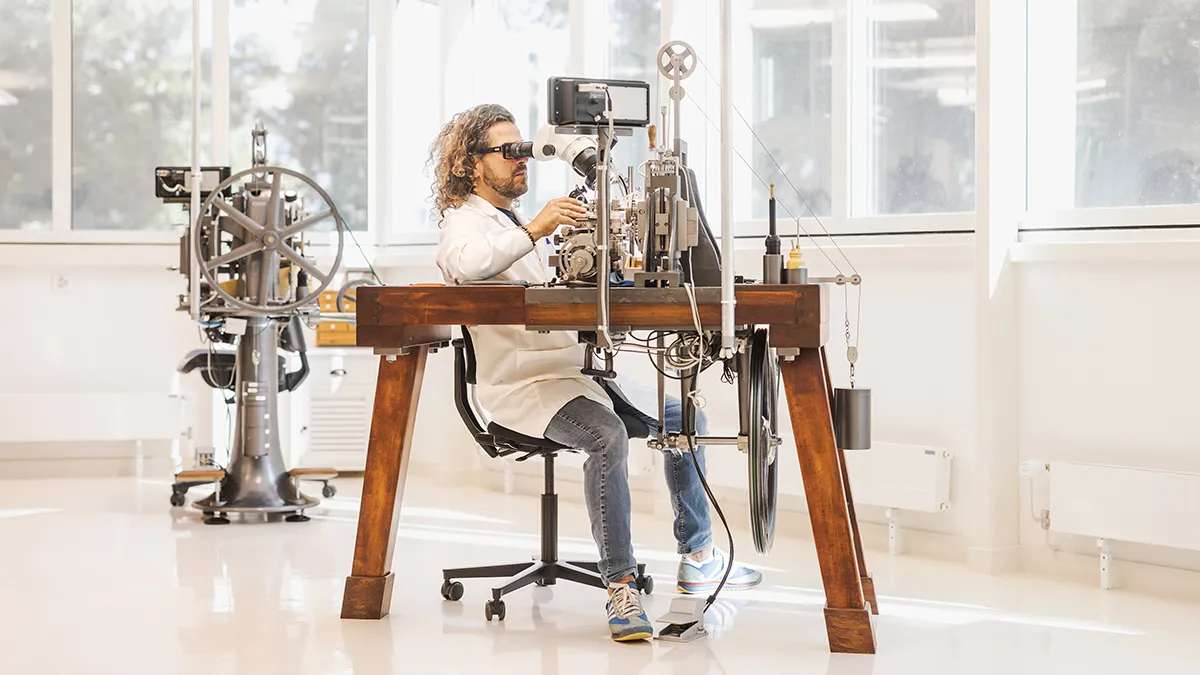
To push the envelope, the company had to invest enormous capital in deepening its vertical integration, bringing capabilities and components that still came from outside suppliers under its own roof. Even the Spin Time, one of Louis Vuitton’s signature complications, historically relied on an ETA ébauche beneath the mechanism developed by La Fabrique du Temps. In 2025, it debuted with a movement developed entirely in-house. Between 2011 and 2014, Louis Vuitton purchased La Fabrique du Temps and Léman Cadrans (a dial manufactureManufactureA watchmaking term for a company that designs and produces most of its movements and components in-house, rather than relying on outside suppliers. Being a true manufacture signals deep expertise,Go to Manufacture Glossary), but under Arnault the full operation has become even more extensive and specialized, organized into La Fabrique des Arts, La Fabrique des Mouvements, and La Fabrique des Boîtiers, split between two buildings.
Part of the impetus for Arnault was listening to those who came before him. “I started on the 30th of August 2021, and the first or second day, I came here and had the first conversation with Michel and Enrico, and they both told me, ‘Listen, we need to change the way we work,’ ” Arnault recalls. “Basically, they went on a rant about what was going wrong, what they needed, and what they thought was possible to improve.” He says he was cautious at first, but after just two to three months, he realized they were right. “Is it going to make sense business-wise? It’s a whole other topic,” he says. “But is it better for the brand to make only high-craftsmanship pieces and beautiful pieces? One hundred percent.”
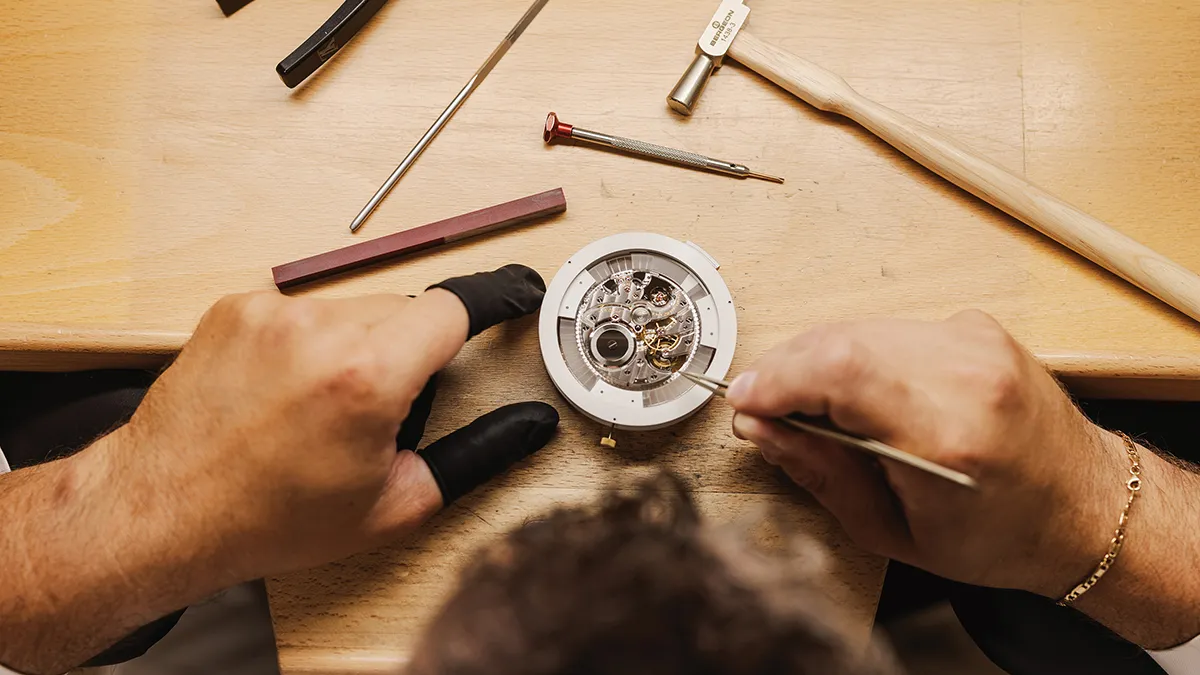
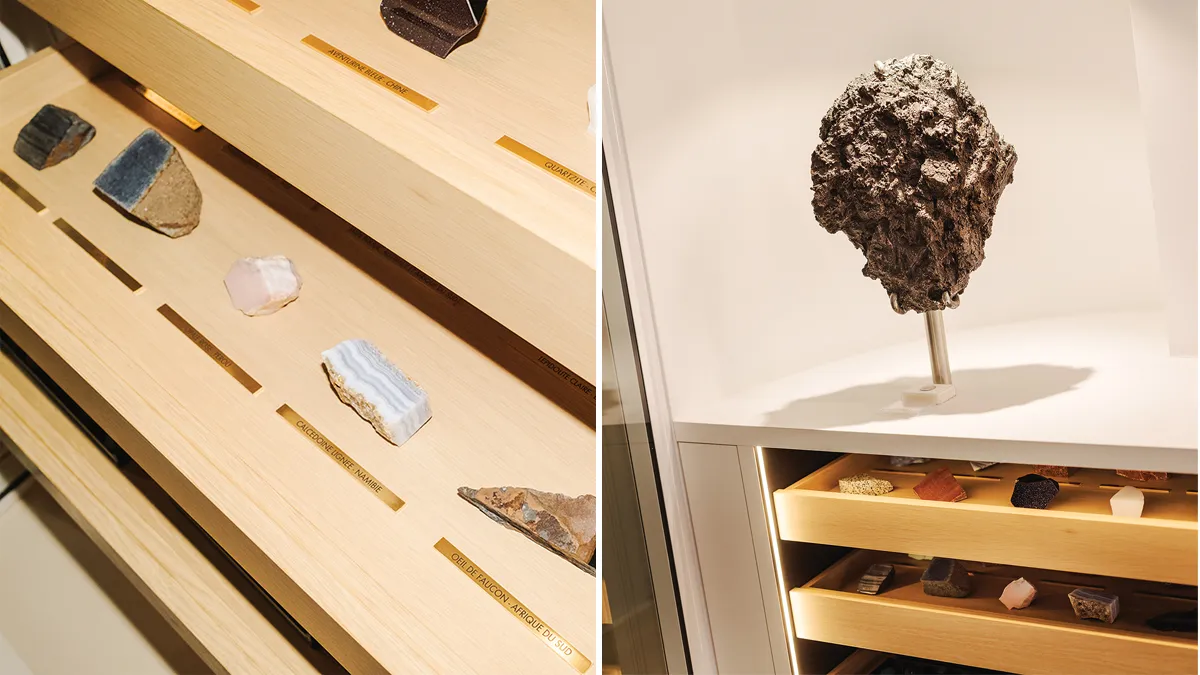
A key part of taking the watchmaking to new heights also required hiring the best talent Switzerland has to offer. “I love talking about screws, but we have an artisan that’s been doing screws for 27 years,” says Arnault with a smile. “He’s only been doing that, it’s his specialty… He’s probably one of the best screw-makers in Switzerland. He knows how to make screws like nobody else, and so even in that field, we go very niche and try to bring the best craftsmanship possible.”
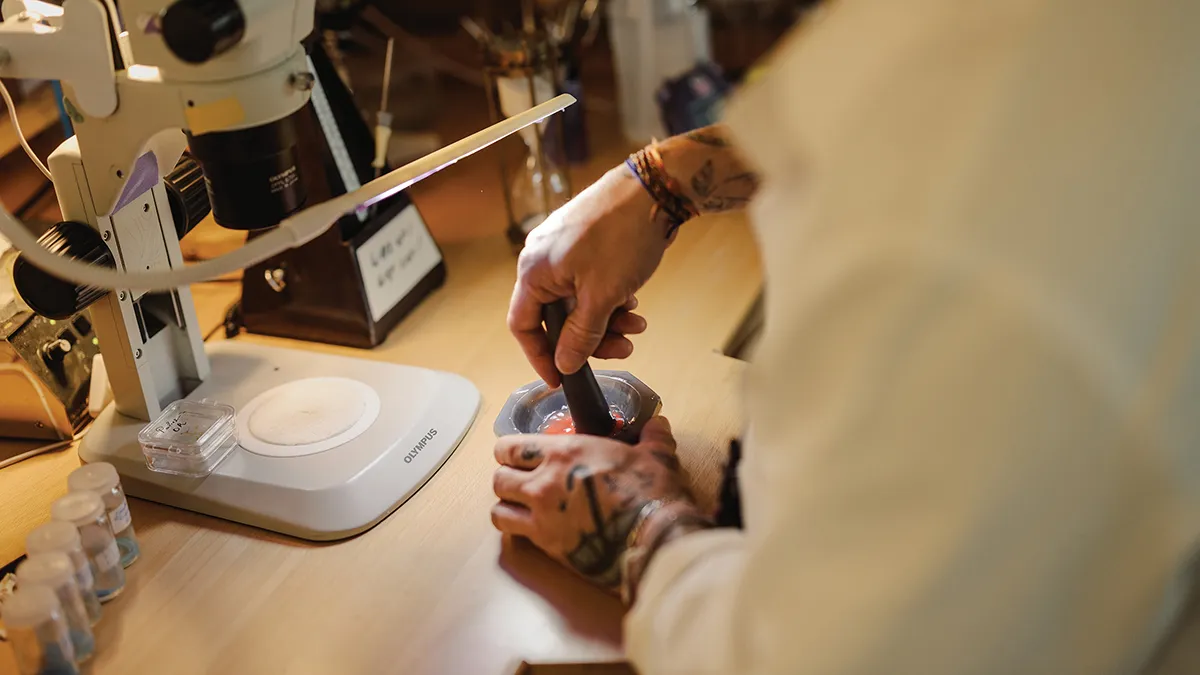
During our tour of the manufactureManufactureA watchmaking term for a company that designs and produces most of its movements and components in-house, rather than relying on outside suppliers. Being a true manufacture signals deep expertise,Go to Manufacture Glossary, we encountered countless employees who came from the top houses. They seem at ease around Arnault, proud to show off their work as he leans in to talk shop with them. At one point, he excitedly sits down beside a worker to check out a nearly finalized pocket watch for a bespoke client. In a room nearby, an artisan with 20 years of previous guilloché experience at Breguet sat perfecting the engraving of a new Convergence dial—work so delicate that even the vibration of a passing car in the parking lot could disrupt his work. In the same métiers d’art wing, an enameler with a Dalí-esque mustache, sporting a bowler hat and plenty of tattoos, told us he was recently hired from Patek Philippe. He was at work on a painstaking cityscape using a brush with a single squirrel hair. As for why he decamped, he says it’s because “Louis Vuitton is like a crazy rabbit doing a tour of the world.”
But Arnault’s arrival was not met without skepticism. New leadership can be daunting at any company; when the boss is the 20-something heir to one of the largest luxuryLuxuryA lifestyle defined by exceptional quality, craftsmanship, exclusivity, and sophistication, encompassing the finest products, services, and experiences that represent the highest standards of refinement and excellence.Go to Luxury Glossary conglomerates in the world, it’s an entirely different story. William Massena, a longtime collector, insider, and watch savant who owns Massena LAB and is a distributor of Daniel Roth (an LVMH-owned brand that Arnault relaunched in 2023), remembers the industry’s initial reaction. “I think most people looked at it and were like, ‘It’s nepo babies getting a toy,’ you know?” he says. “And I think at the end, a lot of people were like, ‘How long is he going to stay? Does he really like watches and all this?’ I can tell you from experience, he really likes watches. He really knows his stuff. The guy has studied, the guy has learned, and the guy has the humility to still want to learn about watches, which, trust me, in this industry is rarer and rarer.”
Arnault himself acknowledges he underestimated the amount of time it would take to persuade people internally of his radical new vision, which involved axing 80 percent of the collection at the time in order to raise the bar on savoir faire, craftsmanship, and finishing across all its watches. “Everybody was very proud to work on pieces like Poinçon de Genève and all these things,” he says, referring to the prestigious, costly, and difficult-to-achieve certification that guarantees that a watch meets exacting Geneva standards. “But when it came to switching completely, it caught a lot of people off guard, and so they were thinking, ‘O.K., is it going to work? Is it not going to work?’ Not necessarily in the sense that they might lose their jobs and things like that, because we didn’t really do any restructuring in that sense. But in the sense of, ‘O.K., where are we going exactly?’ ”
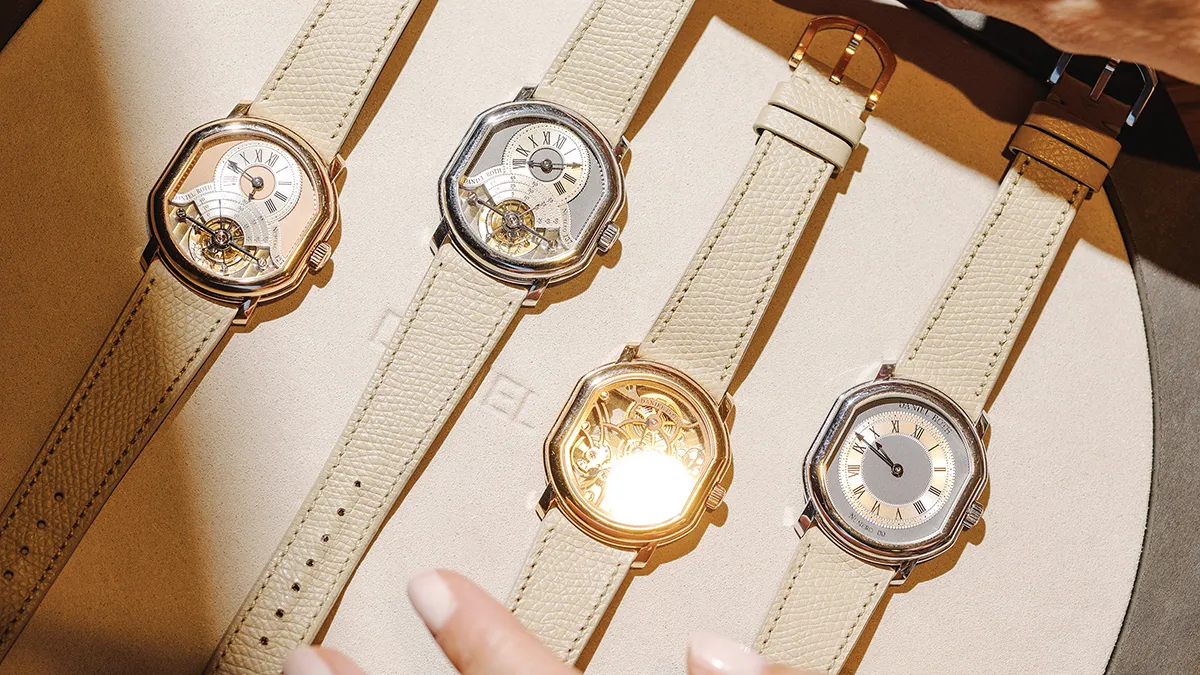
The vision was rolled out in rapid succession. First came the revival of Daniel Roth and Gérald Genta, two revered names whose stewardship by La Fabrique du Temps helped establish the seriousness of Arnault’s ambitions. The Daniel Roth Tourbillon Souscription set the stage in March 2023, followed that June by the Gérald Genta Mickey Mouse Minute Repeater, inspired by a highly collectible timepiece from the brand, with jumping hours and retrograde minutes, created for the Only Watch charity.

Instead of a major aesthetic reinvention, the Daniel Roth debuted in the distinctive double-ellipse case and tourbillonTourbillonA watch complication invented around 1801 by Abraham-Louis Breguet that rotates the escapement in a cage to counter the effects of gravity on accuracy. Tourbillons are mesmerizing and very difficultGo to Tourbillon Glossary architecture that made Roth a household name. Limited to just 20 pieces in yellow gold, it paired traditional hand-finishing with a newly developed La Fabrique du Temps caliber DR001. Arnault says he wanted to test the waters initially, even though he could have gone bigger. “We are part of LVMH, we are part of a big group, and we have the capacity to build a brand from scratch without even thinking about the end customer,” he admits. “But that’s been done a bit too much in the past from us and from others, and so I didn’t want to say, ‘O.K., we’ll build a manufacture to make, I don’t know like 1,000 watches, and then we’ll see if we manage to sell them.’ ” That is why he ultimately landed on a souscription model, where collectors pay upfront to finance a watch’s production, with the balance due upon delivery. “We garnered a lot of interest through that,” he says, adding that the plan is to build it out very, very slowly, over time, in an organic way.
With examples from the ’90s increasingly coveted, the revival quickly attracted collectors’ attention. “I really love Daniel Roth overall,” says Lex Borrero, a 40-year-old Miami-based entertainment executive and entrepreneur who owns the Daniel Roth Extra Plat Skeleton unveiled in January this year. “I think the way they’re building that, that’s gonna get momentum.”
Nevertheless, Arnault insists the intention is to develop genuine novelties with new complications. “The Daniel Roth that you see today and the Daniel Roth you’ll see in five years will be completely different,” he explains. “It will still look the same, like the Porsche 911 in a sense, but it will be stuff that has never been done in the past.”
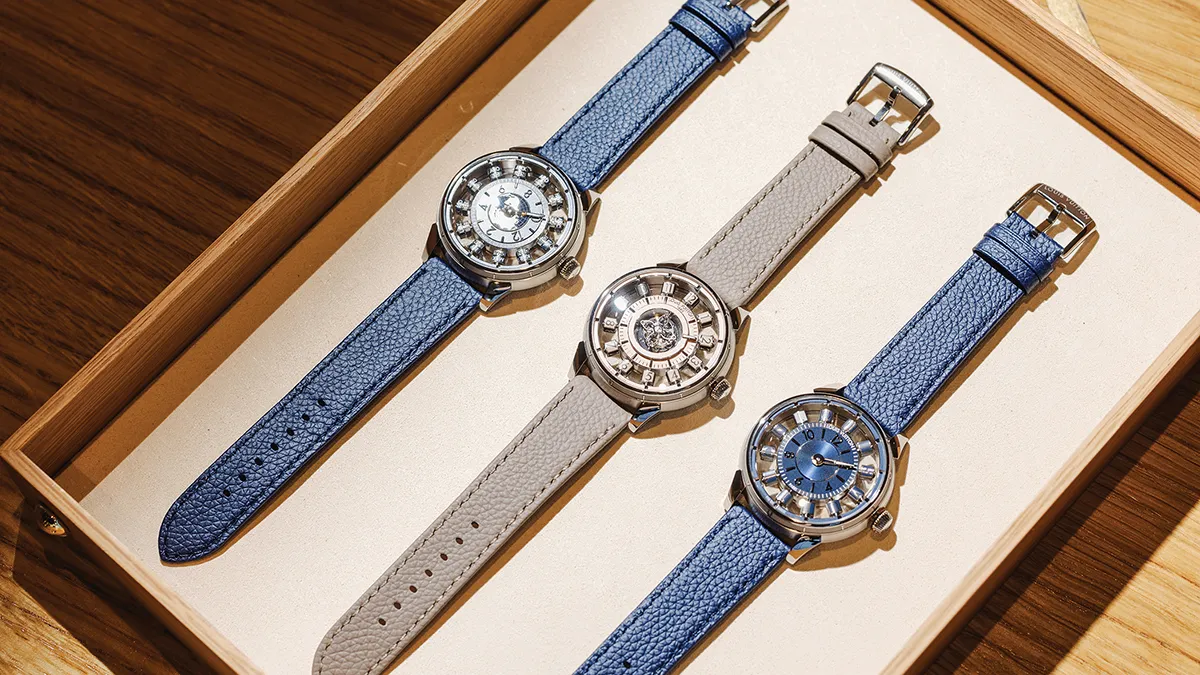
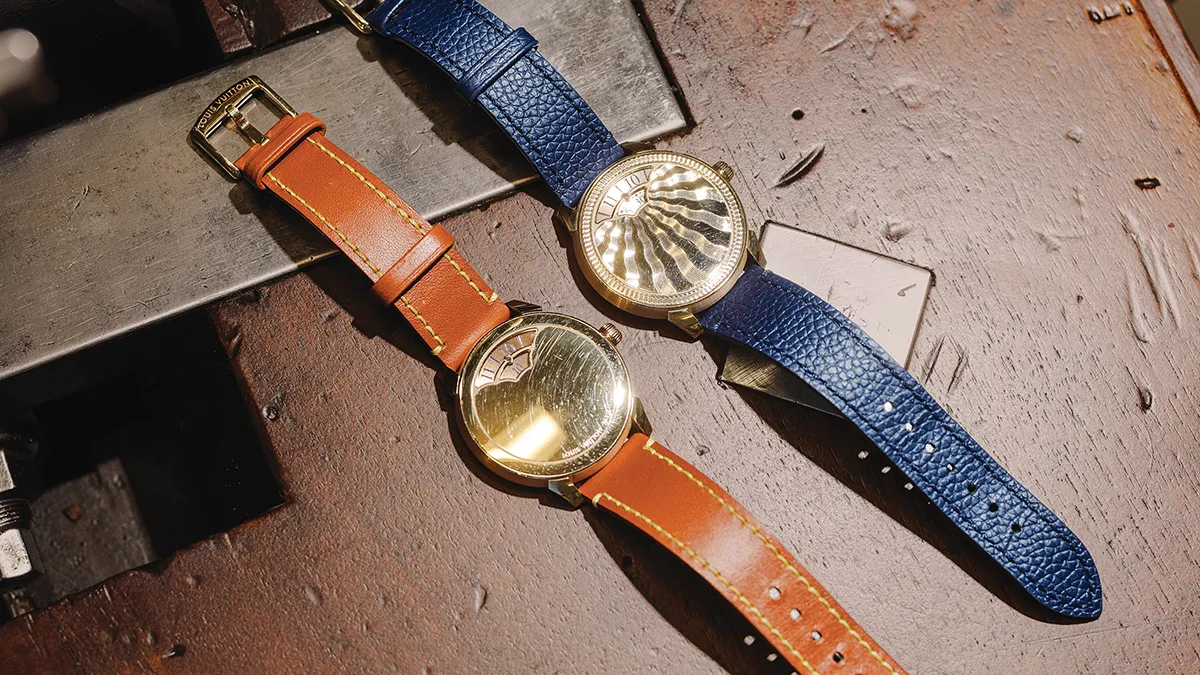
Then, in July of 2023, came a radically reimagined Louis Vuitton Tambour, rebuilt as a legitimate contender in fine watchmaking. Even a relative watch novice could notice the increase in quality: an integrated bracelet, a sleeker and more elegant appearance, a new in-house automatic calibre LFT023 with a 22-karat rose-gold microrotor, micro-blasted bridges with chamfered and polished edges, a circular-grained mainplate, and transparent rubies. It was a marked change, but Arnault candidly admits that even those close to him showed hesitation. “When we launched Tambour in ’23, I had many collector friends, and they were telling me, ‘Great watch! It’s great! It’s amazing!’ ” he says. “They were wearing it on the wrist, and you took pictures of them going to the store and trying it out, but basically none of them bought it. A few of them did, but basically none of them did.”
Louis Vuitton would need more than its own credentials, and soon the company began looking outward. While the house might not have fully captured the buying power of watch snobs just yet, Arnault was prepared with a mic-drop moment just a few months later. In October 2023, a collaboration between Louis Vuitton and Akrivia, the atelier of Rexhep Rexhepi, a.k.a. independent watchmaking’s hottest young star, was announced. The watch world was collectively shocked. It was a stamp of approval that few could disregard.
“Is it better for the brand to make only high-craftsmanship pieces and beautiful pieces? One hundred percent.”
The collaboration, however, was about more than turning heads. It also signaled Arnault’s determination to use the machinery of a luxuryLuxuryA lifestyle defined by exceptional quality, craftsmanship, exclusivity, and sophistication, encompassing the finest products, services, and experiences that represent the highest standards of refinement and excellence.Go to Luxury Glossary behemoth to bolster independent horology—a mission formalized with the LVMH Watch Prize for Independent Creatives. The proceeds of each of the 10 examples of the $497,000 Akrivia x Louis Vuitton LVRR-01 went toward supporting winners of the prize, who received 150,000 euros (approximately $173,150) plus a year-long mentorship from La Fabrique du Temps.
The idea is to keep watchmaking alive. “I don’t want to just make business to make business in a sense,” Arnault explains. “I think it’s important nowadays to do something which is genuinely relevant.” Supporting fresh talent keeps the interest and excitement around the industry as a whole alive, and Arnault has clearly found inspiration in the indies. “I think that if interest in independent watchmaking stops over time, then you’ll have a lot of people that end up being bankrupt or won’t necessarily have the means and resources to keep their brands alive.”
Subsequent collaborations have followed with Voutilainen and De Bethune, with proceeds also going to support winners of the LVMH Watch Prize. Arnault says there will only be five collaborations total, but the annual competition will continue. He’s well aware that he is in a position not only to grow Louis Vuitton watchmaking, but also to be a sort of benefactor of the field. “Louis Vuitton is as big as… far bigger [as an entire brand] than most watch brands altogether, probably except Rolex. It’s on par with Rolex, let’s say, in terms of brand size,” he notes. “And in watchmaking, we’re tiny, but let’s make sure that we benefit the watchmaking industry in using that beautiful name of Louis Vuitton and in an area which speaks to me personally.”
When asked whether LVMH would ever consider buying any independents, he doesn’t rule it out but is cautious about the approach. “It would be more to secure savoir faire or secure a vision of watchmaking that that person has, rather than saying, ‘I’ll take De Bethune and bring it to 10,000 pieces a year,’ ” he says.
Recognition is one thing, but the biggest test is always the end client. It’s hard to turn a ship around and ask even existing clients to stay on board. And it’s even harder to secure a first-time purchase from a serious collector when the dial says Louis Vuitton. “It’s a major problem that others also have—you know, Hermès, to a certain extent, and Chanel,” Massena says. “They can make the most amazing watch, and they still have the stigma of being a fashion brand, or you know, a non-watch brand, and I think this this has to do with a lot of people still thinking of licensing, or that if you’re making bags, you cannot make watches… you know, things like this. I think there’s this [feeling] within the watch-collector community. It’s very hard for those brands to break in. Very hard.”
Borrero was precisely that kind of skeptic. Even though he is a client of Louis Vuitton in other categories, the watches had never been on his radar, despite his being an avid watch collector. “I looked at it as a jewelry watch,” he says. “It wasn’t something I was interested in.” The thickness of previous releases was also a turnoff. It wasn’t until he was invited to LVMH Watch Week in 2024 that he changed his outlook and decided to purchase the new jump-hour Tambour Convergence. “I got to meet Michel Navas here [in Miami] during that time, and it was really when I understood, ‘O.K., this is what they’re going for.’ I’m gonna make a bet,” he says. “And so I had the first global delivery of that watch.” He then purchased the subsequent Tambour Convergence GuillochéGuillochéGuilloché is a decorative engraving technique creating intricate, precise geometric patterns on a watch dial or case, traditionally executed by hand using a rose engine lathe. The painstaking, highly skilledGo to Guilloché Glossary when it came out this year. “I love what [Arnault] is doing,” he says. “It takes some courage to take on that part of the business and pull back on it in order to turn it into a legit, respected watch company.”
For some collectors, however, embracing the watchmaking doesn’t necessarily mean embracing the name on the dial. A Chicago-based collector, who prefers to remain anonymous, says he purchased his first Louis Vuitton watch, the Louis Vuitton Escale limited-edition self-winding automatic watch in 18-karat rose gold, a few years ago when it first came out. “I just wanted to experience it because I think that people can talk about objects or restaurants or wine or whatever the experience might be, but until you put your money where your mouth is, I think that there is a lack of authenticity in how you understand something,” he says. “I was excited to understand the hype surrounding Jean’s vision.” He also adds that while he does shop within the LVMH portfolio of companies, he does not buy Louis Vuitton clothing and does not like to wear anything branded.
As for whether he’ll purchase again, he says he thinks he would, before adding, “The biggest hurdle for me is that it says Louis Vuitton.” Nevertheless, he concedes that the sophistication of the construction is persuasive, specifically citing the Escale Minute Repeater watch, where the activation slide is discreetly hidden within the case instead of jutting out. “If you put any other name on the watch, nobody could sneer at it,” he says.
Client acquisition isn’t just about the product itself. Since the beginning of his tenure at the brand, Arnault has gone out of his way to personally meet with collectors. “He knew that credibility in this space could not be bought—it has to be earned,” says Justin Reis, chairman of the 1916 Company, the Philadelphia-based retailer that sells Daniel Roth. To that point, in April and May of 2023, Reis hosted Arnault stateside for two meet and greets in New York and L.A., respectively, with intimate groups of roughly 20 collectors, during which Arnault is said to have explained in “a painstakingly attentive way” the direction of the brand. “He understood early that he had to really speak and walk the talk to share what the future of what he believed high watchmaking could possibly be, and this was something that he had to proclaim.”
The client experience is so important that in some cases Arnault hand-delivers pieces himself. When Robb Report interviewed him in July, he had just met with a client of a unique pocket watch who, he says, cried when she received it, noting it was the biggest purchase she had ever made. The story clearly still resonates with Arnault. It wasn’t just because of the sale but because of how much work he knew went into it. “The enameler that I talked to—right now, today—she was telling me, ‘It’s so amazing that you tell me this story because I’ve put so much of myself into that piece. I’ve worked I don’t know how many hours on it.’ ” Her playlist throughout all those hours was a composition by famed French pianist Sofiane Pamart, because it kept her calm while working on the intricate dial. Now, she tells Arnault, every time she listens to that music, it reminds her of the watch. “We often hear about clients’ stories of saying how happy they are with their piece, but actually, all along the way people are quite proud to work on that project,” he notes, adding that from start to finish, some 30 people worked to create a unique object of this caliber. Persuading a client to purchase is one thing, but capturing their loyalty is the end goal. Arnault is acutely aware that time itself is often the biggest test. What’s important to him is reassuring collectors that this is the direction for, at minimum, the next 10 years. “If you invest $20,000, $30,000, $50,000 with us, we’re not going to change course drastically three years later,” he says. “Watchmaking takes time. It’s important for us to keep betting on that, even if it was not going to work. Turns out, we’re pretty lucky so far.”
There are signs that patience and perseverance are paying off. Over the past 12 to 18 months, Arnault says some of the same collector friends, who initially questioned his decision to focus on Louis Vuitton watchmaking instead of other brands in the LVMH portfolio or praised the watches without buying them, have started to purchase. “The biggest compliment of them all is them actually buying a watch,” he says.
More may soon follow, and not just at Louis Vuitton. Arnault’s purview is already expanding to include oversight of Hublot and Zenith and, rumor has it, he may also be turning his attention to another Louis Vuitton specialty—trunks. Which makes one recent encounter with a collector especially prescient. Arnault says he meets with clients around the world every other week and, with a laugh, recalls one who was wearing a Spin Time and enthusiastically told him, “Ah, I love your watch. It’s amazing,” before earnestly adding, “And by the way, I didn’t know you make beautiful trunks!’ ”
This article originally appeared in Robb Report US.
FAQs
Jean Arnault took charge of Louis Vuitton’s watchmaking division at just 22, with a mandate to turn the maison into a serious force in high horology.
His mandate has been to reposition Louis Vuitton watches from a relatively secondary part of the maison into credible examples of serious high horology.
Arnault was 22 when he was given responsibility for Louis Vuitton’s watchmaking division.
He took on the division at an unusually young age and was charged with changing how collectors and the broader watch industry perceive Louis Vuitton as a watchmaker.
Based on the supplied text, the central goal is to strengthen Louis Vuitton’s standing in high horology and establish its watches as serious objects of watchmaking rather than accessories to the fashion business.