This Louis Vuitton Watch Resets Itself Overnight—Here’s How


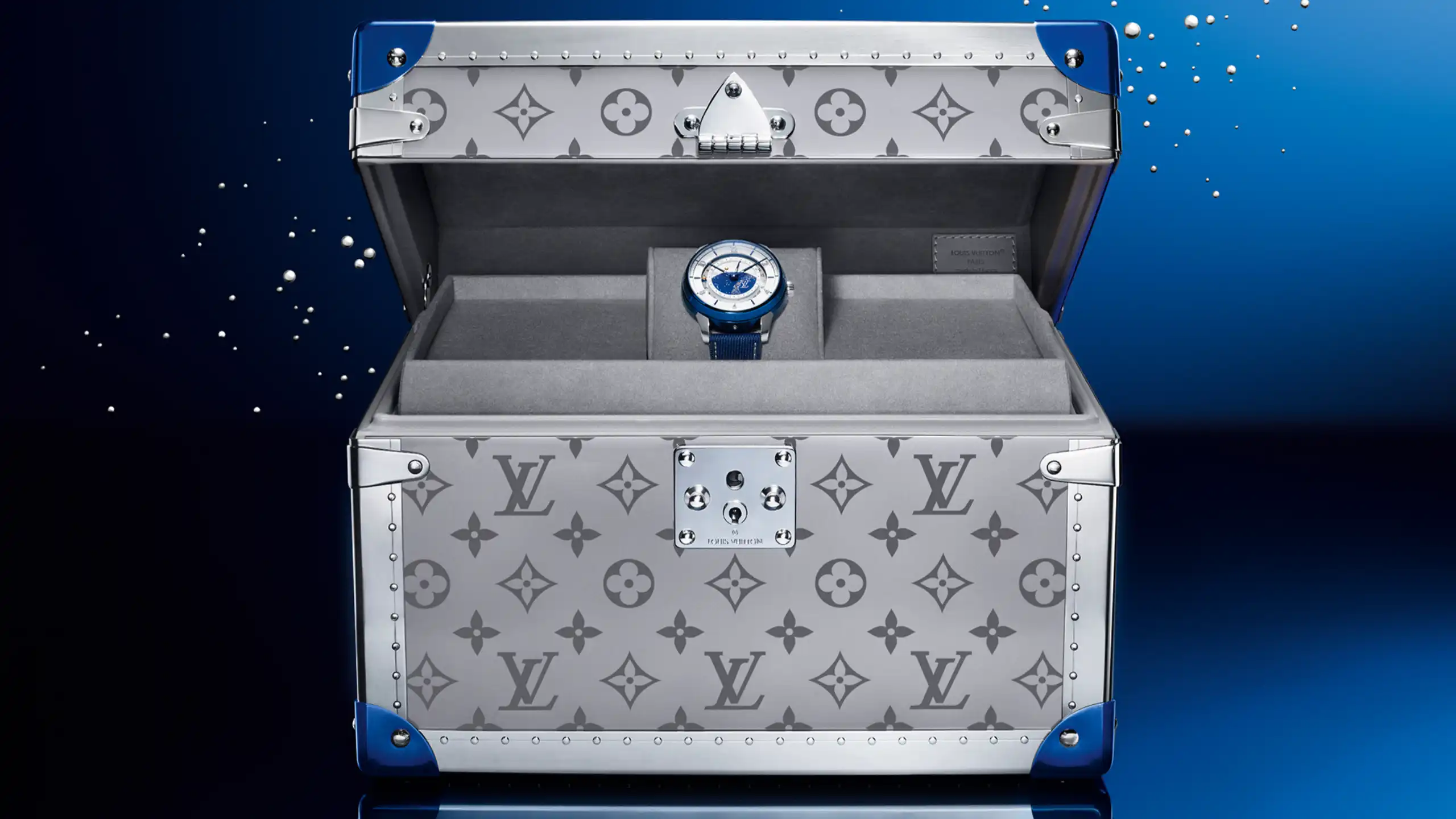
An extraordinary amount of vision and craftsmanship has gone into the creation of a watch that will exist in only 12 pieces.
Louis Vuitton has always been about the journey, and this is an excellent example of how that journey has extended into watches and watchmaking.
The result is the LVDB-03, a collaboration between Jean Arnault of Louis Vuitton and the independent Swiss manufacturer De Bethune, guided by master watchmaker Denis Flageollet.
Each of the 12 sets pairs a wristwatch with a sympathique clock—a concept rooted in classical watchmaking traditions in which the clock serves as both companion and regulator for the watch.
The project also reflects the broader arc of Louis Vuitton’s watchmaking ambitions. A pivotal moment came with the integration of La Fabrique du Temps, the independent manufacturer whose technical expertise and creative vision have become central to the brand’s horological identity. In the years since, Louis Vuitton has steadily produced more ambitious timepieces—some technically complex, others defined by clarity and elegance.
That commitment to the craft was further reinforced in 2023 with the launch of the Louis Vuitton Watch Prize for Independent Creatives, an initiative designed to support and spotlight the next generation of independent watchmakers.
The Louis Vuitton x De Bethune LVDB-03 Louis Varius Project represents the third collaboration in this series. De Bethune, founded in 2002 by Denis Flageollet and David Zanetta, has earned a reputation for combining centuries of watchmaking tradition with a distinctly contemporary aesthetic. Flageollet himself has served on the Louis Vuitton Watch Prize committee since its inception.
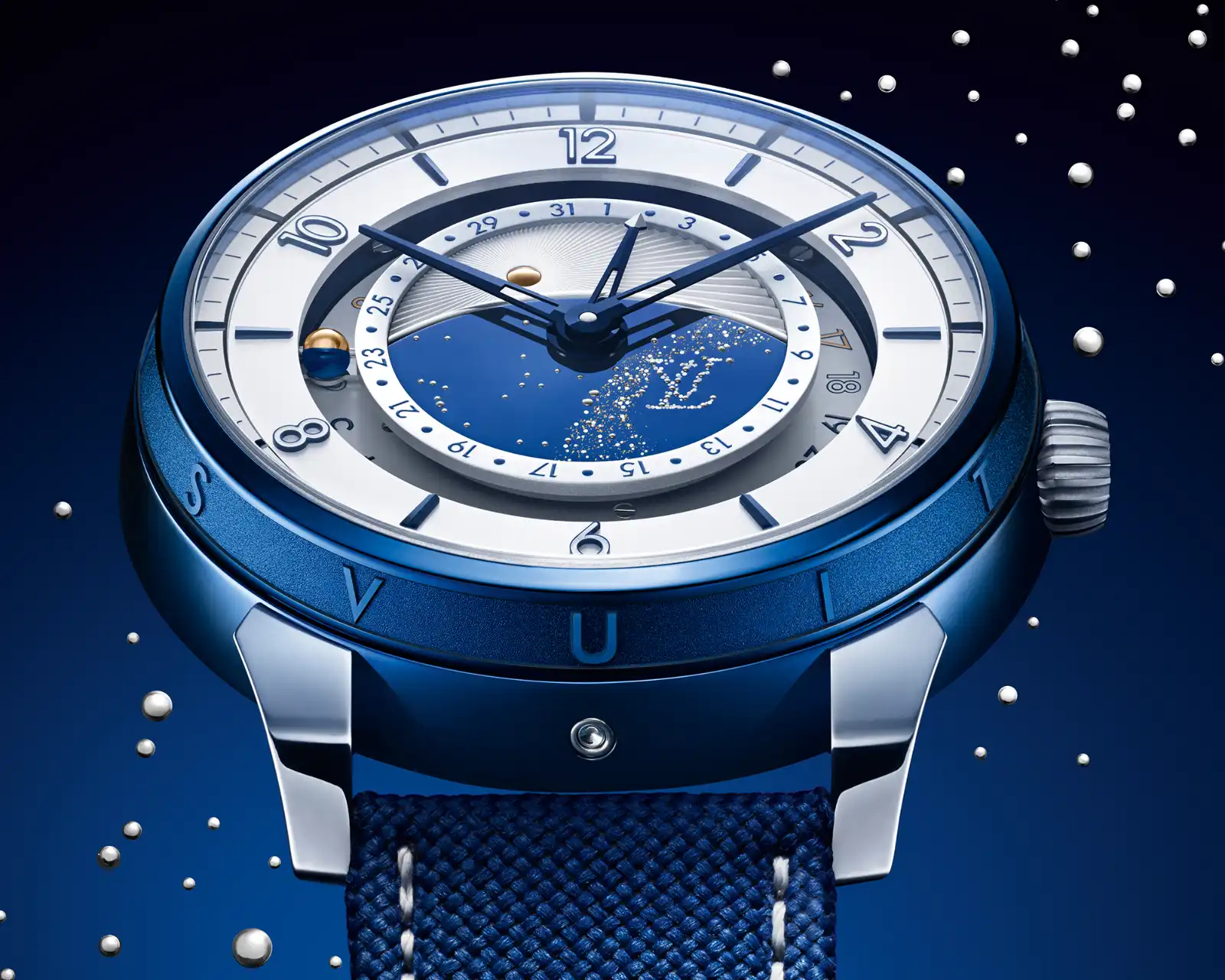
The wristwatch is the LVDB-03 GMT Louis Varius. It is a GMT function watch housed in the Tambour Taiko case in 45-millimeter blued titanium. It is a manual-winding watch powered by De Bethune’s caliber DB2507LV.
The watch displays hours and minutes, a second time zone, a day/night indication, and a jumping date. A unique map of stars at the center of the dial discreetly aligns to reveal the letters LV integrated into the constellation. That dial is surrounded by a spherical day-and-night indicator that completes two full rotations every 24 hours, offering a continuous and intuitive reading of time across zones while traveling.
It has a five-day power reservePower ReservePower reserve refers to the length of time a mechanical watch continues running after being fully wound, before requiring rewinding or additional motion to continue. Longer power reserves, achieved throughGo to Power Reserve Glossary and must be wound manually—something many consider part of its appeal.
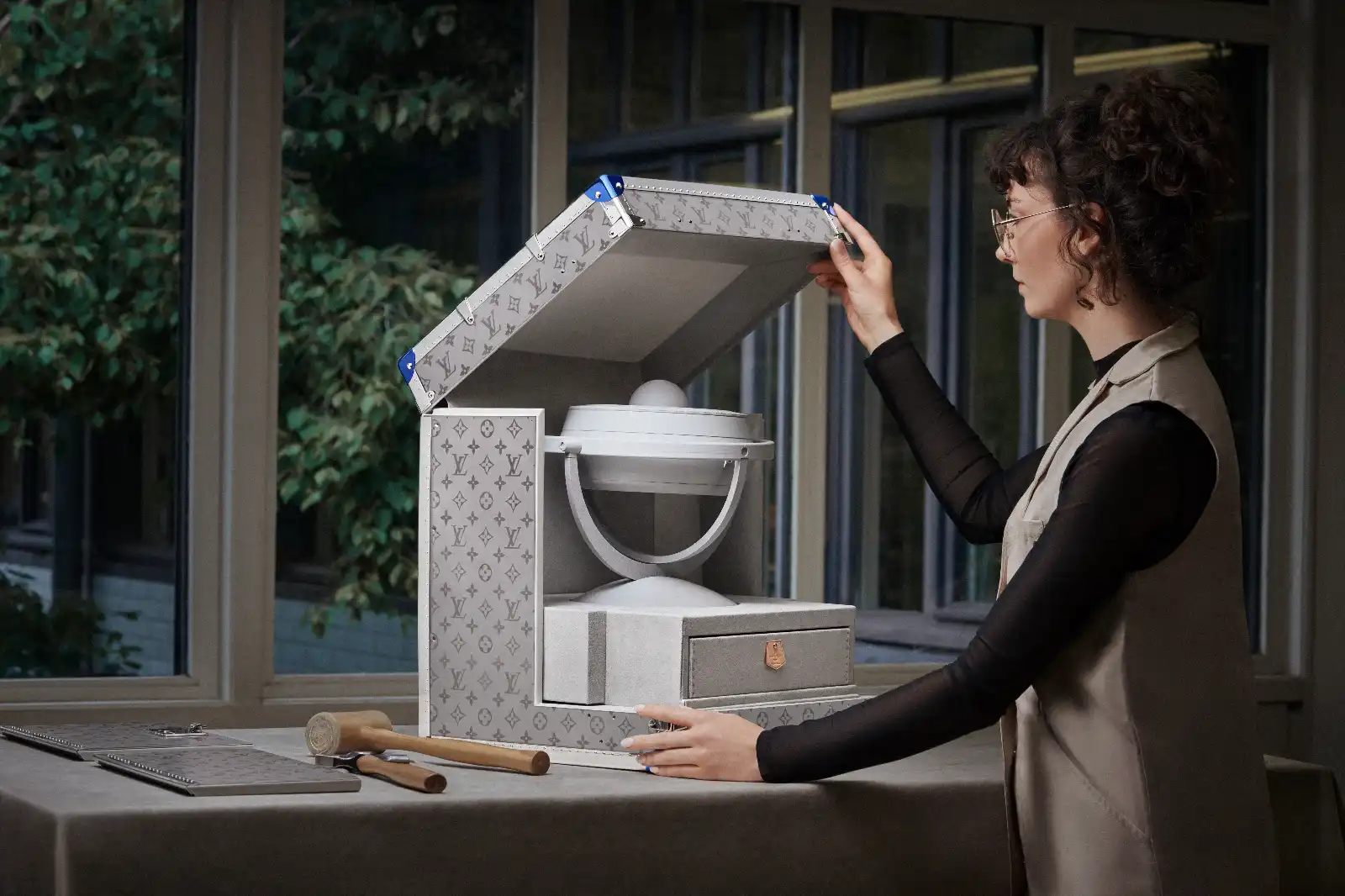
When you return home, the experience changes. The watch is not simply set aside or placed back into a case—even if it comes with several beautifully made ones, as expected from Louis Vuitton. Instead, it is placed in the LVDB-03 Sympathique Louis Vuitton clock.
The idea of the sympathique dates back to 1795, when Abraham-Louis Breguet created a system in which a clock could regulate and reset a companion timepiece, at a time when fixed clocks were the most accurate reference. These were originally designed for pocket watches, long before wristwatches became part of everyday life.
Louis Vuitton brings this concept into the present with a design that feels both technical and expressive.
The clock itself has the presence of a small globe, with hints of the instruments once used on old sailing ships. When the watch is placed into its cradle, the crown aligns precisely with a hidden mechanism inside the clock.
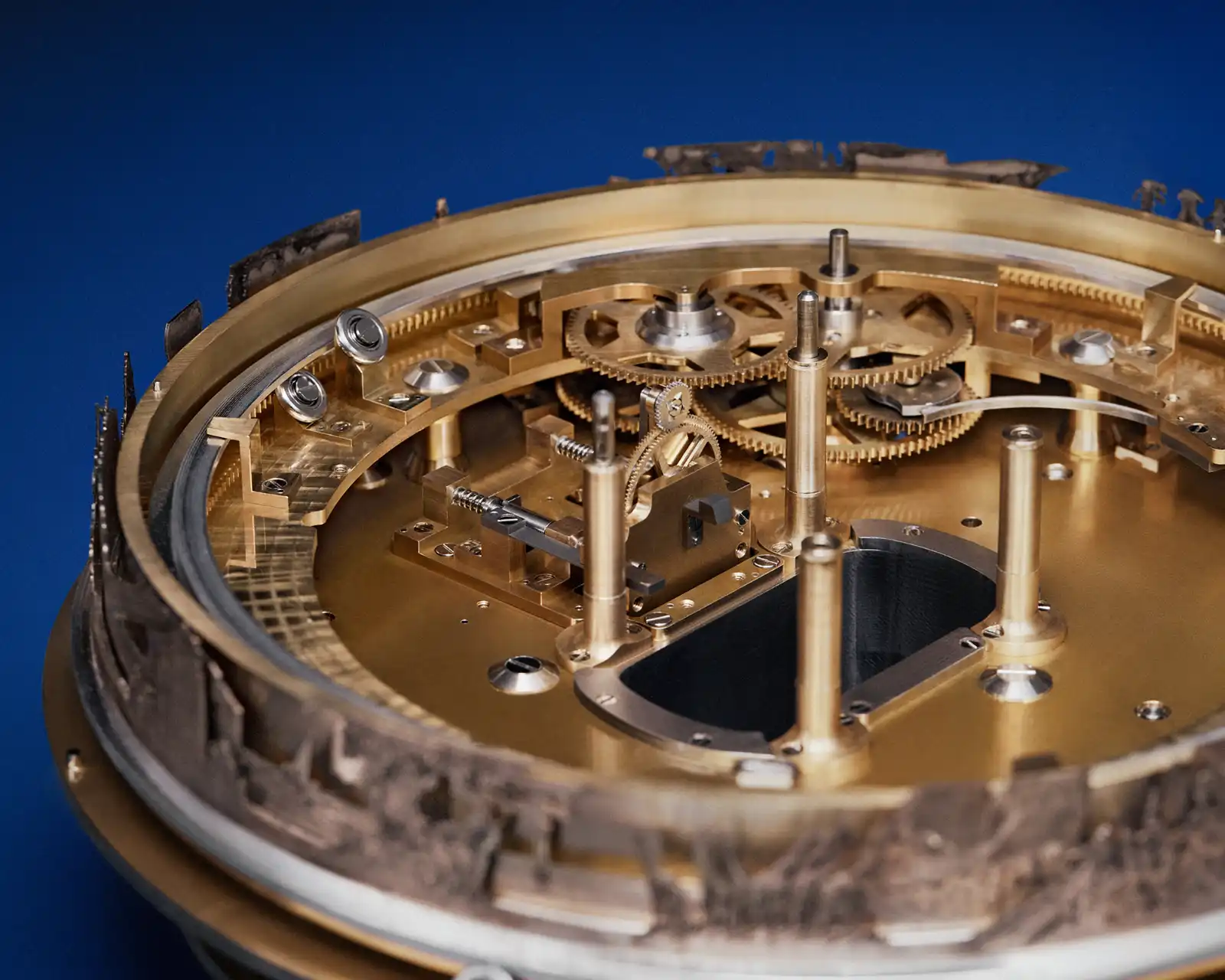
Over the course of the evening, the clock resets the watch to exact time and winds it fully. Every two hours, a finely engineered system adjusts the display, gradually bringing it into perfect alignment. By morning, the watch is fully wound and precisely set.
What makes this remarkable is how seamlessly it works with a wristwatch. There is no need for adjustment. You simply place the watch into the clock and leave it overnight. By the time you pick it up again, it is ready for the next journey.
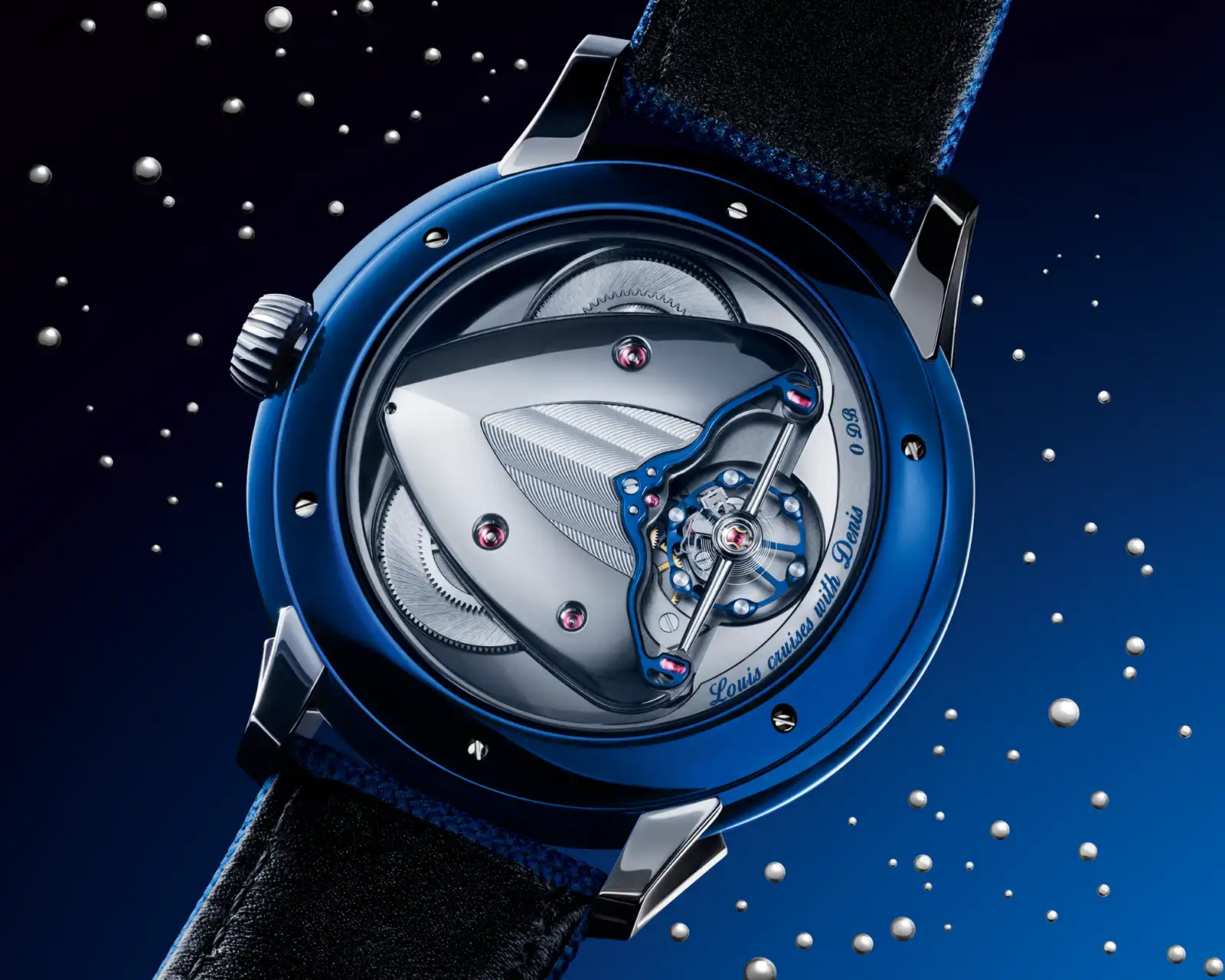
There are, of course, countless details that only a handful of people will ever fully experience. After all, it is made for just 12 collectors. The words “Louis cruises with Denis” are engraved on the movement, along with the individual limited-edition number.
The movement itself brings together modern innovation and classical watchmaking in equal measure. The balance wheel is crafted from blue titanium, while the escape wheel is made of silicon. De Bethune’s proprietary triple pare-chute shock absorption system adds another layer of refinement, designed to protect the movement with precision and elegance.
What most will notice, however, are the visual cues that signal the hand of De Bethune and Denis Flageollet. The architecture of the movement is defined by a hand-polished titanium deltoid bridge and a finely finished balance bridge, each framing the mechanism with sculptural clarity.
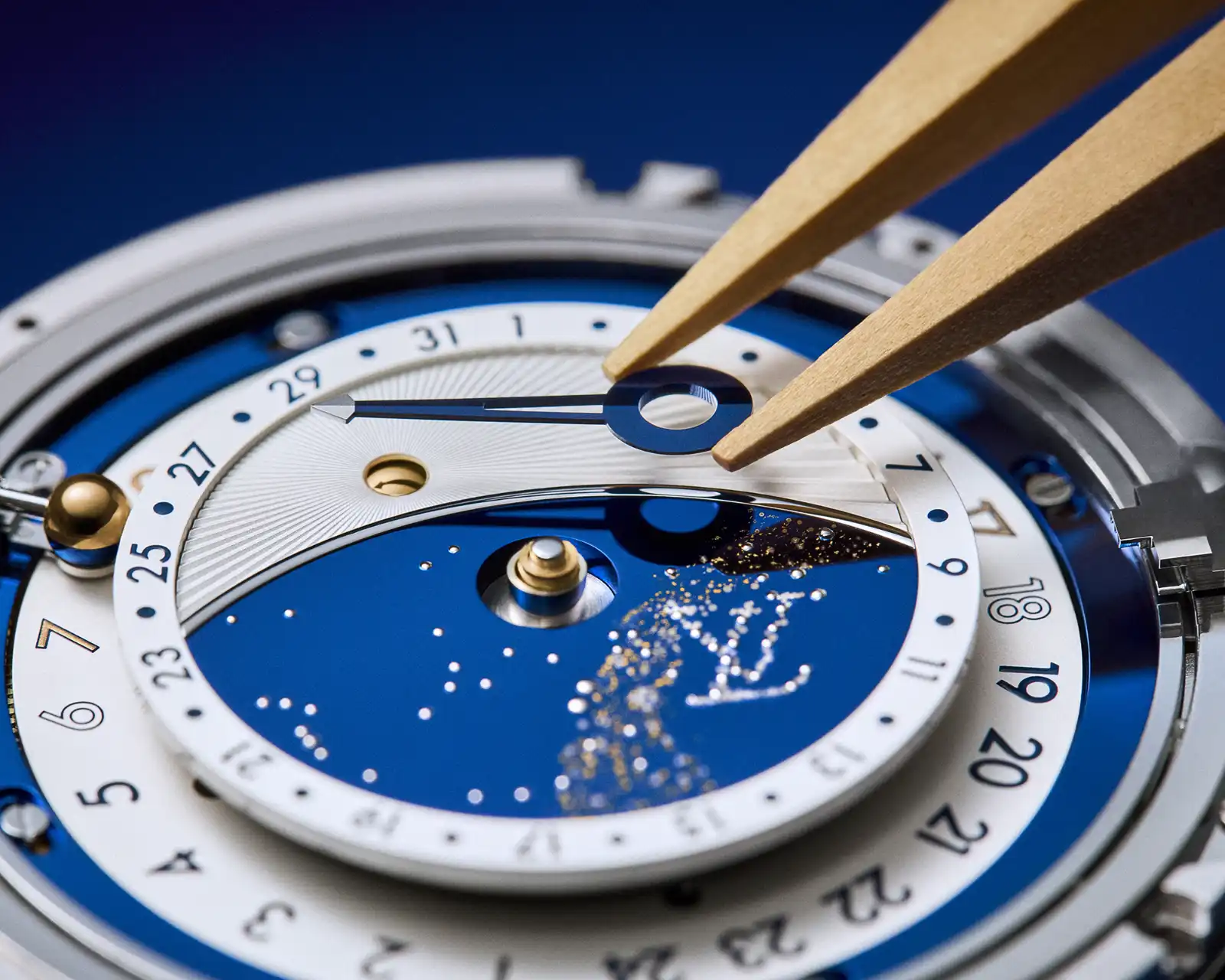
The surfaces carry a contemporary reinvention of Côtes de Genève. On the dial, the celestial theme returns. The map of stars is created through an exclusive artisanal process developed by De Bethune Manufacture. White gold pins are set by hand into micro-perforations of varying sizes, creating depth and luminosity. This is further enriched by the application of fine gold leaf, giving the dial a glow that shifts with the light.
Encircling this is the spherical day-and-night indicator, completing two full rotations every 24 hours. Polished indices and tambour-style numerals reflect Louis Vuitton’s design language, while the faceted hands echo the deep blue tones of the dial and case.
When winding the watch, the crown reveals a slightly different texture. The knurling is designed to engage cleanly with the clock’s mechanism, ensuring the connection between watch and sympathique remains precise, seamless, and free from wear.
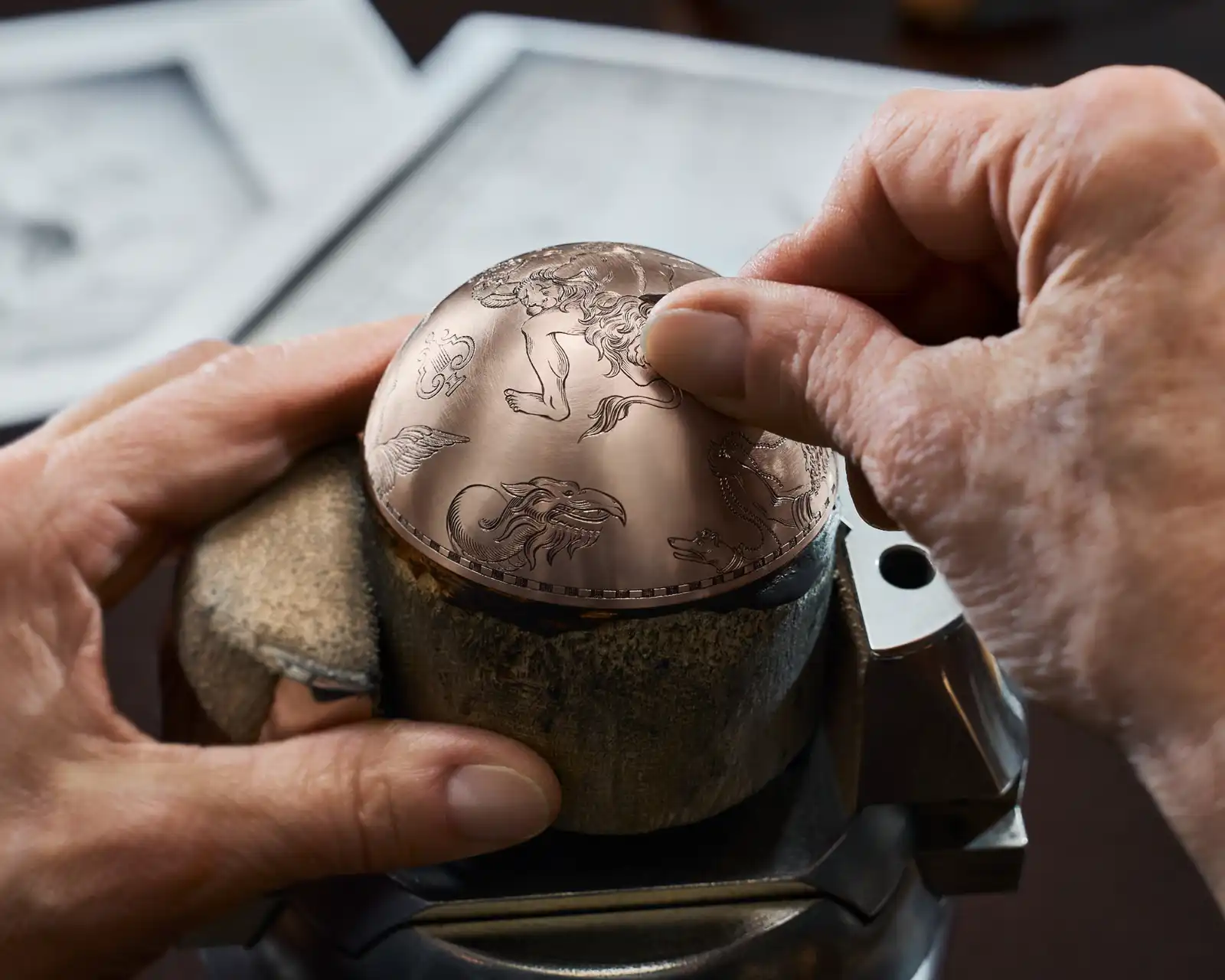
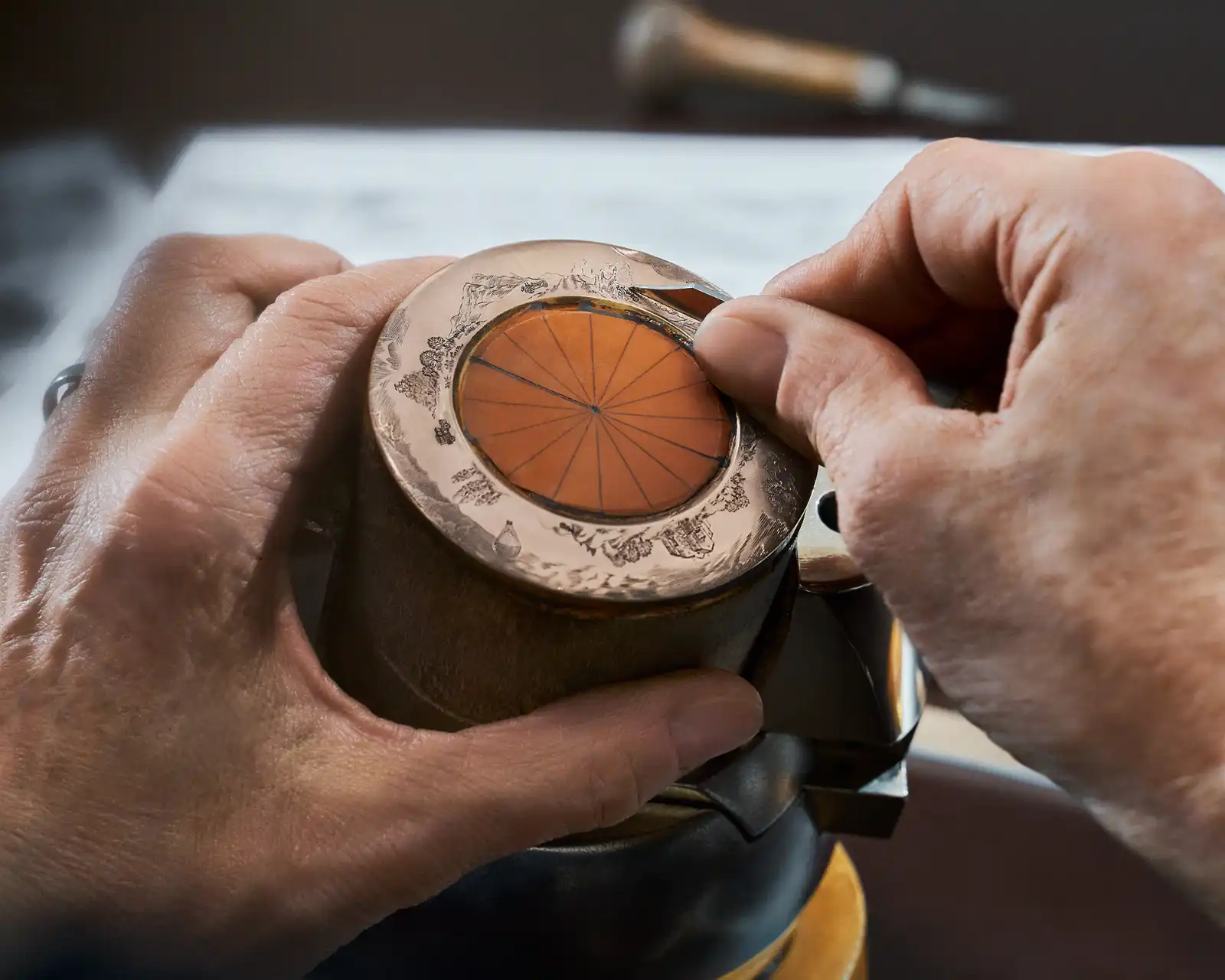
The top dome opens to reveal a deep blue interior, surrounded by a band of twinkling stars. The clock has its own time-telling markings, but beneath them lies intricate hand-worked engraving depicting different modes of travel.
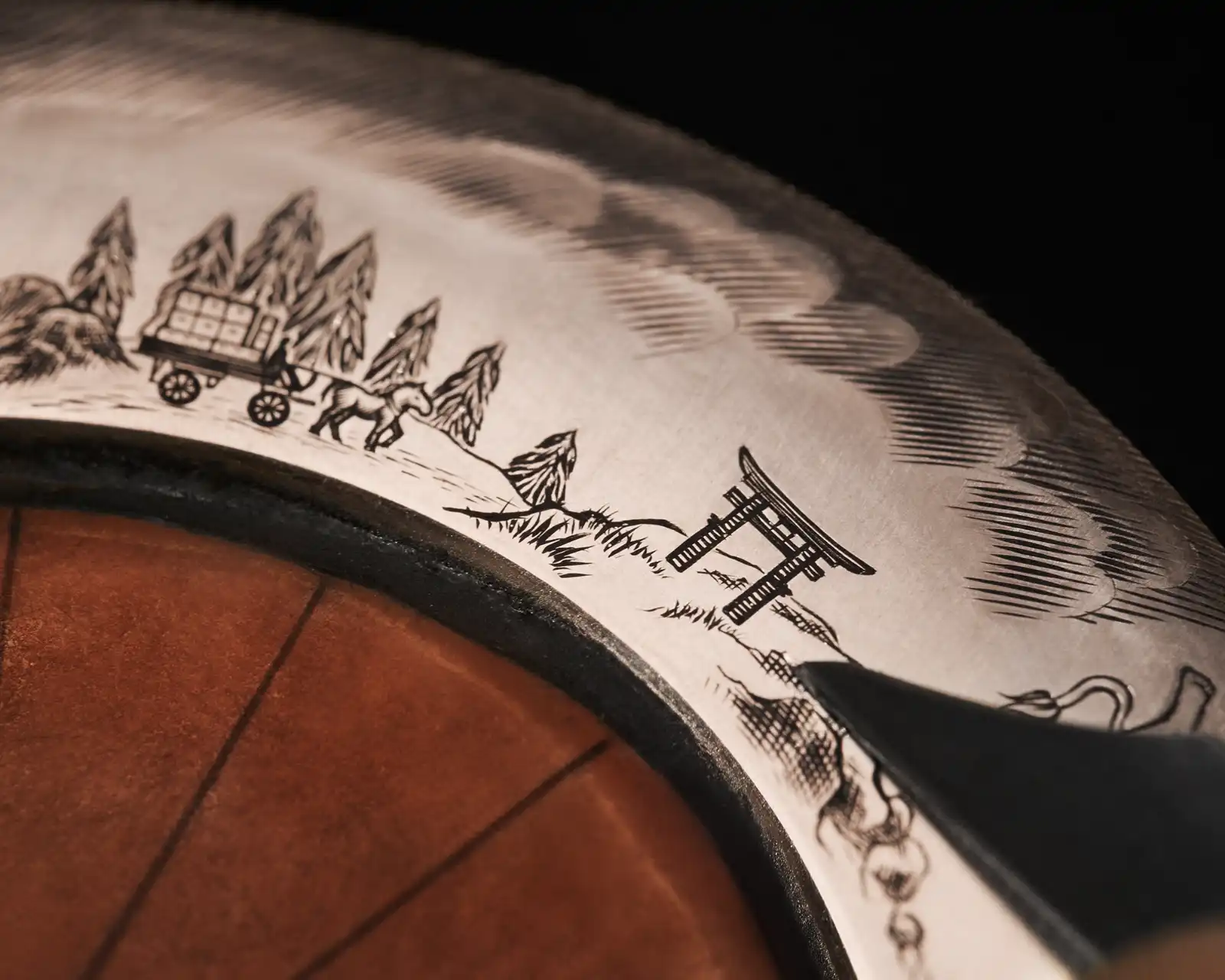
Acclaimed Belgian illustrator François Schuiten, known for his imaginative worlds, has collaborated with Denis Flageollet and Louis Vuitton before, including illustrations for their travel books. This collaboration draws from early 19th-century dioramas, presenting three landscapes of exploration: a steam train crossing a viaduct, hot-air balloons above the African savannah, and sherpas ascending steep mountains.
These miniature worlds encircle the mechanism and rotate slowly.
The set ultimately becomes an interpretation not just of the journey, but of how the journey shapes you. And when you return home, placing the watch into its clock offers a moment to pause—and to take it all in.