Peninsula Manila: The Hotel That Makati Happened Around


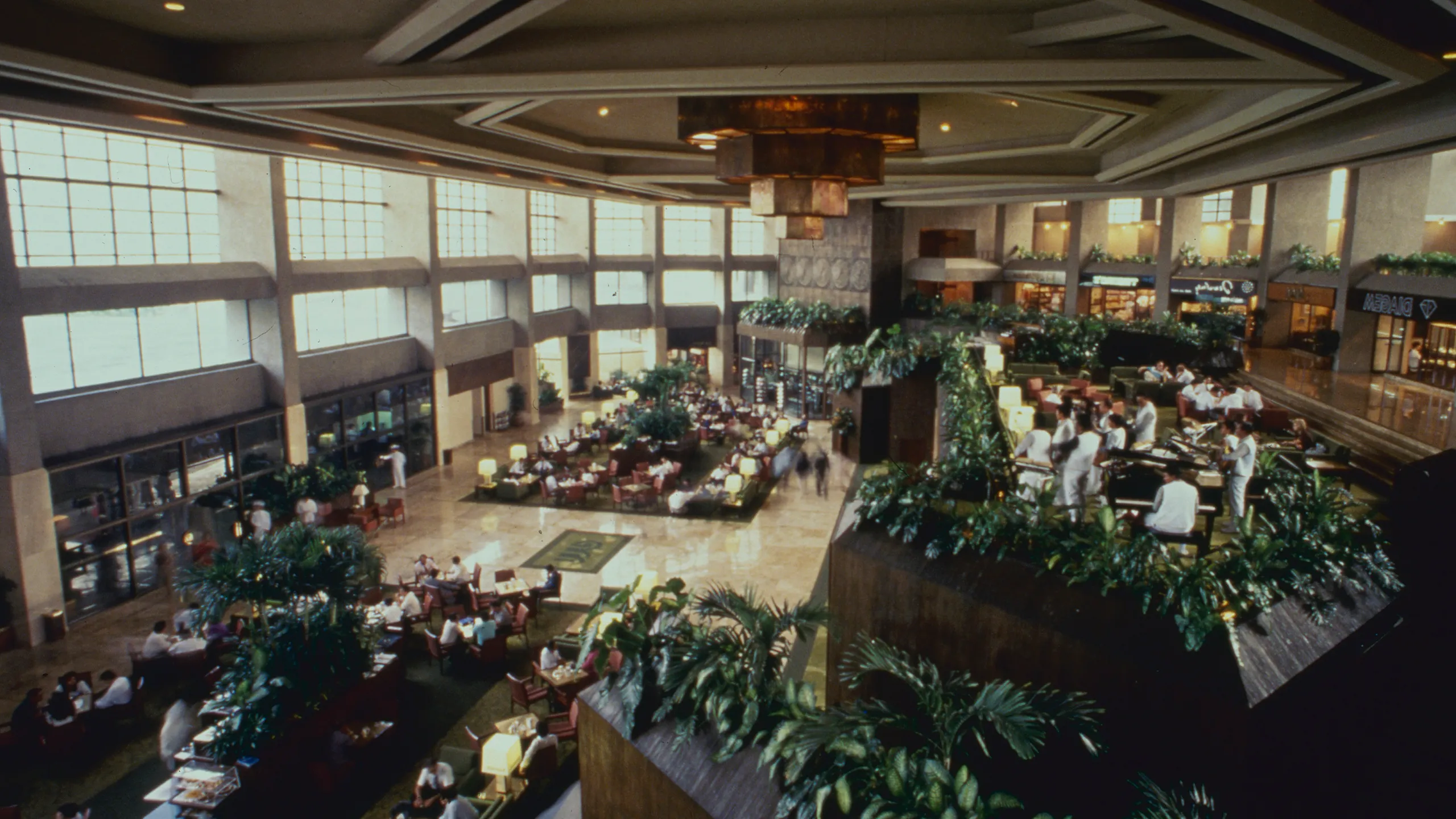
Makati’s history is written into the modernist bones of The Peninsula Manila. Beneath Napoleon Abueva’s iconic Sunburst, the Lobby opens upward in a sweep of marble, chandeliers, palms, and broad staircases, carrying the hum of a room that has seen presidents and soldiers, newlyweds and debutantes, orchestras, eccentrics, and generations of families return to the same tables. Outside, Makati has spent decades remaking itself in glass and steel.
The hotel, by contrast, has preserved an older idea of grandeur. Since opening in September 1976, its permanence has been tested repeatedly. Political crises have reached its doors more than once. In 2007, one quite literally came crashing through when Senator Antonio Trillanes IV and Brigadier General Danilo Lim marched into The Peninsula with Magdalo soldiers and supporters after walking out of a court hearing tied to the 2003 Oakwood mutiny.
It only took a previously unthinkable pandemic to finally empty the Lobby. By then, The Peninsula had become one of those rare places where Manila’s public memory and private rituals kept finding themselves in the same room.
A Monument for a Modern Manila
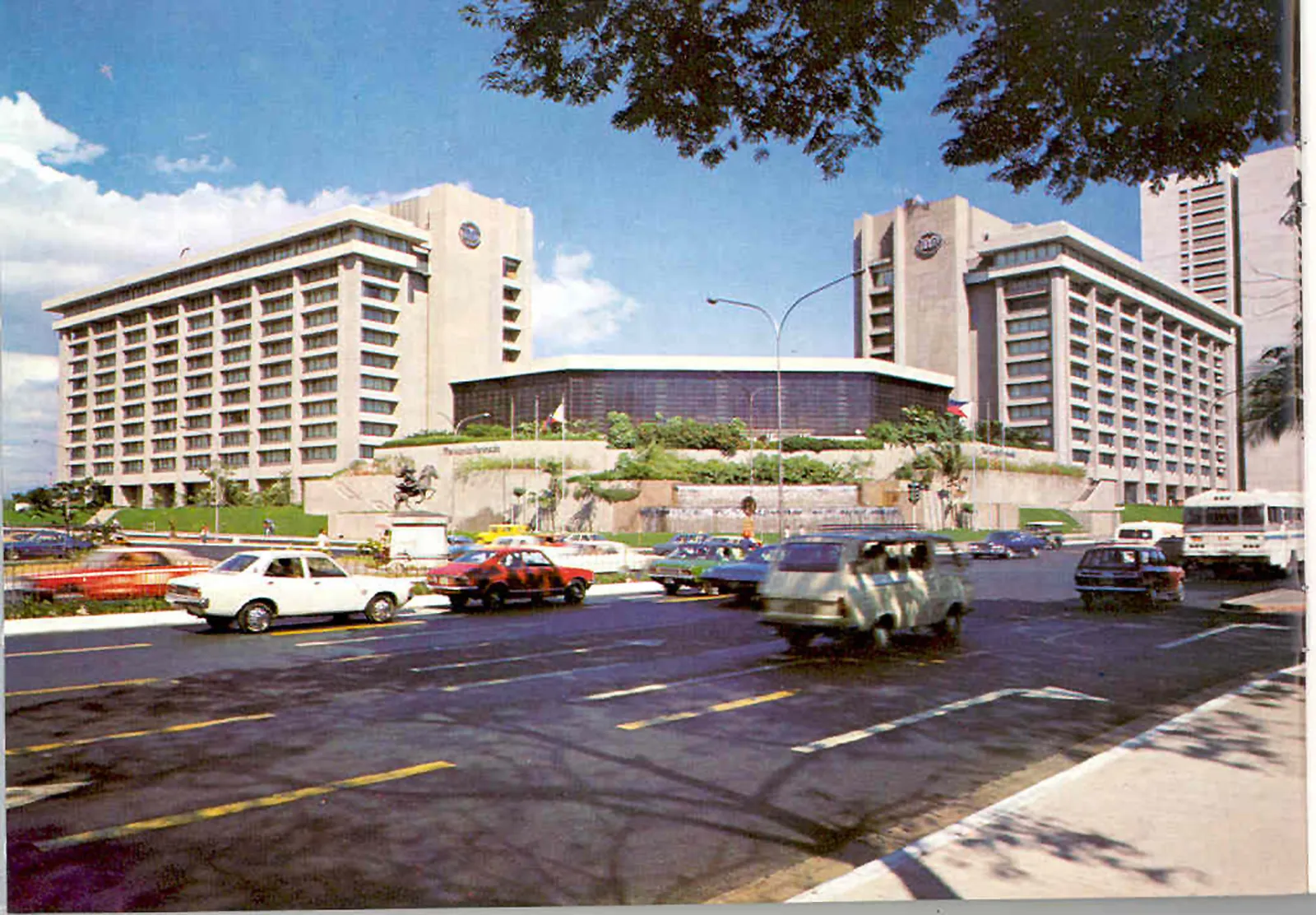
The Peninsula Manila’s image begins with a certain architectural severity. Gabriel Formoso and Wimberly, Whisenand, Allison, Tong & Goo conceived the 1976 hotel in a Brutalist idiom, with a low, weighty profile, deep overhangs, and a disciplined repetition of concrete that still enjoys an unusual calm against Makati’s increasingly glassy skyline. The extensive 1994 renovation complicated that language a bit. Marble, columns, chandeliers, grand staircases, and works by National Artists gave the interior a charming ceremonial flourish.
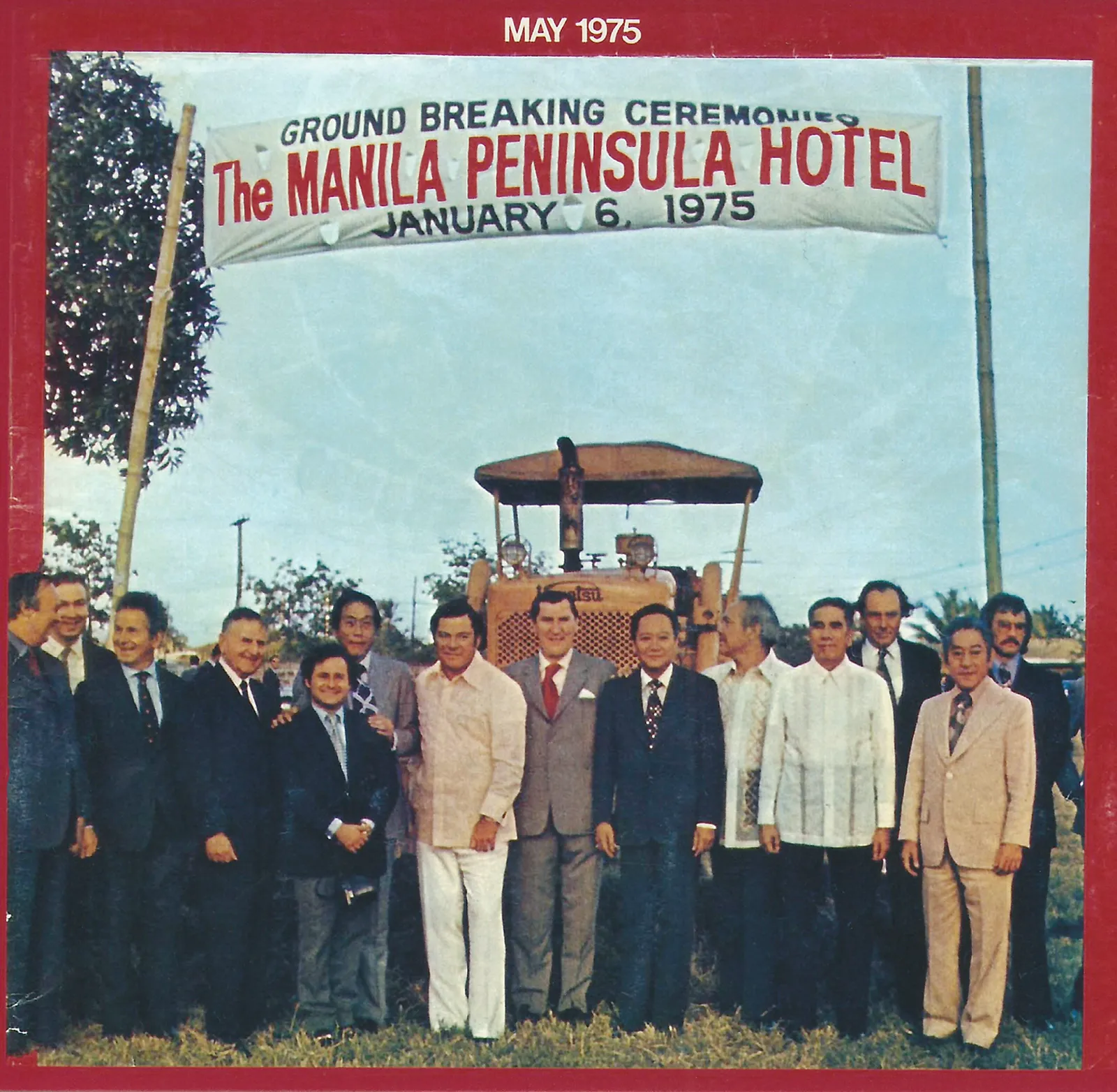
Ground was broken on January 6, 1975, with Horace and Michael Kadoorie, P.L. Lim, Enrique Zobel, Jose D. Aspiras, and Carlos Palanca among those present. The hotel opened on September 14 the following year, becoming only the second Hongkong and Shanghai Hotels property to bear the Peninsula name after Hong Kong. Weeks later, Manila hosted the IMF–World Bank annual meetings, around which the first Marcos administration had mounted an extraordinary construction campaign. Fourteen new hotels were officially sponsored for the influx, alongside convention facilities and other infrastructure meant to receive thousands of foreign delegates and guests.
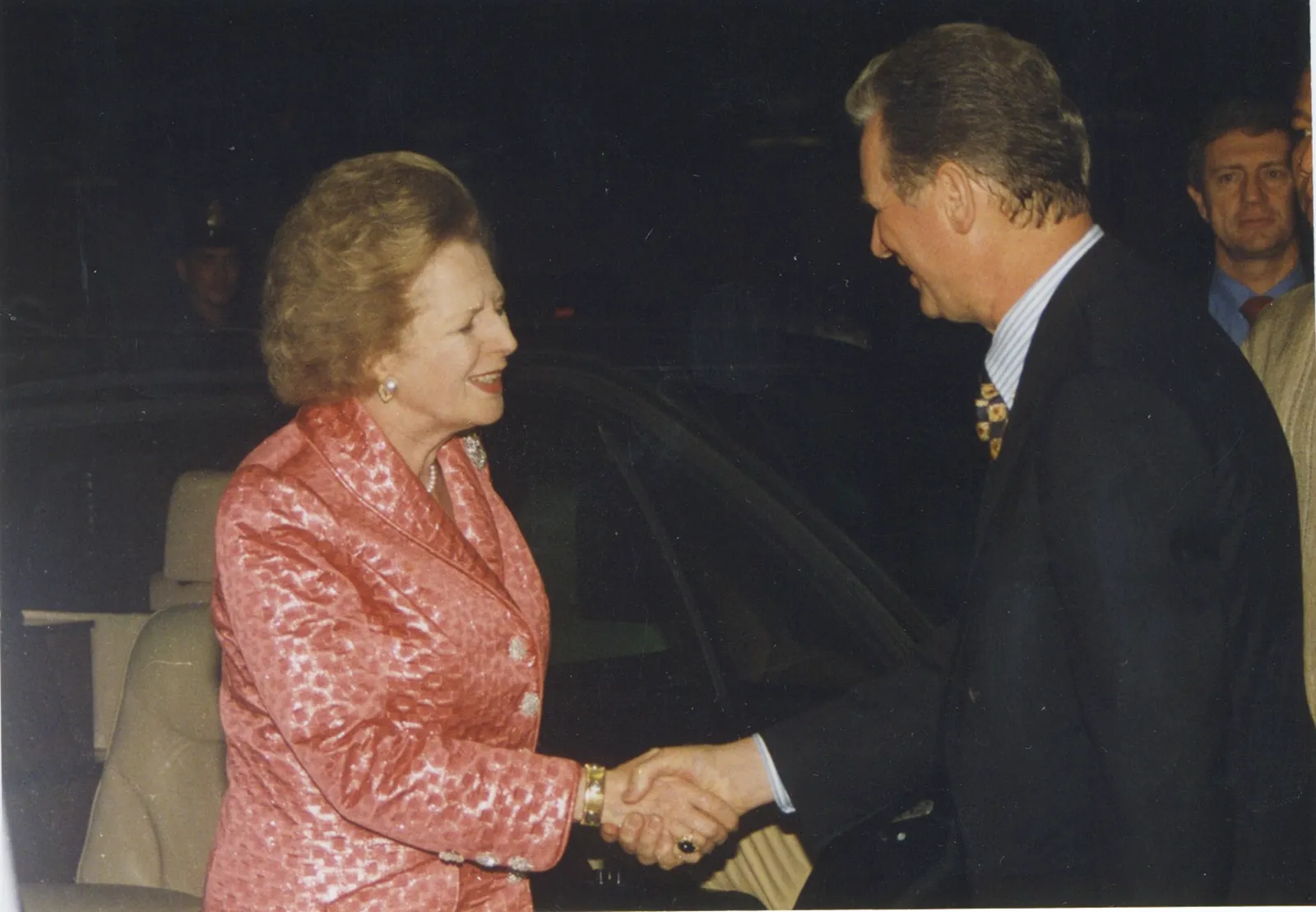
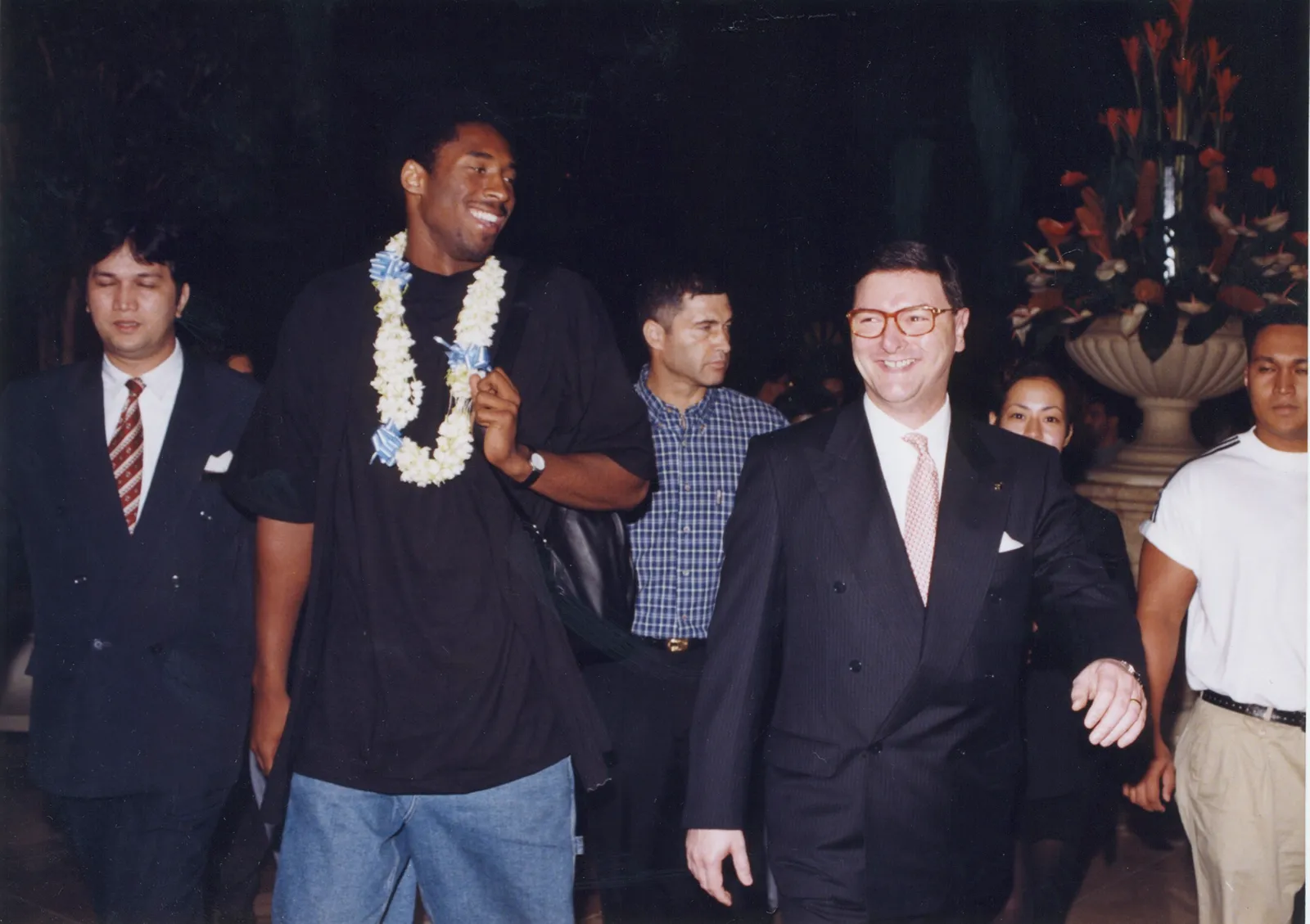
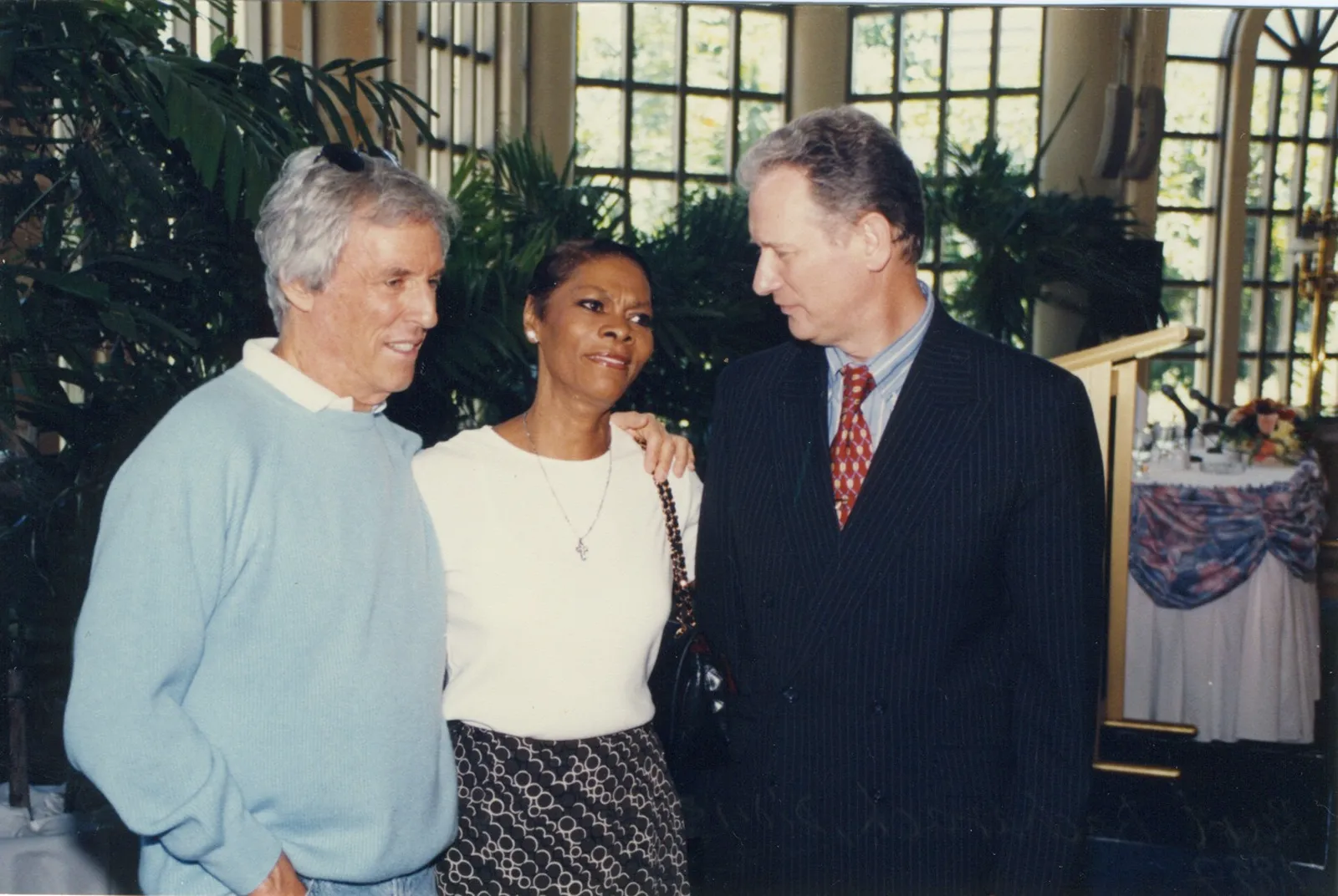
The irony is that Peninsula soon acquired a life far messier, and more colorful, than the international showcase surrounding its birth. The hotel identifies Gina Lollobrigida, the Italian actor and photojournalist, as its first celebrity guest after the IMF–World Bank delegates. Francis Ford Coppola became a regular during the Philippine production of “Apocalypse Now.” Over the decades, the guest list widened across politics, royalty, business, and entertainment: Margaret Thatcher, Queen Sofia of Spain, Prince Andrew, Bill Gates, Stevie Wonder, and, much later, the cast of The Bourne Legacy all passed through.
Just as important were the people who never needed a room. Sir Michael Kadoorie has called the Lobby the place “to see and be seen,” and the hotel’s own records count more than a thousand wedding couples and other celebrants photographed on its twin staircases over the decades, alongside politicians, screen stars, and visiting heads of state. The first wedding reception arrived in the hotel’s opening year. From there, the Rigodon Ballroom became the backdrop to weddings, debuts, charity dinners, and the sort of black-tie nights for which Manila society has always known how to dress.
Music gave all that ceremony a less formal rhythm. During Martial Law curfews, the Lobby developed into a gathering place for families and friends reluctant to stay out late elsewhere. Then rain intervened. In 1983, a downpour scuttled a planned Manila Symphony Orchestra performance at the old Glorietta. Conching Sunico called P.L. Lim. Lim called general manager Felix Bieger, and within hours the Lobby had become an improvised concert hall. More than a thousand people reportedly came. Concert at The Pen started, funny enough, as a contingency plan.
When History Came Through Its Doors
The trouble with occupying one of the city’s most visible corners is that eventually the city’s troubles find you. During the December 1989 coup attempt against post-dictatorship President Corazon Aquino, fighting moved into the financial district and trapped hundreds inside The Peninsula. The hotel contracted around them as the week deteriorated: the pool closed, then the public rooms, then the bars. At six one morning, with a firefight underway outside, 620 guests were moved into a windowless dining room and spent the night on the carpet.
Contemporary reporting caught the absurdity of five-star hospitality under siege particularly well. Canadian physician Harry Richardson later recalled that the hotel kept everyone fed and, during the final days, even supplied free beer. General manager Niklaus Leuenberger and roughly 270 employees continued looking after the stranded guests through eight days of unrest.
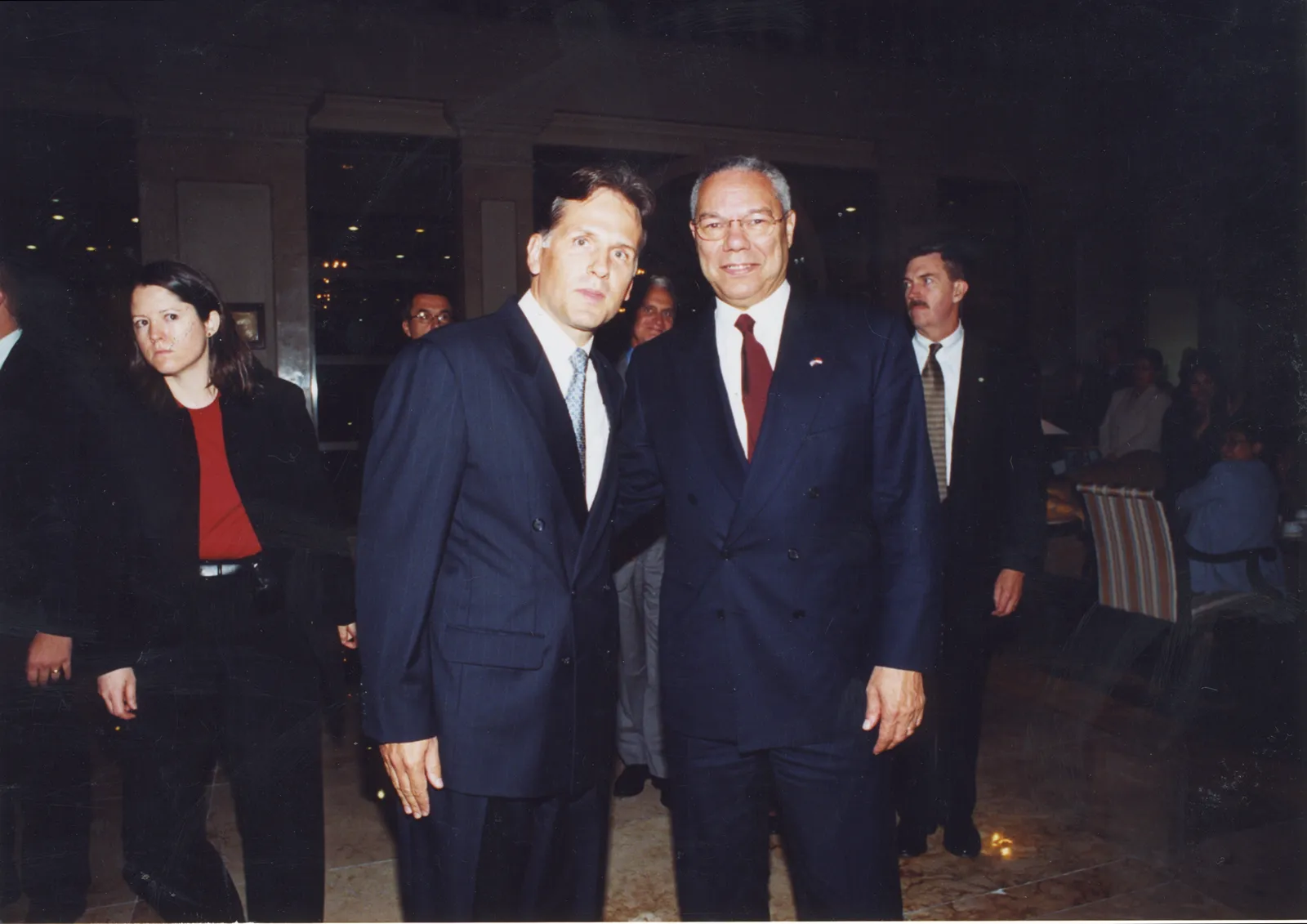
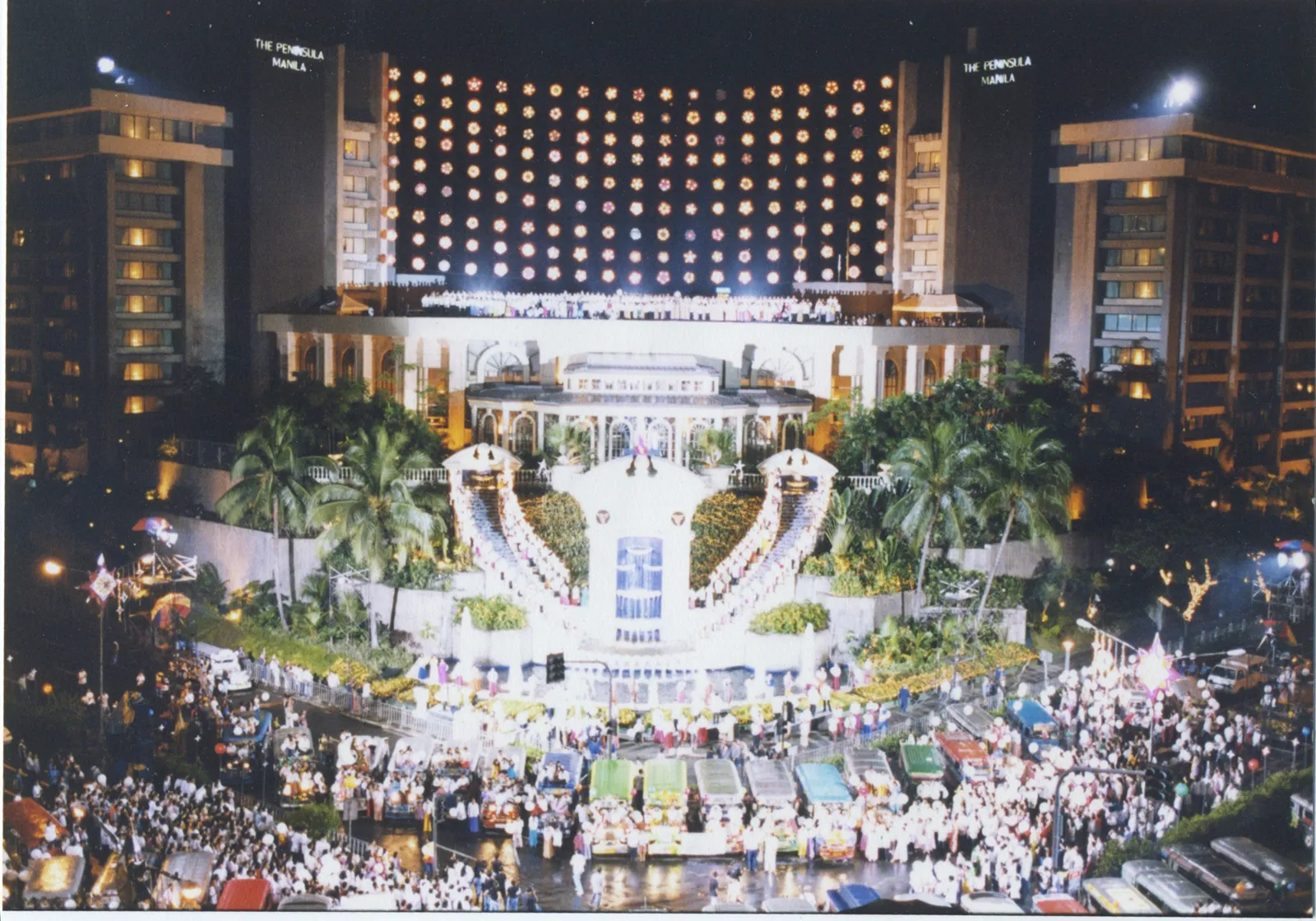
Other episodes were considerably easier on the upholstery. The hotel catered a lunch for Pope John Paul II during his 1995 Manila visit. At the turn of the millennium, Regine Velasquez sang “Written in the Sand” from the grand fountain with some 2,000 children, a celebration carried internationally as part of the BBC’s 2000 Today broadcast. Former U.S. Secretary of State Colin Powell received a standing ovation when he entered the Lobby in 2002. There, too, somewhere in this procession of statesmen, artists, celebrities, and moguls, was Barney the Dinosaur.
One 2002 dinner shows how far that appetite for theater could go. As The Philippine Star reported at the time, the Philippine chapter of the Chaîne des Rôtisseurs asked Peninsula to turn the Rigodon Ballroom into an Arabian-night fantasy for its grand dîner amical. Organizer Fred Fricke’s brief to the hotel was only “to dazzle.” In true Peninsula fashion, sand covered the floor, while fountains, lamps, and patterned tiles supplied the scenery. Evening gowns, barongs, and dinner jackets made up the rest. Champagne opened a seven-course dinner.
“The trouble with occupying one of the city’s most visible corners is that eventually the city’s troubles find you.”
Then came November 29, 2007, when hotel anecdote and national crisis collapsed into each other. Senator Antonio Trillanes IV, Brigadier General Danilo Lim, Magdalo soldiers, and civilian supporters entered The Peninsula after walking out of a court hearing tied to the 2003 Oakwood mutiny. Most of the senior management happened to be away in Tagaytay. The staff left in Makati suddenly had to manage an occupation.
The surreal details are the ones that survive best. Some guests posed for photographs with soldiers. Others resisted abandoning afternoon tea. Staff produced function rooms, televisions, and water. “We couldn’t explain to them what was going on,” banquet chief Dominador Alejandro Jr. later recalled, “because we weren’t sure ourselves.” Clubhouse sandwiches went to Trillanes’s group while red ribbons came from the flower shop and returned as armbands.
By late afternoon, the improvisation had ended. Government forces used gunfire and tear gas, and an armored personnel carrier smashed through the entrance before Trillanes and Lim surrendered. The photographs remain almost indecently surreal: military hardware beneath the chandeliers of one of Manila’s grandest rooms.
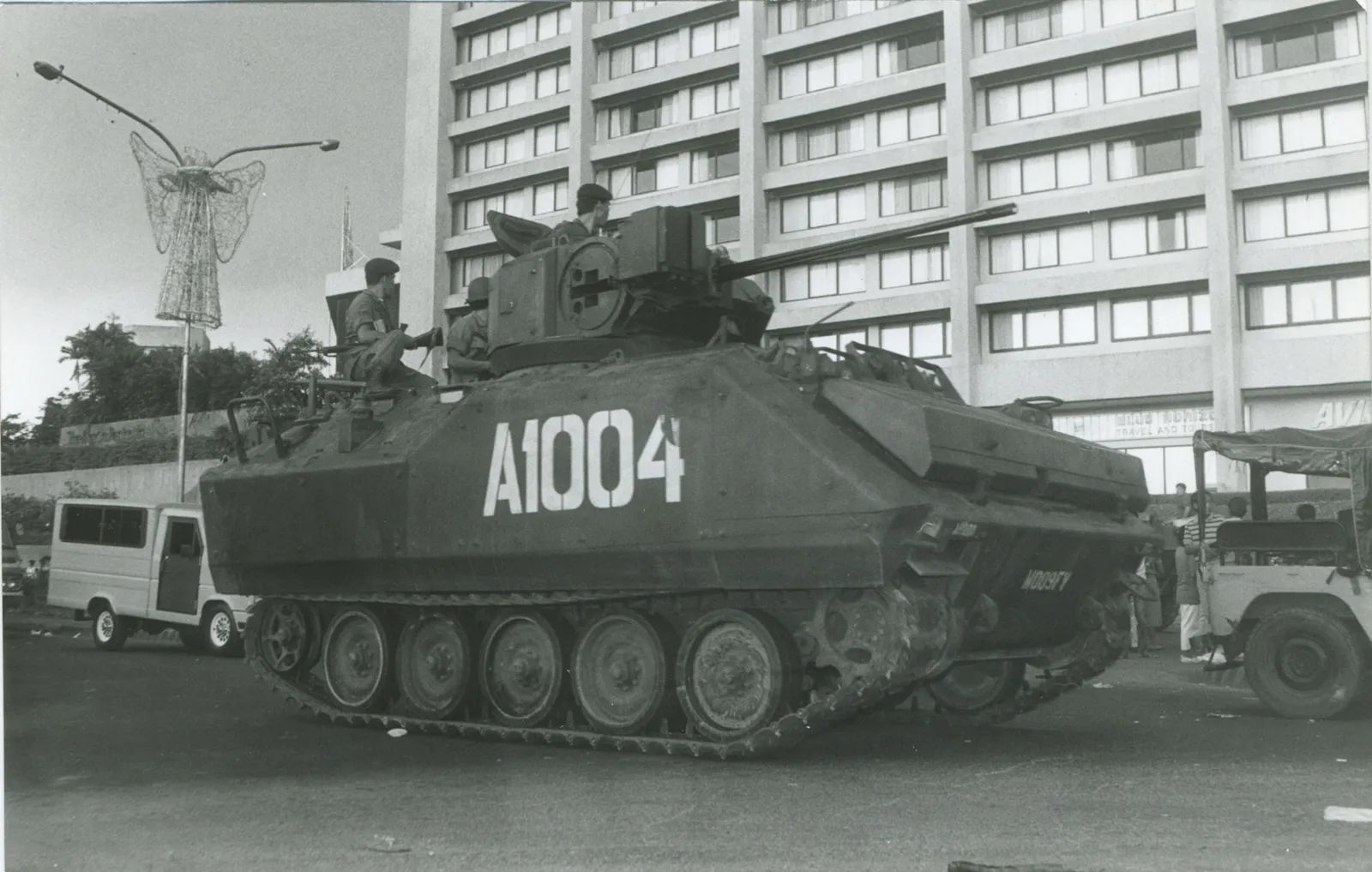
Four days later, the hotel answered with full-page advertisements: “Business as usual, Christmas as usual at The Peninsula.” Glass gets replaced, tables are reset, and yes, your dear afternoon tea resumes.
A Hotel That Became a Habit
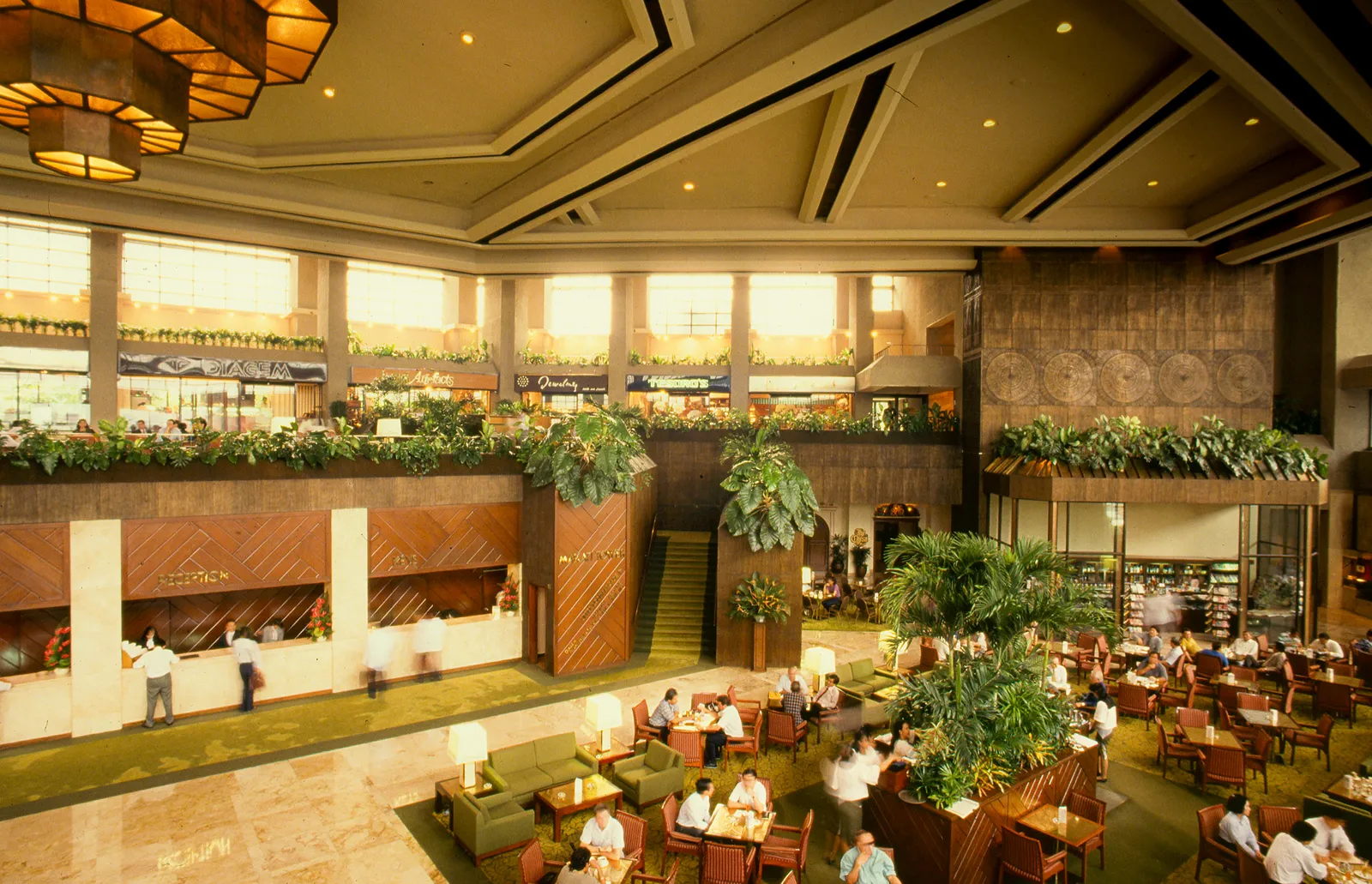
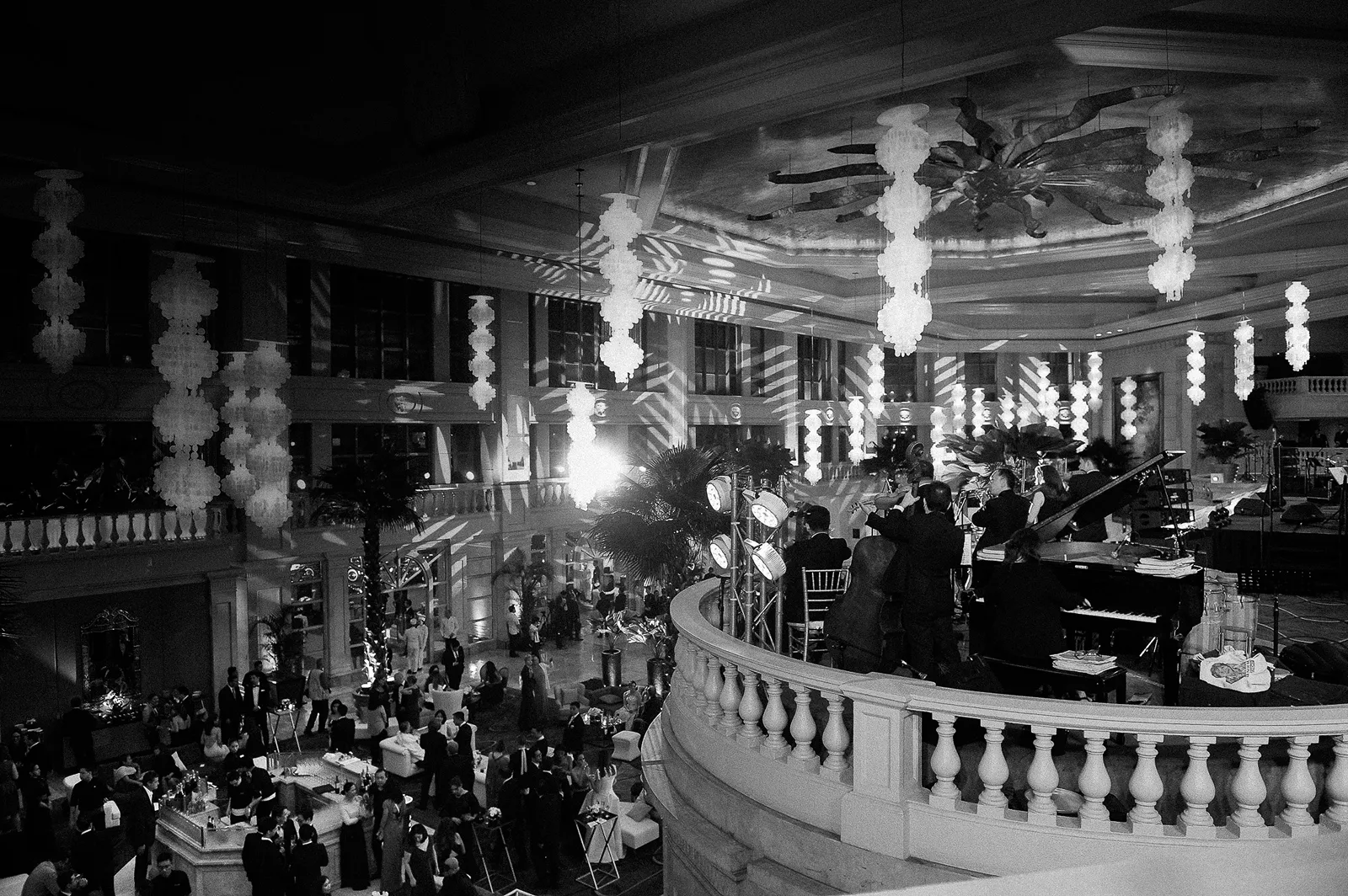
By its 40th anniversary in 2016, the hotel was perfectly willing to perform its own legend. The Peninsula’s account of the gala places Lea Salonga onstage, Las Guitarras—the ensemble associated with the Lobby’s early years—back in the room, and capiz lighting overhead. The feast roamed from caviar and lobster to lechon and turbot before guests spilled into Salon de Ning and Spices.
Nevertheless, the smaller stories are what keep all this from hardening into institutional mythology. Walter Bucher, for instance, has reportedly treated the Lobby as a daily appointment since 1978, long enough for habit to become something closer to tenure. Weddings produce children who later return for debuts. Christmas tables acquire unofficial owners while staff members learn families as recurring characters. Salon de Ning’s 2010 opening gave that instinct a more theatrical form. Contemporary accounts describe the Lobby transformed by colored light and a procession of gloved hands appearing with Champagne.
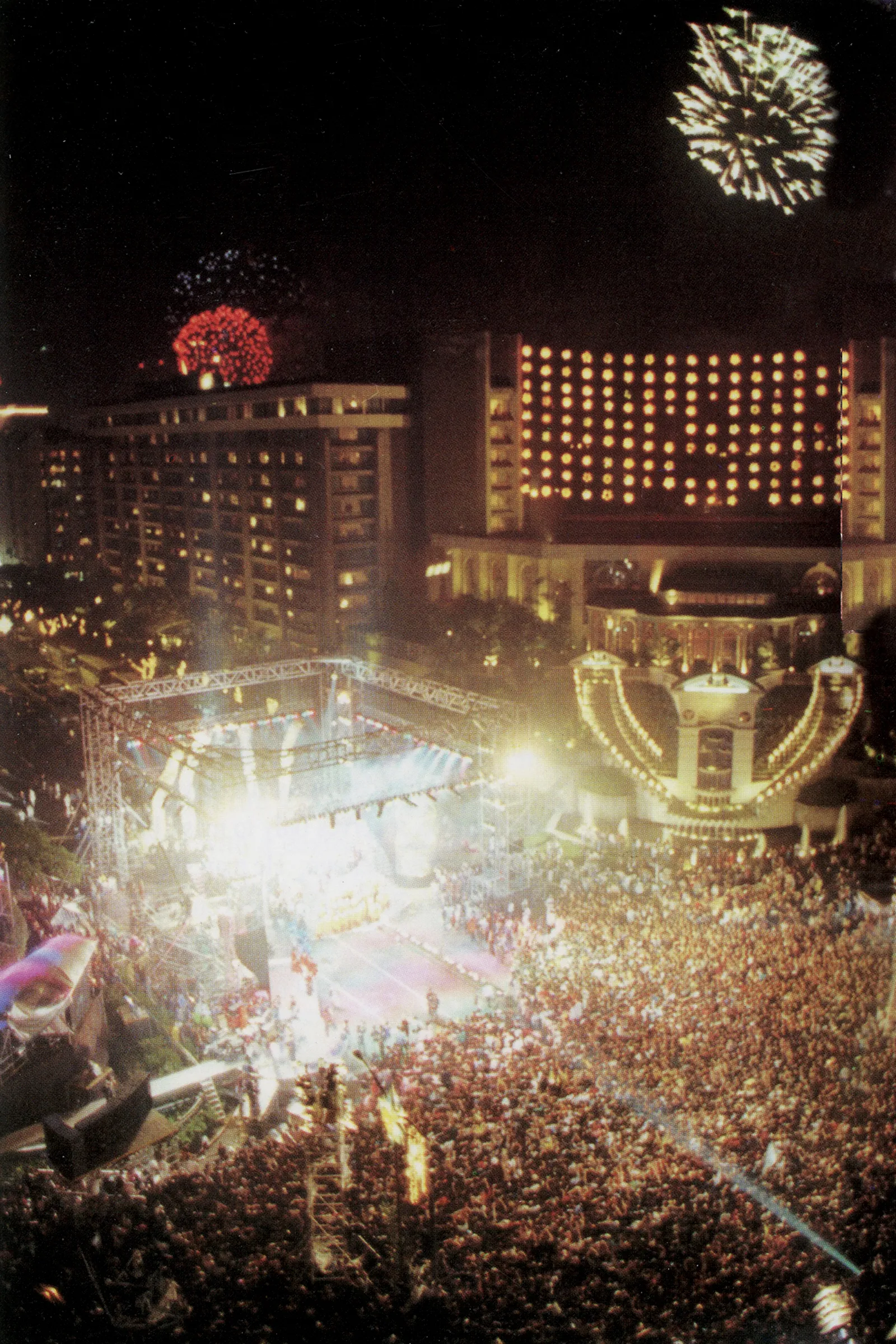
Then, in 2020, arrangement itself became impossible. For the first time in 44 years, The Peninsula Manila closed its doors, though the hotel says it retained its employees through the shutdown. Which leaves a peculiar inversion after everything that came before: Coups had filled the Lobby with soldiers, statesmen with security details, weddings with families, and at least one purple dinosaur with whatever logistical requirements accompany a purple dinosaur. It took an empty room to produce the strangest image of all.
There is, of course, a danger in making too much of endurance. Hotels are businesses before they are repositories of collective feeling, after all, and nostalgia has a convenient habit of improving whatever it remembers. The Peninsula has changed plenty in 50 years. Continuity inevitably has required a fair amount of change. It’s there in the guest who knows which table to ask for, or in the waiter who remembers what arrives with the tea, or in the family photo whose background happens to contain the same staircase as one taken 30 years earlier. Hotels are unusually good at creating the feeling that nothing has happened between visits, even when nearly everything has. Makati will continue doing what Makati does. Its cranes will rise, towers will disappear behind newer towers, and another supposedly permanent skyline will become somebody’s before picture. The Manila Peninsula will change, too. But for now, the Sunburst remains overhead, people still gather under it, and the Lobby keeps making room for whatever’s next.
This article originally appeared in Robb Report Philippines’ Watches and Jewelry Issue.
FAQs
The Peninsula Manila opened on September 14, 1976, shortly before Manila hosted the IMF–World Bank annual meetings. It was the second Hongkong and Shanghai Hotels property to carry the Peninsula name.
The hotel was conceived by Filipino architect Gabriel Formoso with Wimberly, Whisenand, Allison, Tong & Goo, using a weighty architectural language marked by deep overhangs and strong concrete forms.
On November 29, 2007, Senator Antonio Trillanes IV, Brigadier General Danilo Lim, Magdalo soldiers, and supporters occupied the hotel after walking out of a court hearing. Government forces later entered the property, with an armored personnel carrier breaking through the hotel entrance before the group surrendered.
During the December 1989 coup attempt against President Corazon Aquino, fighting in Makati trapped hundreds of guests inside the hotel. Around 620 guests were eventually moved into a windowless dining room as staff continued operating through eight days of unrest.
Over five decades, the hotel has hosted weddings, debuts, concerts, dignitaries, celebrities, political events, and generations of Manila families, making its Lobby and public spaces recurring settings for both private rituals and national history.