Lessons and Legacies: Jorge Araneta, A Lifetime at the Table




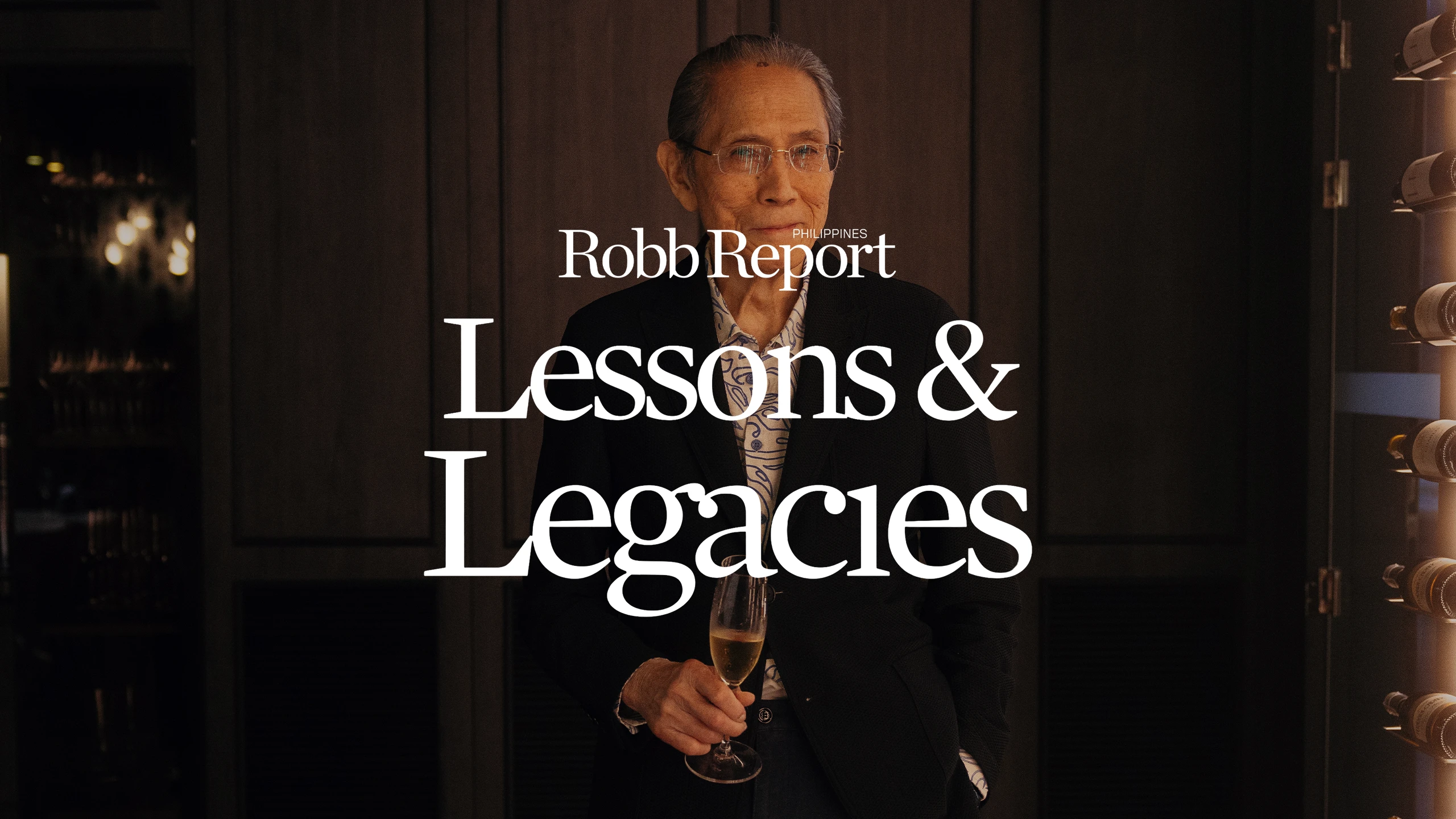
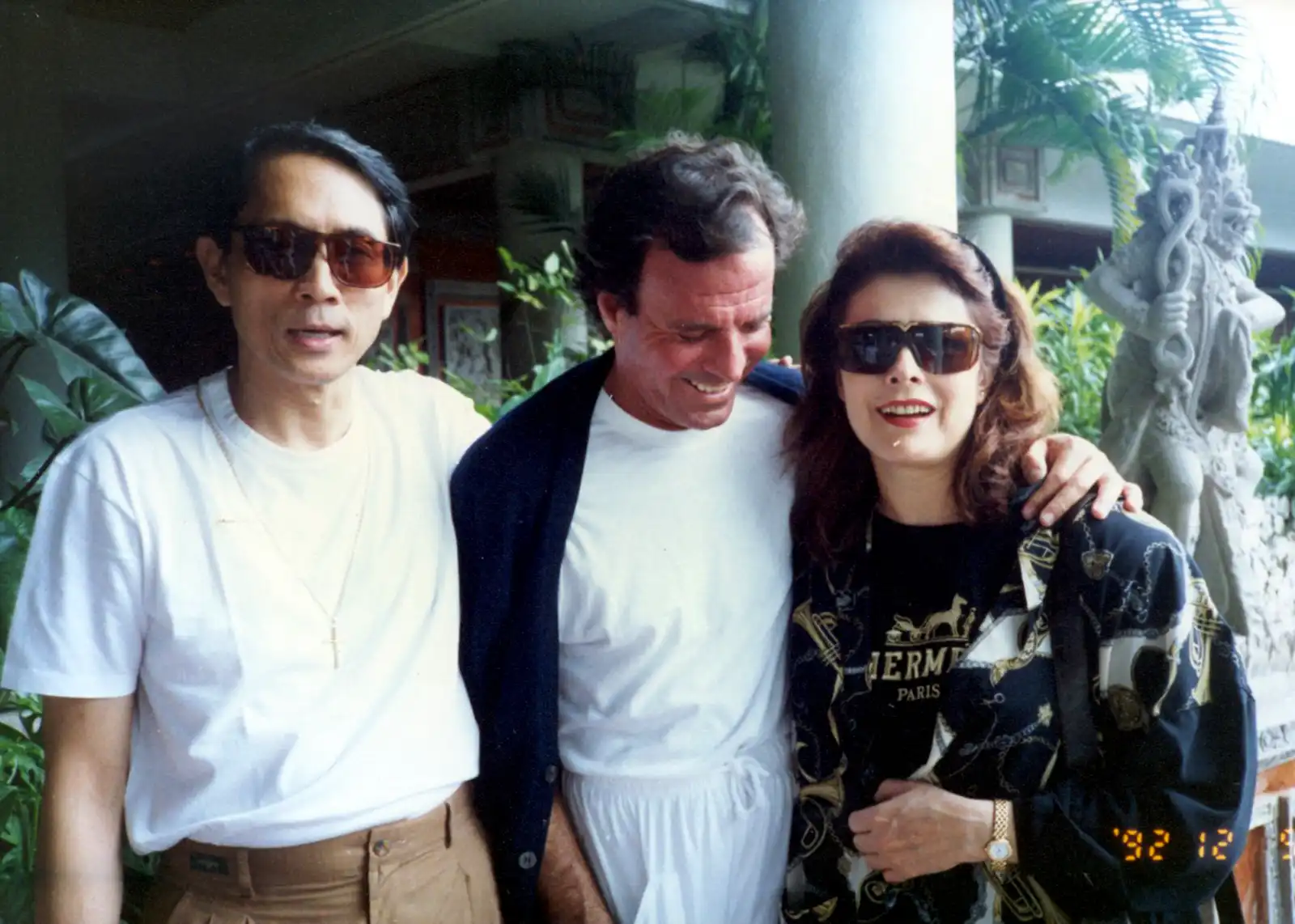
Jorge Araneta says he first learned how to appreciate French wine after an introduction from a good friend, Julio, a wine collector.
“I started drinking wine in high school, but it was Julio who taught me how to drink good French wine. He’s a great wine collector, and I learned a lot from him,” says Jorge, as we walk about his office, looking down at the vistas of Araneta City, the 35-hectare development he’s been leading as head of the Araneta Group since 1970.
Video:
His friend, Julio, just happens to be Julio Iglesias, the most commercially successful Spanish singer in the world, having sold more than 300 million records in 14 languages worldwide.
At Jorge’s invitation, Julio has performed multiple times at the Araneta Coliseum at Araneta City since the 1970s, and they have shared many excellent bottles of wine over the decades.
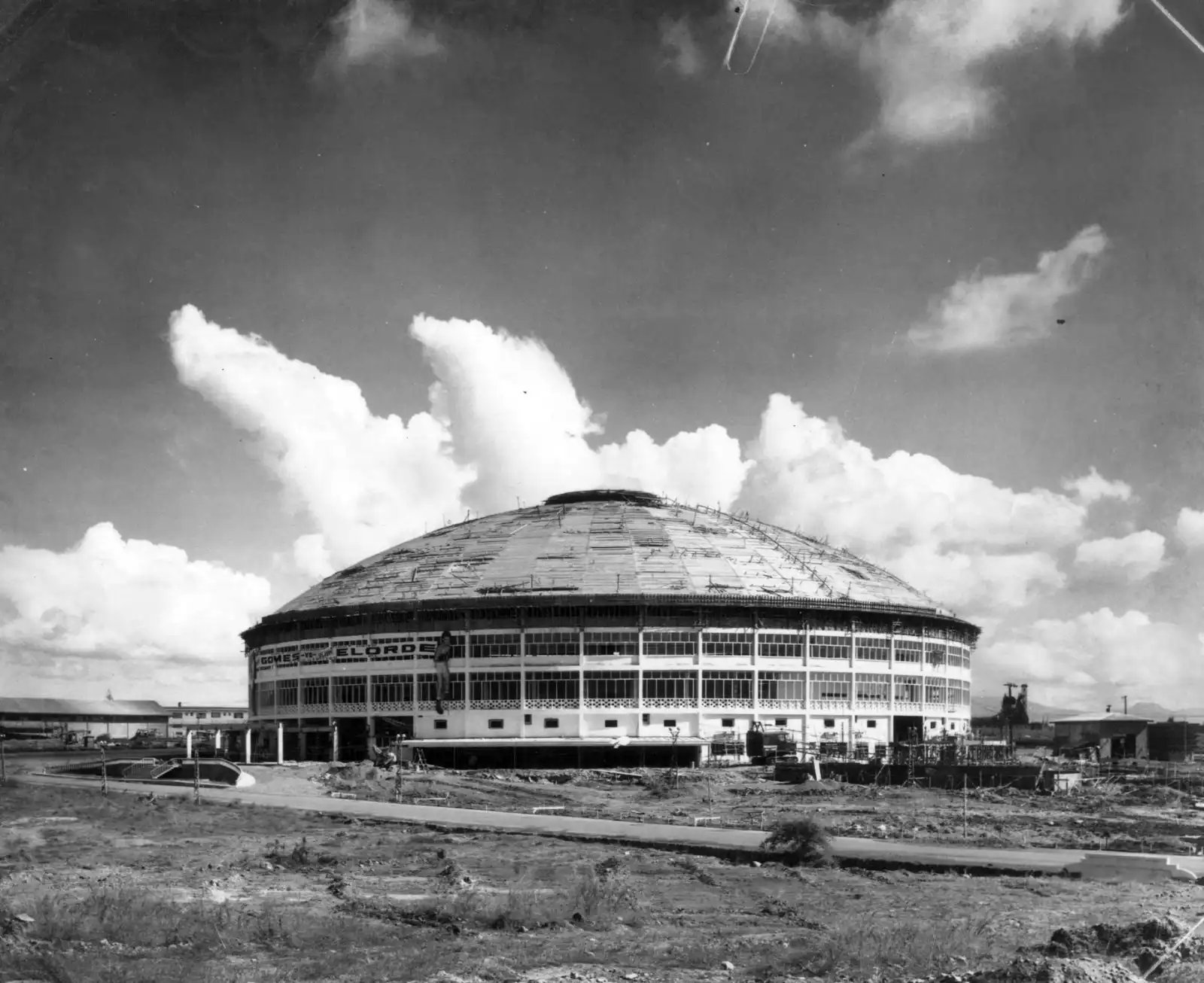
For Jorge, welcoming the world has long been second nature, dating back to the opening of the Araneta Coliseum in 1960, when, for several years, it was recognized as the largest covered coliseum in the world.
The origins of Araneta City were sparked when Jorge’s father, J. Amado Araneta, the family patriarch, was working on Bahay na Puti, the family residence in Cubao in the 1950s. Next door was a large lot owned by the Radio Corporation of America, with multiple radio towers used during the Second World War. But the war was over, and Amado envisioned how a new development could be built on the sprawling property, and he went for it.
“After he bought the land, my father went on a trip to Europe, and he was inspired by the Colosseum in Rome, and he said, ‘I’m going to build one like that,’ and he did—the first major development in the area,” says Jorge.
“My father’s mantra, his focus was ‘how to serve the most number of people at the lowest possible cost.’ That was the Coliseum,” says Jorge. “When we opened the Coliseum, the fee was only one peso to watch a world-class fight—Flash Elorde vs. Harold Gomes. One peso!”
The Araneta Coliseum was the stage for one of the last century’s most talked-about fights, the Muhammad Ali–Joe Frazier “Thrilla in Manila,” broadcast live by satellite from the Big Dome to a global audience in 1975, and still part of boxing lore today.
Jorge, his father’s only son, says he always knew he would one day take over the business, and never, ever even considered another life path.
“I learned by osmosis, by being around my father all the time,” says Jorge, who reminisces about spending time with his father at the office after classes at La Salle High School.
J. Amado and his wife were in Europe when Martial Law was declared in 1972, and they decided to stay in New York for the long haul instead of coming back to Manila. Thus, the reins of Araneta City were completely handed over to Jorge; he was 36 years old.
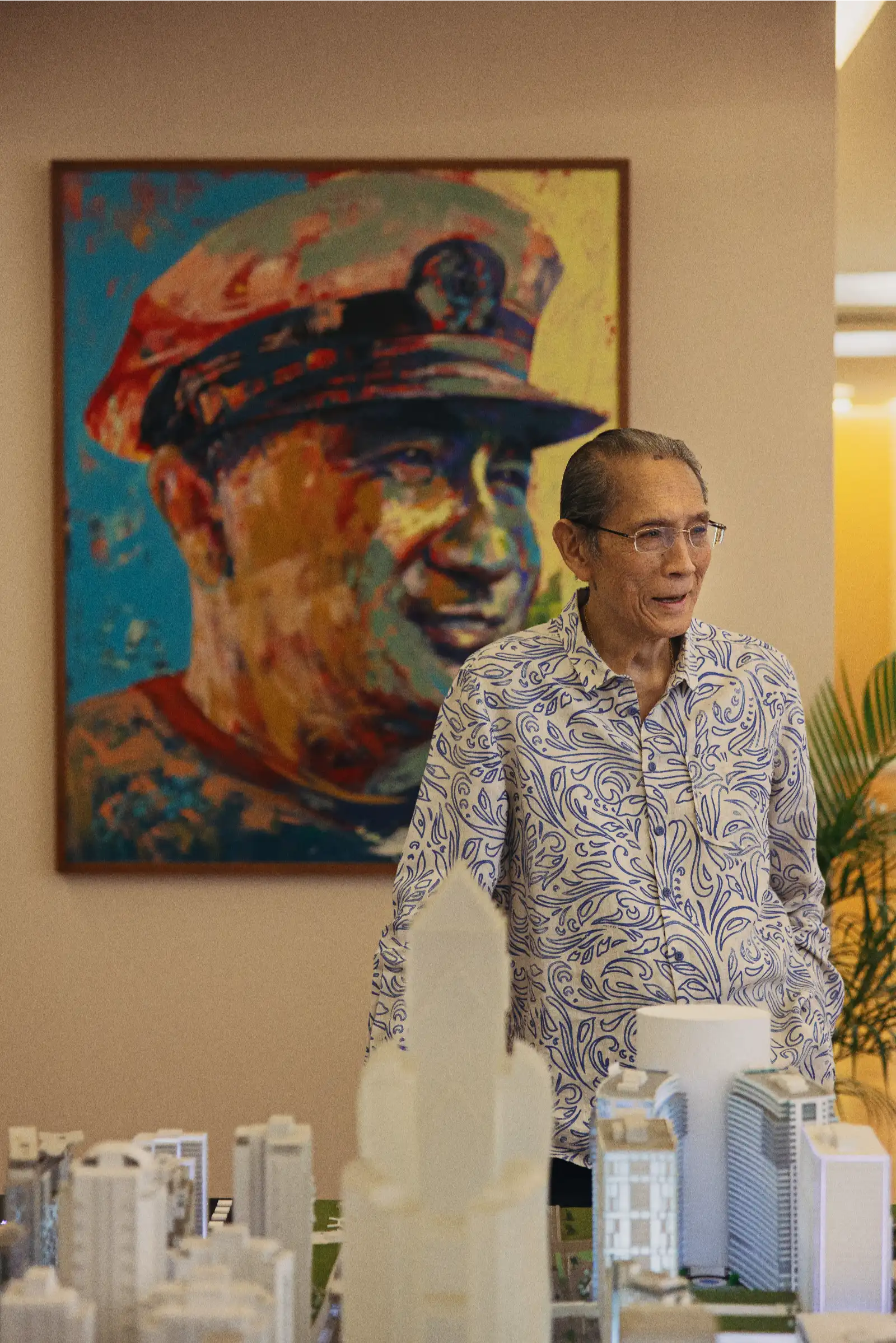
“The biggest challenge of my life was Martial Law. Everything was on hold. We started to build again only in 1986,” says Jorge.
And they never stopped. Over the decades, Araneta City has expanded and modernized, reflecting the way consumers spend their leisure hours. New towers have joined familiar landmarks; retail spaces expanded, residences built.
Over the years, sports champions, beauty queens, and legendary performers such as Nat King Cole, the Jackson 5, Eric Clapton, Lady Gaga, Taylor Swift, and Bruno Mars have passed through the doors of the Coliseum, now branded the Smart Araneta Coliseum.
For the Araneta family, backstage corridors at the Coliseum became informal receiving rooms, and dinners at their home stretched into the early hours of the morning. Excellent food and wine have always been part of the family’s hospitality, making their esteemed guests feel comfortable and welcome.
From the executive offices, we head over to Wine Cellar, Jorge’s newest venture, at the Gateway Mall.
Jorge, now 90, exudes youthful vigor and zeal as he strides about the space, introducing us to the latest project integrated into his food hall concept, World Kitchens.
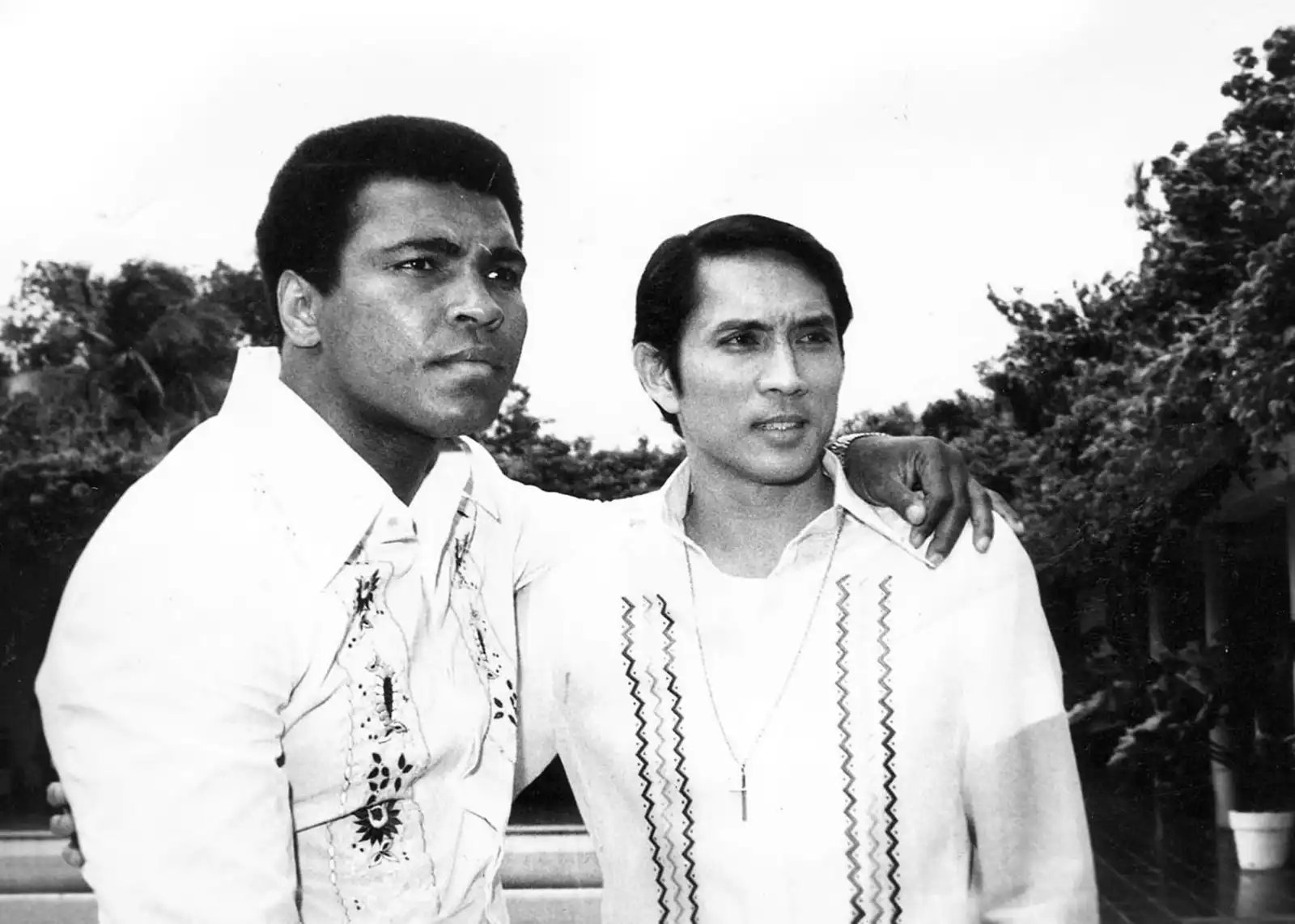
For generations, people have come to Araneta City for ice skating dates, concerts, boxing matches, Ateneo-La Salle, and now Ateneo-UP basketball games, with meals shared with friends and family before or after.
And while in the past, the head of the family or the dinner host made unilateral restaurant choices, today’s diners expect range, speed, and the freedom to follow individual appetites. World Kitchens answers that transition with an abundance of choice.
“The idea behind World Kitchens is simple. Each restaurant is run by the chef who owns it. They invest in their own place, they have a stake in it, and we provide the common areas and the infrastructure. I thought it was a good model, so we went with it,” he says, of the idea pitched to him by another friend, Singaporean food and beverage expert Andrew Tan Hock Lai.
The 700-seat, full-service food hall dining concept at Araneta City’s Gateway Mall 2 features 15 different show kitchens run by international chefs. The space is massive, with an area of 2,500 square meters, and yet there are tables tucked away in nooks and corners for those who prefer privacy.
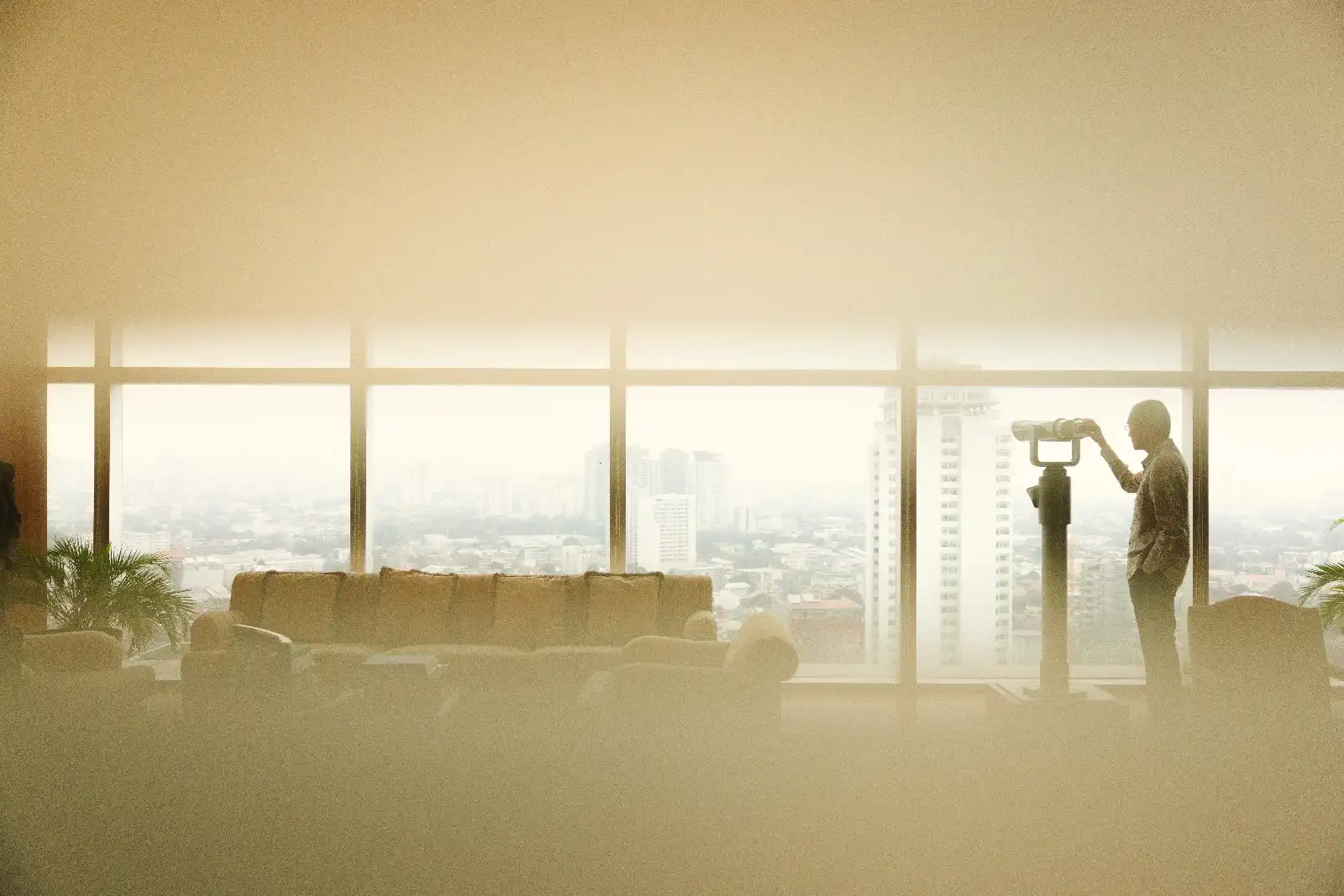
Earlier, at a glorious lunch, we dined on jamon iberico from Jorge’s personal stash, otoro rolls from Kuro Maguro, a beautifully lacquered dry-aged Peking duck from 18 Jade, sous vide Iberico char siew from HK Ma’s Bistro, and cochinillo and foie gras from chef Gale Sun at Asador de Manila, among others.
Plates arrived in quick succession as we were on a tight schedule, drawing approving smiles from around the table. Chefs emerged from their counters, proudly introducing their dishes, watching our reactions with pleasure, urging more tastes, before heading back to their kitchens.
Jorge says he dines at World Kitchens regularly.
“I’m here almost every day. I try one kitchen at a time,” he says. “What I like is that people can come here with family or office mates and everyone can order what they want. If you go to a single restaurant, you’re limited. If it’s Chinese, you eat Chinese. If it’s Japanese, you eat Japanese. Here we have Chinese, Japanese, American, Spanish, Indian, French—you name it, we have it.”
“They’re all my favorites. That’s why they’re here,” he says simply.
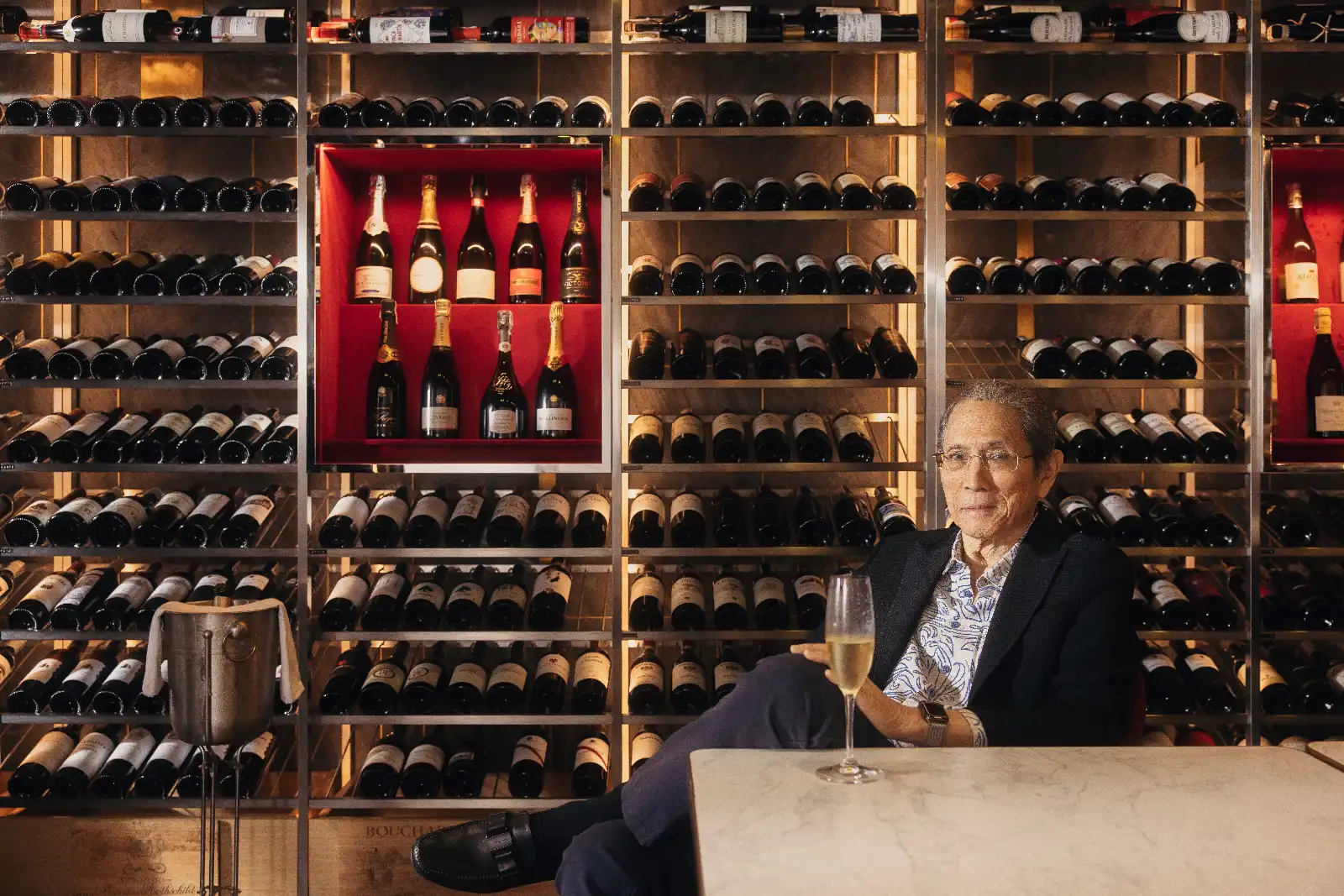
Regulars are used to seeing Jorge out and about, with no signs of slowing down. As an owner, his hands-on presence is reassuring. He walks around on his own, pausing when something catches his eye, saying hello and greeting colleagues, checking in the way seasoned experts do. He clearly takes pleasure in his observations, curious about what conversations have been about and what is working.
“To support World Kitchens, we needed wine. And wine is something I personally enjoy, so I said, why not?” Jorge says.
Jorge’s concept for World Cellar is to make wine more accessible.
“In the last decade, you can already see more people drinking wine in the Philippines, especially the young,” he says. “The new generation likes to try things they see on television or online. They’re curious.”
“All over the world, you go to a restaurant and order a bottle, you pay three or four times the retail price at a wine store. That’s the practice. I think it’s too much. Why should you pay triple just because someone else opens it?” he says. “Here we add about 50 percent. If a bottle costs Php 1,000 in a store, here it’s just Php 1,500, not Php 3,000. I think that will encourage more people to drink wine when dining. I want this to be a place where people come, drink wine, enjoy, and don’t have to pay too much.”
Jorge says World Cellar has about 500 labels, with prices ranging from a thousand pesos to 20 or 30 thousand pesos and more.
“Young people are interested in New World wines—America, Australia, South Africa, Argentina, Chile,” says Jorge. “I want people to understand when they walk in that they have a huge choice. There is no other place in Manila with 500 labels from different regions and vineyards. Maybe you see 100 or 200 somewhere else, but not this.”
To help guests navigate through so many choices, the team at World Cellar highlights smaller selections.
“When you come in, you don’t have to go through everything. You can pick from a selection, and there are different price levels,” he says. “We’re planning tastings and appreciation sessions. But education is not the most important thing. What’s important is that people drink and enjoy.”
Bottles of wine from Jorge’s own personal collection, moved from his private cellar at home to a private room at World Cellar, are also available for the more discerning.
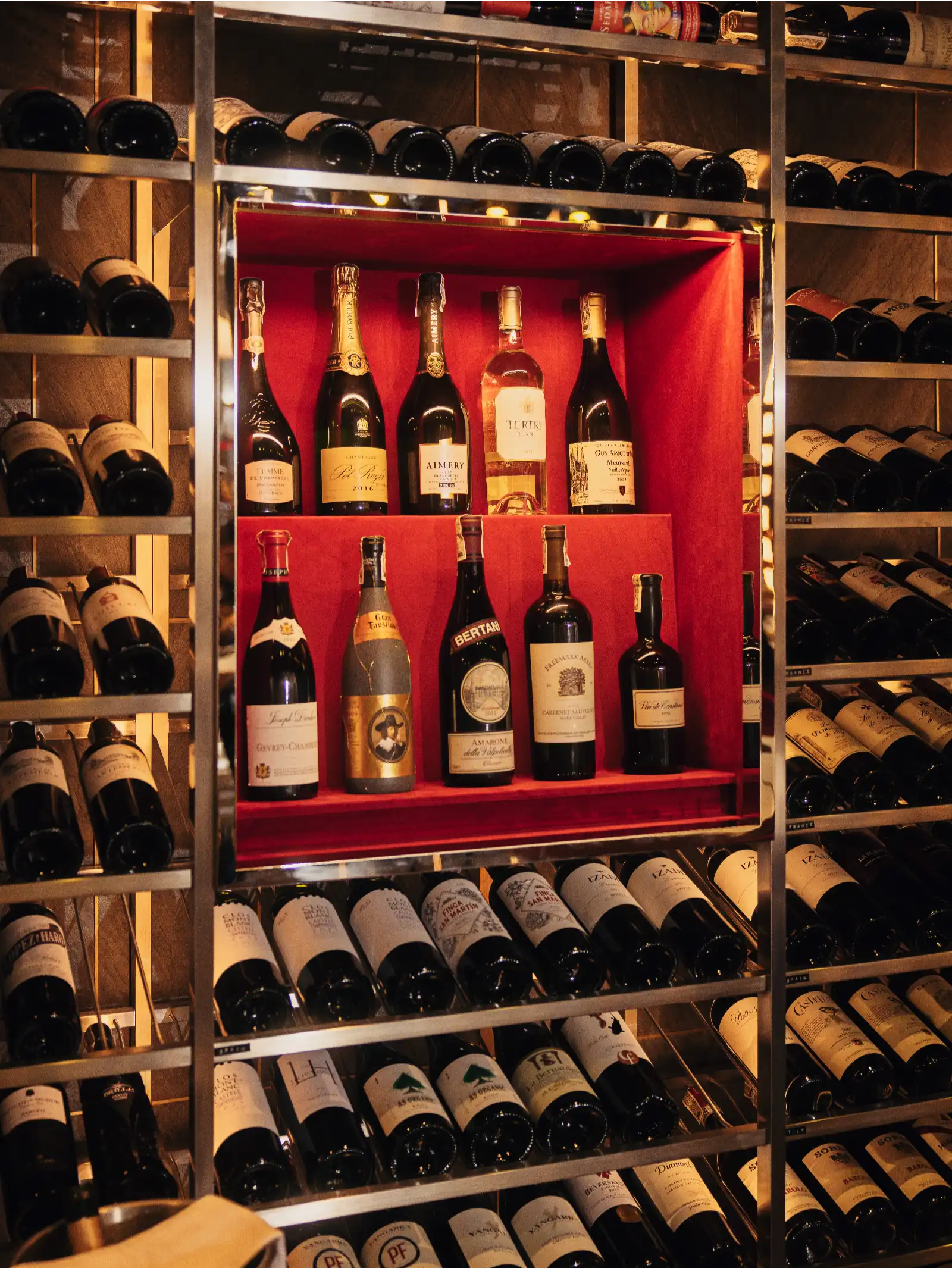
“I only buy what I like. I don’t collect for the sake of collecting. Over the years, it has grown into a serious collection,” he says. “I personally like to drink French wine, Burgundy and Bordeaux. I have bottles from Lafite, Latour, Margaux, Haut-Brion, and Mouton—the Big Five. I also like Champagne very much. Champagne is always a celebration.”
“I celebrate life.”
Jorge says he has no plans to ever retire.
“I want to continue what my father started, and to maintain that,” he says. “And then I will just fade away, like an old soldier.”
“I want my own legacy to be a foundation, to help people, something that will be eternal, not something that will be limited by human frailty. I still have to figure out what’s most needed by our people. The idea is to give back. Again, what will affect the most people. That will be the focus. With my wife. It will be called The George and Stella Araneta Foundation.”
“That’s a scoop,” he says, his eyes twinkling.
Cheers.
This article originally appeared in Robb Report Philippines’ Food and Drink Issue, April 2026.