Homage to Ancestry


From a stylistic perspective, Bobby Gopiao’s mandate to his architect, Jason Buensalido, was pretty straightforward.
“I just wanted a simple, liveable vacation home where the outdoors interact with the living spaces,” says Gopiao, one of Manila’s top landscape designers, known among his circles for an exceptional art collection, award-winning bonsai plants, and museum-grade ethnographic artifacts.
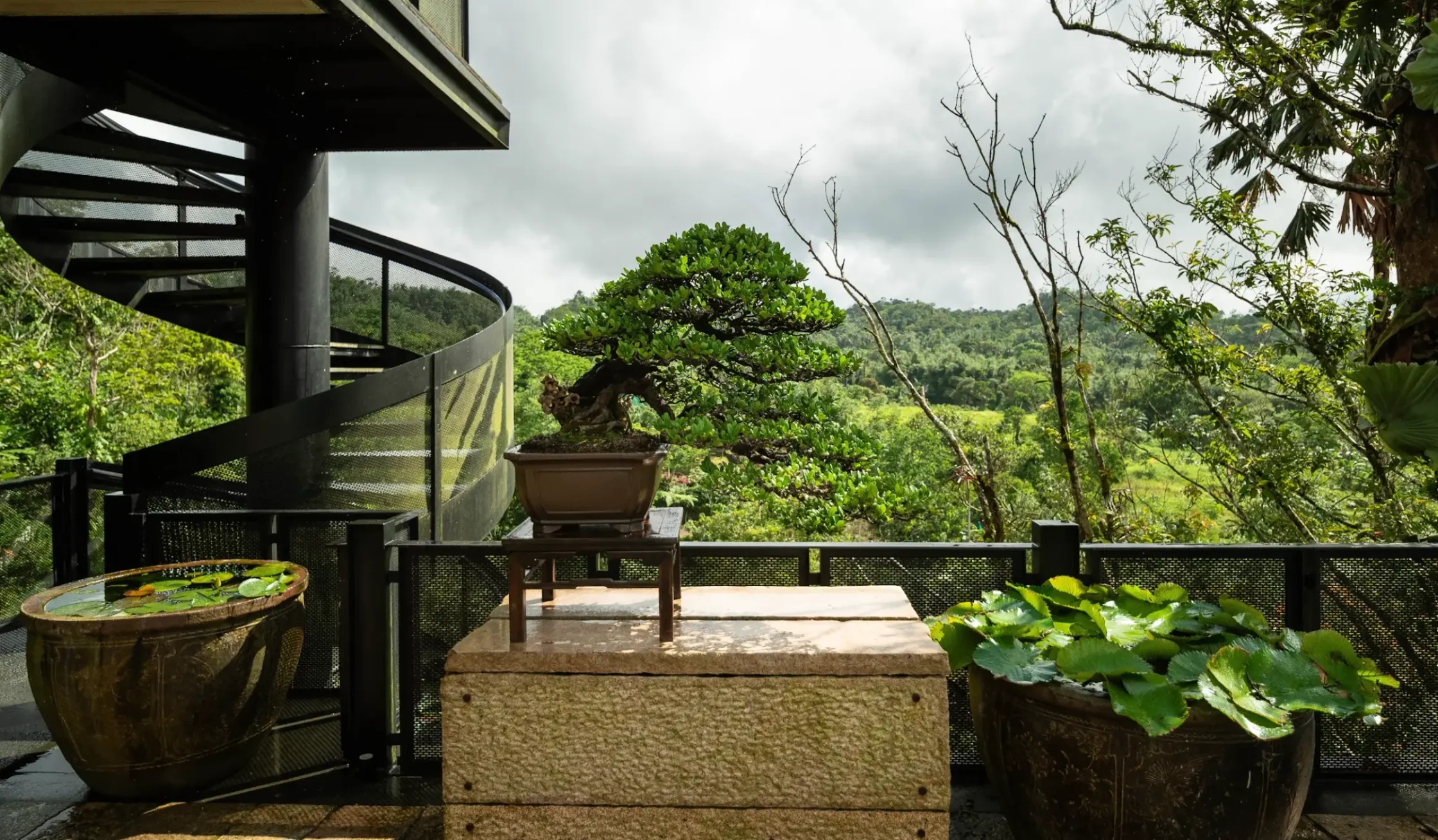
Gopiao was also clear about the real star of the project—Lucban’s magnificent landscape. He appreciated the undulating terrain and thick foliage of his property, parts of which also serve as a plant nursery, and respected the unique qualities of its ecosystem.
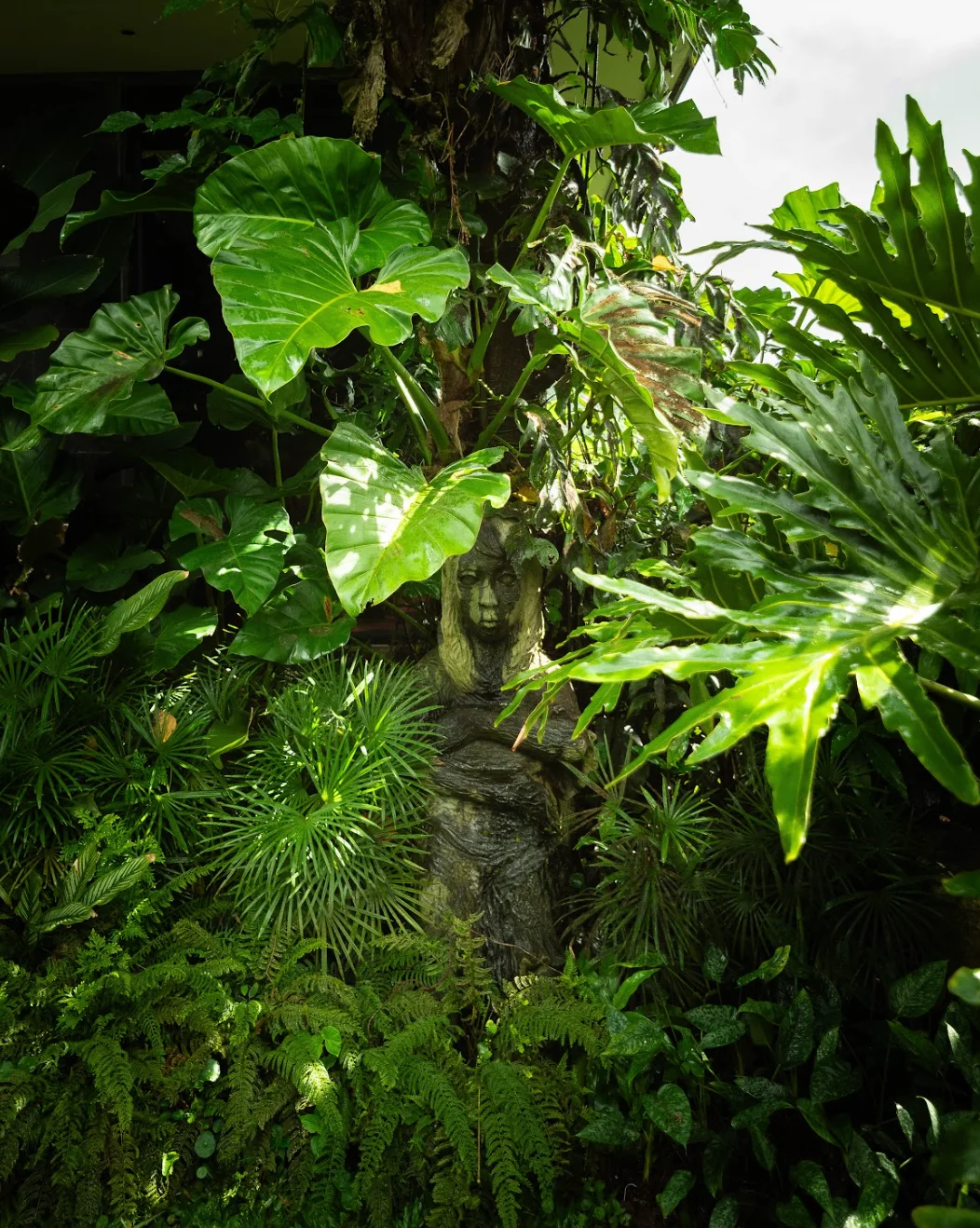
“You can’t go against nature,” says Gopiao. “If you do, you’ll have a difficult time. In conceptualizing the landscape design, for example, you can’t grow most cycad varieties in Lucban because the environment is wet. It takes too much effort for them to survive, and they won’t look very healthy. Everything will be dictated by the natural surroundings.”
Tasked with breathing life into Gopiao’s vision, Buensalido adhered to his client’s wishes while responding sensibly to the property’s tropical character. Though his blueprint reflected all that Gopiao desired in a vacation home, finding a suitable location proved tricky.
“We kept adjusting to adapt to the natural landscape,” Gopiao explains. “Originally, we were supposed to build in a section that used to be rice paddies. But when we were staking it, I realized you don’t really see anything. Right there and then, we scouted for other possible sites, preferably somewhere that’s elevated. So we switched to another location.”
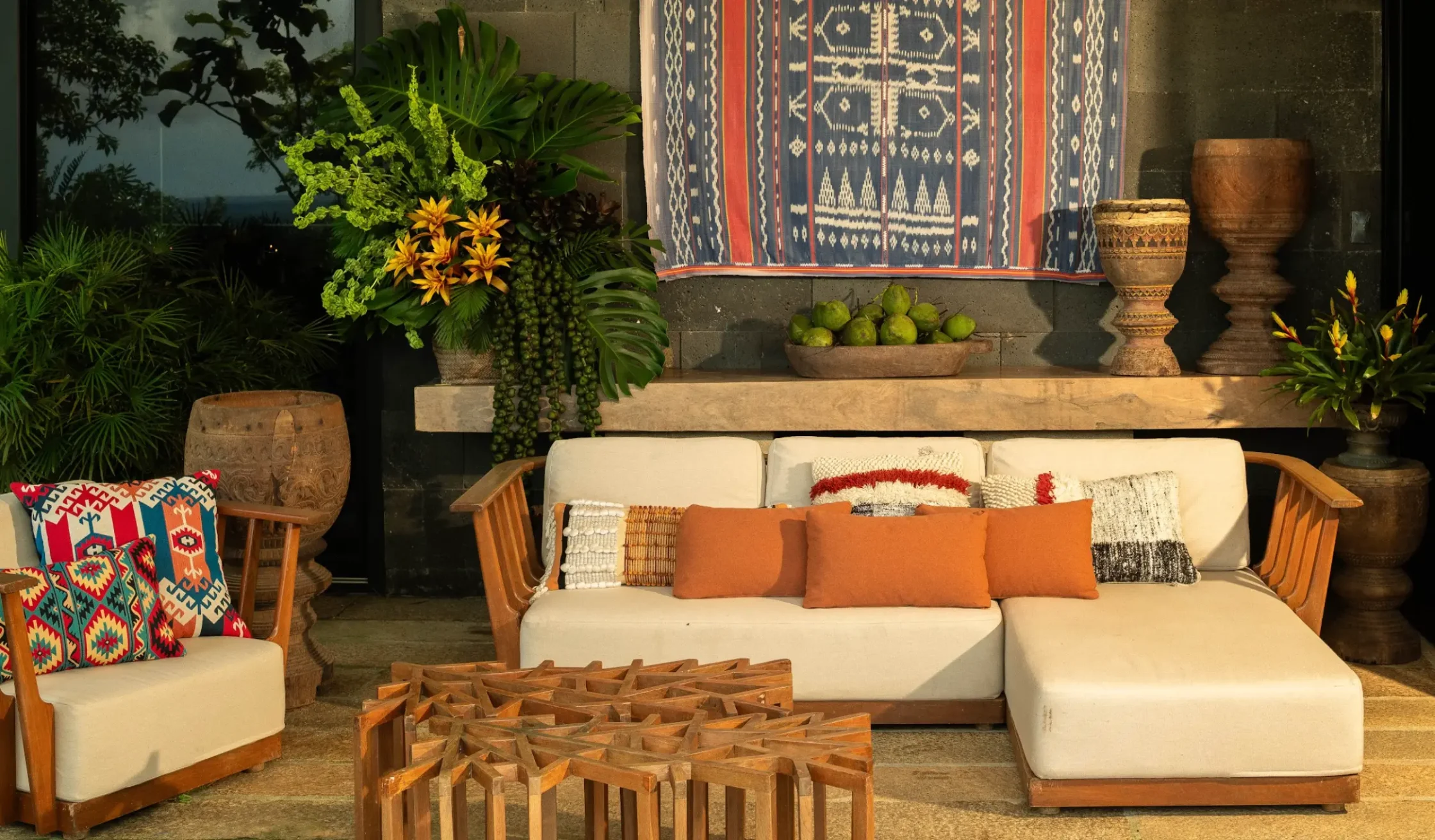
The house started to take shape at the property’s highest point during the pandemic lockdown and took about three years to complete. From the outside, the structural lines appear starkly modern, but organic elements like the lava tile wall cladding, piedra china flooring, and supa wood architectural details add textural warmth in harmony with the house’s natural surroundings.
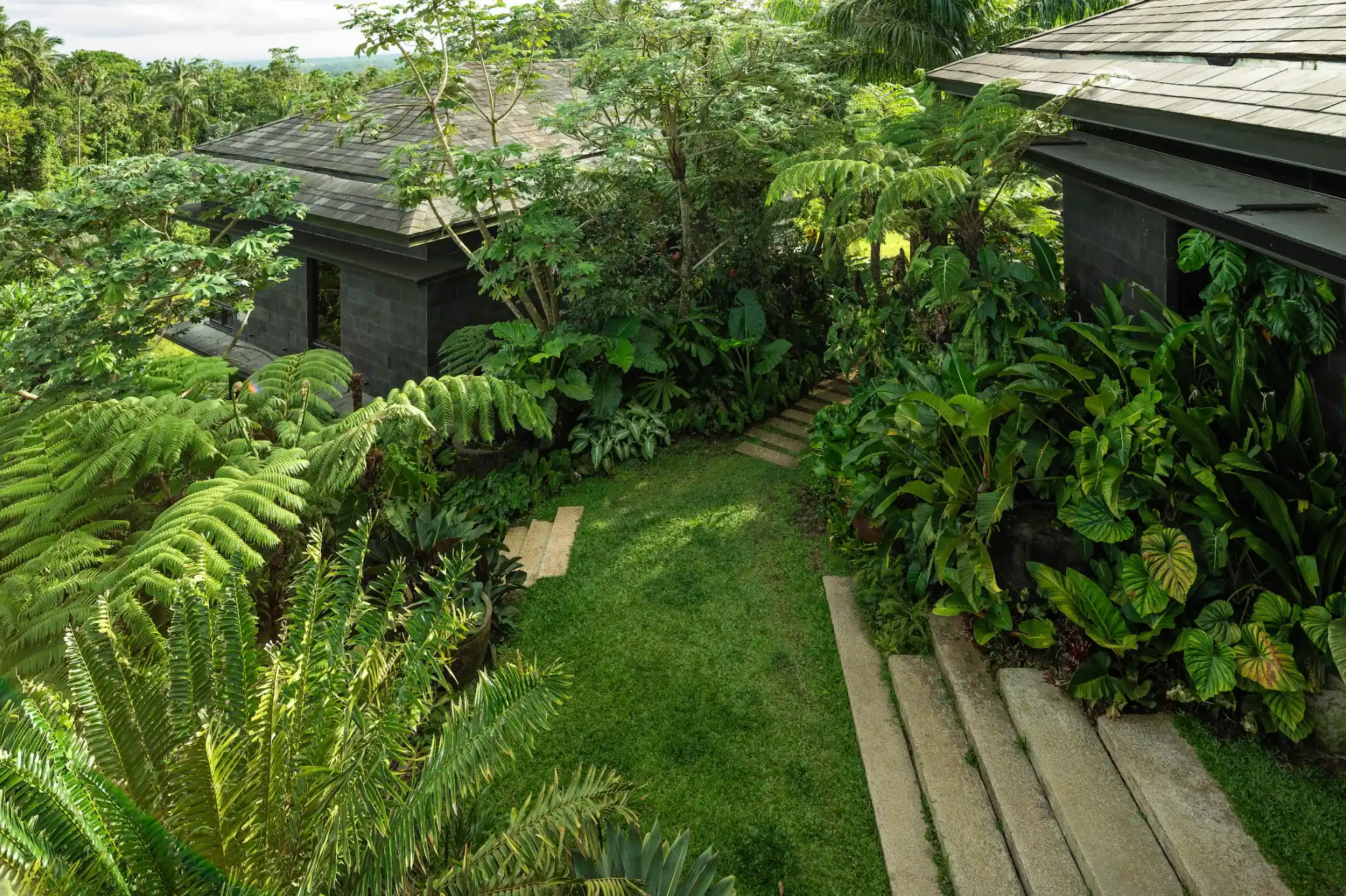
Anticipation builds starting from the uphill climb toward the house’s main entrance, both sides of the path lush with Gopiao’s favorite plants. On a walkway parallel to the main door, a massive stone sculpture by BenCab stands beside one of Gopiao’s favorite ethnographic objects, a ceremonial hagabi from the Cordilleras.
Gopiao’s distinctive landscaping frames the house’s facade, an invigorating assemblage of hard and soft elements staged around a pond that runs across the structure’s frontage. In recent years, he has incorporated Filipino hard elements—like stone bululs and hagabi sculptures—to give his landscape designs a sense of place.
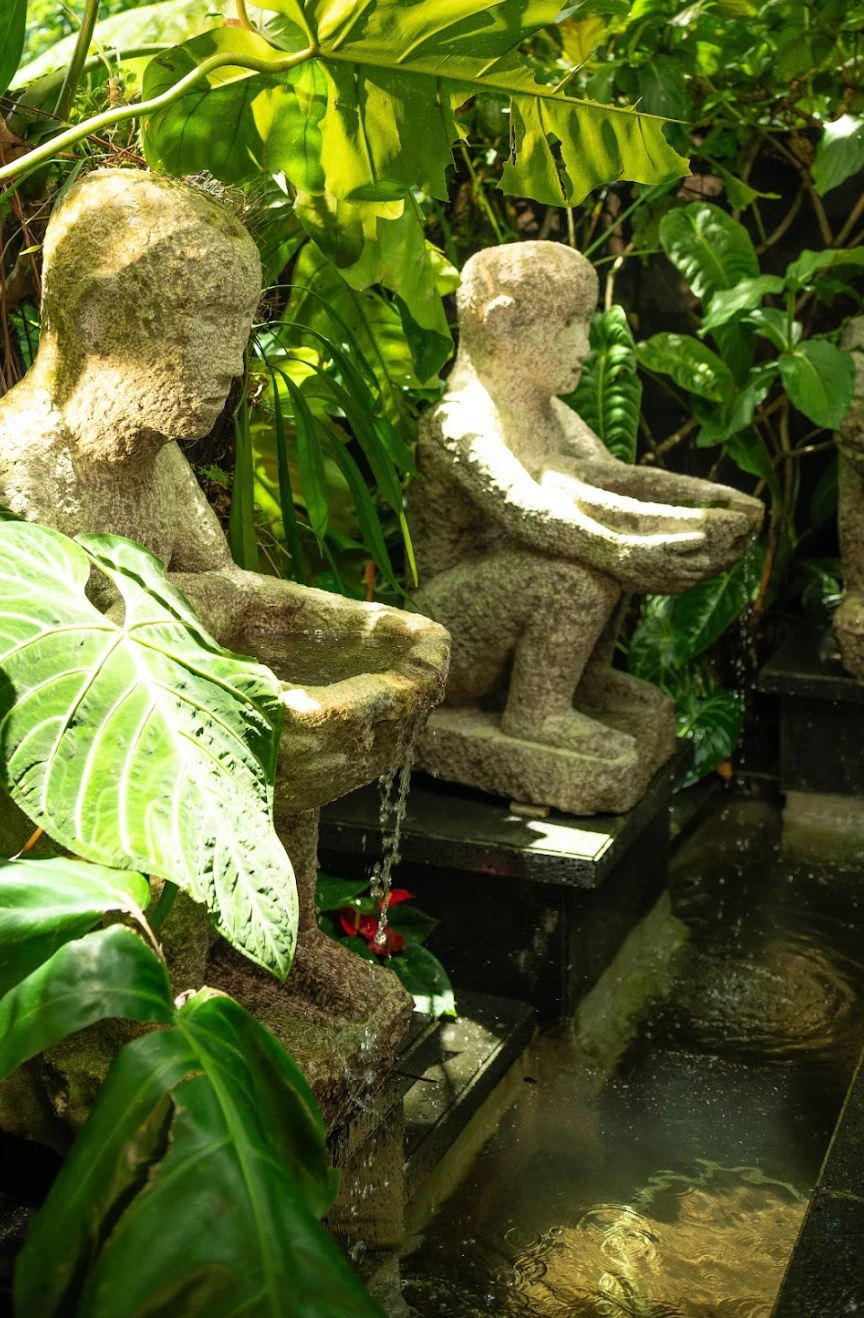
“I have the confidence to do that now, unlike when I was younger,” he says. “We don’t usually see these Filipino sculptures in local landscapes because we don’t have hard elements like the Buddhas, ceremonial objects, etc., that you see in other Asian gardens. That’s why I had stone bululs and hagabis made and incorporated them with our traditional Cordillera stone artifacts like sugarcane grinders, or gilingan, rice mortars called bayuhan, etc. Even the gilingan covers are utilized as step pads in my garden.”
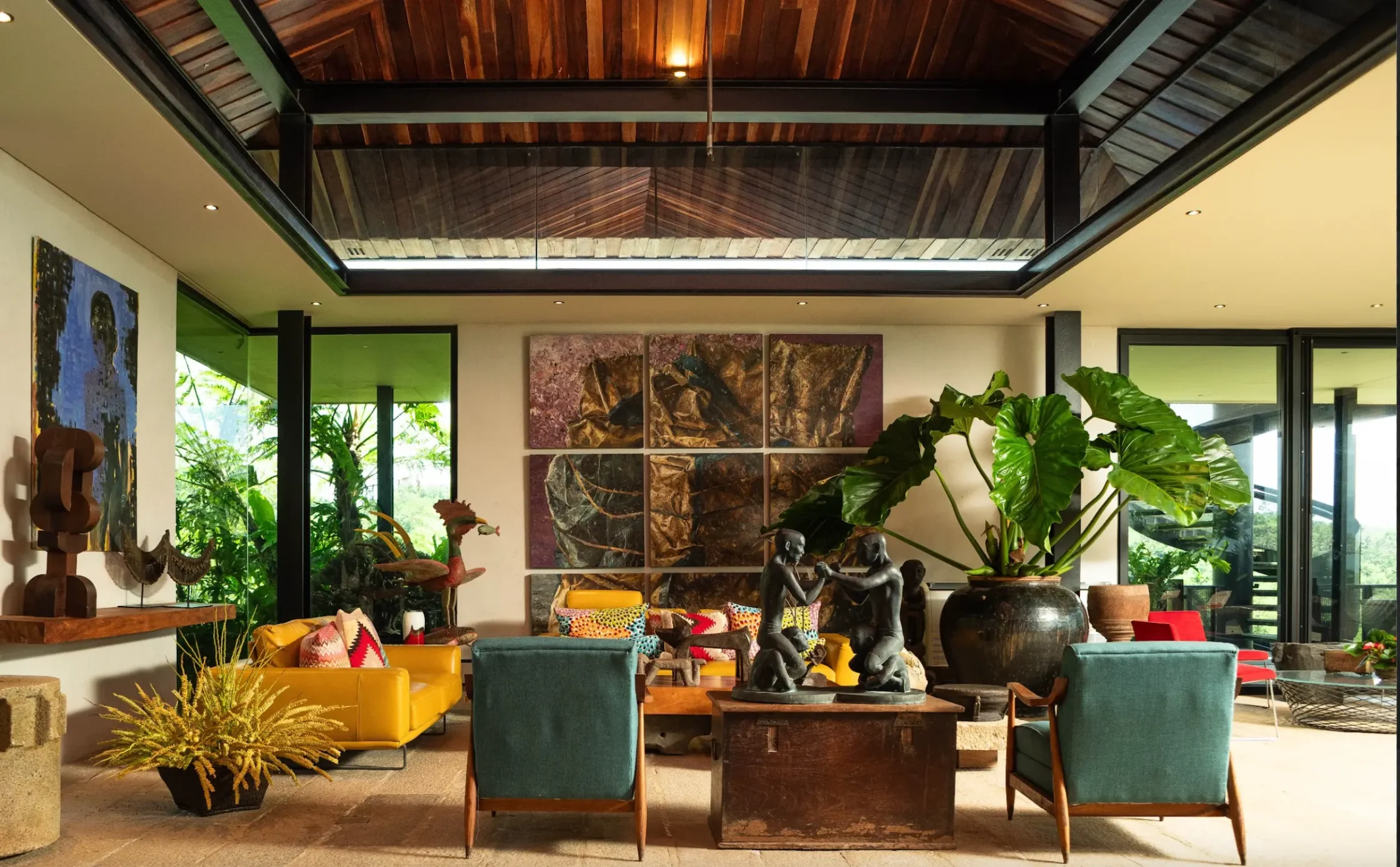
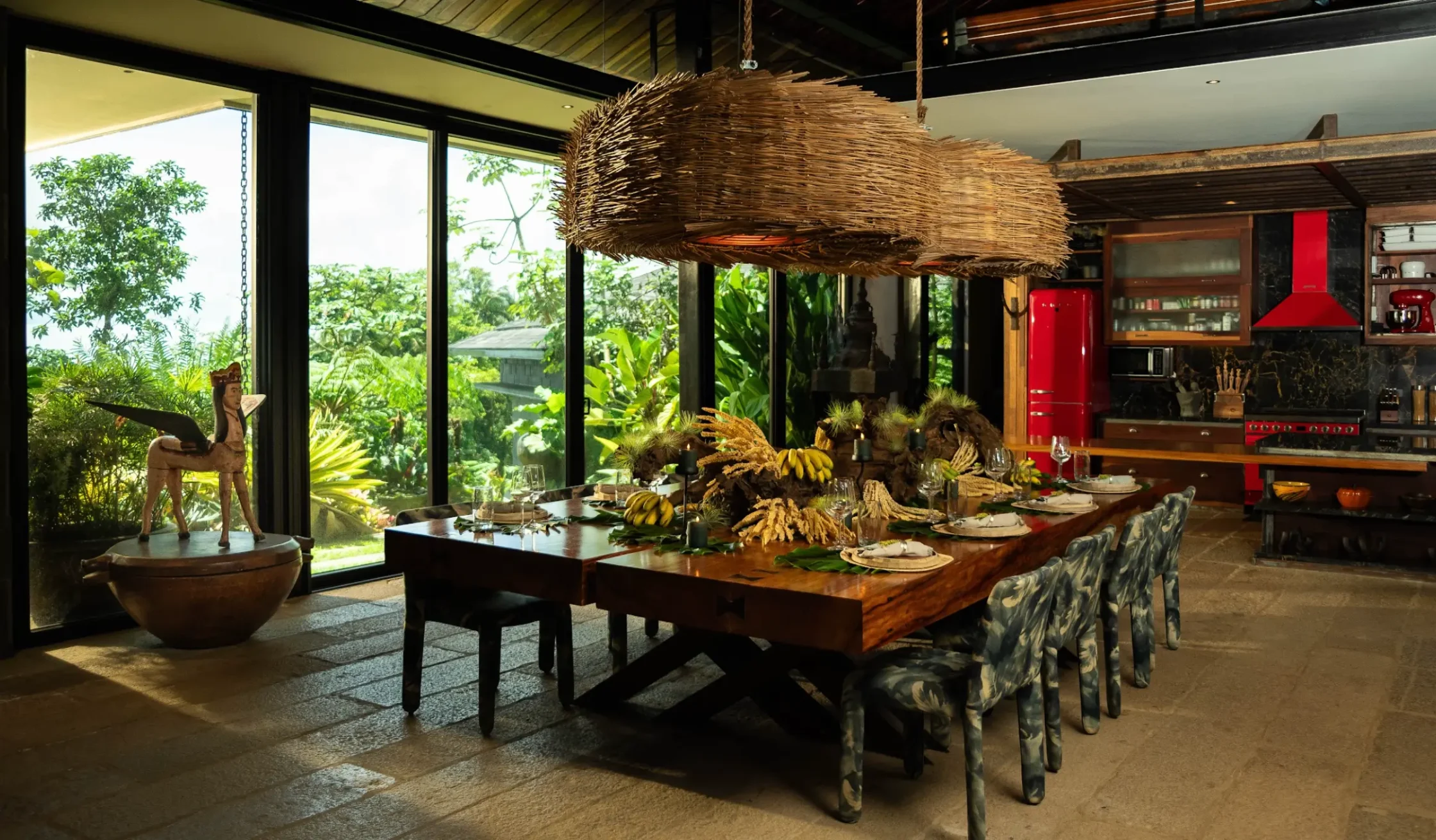
Guests get a full sensorium experience past the main door. It leads to the combined dining and living area, a sprawl made even more expansive by the floor-to-ceiling glass windows and doors to offer stunning views: Gopiao’s prized plants and Cordillera-inspired sculptures that populate the landscape on one side, and Lucban’s terrain stretching all the way to the Pacific Ocean on the other.
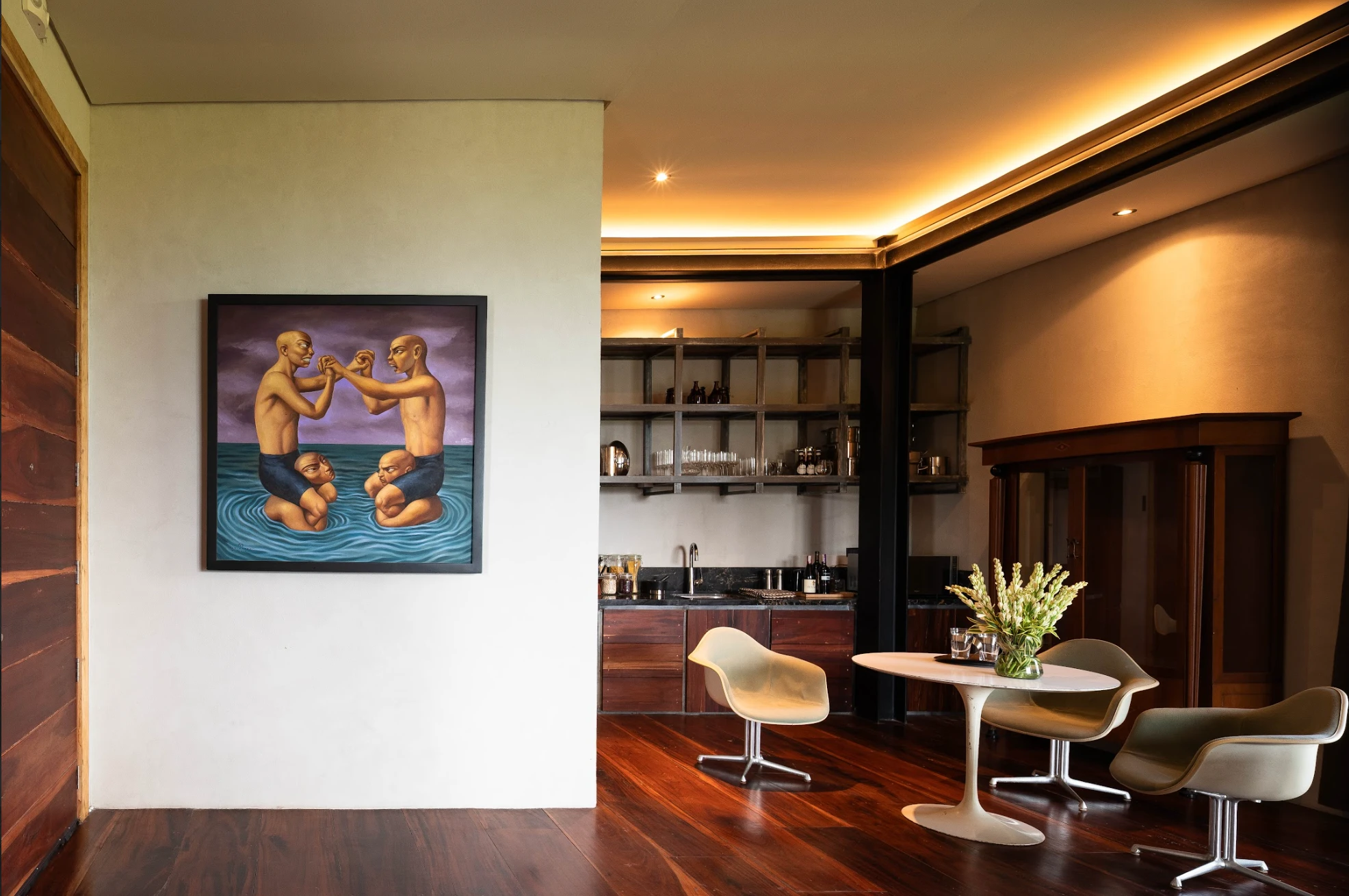
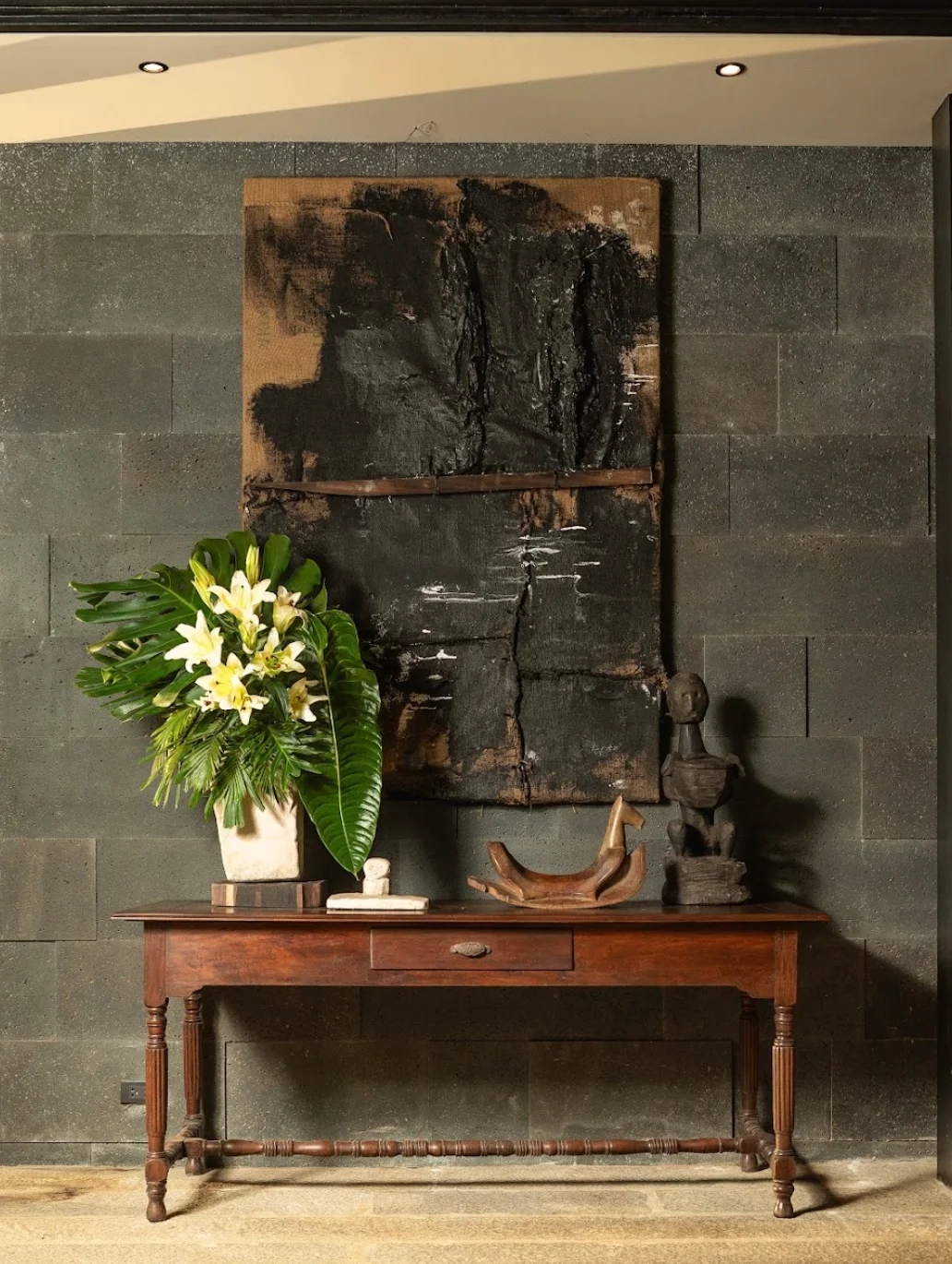
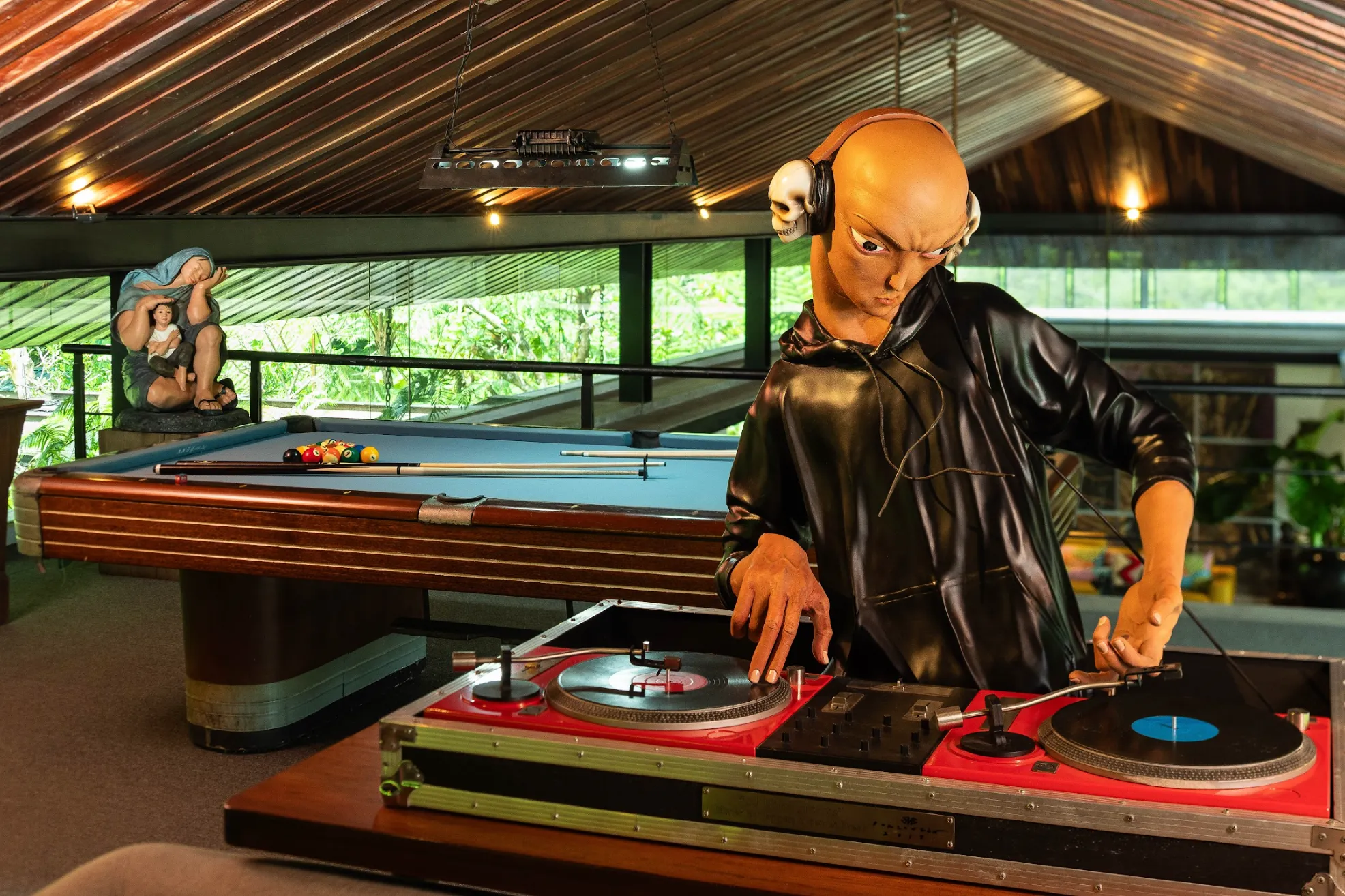
Filled with contemporary art, antiques, fine furniture, and incredible indoor plants, the space feels luxurious yet laid-back, due in part to the piedra china flooring that adds a tactile feel underfoot.
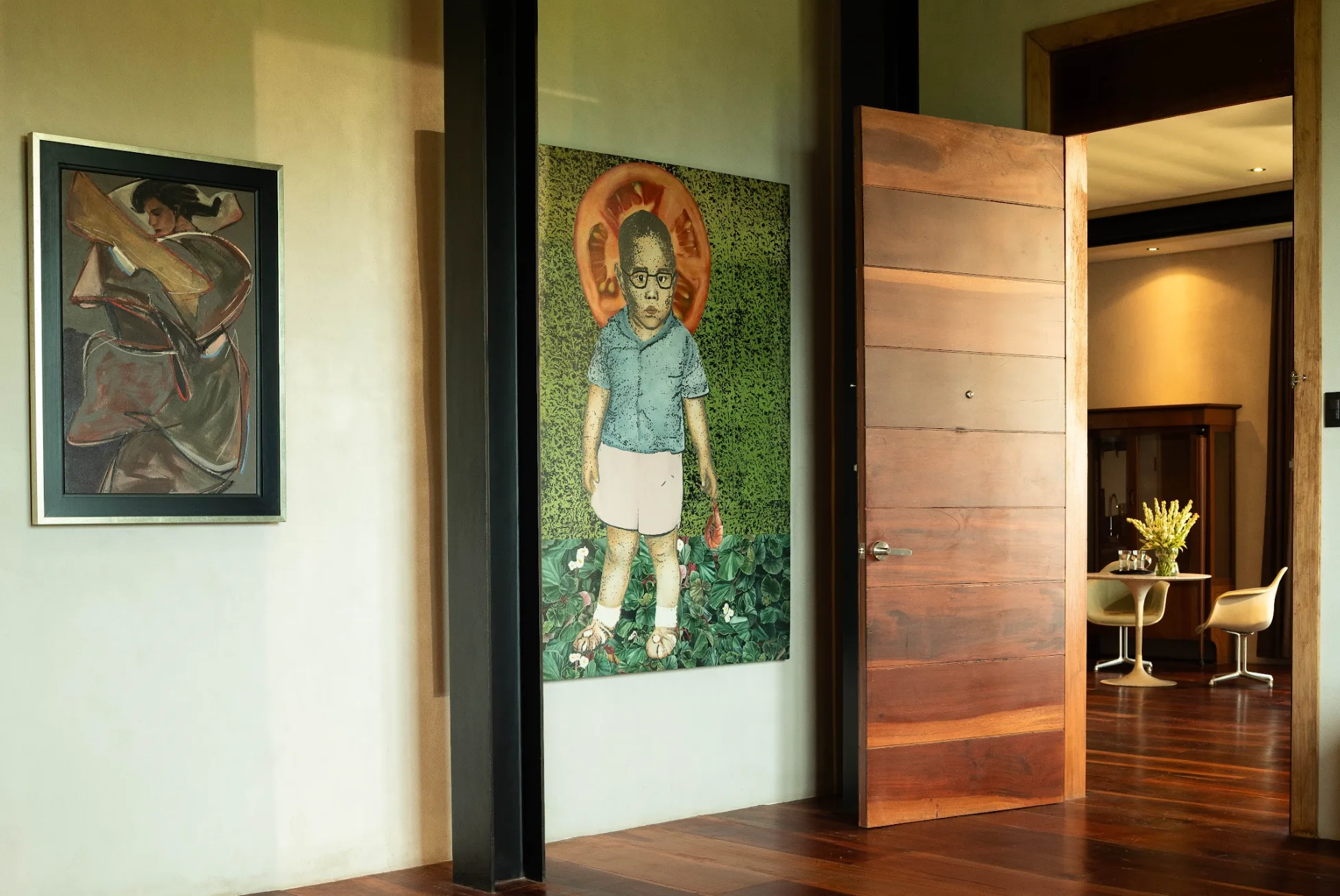
“They’re perfect for the space, and practical as well,” Gopiao says. “I didn’t want to use wood for high-traffic areas because of the maintenance,” he continued. “And I’ve been collecting piedra china since the 80s, which I got for a bargain because everyone wanted the square or rectangular tiles, not the unevenly-shaped ones. So all the piedra china used for the house came from my inventory.”
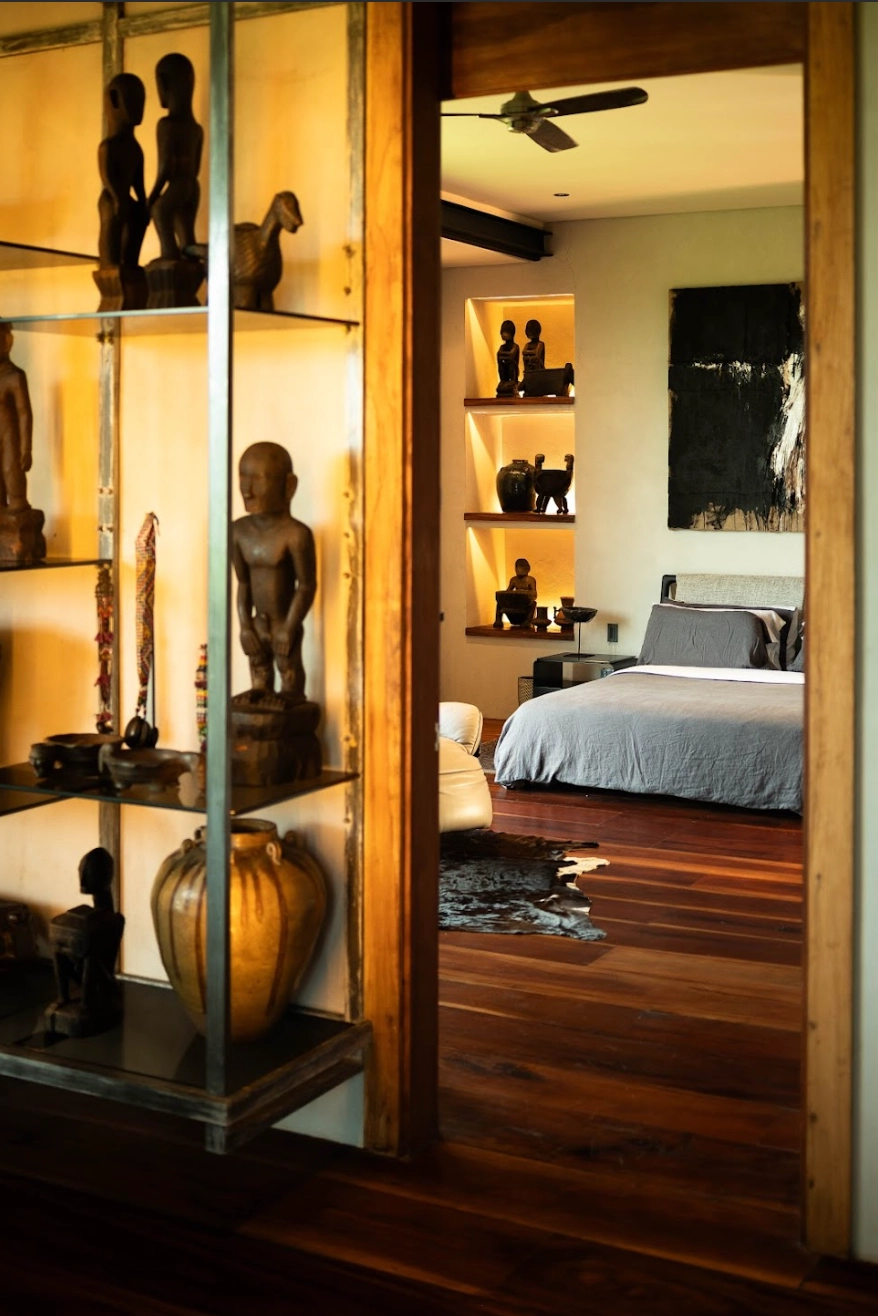
The sleeping quarters are detached from the common areas to allow for a restorative slumber while surrounded by natural vistas. From the ground-floor deck, a spiral staircase leads to a guest bedroom below. Another is located a few steps down a gentle slope. Clinging to a precipice, the master’s bedroom is accessible by a walkway that floats one story above ground.
In the years following the completion of the main house, Gopiao added an Ifugao village on a hill that overlooks another striking feature in the property—a manmade lake where Elmer Borlongan’s bronze sculpture depicts men playfully wrestling amid giant Victoria Amazonica lilies and water banana plants. The place also acquired a name—Binhi at Lahi—binhi, meaning seed or seedling, and lahi, which means ancestry. It was suggested by Gopiao’s good friend, the late playwright, theater director, and ethnographic expert Floy Quintos.
Quintos came up with the name while visiting to discuss plans for a museum that will house Gopiao’s bulul collection. “He said, ‘You need to look at this whole thing as an integrated facility,’” Gopiao recalls. “He asked me what my intention was for the place. I told him I want it to be a repository for ethnographic objects and a sanctuary for endemic trees and flora, like the local stag horn and the giant pitcher plant. So it’s not just a rest house, but also a place for regeneration, agriculturally, culturally. That’s why we incorporated the pitcher plant into the logo of Binhi at Lahi.”
This idea is reinforced at every turn. With nature, art, and artifacts all around, Binhi at Lahi signals a transition to a different world where one pauses to take in all that it has to offer. There will be more to marvel at in the future. Apart from the bulul museum, Binhi at Lahi will soon include seven hectares of land surrounded by streams and several waterfalls dedicated to growing and reintroducing Philippine orchids, with the help of orchid enthusiasts and experts Kevin Manubay and Vangie Go.
Despite its massive spread, Binhi at Lahi feels intimate and personal. “That’s because I used things that I love, which I’ve been collecting for decades,” Gopiao says, “from the artworks to the antiques and plants you find here. This is really an homage to nature and our ancestry.
Photos: Johann Guasch