At L’Apogée Courchevel, Kelly Wearstler Turns to Form and Material


American interior designer Kelly Wearstler has long built her reputation on interiors that balance theatricality with a grounded sense of place. At L’Apogée Courchevel, her first European hospitality commission and her debut in an alpine setting, that sensibility finds a new register. Introduced in December 2025, the redesign spans five interconnected dining spaces, each conceived as part of a larger architectural narrative shaped by the terrain of the French Alps.
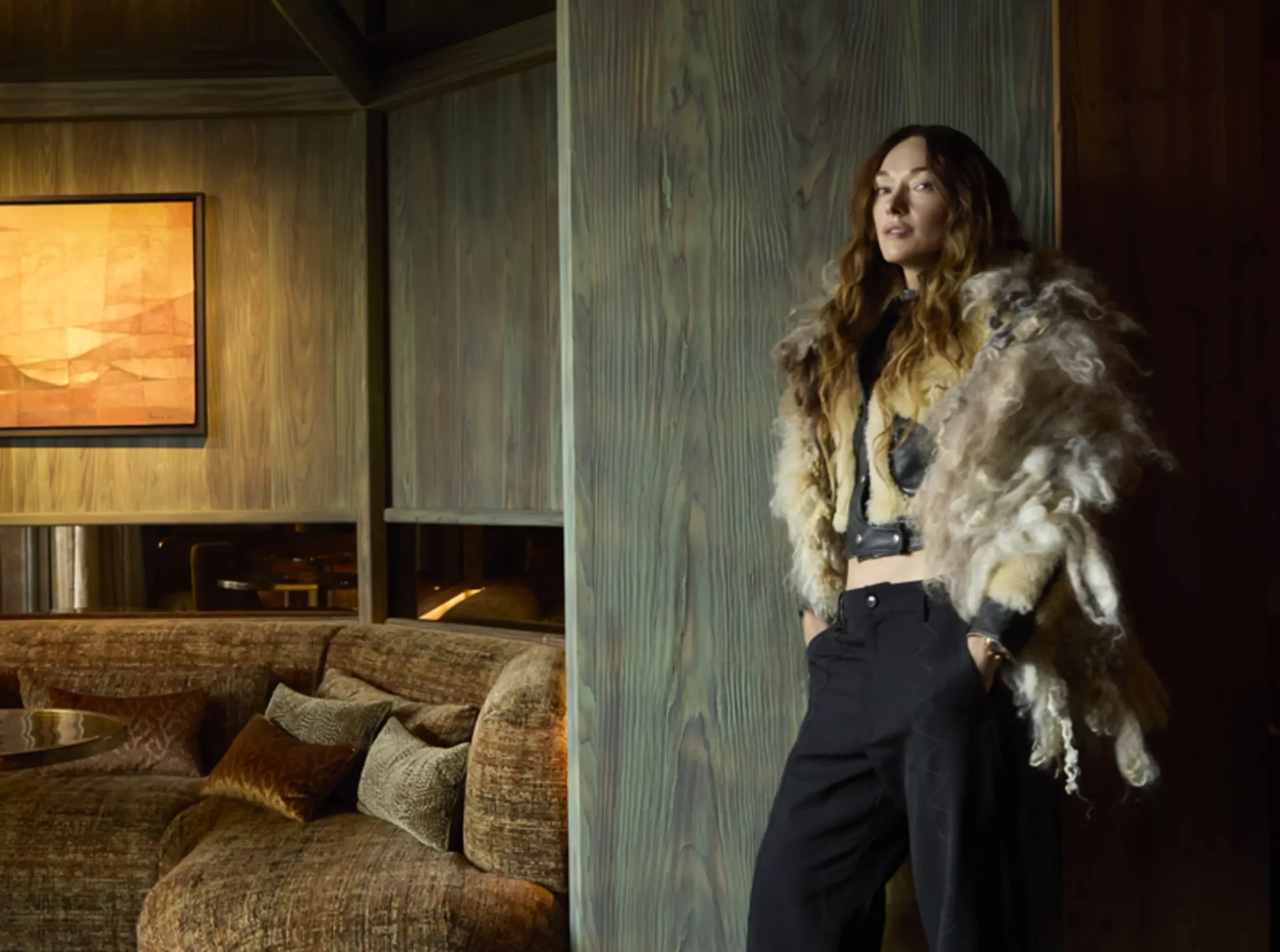
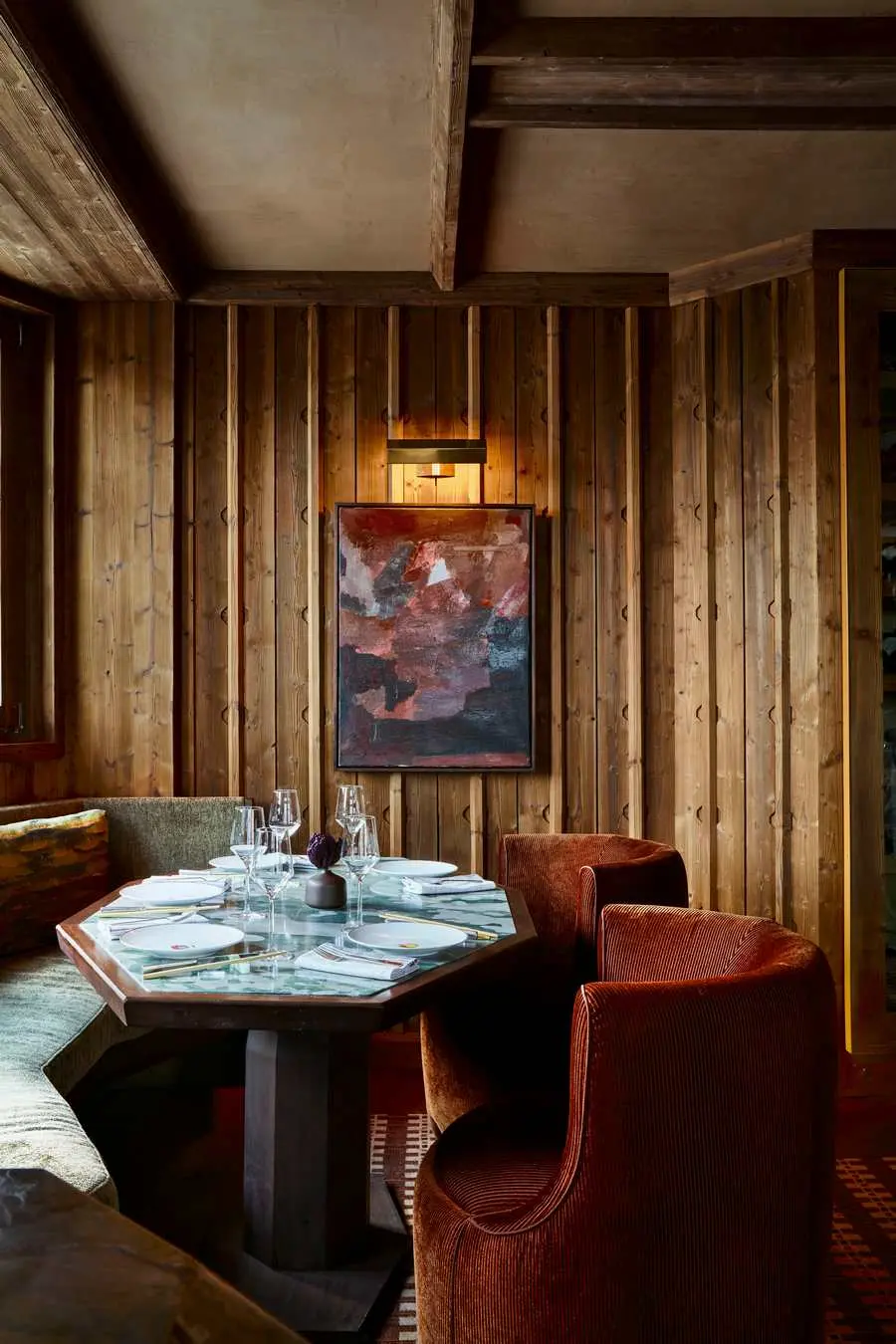
Wearstler approached the project with an interest in having the landscape’s drama translate indoors. Rather than leaning into rustic chalet nostalgia (pinewood beams, animal hide), she drew from the weight and geometry of Brutalist architecture, tempering its severity through texture, warmth, and a palette that draws from the surrounding environment; the result is an intelligent composition in interiors that can stand toe-to-toe with the Alps outside. Deep greens, charcoal, ochre, and garnet establish a tonal framework that mirrors the alpine terrain across seasons, while near-black stone, brushed woods, and dense natural textiles introduce depth and tactility. The spaces feel anchored and shaped by materials as much as by color.
“The French Alps provided a remarkable canvas for my first European hospitality project—I’ve long dreamed of creating a space in Europe, and it is truly special to pair this debut with my first alpine project, too. I’m so excited to bring my vision to L’Apogée Courchevel, crafting dining spaces that honor the strength and natural beauty of the Alps while offering warmth, intimacy, and a soulful sense of place,” Wearstler said.
Furniture and objects play a crucial role in reinforcing that sense of place. Wearstler collaborated with dealers and artisans across Europe to assemble a mix of vintageVintageVintage refers to the specific year a wine's grapes were harvested, with exceptional vintages reflecting particularly favorable growing season conditions within a given region and year. Serious collectors track vintageGo to Vintage Glossary pieces and custom designs, allowing the interiors to carry a layered quality that mixes history with the contemporary. The result is an environment that reads as sculptural yet lived-in, with each room offering a slightly different interpretation of the overarching concept.
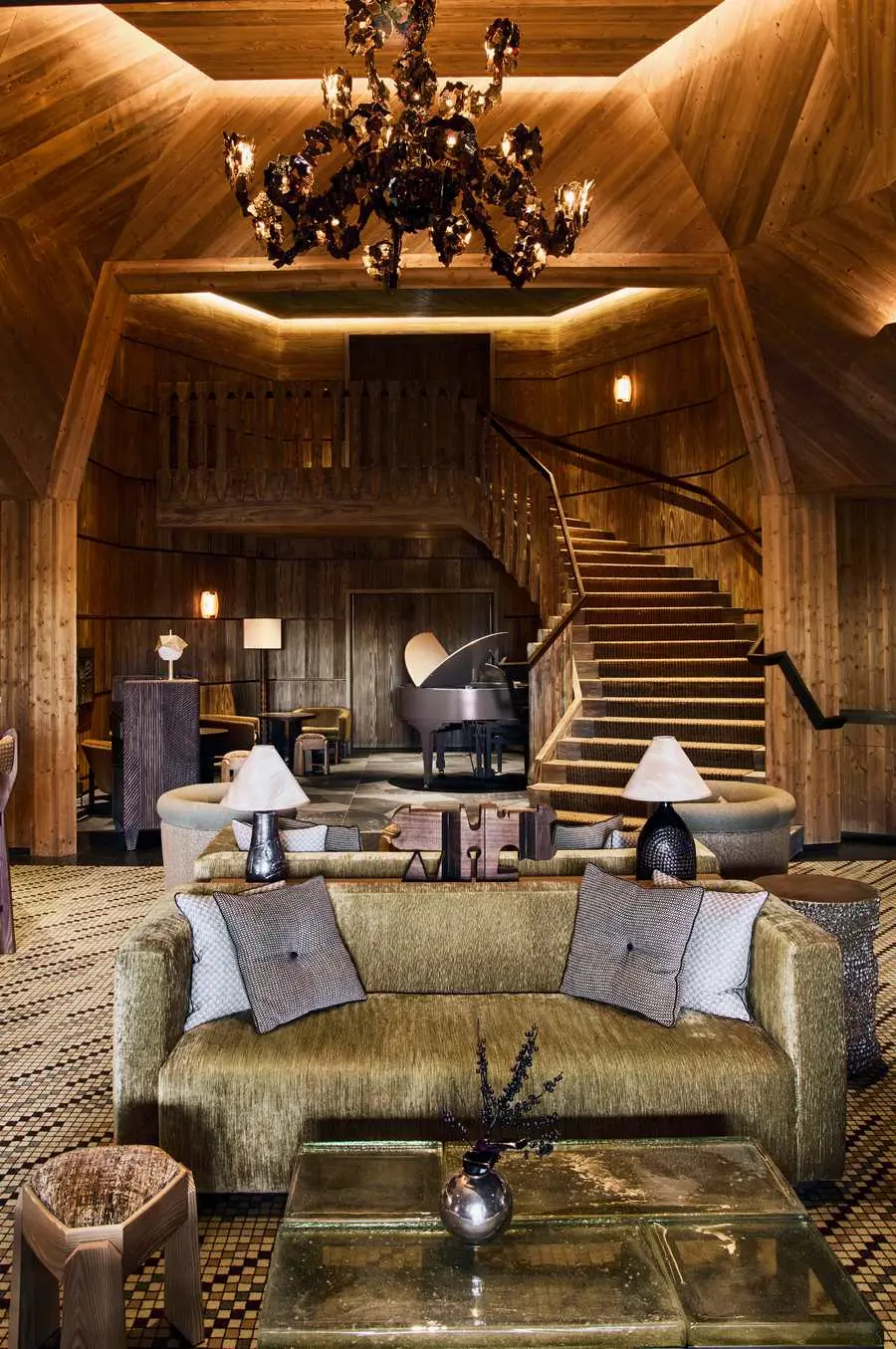
In the Piano Lounge, a custom staircase and angular balustrades establish the project’s Brutalist architectural language. Charred pine cladding wraps the double-height walls, creating texture not only for its own sake but for acoustics, softening sound and drawing attention to a bespoke Edelweiss piano at the center of the room.
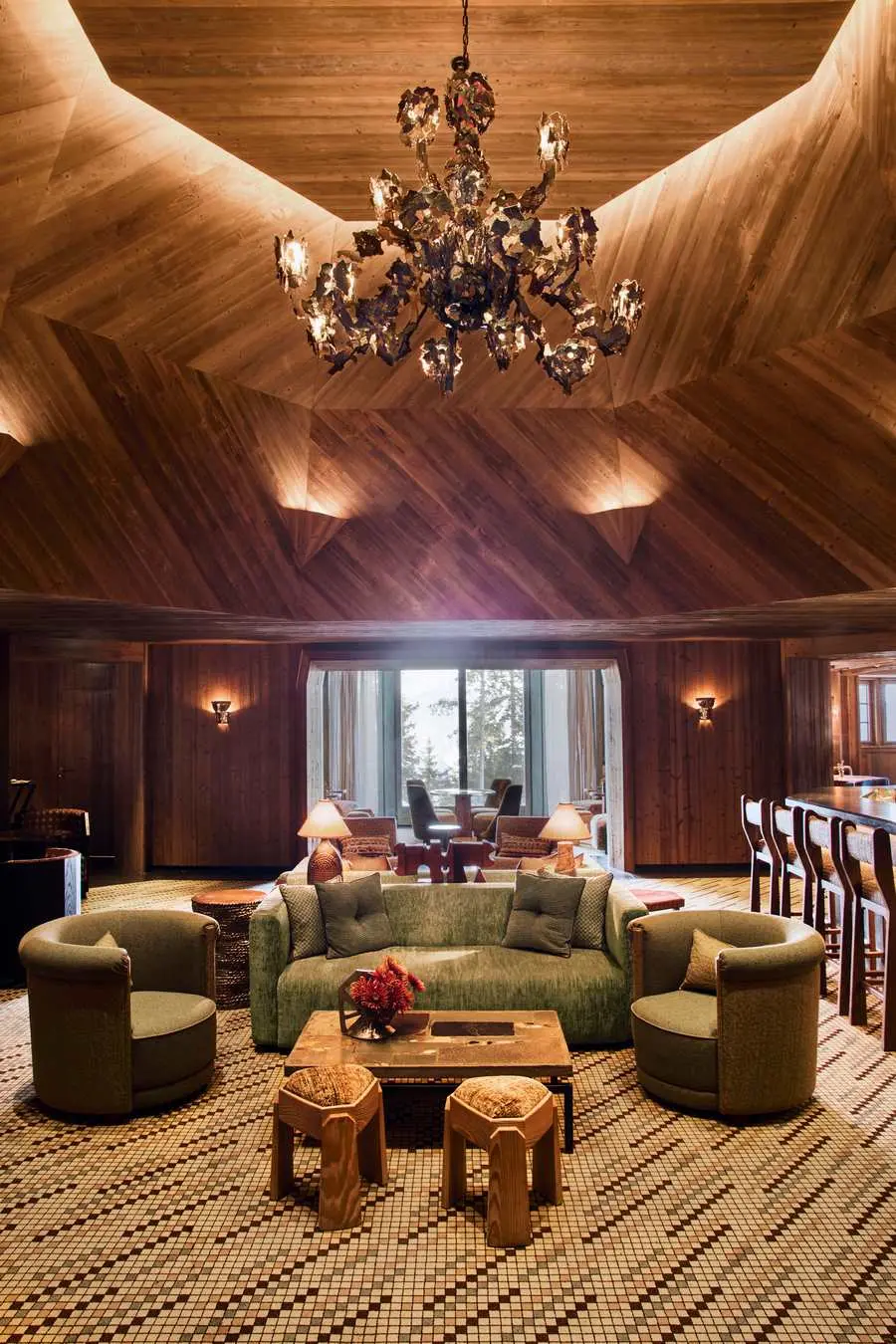
Nearby, the Central Bar introduces a more relaxed mood with vintage pine seating and a statement chandelier by Paris-born designer Nathalie Ziegler, composed of blown glass elements.
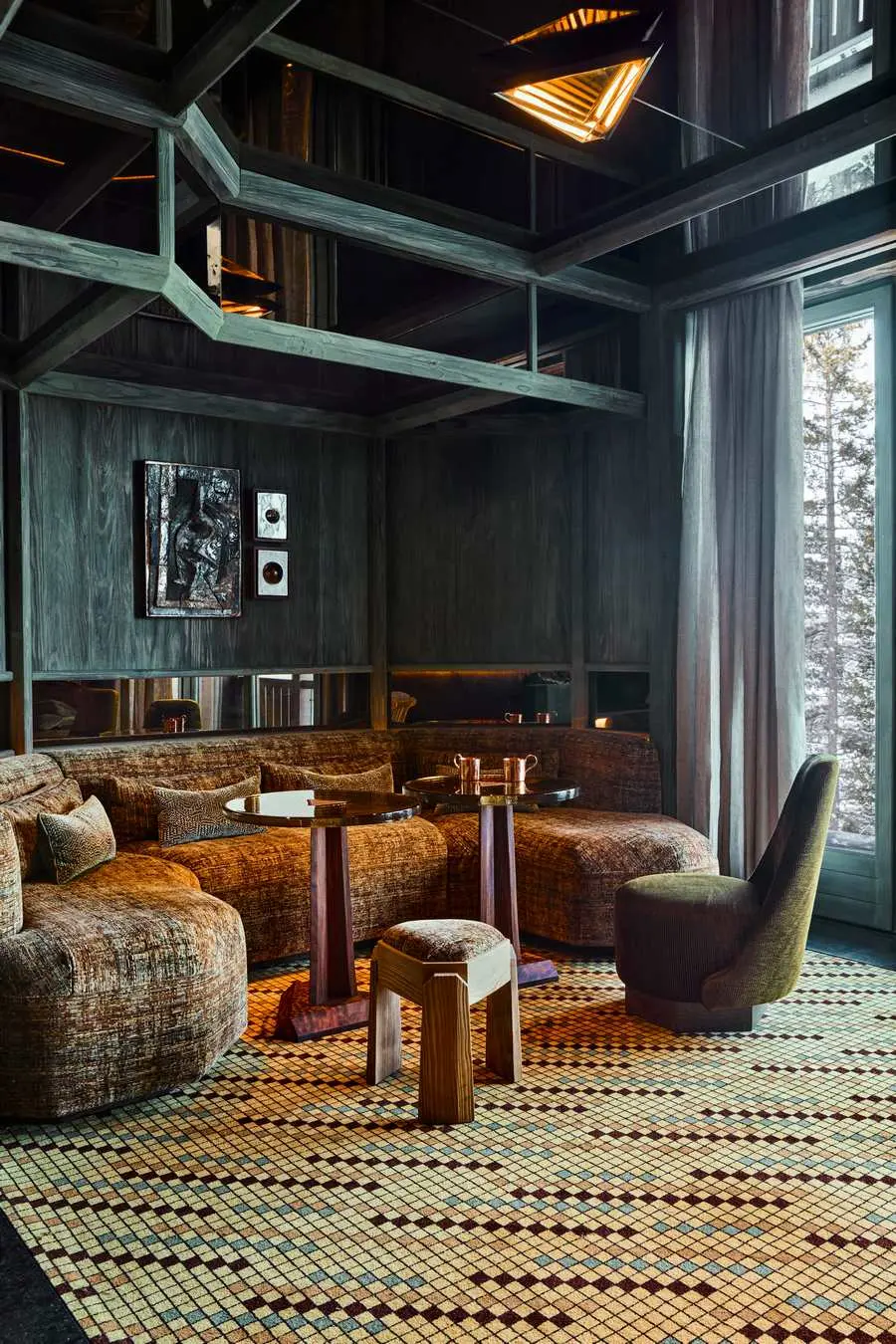
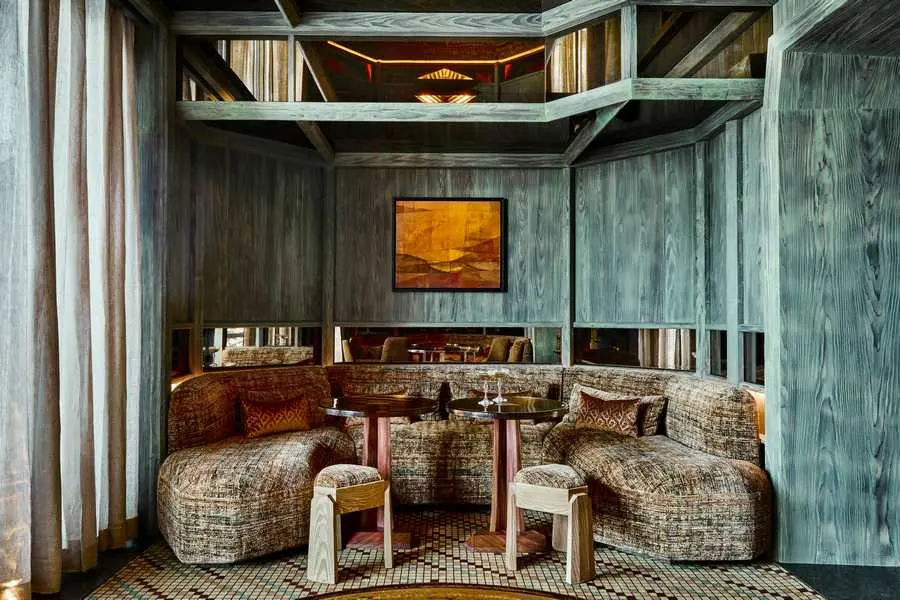
In the Salon, low banquettes and mirrored surfaces interact with subdued lighting to create a space that feels cozy yet sophisticated, while expansive windows maintain a visual connection to the mountains beyond.
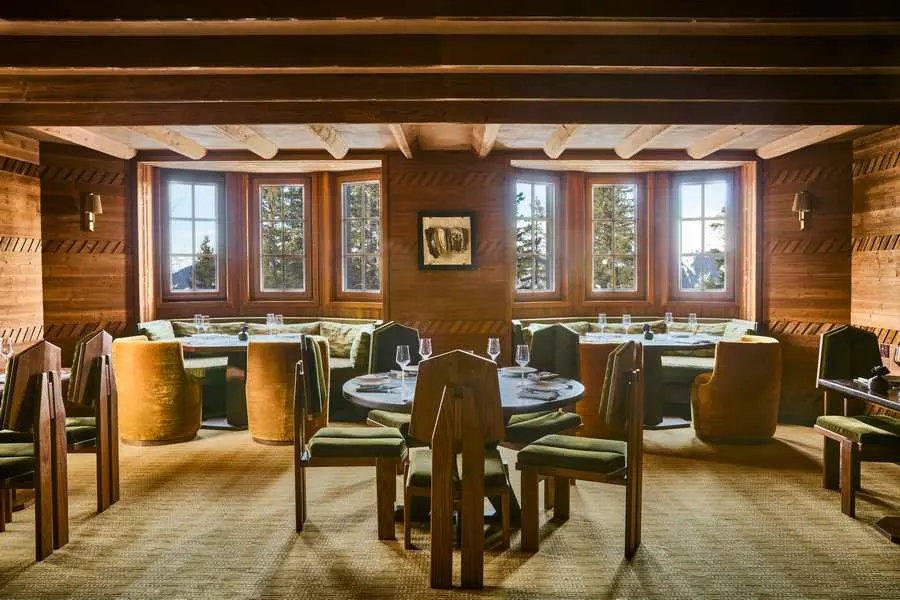
The East and West Dining Rooms of Beefbar continue the dialogue between structure and warmth. Wood cladding and window seating frame views of the landscape, allowing the alpine setting in.
With the winter ski season past the halfway point, the redesign stands as a study in how alpine hospitality can move beyond rustic tropes toward something more architectural and enduring. Wearstler’s intervention positions the dining rooms as places to gather after a day on the slopes, as well as spaces that hold their own sense of gravity long after the snow recedes.
More information at L’Apogee website.