Here’s What Our Editors Recommend Not to Miss at ALT Philippines This Weekend


Art fairs reward stamina, but they reward discernment even more. With its tightly curated roster and strong gallery program, ALT Philippines, Robb Report Philippines’ Best of the Best Awardee for the Collective category, offers plenty worth seeing at this year’s edition of ALT Art—if you know where to look. Here, our editors highlight the works, booths, and conversations that merit a closer pause (KoloWn’s “ghost_control” figures twice), whether you’re collecting, observing market signals, or simply tracking the artists shaping the region’s contemporary voice.
Yvette Fernandez, Chief of Editorial Content
Enjoyed the afternoon wandering through ALT’s 5,000 square meters of exhibition spaces and projects celebrating Filipino contemporary art.
This time, the works that caught my eye were those with dimension and texture.
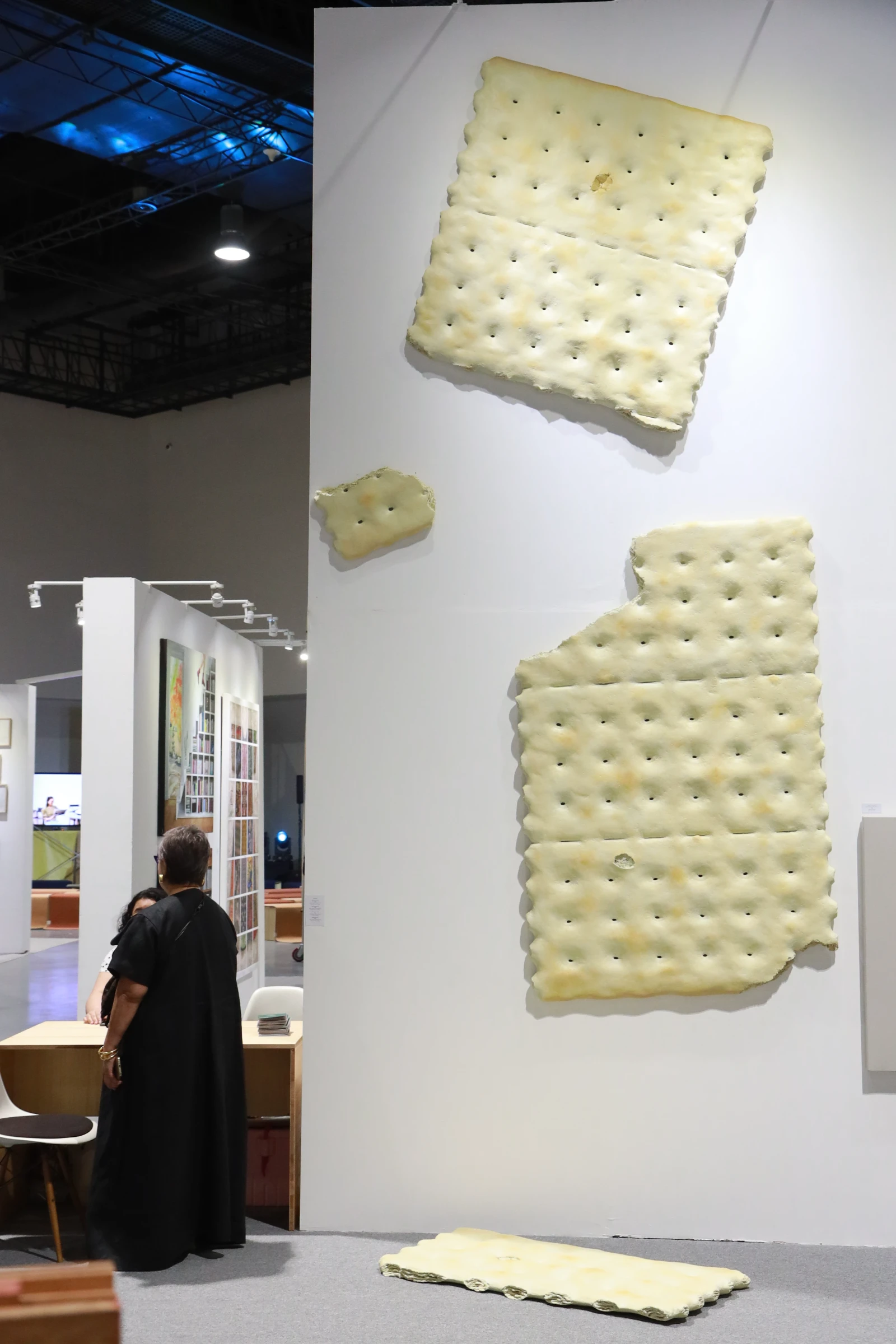
A giant saltine cracker made of fiber-reinforced resin and acrylic at Finale Art File by Lindslee resembles a favorite snack on steroids, part of a series entitled Tawid Gutom.
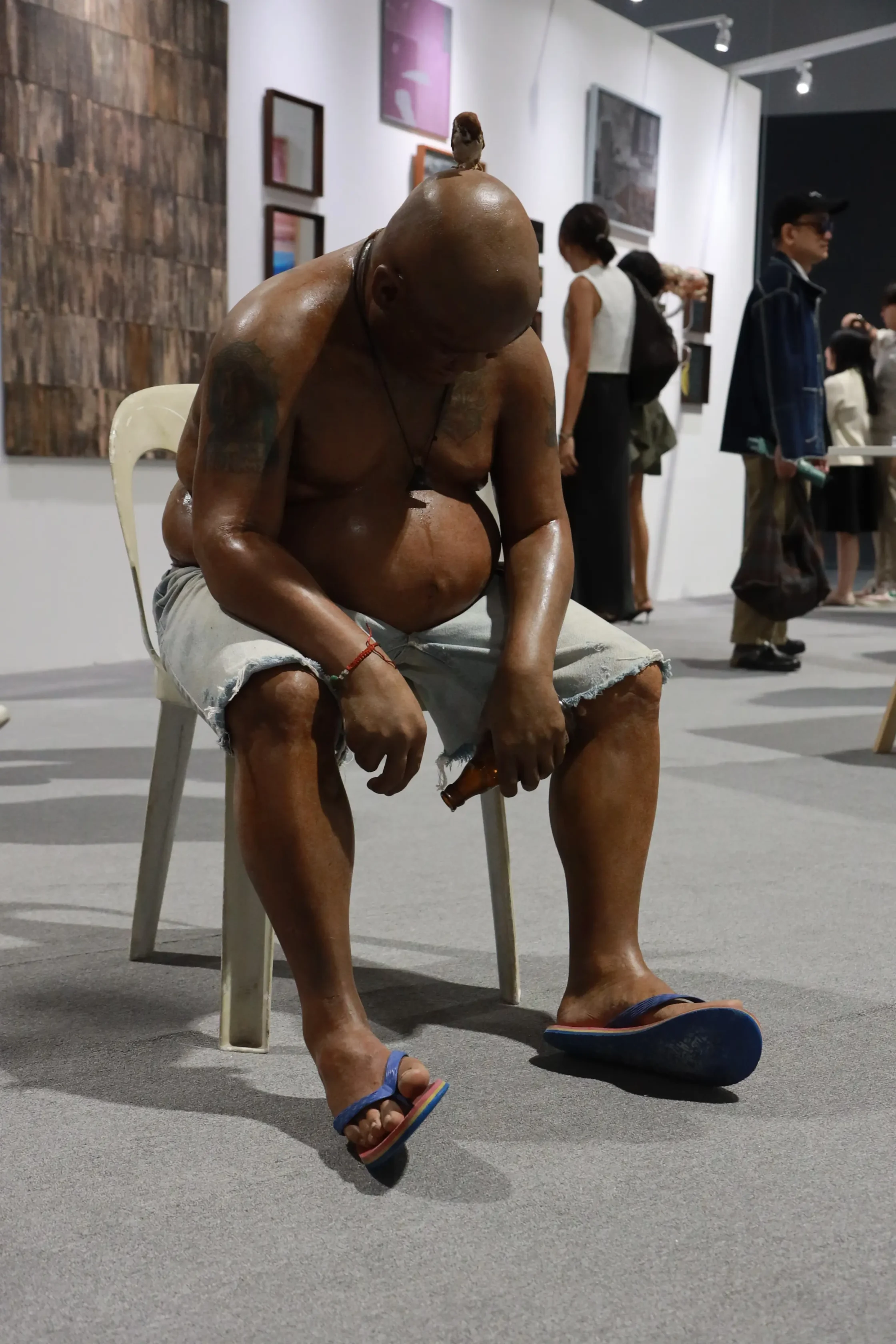
Down at ArtInformal, crowds gathered around another work by the same artist: an incredibly realistic, life-size figure of a tattooed man with sweat-slicked folds of extra fat around his distended waist. Wearing tattered denim shorts and rubber slippers, he is crouched on a plastic monobloc chair in a pose that suggests exhaustion or despair.
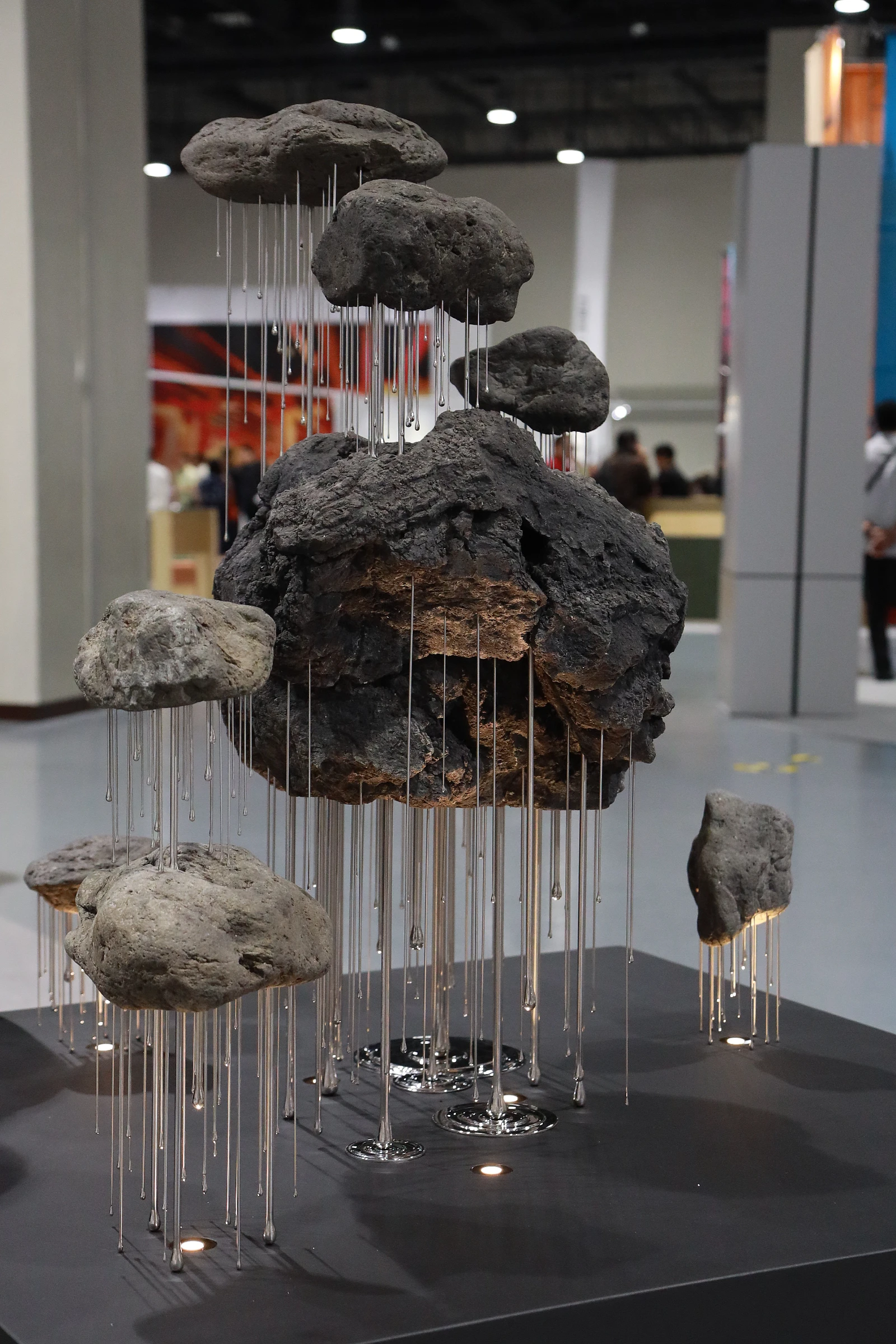
“Nimbus,” a work by Reg Yuson at West Gallery, shows heavy rocks appearing weightless, seemingly floating in the air, held up by droplets of stainless steel.
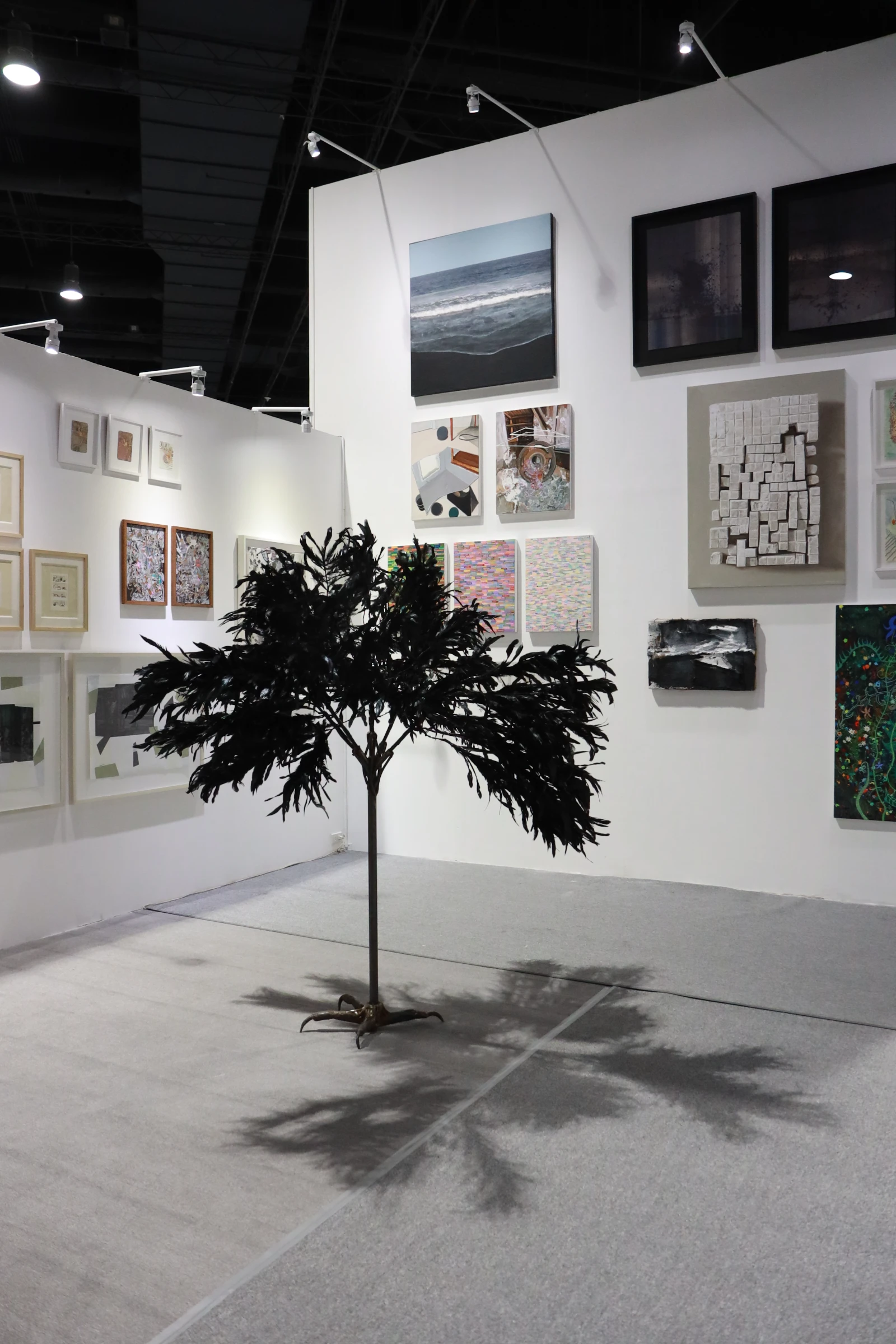
At The Drawing Room, an eerie black tree with feather leaves stabilized by bird claws, created by Lilibeth Cuenca Rasmussen, looks like a prop straight out of a Tim Burton film.
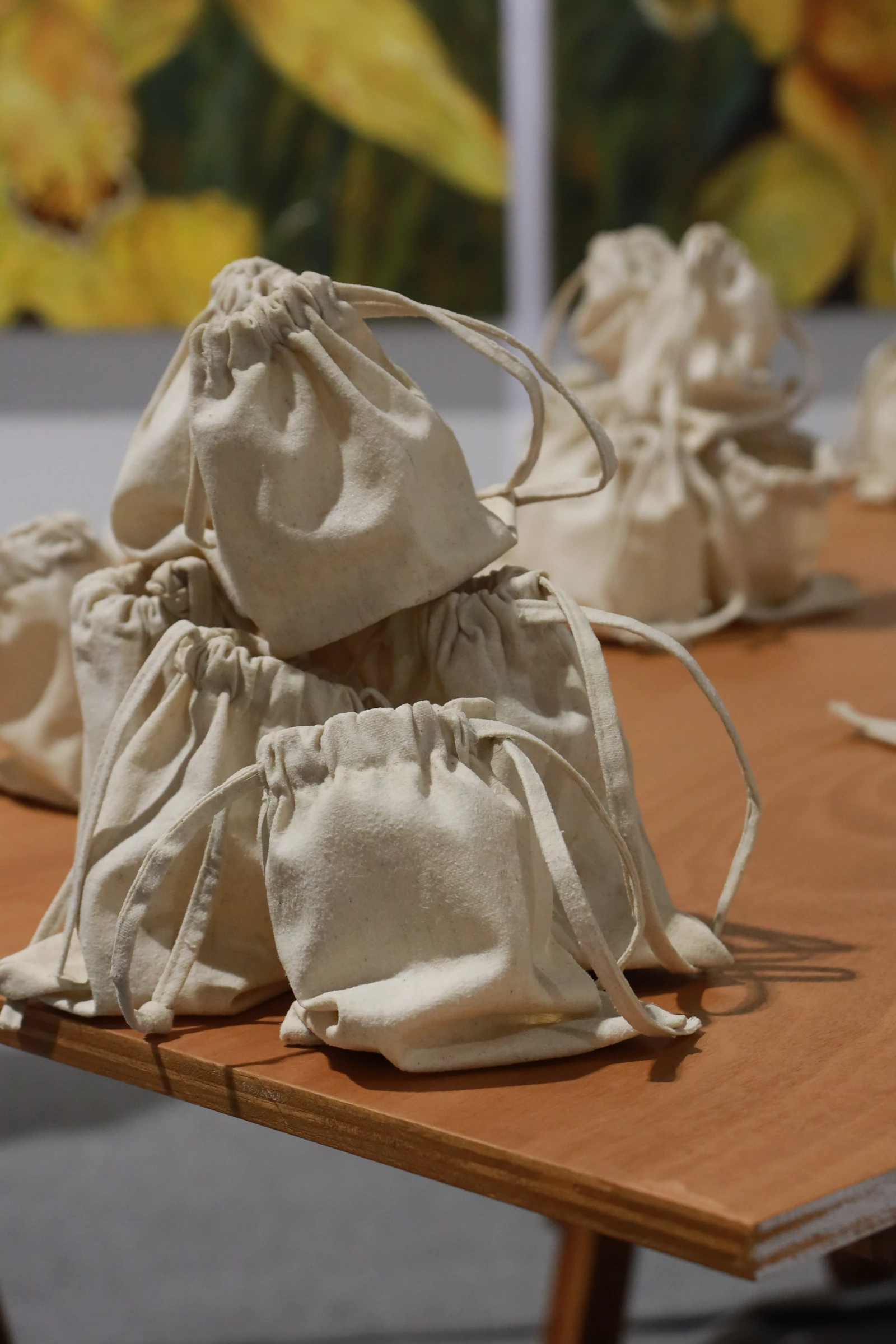
And at MO_space, canvas bags coated in resin by Jose Santos III evoke both mystery and nothingness.
Bryle Suralta, Features Editor
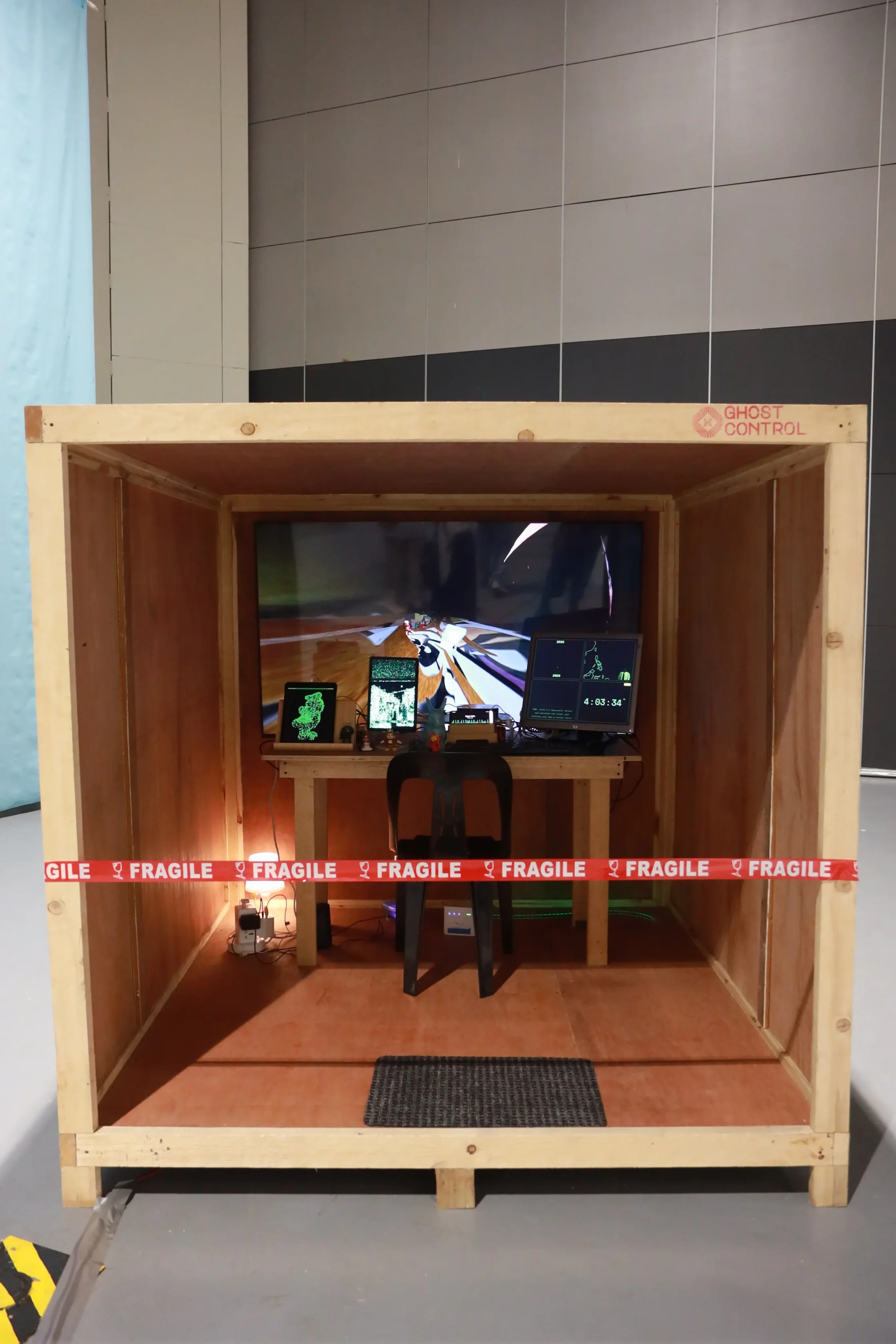
At The Drawing Room, “ghost_control” stages the contemporary worker as both operator and apparition—present in the system, yet strangely absent from the spaces that supposedly contain “work.” By turning the remote workstation into an interactive installation, the artist (the still-unmasked KoloWn, a Thirteen Artists Awardee) cleverly exposes how algorithmic infrastructures choreograph our rhythms of productivity while quietly dissolving the line between autonomy and surveillance.
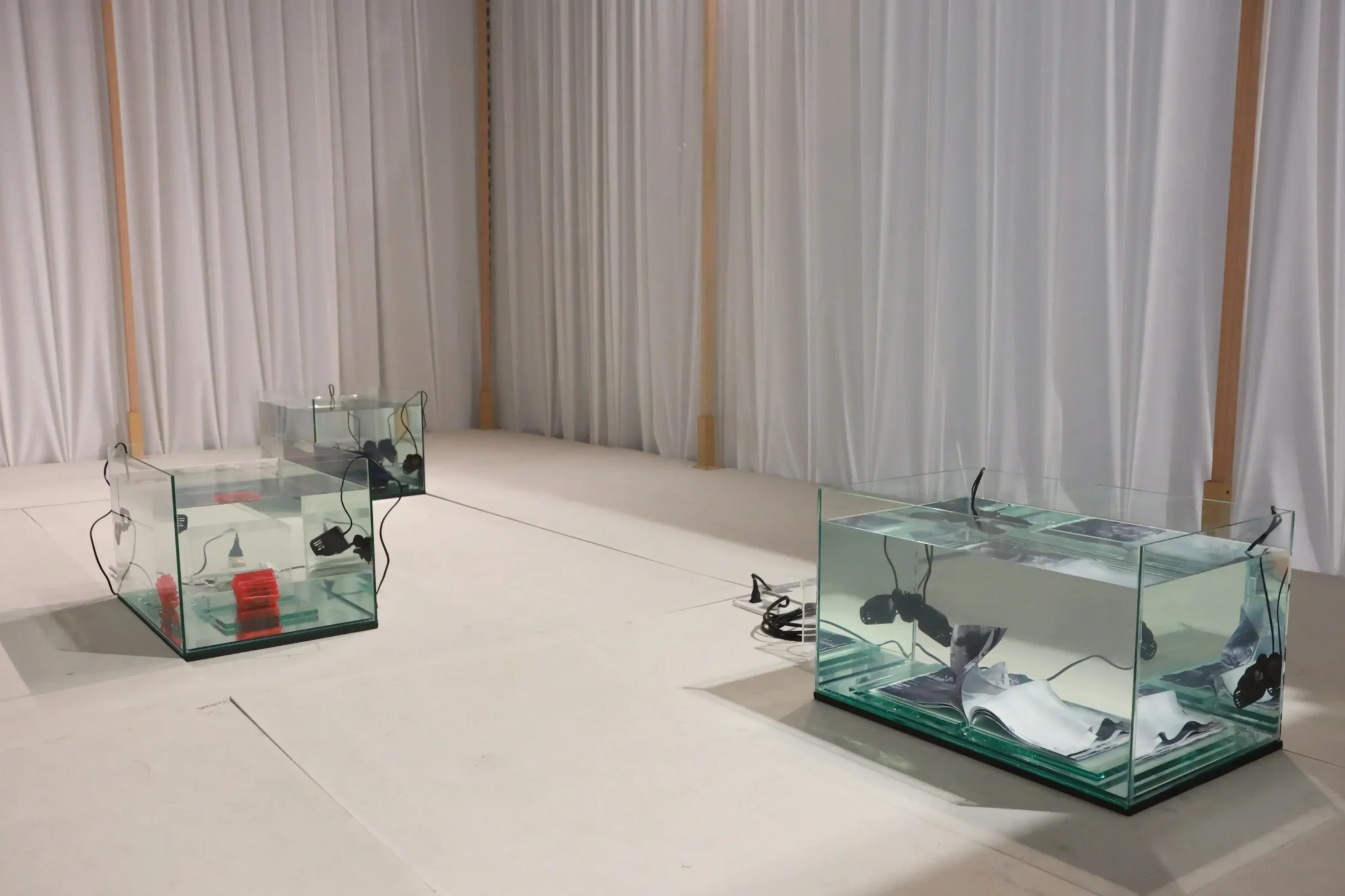
“Amphibian Palm” by Lesley-Anne Cao at Underground Gallery feels like a speculative organism, something midway through evolution, testing the boundaries of where life is allowed to root. The work’s quiet tension lies in its suggestion that adaptability, not stability, has become the primary survival skill of our ecological moment. It is a small but incisive reminder that the future may not favor what stands firm, but what learns to shift shape.
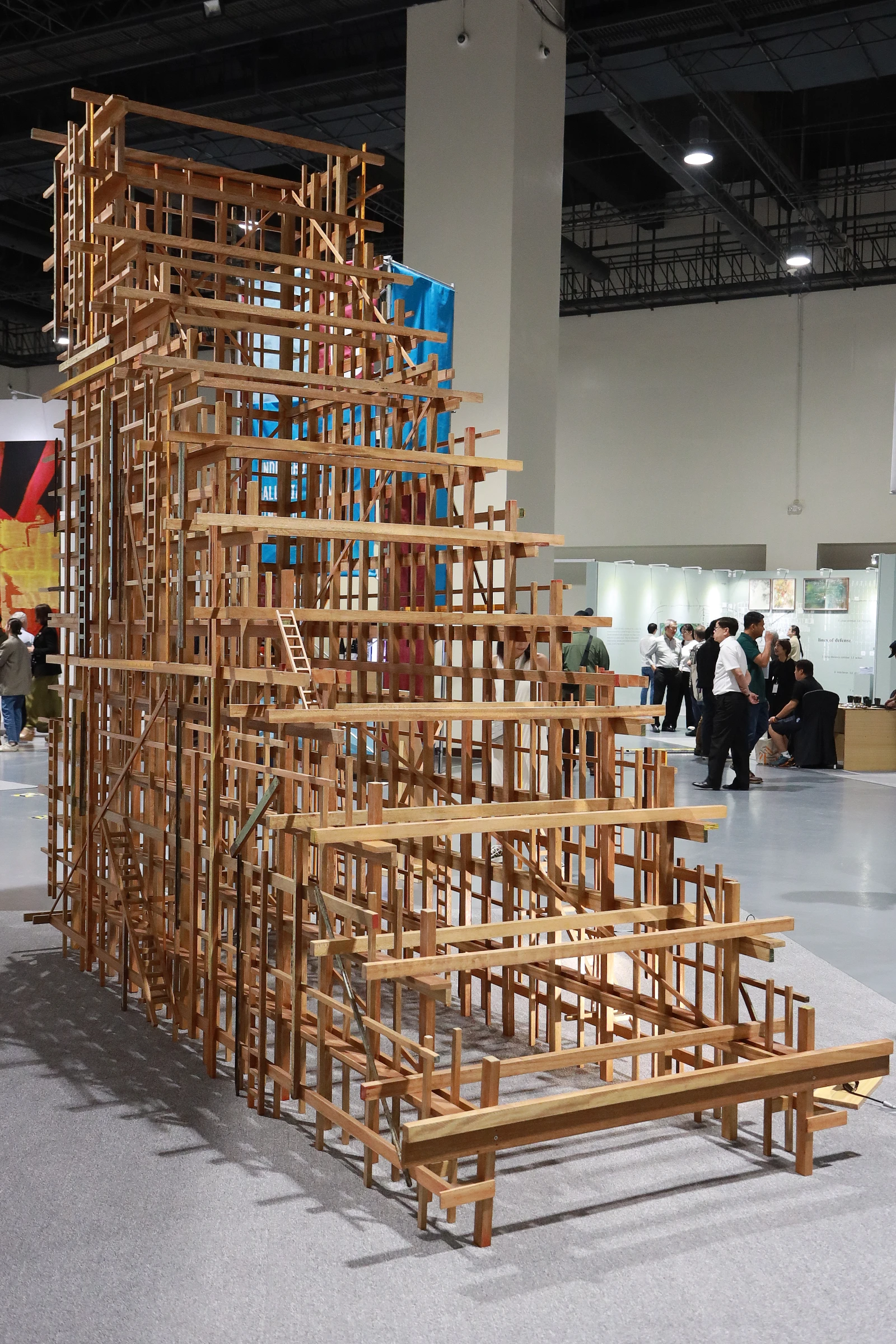
In “Still We Hope,” Christina Quisumbing Ramilo‘s work presented at the Artinformal booth, constructs a staircase that promises ascent minus the promise of arrival, turning architecture into a meditation on the choreography of desire and expectation. The work captures that distinctly human feeling of reaching towards elsewhere, even when the structure of reality offers no guarantee of resolution. A kind of impossible climb to God knows where.
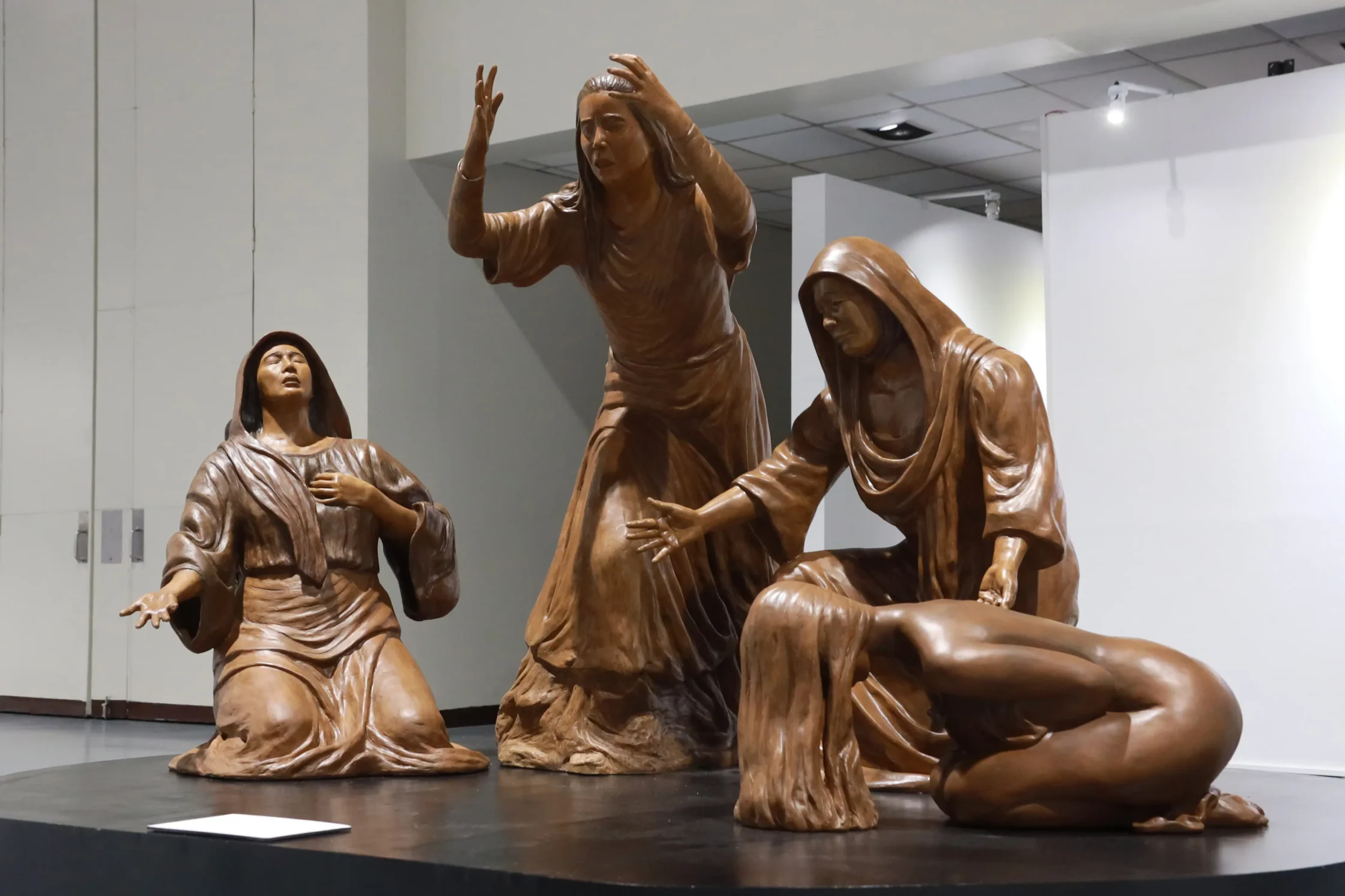
“Lamentations” reminds me why Julie Lluch has long stood as one of my personal touchstones: few artists working today can still command the human figure with this much mythic gravity without tipping into theatrical excess. The cold-cast marble bodies at Galleria Duemila feel summoned (ITALS), each gesture earned, holding the weight of allegory while remaining intensely, painfully human.
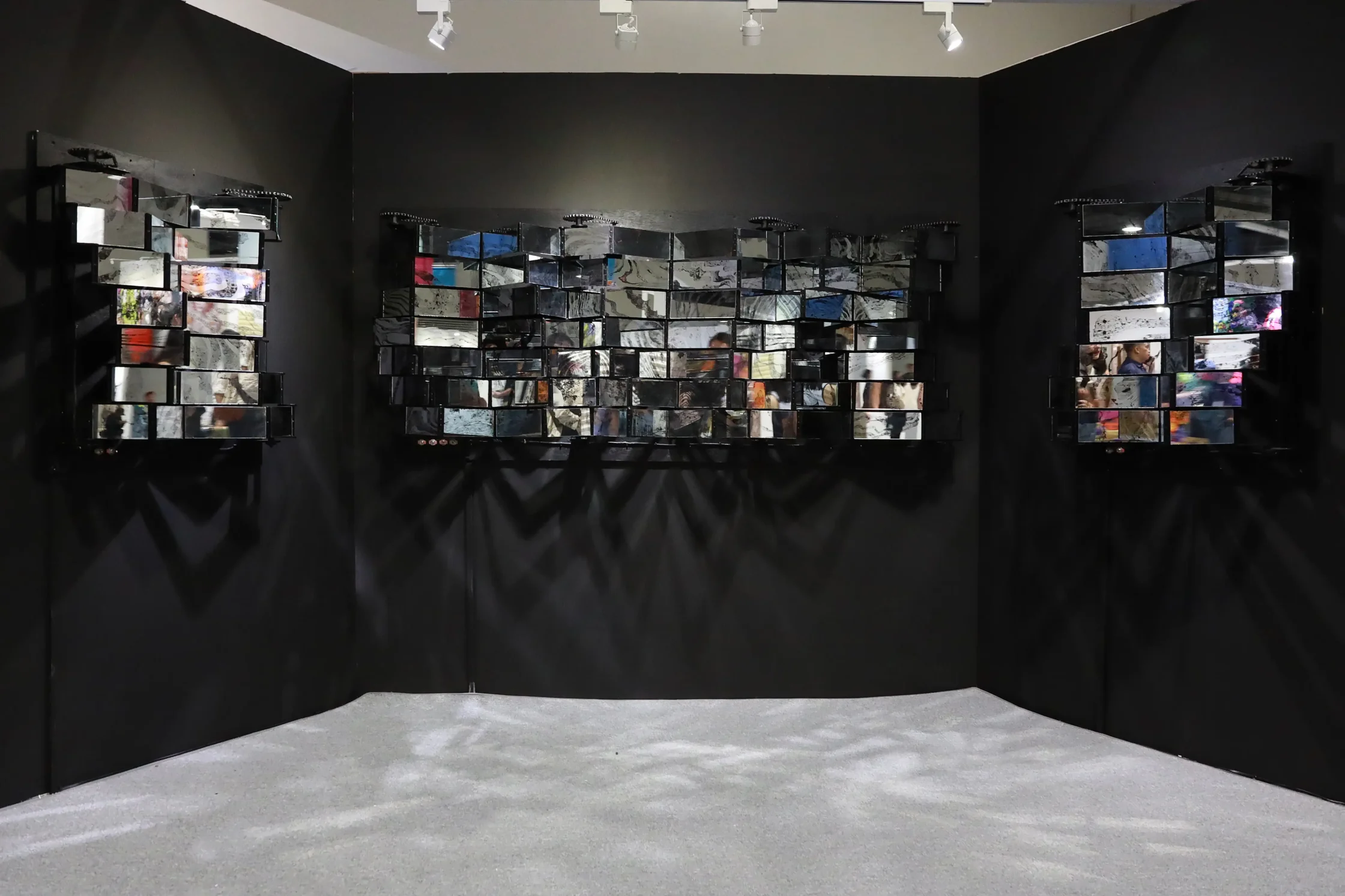
As the fractured panels pulse in asynchronous rhythms, the viewer of Marco Ortiga (ALT Discoveries) “Unstable Waters” is left chasing a self-image that never really settles—quite the metaphor for a moment defined by ecological disturbance and psychological drift. What Ortiga ultimately offers is this unease, a fleeting realization that even the act of seeing oneself has become subject to turbulence.
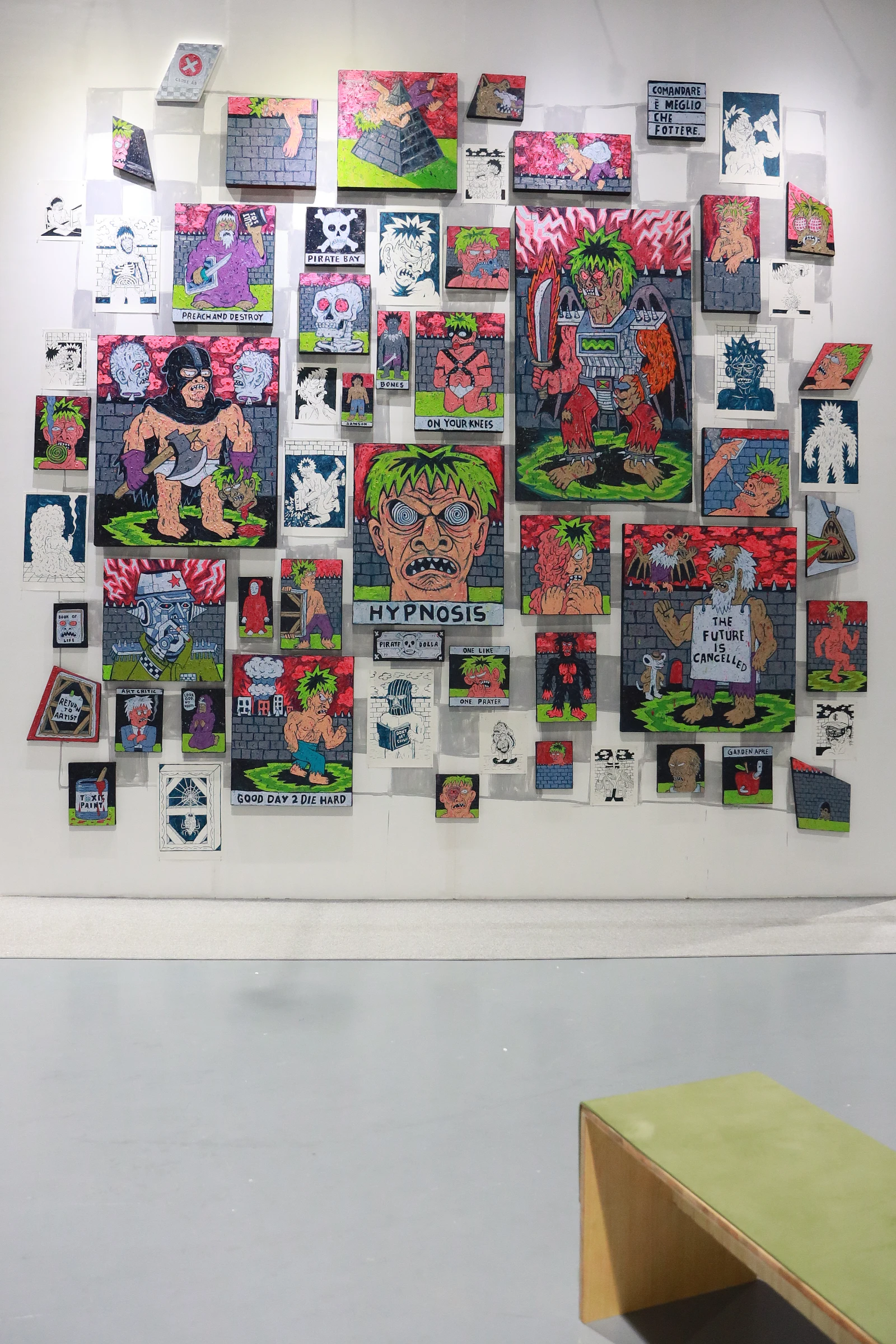
Roger Mond at Vinyl on Vinyl mischievously collapses internet detritus, pop nostalgia, and localized translation culture into a single conceptual punchline with “Diary_of_ a_wimpy_kid_HD1080p_tagalog_dub.” The humor lands, yes, but what lingers is the recognition of how culture actually circulates in our region. Call it an ethnography of piracy, where the bootleg file becomes the true language of contemporary spectatorship.
Mick Gaw, Contributor
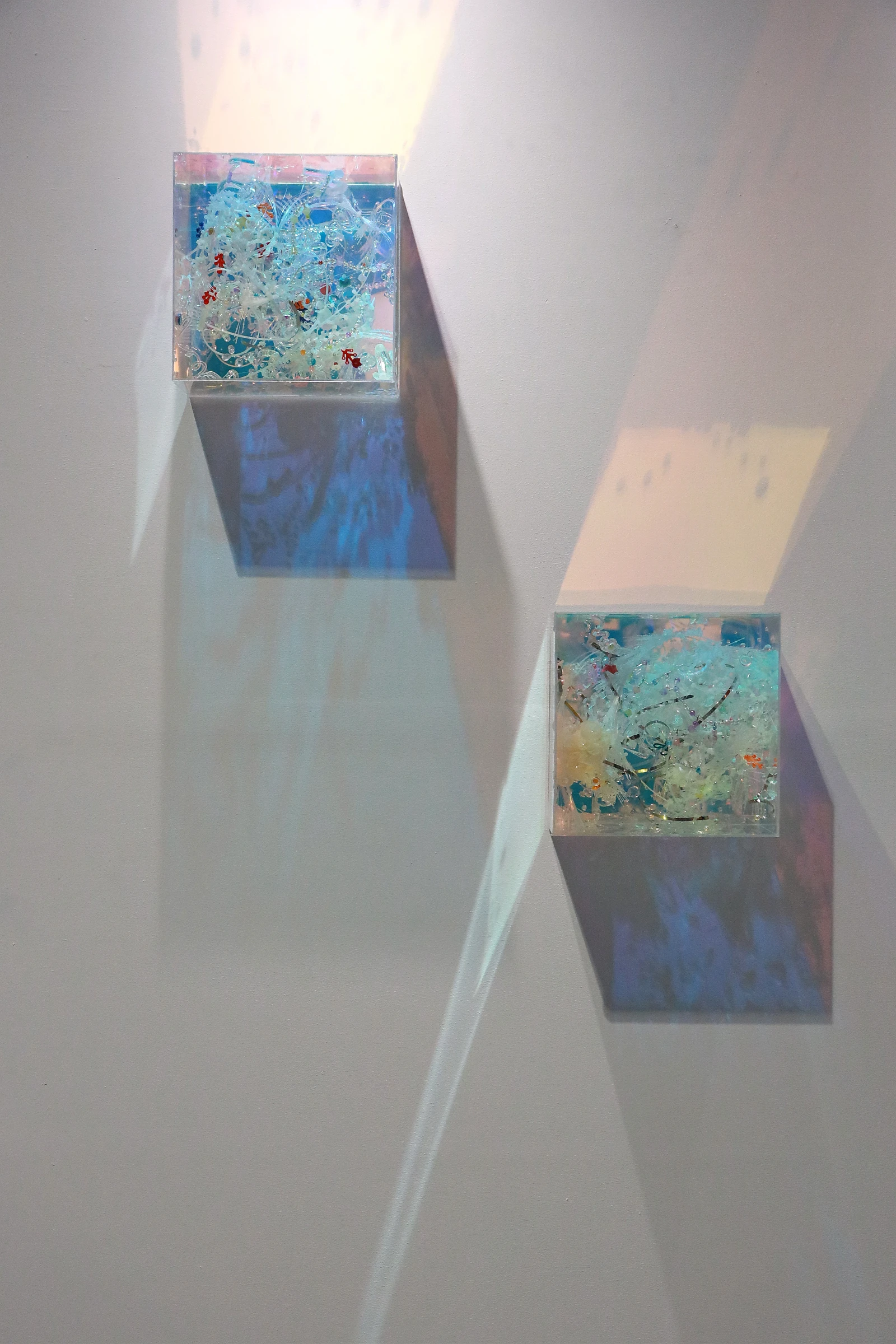
Previously displayed as part of The Drawing Room’s Tokyo Gendai 2025 presentation, Kelli Maeshiro’s “The Neon Sign” and “The Clouds Hung Around” are a pair of works that belong to her “Remainders of a Shooting Star” series. The see-through cubes, which are filled with items like zipties, plastic charms and metallic strips, have a hypnotic quality. Visitors are bound to get lost in the luminescent worlds within Maeshiro’s glossy fossils.
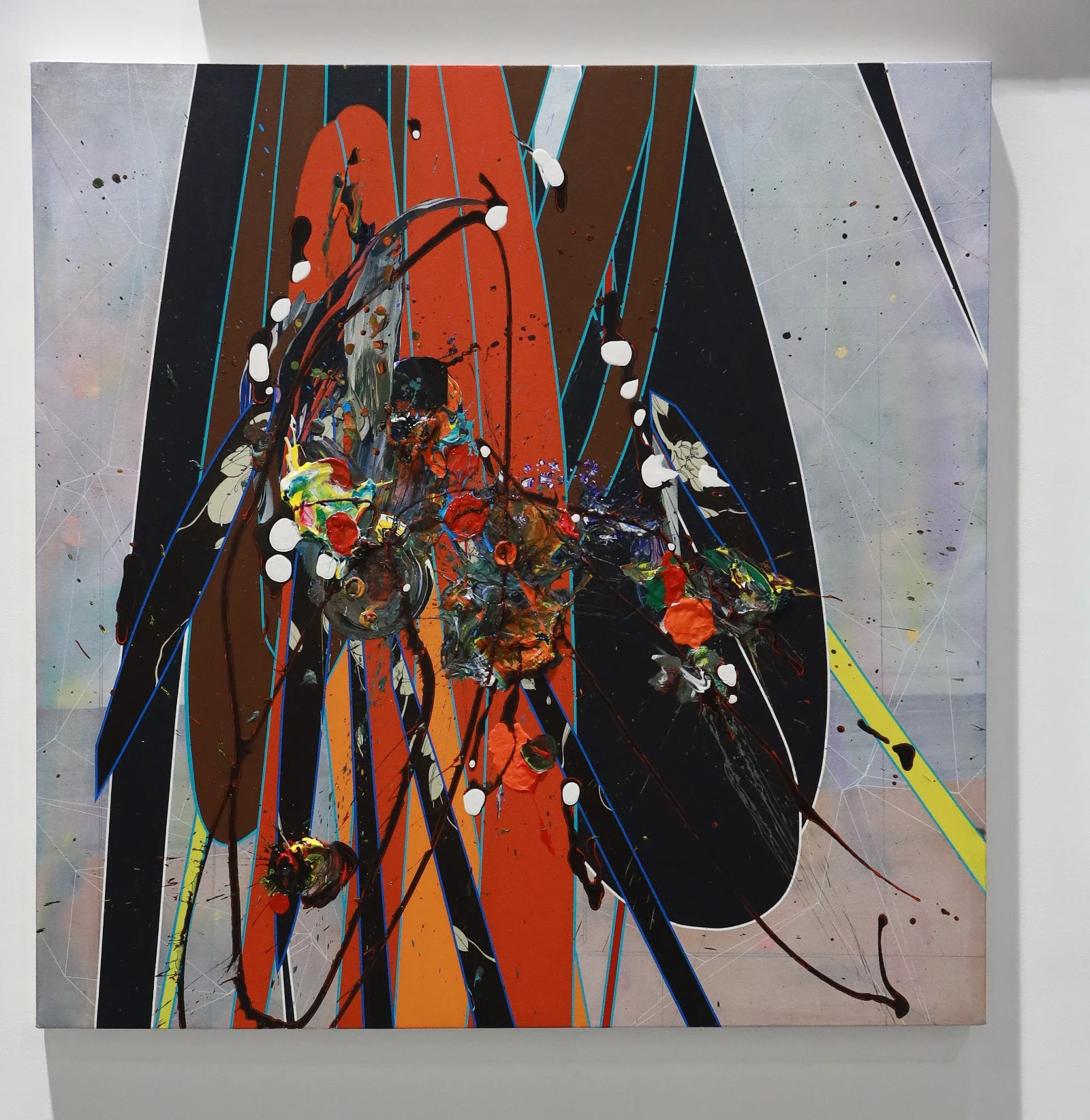
One of the latest editions to visual artist Clarence Chun’s oeuvre of abstract paintings is “On how time flies with crystal dear eyes.” The canvas is covered in his trademark clash of vibrant tones, printer-like handpainted geometries and erratic, yet intentional, paint splatters. Chun’s work is layered not just with formal precision, but also profoundly expressive emotional potentials.
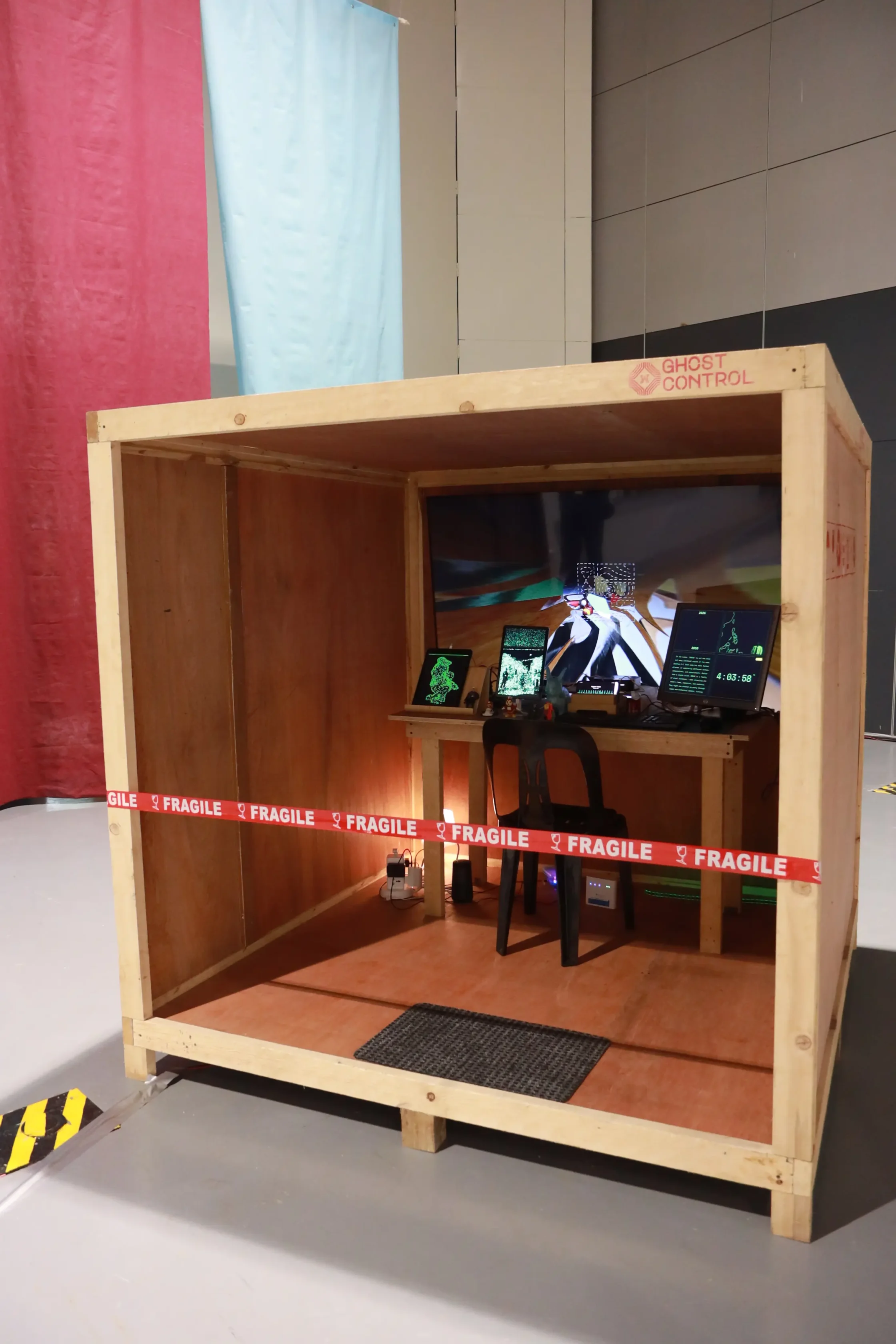
In this latest iteration of their internationally exhibited “ghost_control” series, Cebu-based KoloWn’s installation “ghost_control2026” continues KoloWn’s urgent artistic exploration of contemporary algorithmic rhythms, how they regulate shifting labour realities between physical and cyberspace. The installation also features an interactive minigame which visitors can play with using their smartphones.
ALT Art 2026 runs through this weekend until February 15, 2026 from 11AM to 7PM at SMX Convention Center Halls 1 & 2, Mall of Asia Complex. For more information, visit their website.
Photographs by Medal Elepano