Best of the Best: Art


An immaculate golf course became an unlikely stage for one of the year’s sharpest examinations of Philippine society. In Rafael Manuel’s Filipiñana, carefully observed rituals revealed the peculiar arrangements of class and privilege that govern life beyond the fairways.
Imelda Cajipe Endaya has pursued a similarly critical inquiry for five decades. Across painting, printmaking, and installation, she interrogates the structures of power that determine whose lives become visible and whose histories enter the national consciousness.
Manila, meanwhile, welcomed three decades of Olafur Eliasson’s work through “Your curious journey” at the Museum of Contemporary Art and Design.
With Liyab, Ryan Cayabyab’s extraordinary songbook filled The Theatre at Solaire, its familiar melodies carried by an orchestra and 200 voices. Few occasions could better demonstrate how deeply art settles into the ordinary experience of being Filipino.
Our Best of the Best selections celebrate the artists and institutions that made 2026 a consequential year for Philippine culture.
Best of the Best: Imelda Cajipe Endaya
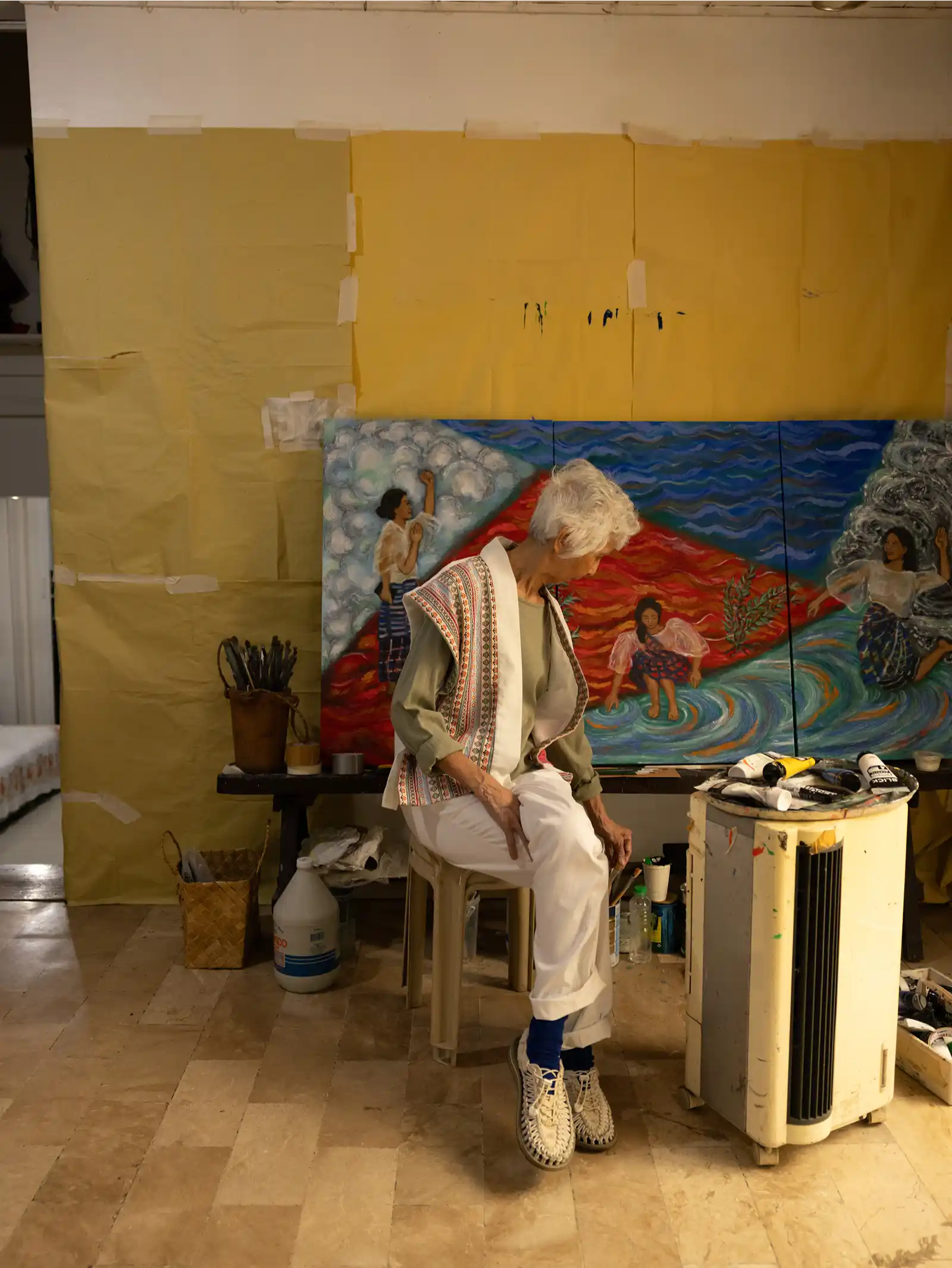
Few years could have provided a more fitting summation of Imelda Cajipe Endaya’s five-decade practice than 2026. January’s “Kahapon Muli Bukas” at Silverlens returned her landmark 1995 installation “Filipina DH” to Philippine audiences after roughly three decades, placing its meditation on migrant domestic labor alongside newer works addressing colonialism, religion, climate, and the continuing struggles of Filipino women.
Likewise, at Art Fair Philippines, “A Votary’s Art” revealed yet another dimension of her career through selections from an archive of nearly 300 prints. The exhibition spanned etching, collagraphy, aquatint, silkscreen, and dye-resist techniques while tracing the meeting point between formal experimentation and political engagement.
In September, Cajipe Endaya was named National Artist for Visual Arts, making her the first woman to receive the country’s highest artistic distinction in this particular field. It affirmed a legacy extending beyond the studio, too: she co-founded pioneering Philippine feminist art collective Kasibulan, helped establish Pananaw: Philippine Journal of Visual Arts, and spent decades creating space for women within wider Philippine artistic discourse.
New Landmark: National Museum of the Philippines – Baler
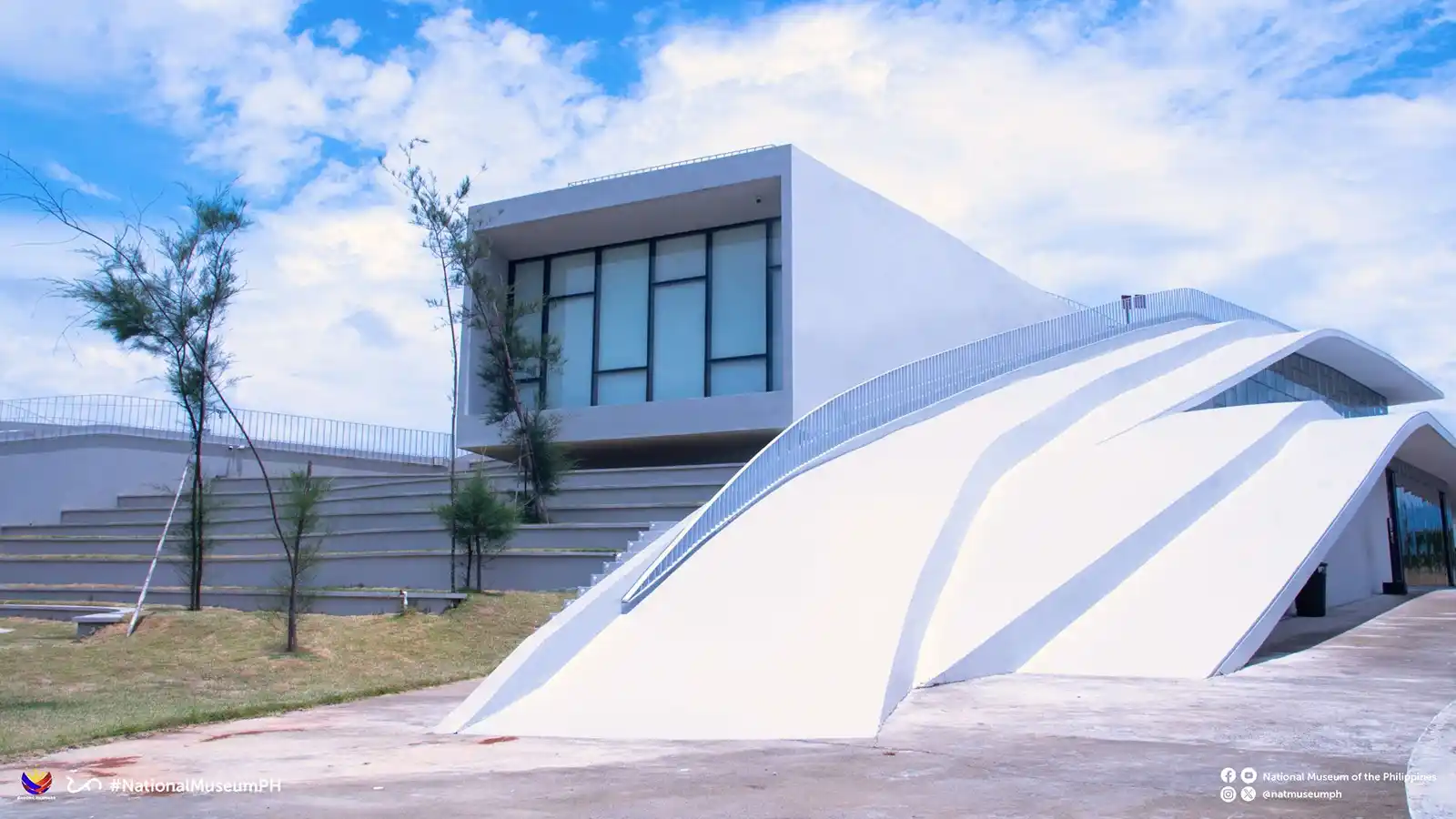
The opening of the National Museum of the Philippines–Baler in June gave Central Luzon its first component museum under the National Museum network and the country its 22nd overall. Designed by architect Ed Calma, the building takes its cues from Aurora’s position between the Sierra Madre and the Pacific, giving the institution an architectural identity closely tied to its setting.
Inside, three permanent galleries move across natural history, Indigenous knowledge, Philippine-Spanish encounters, and Filipino art, which effectively Aurora through overlapping histories rather than a single regional narrative.
While the province may be more readily associated with surfing, the Siege of Baler gains an institution capable of making its ecological, artistic, and historical complexity visible on its own ground.
Movement Maker: Alice Reyes, Alice Reyes Dance Philippines
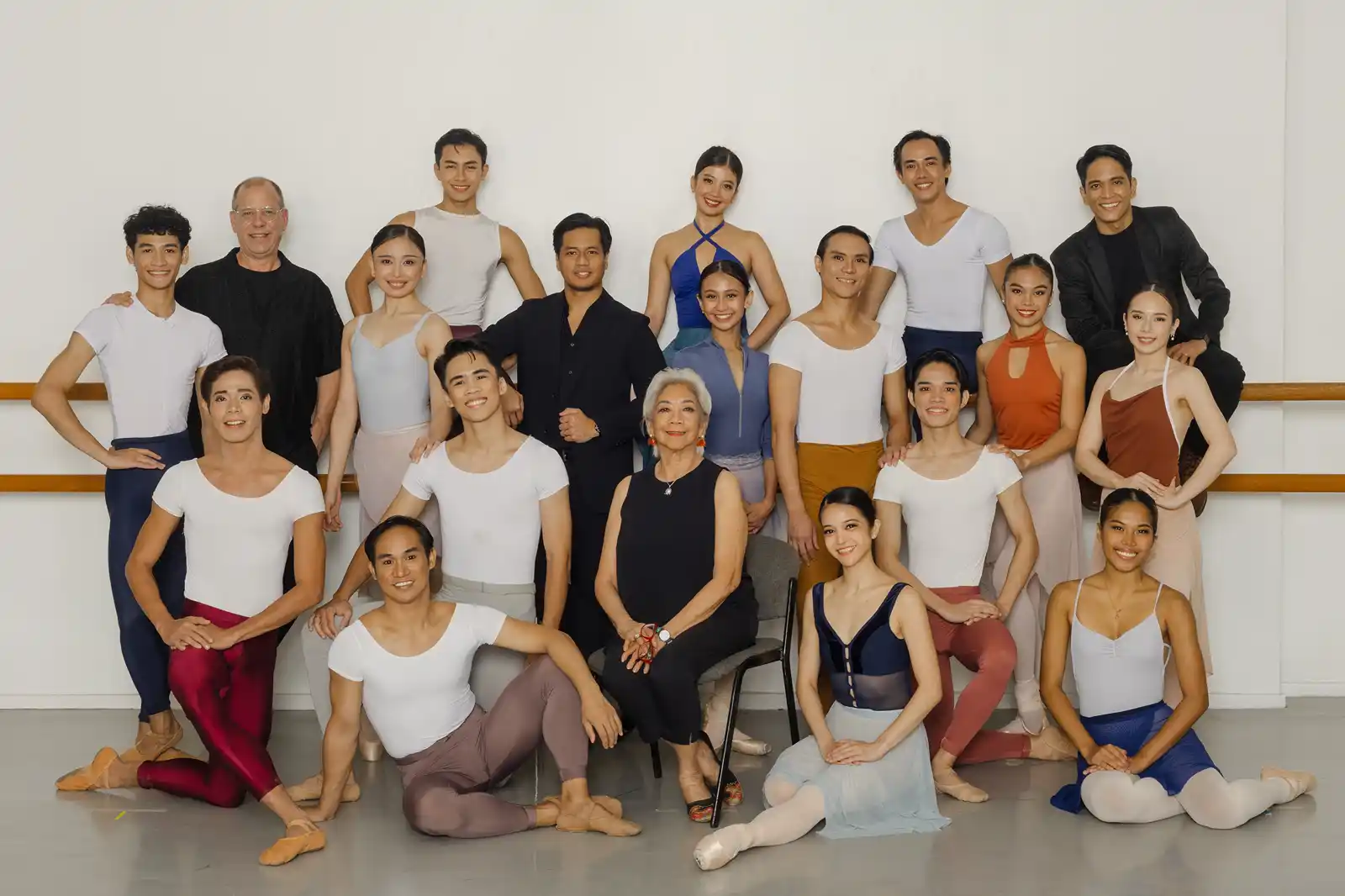
Alice Reyes’s repertoire has lost little of its appetite for experimentation. In February, Alice Reyes Dance Philippines revived her landmark 1977 rock-opera ballet Tales of the Manuvu at the UP Theater, bringing its audacious marriage of indigenous mythology and contemporary movement to a new generation before transferring to Rockwell’s Proscenium Theater in March. Loy Arcenas reimagined the production design, while Michael Mark Guevarra refreshed the musical arrangements. What came out of it was one of Philippine dance’s most groundbreaking works given renewed theatrical life.
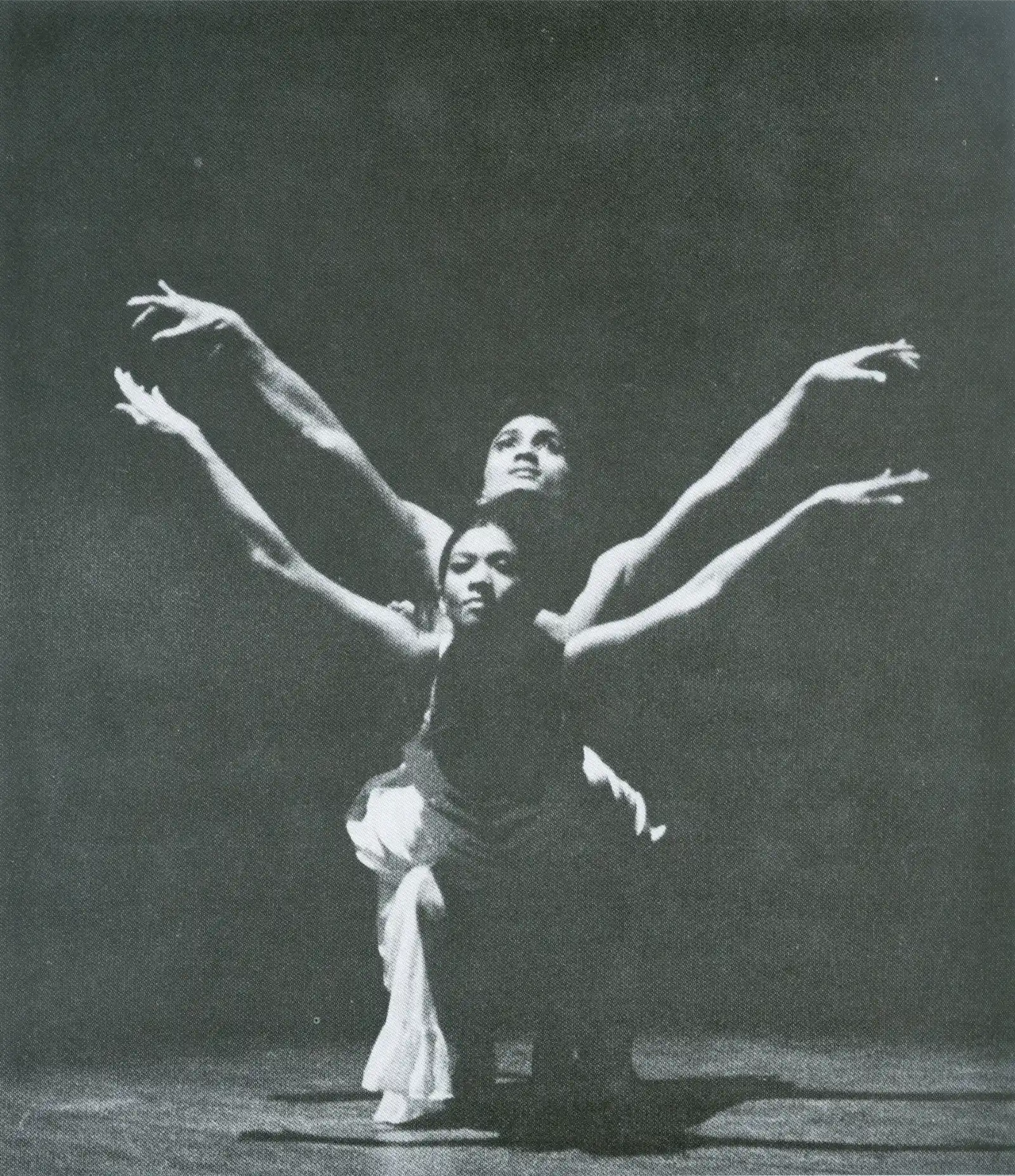
Reyes’s influence extended well beyond the revival, as her company presented Kalayaan at the Foro de Intramuros in June and performed excerpts from Rama, Hari alongside young Southeast Asian artists at the Metropolitan Theater in August. By September, ARDP artistic director Ronelson Yadao had turned Tony Velasquez’s beloved Kenkoy into dance theater, carrying forward Reyes’s instinct for finding choreographic possibilities in distinctly Filipino stories.
Curatorial Vanguard: Museum of Contemporary Art and Design (MCAD)
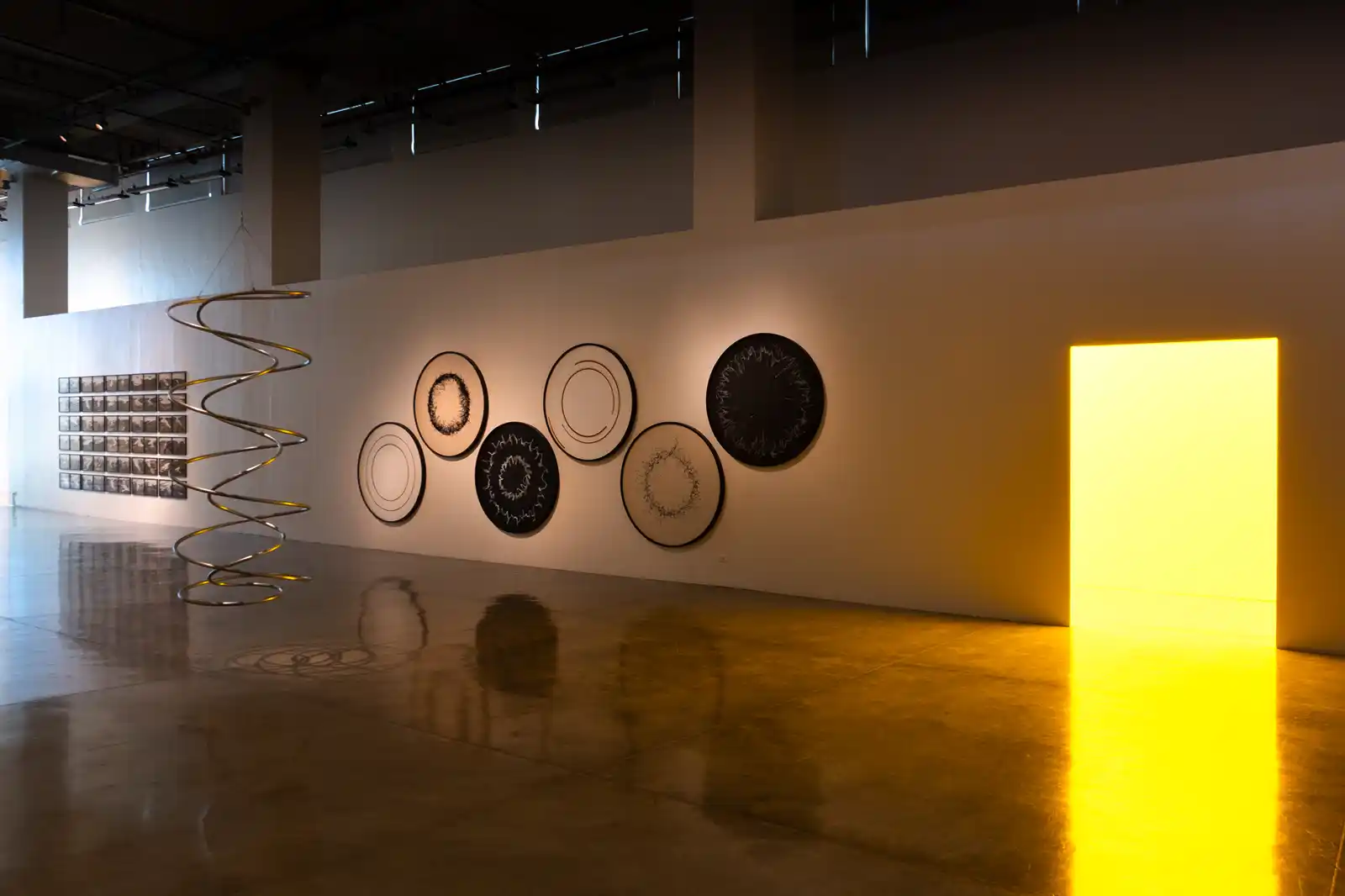
MCAD spent 2026 making an unusually convincing argument for Manila as part of the international museum circuit. Early in the year, “Poets of Physics” linked David Medalla’s experiments in auto-creative sculpture with work by Aki Sasamoto, Bagus Pandega, Fischli and Weiss, and Ian Carlo Jaucian, using the discipline as a route into questions of chance, nature, and artistic authorship. July brought an exhibition of another scale altogether in Olafur Eliasson’s “Your curious journey”, a three-decade survey that arrived in Manila after stops in Singapore, Auckland, Taipei, and Jakarta.
The space serves as the final destination for the tour, with landmark works including Beauty, Moss wall, Yellow corridor, and The glacier melt series. Bringing an exhibition of this caliber locally allows Filipino audiences to encounter major works of contemporary art within their own museum ecology rather than primarily through overseas biennales and institutions. Across all its exhibitions, MCAD demonstrated the kind of ambitious, research-led programming that allows Manila to participate more confidently in a wider conversation about contemporary art.
Ecological Witness: Martha Atienza
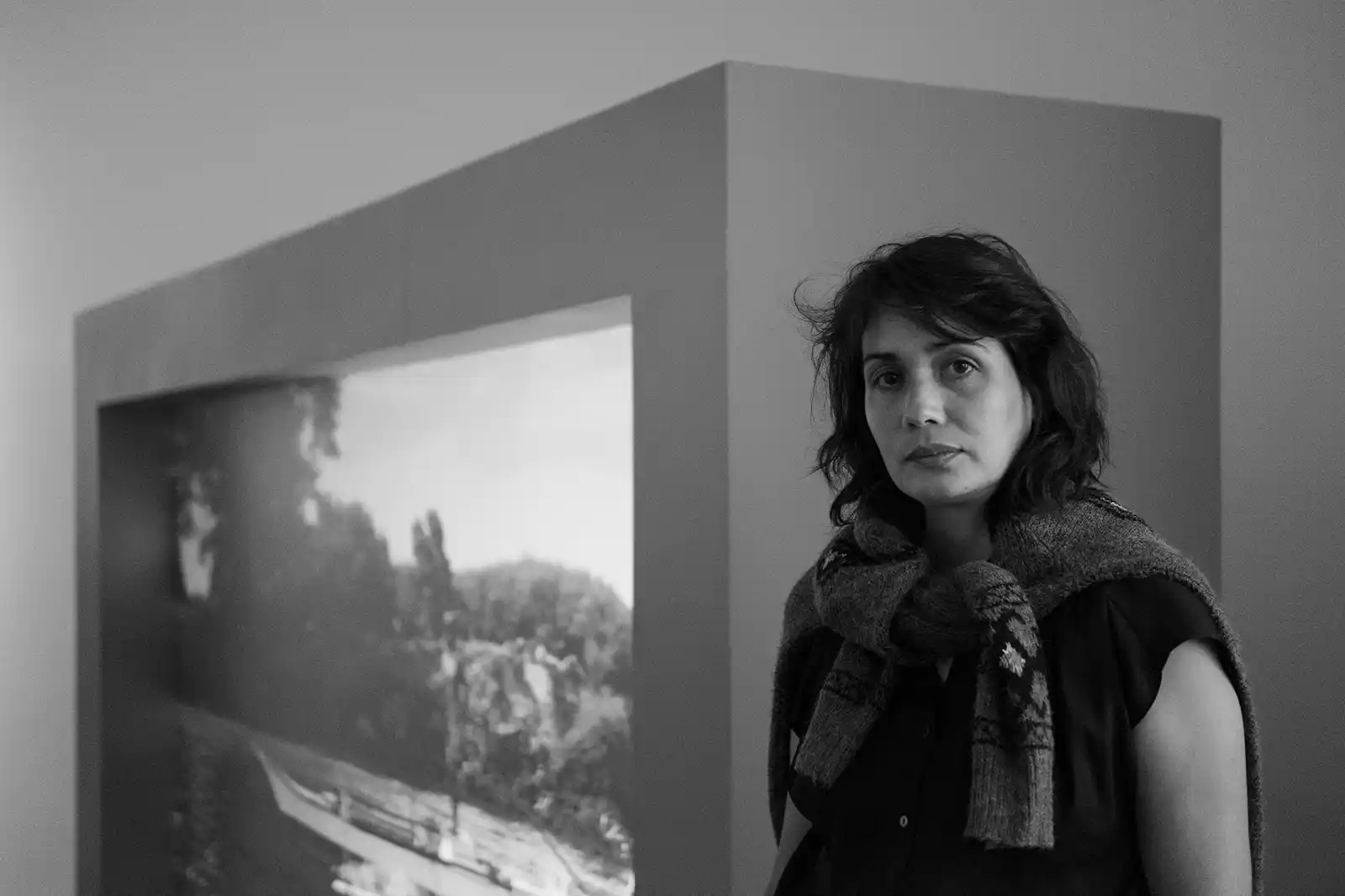
Martha Atienza’s 2026 brought several strands of her practice—art, ecology, fieldwork, and community organizing—into unusually sharp alignment. At Silverlens Manila, “The Coconut Tree Methodology” returned to the changing coastlines of Bantayan Island, where uprooted coconut trees have become physical records of erosion and rising seas. New footage shot this year, in fact, even revisited a shoreline she had documented in 2019, now altered by the construction of a seawall.
Her work also appeared in “The Spirits of Maritime Crossing”, an official collateral event of the 61st Venice Biennale, alongside artists including Marina Abramović and Arahmaiani, extending her examination of ritual, migration, ecology, and island life into a broader maritime conversation.
Perhaps more consequential was the recognition of GOODLand, the Bantayan-based platform Atienza founded in 2020, with the 2026 VISIBLE Situated Fellowship announced during Art Basel in Basel. The award supports work developed with fisherpeople, farmers, and local communities around coastal protection, ecological knowledge, and self-sufficiency.
Counter-Historian: Pio Abad
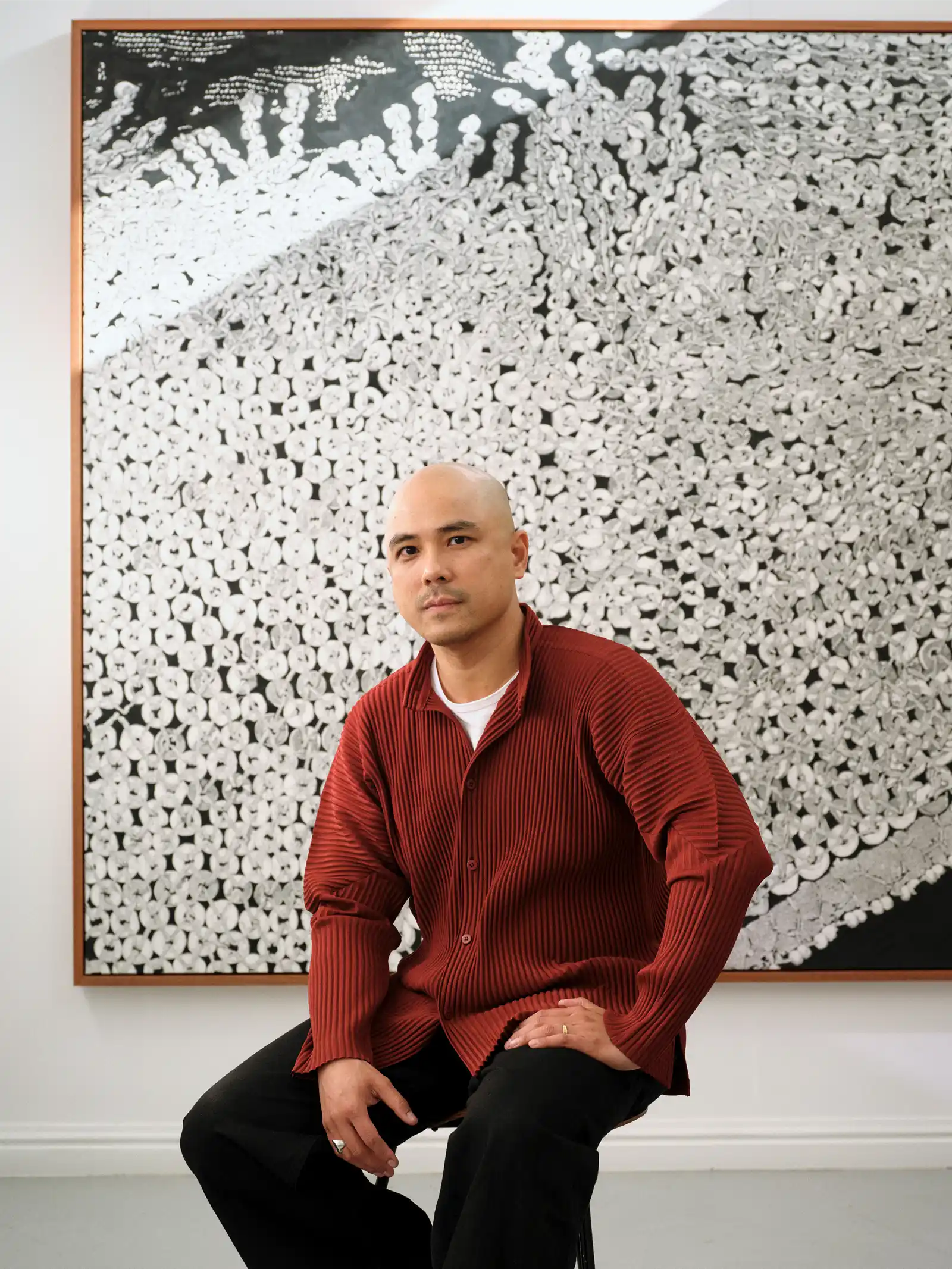
Pio Abad’s year placed him firmly within contemporary art’s most consequential international conversations around memory, restitution, and the afterlives of empire. At the 61st Venice Biennale, his work appeared in the Central Pavilion of In Minor Keys, where drawings based on looted and displaced objects turned museum collections into evidence of histories often buried within them. Among them was “Banua” (2026), which takes a mother-of-pearl garment from Chicago’s Field Museum’s Philippine collection and transforms its intricate surface into an expansive meditation on craft, displacement, and Austronesian ideas of belonging.
Earlier in the year, the Diriyah Contemporary Art Biennale presented Vanwa, a reworking of an Ivatan oral poem in mud brick, alongside Giolo’s Lament, his memorial to a young man taken from Southeast Asia and exhibited in 17th-century England. The two biennales showed Abad widening a practice long associated with Philippine political memory toward larger histories of colonial extraction, migration, and cultural loss.
Stage-Builder: Theater Group Asia
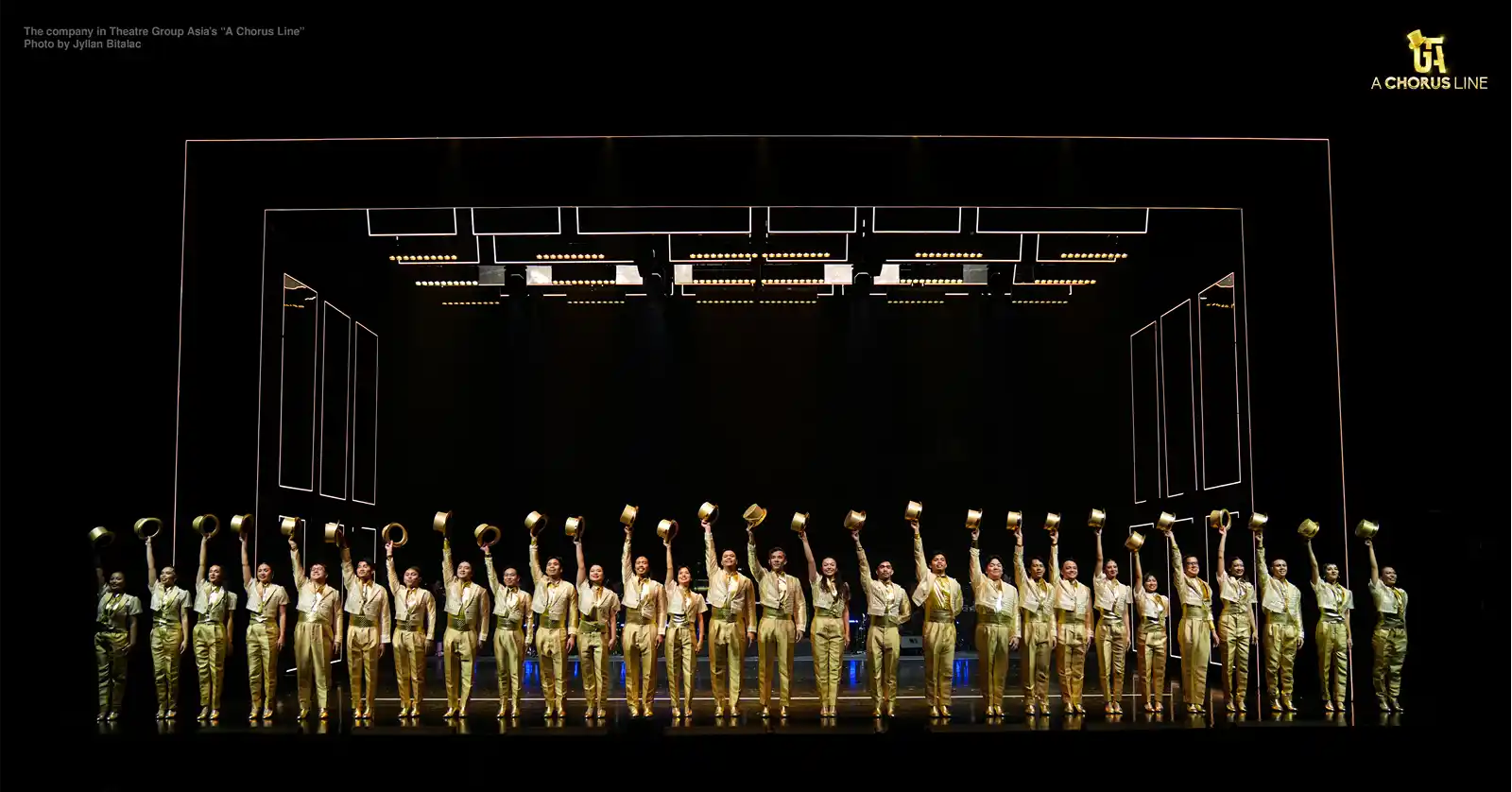
Theatre Group Asia (TGA) spent 2026 testing how far a Philippine theater company could push the scale and international reach of locally produced work. For instance, its March staging of A Chorus Line, directed and choreographed by Emmy winner Karla Puno Garcia, assembled an all-Filipino company that included Broadway performers Conrad Ricamora and Lissa deGuzman alongside talent based in Manila. September raised the stakes with The Notebook: The Musical, whose Manila run became the Broadway musical’s first international production rather than a touring import, with a new Filipino-led staging built specifically for the production.
TGA also announced Ang Tahanan ni Bernarda Alba and Sondheim’s Sunday in the Park with George for 2027, extending a model in which major works from the global dramatic canon are interpreted through Filipino performers and creative teams. In only a few seasons, the company has begun building a two-way theatrical infrastructure: one capable of bringing Filipino talent home, all the while positioning Manila as a place where significant new stagings can originate.
Maestro’s Tribute: Liyab
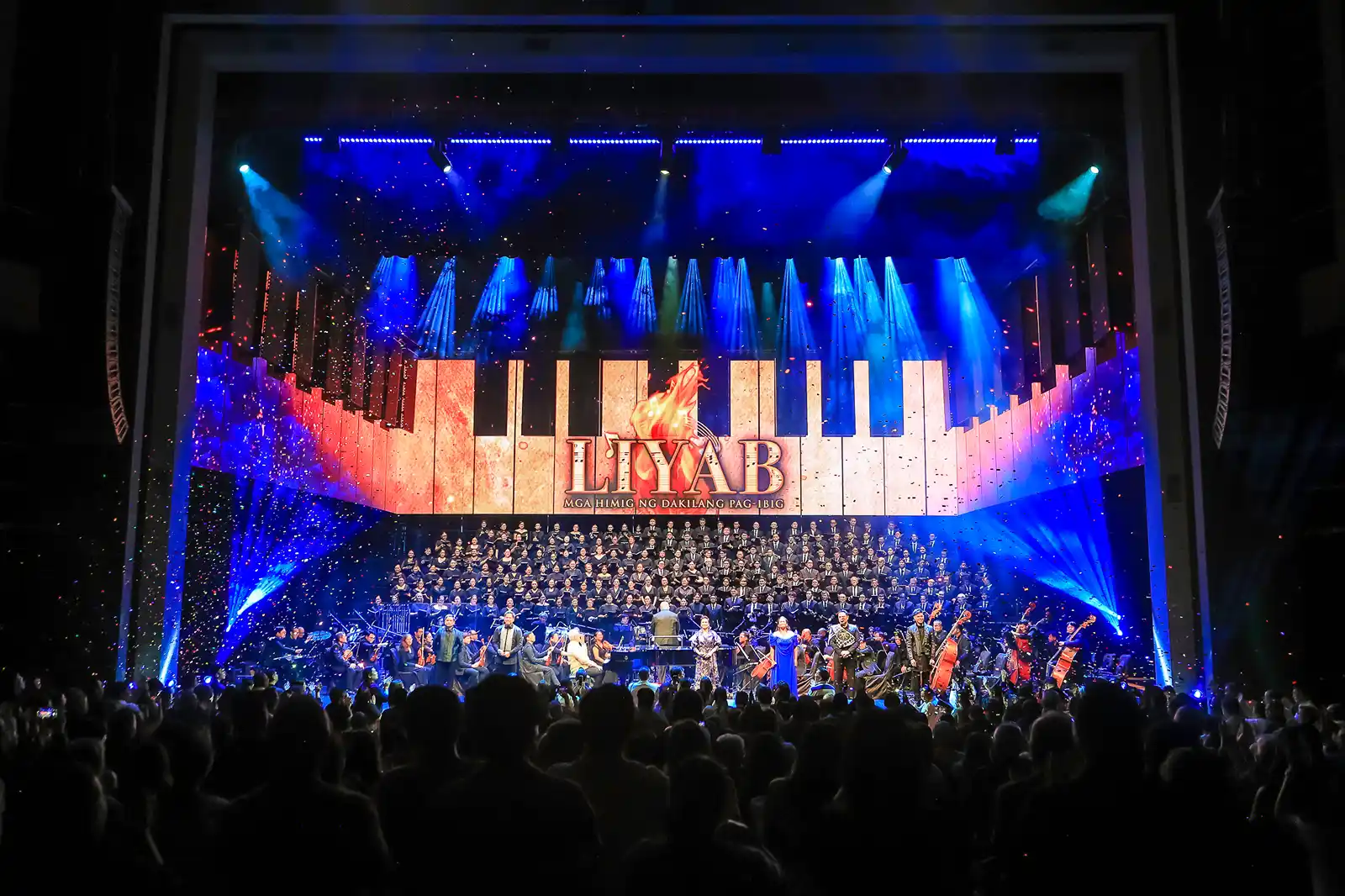
Nearly five decades after “Kay Ganda ng Ating Musika” won the inaugural Metro Manila Popular Music Festival, Ryan Cayabyab’s compositions continue to occupy a remarkable place in Filipino cultural life. His ballads have become standards, while landmark productions such as Rama Hari and Katy! helped expand the possibilities of Philippine musical theater.
This year’s Unang Siklab Liyab: Mga Himig ng Dakilang Pag-Ibig celebrated his extraordinary legacy at The Theatre at Solaire, bringing together the Philippine Philharmonic Orchestra, a 200-member grand chorale, and celebrated performers led by Lea Salonga. The ambitious concert explored the full emotional and musical range of his repertoire, from the solemnity of “Misa” and “Magnificat” to the songs that have accompanied generations of Filipinos.
The production also gave younger audiences an opportunity to encounter the breadth of a career that has earned Cayabyab both the Order of National Artist and the Ramon Magsaysay Award. With plans to bring future editions to the Visayas and Mindanao, Liyab could extend the reach of his music even further, allowing communities across the archipelago to participate in celebrating one of the country’s most enduring musical geniuses.
Breakthrough Auteur: Rafael Manuel

Rafael Manuel entered 2026 with a prizewinning short-film reputation and emerged from it as one of the most closely watched Filipino filmmakers of his generation. His feature debut, Filipiñana, premiered in Sundance’s World Cinema Dramatic Competition and won the Special Jury Award for Creative Vision before heading to the Berlinale’s Perspectives section. Set within the immaculate confines of an elite Philippine golf club, the film turns class, colonial memory, labor, and privilege into a meticulously controlled world of rituals and quiet menace.
What began with Manuel’s Silver Bear-winning 2020 short expanded into a 100-minute feature without sacrificing the visual precision or political unease that first distinguished his work. Kino Lorber acquired North American rights, while BFI Distribution picked up the film for the UK and Ireland, giving Manuel’s debut an unusually substantial international life for a first feature. Its return to the Philippines as Cinemalaya’s closing film, followed by its inclusion among the films considered for the country’s 2027 Oscar submission, completed a year in which Manuel moved decisively from promising filmmaker to an international auteur with a language already recognizably his own.
Art Fair: ALT
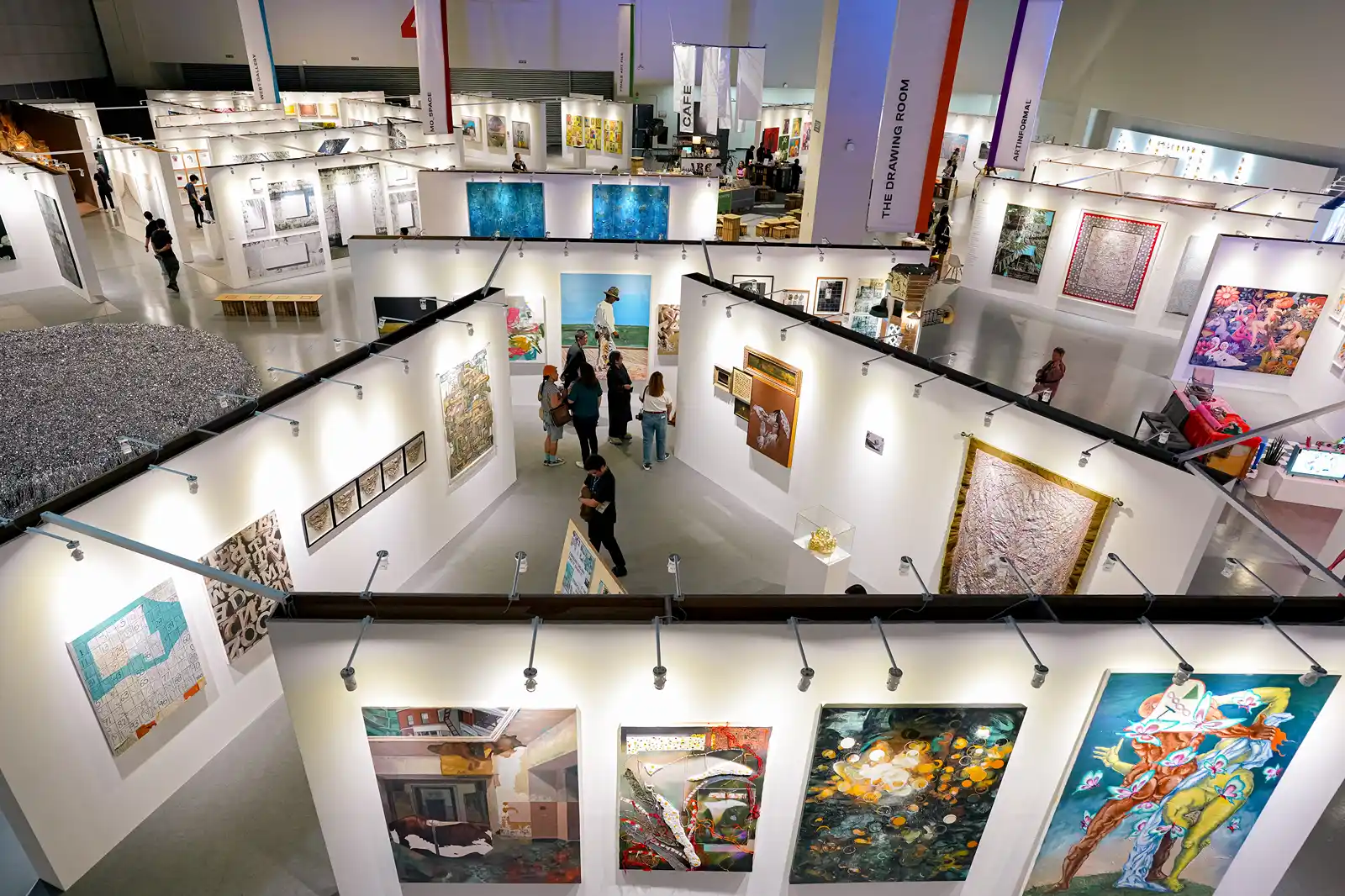
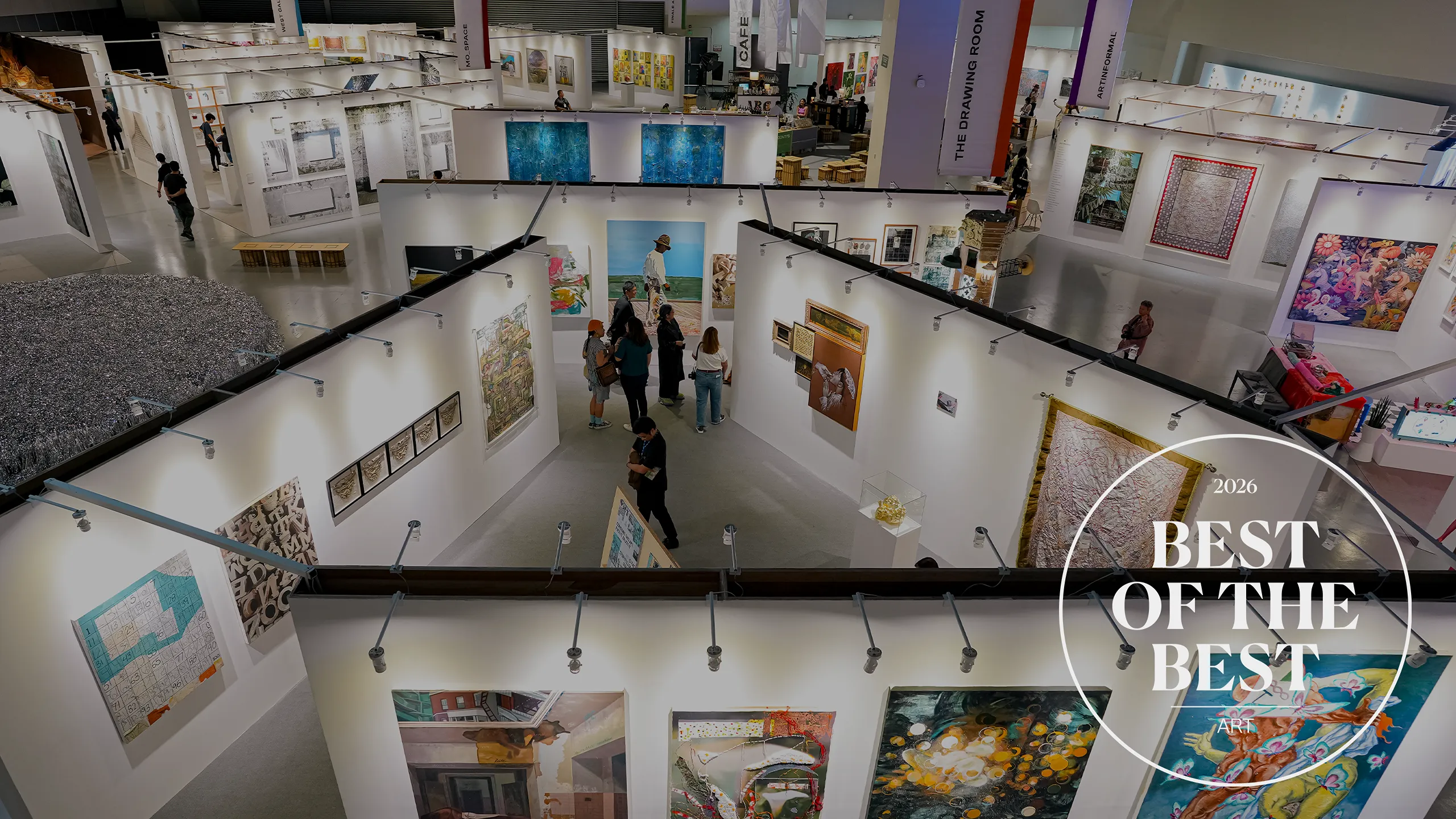
After a two-year hiatus, ALT Philippines returned in 2026 with its most ambitious edition yet, occupying 5,000 square meters at the SMX Convention Center and bringing together more than 300 artists under the stewardship of nine galleries. The expanded footprint doubled the fair’s previous floor area, yet scale never displaced the proposition that has distinguished ALT from Manila’s increasingly crowded fair calendar: fewer galleries, greater curatorial latitude, and more room for individual works to establish their own presence.
Its open-plan format accommodated painting and sculpture alongside installation, performance, photography, sound, moving image, and new media, loosening the familiar grid of commercial booths. A new ALT Discoveries program gave nine emerging artists solo presentations, while the Project Spaces extended the fair toward larger and more experimental propositions. By its fourth edition, ALT had grown without surrendering the collective structure and curatorial emphasis that made it an alternative in the first place.
This article originally appeared in Robb Report Philippines Best of the Best Issue, October 2026. See the full list of Best of the Best awardees.