The New Corvette E-Ray: American Muscle with Finesse




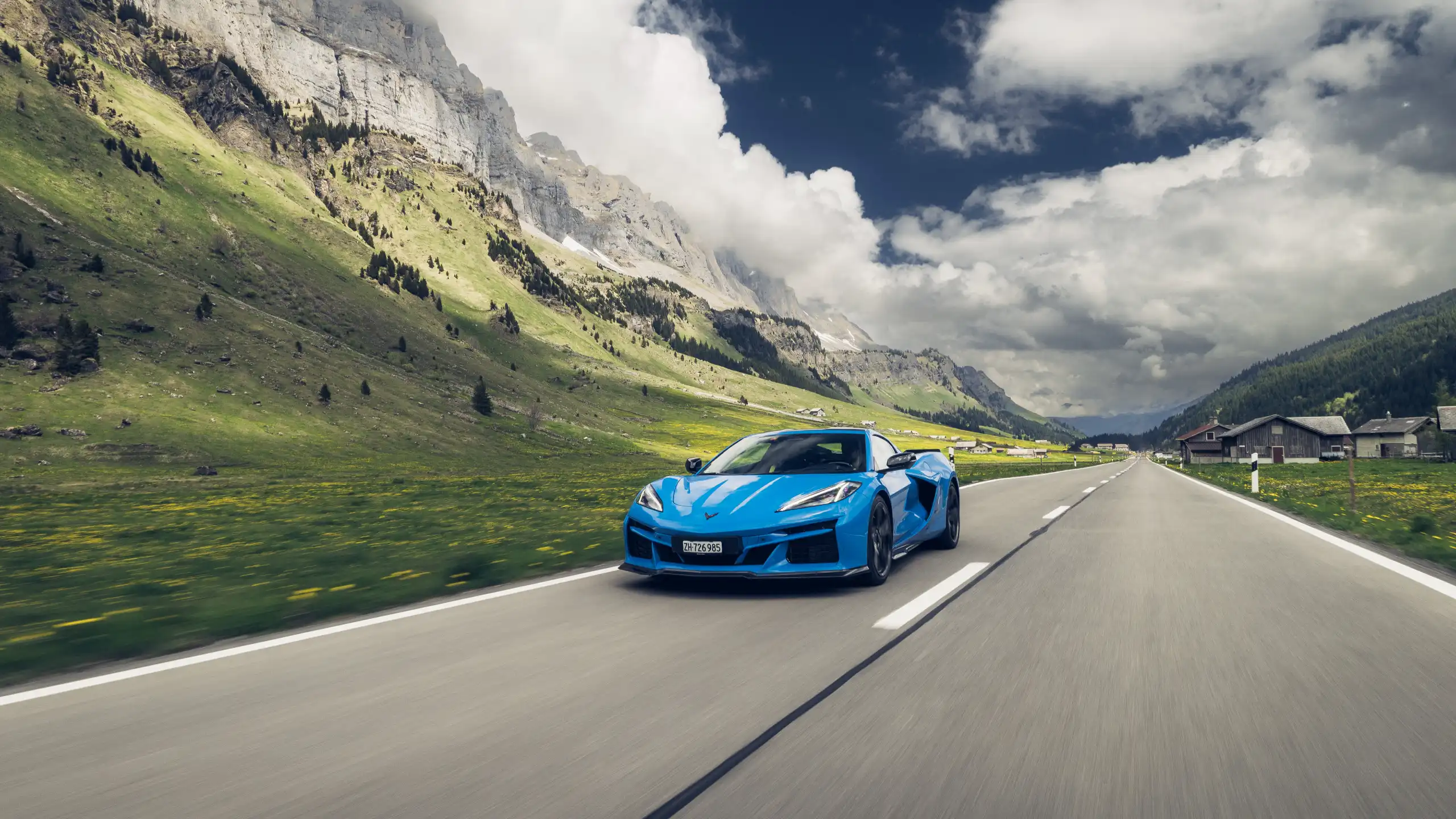
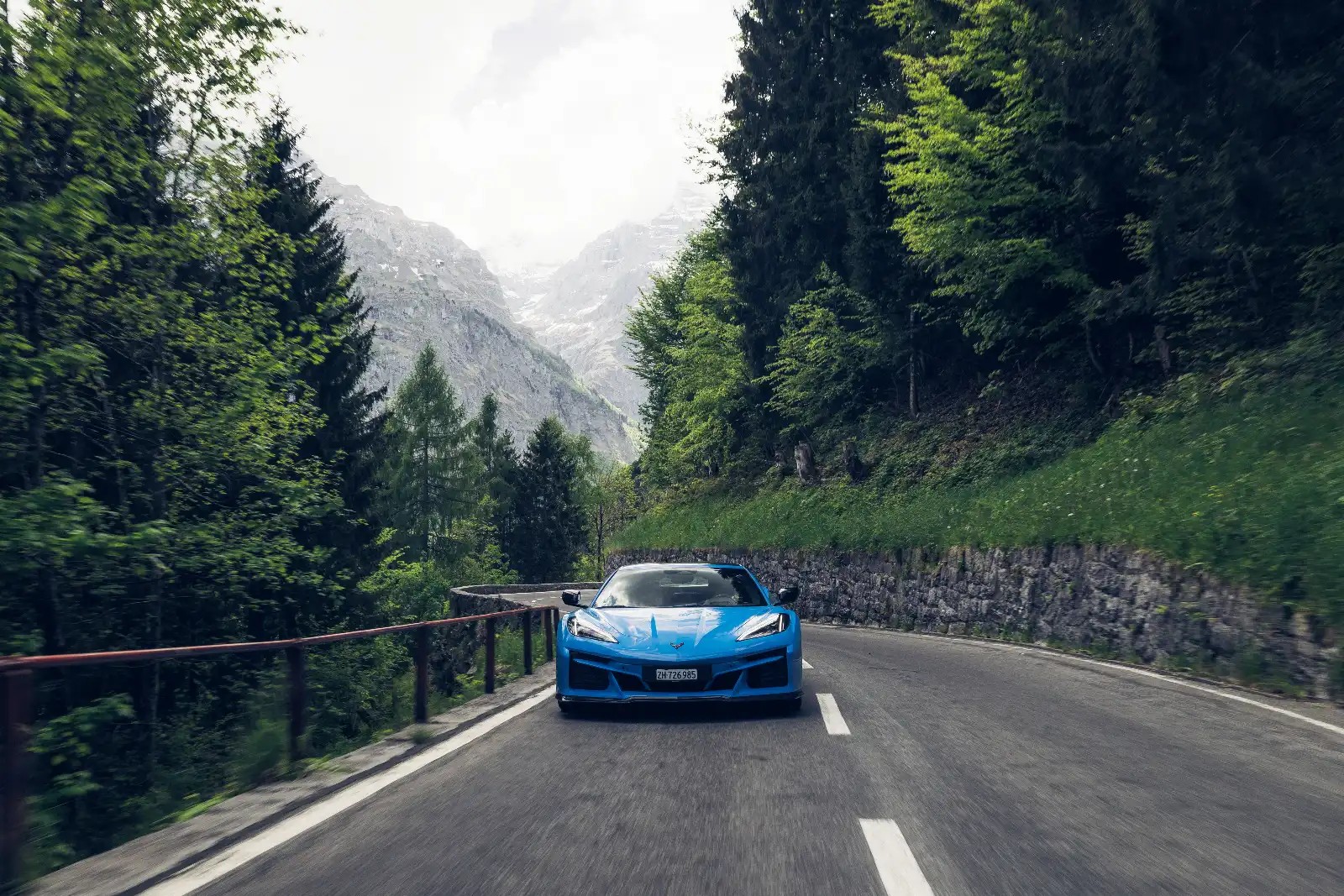
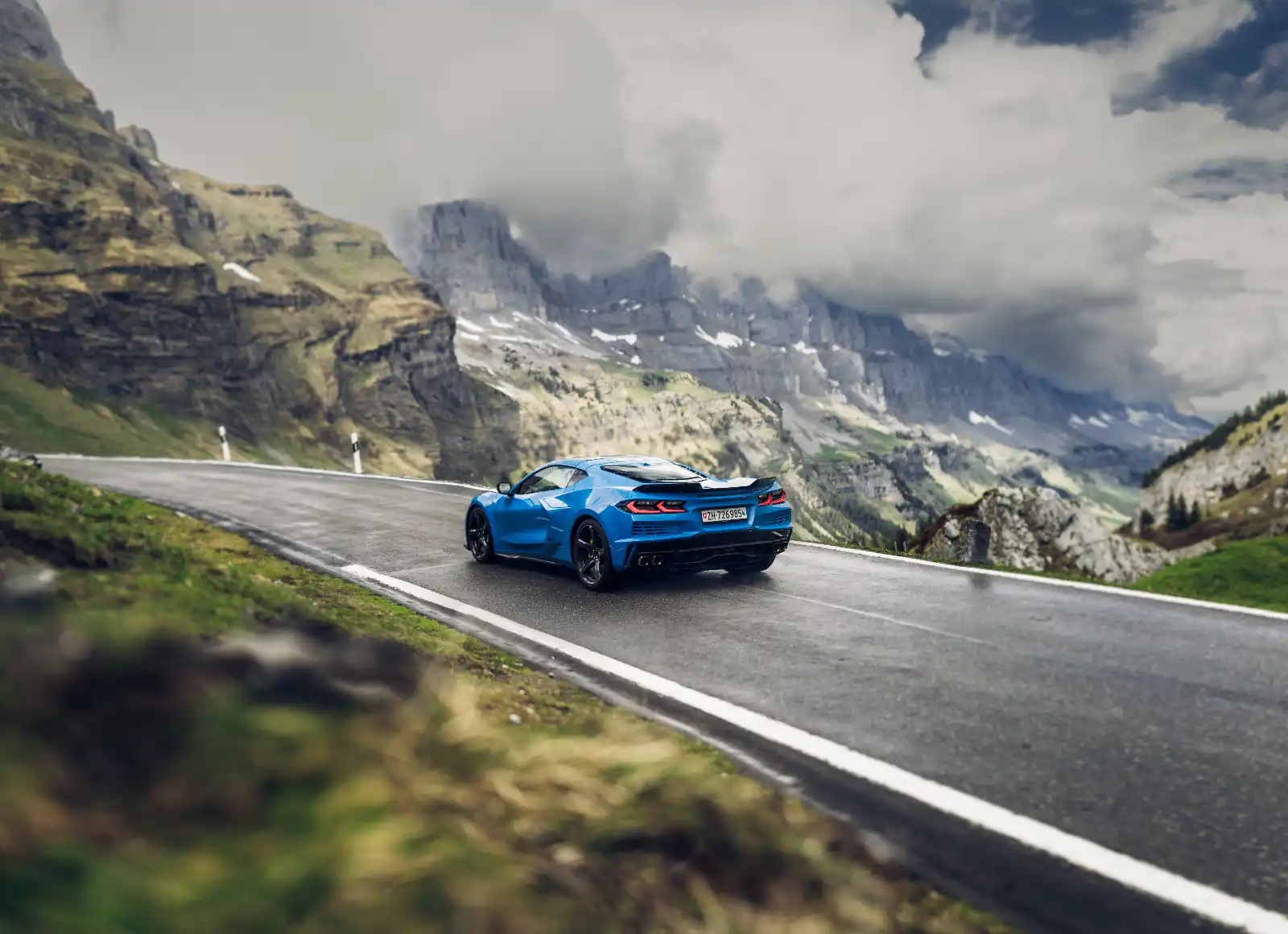
At the Los Angeles testing sessions at the World Car Awards in Pasadena, we chatted with the judges about how we had driven the new Corvette up the mountain, and about how surprisingly good it was.
The ones having the conversation were very deep Porsche guys who are very well versed in running Ferraris and Lamborghinis on racetracks, curvy mountain roads, and unrestricted German highways. So the fact that they were impressed by basically anything American claiming to be a serious sports car was very surprising.
The Chevrolet Corvette E-Ray 2026 was in the running for the World Performance Car Awards, and we were judging it as such. This car’s been around for a few years, but they’ve refined it while still keeping the oomph and rawness that people associate with effectively old American muscle cars, despite, of course, being an outlier from that era of huge, full-metal beasts.
For one, the Corvette was lighter, with the earlier ones being made of daring fiberglass. It was also more shapely and much smaller. Yet it never really punched into the world of European sports or super sports cars. It was never as refined, or as dedicated. And even though it may have been easier to drive in some ways than other American muscle cars, it wasn’t what the more sophisticated enthusiasts the world over really wanted.
This is why the new Corvette E-Ray is so surprising. It’s still not trying to be the equivalent of a European sports or super sports car, but in many ways it defines itself exactly as such: a powerful V8 in a striking and unique body with American muscle car heritage. It’s got a full V8 engine, which is a normally aspirated 6.2 liter, producing 495 horsepower to the rear wheels. It sits right behind your head, and you get a great look at it through the black glass. They combined this with an electric motor that adds 160 horsepower to the front axle. This is not a new formula. A lot of the European sports car makers are using it because it adds, among other things, better traction control while still keeping fuel burning fun in the mix. So this is essentially an all-wheel drive V8 hybrid.
The key here is how Chevrolet interprets everything, and it does this in several ways. The car is actually very comfortable in terms of ingress, egress, and just driving and doing things in the cabin. It is definitely sport-oriented, but it’s worked out the ergonomics such that you’re not struggling to get in and out of the car, which many European makers still require you to do.
It’s not just in the startup of the engine, because that’s relatively easy to do. You crank it up, you get a roar, a slight rev blip, and you get the rumble that you feel in your seats and in your bones. But this car communicates its friskiness in a different way than other sports cars, something we were able to test out in the simple act of driving out of the holding area for all the cars on an incline. We didn’t have the tightness or tautness of a lot of the high-performance sports cars, but they somehow managed to tune the suspension such that we got the feel of the whole car and how it moved, and that was just on low speeds. It communicates, but is not intrusive nor painful. It gives enough information for you to do what you want, but does not overwhelm.

On the highways and on the mountain roads, it isn’t as slicing and dicing as the usual European suspects, but it is just as engaging and fun further down the limit. It’s a pleasant high-speed highway drive. And the rumble of the engine doesn’t drone at speed. It communicates handling, and acts and reacts very quickly. A lot of this is because you now have newer, better electronic systems controlling things.
As much as everything is theater in this car, it is also relatively free of drama. You can launch the car hard from the start very easily. The front electric motor will put the power in where the V8, with its more traditional curve, would not. The car, as delivered and driven, had relatively all-season road tires on it as opposed to semi-slick, semi-race tires on other sports cars that actually disallowed us from going up the mountains in bad weather.
The car’s been around for a while, and so there have been requests largely centered on what happened inside the cabin with previous models. This was answered with the 2026 reworking. Information is displayed using three screens, and it’s actually—all things considered—an elegant answer as opposed to something that’s too in-your-face. It’s from these screens that you choose and control things, like your driver mode selection, and how your magnetic ride control suspension is going to work.
There’s a whole range of collectors of American sports cars that are quite excited about this vehicle, and have been for a while. So it does speak to the more traditional, who don’t really look at European sports cars. Yet it also impresses those who are far more oriented to what can come from the continent.
Traditionally, the Corvette was meant to be what they called America’s everyday sports car, or arguably, everyday supercarSupercarA high-performance sports car with exceptional speed, advanced engineering, and striking design, produced in low volumes by marques such as Ferrari, Lamborghini, and McLaren. Supercars sit near the top ofGo to Supercar Glossary, at this point. But you always used to give up a lot, and so there were almost completely different sets of enthusiasts and collectors and buyers who would look at the marque and the badge. With this particular new release, they may well have nailed it. In a world where almost no one would believe this right now, it seems that the Americans may have learned a bit about the proper use of power, restraint, and finesse.