Meet the Tuscans Embracing Winemaking Techniques of Ancient Rome




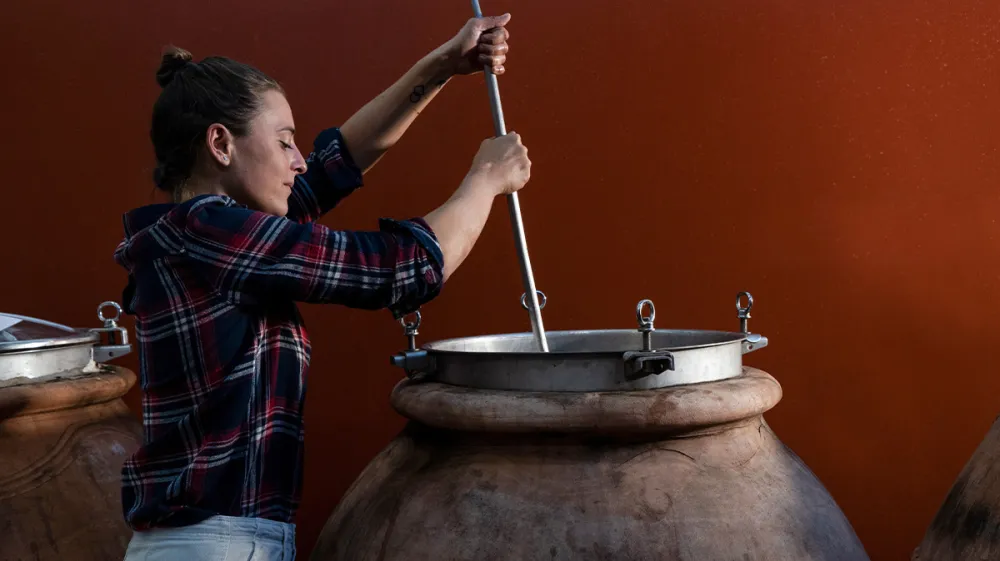
While oak barrels have been the gold standard for aging wine for the past several hundred years, a handful of cutting-edge Tuscan estates are rediscovering a far older vessel: terra-cotta amphora. While these ancient containers fell into disuse as stainless-steel tanks and oak barrels took hold of the wine world, some of Tuscany’s best wineries are experimenting with amphora fermentation and aging to maintain unadulterated expressions of their vineyards. What started as a fringe practice using this historical material has blossomed into a wider dialogue among the region’s most forward-thinking winemakers. Tuscany has been home to clay pits revered for fine terra-cotta wine vessels used for production and storage since the time of the Etruscans, and many wineries still use local clay in addition to venturing further afield in Italy and Europe.
“For me, one of the most interesting things about amphora is almost what it doesn’t bring,” says Marilisa Allegrini, owner of San Polo in Montalcino. “Unlike oak, it does not impose another aromatic layer on the wine, while its porosity still allows a measured exchange with oxygen.” Allegrini points to the similarities and differences between her San Polo Amphora Vignamasso Toscana IGT and the winery’s Rosso di Montalcino, which are both 100 percent Sangiovese from neighboring high-elevation vineyards. While Amphora Vignamasso is made entirely in amphora, the Rosso di Montalcino ages for a year in large oak casks. “Both wines share the mineral-driven character and lively acidity we associate with our vineyards, but their aromatic and textural profiles are quite different,” Allegrini says. “Oak tends to soften the wine while contributing sweet-spice notes, whereas amphora allows the savory character of our terroir to come forward more clearly, with a very different texture.”
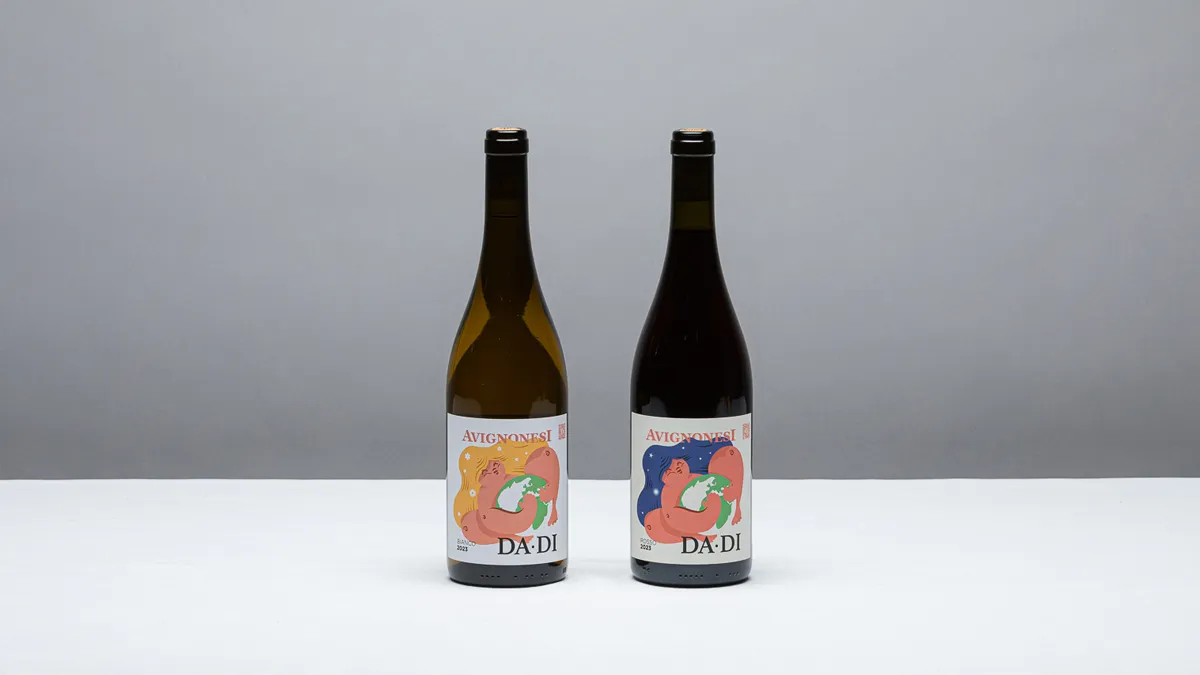
“Amphora is particularly useful because it gives us a very direct reading of the grape variety,” says Alessio Gorini, COO of Avignonesi, one of the foremost producers of Vino Nobile de Montepulciano. “Without the aromatic contribution or textural sweetness of wood, characteristics such as aroma, acidity, tannin and texture remain particularly easy to identify.” Utilizing amphora for his Da•Di Rosso and Da•Di Bianco IGT Toscana wines, he uses slightly different techniques for the two bottlings. The majority of Da•Di Rosso (red) ferments in Tuscan terra-cotta amphorae and remains in contact with the skins for approximately three months. Meanwhile, a small portion of wine is fermented separately in stainless steel and is used to top up the amphorae once the most active phase of fermentation has finished. Da•Di Bianco (white) ferments without skins directly in ceramic amphorae from a local producer and continues its aging in the same type of vessel, although in some vintages Gorini has had to use neutral barrels for a portion of the wine due to quantity issues. Both the red and white are reassembled in stainless tanks prior to bottling.
“At Avignonesi, amphorae are first and foremost small laboratories for learning,” he says. He explains that this type of experimental, small-lot winemaking allows him to better understand specific winemaking choices such as the impact of whole-cluster fermentation on Sangiovese: “Amphora helps us understand the identity of a grape and the consequences of individual winemaking decisions with unusual clarity.”
“I love the idea of making wine in Tuscany using Tuscan earth itself,” says Elena Casadei, winemaker of Le Anfore di Elena Casadei. The second generation of Famiglia Casadei, she uses a combination of local Impruneta clay amphorae and traditional Georgian qvevri. “I also love working with qvevri because they connect me with an ancient winemaking culture, one that has even been recognized by UNESCO.” Having been introduced to amphora by her father, Stefano, she says the vessels are what made her fall in love with wine. “I find it incredible that one of the oldest winemaking tools in history can still feel so contemporary today,” she says. “Working with amphorae has taught me to observe, to taste, to wait, and above all to accept that not everything has to be the same every time.”
Producing a wide range of single variety wine across her family’s estates in Sardinia and Tuscany, Casadei was first fascinated by the way the same grapes could express themselves differently by changing the vessel, and her curiosity led her to create her own range of amphora wine. “Stainless steel tends to offer a fresher, more linear expression; oak allows for an exchange with oxygen but can also leave its own aromatic and structural signature,” she says. “Terra-cotta, on the other hand, allows the wine to evolve without imparting the distinctive aromatic influence typically associated with oak.”
One of the mainstays of natural wine, terra-cotta is often blamed for the gritty feeling that it can potentially bring, but this can be the result of winemaking decisions rather than material. “Amphorae can certainly produce wines with a distinctive texture and a strong tactile quality, but that is very different from having unwanted sediment or a wine that lacks precision,” Casadei says. “We aim to achieve clean, precise wines through time, natural settling, and careful management throughout the entire winemaking process, intervening as little as possible. For me, minimal intervention does not mean accepting imprecision.”
At San Polo, dabbling with amphora has allowed Allegrini’s team to dial down the amount of sulfur. Because amphora is less porous than oak, they discovered that they could use less of the preservative in the winemaking process. “Combined with the other qualities we value in amphora—its porosity, neutrality and non-conductive nature—the experience has helped inform a larger evolution in our cellar,” Allegrini says. Starting with the 2025 vintage, San Polo no longer uses stainless steel and works exclusively with concrete, oak and amphora. “What started as an experiment has therefore become something much more meaningful to us: the lessons we have taken from the past are now actively helping to shape the future.” True not just at San Polo but across all of Tuscany, this ancient substance leaves a lasting but invisible mark on the wines it touches.
This article originally appeared in Robb Report US.
FAQs
Winemakers are returning to terra-cotta amphorae because the vessels allow controlled oxygen exchange without adding the aromatic influence associated with oak, helping preserve the character of the grape and vineyard.
Oak can soften wine and contribute flavors such as sweet spice, while amphora is relatively neutral and allows acidity, tannin, minerality, and savory characteristics to remain more clearly expressed.
Producers experimenting with amphora include San Polo in Montalcino, Avignonesi in Montepulciano, and Elena Casadei through her Le Anfore di Elena Casadei wines.
Winemakers use vessels made from local Tuscan terra-cotta, including Impruneta clay, as well as ceramic amphorae and traditional Georgian qvevri.
Not necessarily. While amphora wines can have a distinctive texture, producers can still achieve clean and precise results through careful handling, natural settling, and controlled minimal-intervention techniques.