What Ayka Go Found in a Butterfly’s Wing




During a year-long sabbatical, painter and paper artist Ayka Go finally cultivated the garden she had long envisioned for her Las Piñas home, prompting an unexpected evolution in her practice through close encounters with nature under a microscope.
However, this stillness wasn’t the most delightful of turns, nor the gentlest, as her life was about to change due to a chronic illness. Life prior to this was about preparing for full schedule of exhibitions. Go, after all, may already be considered a household name among many collectors who have fallen in love with her explorations of paper as a mark-bearing material of folds, creases, and tears; the artist depicted them as paintings, often on a magnified scale.
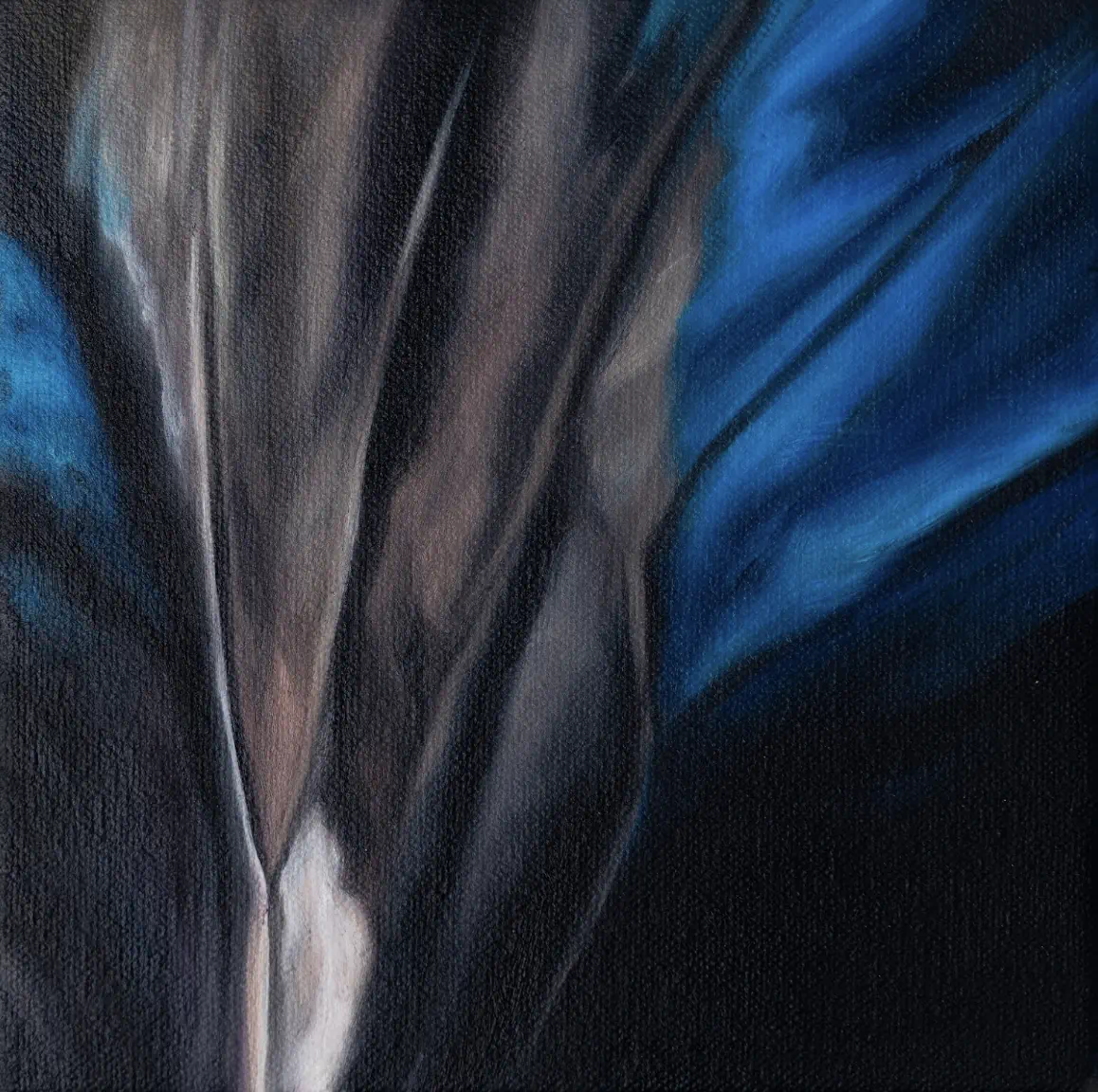
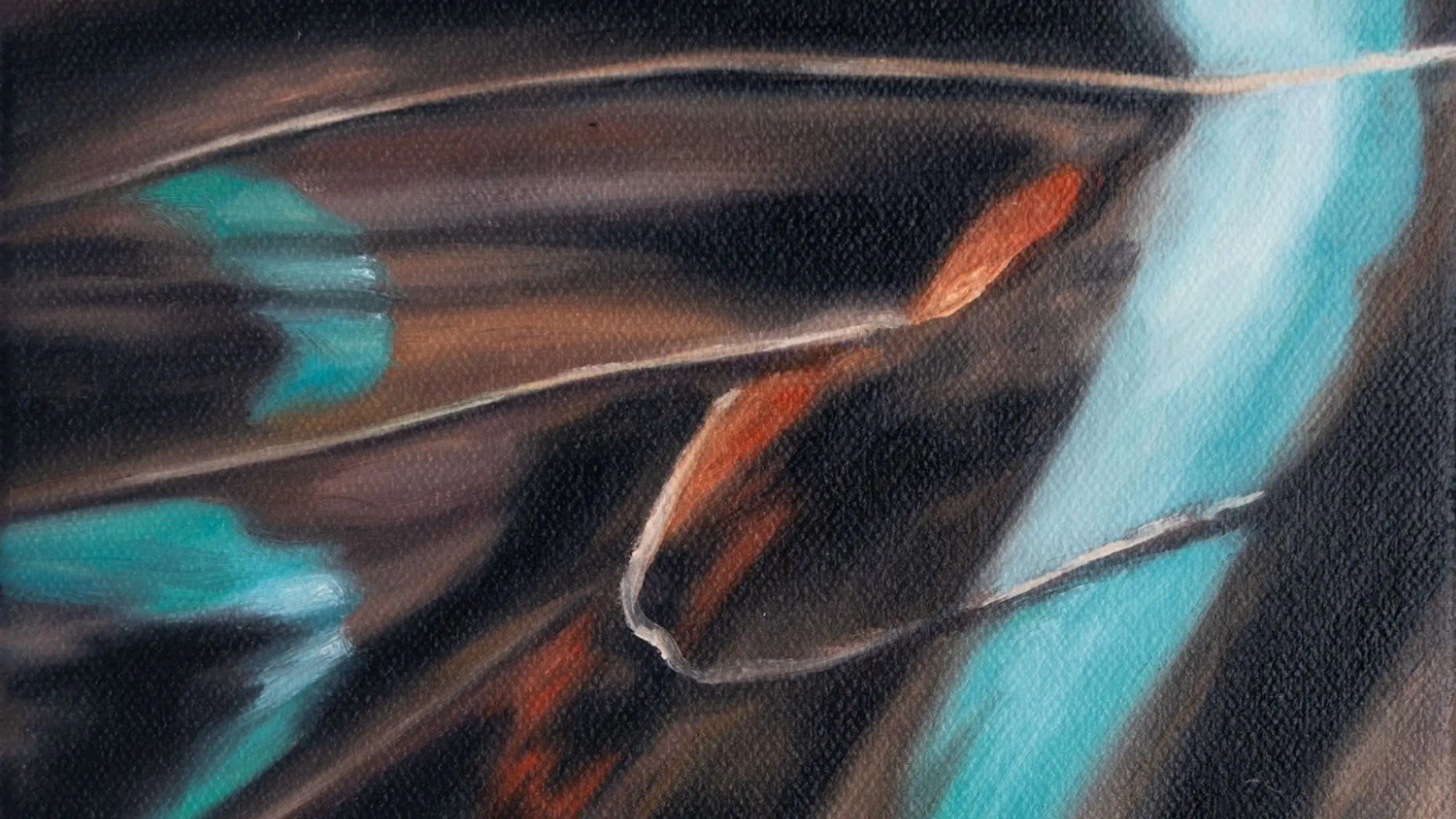
In her most recent show, Small Vast Things at Silverlens Manila, Go courageously steps away from the pressure of adhering to this known visual language, allowing her works to act as windows that offer a peek into her unfurling universe. The collection depicts the artist’s own metamorphosis. A key component of this show, the Lepidoptera series, shows what Go saw when she leaned into her curiosity, placing wings of expired butterflies under a microscope. She discusses her findings and their relation to painting in this interview. Even more intriguing, Go explains why she decided to set aside the aesthetics of her usual oeuvre and how gardening reminded her of the artist’s role in the world at large.
Editor’s note: Certain portions of this interview have been translated into English and edited for clarity.
Q. Starting a garden played a significant part in the making of this exhibition. It must have been a huge undertaking. What inspired you to pursue it?
Back in 2025, I finally had the time and space to do the things that I had been putting off.
In the three years that I have lived in the south [of Manila], it was only last year that I was able to begin building a garden. At first, I started planting from seeds—so ambitious. But it took time for me to realize why nothing was growing.
I started researching what healthy soil should be like. This led me to composting food waste. Gardening, I guess, was something easy to lean on because it felt like I had a routine and a sense of purpose. Gardening allowed me to be more mindful of the environment I was creating; there was also this sense of responsibility. There was a lot of trial and error. In the process, I was learning a lot.
Slowly, when seeds started to sprout and plants started to grow, I was surprised to finally see butterflies again! Dragonflies and ladybugs, too. And then I realized: Maybe the ecosystem was starting to balance itself.
Every day I looked forward to them visiting until it reached the point where it felt like I was their visitor. Gardening was healing. The more I tended to it, the more I felt like I was building this ecosystem for them, too, which gave me so much more in return.
Q. What thoughts came to mind during this season of gardening and stillness?
Seeing these creatures once again was quite humbling. My friend said that it was probably one of the little ways we could give back to the environment.
Because I was finally seeing these butterflies, I was inspired to look at them under the microscope. I was so amazed. They were so beautiful. I felt like a child again! It also made me think about my life and how small a speck I am in this vast universe, as well as my role as an artist, and how limiting it can be when you want to do so much more for your community.
But, as though I were in a cocoon, I felt like I was in the process of “becoming” as well. I have resolved to live life now and enjoy moments that I would easily take for granted.
Q. The Lepidoptera series actually references that microscope. Can you tell me more about looking through that lens and about painting?
When you look into a microscope, you need to focus [the lens]. So,there are two works that I included [in the series of how things look] before the reveal. [Looking at a butterfly wing] felt like looking at a kaleidoscopic abstraction of light and color. They were extremely beautiful. And then, with the lens in focus, it felt like a whole different kind of universe again. With the focus, I could finally see the lines, shapes, colors, structure, and textures.
It is completely different when you see them with your naked eye. Blacks, yellows, oranges, whites, blues…so I thought it was also like how an artist paints a painting. It also has underpainting, sketches, and a buildup of colors toward the final layer.
Q. What was it like to make a huge leap from your usual paper folding to this subject?
With paper folding, it was really more about representation and imagined worlds, but with this subject matter, I had to think about whether I needed to depict the forms in paper first—but for what? I didn’t find it necessary. I was nervous that people would ask me, “Why the jump?” But that added step of translating them to paper was unnecessary.
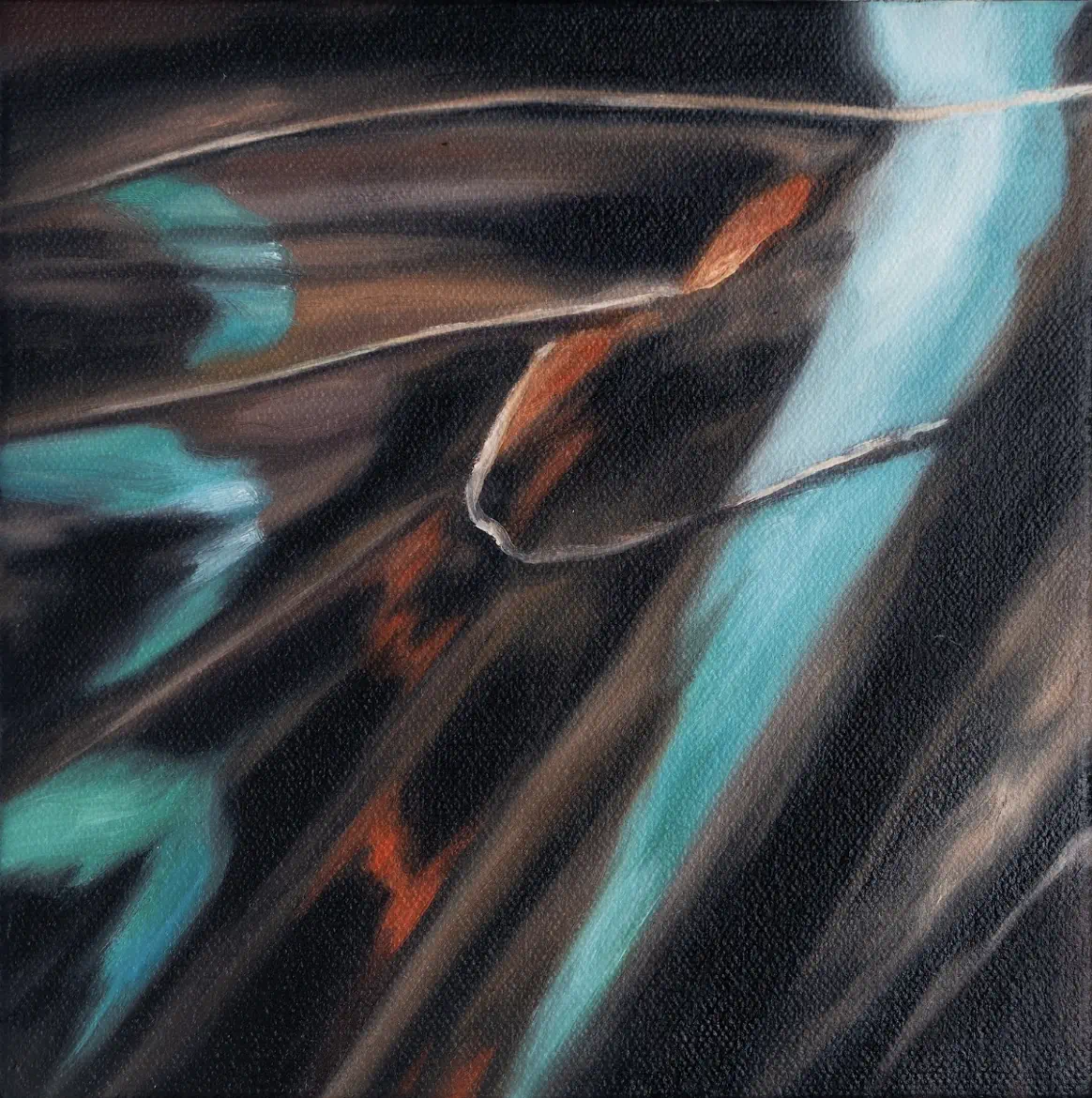
I was hoping that despite the visual differences from my previous body of work, people would understand why there was a shift to nature. Rather than thinking of it as a departure, it is more of a progression. When I think about the sources I draw from, they are all still interconnected. Even the physical gestures in the paintings are still mine. My brushstrokes are still there.
Q. On themes of birth and rebirth, what were moments in your practice have felt pivotal?
It was during this exhibition that I realized there is more in me I can still do. With chronic pain come bad days, and it’s so easy to get frustrated and fall into a place of depression. There would be times when I would lie in bed, stare at the ceiling asking, All of this pain, for what? But then there are good days, too. For some reason, observing the butterflies and studying them gave me a whole new perspective on living.
Butterflies are natural pollinators and indicators of the state of the environment. Just like birds, other insects, and even worms, they have a role to play in the ecosystem. If there is an excessive number of one species, there will be an imbalance. A butterfly cannot be a bee and a butterfly at the same time. That’s just like with humanity—I just have to do the work that I have to do with the time that I have.
A butterfly’s life doesn’t have to be long to have significance. It has a role; it contributes, it continually transforms, and then it disappears. I realized that much of what I could observe in a butterfly’s life reflected how I am as a human being as well.
The exhibition runs through to August 25,2026 at Silverlens Manila. For more information, please visit their website.
FAQs
Ayka Go is a Filipino painter and paper artist known for translating the folds, creases, tears, and textures of paper into paintings, often on a magnified scale.
The exhibition explores nature, transformation, mortality, and renewal through paintings inspired by the garden Go cultivated and the butterfly wings she examined under a microscope.
The butterflies that appeared in Go’s garden prompted her to examine their wings under a microscope. Their microscopic structures, colors, and layers revealed visual parallels with the process of painting.
Go moves beyond the folded and worn paper forms associated with her previous paintings, turning directly to nature while retaining her characteristic brushwork and interest in magnification.
Small Vast Things is on view at Silverlens Manila through August 22, 2026. The gallery is located at 2263 Don Chino Roces Avenue Extension in Makati City.