This Ultra-Complicated 1914 Audemars Piguet Pocket Watch Could Fetch $1 Million at Auction




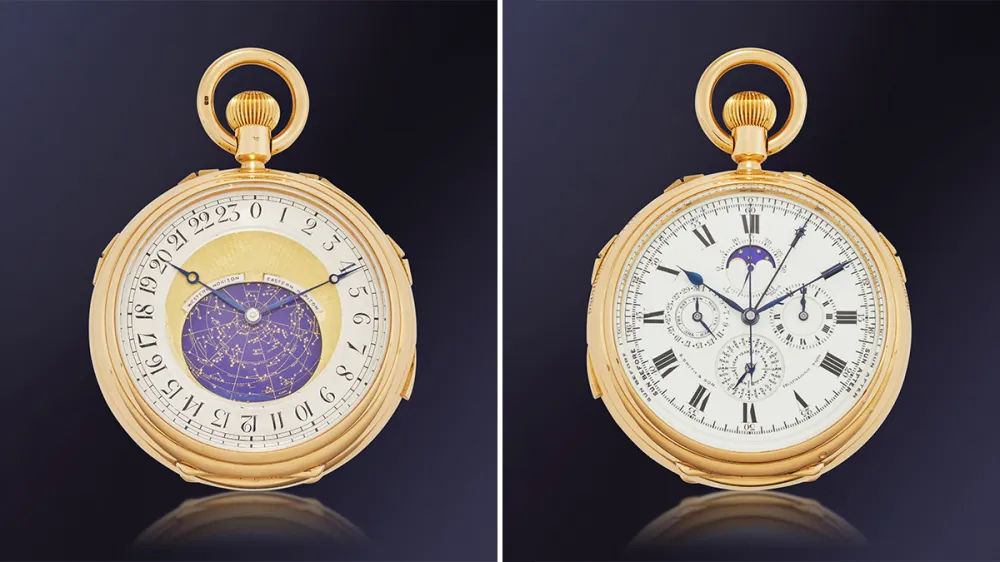
Collectors who want to add more complicationComplicationAny function on a mechanical watch beyond telling the hours, minutes, and seconds, such as a calendar, chronograph, moon phase, or tourbillon. Complications demonstrate a watchmaker's technical skill, and moreGo to Complication Glossary to their lives are in luck. The most complicated Audemars Piguet pocket watch in private hands will go under the gavel at Sotheby’s New York this December. Affectionately nicknamed Grosse Pièce, or “Big Piece” in English, No. 16869 features a huge 80 mm yellow-gold case that houses no less than 19 remarkable complications. It is expected to sell for between $500,000 and $1 million at the upcoming sale, giving the Big Piece an even bigger place in horological history.
Commissioned in 1914 by Smith & Sons of London on behalf of a South American client, the double-dialed and double-open-faced minute-repeating astronomical watch took some six years to complete. It features a one-minute tourbillonTourbillonA watch complication invented around 1801 by Abraham-Louis Breguet that rotates the escapement in a cage to counter the effects of gravity on accuracy. Tourbillons are mesmerizing and very difficultGo to Tourbillon Glossary, a chronograph, a perpetual calendar, a moon phase, day/night grande and petite sonnerie functions, 60-minute and 12-hour registers, equation of time and sidereal time displays, and indications for times of sunrise/sunset. The highlight is the rare astronomical display, though: A celestial chart for the nighttime sky of London with 315 stars and 18 labeled constellations. The Big Piece is the only known pocket watch to have such a complication, as per research carried out by the Swiss watchmaker’s Heritage Department. It is also the only one from this period with a tourbillon.
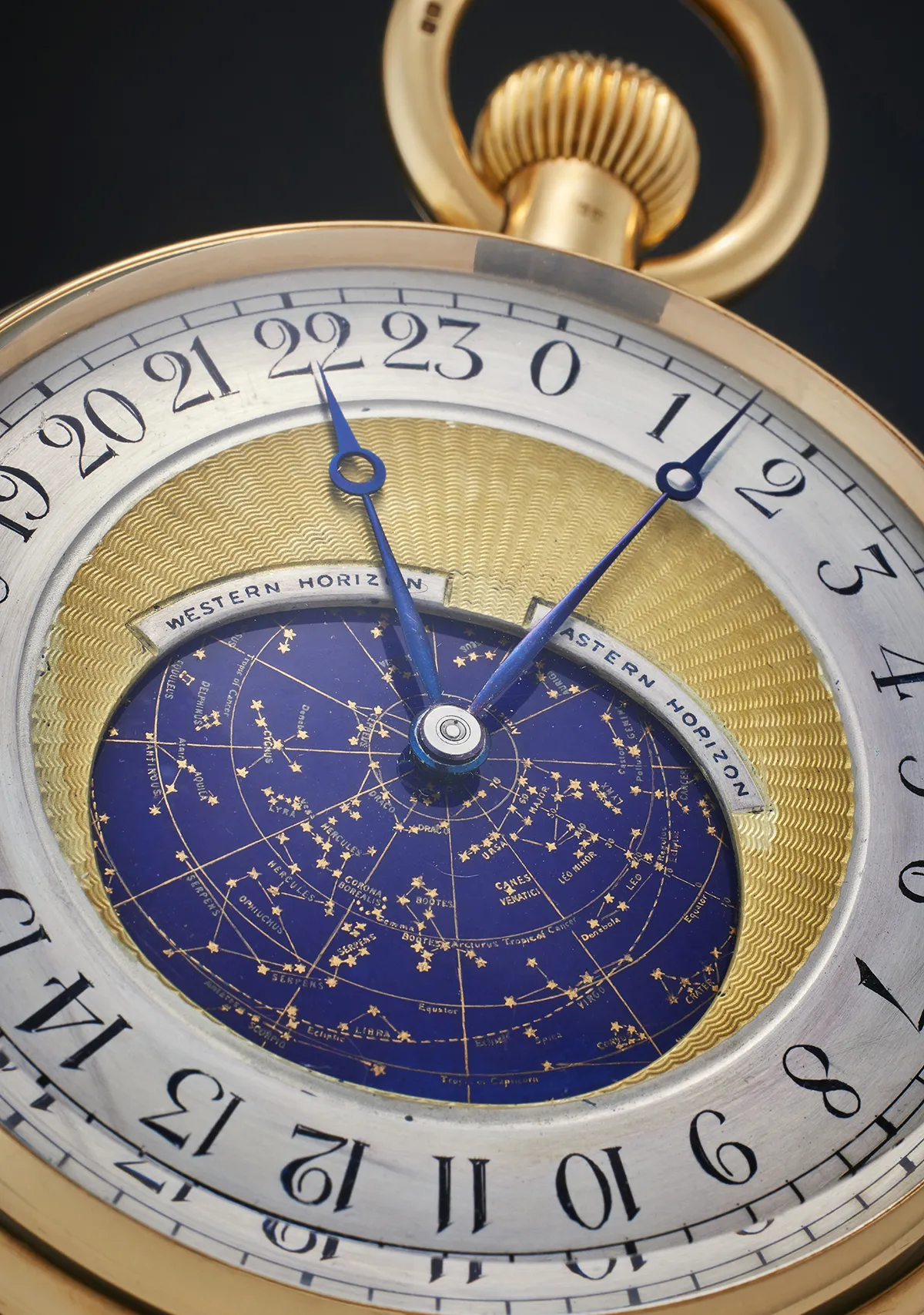
That extraordinary combination of a sky chart, a tourbillonTourbillonA watch complication invented around 1801 by Abraham-Louis Breguet that rotates the escapement in a cage to counter the effects of gravity on accuracy. Tourbillons are mesmerizing and very difficultGo to Tourbillon Glossary, and all the additional complications cements the Big Piece as a true standout in the AP lineup (and haute horlogerie at large). It is matched only by the 19-complication Universelle, which is on display at the watchmaker’s museum in Le Brassus, Switzerland.
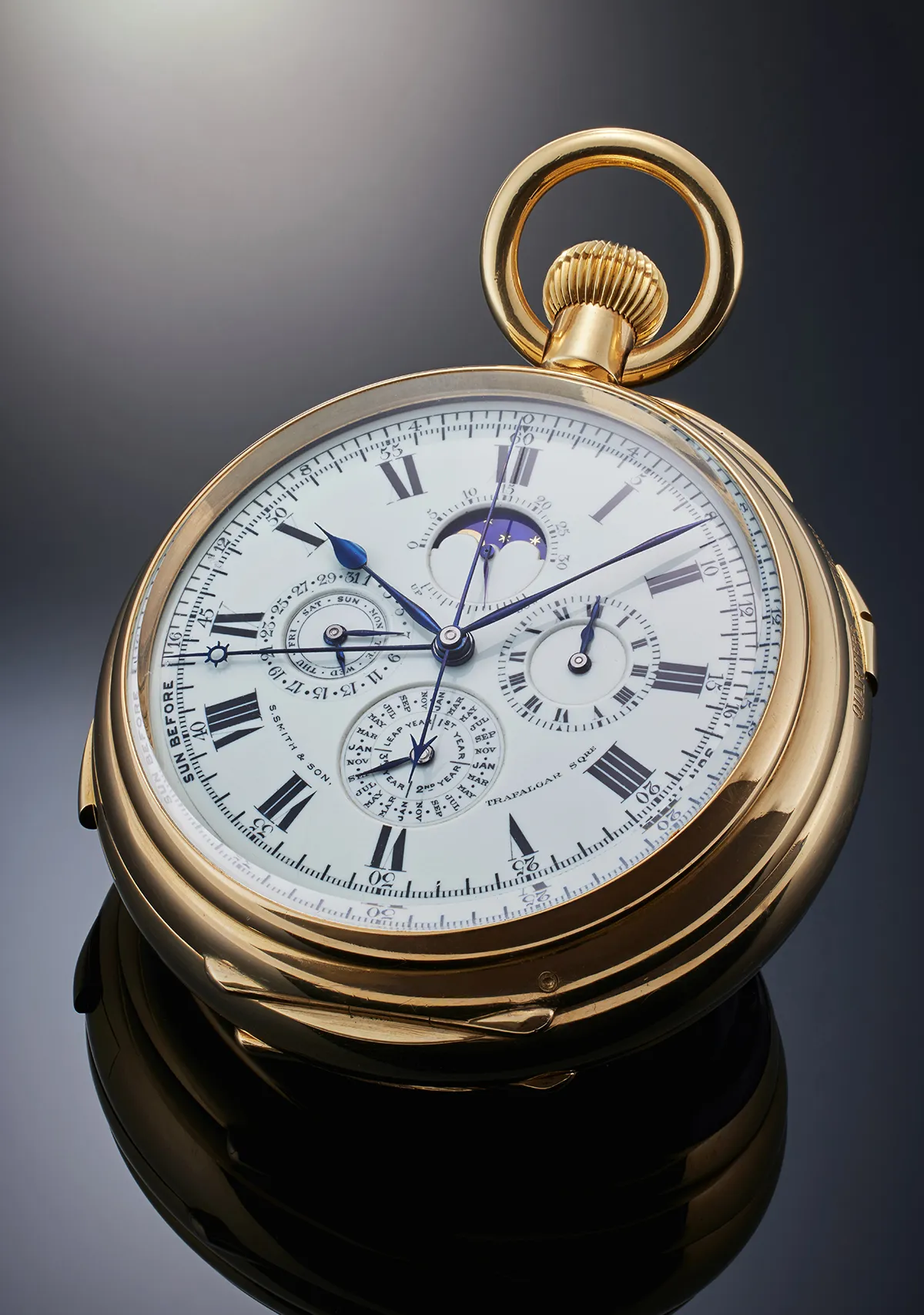
Adding to the allure of the Big Piece is the fact that it has been hidden for decades within a private collection. It was acquired by Robert M. Olmsted, one of America’s most discerning and meticulous watch collectors, back in 1970. It stayed out of the public eye until watch historian Gisbert L. Brunner wrote about it in an article in the Horological Journal in 1990. At that time, the location of the watch was unknown. It was later documented in Brunner’s 1993 book Audemars Piguet: Masterpieces of Classical Watchmaking, where it was described as “the crowning achievement of the company’s founders.”
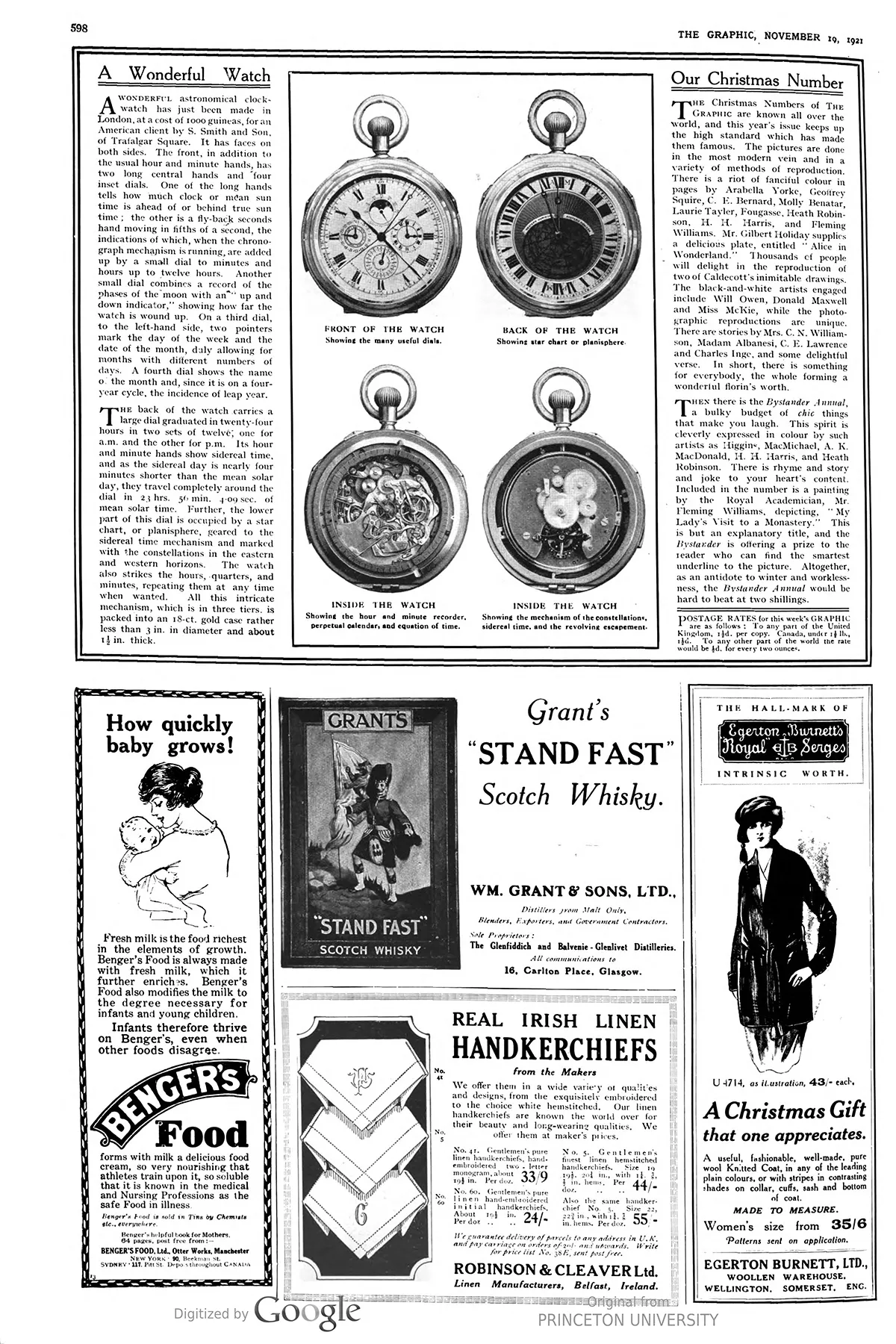
The December auction marks the first and only public appearance of the watch since Audemars Piguet unveiled it at the Geneva Watch Exhibition in 1920.
“To bring such a masterpiece, hidden for decades within one of America’s most discerning private collections, into the public eye is a rare privilege,” Daryn Schnipper, Sotheby’s Chairman Emeritus, International Watch Division, said in a statement. “It stands alongside the greatest ultra-complicated timepieces ever made, offering collectors and enthusiasts an unprecedented glimpse into the genius of traditional watchmaking.”
Other grails from the Olmsted collection, including two never-before-seen Patek Philippe pocket watches with double movements, will be auctioned off across two Sotheby’s sales (Important Watches on December 8 and Fine Watches from November 26 to December 10).
This article originally appeared in Robb Report US.