Face Forward: Minerva Brings Its Mechanical Secrets Into the Light


Walking into the Minerva Manufacture in Villeret, Switzerland, feels like a convergence of different eras. Minerva is one of the most historically important Swiss movement makers, and many, myself included, consider its movements among the most beautiful ever produced. The current building is relatively modern, set in the Bernese Jura. From the balcony overlooking the countryside, you can see a small house off to the left: the original site where watches, parts, and watchmakers first came together. Behind you, in the library, sit ledgers of orders from the biggest names in watchmaking history.
The building also houses Minerva’s manufactureManufactureA watchmaking term for a company that designs and produces most of its movements and components in-house, rather than relying on outside suppliers. Being a true manufacture signals deep expertise,Go to Manufacture Glossary offices, including something rare in the industry: the in-house capability to produce its own hairsprings.
Sit at the watchmaking benches and you look out at the mountain range that lent its silhouette to some of Minerva’s components. What struck me most was learning that, much as in the past, many watchmakers here split their time: watchmaking for part of the day, working their own farms or teaching younger watchmakers for the rest. It’s a direct link to the origins of Swiss watchmaking, which grew out of work craftsmen and farmers took on when the fields were unworkable.
In 2007, Montblanc took Minerva under its wing, a year after Minerva had been acquired by the Richemont Group. That move is widely credited with helping Minerva survive and grow. It also gave Montblanc two manufacture locations: Villeret for Minerva and Le Locle for Montblanc’s own primary watchmaking facility.
Earlier this year, Montblanc formally announced the decision to let Minerva step back into a more specialized, near-independent role within the group. Viewed from within the industry, it is an example of how to help a fellow Swiss maison survive, grow, and set up for its own future while remaining backed by Montblanc and Richemont. A positive outcome all around.
We’d sensed this shift coming for a while, and it was confirmed in a meeting with Laurent Lecamp, Global Managing Director of Montblanc’s Watch Division and, as of this year, CEO of Minerva. Lecamp’s background spans both traditional watch brands and distribution, as well as co-founding his own independent watch company, which is how we first met him. That mix of experience makes him well suited to bring together the different capabilities now converging to shape Minerva’s future.
Minerva’s reputation rests on some of the most beautiful movements ever made, and that history is precisely what led the brand to develop pieces that showcase this artistry without requiring you to take the watch off and turn it over to view the sapphire caseback. Many brands attempt this through skeletonized dials and movements, but that approach doesn’t offer as clear a view as what Minerva has done with its Unveiled Secrets line. For these watches, Minerva re-engineered the movements to put their best face forward, literally, from the dial side. It’s not a simple flip of the layout, but a full rethink of how the components fit and function together while keeping the dial legible and leaving room for future complications.
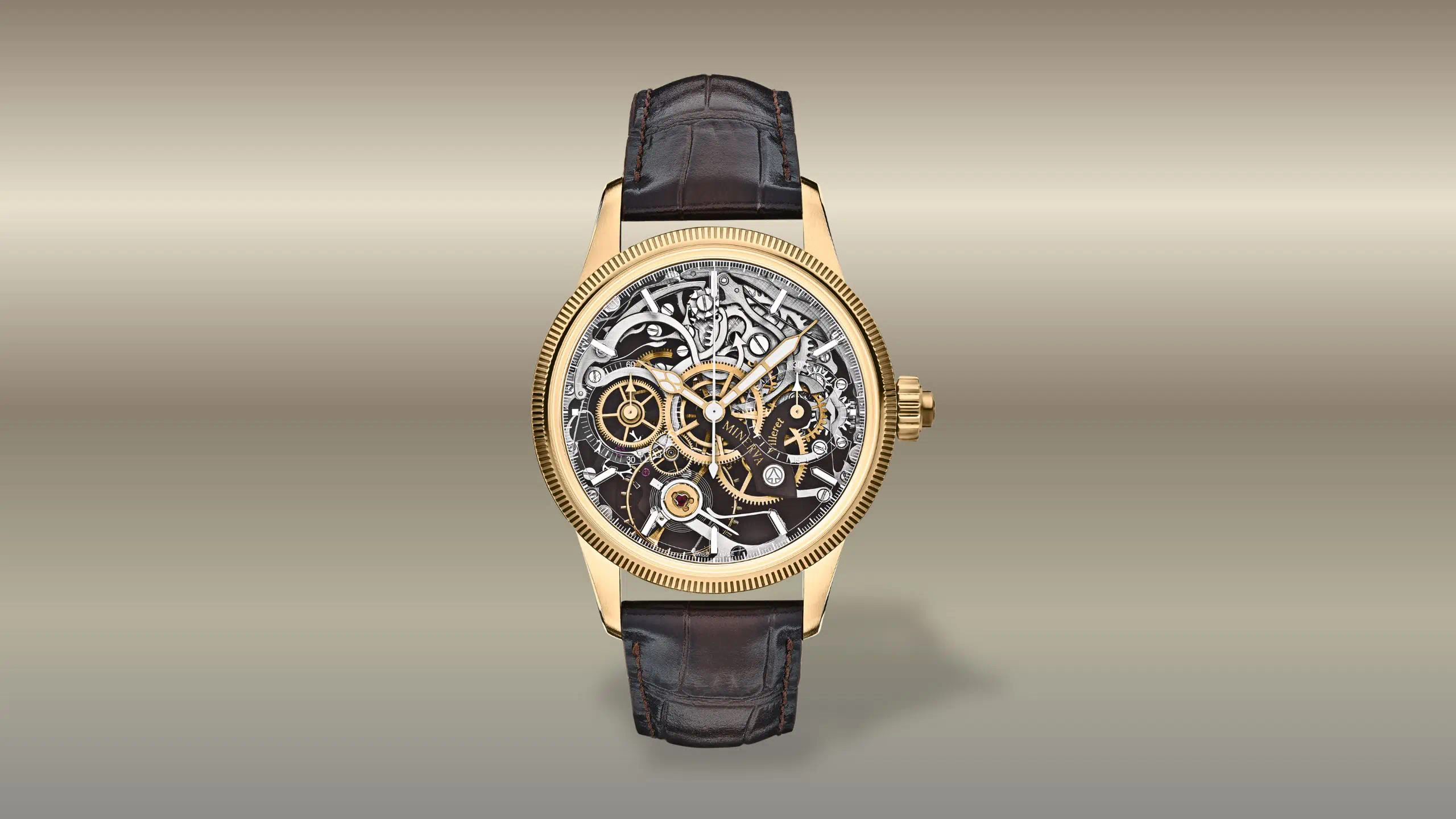
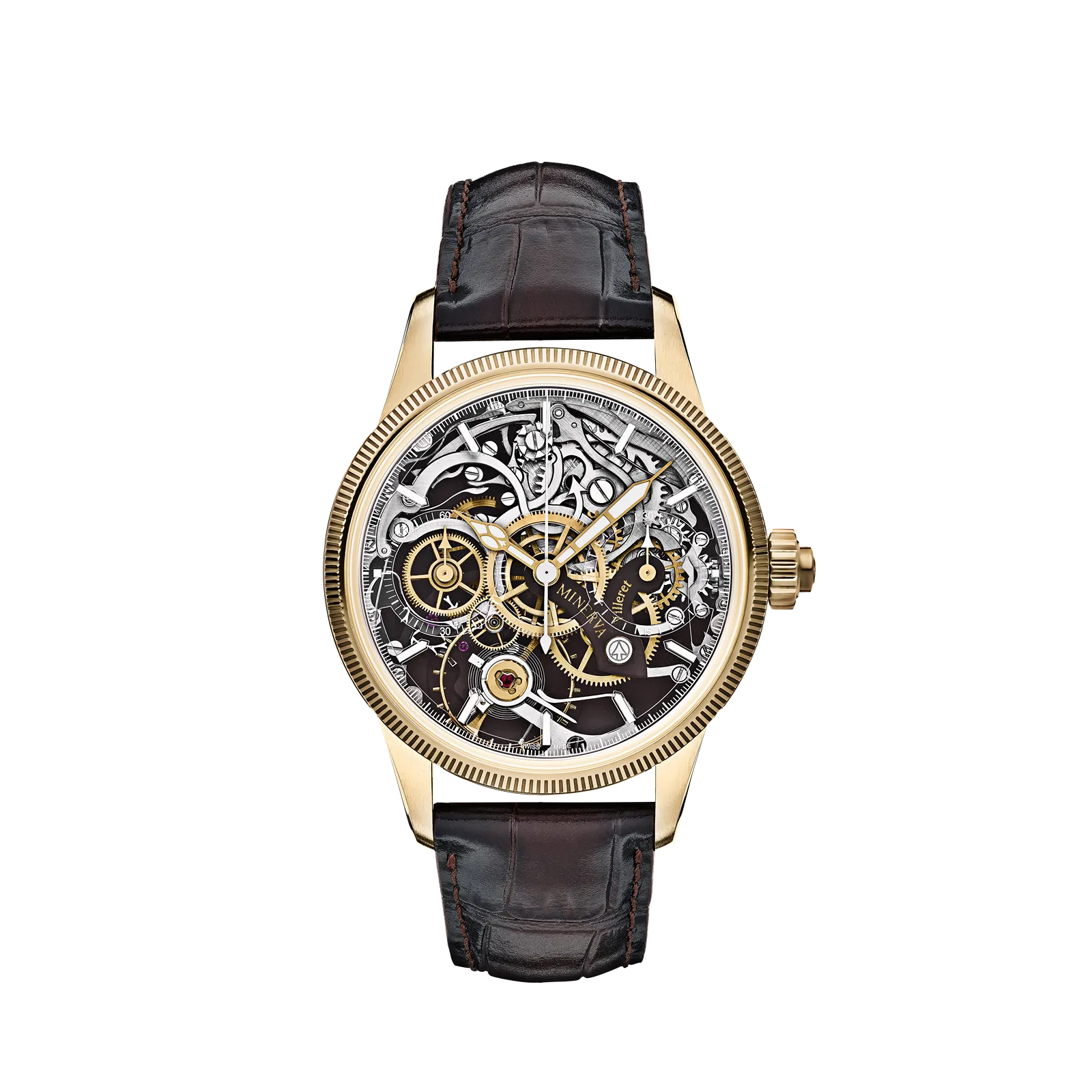
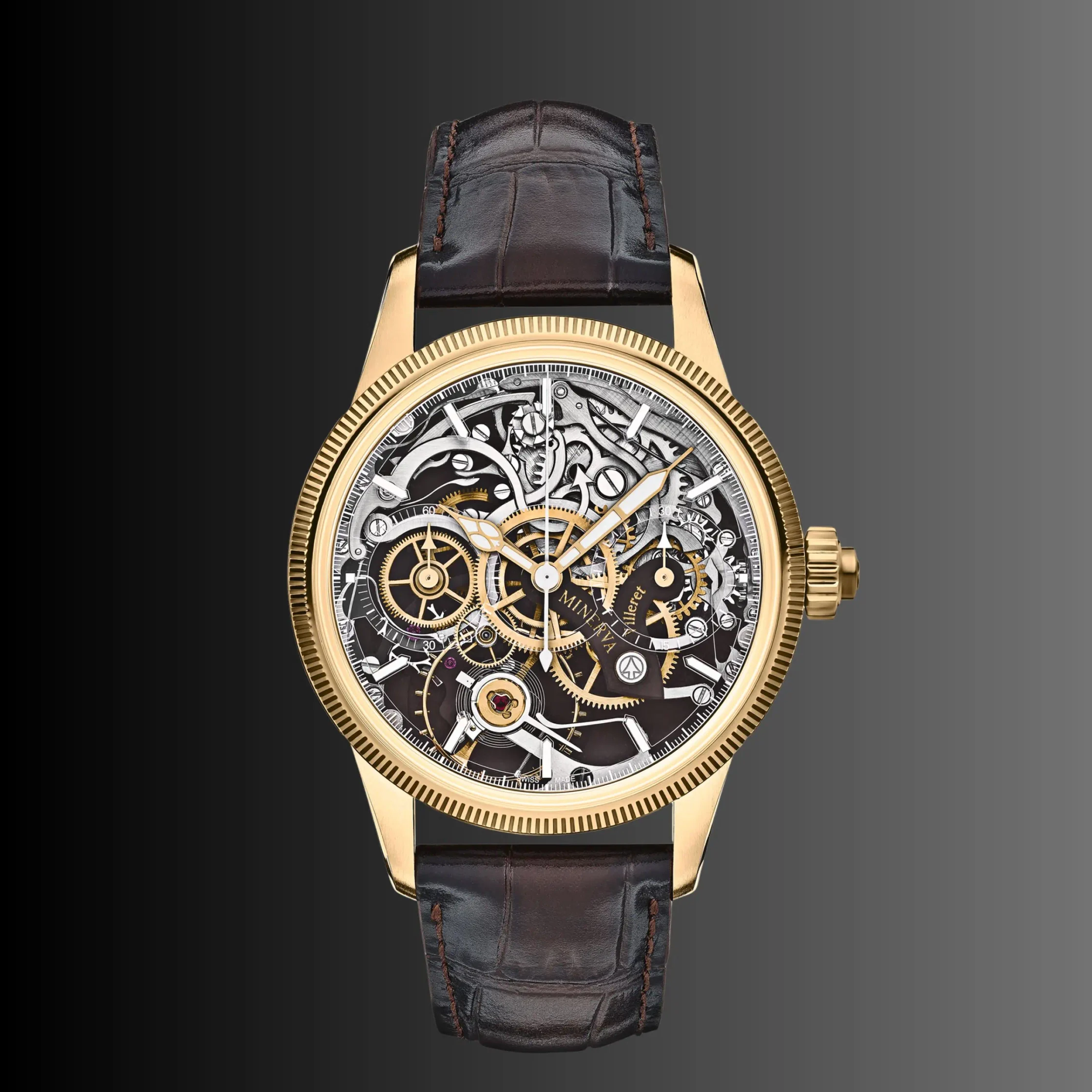
The new Minerva The Unveiled Chronograph Limited Edition 30 is the latest example of how the historic maison has flipped the workings of the interpretation of time. The reverse-mounted and engineered movement exposes bridges, levers, and gears and has apertures in the mid-case to allow light in. Crafted entirely in-house, this monopusher chronograph sits in a 43mm yellow gold case and will be limited to a run of only 30 pieces.
Montblanc did not participate in Watches and Wonders Geneva this year, so we didn’t get to see these pieces in real life. Even so, we knew Minerva planned to present them, and more to come, through small, private gatherings around the world.
One thing we’ve learned from being involved with watchmaking over the years is that brands often develop tunnel vision, with design and engineering decisions anchored to precedent rather than possibility. What Montblanc has done with Minerva, and under Lecamp, requires drawing on both the strength of a large luxury group and the independent mindset needed to understand different customer types and enthusiast desires. It is also key to understand how to operate as an independent watchmaker with a direct line to the people who love the brand.
It’s encouraging to see Minerva and its movements continue to play such an important role in watchmaking history and appreciation.
This article originally appeared in Robb Report Philippines’ Watches & Jewelry Issue, August 2026.
FAQs
Minerva is a historic Swiss watch manufacture known for its mechanical movements, particularly chronographs. Its manufacture in Villeret also has the rare capability to make hairsprings in-house.
Minerva’s manufacture is in Villeret, in Switzerland’s Bernese Jura. The site brings together watchmaking workshops and archives documenting its history.
The Unveiled Chronograph is a limited-edition watch with a reversed, manually wound movement that displays its mechanical components through the dial. It comes in a 43mm, 18-karat yellow gold case.
Five apertures in the case band allow light into the movement, helping reveal the individual components and their hand finishing.
The yellow gold edition is limited to 30 pieces. It uses a monopusher chronograph, with one push-piece controlling the start, stop, and reset functions.