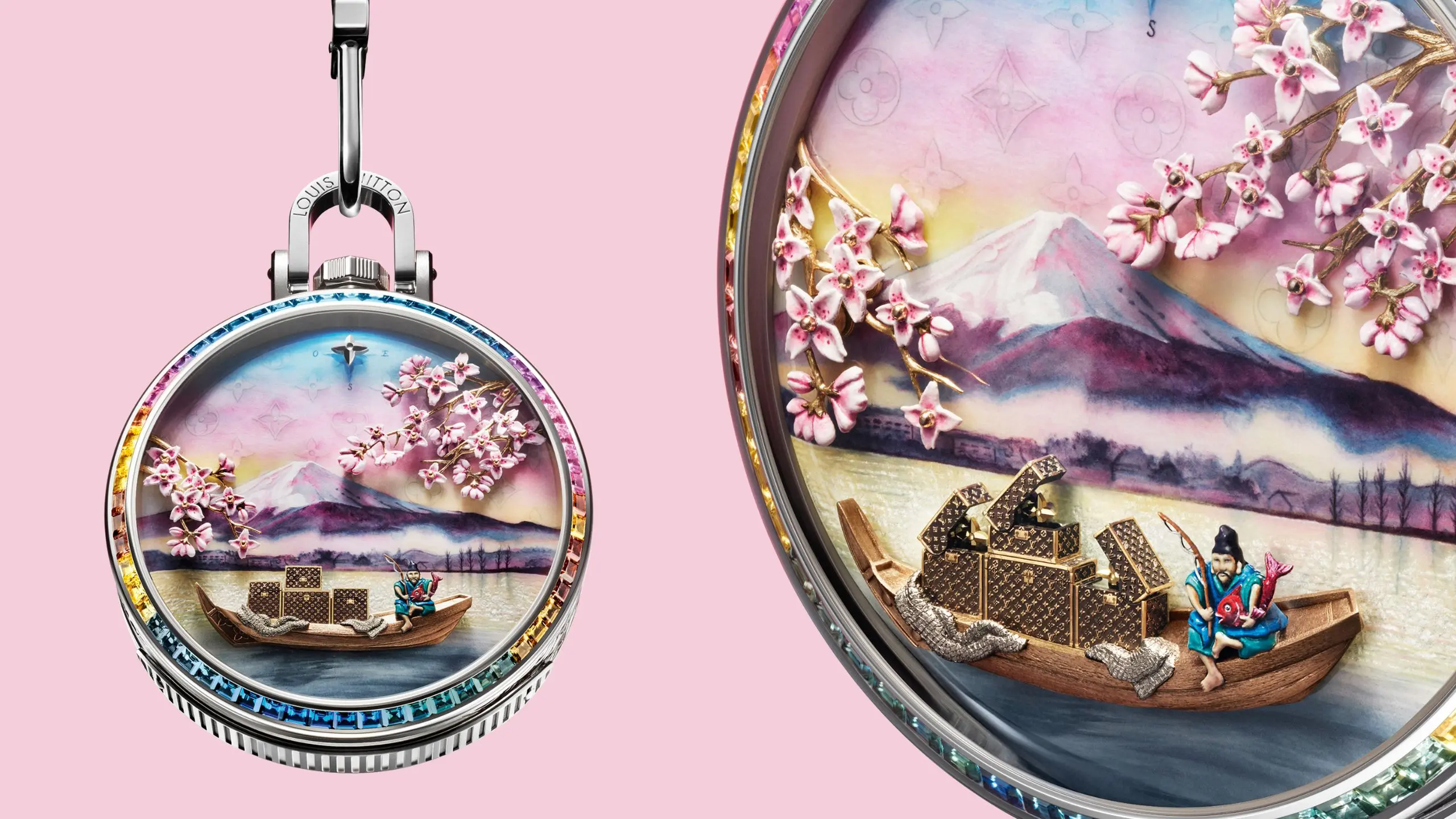
For most of modern history, the pocket watch was the original personal timekeeper. Gentlemen carried them in waistcoats, retrieving them with a practiced gesture, but soon enough, the wristwatch eventually displaced it—first through convenience, later through habit. Watch the video: In haute horlogerie, however, the pocket watch survives, though more as an heirloom or antique curiosity. A small circle of watchmakers has continued to explore the format, maybe due to a little bit of nostalgia, but also because it offers something modern wristwatches rarely can: space. With a larger case diameter and fewer ergonomic constraints, it allows the integration of complications and artistic flourishes that would be impractical—or simply invisible—on the wrist. (Historically, this is why many of the most complicated watches ever made were pocket watches.) Louis Vuitton’s Escale au Mont Fuji belongs squarely in that tradition. The piece transforms the format into something closer to a moving tableau:..