Why Pineapple Waste May Be the Philippines’ Most Promising Design Material




In the last few decades, innovations in the textile industry have flooded the global market in volume and variety. Whether one looks at garments or industrial materials, mass-produced synthetic fibers literally bind all aspects of our daily life. Yet, it is no secret that the excessive use of these often-imported materials is both ecologically unsustainable and a breeding ground for unethical labor practices.
This is what newly founded material innovation company Hiblatech seeks to address: beyond pushing the boundaries of local textile applications, it aims to contribute to a lower-emission, circular textile economy. Cofounded by Tina Sabarre and Kristine Bañez, the company’s main line of non-woven felts and woven fibers are made from pineapple-leaf fibers, departing from the centuries-old material tradition of piña.
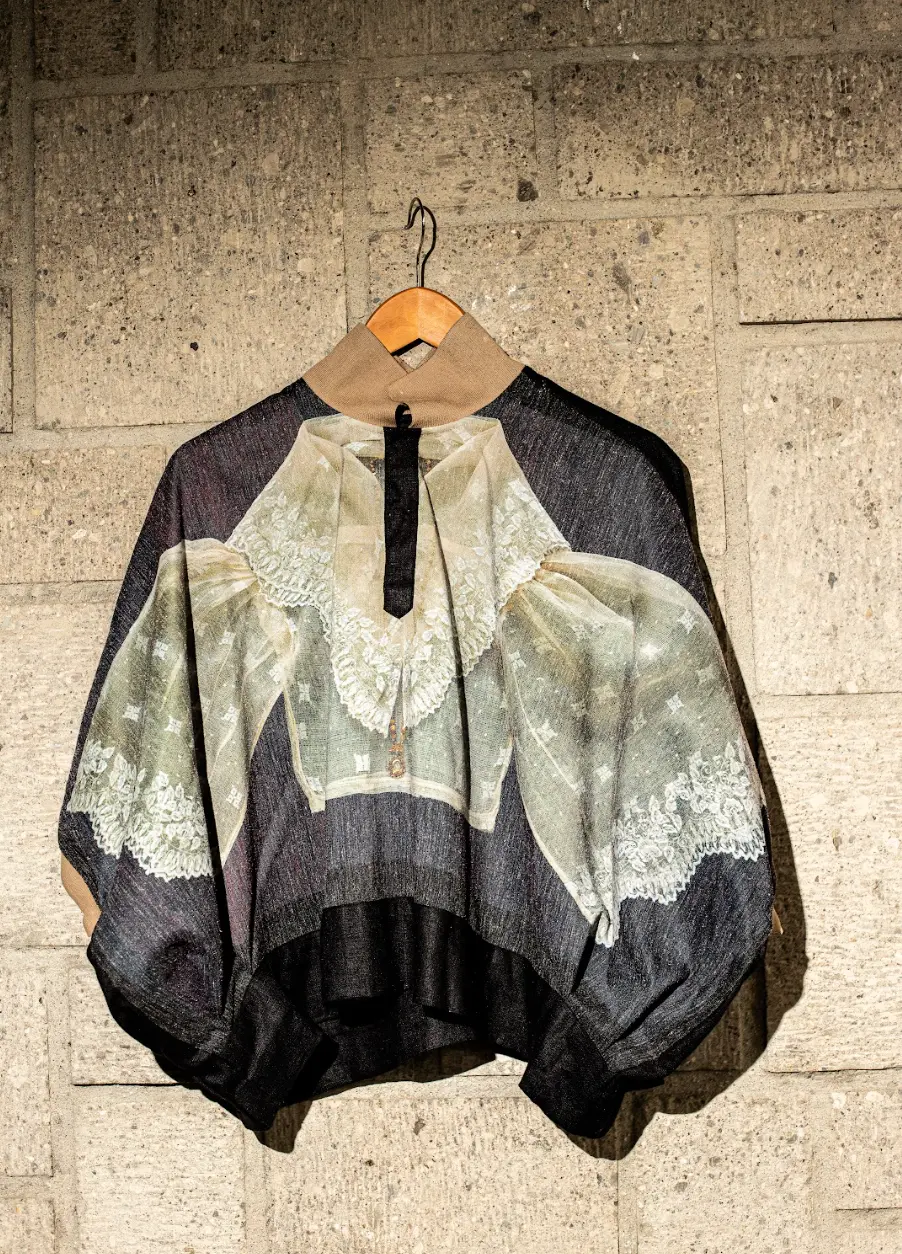
A product of colonial trade and indigenous weaving practices, handloomed piña is most often used in making garments like the Barong Tagalog. With more than 2.6 million tons of pineapple leaf waste produced annually in the country, Hiblatech seeks to expand the material’s applications beyond the delicate forms piña fabrics often end up inhabiting.
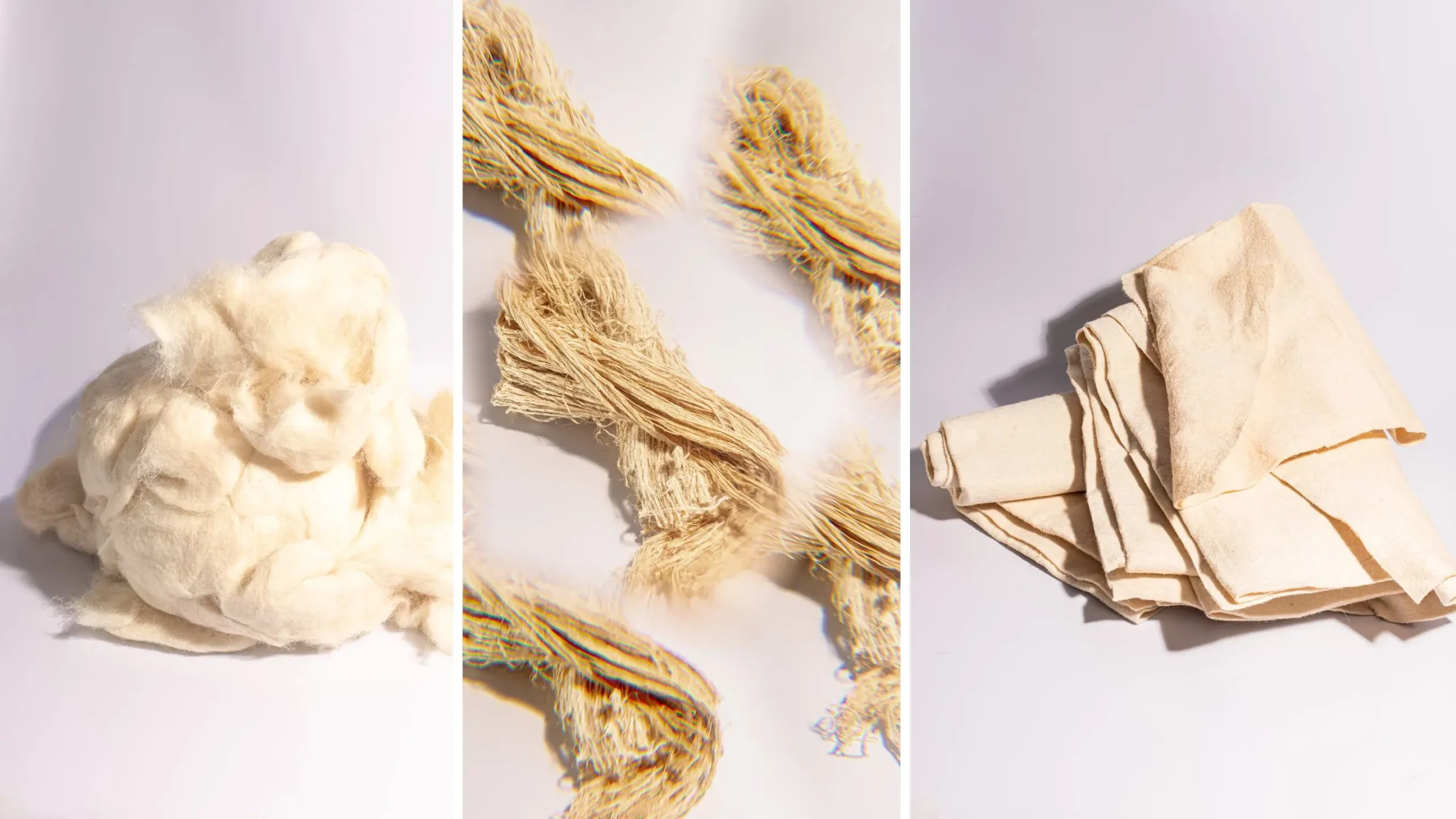
Working with manufacturer Chuck Lazaro of Asia Textile Mills, the material-based venture offers a range of pineapple leaf-based fibers and fabrics, all ripe with a myriad of production possibilities. In the short time which the product has circulated fashion and design spaces, young creatives have already begun to unravel the material’s various potentials.
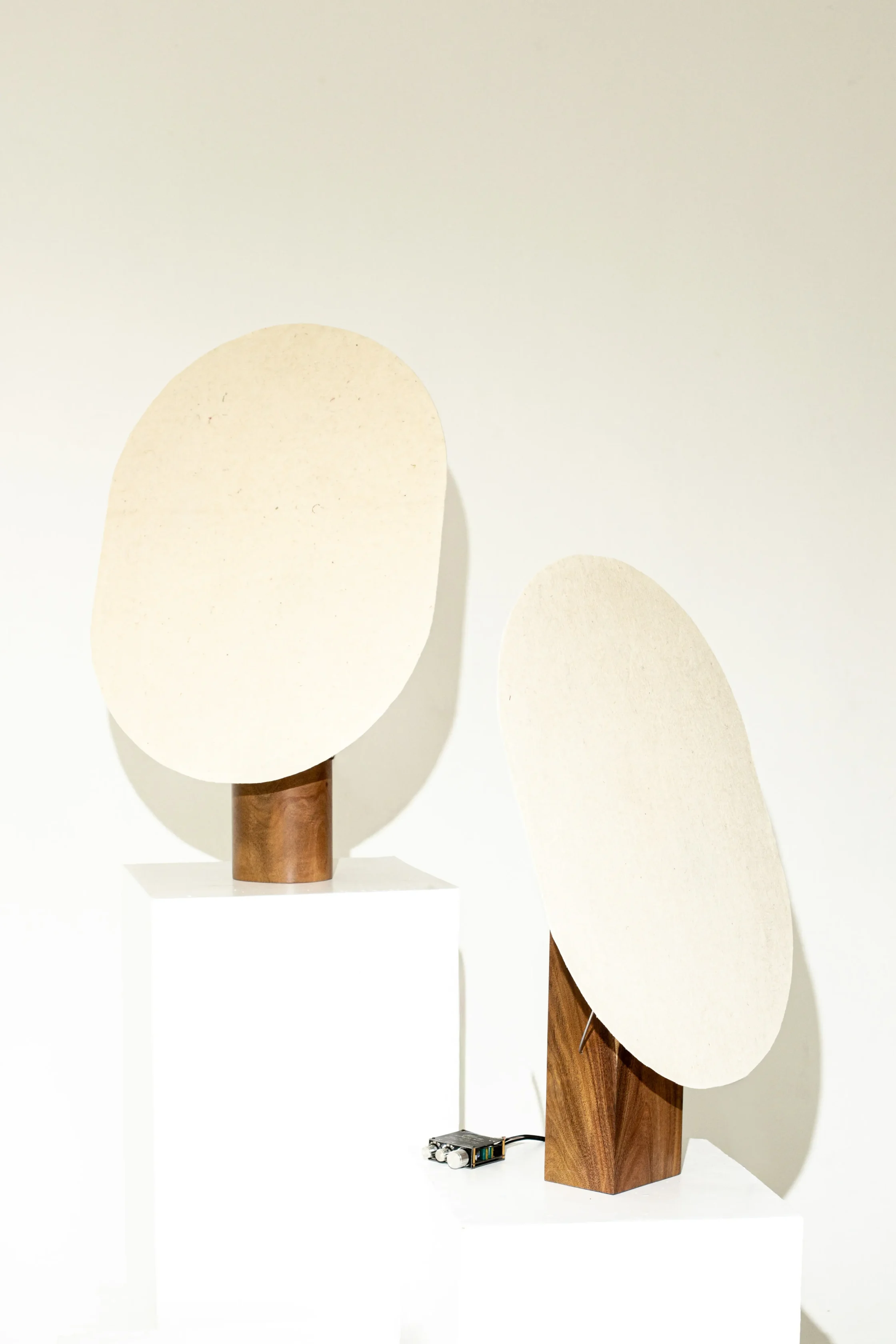
This new rendition of a well-known form doesn’t behave the way designers expect them to, Sabarre notes, and this challenge sparks innovation, forcing those handling Hiblatech’s products to adjust “processes, not just aesthetics.” One such example of inventive design approaches is embodied by Edward Sibunga’s application of Hiblafelt in stereo systems. Under his furniture design studio label e/lou, Sibunga crafted the “Piña Sound Panel,” using a panel of laminated Hiblafelt as a sonic conduit for his sound system. Despite this being the designer’s first foray into the speaker market, this innovative inversion of piña’s sound absorbent quality is likely to draw attention from dedicated audiophiles seeking textures, sonic and material, in their listening rooms.
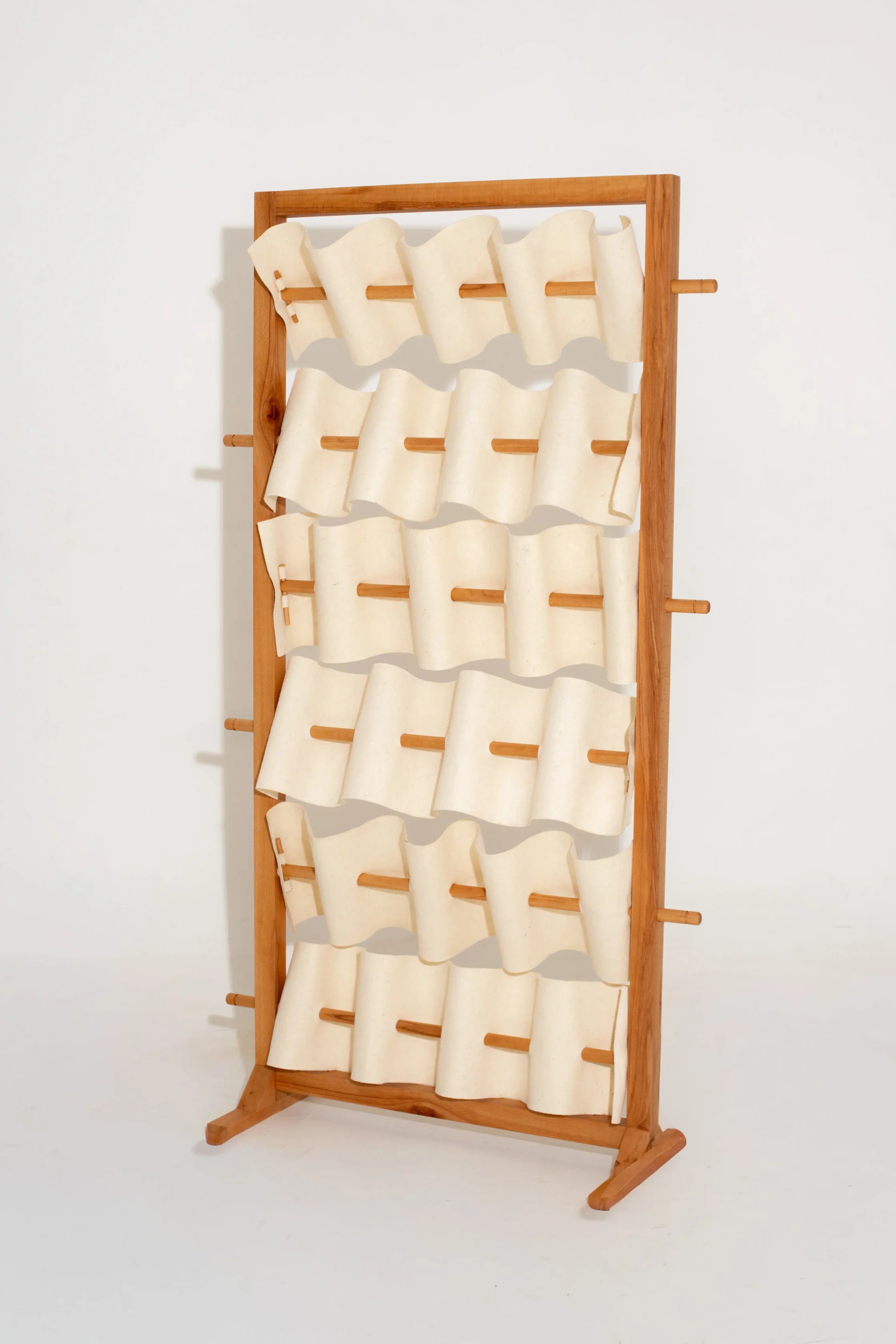
In the spirit of Hiblatech’s own mission of remixing familiar forms to create something novel, acclaimed industrial designer Selena Placino’s freestanding room divider “Ihawi” is another example of how this new textile might figure into interior spaces. Taking inspiration from the geometries and motions of the ihawan, rows of thick non-woven Hiblafelt strips are bent into waves and skewered through twistable wooden rods, allowing users to control the amount of light coming through. Bringing a playful minimalist interpretation of everyday culture into a piece of furniture, Placino’s room divider is a functional conversation piece, taking full advantage of Hiblatech’s new material innovation.
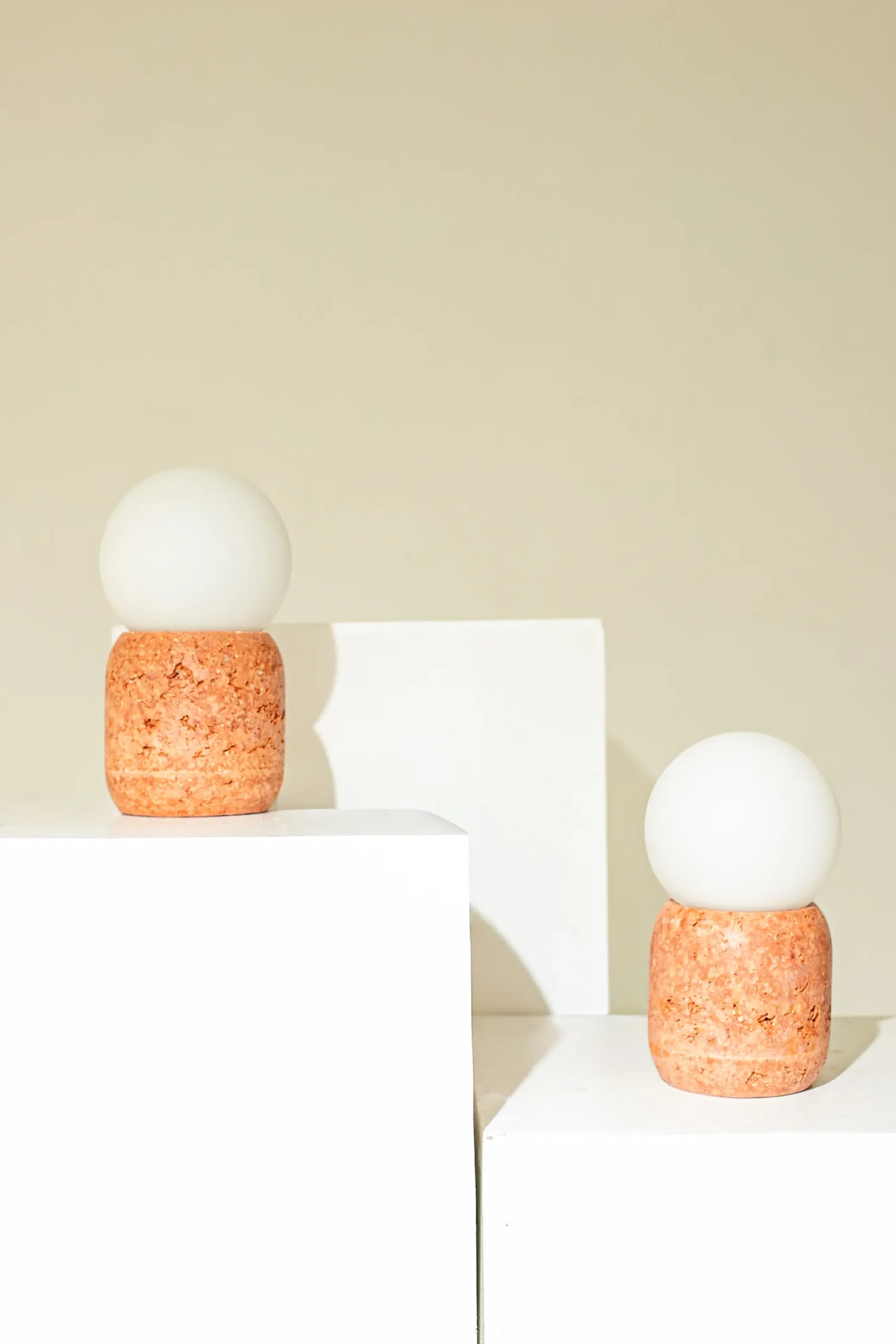
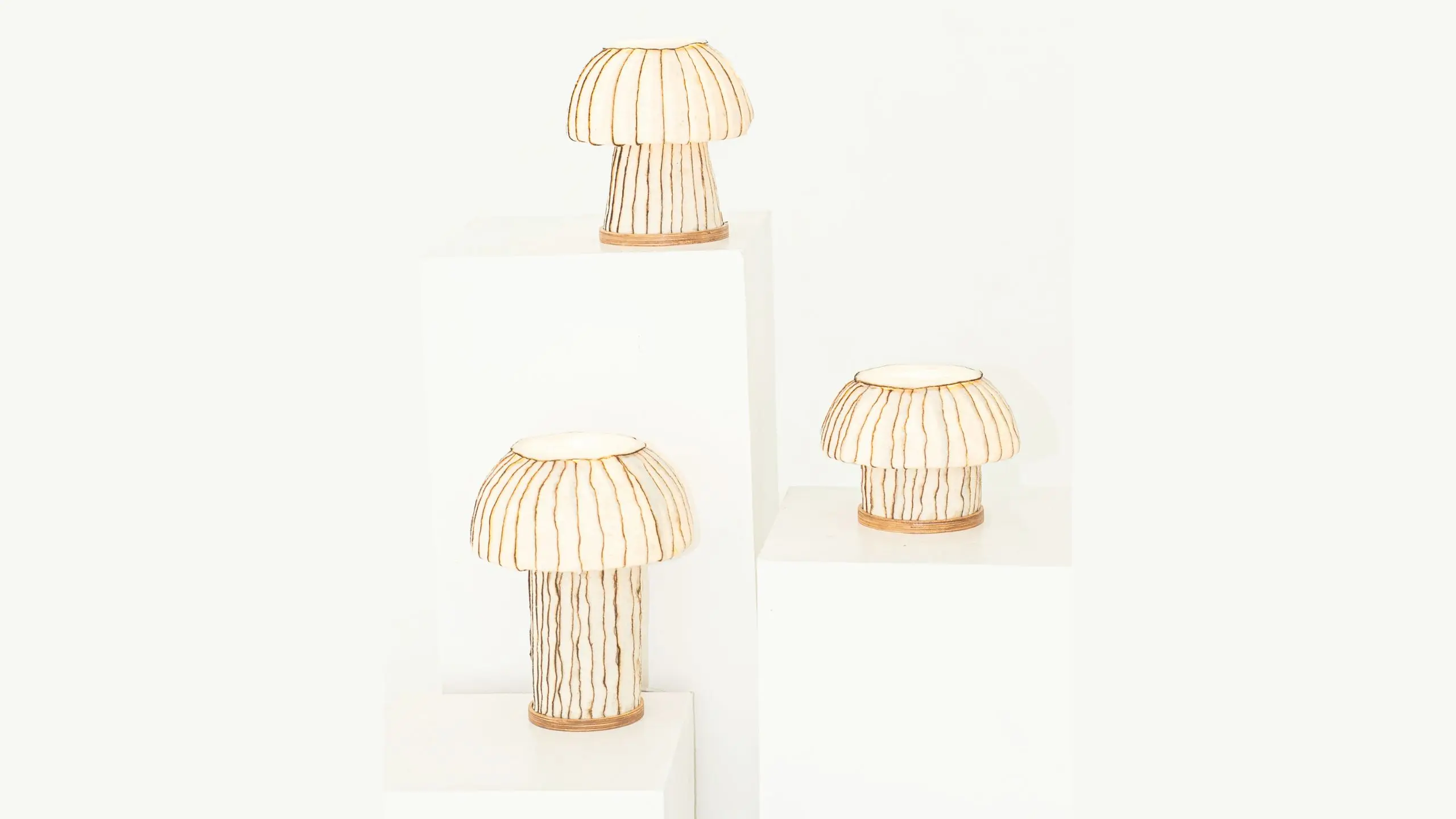
Beyond simply treating pineapple fibers as the starting point for soft fabrics, creators like Viktoria Laguyo and Daniel Ubas of Krete Manila have also demonstrated how this material plays into their practice of concrete design. Subverting widely held assumptions that concrete forms lack a certain artistic grace or aesthetic pull, the duo has worked with cement to create everything from smaller-scale kitchenware to larger furniture pieces. Drawing from this artistically refined yet pragmatic design philosophy, Laguyo and Ubas meticulously formulated a hybrid construction material combining the lightweight composite of recycled paper called papercrete with byproduct Hiblatech fiber trims to create something entirely new. Used as the base for their “Pouf Lamp,” this lighter and more durable concrete alternative proposes new possibilities, not just in miniature household furniture; it also holds broader implications for the local construction industry.
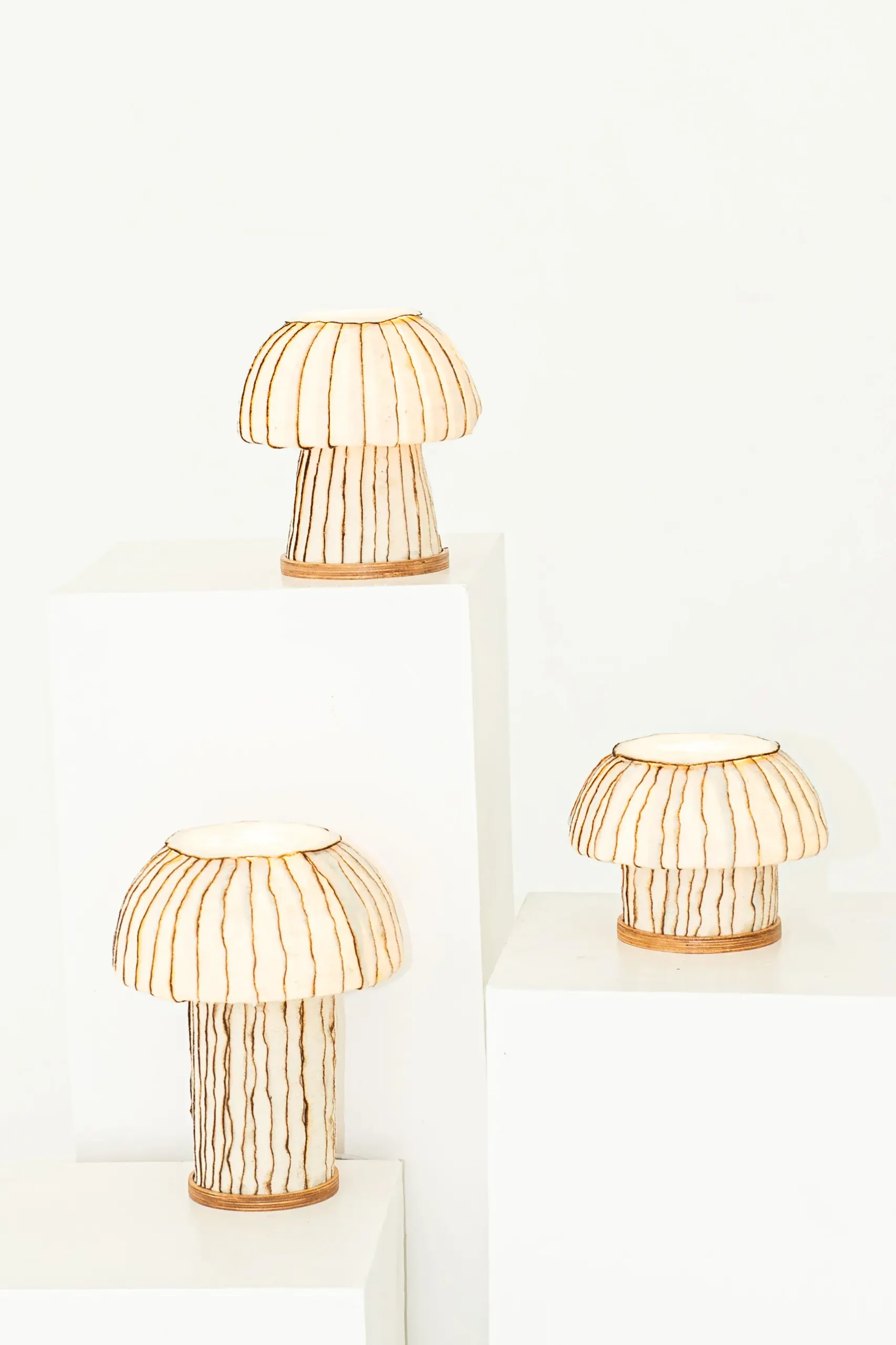
Of course, the possibilities offered by Hiblatech’s venture into pineapple-leaf waste fibers are not just for experimental artisans and industrialists, but also for the whole textile production chain. Mr. Lazaro, who has worked with this material for over two decades servicing both local and foreign clients alike, has stressed the importance of his mission in popularizing pineapple-based materials.
With the Philippines being the second largest supplier of pineapples worldwide and with over 50,000 hectares of land dedicated to their harvest, the textile veteran stresses the opportunity to take advantage of an abundant resource while also supporting the local economy and environment.
More information about Hiblatech is available in their website.