Milo Naval’s Yakisugi Finds Form in the Flames


Fire enters Milo Naval’s Yakisugi as an unlikely collaborator at Aphro Living. We could say that the metamorphosis feels inevitable for a designer who has spent decades coaxing new life from wood. Across interiors and furniture, his vision has long relied on lucid geometry and an economy of form, with indigenous materials lending warmth and tactile depth to his brand of modernism, one that feels distinctly Filipino without becoming too soullessly decorative.
The exhibition is Naval’s first solo presentation as a visual artist, a break from his naturalistic design language. For decades, the designer has worked with the same fundamental questions: What can certain materials withstand? How do I reveal their natural character? How can order and irregularity co-exist?
Interestingly, the show also took shape through Naval’s collaboration with Christina “Ling” Quisumbing Ramilo, the renowned mixed-media and assemblage artist who curated Yakisugi. Their partnership began through one of those fortunate convergences in the art world. Quisumbing Ramilo happened to be at Aphro while founder Tina Fernandez and Naval were considering how the works might inhabit the space. Fernandez recognized a kinship between their practices, particularly their shared sensitivity to familiar, reclaimed, and materially expressive objects.
From Function to Surface
Yakisugi gives those questions a natural point of departure. The traditional Japanese technique chars the surface of wood to preserve it, deepening its texture and darkening its grain in the process. “I was looking for a way to preserve wood without using chemicals. That was how it (the concept for the show) started,” Naval tells Robb Report Philippines.
He wanted the work to pass through a genuine process of development rather than arrive as an extension of his reputation as a designer. Over roughly three years, he experimented with various methods. “I wanted to go through the process of developing the work and finding my own voice.” Naval, after all, had already spent decades building a highly recognizable design practice.
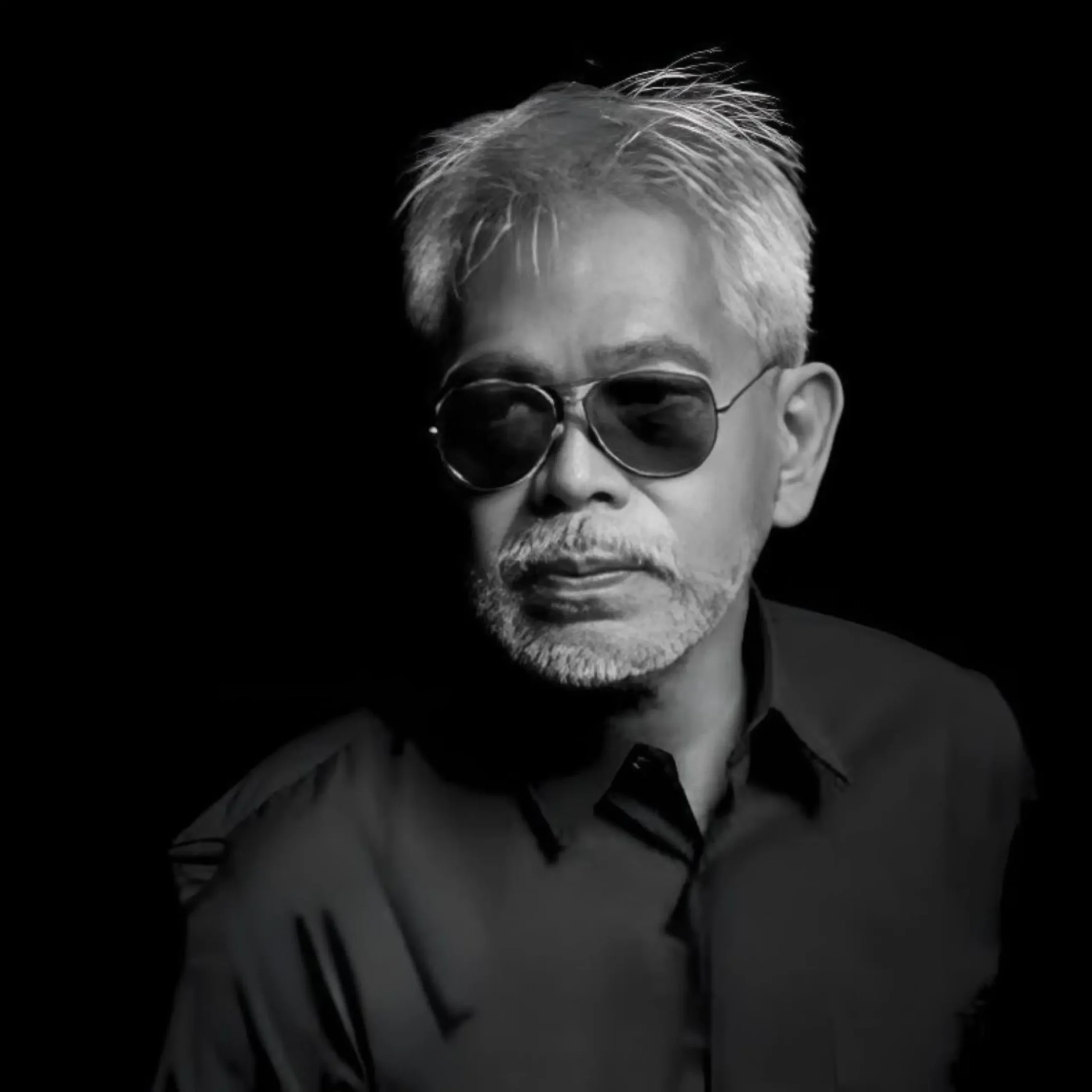
Trained in architecture at the University of Santo Tomas and interior design at the Philippine School of Interior Design, Naval worked in interiors for more than 15 years before establishing Evolve Designs in 1997. The company developed an international furniture practice known for clean forms and the transformation of indigenous materials into contemporary objects.
Flame introduces accidents that cannot be fully drafted in advance. Burning, it seems, functions as a kind of excavation, appearing to damage the wood while exposing more of what it contains. Grain becomes topography, and imperfections gather into rhythm. A material associated with stability begins to resemble parched soil, cooled lava, or an aerial landscape divided by rivers and fault lines.
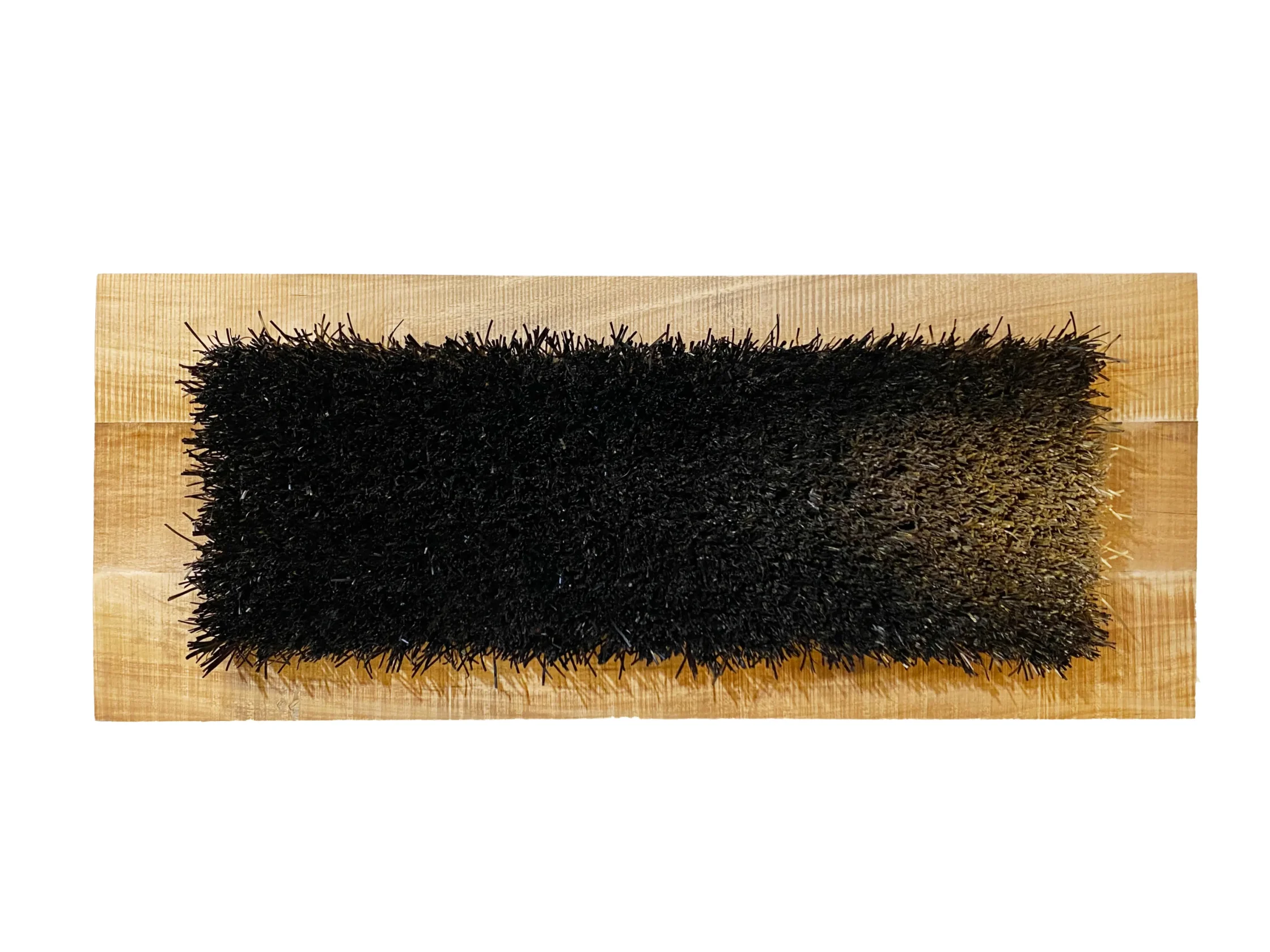
Consider “Renewal 2,” which makes this duality especially vivid. A dense bed of blackened fibers lies within a pale wooden field, its surface gradually loosening into earthy brown and gold along one edge. The shift resembles a landscape in the aftermath of fire, when the severity of the burn begins to yield to another season.
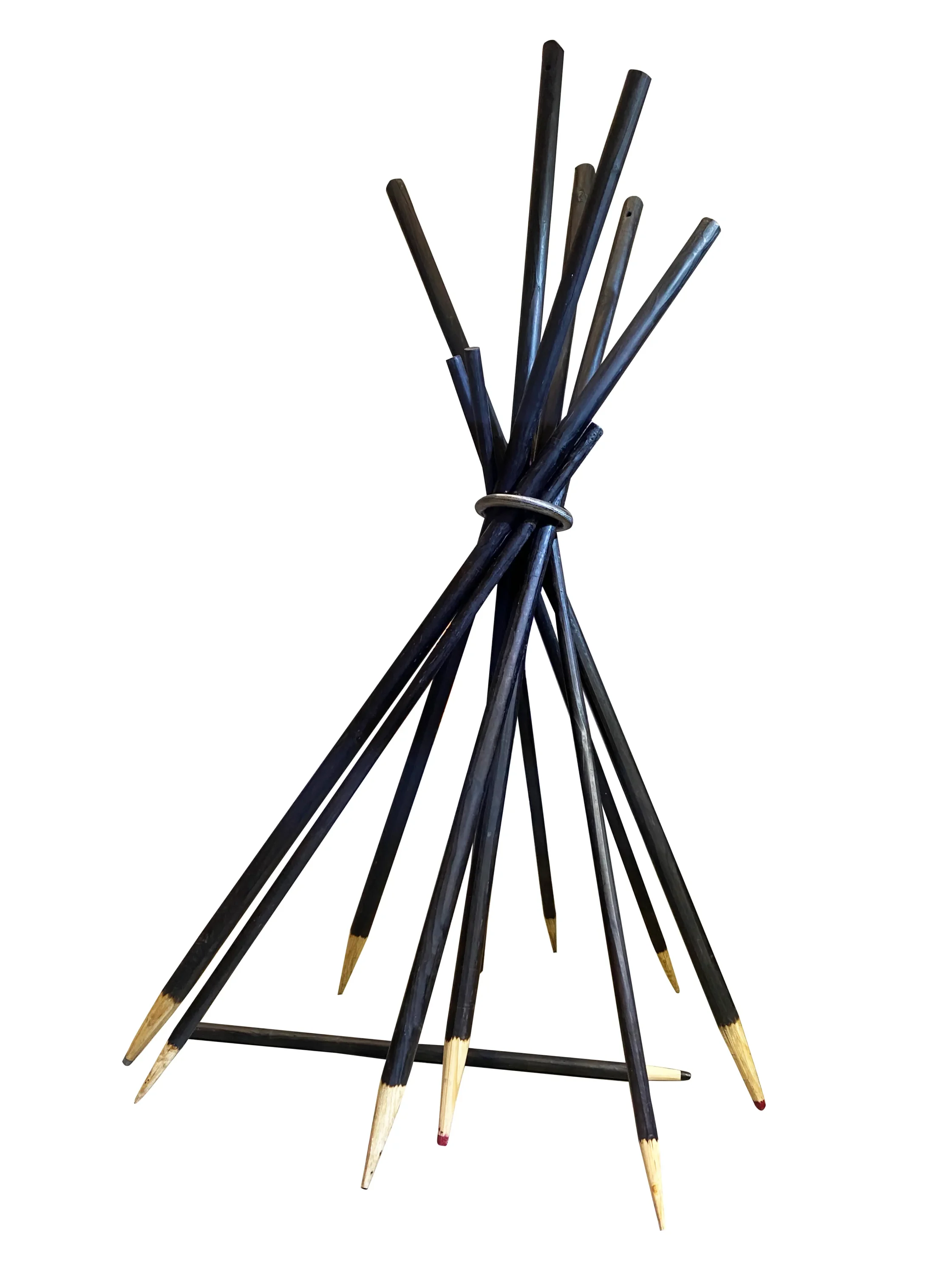
Naval carries the same vocabulary into three dimensions with “Monolith 10,” a gathering of long, blackened rods held together by a metal ring. Their pale, sharpened ends remain exposed, making the sculpture resemble a bundle of kindling, a clutch of oversized pencils, or surveying stakes waiting to mark out new territory. The title is almost playfully contradictory, since the thing achieves its imposing weight through an accumulation of slender rods rather than a single solid form.
“I like the character burning brings to the wood—the texture, the color, especially the cracks,” he says during our conversation, pointing to its altered surface.
Weather Held in Geometry
The designer contains these restless surfaces within strict compositions, where lines intersect and borders divide fields of matter; yet, the geometry never succumbs to rigidity. Rods bow, intervals narrow, and shadows alter the cadence of the grid, allowing the hand and the material to remain visible within the system.
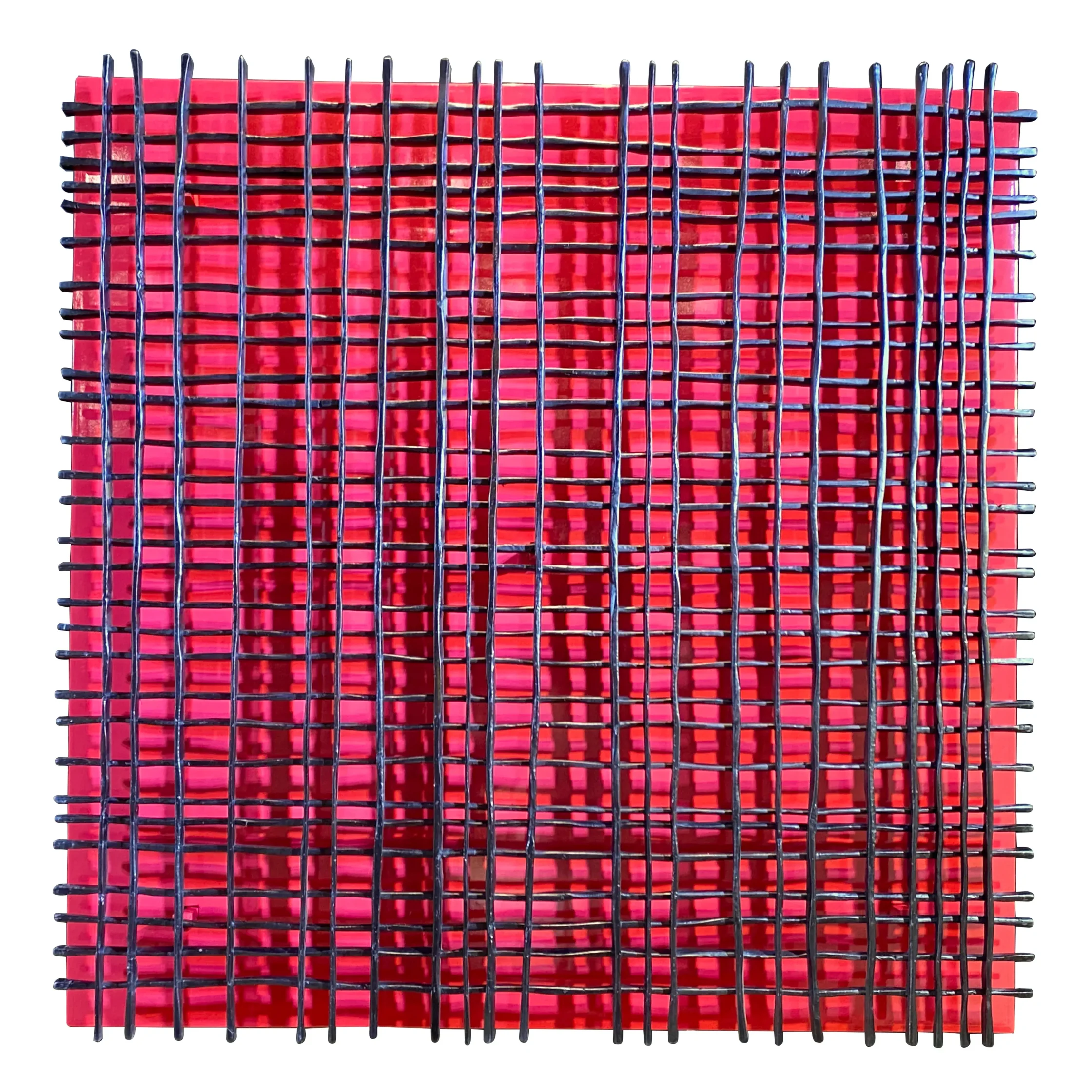
That sort of friction comes alive in “Tickled Pink,” where an irregular black lattice presses against a luminous field of red and magenta. Its translucent ground flashes between the bars like heat behind a screen, reimagining the practice of weaving into something more electric and urban. The work appears ordered from a distance, but its individual lines prevent it from becoming sterile, as they buckle and drift.
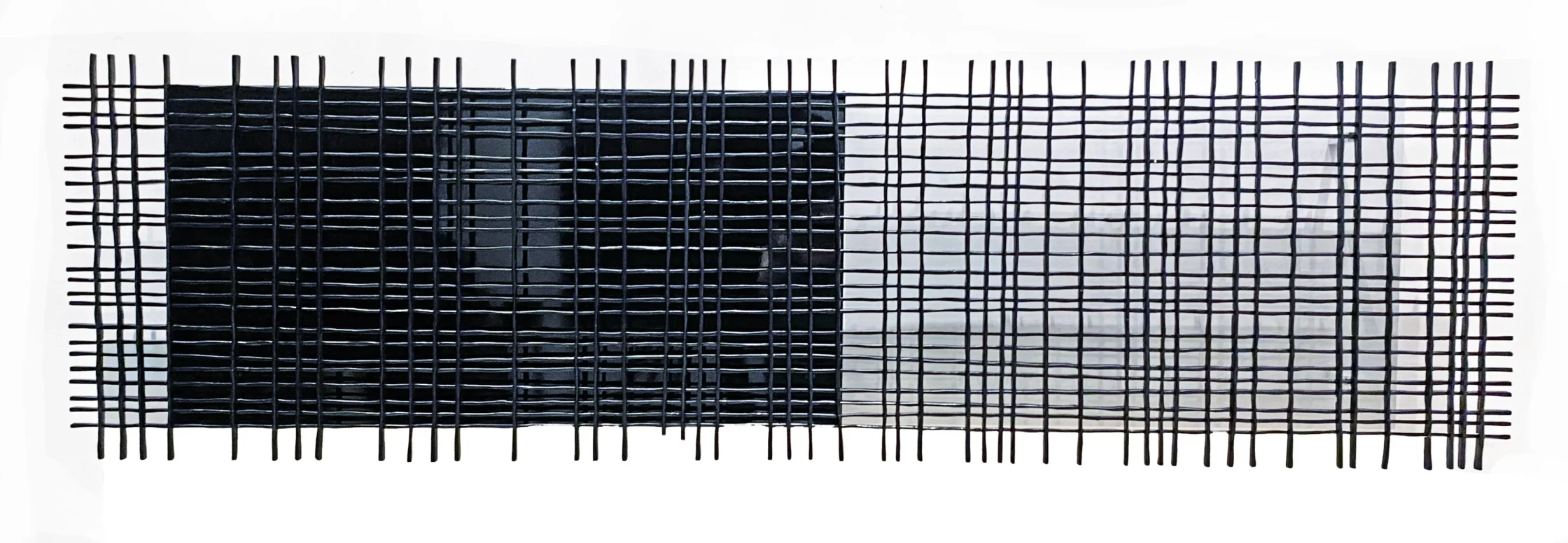
“Ebony and Ivory,” likewise, extends a similar woven structure across a long horizontal plane divided between darkness and light. The black rods continue uninterrupted across both fields, tying the opposing halves into a single composition. Its title may suggest contrast, though the work is more interested in the continuity of the line, specifically in how it passes through night and day, as well as density and openness.
Weather takes on a harder, more architectural turn in “A Lovely Rainy Night.” Rows of raised pyramidal forms gather across a metallic rectangle, their angled surfaces catching faint glints against a larger black field. They can read as rooftops seen through a downpour, folded umbrellas, or droplets translated into sharp geometry. Naval builds its atmosphere through the dim shimmer of light across metal.
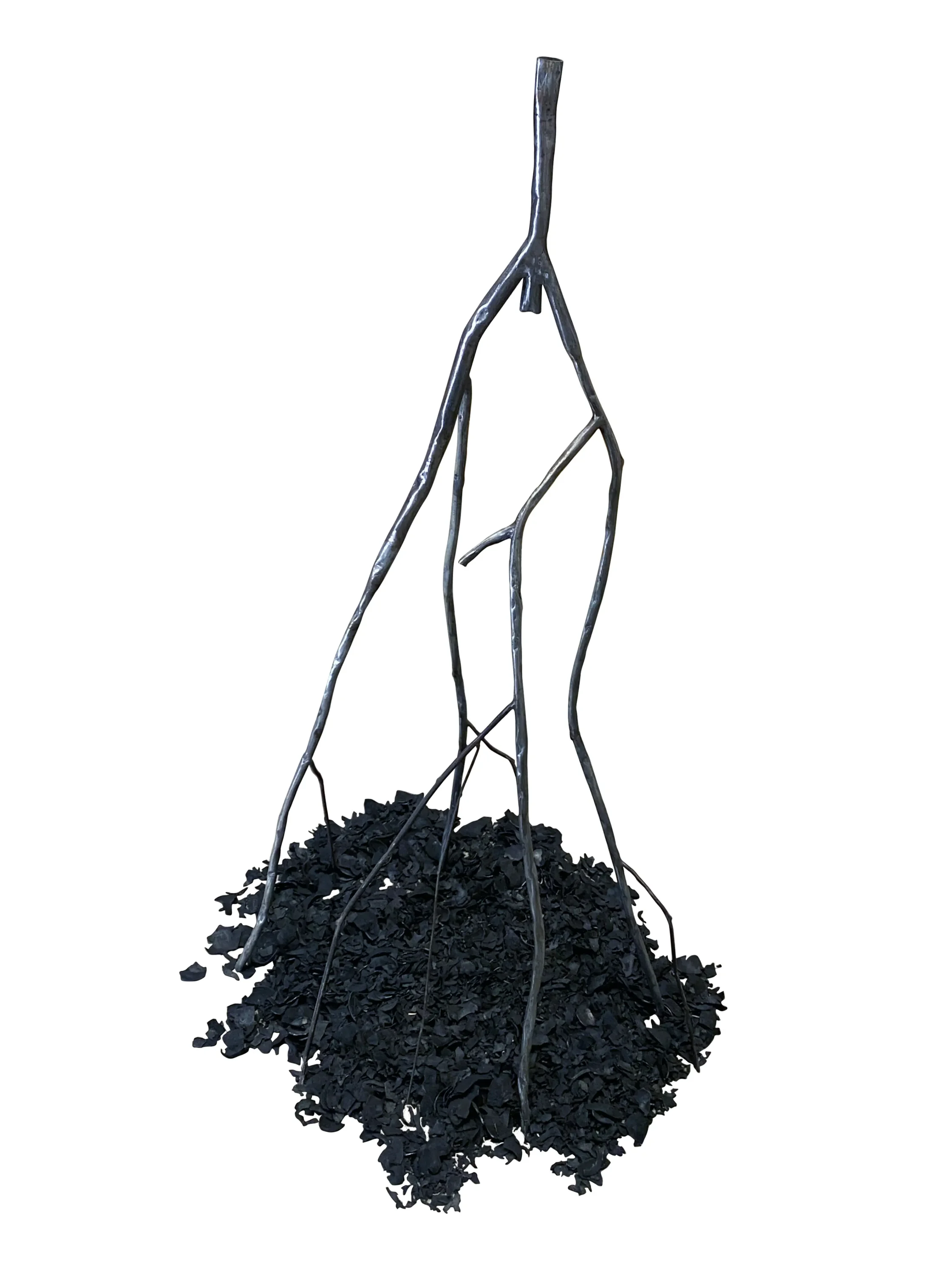
Then there’s the commanding “Kidlat 1,” an eight-foot-tall sculpture that moves beyond the wall altogether. A branching metal armature rises above a suspended mass of blackened fragments, its forked lines recalling lightning, exposed roots, or the skeletal remains of a tree after a strike. The work holds the instant after impact, when the current has already disappeared, but its path remains legible in the scorched matter below.
Naval describes yakisugi, the practice, as an “expression of human order placed against the volatility of the natural world.” Fire, rain, lightning, and wind then become subjects without being reduced to illustrations. Yakisugi finds its beauty in that tension, allowing creation and destruction to coexist across the same scorched surfaces.
Milo Naval’s Yakisugi runs at Aphro Living, The Alley at Karrivin, 2316 Chino Roces Avenue, Makati City, through August 22, 2026.
FAQs
Yakisugi explores the relationship between human order and the unpredictability of nature. Through charred wood, woven fibers, glass, and galvanized metal, Naval interprets fire, rain, lightning, and other elemental forces using geometry and texture.
Yakisugi is a traditional Japanese method of preserving wood by charring its surface. Naval uses the process to deepen the wood’s grain, reveal cracks and irregularities, and produce a range of blackened textures across the exhibition.
Milo Naval’s Yakisugi is on view at APHRO Living, located at The Alley at Karrivin, 2316 Chino Roces Avenue, Makati City, through August 22, 2026.