Maricar Tolentino Stitches the Invisibility of Creative Labor at Mo_Space


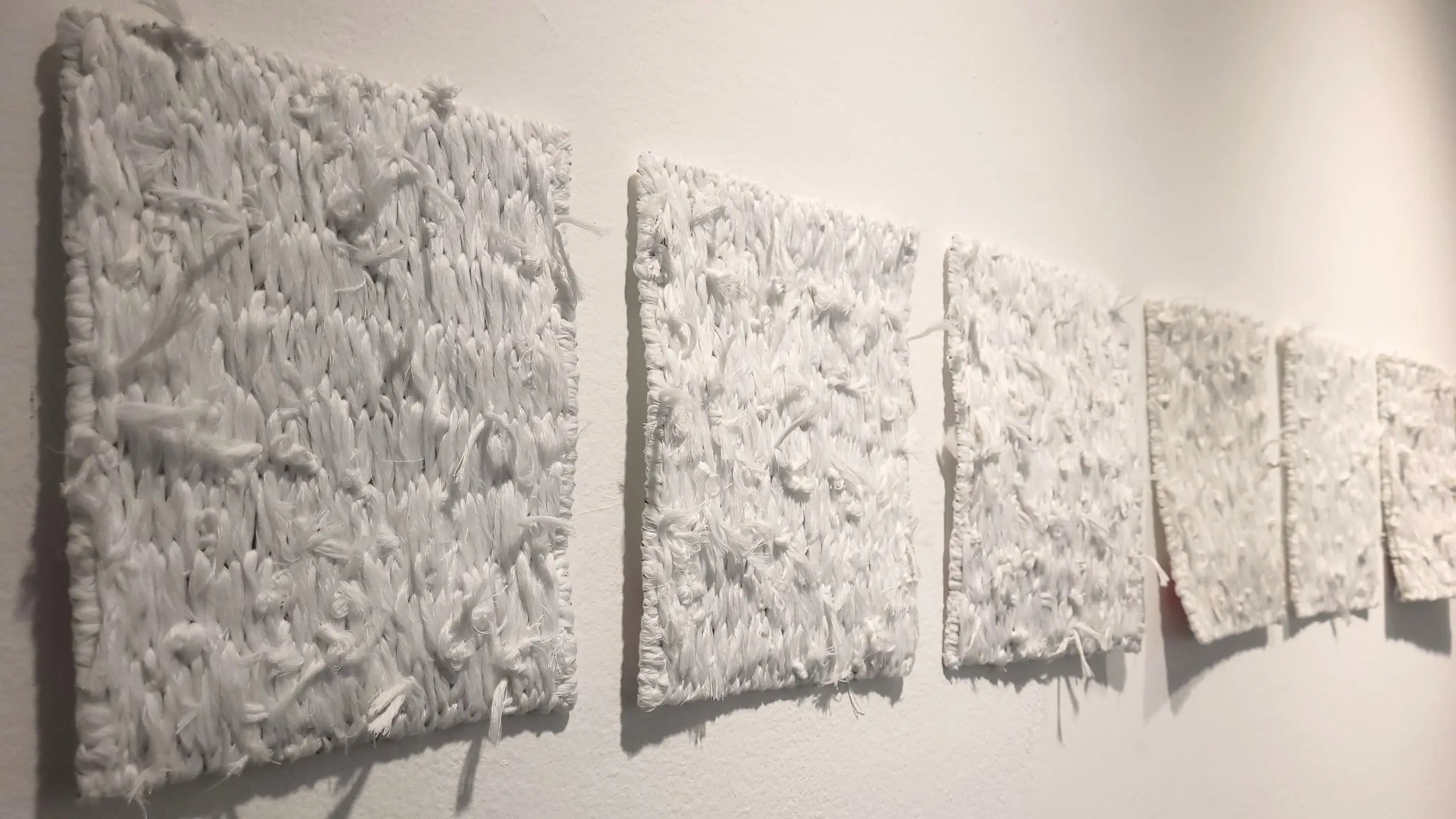
It was easy to imagine the artist sewing hours upon hours through the night, considering how much thread it took to create the fabric works that now cascade along the walls of Mo_Space Gallery. But imagining doesn’t quite cut close to doing the work. When a viewer enters a gallery, there is an unsaid anticipation that a flurry of images and colors greets one’s eyes. Maricar Tolentino’s show, /hour, did the opposite, and in so doing, successfully brought a spectator’s attention to the process behind her practice.
To be acquainted with Tolentino’s works is achievable even when one has only seen a piece alone (perhaps in a group show). I emphasize the word “achieveable,” as it is almost impossible to merely be acquainted with them once you have entered a space engulfed by her charged display of powerful oeuvres materialized in compact wads of fabric. Such an encounter sears itself into one’s consciousness deeply that by the time you face another work by Tolentino–even in a group show–your bones can tell it is by her.
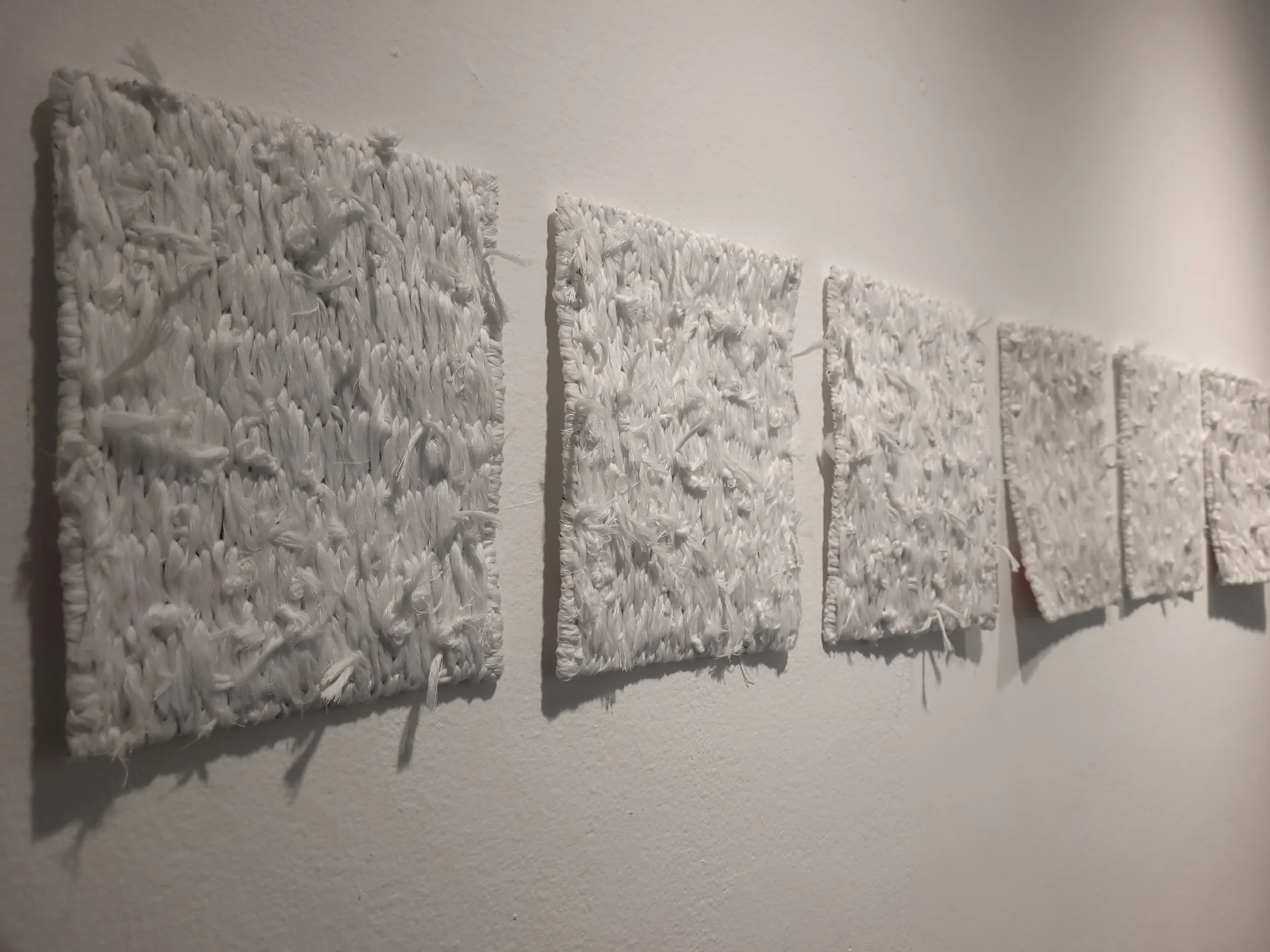
Up until now, the artist doused viewers with the strength of fiber, presenting visceral, and, in some instances, subtly brutal vignettes that tackled themes of womanhood, domesticity, and labor. As an effect, this created a formulaic approach in many viewers, hounding the artist with questions on what her work was about. Realizing this did not fare well in her mind, Tolentino relieved her woven pieces of narrative from colors and images altogether. Tolentino says she’s noticed that when her works have images, viewers ask what they are are or what they mean. The length of time it takes to make is secondary.
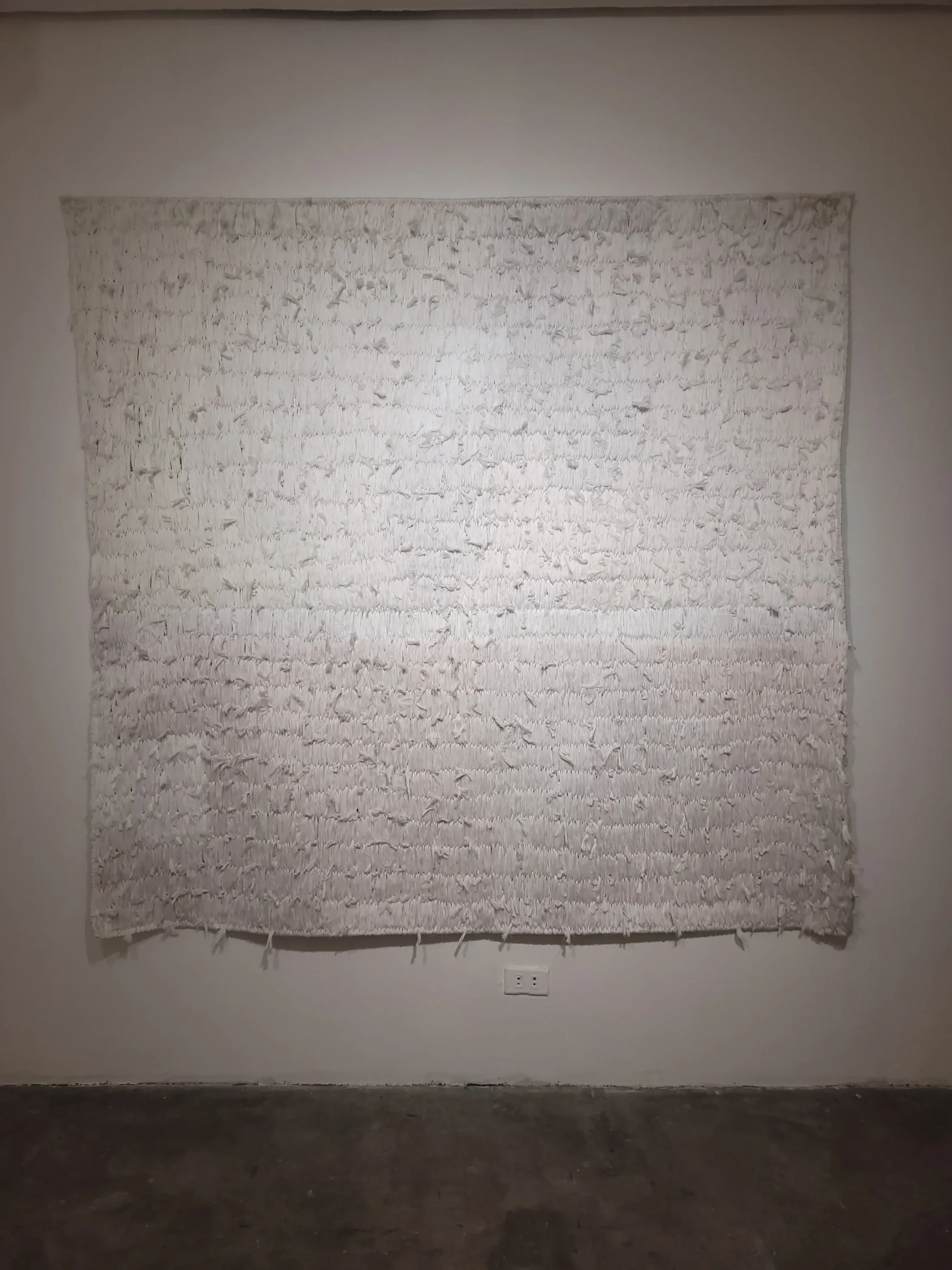
The artist experimented with how big of a work she can make with the conventional number of eight working hours in a day. What resulted was a 12” x 9.5” piece, not much larger than a sheet of short bond paper. She made a total of 15 pieces of the same size, referencing the payroll practice of dividing an employee’s paycheck. But Tolentino is not an employee and neither is her practice bolstered by the mechanisms of a normal career. For artists, working hours are longer, more grueling, and don’t always guarantee a good financial return. Tolentino named her works according to the number of hours she spent making them. Her largest is entitled “530 hours.”
Sewing has been thought to be a meditative process for many artists, and to an extent, it truly is. For Tolentino, however, she says it felt as if she was driven to the edges of her sanity, and that she almost lost her mind. She says that while some may describe the process as meditative, for her it was quite painful. The artist does not conceal this in the final output. As if in a spirit of rebellion, knots jut out of the ivory swathes of cotton that make the works, cancelling all possible notions that a smooth and clean surface was attempted by the artist.
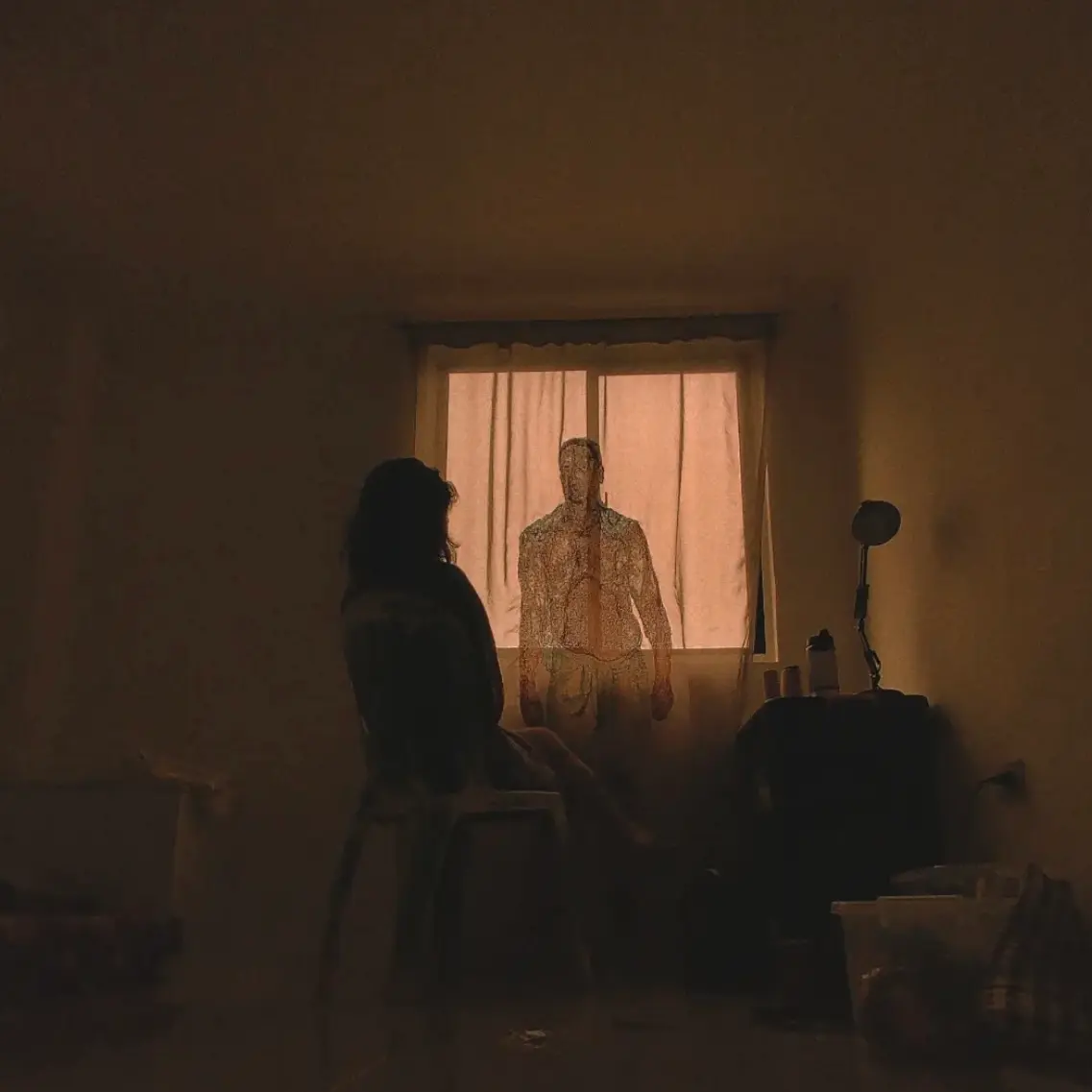
Throughout the show, Tolentino unveils the plight many artists shared today. She says she used white so they are invisible and blend in with the gallery walls that are usually white, too. Any honest viewer will admit that most works only enthrall them for a mere few seconds before they recede to the walls of the gallery and into the back of their minds. In recent years, a gallery show only runs for an average of four weeks, but preparing for one takes significantly longer. For a solo show such as /hour, it took sometime between a year to six months, working through weekends and holidays.
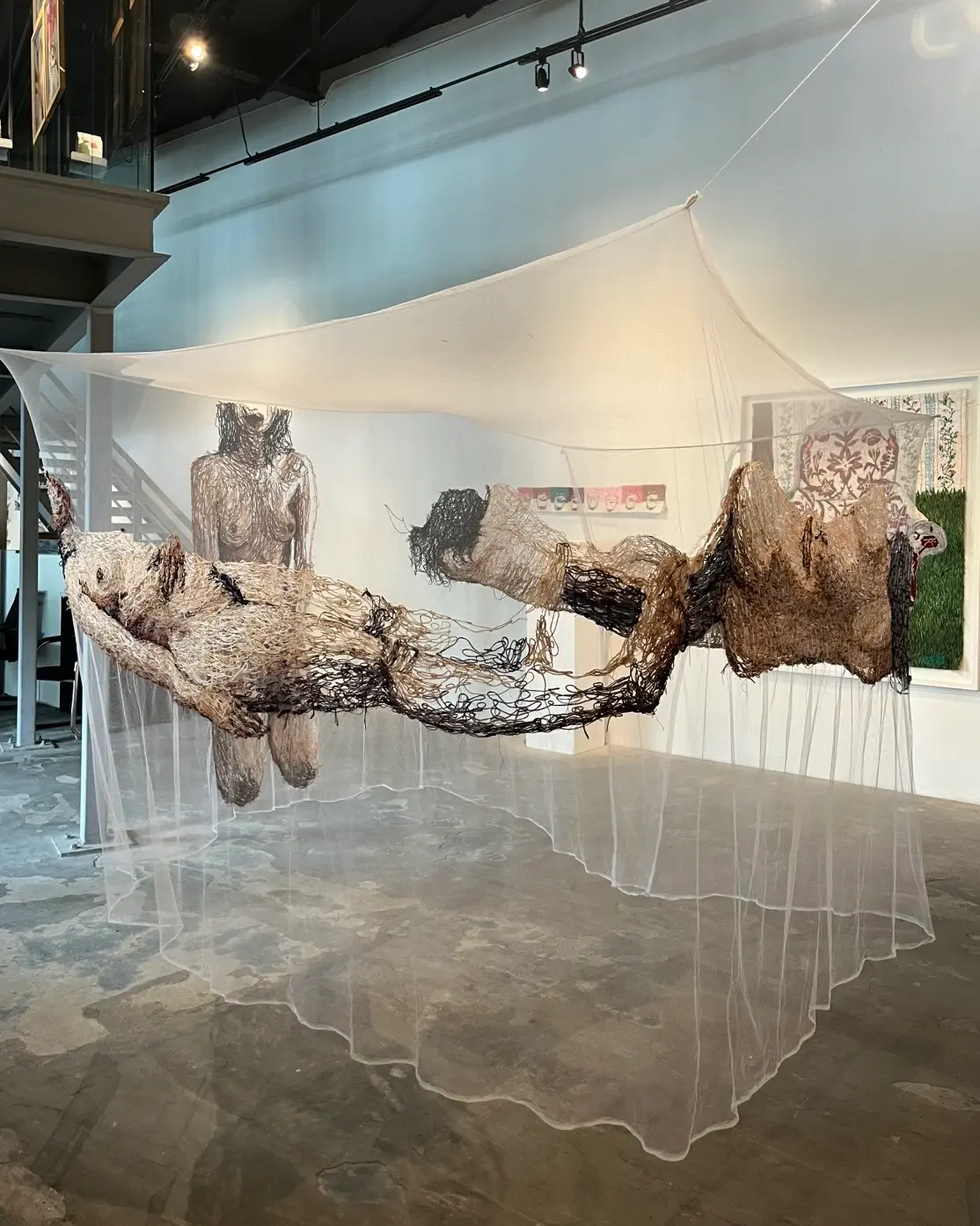
In all of this, Tolentino points to the historical and unconscious underpinnings of labor and the (de)valuation of it based on cultural prejudices. Needlework, embroidery, and sewing had not always been an accepted medium in the fine arts, which carries on even today, with artists struggling to make fabric works more “sellable” and “appealing” to collectors. Many have relegated it to domestic work, where the “domestic” is perceived to be less significant in a patriarchal and capitalist-driven order. What does this now mean to the body that labors within such a space? How does one judge the labor of homemakers, helpers, and artists? Tolentino spells these out without saying a word. In an erasure of visual language and through the materiality of her process, /hour invites its viewers to consider the weight of invisible work.
/hour runs until 19 April at Mo_Space Gallery. Photos courtesy of Jodie Jose