Growth (With Conditions): The Art Market’s Uneven 2026 Outlook


It was in 2022 that the art market broke records left and right at both the auction and gallery levels. In the past three years, however, it’s entered a sort of prolonged cooling phase. In fact, auction sales fell 7% to $25.1 billion in 2023, followed by further declines in 2024, as rising interest rates, tighter liquidity, and a broader pullback in discretionary spending dampened the speculative fervor that had defined the early part of the decade.
While recent fall auctions and art fairs have signaled a return of confidence, the effects of that three-year contraction remain tangible. Nowhere has this been felt more acutely than in the mid-tier gallery sector, where a steady cadence of closures since 2022 has unsettled the infrastructure that sustains working artists. And yet, it is often dealers, collectors, and institutions who shape the narrative of recovery.
Against this backdrop, the latest Art Basel and UBS Global Art Market Report frames 2025 as a return to growth, with global sales rising 4% to $59.6 billion. But this is not a simple rebound. It is, rather, a market that has become more selective, more concentrated, and increasingly shaped by forces beyond its control.
A Return to Growth, But on Tighter Terms
The headline figures suggest resilience. Dealer sales rose 2% to $34.8 billion, while public auction sales climbed 9% to $20.7 billion, driven by renewed activity in the second half of the year. Yet this growth remains uneven and incomplete, with total sales still below their 2022 peak. Costs, meanwhile, continue to rise faster than revenues. Dealers reported operating expenses increasing by around 5%, tightening margins even as sales stabilize.
Dr. Clare McAndrew, founder of Arts Economics, underscores the fragility beneath the recovery. “It continued to operate in a volatile geopolitical environment, particularly regarding cross-border trade,” noted Dr. McAndrew, pointing to tariffs, policy uncertainty, and “trade fragmentation” as persistent pressures shaping pricing and supply.
Even where direct impacts are limited, the broader climate of protectionism is altering behavior. “A wider shift toward protectionism and more domestically focused sales also poses longer-term risks,” she adds, particularly for a market historically dependent on global circulation. All these argue that the market has lost tolerance for excess.
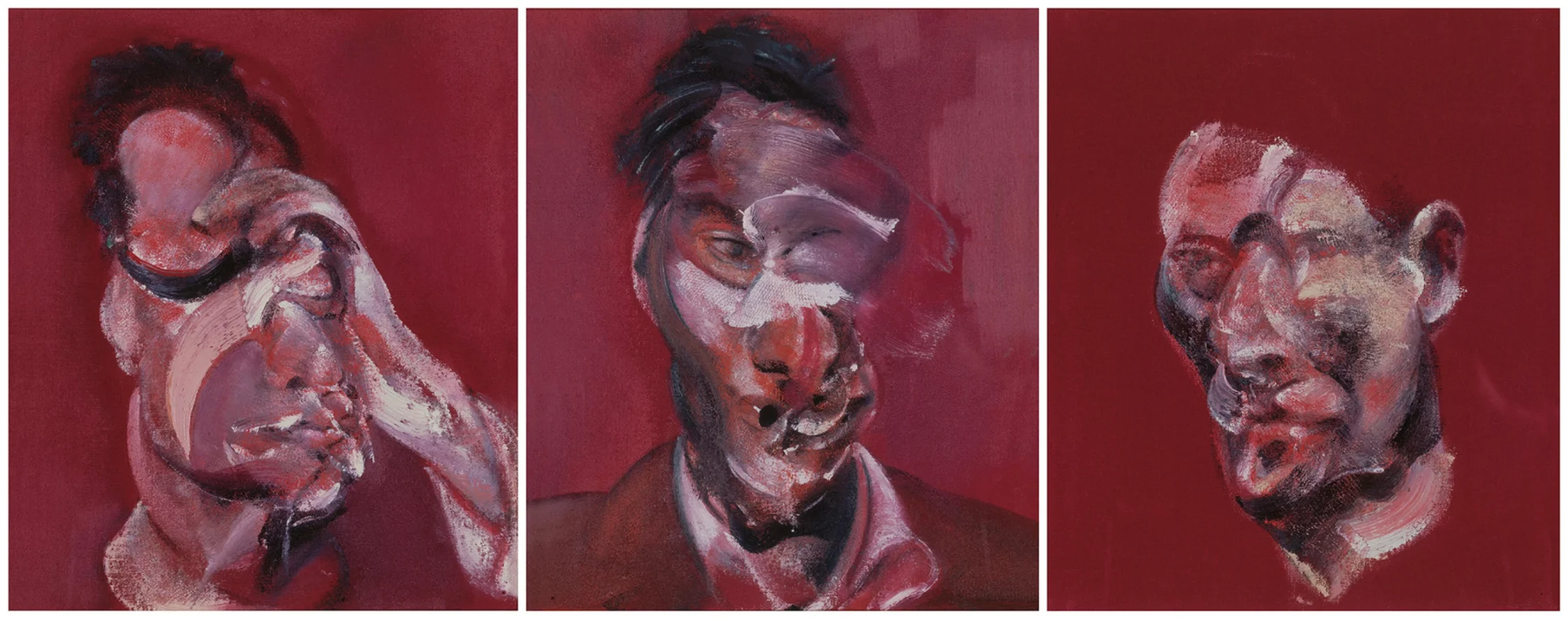
If there is a clear engine driving this return to growth, it is the high end. Sales of works above $10 million surged, with the United States—still the largest market at 44% of global sales—benefiting disproportionately. New York, in particular, has reasserted itself as the center of gravity for trophy works, accounting for the vast majority of top-tier auction results. These reflect a market where confidence has returned selectively. Collectors are still willing to spend, but with greater scrutiny and preference for works that carry institutional weight.
Art Basel CEO Noah Horowitz describes this shift as both strategic and structural. “2025 marked a return to growth for the art business and a strategic inflection point in its continued evolution,” he says, noting that dealers have refined their programs “with clear intentionality,” while art fair-related sales have strengthened. Confidence, in other words, has been rebuilt, deliberately.
Yet beneath this strength lies a narrowing base. The number of buyers per dealer has declined to its lowest level since 2021, with the steepest drops among smaller galleries. Private sales have fallen by 5%, and mid-tier dealers continue to face pressure. The market is expanding in value while contracting in participation.
At the lower end, demand remains active but constrained. Smaller dealers have seen growth in some segments, but increasingly rely on local buyers as international transactions become more complex and costly.
A Market Reshaped by Structural Change
Geography reveals further asymmetries. While the US, UK, and China still account for 76% of global sales, regional performance is uneven. China’s marginal growth reflects deeper economic uncertainty, particularly tied to its real estate sector, while Hong Kong’s internationally oriented market faces heightened vulnerability to global volatility. France, by contrast, posted a 9% increase, signaling a localized resurgence within Europe.
But the more consequential changes are structural. Art fairs have regained prominence, accounting for 35% of dealer turnover—their highest share since 2022—as galleries double down on in-person engagement. Online sales, once accelerated by necessity, have declined to $9.2 billion, with high-value transactions returning decisively to physical settings.
Horowitz frames this as part of a broader shift. “As the market recalibrates within a more disciplined range, sustained growth will depend on bringing exceptional works to market, deepening client relationships, and broadening participation across the global ecosystem,” he says. The emphasis here is telling: fewer works, better quality, stronger relationships.

At the same time, longer-term forces are beginning to reshape the market’s foundations. Chief among them is the so-called “Great Wealth Transfer,” which will see more than $83 trillion pass between generations in the coming decades. UBS Global Wealth Management Chief Economist Paul Donovan describes this as a “profound structural shift,” one that is already influencing collecting patterns.
“As wealth increasingly moves into the hands of women and younger collectors,” Donovan adds, “family dynamics, collecting motivations, and philanthropic priorities” are evolving. This is reflected in the rising representation of female artists, now at parity in primary market galleries, and in a broader diversification of the collector base.
And yet, as with much else in the current market, progress remains uneven. At the highest levels, disparities persist, and the concentration of value among a relatively small group of artists and buyers remains pronounced. Even optimism reflects such caution. While 43% of dealers expect sales to improve in 2026, expectations are tempered by the realities of a more complex operating environment. As McAndrew notes, cross-border trade has remained “broadly stable,” but its future trajectory remains uncertain—and with it, the market’s capacity for sustained growth.