Art Basel Hong Kong 2026 Guide, Part 2: Asian Artists You Can’t Miss




Art Basel Hong Kong 2026 returns with its usual density this weekend. There are 240 galleries, thousands of works, and more than enough visual noise to overwhelm the average fair-goer. This year’s edition leans more visibly into its regional strength, even as global blue-chip galleries maintain their hold on the fair’s upper tier. Global presence, evidently, is now being counterweighted by a stronger, more confident Asia-Pacific narrative.
Across the fair, leading international galleries continue to anchor the program with museum-grade works and tightly edited presentations. Names like Hauser & Wirth, Gagosian, Pace, and White Cube return with the kind of institutional-caliber material that defines the fair’s commercial gravity. These booths operate as expected. High-value works, carefully staged, designed to attract collectors who arrive with purposeful viewing rather than curiosity.
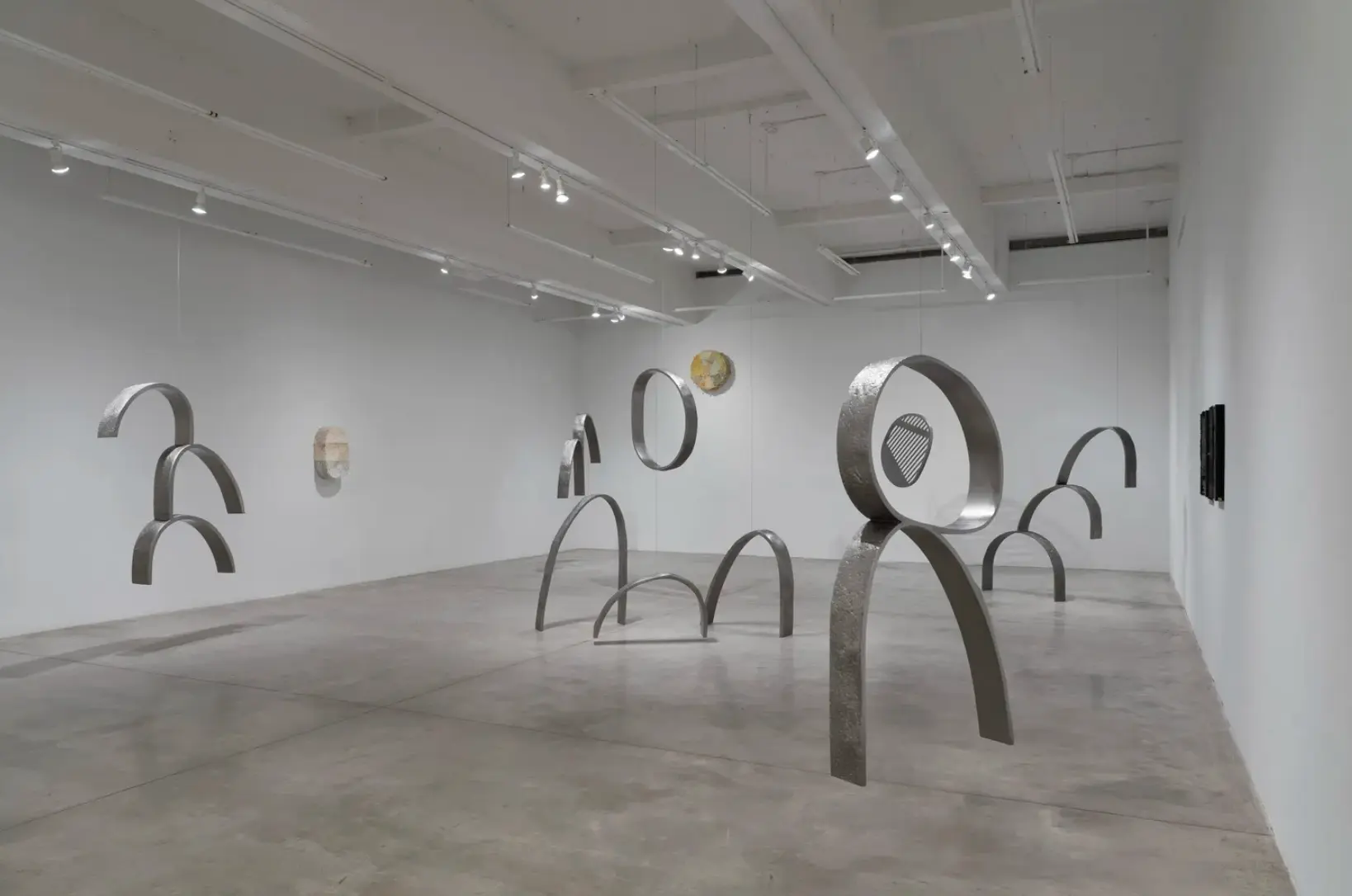
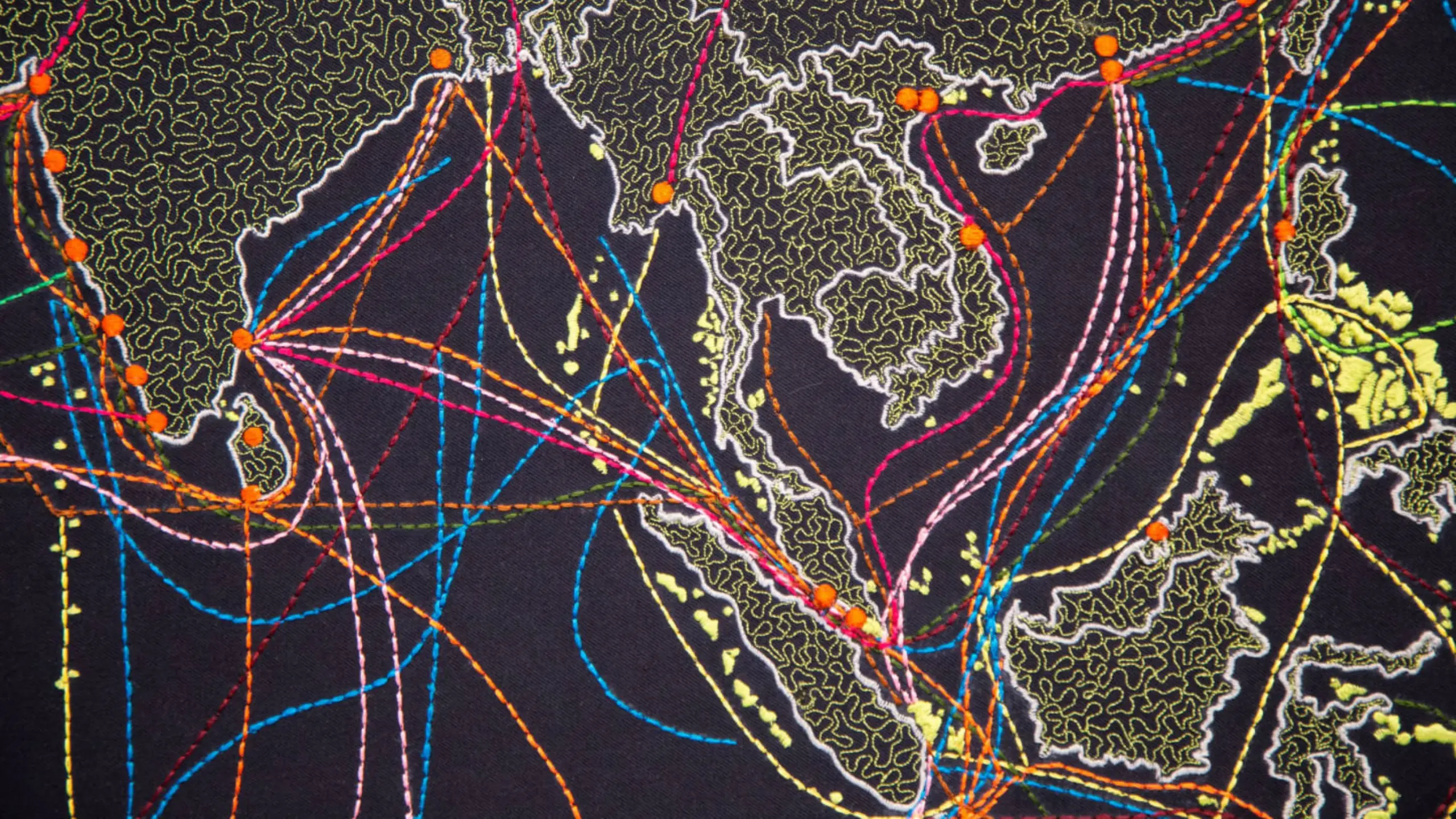
For Encounters, large-scale installations tend to set the tone for the fair. Suki Seokyeong Kang’s textile-driven installation is among the most interesting. Translating choreography into woven form, the work unfolds slowly. Nearby, Parag Tandel’s yarn-based installation draws from coastal memory and labor, layering personal and communal histories into something tactile and quietly affecting.
Ceramicist Masaomi Yasunaga, on the other hand, offers a different kind of intensity. Presented by Lisson Gallery, his glazed forms feel almost geological, as if shaped by pressure rather than hand. They’re less about refinement than transformation. Meanwhile, at Kabinett, Dinh Q. Lê’s Damaged Gene (1998), presented by P.P.O.W., remains one of the more unsettling installations in the fair, using children’s clothing and pacifiers to confront the lingering trauma of war.
Elsewhere, Ma Qiusha’s architectural installation with Beijing Commune offers a more introspective experience, folding space into a kind of psychological landscape. And for those tracking Southeast Asian modernism, Tang Chang’s abstract works provide a necessary historical anchor.
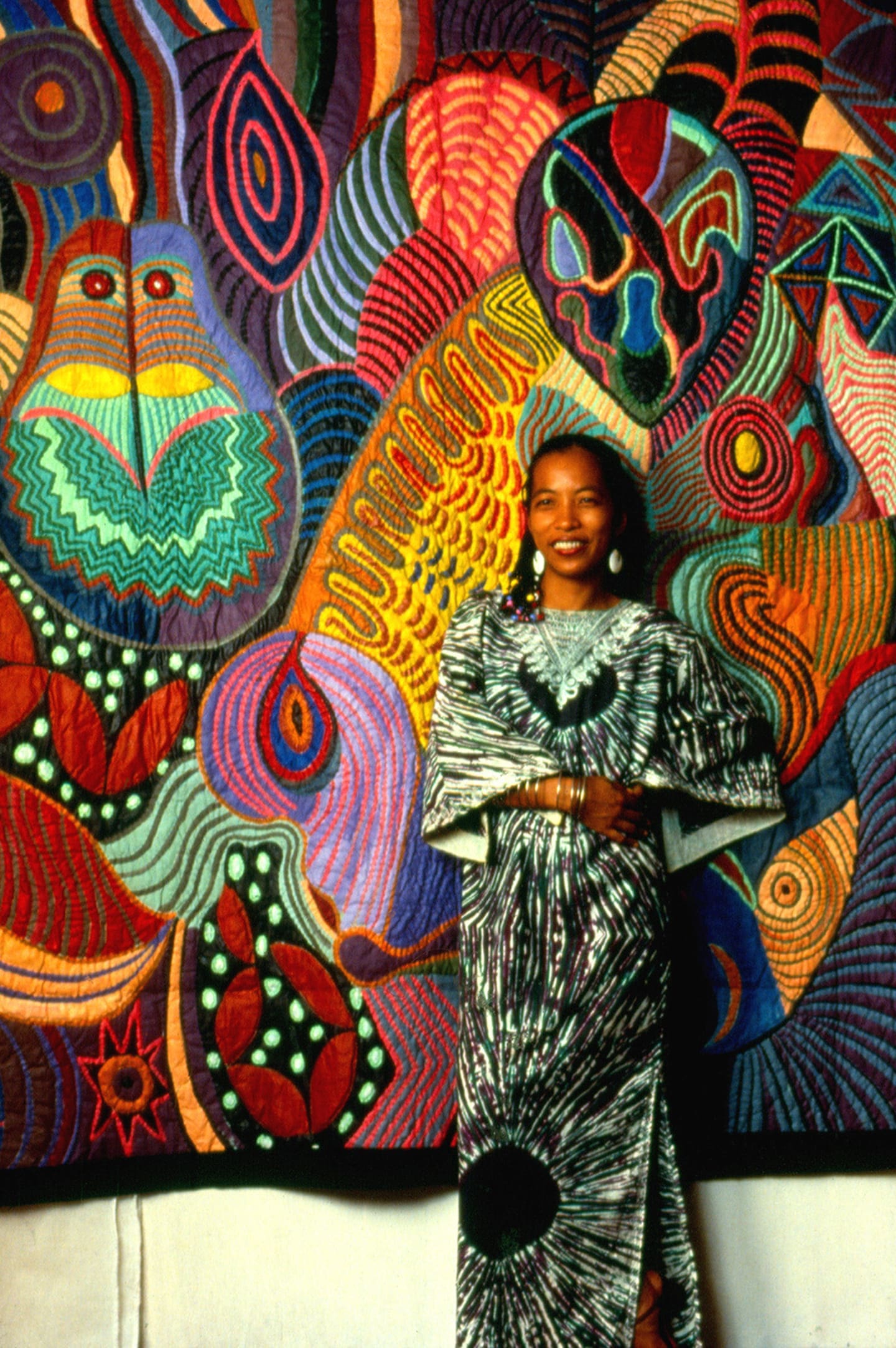
Manila’s own Silverlens returns with one of the more tightly considered presentations at the fair, bringing together Pacita Abad, Imelda Cajipe Endaya, Patricia Perez Eustaquio, and Geraldine Javier. The throughline is material intelligence, as seen in Abad’s layered surfaces and Eustaquio’s textile interventions. One of the more compelling showcases here, particularly for regional audiences, is, of course, Javier’s monumental eco-printed fabric columns, fresh off the 2025 Helsinki Biennial.
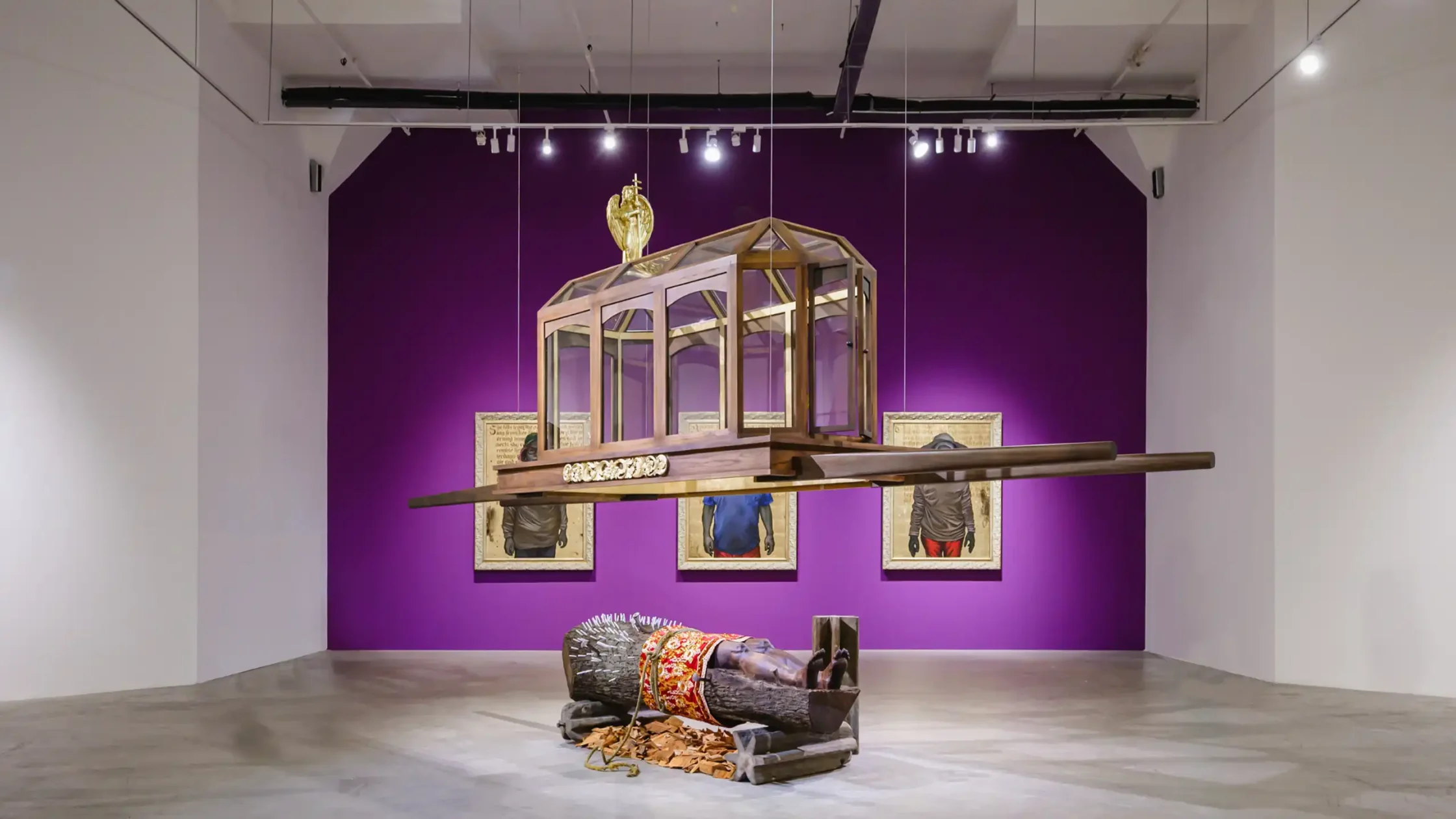
Filipino representation extends to Gajah Gallery, which opened up its Manila counterpart in Mandaluyong just last year. It is showing works by some of our leading modern and contemporary Filipino artists, including Benedicto Cabrera, Leslie De Chavez, Charlie Co, and Mark Justiniani, among other heavyweights. BenCab’s Sabel carries its usual weight, while Justiniani’s spatial interventions shift the conversation toward perception and immersion. Co, as ever, sits somewhere in between.
Mind Set Art Center is also featuring Marina Cruz and Nona Garcia as part of the group exhibition The Quotidian Epic, a presentation that frames everyday experience as a site of cultural and historical weight. Their works sit within a broader international conversation, reinforcing how Filipino practices are increasingly embedded within cross-regional narratives rather than presented in isolation.
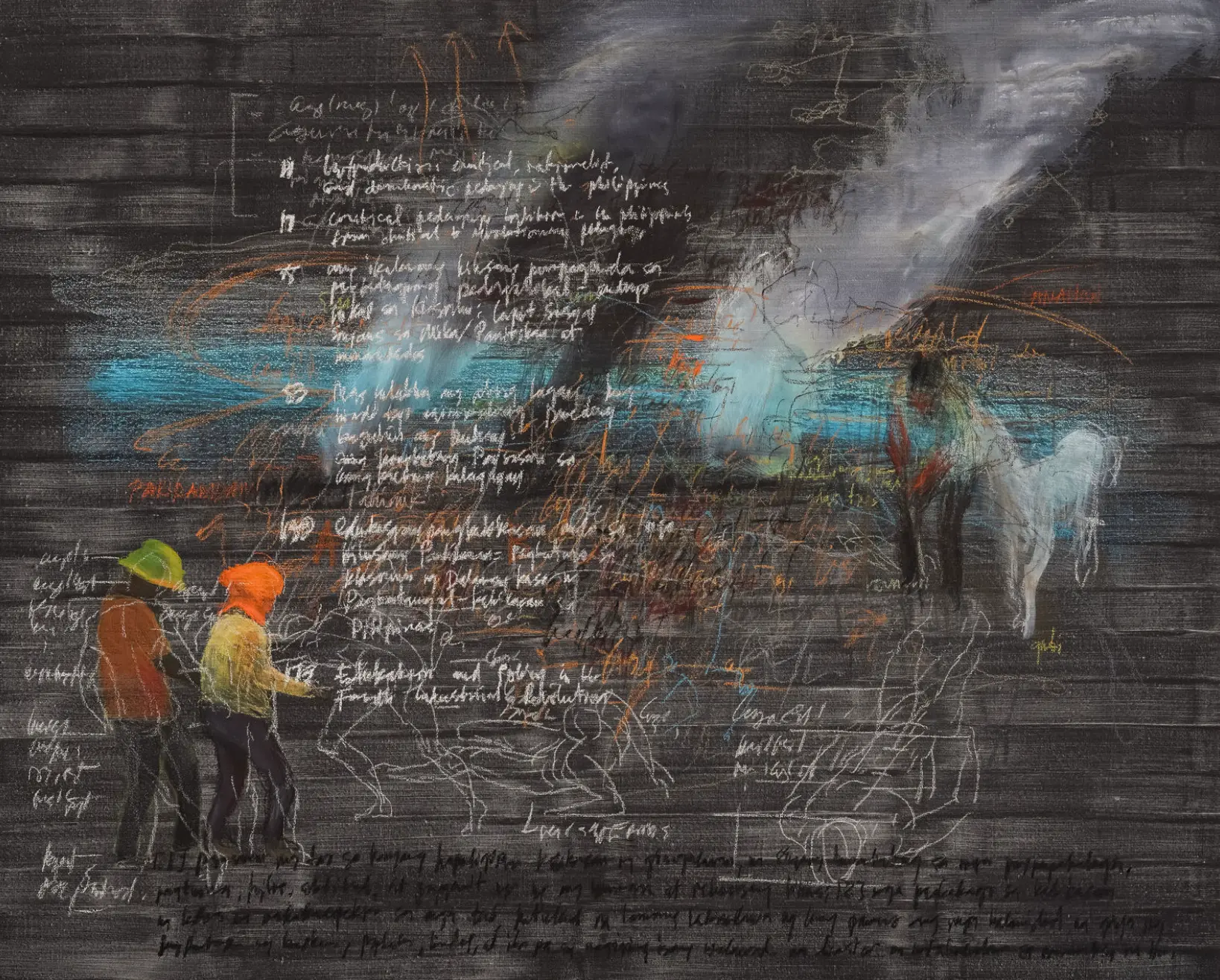
The same gallery also presents a focused Kabinett solo project by Buen Calubayan, titled When Breathing Becomes Work. The body of work examines survival through the lens of maintenance—mapping the rhythms of breath, fatigue, and repair as forms of labor. Drawing from ideas of autoimmunity, Calubayan reframes the body as a site of negotiation, where systems of care and control begin to overlap.
Likewise, Elmer Borlongan joins the fair through Amez Yavuz, bringing his distinct figurative language, one rooted in urban life, labor, and social realism, into a broader regional dialogue. His inclusion further reinforces the steady presence of Filipino artists across the fair, not as a singular category, but as part of its wider visual and cultural fabric.
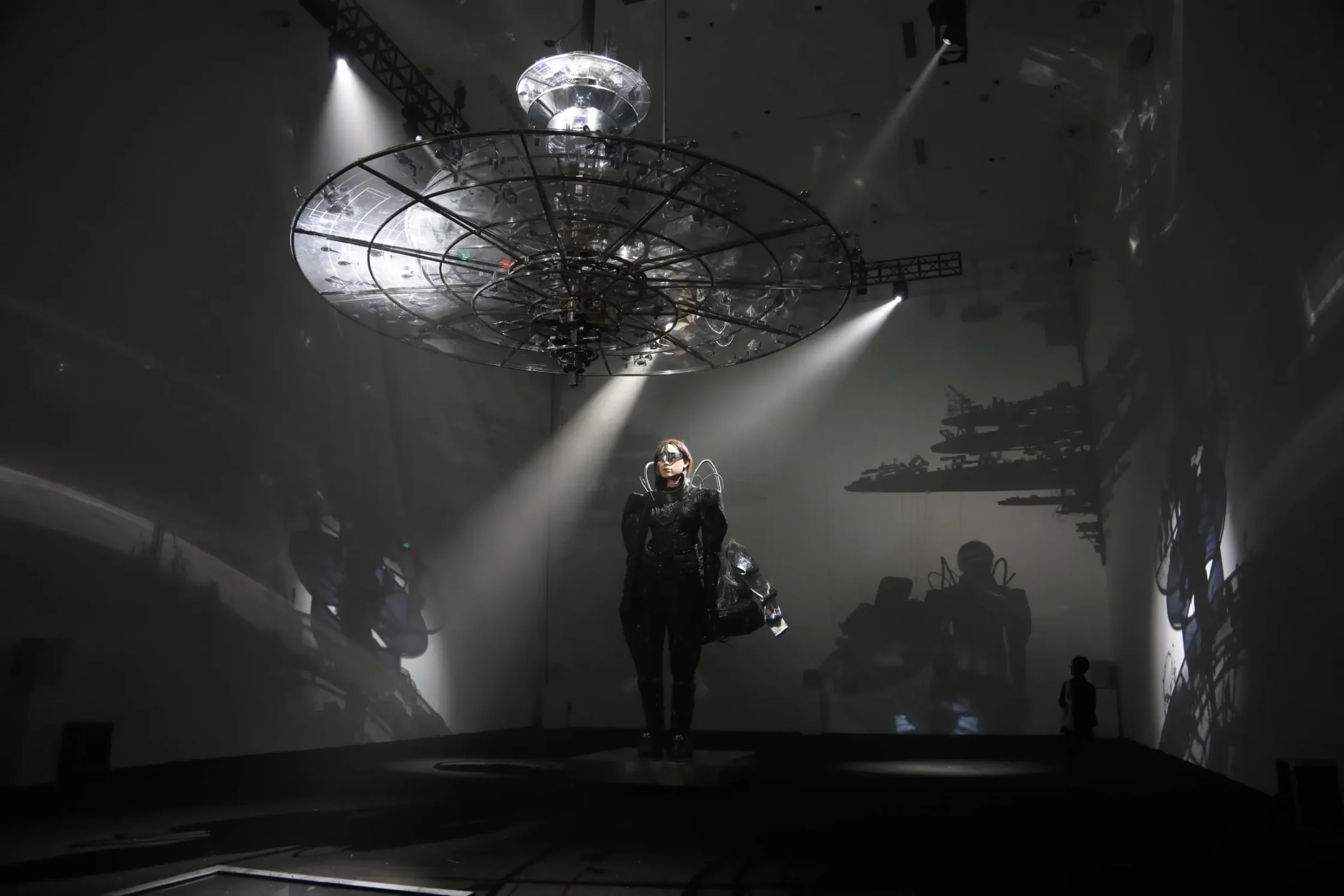
The fair’s digital ambitions come into focus with Zero 10, making its Asia debut this year. While digital art has long hovered at the edges of the fair circuit, the presentations here suggest a more serious integration. Art of This Millennium, for instance, stages DeeKay’s animated works, which borrow from early video game aesthetics to explore psychological states—looping, slightly disorienting, hazy, and unexpectedly emotive. Then finally, there’s Asprey Studio, with a cross-media presentation pairing AI-driven works with traditional ink painting, featuring artists such as All Seeing Seneca, Qu Leilei, and Tim Yip.
More information here.