Ferrari’s Next Move: From Roma to Amalfi




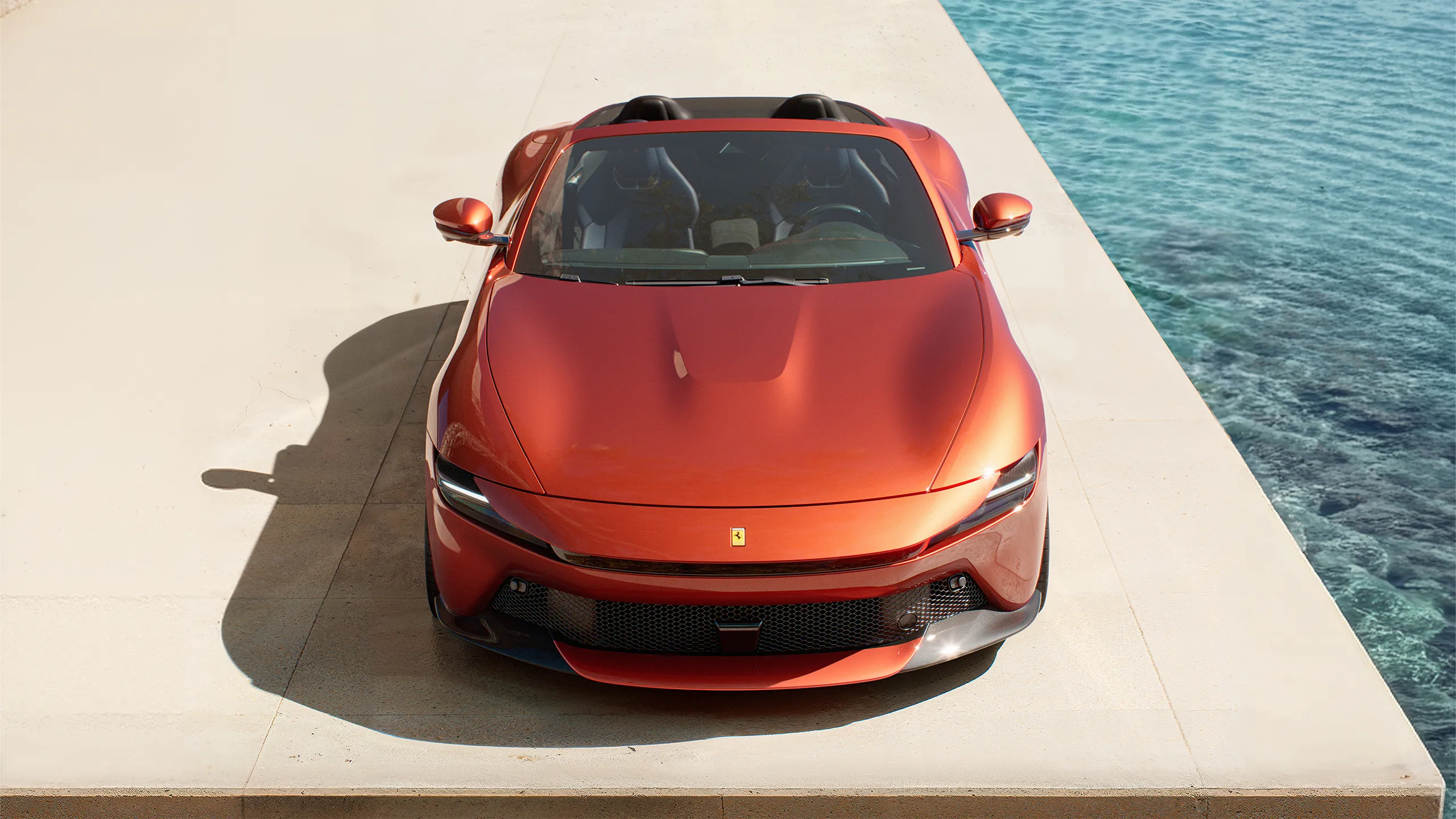
There are a couple of different ways to look at the new Ferrari Amalfi. I’m going to look at it through the lens of its name. It is the successor to the Ferrari Roma, and in a way, that describes the difference between the two cars, even though they belong to the same family. Both are part of Ferrari’s front-engine, rear-wheel-drive grand touring expression of the Prancing Horse.
When the Roma was introduced, it felt in many ways like a more modern, more urban vehicle. That had its pluses and minuses. One of the things that arguably made it more of a city Ferrari was its use of touchscreens instead of buttons and knobs, making it a little less tactile while remaining perfectly usable. The Amalfi, however, moves back toward the idea of these GT cars crossing the countryside or running along the sea in a more romantic way. Even its interpretation of the interior reflects that shift.
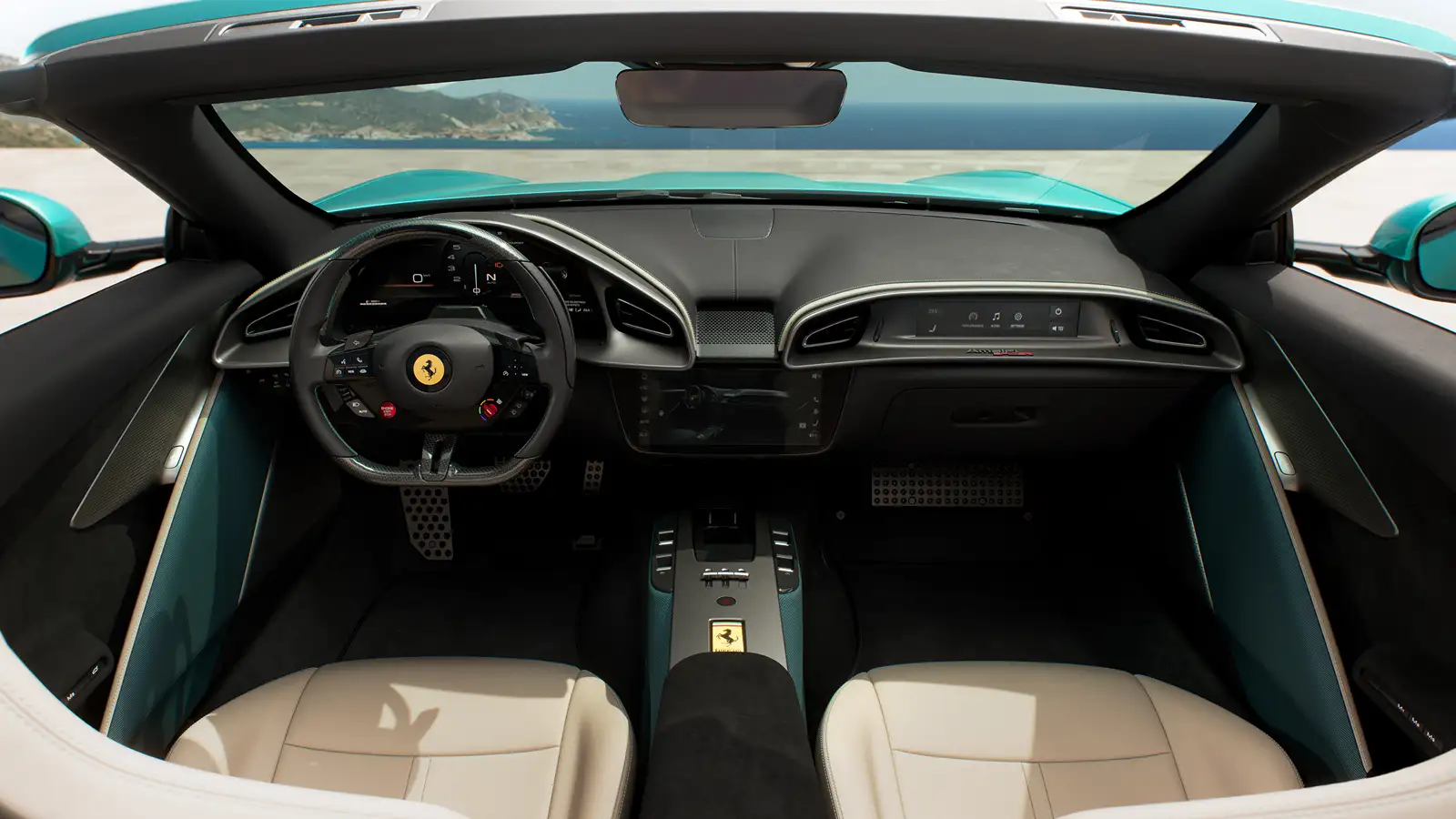
Perhaps Ferrari’s tradition of using place names for its GT models is more meaningful than it first appears, or perhaps it’s simply coincidence. These GT-oriented models stand apart from Ferrari’s mid-engine sports cars. They are designed for comfortable, romantic long-distance touring with everyday usability while still delivering the Ferrari feel, sound, power delivery, and voice.
The Amalfi is powered by an updated 3.9-liter twin-turbocharged V8 from Ferrari’s F154 family. It produces 631 horsepower, a slight increase over the Roma, while maintaining the same level of torque delivery. The engine has a slightly higher 7,600-rpm redline and uses revised turbochargers that spin up to 171,000 rpm. An eight-speed dual-clutch transmission sends that power to the rear wheels, bringing the car from zero to 100 kilometers an hour in around 3.3 seconds. Equally important is what Ferrari allows the engine to do, and that is handled by the engine control unit. The Amalfi now uses the same unit found in Ferrari’s V12-powered cars, such as the front-engine 12Cilindri and the Purosangue, as well as the mid-engine V6 turbo hybrid 296 GTB.
Further technical improvements come in the chassis and dynamic technologies, which are also a step up from the Roma. Brake-by-wire is paired with an evolved ABS Evo setup, already used in the just-mentioned models but adapted specifically for the Amalfi, together with Side Slip Control 6.1, which offers better coordination with the suspension and torque distribution. What we’re seeing here is a higher level of performance and dynamism incorporated into a more relaxed GT car.
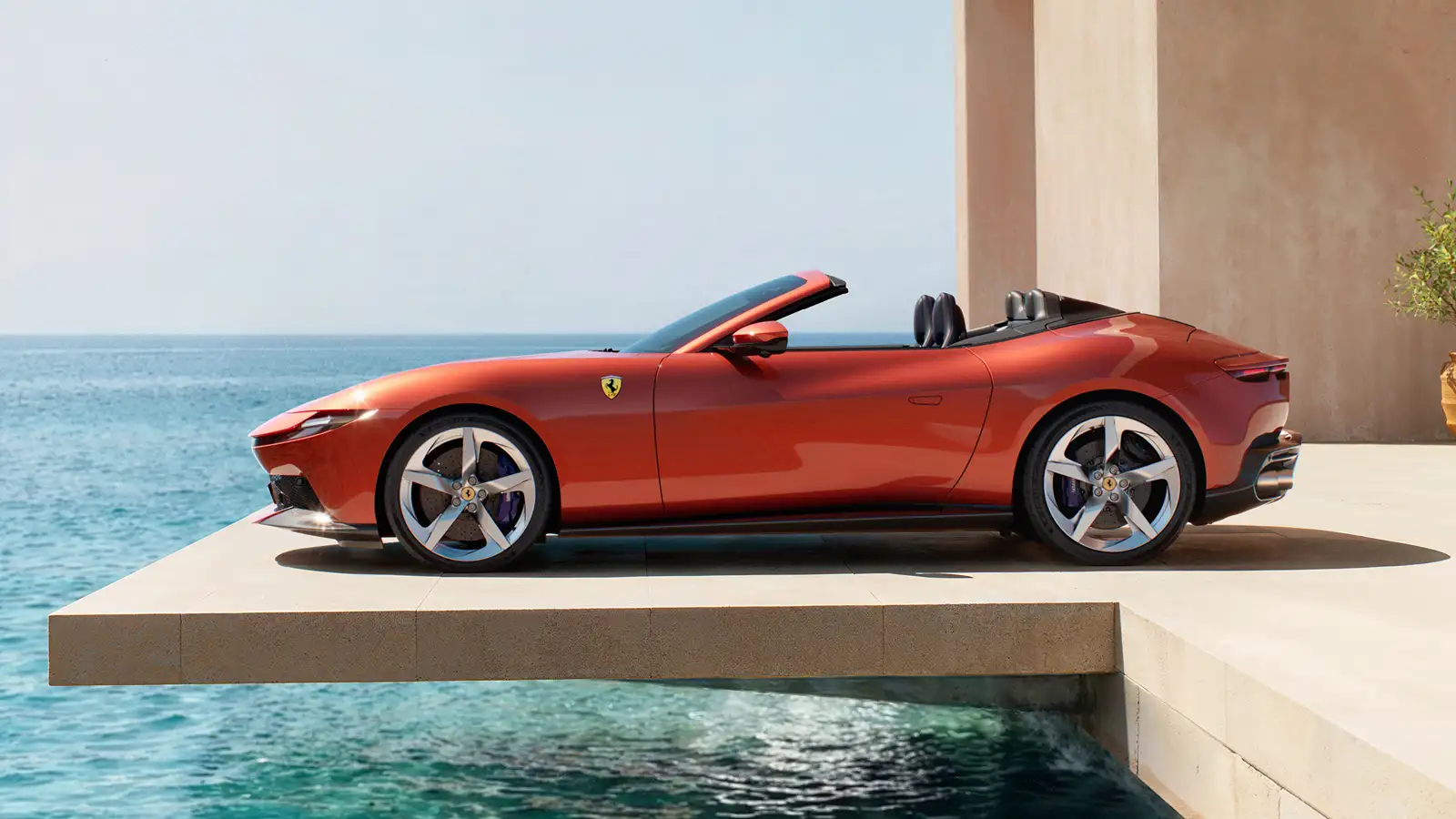
The interior is where many feel Ferrari has gotten things right. There is a clear attempt to give both driver and passenger the feeling of being wrapped in Ferrari-ness. The driver gets what Ferrari calls a monolithic layout, with the instrument cluster and air vents integrated into a single design. The passenger enjoys a similar experience, with a screen positioned between the two occupants but mounted low enough that it thankfully doesn’t demand too much attention. A central tunnel, milled from a block of anodized aluminum, sits between the seats and houses the gear selector gate, the key slot, and, yes, a wireless charging pad for your phone. Ferrari has also made an effort to make everything more tactile and, therefore, more emotional, including physical buttons on the steering wheel and a classic titanium red engine start button. A drop-top version, the Amalfi Spider, was unveiled this year.
“GT cars like the Amalfi, and the Roma before it, are in many ways the best Ferraris for most people.”
GT cars like the Amalfi, and the Roma before it, are in many ways the best Ferraris for most people. They offer relative everyday usability while still delivering a full expression of the Ferrari soul. There is beauty and elegance, but without the single-minded performance, track focus, and accompanying rigidity of the mid-engine supercars. While many see these cars as an entry point into the Ferrari and supercar world, the opposite is often true. People are drawn in by Ferrari’s racing heritage and the cutting-edge technologies of its mid-engine supercars. Then, because of the desire for greater comfort and enjoyment on a more regular basis, they gravitate toward the front-engine GT cars. They provide the Ferrari experience while making it easier to enjoy more often.
Even the customization options lean more toward grand touring than lap times. Buyers can choose 10-air-chamber massage seats with five massage programs and three intensity levels, seat and backrest ventilation, and upgraded audio systems. Whether or not you want all that in the Spider is entirely up to you.
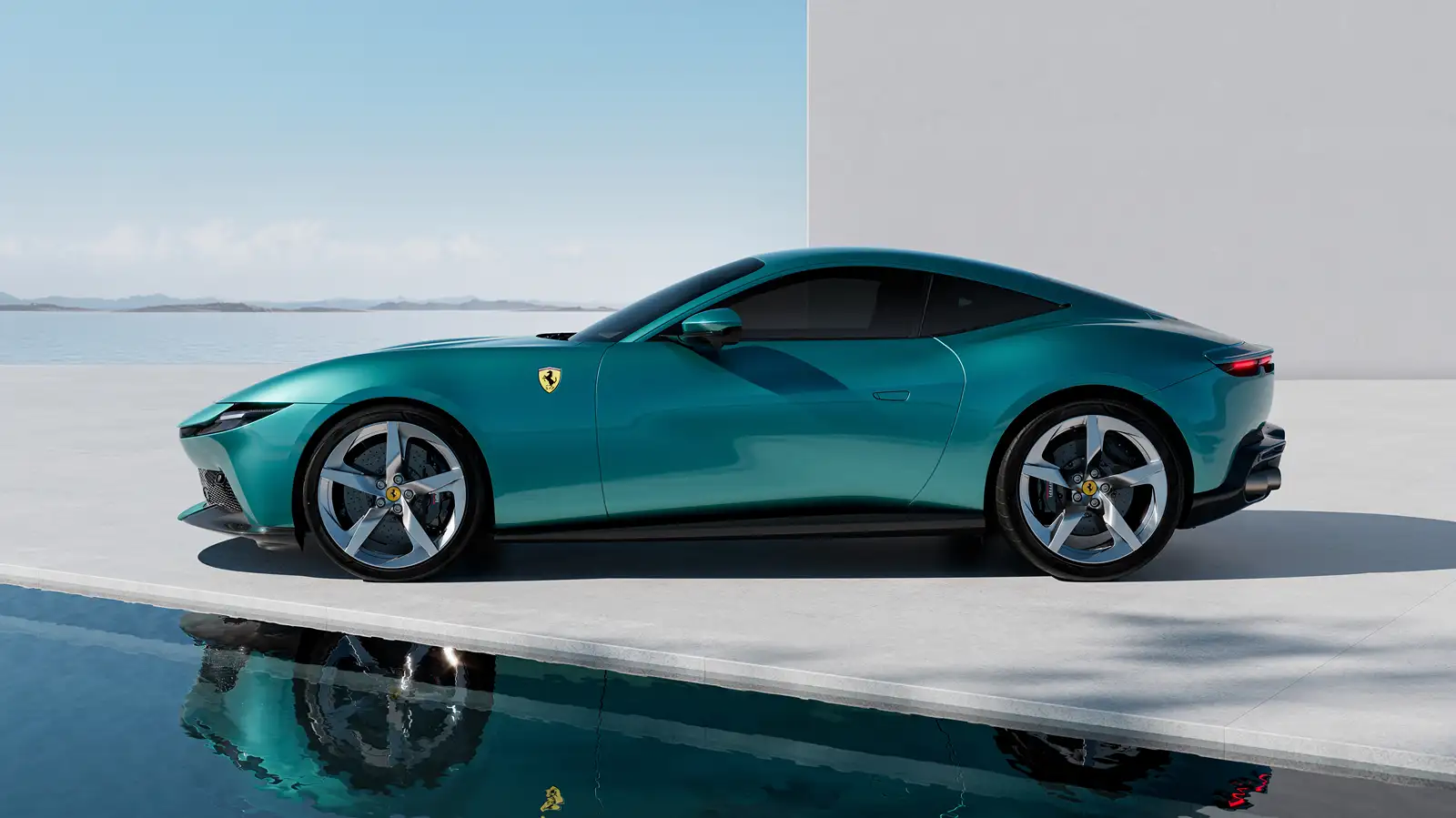
What the Amalfi still has is that romantic Ferrari drive-up presence, especially with the long hood that characterizes Ferrari’s front-engine layouts. A strong character line wraps around the entire body and ends in a compact, clean tail, with taillights concealed within narrow cuts. It also features active aerodynamics, including an active rear wing with drive-mode-dependent settings that deploys when needed. The car debuted in a signature new color called Verde Costiera, a bright teal that looks perfectly suited to driving along the Amalfi Coast. It may feel more mature than bright red or yellow, but it also highlights the sculpted surfaces of the car’s body. As Ferrari has long said, it will build a Ferrari for every Ferraristi, one tailored to what each individual wants from the Prancing Horse. This is likely the Ferrari that many of those owners will be happiest with, even if it ends up sharing garage space with some of their other toys.
This article originally appeared in Robb Report Philippines’ Muse Issue, July 2026.
FAQs
The Ferrari Amalfi is a front-engine, rear-wheel-drive grand tourer that succeeds the Roma, combining everyday usability with Ferrari performance and long-distance comfort.
Its updated 3.9-liter twin-turbocharged V8 produces 631 horsepower and is paired with an eight-speed dual-clutch transmission.
Ferrari says the Amalfi can accelerate from zero to 100 km/h in around 3.3 seconds.
The Amalfi adds more power, updated chassis and braking technology, revised aerodynamics, and a more tactile interior with physical steering-wheel controls and a titanium engine-start button.
Yes. Ferrari has also introduced an open-top Amalfi Spider, giving buyers a convertible version of its latest front-engine grand tourer.