These Slim New Catamarans Are Redefining the Category. Here’s How.


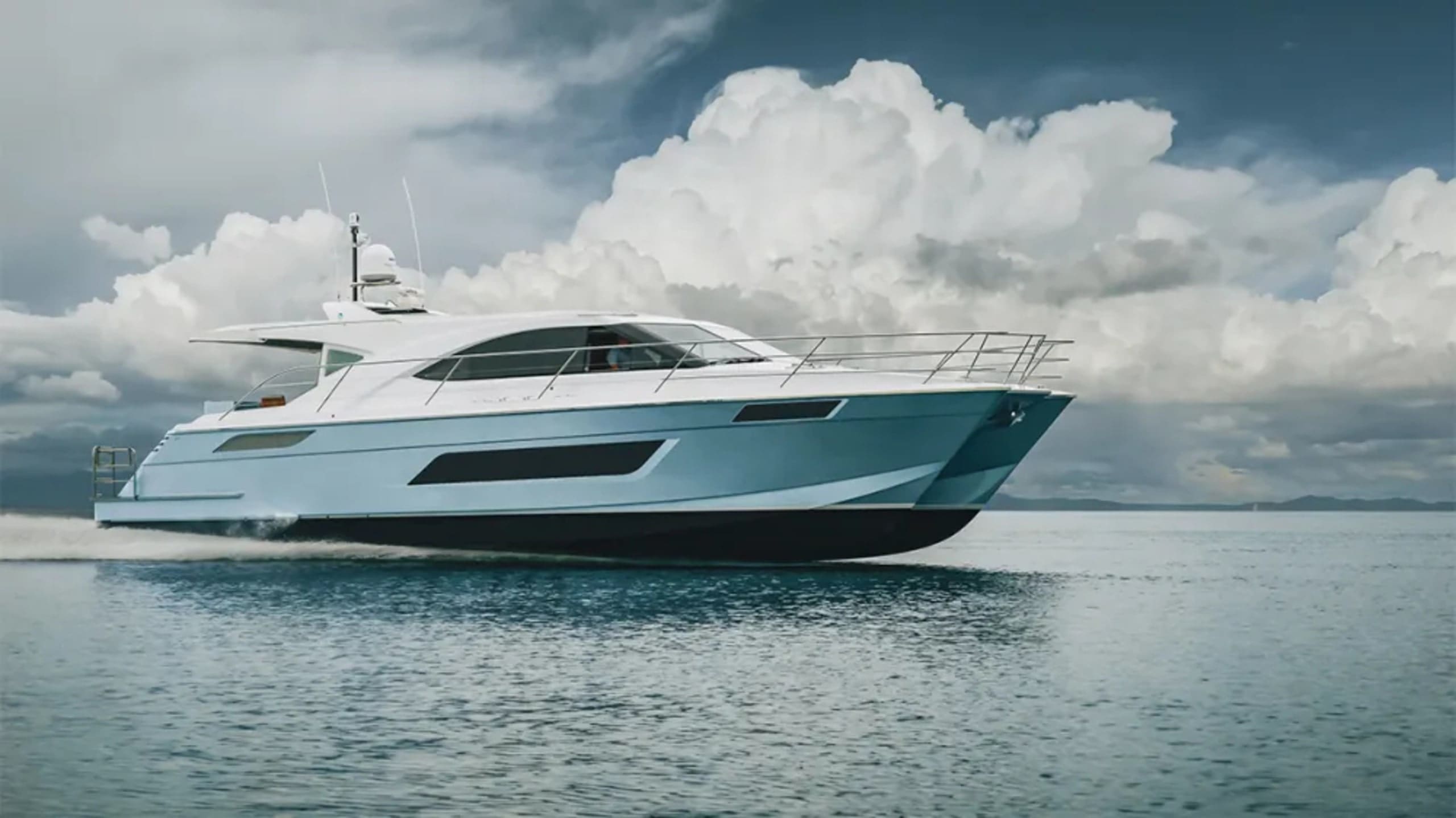
The opulence implied by the term “luxuryLuxuryA lifestyle defined by exceptional quality, craftsmanship, exclusivity, and sophistication, encompassing the finest products, services, and experiences that represent the highest standards of refinement and excellence.Go to Luxury Glossary power cat” has largely meant the commodious salons typical of these wide-beam motor yachts. Unfortunately, such spaciousness has long come at a price that includes ungainly styling, severely narrow staterooms in the outer hulls, and squirrely handling on big seas—not to mention a lack of compatibility with many marina slips due to the form’s bulky proportions.
But a handful of builders are addressing such issues with slimmer designs and the use of foils for enhanced performance. Take Bluegame’s BGM75, with a width of 26 feet seven inches, or about 25 percent of its length overall. By comparison, conventional power cats sport beams closer to 50 percent of their lengths. “This is more like a monohull that happens to have twin hulls,” says Luca Santella, Bluegame’s founder and head of product strategy. Another bonus: Thanks to naval architectNaval ArchitectA naval architect is the specialist who designs a vessel's hull, structure, stability, and performance, balancing engineering and vision. On a superyacht, the naval architect works alongside exterior and interiorGo to Naval Architect Glossary Philippe Briand’s design, the Bluegame catamaran requires roughly half the horsepower of a 90-foot monohull with a similar interior volume.
The slimmer approach also enhances seakeeping. “In big waves, wide-beamBeamBeam refers to a yacht's width at its widest point, a key dimension directly influencing interior space, stability, and overall onboard comfort across varying sea conditions. Naval architects balance beamGo to Beam Glossary power cats have a seesaw motion,” Santella explains, because the twin hulls can hit waves at different times, forcing the boat to rock back and forth. “Placing the hulls closer together dramatically reduces this uncomfortable feeling.”
Bluegame, acquired by style-forward Sanlorenzo Yachts in 2018, used both engineers and designers from its parent company to elevate the BGM75’s layout and look. The full-beamBeamBeam refers to a yacht's width at its widest point, a key dimension directly influencing interior space, stability, and overall onboard comfort across varying sea conditions. Naval architects balance beamGo to Beam Glossary main suite has exceptionally large windows, a side lounge, and a spacious, glassed-in ensuite, while four guest staterooms cross into the boat’s interior rather than remaining confined to the outer hulls. There’s also a full-beam garage with an automatic launch for the tender—another demonstration of how a clever interplay of form, function, and smart styling can expand the power cat’s potential.
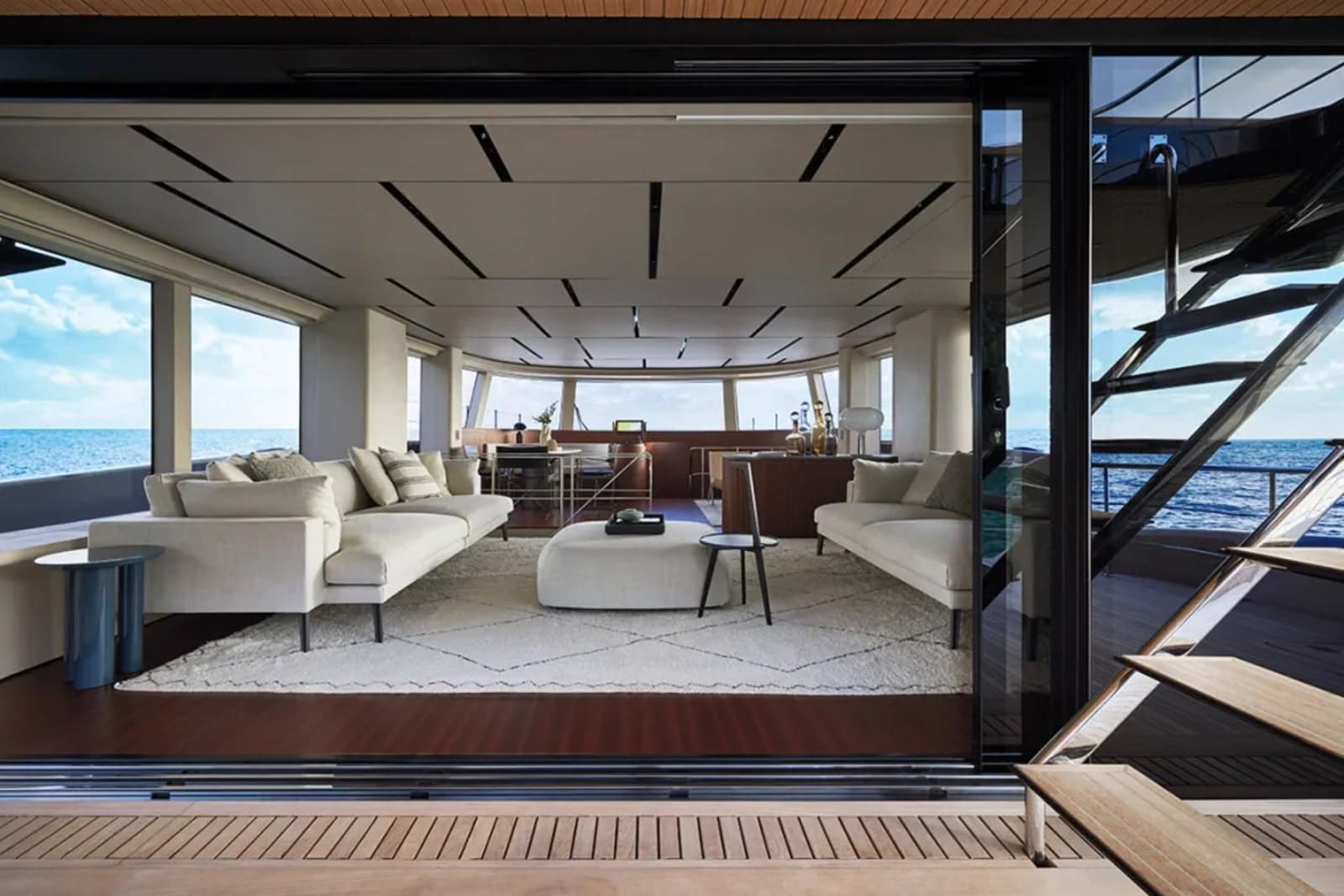
Polish builder Sunreef Yachts is taking a similar tack with its Ultima line, though with more curves and flash. The length of its 66 Ultima is 65 feet nine inches, while the vessel’s 23-foot nine-inch beamBeamBeam refers to a yacht's width at its widest point, a key dimension directly influencing interior space, stability, and overall onboard comfort across varying sea conditions. Naval architects balance beamGo to Beam Glossary is about two-thirds that of its wide-body cat, the 70 Sunreef Power. Nicolas Lapp, Sunreef’s cofounder and chief technical officer, says the approach is about “merging the best attributes of monohull dynamics with multihull living space and minimizing drag.” Aiming for a 2025 launch, the Ultima 66 will be available with diesel-electric propulsion and solar panels, along with an optional hydrofoil.
The XF60, the smallest member of the Xpedition Foiler line from Voodoo Yachts, has a 21-foot beamBeamBeam refers to a yacht's width at its widest point, a key dimension directly influencing interior space, stability, and overall onboard comfort across varying sea conditions. Naval architects balance beamGo to Beam Glossary, while a combination of 1,300 hp diesels in the upgraded propulsion package and a proprietary hydrofoil blade, called the Xpedition Wing, gives it a top end of 52 mph and an impressive 1,350-mile range at 34.5 mph. “The wing raises the boat 30 inches, carrying about 50 percent of its weight,” says Mitch Pachoud, cofounder and director of the New Zealand brand, who calls such lift “the secret to running a long distance at speed.” The four-stateroom XF60 is a more buttoned-down, less “yachty” vessel than its competition, but the range is a major draw for the explorer-yacht set.
The most extreme example of the svelte-multihull trend is the T-2000 Voyager from Irish builder Safehaven, presenting a 70-foot length with a 20-foot beamBeamBeam refers to a yacht's width at its widest point, a key dimension directly influencing interior space, stability, and overall onboard comfort across varying sea conditions. Naval architects balance beamGo to Beam Glossary. It features a racy superstructure and wave-piercing hulls. And its performance specs are riotous: Thanks to twin 1,550 hp MAN V-12 engines, it can hit 57.5 mph and has a range of 1,150 miles at 34.5 mph. The T-2000 was put to the test immediately, with its first sea trials taking place in a Force 10 storm with 55 mph winds and 20-foot waves. Retaining the multihull’s interior-volume advantage while closing the monohull’s gap in handling prowess and streamlined aesthetics? This new approach could be the cat’s meow.
Evolution of the Species
The earliest catamarans can be traced back to 1500 B.C.E.: crude vessels (essentially two logs tied together) used by islanders to navigate Austronesia. Over the past 150 years, though, these watercraft have seen supercharged change, progressing from small racing sailboats to vast, A.I.-controlled superyachts. Here, how the contemporary cat species came to dominate.
1500s
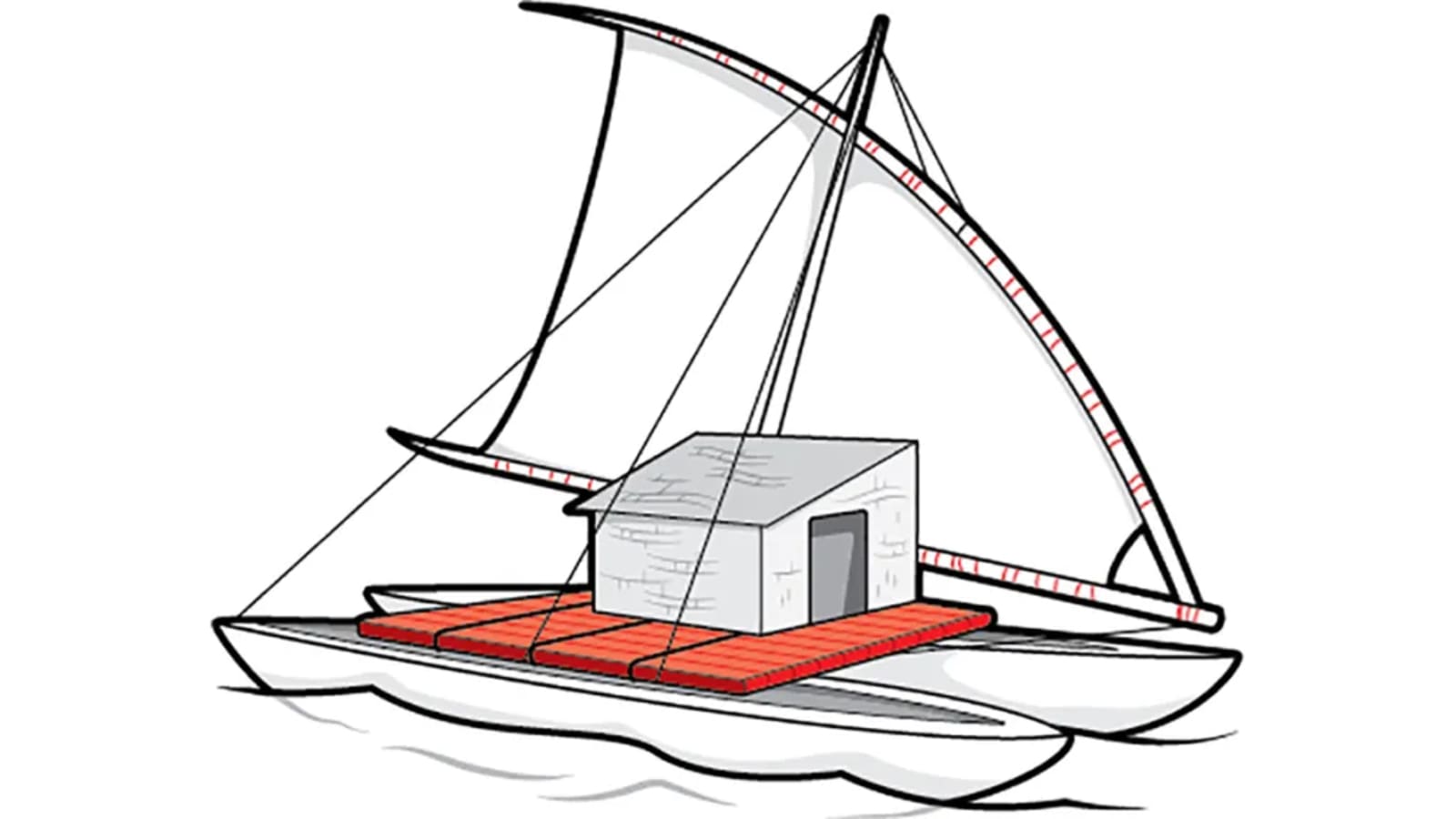
Druas—“sacred canoes” in early Fijian—were one of the first forms of advanced catamarans. Despite the name, there was nothing canoe-like about the vessels, which spanned 100 feet, could carry 200 people, and were reserved for aristocrats. Amazingly, the plank-built ships were constructed without the use of metals.
1916
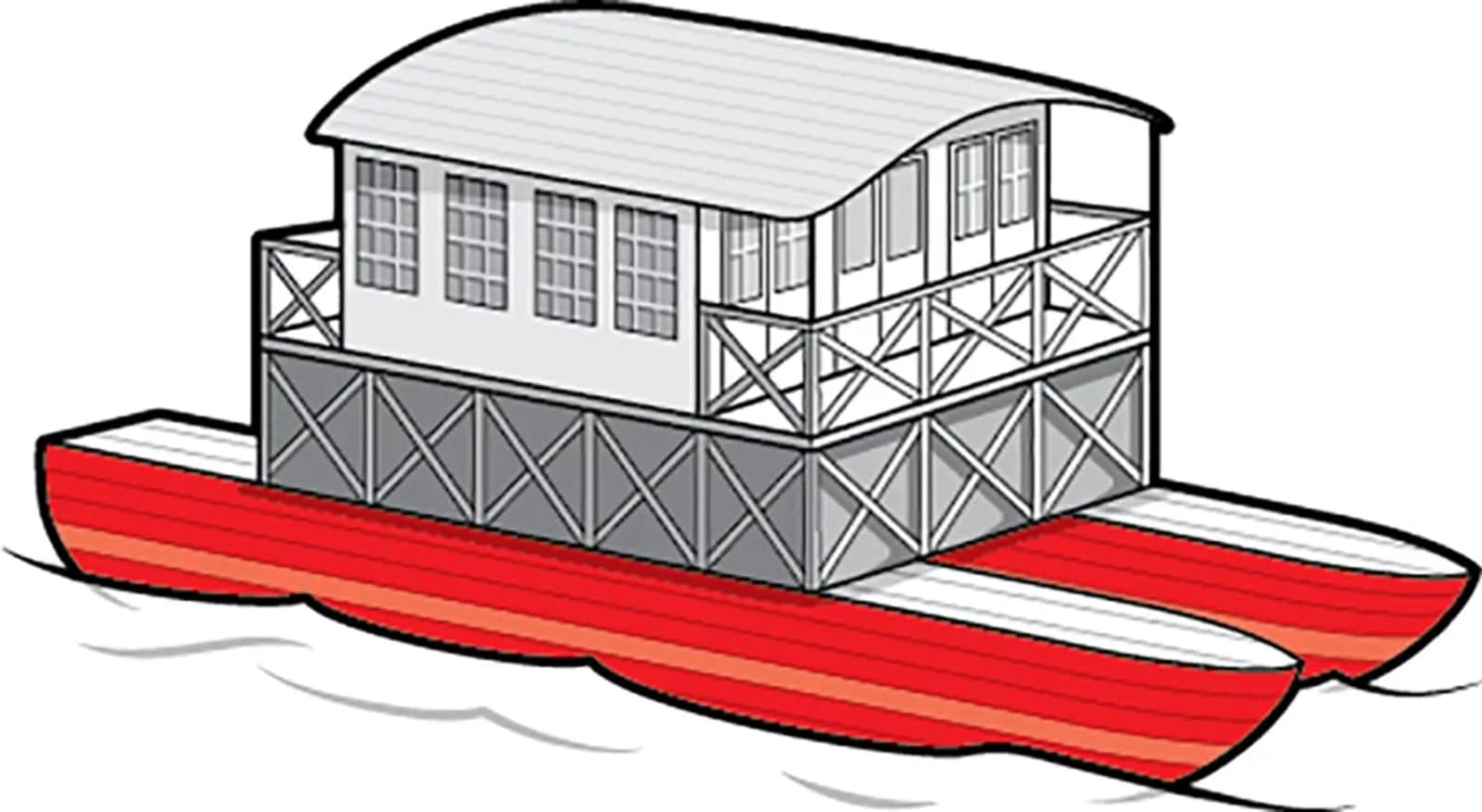
Though fast-sailing catamarans came into racing in the late 1800s, Leonardo Torres Quevedo’s Binave was the world’s first power catamaran. While the twin-hulled steel vessel was essentially a Franken-boat—with a raised cabin atop pontoons—its dual engines and high-riding sponsons became the templates for modern power-cat design.
1950s
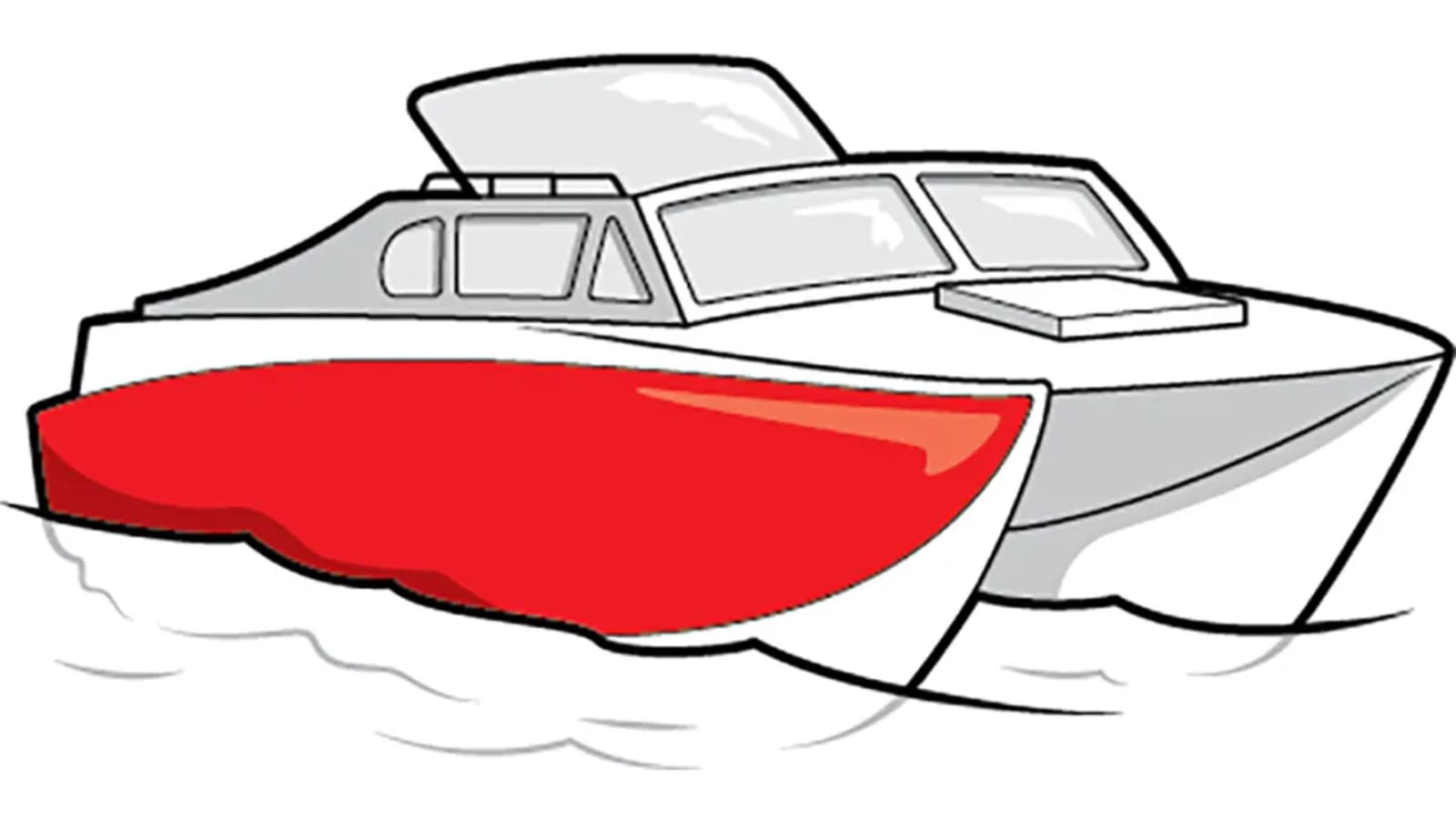
Californian Ray Leger designed the first 18-foot PowerCat in the postwar era as an offshore fishing boat, as well as an antidote to his wife’s seasickness. Over the next two decades, Leger’s builds, ranging
from 12 to 40 feet, attracted middle-class day boaters who wanted something that was less tippy on seas than a monohull. Power catamarans were also quickly adopted as race boats.
1998

The first motorized multihull yachts appeared in the 1990s and the aughts as tall, boxy vessels that were essentially sailing cats minus the masts. These appealed to sailors who didn’t want the manual labor of working the sails but craved a similar experience. More utilitarian than luxurious, these early cats looked awkward compared to the sophisticated designs of monohull motor yachts.
2021
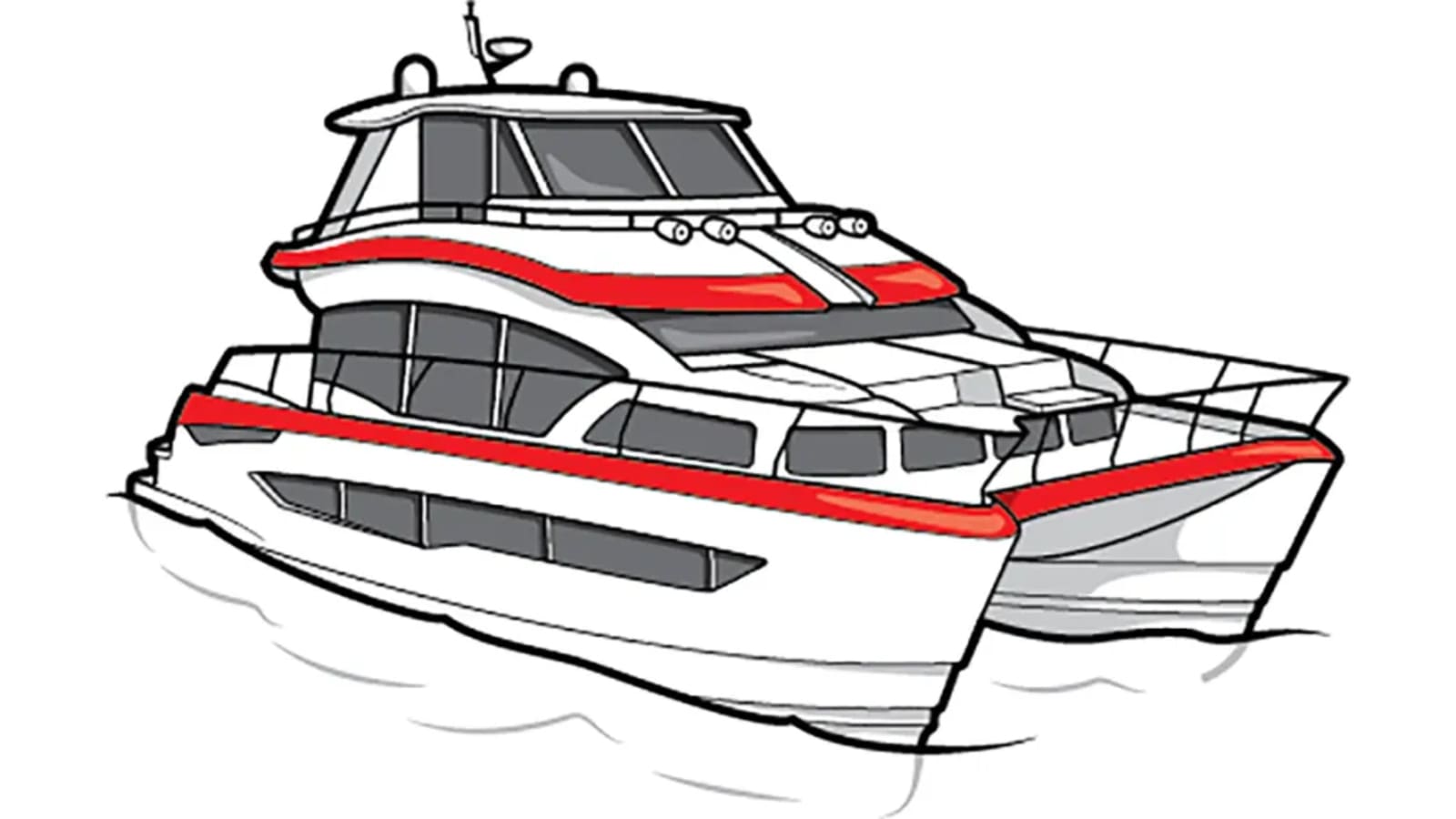
At the beginning of the current decade, power cats began taking cues from motor yachts, with sleeker topsides, additional curves, and a sportier presence. Builders discovered a market of motor-yacht owners, including celebrities, who wanted to burn less fuel while enjoying more space. For the most expensive models, a colossal, luxury interior was one of the design mandates.
2024
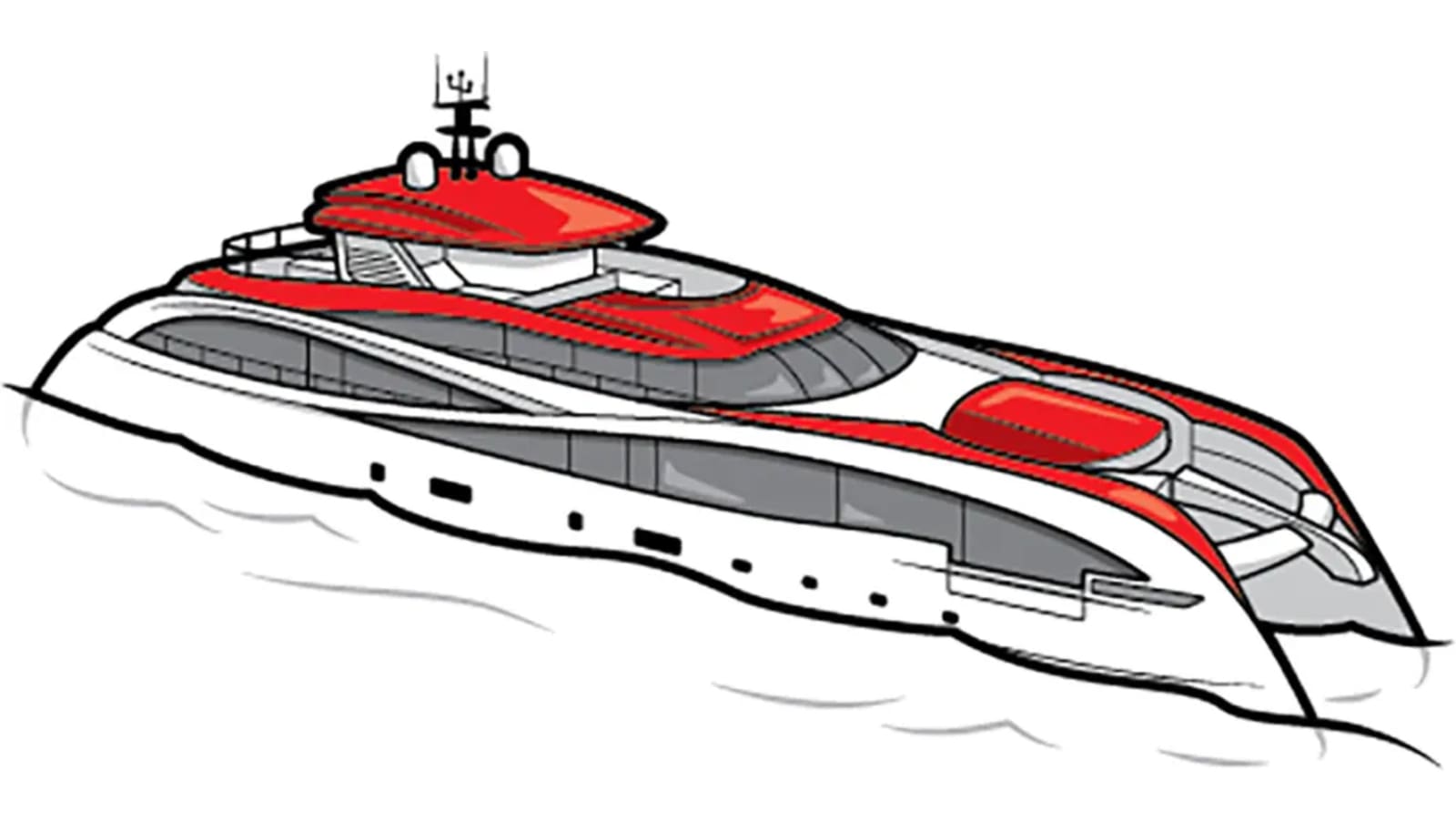
Builders such as Wider, Rossinavi, and Sunreef have launched custom superyachts with bolder, more streamlined looks and sustainability-minded technology. Rossinavi’s 141-foot Seawolf X, for example, uses artificial intelligence to not only manage its hybrid propulsion but also deliver real-time ways for crew and guests to reduce energy use.
This originally appeared in Robb Report US and in Robb Report Philippines’ Premiere Issue.