Best of the Best 2025: Water




Best of the Best: Breakthrough
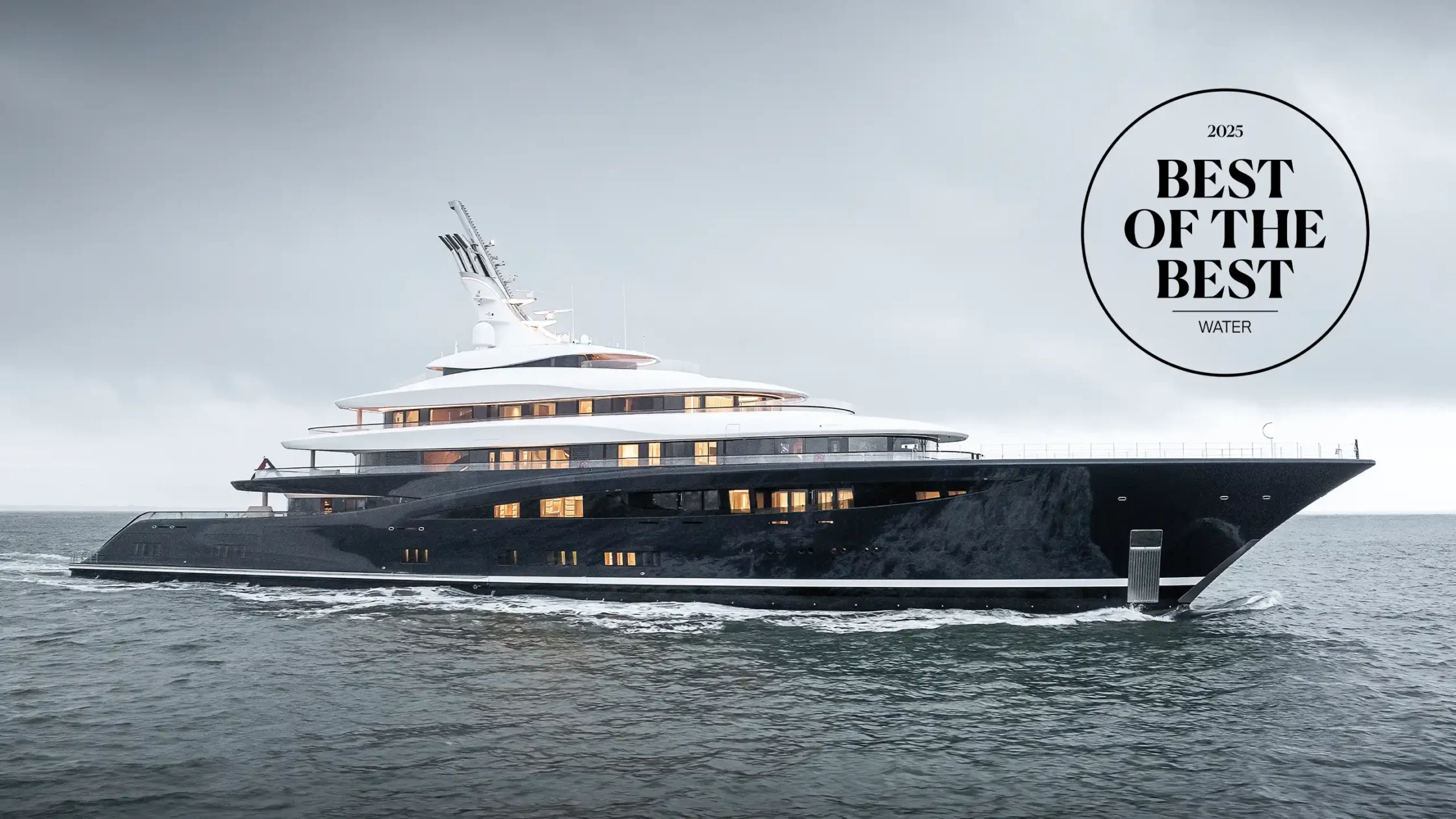
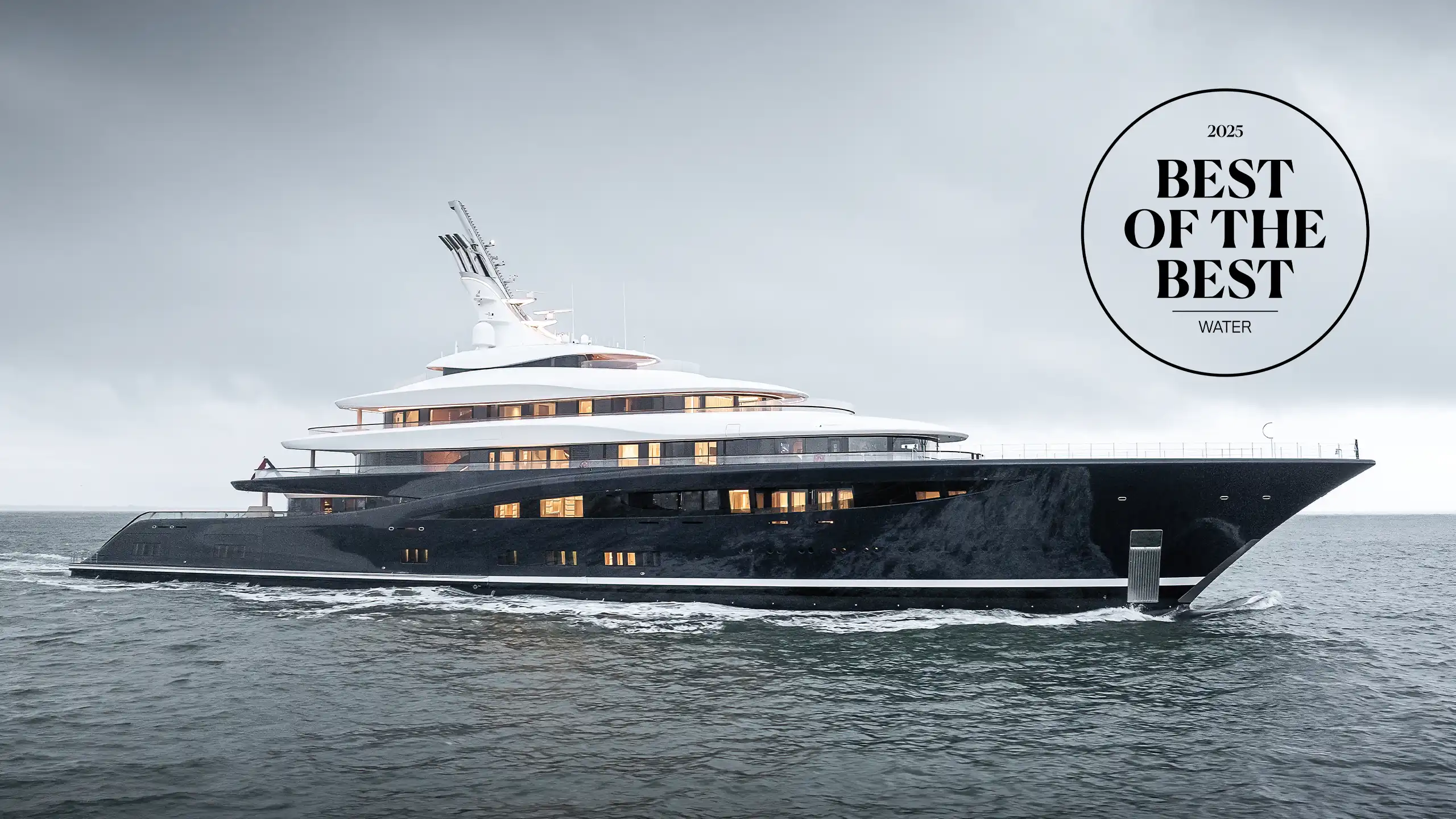
The largest yacht by volume ever built in the Netherlands, the 390-foot Breakthrough justifies its name. Feadship spent five years researching, designing, and constructing the world’s first hydrogen-fuel-cell superyachtSuperyachtA large, luxurious vessel typically over twenty-four meters in length, crewed by professionals and equipped with high-end amenities. Superyachts symbolize luxury at sea, and the segment is covered extensively inGo to Superyacht Glossary. It involved entirely rethinking the interior to accommodate 4.4 tons of liquid hydrogen—which required 10 times more space than what’s needed for diesel fuel and must be stored in cryogenic tanks at -423 degrees Fahrenheit—to generate emissions-free energy. This technical leap combines 16 fuel cells, lithium batteries, two electric motors, and diesel generators to meet Breakthrough’s substantial propulsion and hotel needs. It will also allow the behemoth to cruise on fuel cells for short periods. Its heat-recovery system warms the pool, Jacuzzi, steam room, and floors and even preheats the engines. The luxe interior features elegant textured leather, marble, and rattan. The owner’s deck includes two en suite bedrooms, a gym, two offices, and a living room, while a private book-lined staircase leads to the lower deck. Other unique features: a regulation-size pickleball court on the bow and a submerged Nemo lounge on the lower deck.
Superyacht: Diamond Binta
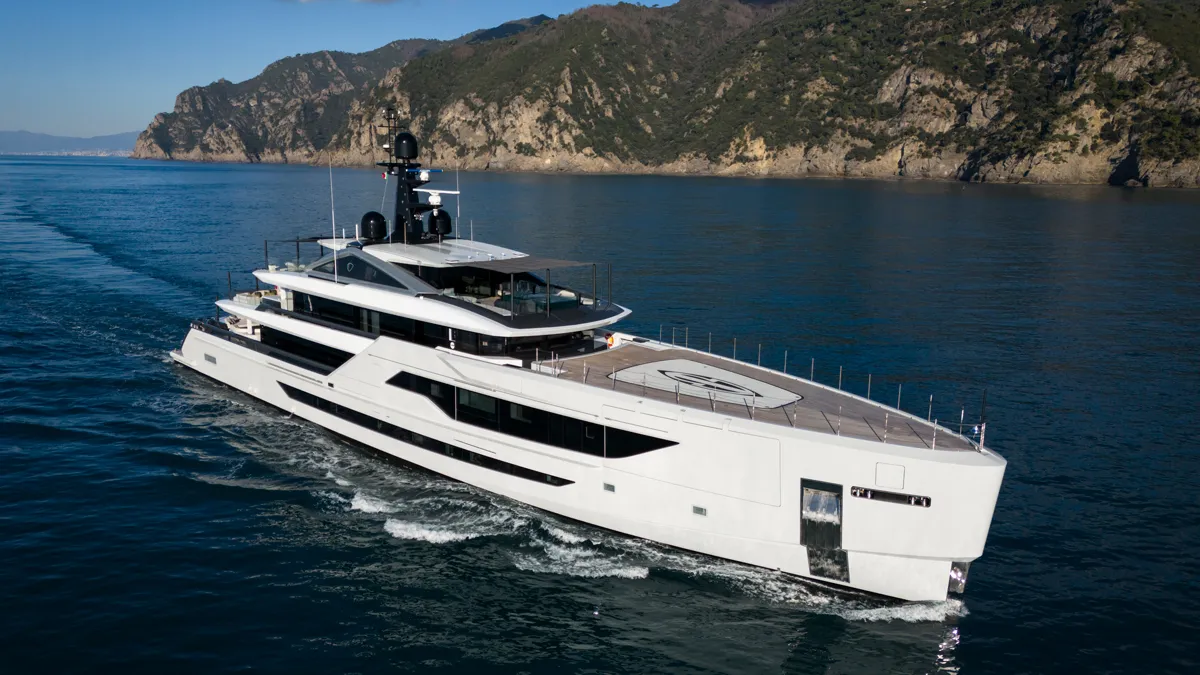
Few yachts focus on the engine room for favorable first impressions, but Diamond Binta revels in pulling back the curtain in unexpected places. A glass walkway and viewing gallery pass between white Caterpillar 3512E diesels, connecting the yacht’s lower-deck guest staterooms with the beach club. Built at the Tankoa shipyard in Genoa, the Paszkowski-designed exterior also differentiates with automotive details such as deck overhangs, which resemble the hood of a car, and a custom-designed sundeck bar inlaid with a honeycomb pattern that replicates the carbon fiber used in sports cars. A glass-sided pool on the top deck and an outdoor gym are other distinguishing features. The interior emphasizes natural-wood tones, along with marble and leather, and houses a full-beam owner’s suite. Beneath the sophisticated look, Diamond Binta was designed as a world explorer with a 5,400-nautical-mile range. A two-tender garage and a helideck support its off-grid adventures.
Motoryacht: Azimut Seadeck 7
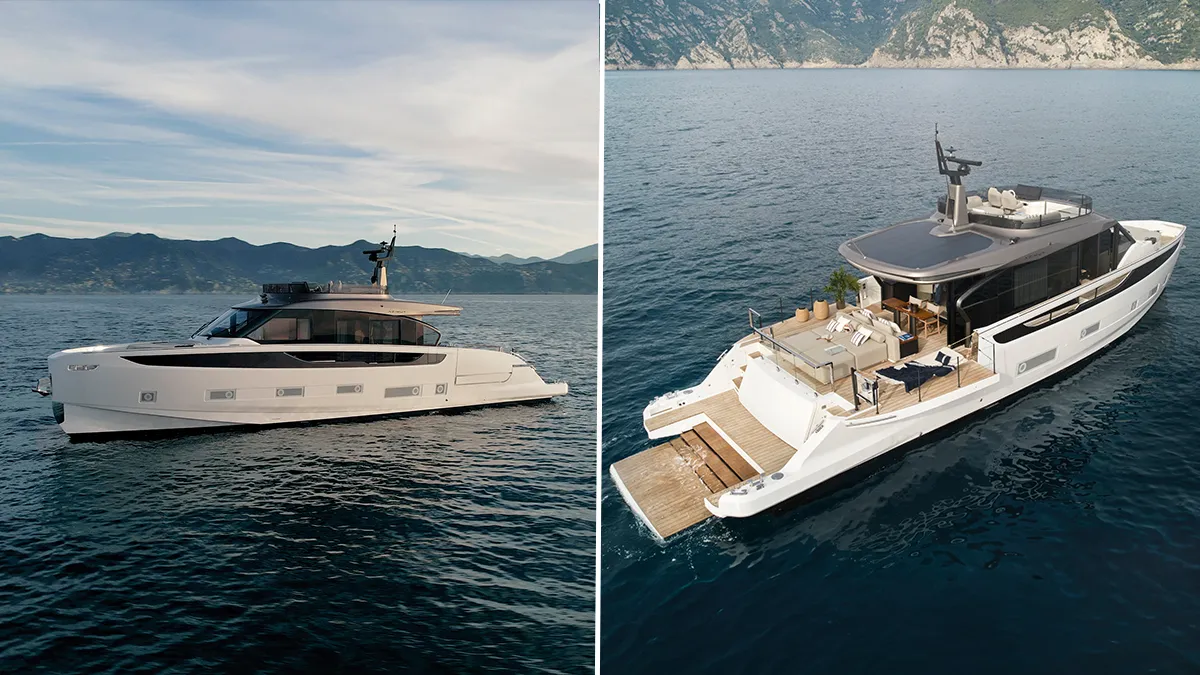
Azimut’s Seadeck 7 isn’t a classic motoryacht, but it is the most forward-thinking in its class. The 71-footer is the first production yacht with Volvo Penta’s IPS hybrid-electric propulsion, which aims to reduce emissions by 40 percent via four navigation modes. For carbon- free operation, Pure Electric runs on battery power alone, while at the other end, Crossover uses a diesel engine to drive the electric pod motors. The system can run the hotel load for up to 12 hours without turning on the generators. The Seadeck 7’s Fun Island lives up to the 1950s-sounding name: The three-tiered rear area measures about 650 square feet when the side wings are folded out. It’s defined by lounges, a hammock, and a descending rear step for easy water access. The four-stateroom interior by residential architects Matteo Thun and Antonio Rodriguez balances simplicity with an upscale vibe, employing certified woods, carpeting made from recycled plastics, and other sustainable materials without looking self-conscious. The flybridge, with solar panels at the rear, makes a cozy, private getaway.
Megayacht: San
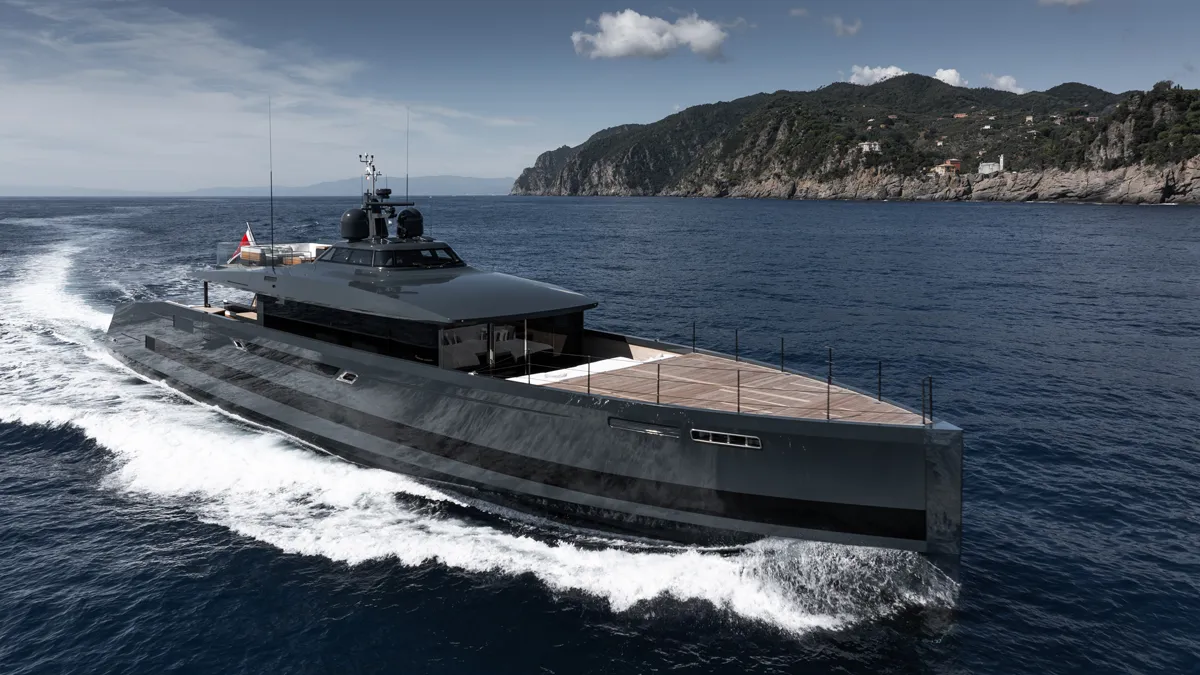
Among the many custom projects from Turkey’s Alia Yachts, San stands out for its radical, see-through main deck, making it more day boat than superyachtSuperyachtA large, luxurious vessel typically over twenty-four meters in length, crewed by professionals and equipped with high-end amenities. Superyachts symbolize luxury at sea, and the segment is covered extensively inGo to Superyacht Glossary. The owner wanted to re-create the open sense of a yacht about half of San’s 148-foot length and pushed Sinot Yacht Architecture & Design for a vessel where one can see from the beach club to the bow. This remarkable line of sight was achieved by placing the staterooms and galley on the lower deck and exchanging all bulkheads in the salon with full-height windows. There is no main-deck galley or helm to spoil the view, and even the salon seating area is sunken into a Japanese-style floor recess. San’s attractive, minimalist wooden interior, precise lines inside and out, and clear views of the sea from every angle made it this year’s best-in-class design.
Charter Yacht: Renaissance
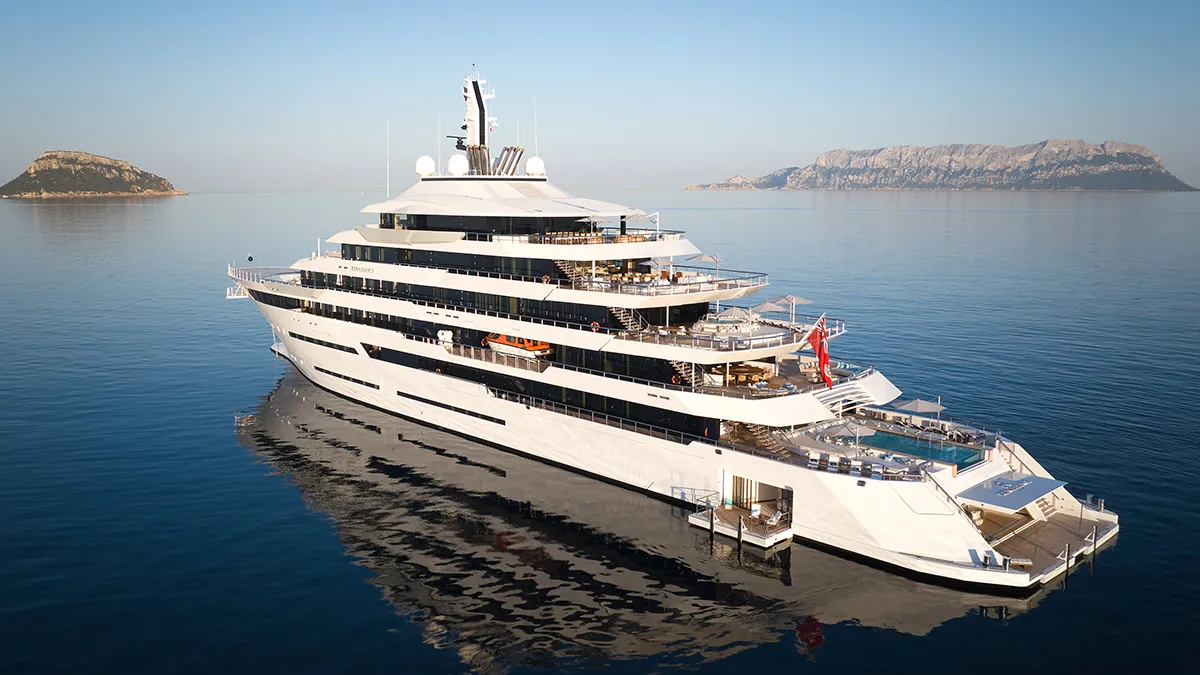
By the numbers, the 367-foot Renaissance might be confused with a mini cruise ship, with its six decks and massive 7,925-gross-ton interior volume. It sleeps 36 guests in 19 staterooms, has a deck devoted to wellness, and offers a 19-seat cinema. Dining areas are on four decks, with the largest being a double-height dining room on the main deck. The Bannenberg & Rowell design, however, never drops its superyachtSuperyachtA large, luxurious vessel typically over twenty-four meters in length, crewed by professionals and equipped with high-end amenities. Superyachts symbolize luxury at sea, and the segment is covered extensively inGo to Superyacht Glossary grandeur, with meticulous wood- and stonework, an overhead walkway above the salon, and a sense of intimacy on each deck. The owner’s deck is a 646-square-foot suite with twin walk-in wardrobes and bathrooms, with side-deck access on both sides. The beach club features a bar and multiple lounge areas, plus a large swimming pool on the deck above. Available for charter starting at about $3.4 million per week, the yacht has a multiskilled crew of 45—a former engineer, for instance, once doubled as a magician—to look after the guests. Beyond the chef’s traditional fare, Renaissance has a sushi bar, a pizza oven, and a 1,000-bottle wine cellar.
Sailing Yacht: Project Zero
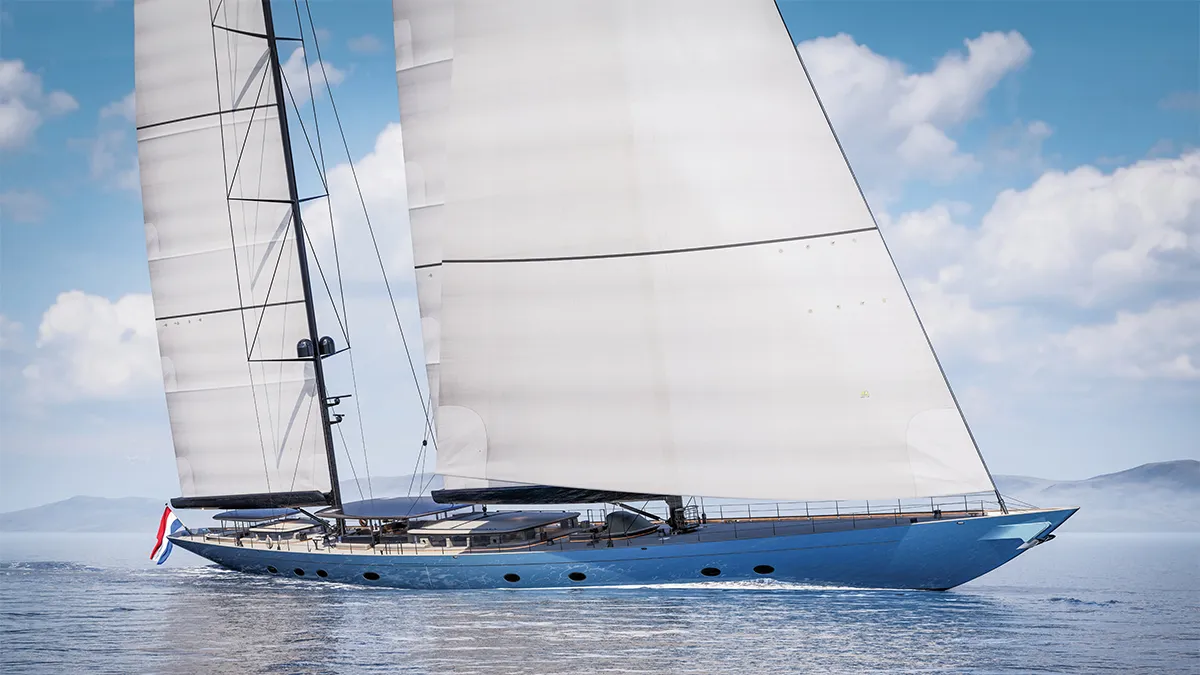
The world’s first zero-emissions sailing yacht began with Foundation Zero, a group of impact investors who wanted to open-source their new designs to promote renewable technologies. One of the first projects was something that sounded impossible: a 227-foot superyachtSuperyachtA large, luxurious vessel typically over twenty-four meters in length, crewed by professionals and equipped with high-end amenities. Superyachts symbolize luxury at sea, and the segment is covered extensively inGo to Superyacht Glossary with no fossil-fuel power, but that instead harnesses sun, wind, and water.
Leading the project, Dutch designers at Vripack teamed up with Dykstra Naval Architects and sailing-superyachtSuperyachtA large, luxurious vessel typically over twenty-four meters in length, crewed by professionals and equipped with high-end amenities. Superyachts symbolize luxury at sea, and the segment is covered extensively inGo to Superyacht Glossary builder Vitters, as well as teams of coders, data analysts, and even a physicist. Project Zero was designed to generate most of its power through hydro-generation while sailing, storing it in the onboard batteries (weighing 44 tons), while specialty solar panels provide more energy. Depending on wind conditions, it can gather about 200 kW of electrical power—or 10 times total energy needs—to meet its ambitious goal of two weeks’ energy autonomy. (Most hybrid yachts run for eight hours max on battery power.) With its aesthetic appeal, Project Zero could well be the next marker for sustainable yachting.
Advanced Technology: Almax
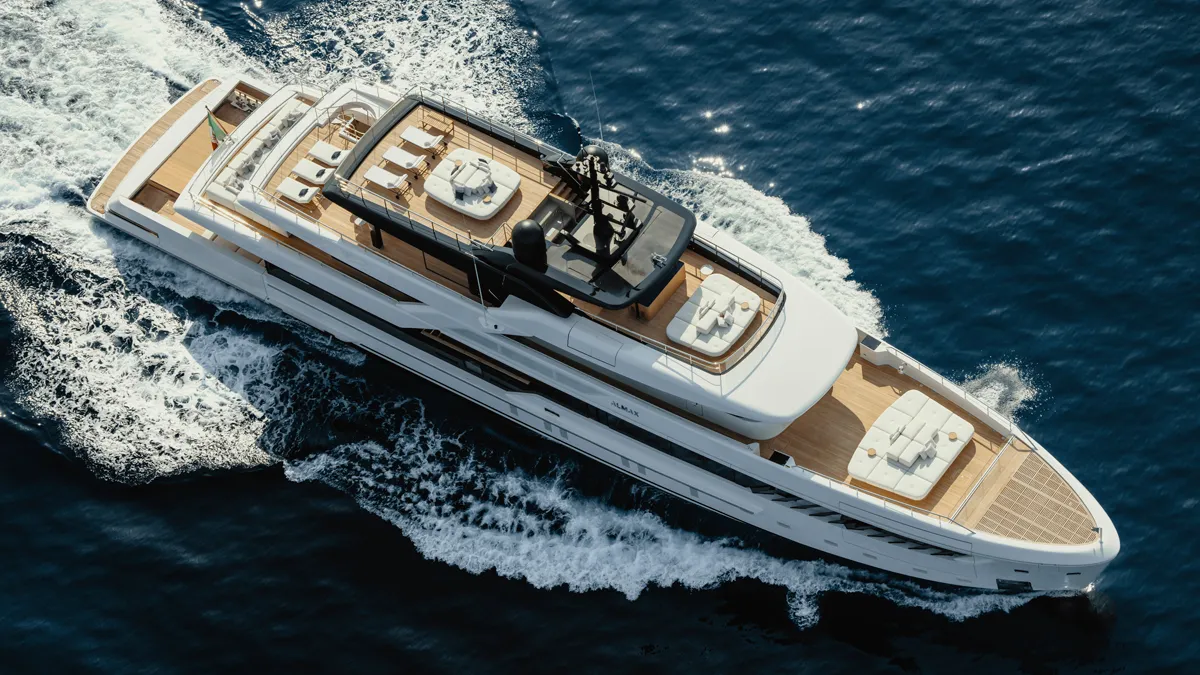
This 165-footer is the first of Sanlorenzo’s 50Steel series, but, more importantly, it serves as a test bed for a fuel-cell system that converts green methanol into hydrogen and ultimately generates 100 kW of emissions-free power for the yacht’s hotel load. Other than being the first superyachtSuperyachtA large, luxurious vessel typically over twenty-four meters in length, crewed by professionals and equipped with high-end amenities. Superyachts symbolize luxury at sea, and the segment is covered extensively inGo to Superyacht Glossary with a reformer fuel-cell system, Almax’s novel design includes the Hidden Engine Room (HER), with a lower-deck engine area. This particular configuration allowed the designers to replace the traditional engine room with a large Ocean Lounge, which connects to the aft beach club and forward guest quarters. The methanol fuel-cell technology powers all the yacht’s needs at anchor or the dock. The innovation is a genuine technical leap for vessels this size.
Catamaran: Seawolf X
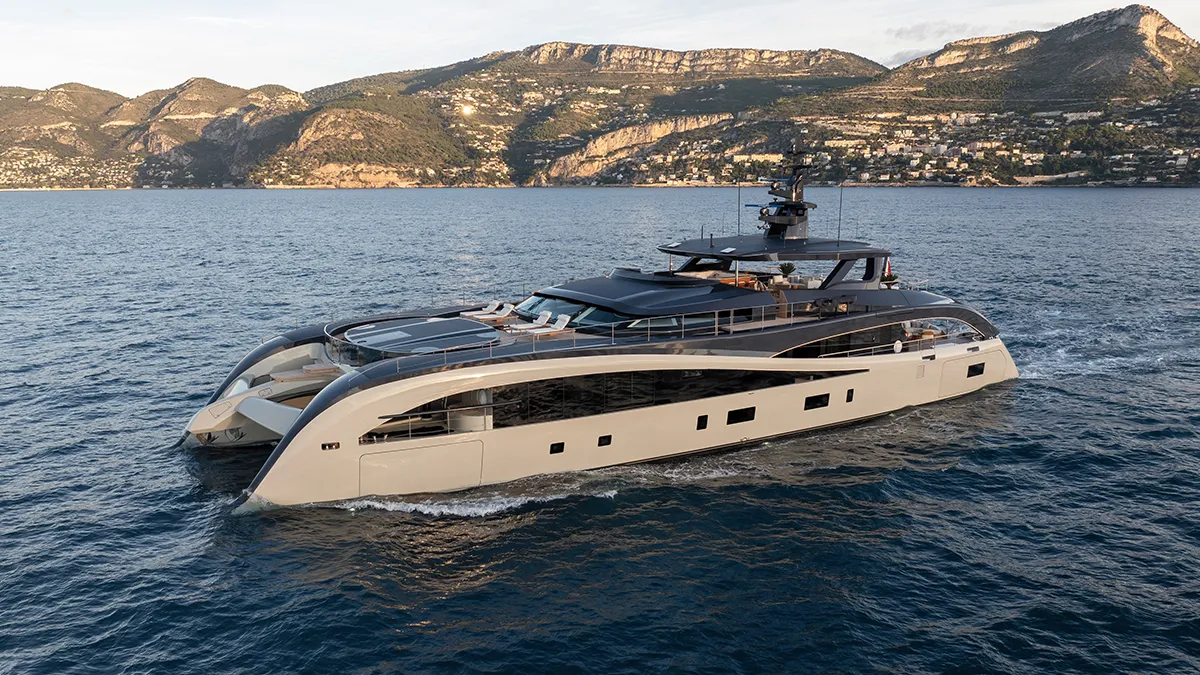
Rossinavi has built many exceptional custom yachts in the past 20 years, but Seawolf X could be a defining moment for the Italian builder. The 140-footer is its first catamaran, a design with larger interior space and better fuel efficiency than a similar- length monohull. Its young, tech-focused owner, obsessed with squeezing every type of efficiency from his boat, mandated that A.I. help run the vessel. Over three years, Rossinavi, Videoworks, and the University of Pisa created RossinaviAI, the first adaptive-artificial-intelligence system on a superyachtSuperyachtA large, luxurious vessel typically over twenty-four meters in length, crewed by professionals and equipped with high-end amenities. Superyachts symbolize luxury at sea, and the segment is covered extensively inGo to Superyacht Glossary that not only observes owner and guest behavior, tweaking temperatures and lighting to individual preferences, but, more importantly, also monitors engine performance, navigation, and maintenance schedules to supercharge efficiency. The design doesn’t sacrifice luxury, either: The sleek, curved hull has a sunken foredeck and glass-encased Jacuzzi, while the palatial main salon and owner’s stateroom—both full beam—offer up the square footage of a much larger yacht.
Explorer: Maverick
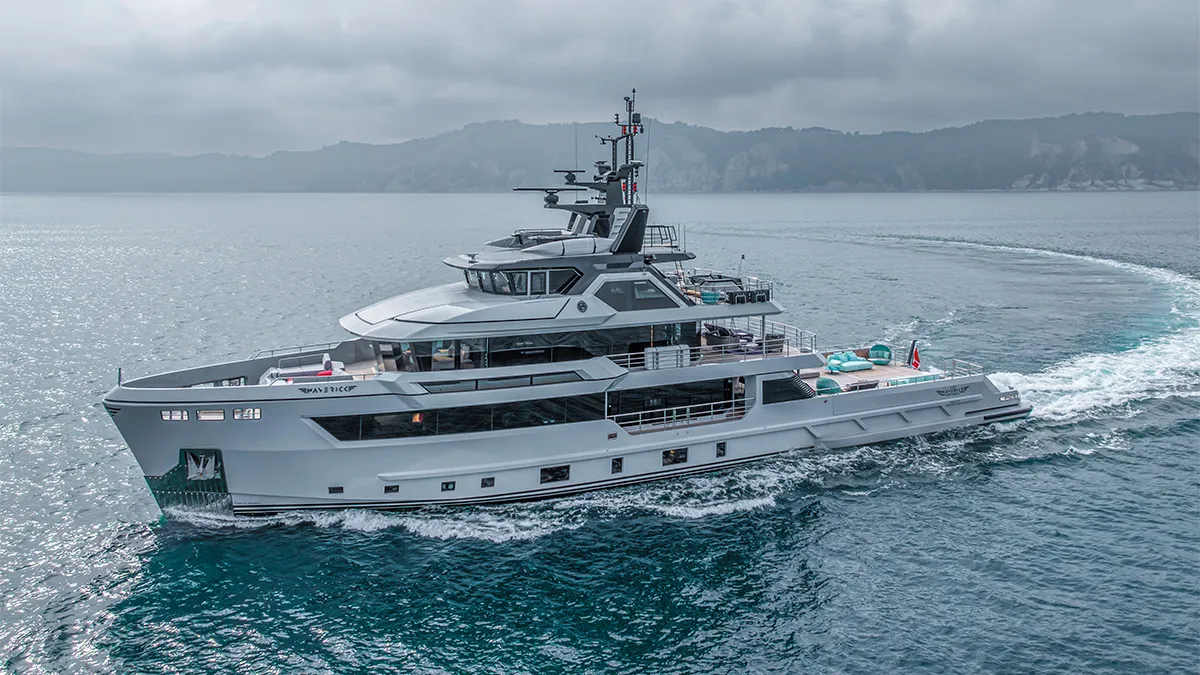
The first of Cantiere Delle Marche’s Flexplorer 146 range was designed for a multiyear off-grid expedition. As the Flexplorer name suggests, it’s an explorer that can be configured with the comforts of home. The 1,453-square-foot rear deck is a perfect example of double duty: With the tender aboard, Maverick resembles most expedition yachts. After it’s launched, the open deck (with a pool) becomes the main social area and provides access to the ocean. Below that is a small gym, with storage for diving equipment and other toys. Maverick’s owners designed two large staterooms (one for the parents and the other for one child) and a balcony on the upper owner’s deck, with suites on the lower deck for the other children. Interior spaces are open-plan to facilitate easy movement (and informal relationships) for the family and nine-person crew. Maverick’s 16,900-gallon fuel capacity and 5,000-mile-plus range at 10 knots provide weeks of autonomy, while the hull’s ice belt allows cruising in polar waters, the signature of a true explorer.
Weekender: Scout 670 LXS
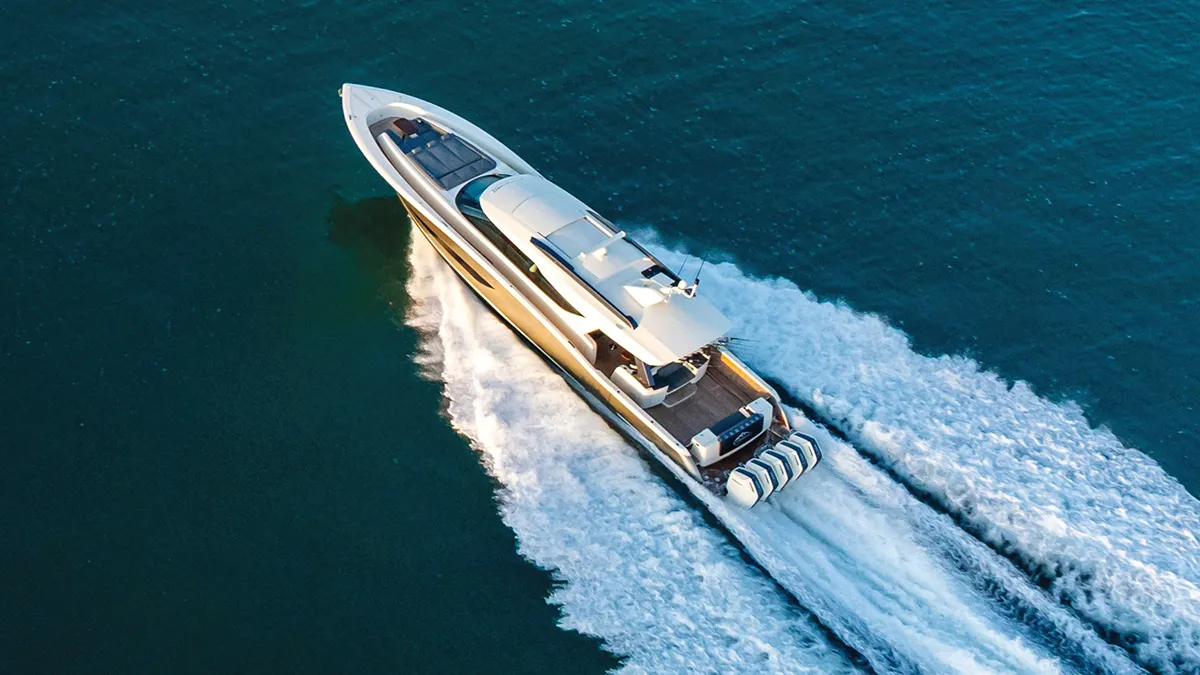
Nicknamed Project Everest because of its complexity and scale, the world’s largest outboard-powered boat evolved after months of back-and-forth between the South Carolina builder’s design team and London-based Harrison Eidsgaard. The collaboration was a first, pairing an American builder known for offshore-fishing boats with one of Europe’s leading superyacht designers. What could have been a clash of cultures resulted in a fast, stylish outboard-powered cruiser; its five 600 hp Mercury V-12s push the 670 LXS to nearly 60 mph. Despite its speed, it’s a yacht, with a teak-decked cockpit that electronically folds out on both sides, a bar, and 22 rod holders and rocket launchers for sportfishing. Beneath the hardtop are four bucket seats and a large L-shaped lounge for offshore running. The 670 LXS retains Scout’s DNA but infuses details like a Gussi Italia steering wheel and Mercedes G-Wagen air-conditioning vents. Three staterooms below—two being en suite—offer unusually generous headroom, with yacht-grade fit and finish. This transatlantic alliance was a success.
For a complete list of Robb Report Philippines’ Best of the Best awardees, click here.