When First Class Becomes the Private Jet You Don’t Have to Own




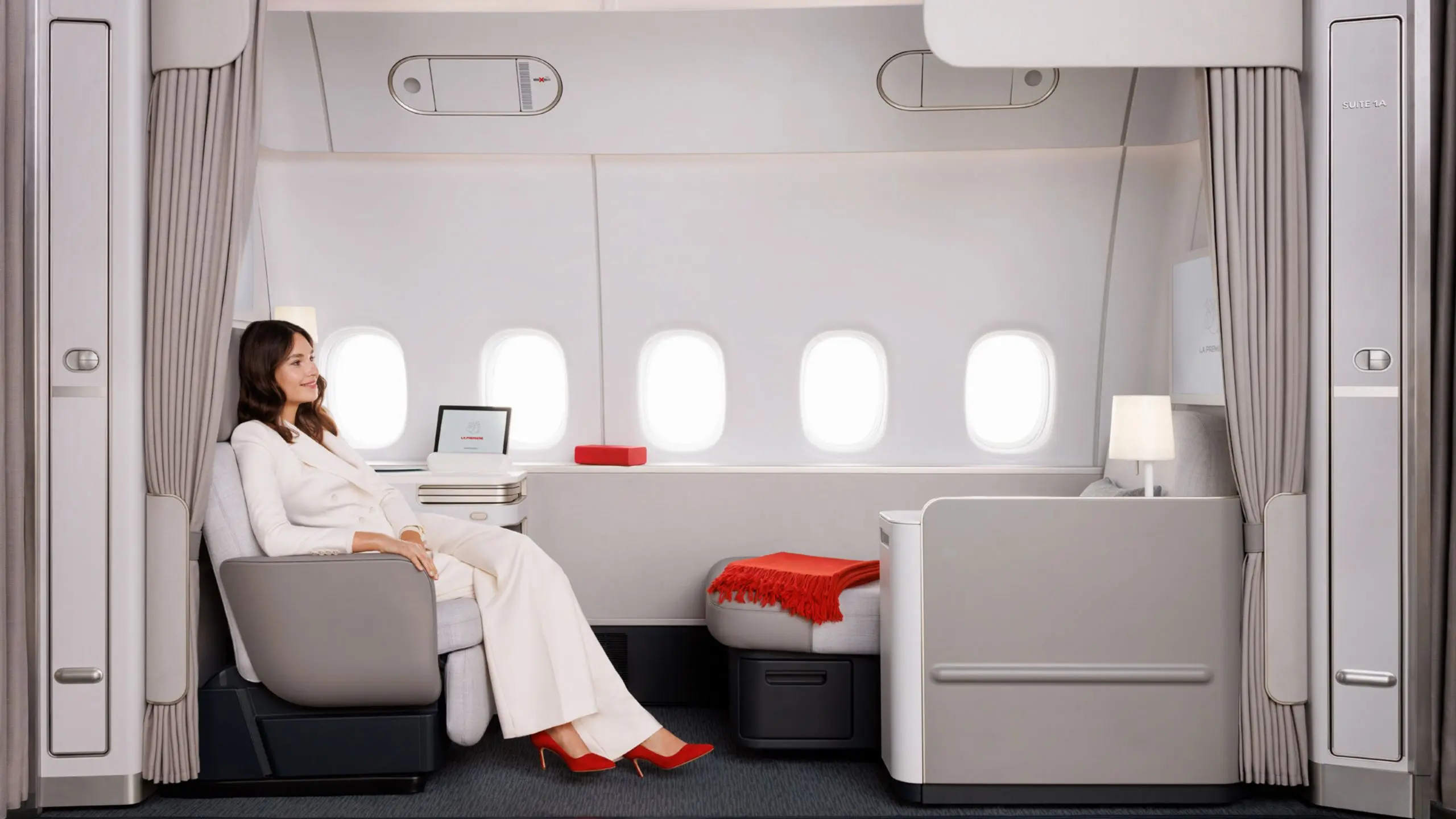
There is a moment, somewhere over the Atlantic, when a passenger aboard Air France’s newly relaunched La Première suite draws the floor-to-ceiling curtains around their five-window cabin, stretches across a chaise longue designed with the proportions of a Parisian bedroom, and orders a dish conceived by Daniel Boulud, and wonders, perhaps for the first time, why they ever paid for a charter.
That question is just the one the world’s great carriers want you to be asking. An under-the-radar but relentless arms race is reshaping the upper atmosphere of luxuryLuxuryA lifestyle defined by exceptional quality, craftsmanship, exclusivity, and sophistication, encompassing the finest products, services, and experiences that represent the highest standards of refinement and excellence.Go to Luxury Glossary aviation, and the target is explicit: the private jet. Air France has publicly framed its new La Première as a direct bid for passengers who would otherwise book private aircraft. It is not alone: From the Gulf to East Asia, airlines are building first-class products so architecturally private, so gastronomically serious, and so meticulously choreographed from curb to cabin that the old hierarchy—private jet first, commercial never—is being slowly, subtly dismantled.
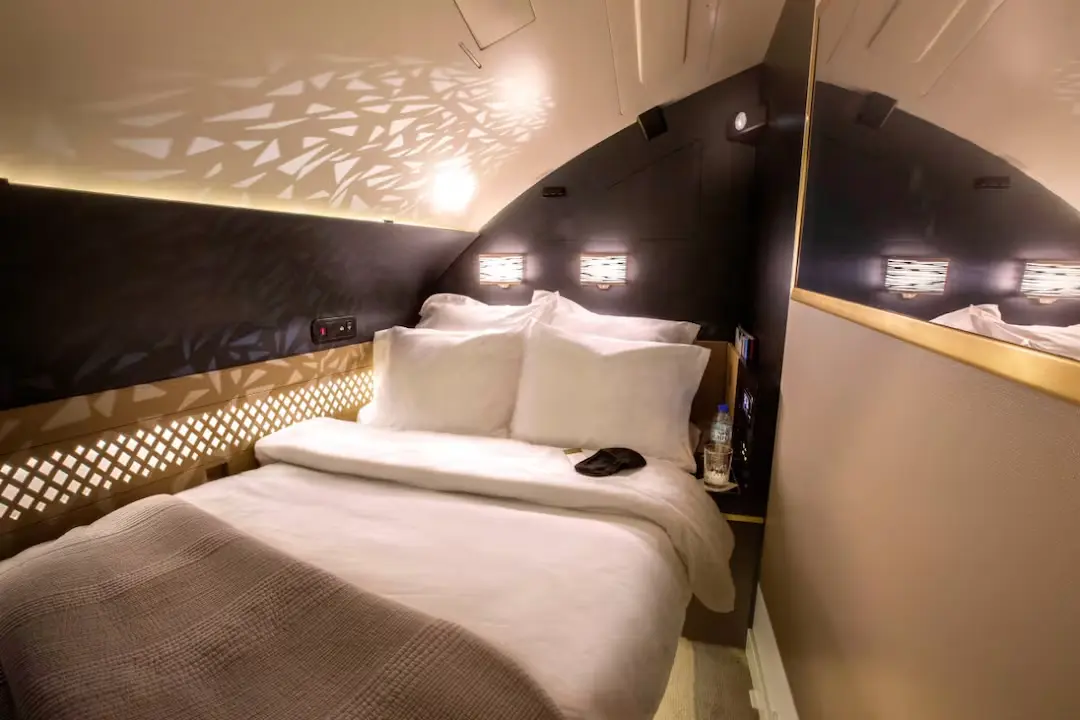
The economics are worth examining. On routes where the finest commercial first-class products now operate, the premium charter alternative frequently costs several times more for a comparable level of privacy and comfort. Etihad’s The Residence—a three-room apartment on the upper deck of the A380, comprising a living room, a double bedroom, and a private en-suite shower, attended by a butler trained at the Savoy Butler Academy in London—begins at roughly $25,000 one way between Abu Dhabi and London. A comparable private charter on the same route would cost multiples of that. Condé Nast Traveler has called it the closest thing commercial aviation currently offers to the private jet experience, and only one exists per aircraft, a scarcity that operates like a Hermès allocation.
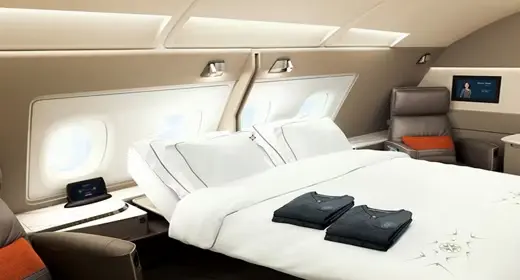
Singapore Airlines, ranked the world’s best first class by Skytrax in 2025, takes a different approach. Its A380 Suites (just six per aircraft) can be combined to create a double bedroom at 35,000 feet. The airline’s “Book the Cook” service allows passengers to pre-order from restaurant-calibre menus before departure; the Private Room lounge at Changi, accessible only to Suite holders, functions like a private members’ club with white-tablecloth dining. Emirates, for its part, has gone further still on select Boeing 777s with its Game Changer suite, where there’s zero-gravity seating co-developed with space engineers, floor-to-ceiling doors, a service window so crew can deliver champagne without breaching the passenger’s privacy, and cabin fabrics developed in collaboration with Mercedes-Benz.
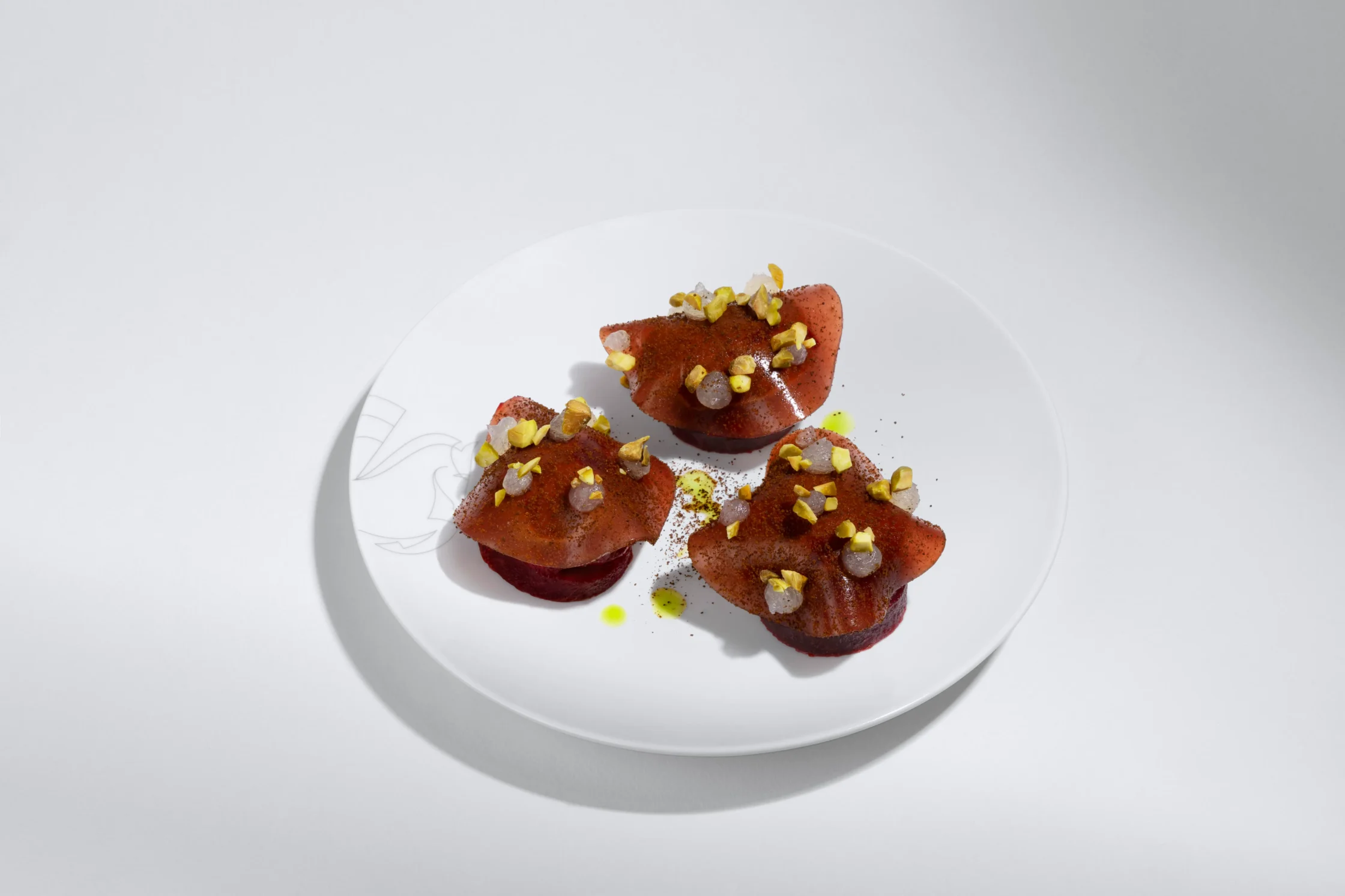
But it is Air France’s La Première relaunch that has generated the most conversation among those who track the premium travel market. The new suite spans five windows and features a modular seat-and-chaise design that converts into a two-meter bed. On US departures, the dining program rotates among four Michelin-starred chefs—Daniel Boulud, Anne-Sophie Pic, Arnaud Lallement, and Emmanuel Renaut—each bringing a personal interpretation of seasonal French cuisine, with the wine list curated by Xavier Thuizat, named Meilleur Sommelier de France in 2022. The ground experience is as dedicated: personalized check-in, tarmac transfer by private car, and at Paris CDG, a lounge ranked among the finest in commercial aviation. There are just four suites per aircraft, a deliberate choice that makes the cabin feel like a very small, very exclusive hotel that happens to be moving at 900 kilometers per hour.
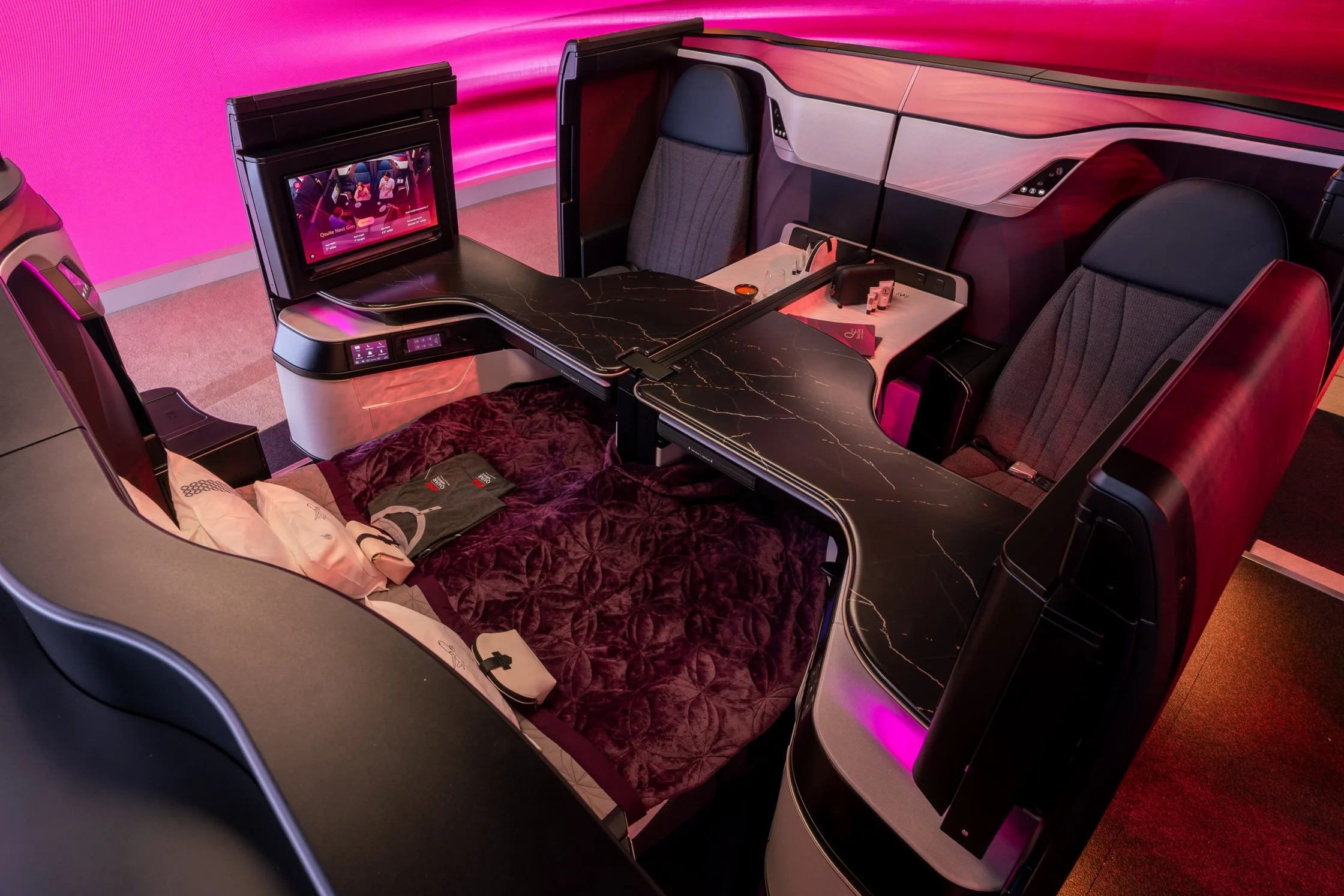
Not every carrier has followed this trajectory. Qatar Airways famously retired its dedicated first-class cabin and redirected investment into Qsuites, a business-class product so refined it routinely outscores legacy first-class cabins in independent evaluations, and which now includes a Nobu Matsuhisa dining collaboration on select routes. The implication is pointed: in the era of the sky suite, the distinction between first class and business class matters far less than the quality of the enclosure, the food, and the silence.
What is emerging across all of these products is a coherent new philosophy: luxuryLuxuryA lifestyle defined by exceptional quality, craftsmanship, exclusivity, and sophistication, encompassing the finest products, services, and experiences that represent the highest standards of refinement and excellence.Go to Luxury Glossary at altitude is no longer about seat width, flat beds, or the volume of champagne poured, but rather, privacy and service so personalized that it carries the texture of a private home. For the traveller who once booked a charter because no commercial product could approximate that feeling, the invitation is now direct—and the experience, in many cases, is remarkably close to the real thing, at a fraction of the price. The private jet is not going anywhere, but for the first time in the history of commercial aviation, it has genuine competition.