Japanese Scientists Just Launched the First Wooden Satellite Into Space


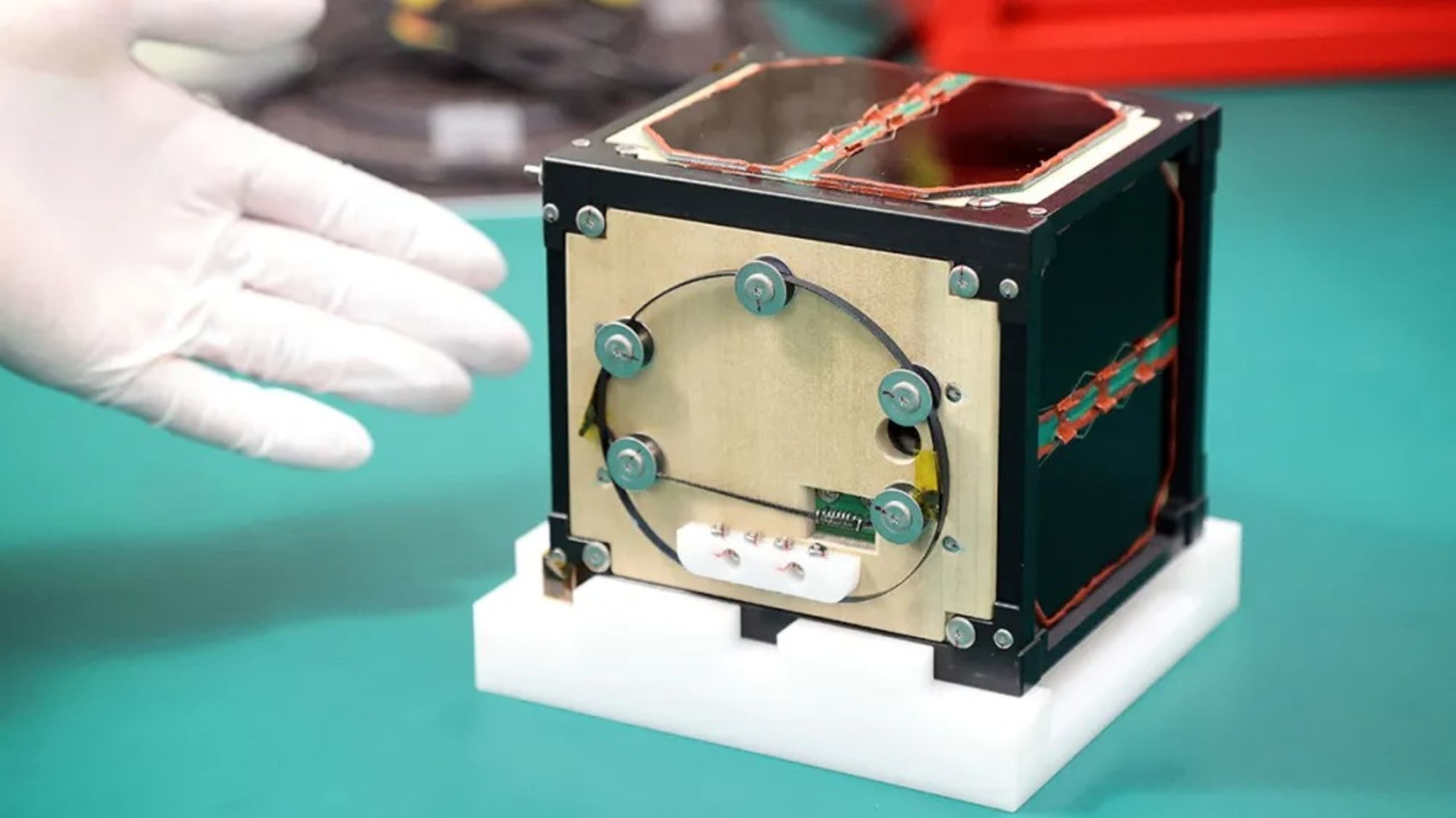
The world’s first wooden satellite has just been sent into space, and it could be a game changer.
Japanese scientists have spent years developing a cube-shaped satellite that swaps metal for timber, and on Monday night, it was officially launched into space, The New York Times reported. The satellite model was onboard a SpaceX rocket that lifted off from Florida’s Kennedy Space Center; starting in December, it will spend six months in low Earth orbit.
A group of researchers at Japan’s Kyoto University conceptualized LignoSat, as the cube is known, in collaboration with Sumitomo Forestry, a Japanese timber company. Their goal is to test how renewable materials such as wood hold up in space where there are extreme temperatures, harmful cosmic rays, and energetic solar particles. In addition, scientists are hopeful that the new satellite could mitigate the number of pollutants released into the atmosphere.
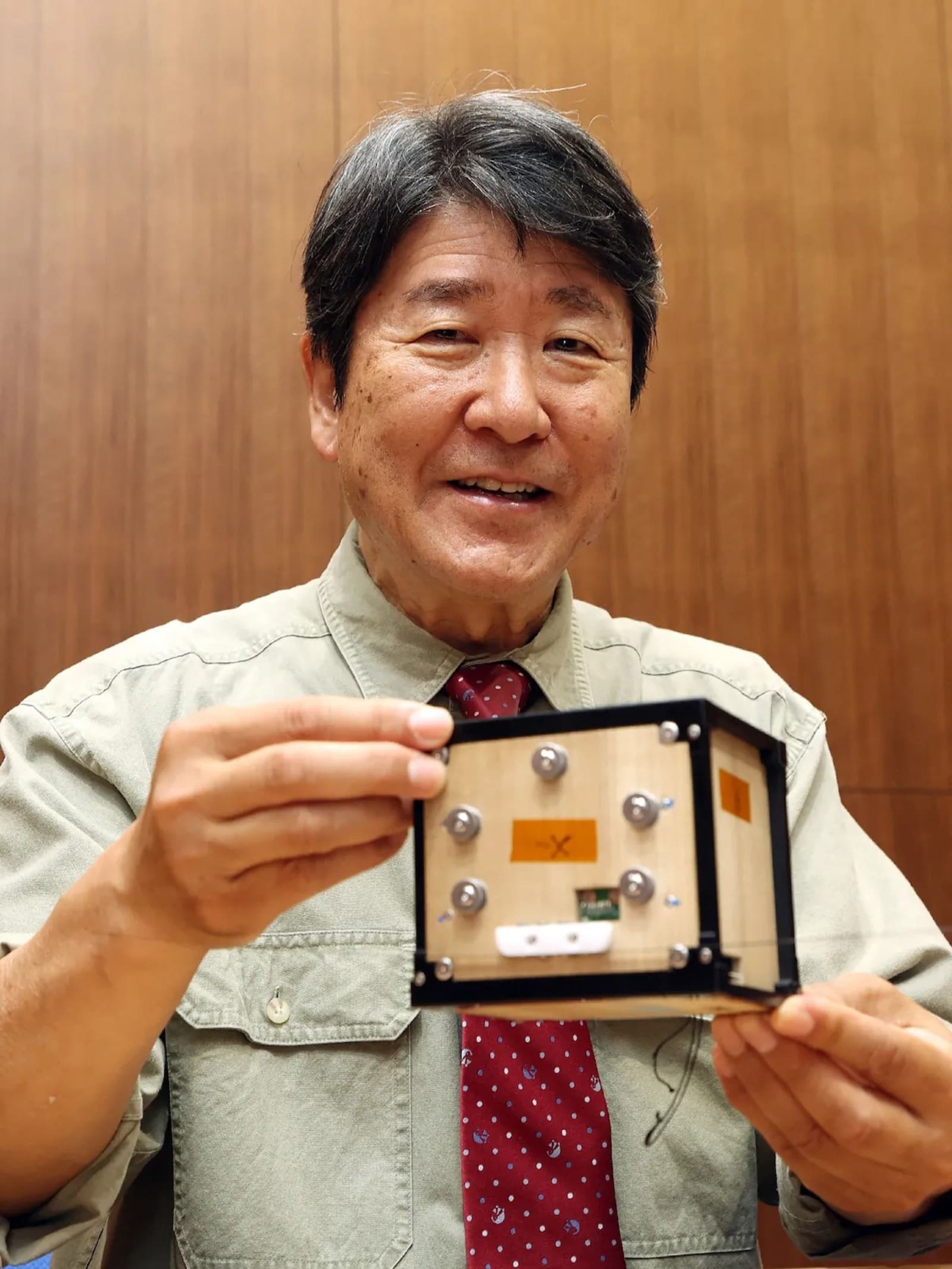
“Nobody had ever thought about using wood for rocket science before,” Koji Murata, a professor of forest and biomaterials science at Kyoto University who worked on the satellite, told the newspaper. “Many engineers thought wood was old technology and couldn’t be applied to cutting-edge technology.”
JIJI PRESS/AFP via Getty Images
In the early 1900s, wood was a popular building material for airplanes, so, naturally, Murata thought it would work for satellites, too. Takao Doi, a Japanese engineer and former NASA astronaut, raised the question in 2017 and since then has been on a mission to test the theory. In 2022, they began by sending three different samples—birch, cherry, and magnolia—to the International Space Station. Each wood then spent eight months in space and surprisingly, the researchers found no signs of decomposition or surface damage such as warping or peeling. The team ultimately opted to make their model using magnolia, which is known for being lightweight and the least likely to crack.
Two Kyoto-based master carpenters created the wooden components of LignoSat, comprised of plastic and silicon parts; the duo assembled the cube using a traditional Japanese crafts technique that doesn’t require any screws or glue. Unlike metal, wood can contract when it loses moisture, so that’s one thing the scientists will be studying, along with how well the satellite can measure the Earth’s magnetic field. After six months, the decommissioned satellite will reenter the atmosphere and begin to burn up. If it were a metal satellite, it would expel tiny particles of aluminum oxide that can damage the ozone layer. However, because it’s made of wood, it will release water vapor and carbon dioxide.
Looking ahead, Murata has ambitious plans for the future, but he’s no stranger to bold claims. “I am hoping to grow wood on Mars,” he added. “I used to think it was impossible to send anything made of wood to space.”
This article originally appeared in Robb Report US.