Patek Philippe’s Museum Celebrates 25 Years In Geneva


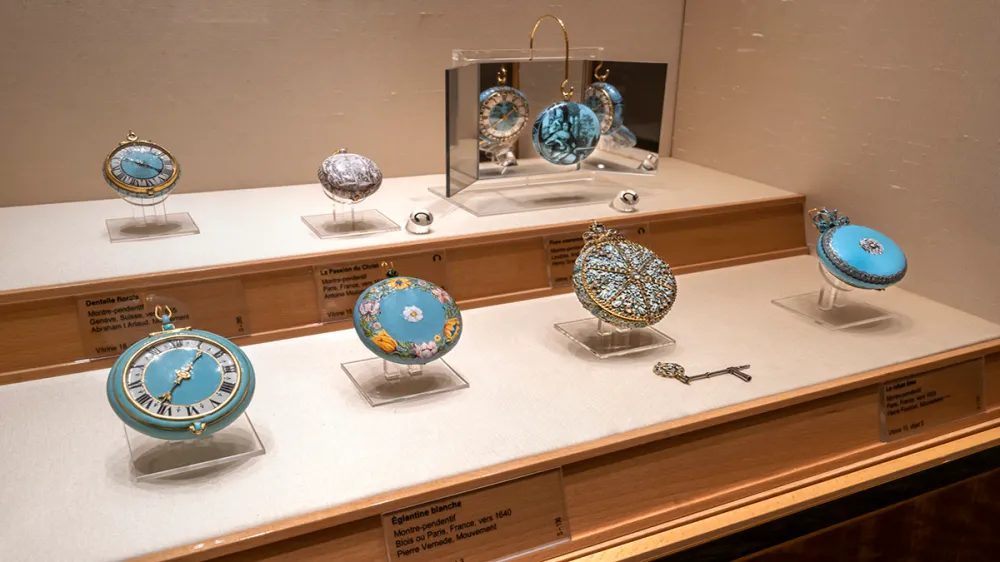
The Patek Philippe Museum in Geneva is celebrating its 25th anniversary this year. The museum, which houses the world’s most extensive horology collection, traces the trajectory of watchmaking from its early roots showcasing watches from the 16th century through today. It holds 2,500 watches, automata, precious objects, and miniature portraits on enamel as well as some of its most important historical timepieces including three from the late prolific American collector, James Packard Ward. The museum was officially opened in 2002 by Philippe Stern, then president of the Geneva manufactureManufactureA watchmaking term for a company that designs and produces most of its movements and components in-house, rather than relying on outside suppliers. Being a true manufacture signals deep expertise,Go to Manufacture Glossary and subsequently its honorary president, who passed away this year. Patek Philippe held a private reception last week to celebrate the anniversary, but the museum is open and free to the public with fresh displays of recent acquisitions and an exhibition dedicated to the Nautilus.
“My father’s dream to open a museum started many years ago, and I remember when he bought the two first museum pieces,” says Thierry Stern, Philippe Stern’s son and current president. “He was already thinking of building a museum, but of course we didn’t have the money to do it at the time. We had to build up the factory and build up the network for Patek before we could have a museum and acquire pieces. But it was always on his mind. He wanted what he called ‘the beautiful triangle.’ He wanted to create the most beautiful and celebrated museum of horology in the world. He did it not for the business, but for the pleasure of representing the Swiss watch industry and to share his love of fine watchmaking with a wider public. Many people know who we are, they know the name and know Patek PhilippePatek PhilippeA Swiss watchmaker founded in Geneva in 1839 and widely regarded as among the most prestigious in the world, known for complications, hand finishing, and its slogan about passing watchesGo to Patek Philippe Glossary is important, but sometimes when I ask them why, they don’t know. This is why I think we have to communicate through the museum, and give a reason why the respect is so strong for a brand like Patek. We are known not because I’m doing a beautiful event or making beautiful watches, which is something very nice, but because Patek has been very creative and innovative throughout all these years.”
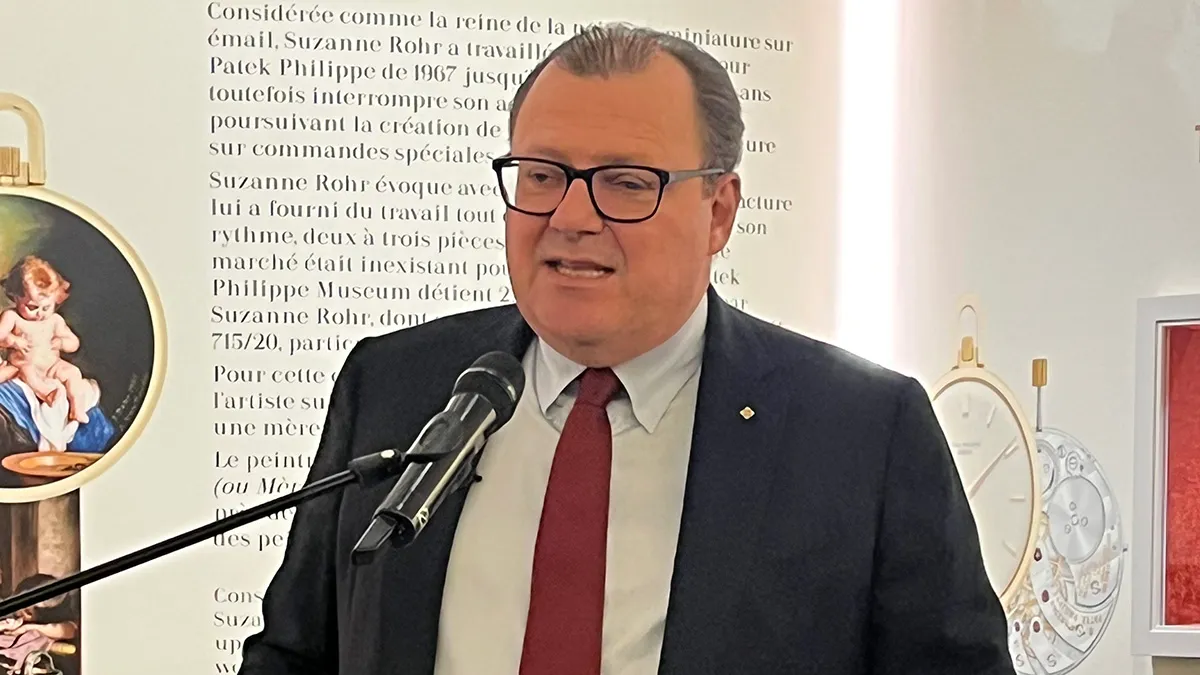
The museum is extensive and occupies four floors. The ground floor pays tribute to its founder, Philippe Stern, with a display of the 11 timepieces that inspired him the most—a personal selection unveiled in 2004 in a book devoted to the 10 values of his family-owned company. The second and third floors are devoted to the Patek PhilippePatek PhilippeA Swiss watchmaker founded in Geneva in 1839 and widely regarded as among the most prestigious in the world, known for complications, hand finishing, and its slogan about passing watchesGo to Patek Philippe Glossary collection and the antique collection (with watches from other companies), as well as recent acquisitions, including the Morehead and Cremsdorff timepieces, auctioned by Sotheby’s last year. The current highlight of the third floor is an exhibition tracing 50 years of the Nautilus collection, featuring milestone models and even hand sketches of early models. And for those interested in research, the fourth floor also houses a library. It’s difficult to nail down a top ten in a 2,500-piece collection, but here are some important highlights that may entice you to pay a visit.
The Morehead III double-movement pocket watches
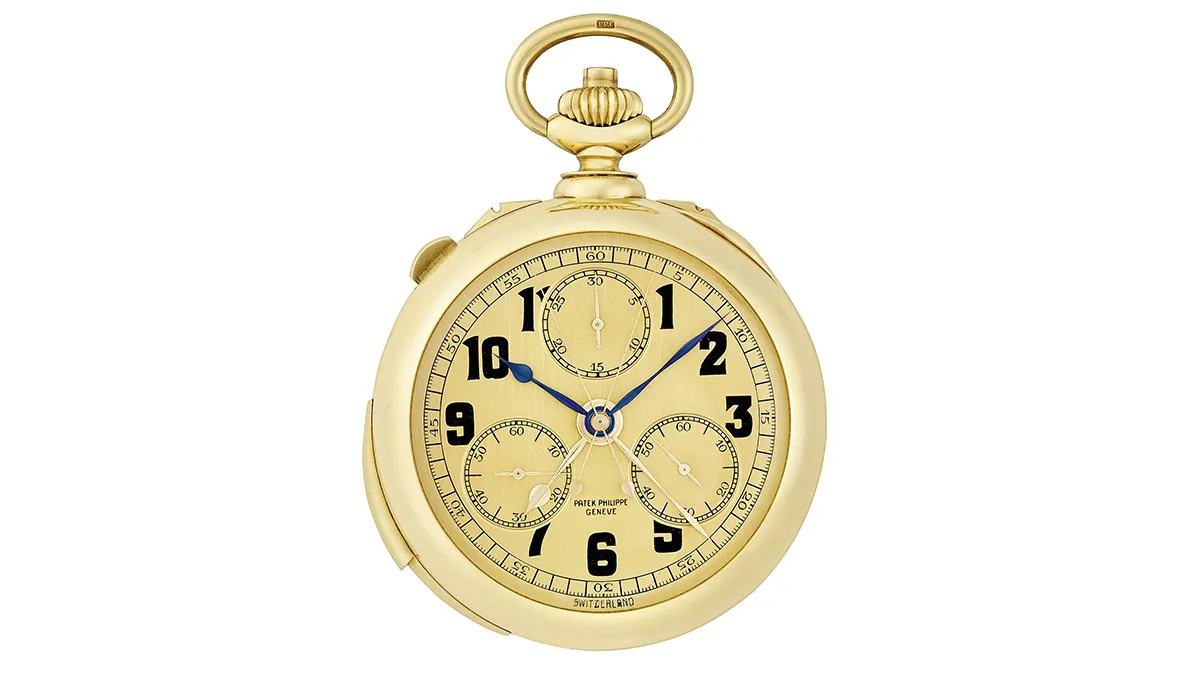
Over a 40-year period, American industrialist John Motley Morehead III (1870–1965) assembled a collection of more than 20 rare Patek PhilippePatek PhilippeA Swiss watchmaker founded in Geneva in 1839 and widely regarded as among the most prestigious in the world, known for complications, hand finishing, and its slogan about passing watchesGo to Patek Philippe Glossary watches. Among the most notable were two highly complex designs featuring a unique horological feat. Both house two independent movements—a groundbreaking engineering achievement unique to Patek Philippe—to display two separate time indications. A single winding crown operates both movements, linked by one shared winding stem. It’s a design so rare that no other examples are known to exist. One, made in 1921, incorporates a minute repeater, while the other, made in 1924, combines a minute repeater with a split-seconds chronograph. According to Sotheby’s, they are the only two known pocket watches ever crafted by Patek Philippe or any other maker to feature two independent movements, connected solely by a shared winding mechanism.
The Cremsdorff Pendant Watch: Temperance, Charity, and Hope
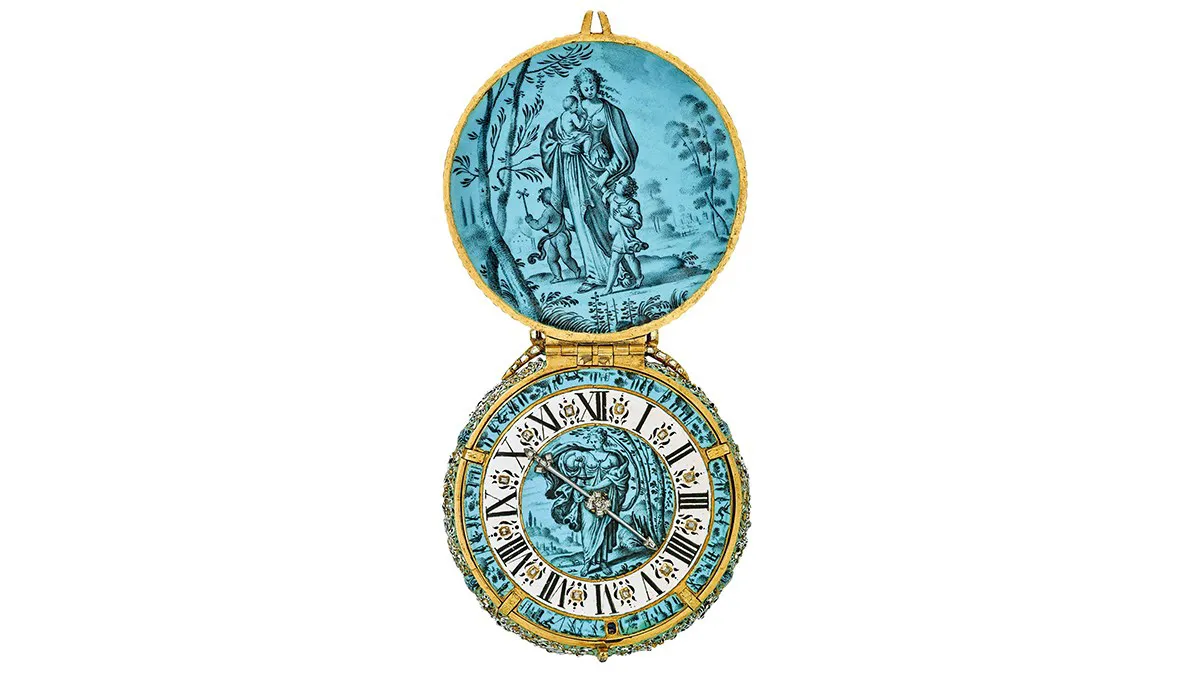
This baroque-style pendant watch, made circa 1650, features images of the three heavenly virtues: Charity with her children, Temperance diluting wine with water, and Hope clinging to her anchor. At the time, it was common for enamel painters to use the compositions of famous artists and printmakers as models. The images were inspired by engravings by Abraham Bosse (1604-1676), and an anonymous enamel painter then transferred Bosse’s virtues onto a deep pale turquoise background, typical of the period. The mechanical movement inside was crafted by the Parisian master watchmaker Jehan Cremsdorff. Arguably the finest of its kind, this watch seamlessly combines several master disciplines: watchmaking, goldsmithing, enameling and gemsetting. Its solid gold case glows in pale turquoise blue, adorned with diamonds.
Caliber 89
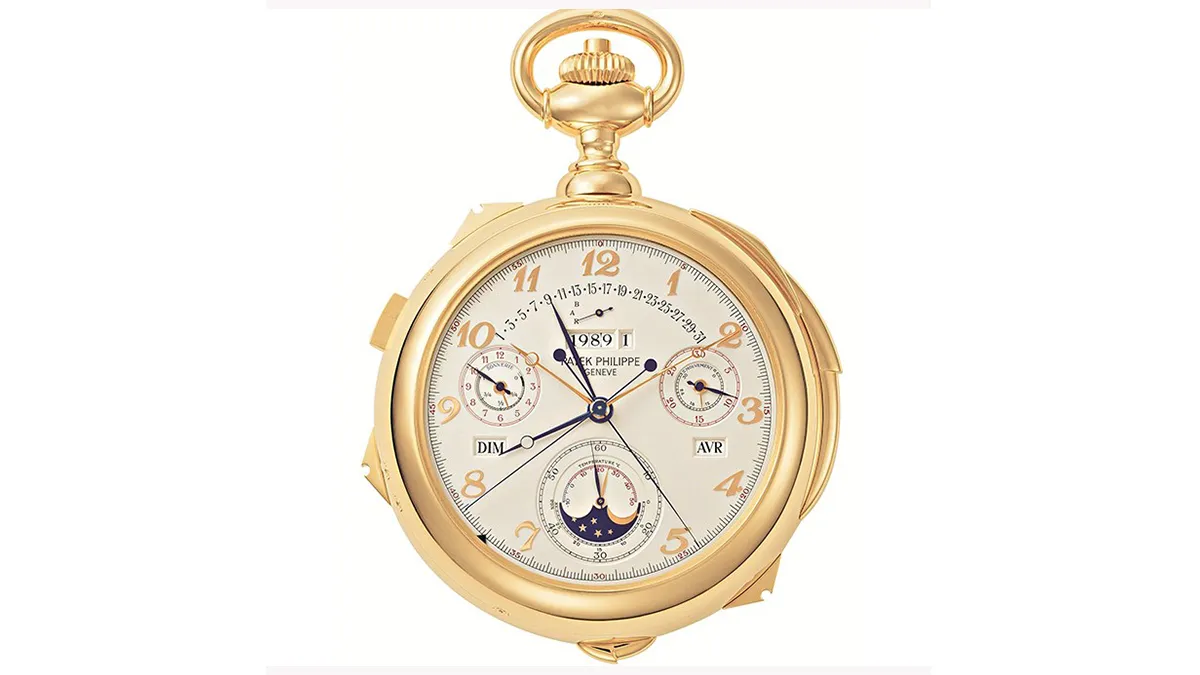
The Calibre 89 was the most complicated timepiece in the world from 1989 to 2015. In addition to displaying mean solar time (hours, minutes and seconds), it has 33 complications, including, for the very first time, a patented indication of the date of Easter. Created to celebrate Patek Philippe’s 150th anniversary, it took nine years to complete, including five years of research and development and four years of production. Four examples were produced, in yellow gold, rose gold, white gold and platinum. The prototype is on display at the museum. Philippe Stern has said about the Caliber 89: “This piece contributed to pushing the boundaries of the art of watchmaking, and for me, it symbolizes the spirit of independence and the freedom to innovate that is embraced every day at Patek Philippe.”
Henri Stern Watch Ref. 1527
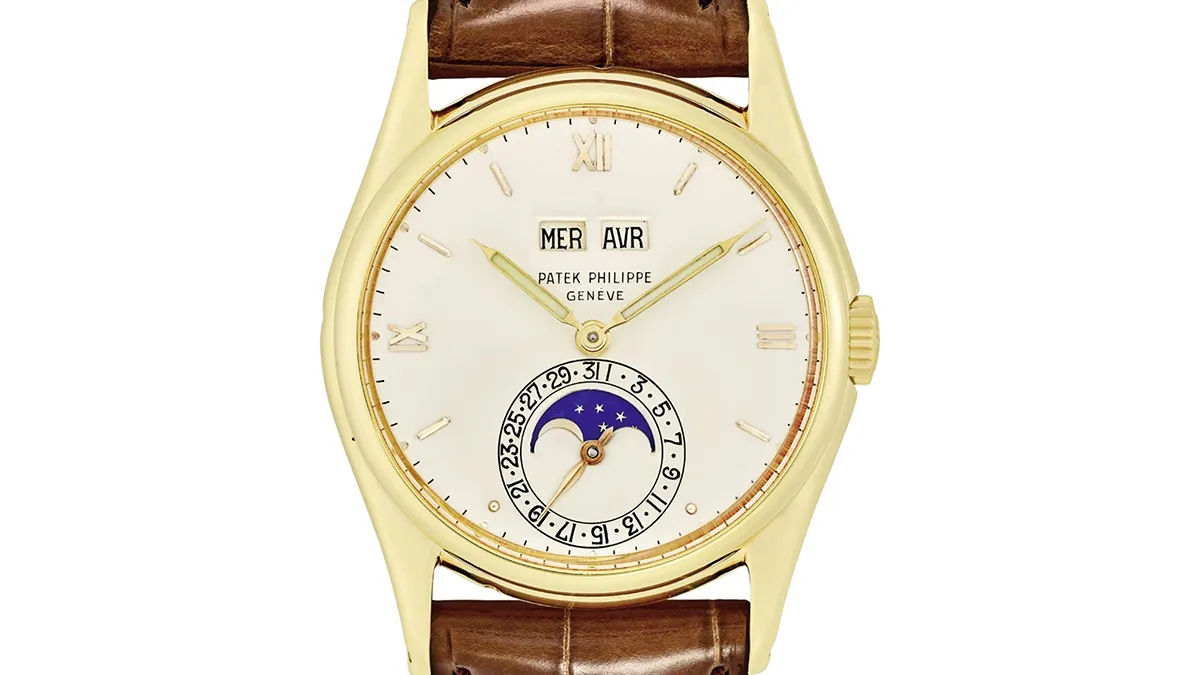
This timepiece, made in 1943, was inherited by Philippe Stern from his father, Henri Stern, the company’s president before him. It was one of the earliest timepieces with a perpetual calendarPerpetual CalendarA watch complication that automatically tracks the date, day, month, and leap years, requiring no manual adjustment until the year 2100 in most cases. The perpetual calendar demonstrates remarkable mechanicalGo to Perpetual Calendar Glossary and moon phase. “In the spirit of family tradition and the company’s philosophy, this watch holds great emotional and sentimental value for me,” says Philippe Stern. “Inherited from my father, who in turn had been given it by my grandfather, it not only embodies the passing down of a possession from one generation to the next, but also the unique bond between father and son.”
Cross-Shaped Watch
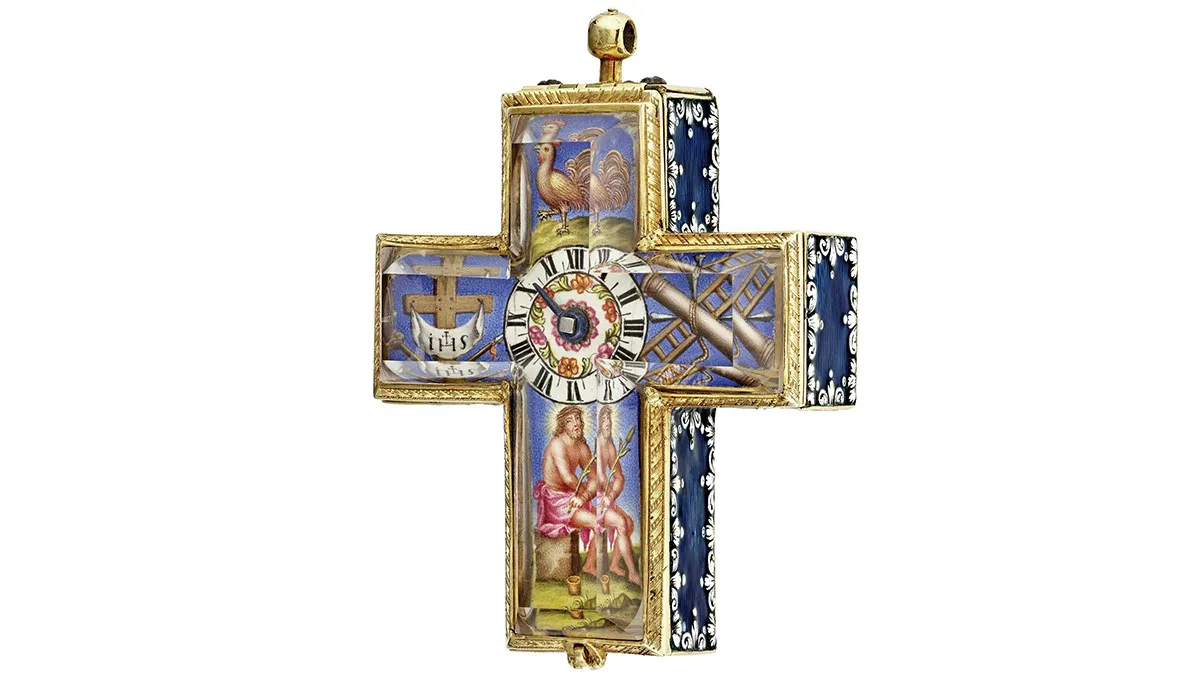
This cross-shaped watch with enamel painting on gold depicts the Crucifixion. Attributed to Pierre Huaud of Geneva, circa 1670, the piece dates from the period when Protestant craftsmen, the Huguenots that had been chased out of France, Italy and Spain, laid the foundations for what was to become Geneva’s watchmaking “fabrique,” a generic term that referred, principally in the 18th and the early 19th centuries, to the entire assembling of the watch, including watchmaking, jewelry setting, enameling and other related crafts. As Philippe Stern observed, “ The fabrique became a source of fame and glory for many watchmakers, goldsmiths and enamelers. It led to the establishment of this lucrative craft in the city on the shores of Lake Geneva, before the advent of the Industrial Age and the existence of watch manufacturers.”
The Crow and The Fox
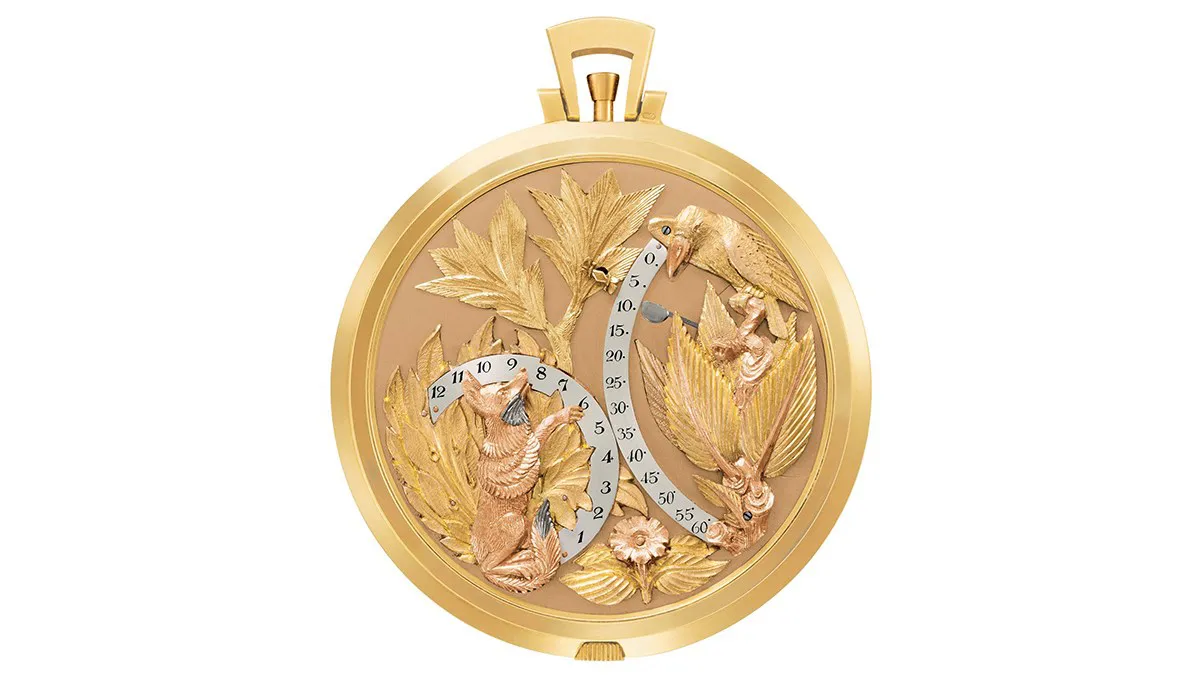
The moving parts on the dial of this watch, made by Louis Cottier, are engraved out of yellow, red and white gold and platinum. It was a prototype, inspired by the fable “The Crow and the Fox” by Jean de la Fontaine. On demand, the fox raises its right paw or muzzle to indicate the hours on the sector to the left. at the same time, the crow releases the cheese from its beak, which, as it falls indicates the minutes on the sector to the right.
175th Anniversary Grandmaster Chime Ref. 5175
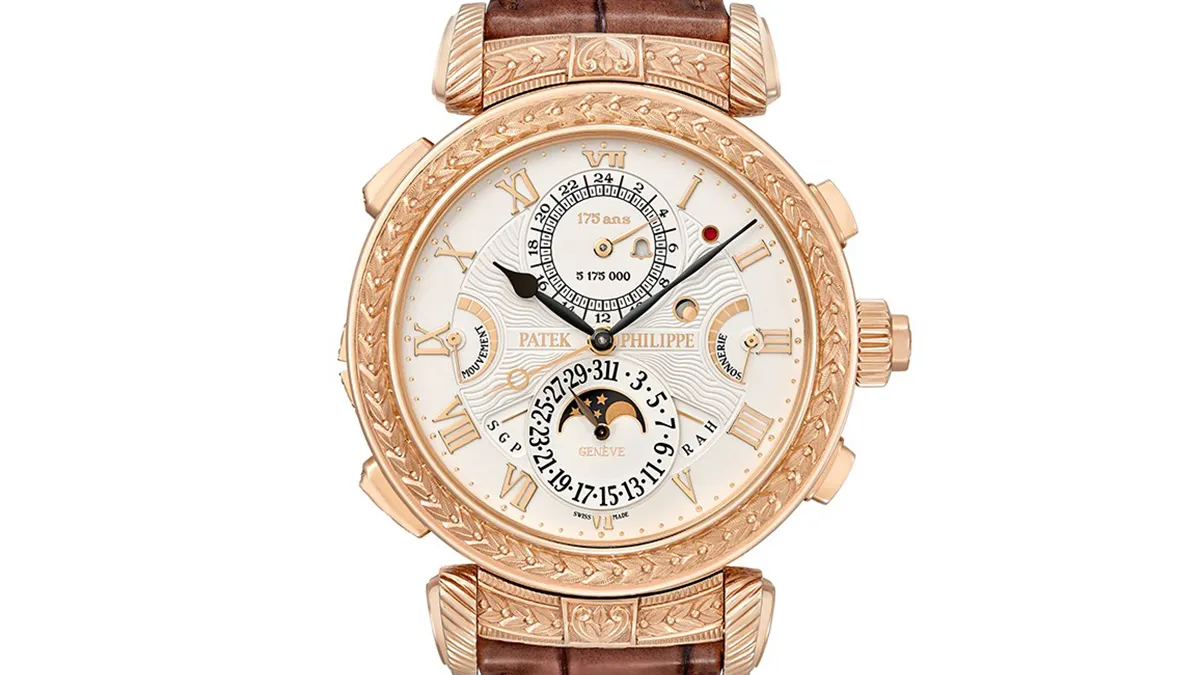
Only seven pieces of this hand-engraved rose gold watch were made, one of which resides in the museum. With 20 complications, it has two dials, five different striking chimes, and 20 different complications, driven by four spring barrels. Complications include a grande and petite sonnerie, a minute repeaterMinute RepeaterA minute repeater is a watch complication that chimes the time on demand through tiny gongs, striking hours, quarters, and minutes in distinct tones when activated. Among the most complexGo to Minute Repeater Glossary, instantaneous perpetual calendar with a four-digit year display, second time zone, day/night indicator, day/date (on both dials), month, leap-year cycle, four-digit year display and 24-hour and minute subdial. The watch also has a chimed alarm function that strikes the time by reproducing the complete tone sequence of the minute repeater – a function never before integrated in a mechanical wristwatch. A variant of the watch, Ref. 6300A, sold for a hammer price of CHF 31-million (about $31-million) at an Only Watch, a charity auction held in Geneva, setting a record for the world’s most expensive watch.
The Mother and The Child
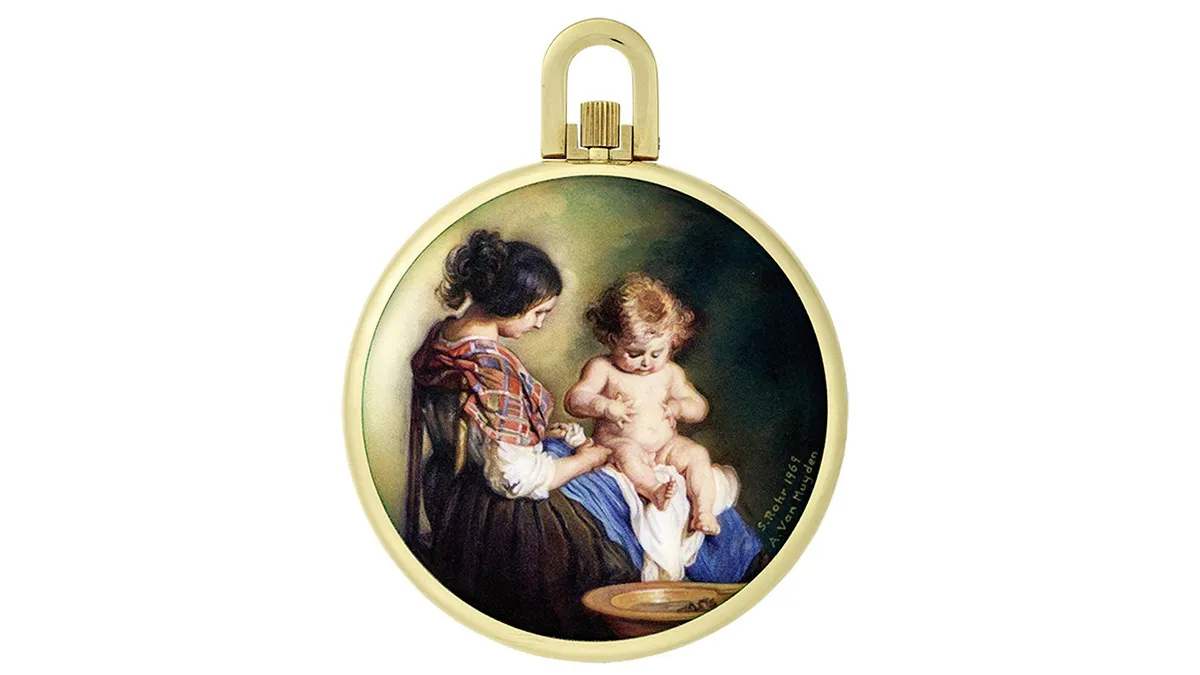
Painted in enamel on gold, this work reproduces a painting by the Swiss artist Jacques Alfred van Muyden showing a mother bathing her child. It is signed by Suzanne Rohr, regarded as the queen of enamel painting (mentor to Anita Porchet), who worked for Patek PhilippePatek PhilippeA Swiss watchmaker founded in Geneva in 1839 and widely regarded as among the most prestigious in the world, known for complications, hand finishing, and its slogan about passing watchesGo to Patek Philippe Glossary from 1967 to 2002 and continued after her retirement until 2017. According to Philippe Stern, “For me, this painting on enamel embodies the emotional value and strong sensation of building and handing down to future generations something of importance. Also noteworthy is the enamel painter’s skills, which we are still fortunate to benefit from to this day.”
World Time Chronograph Ref. 1415-1 HU
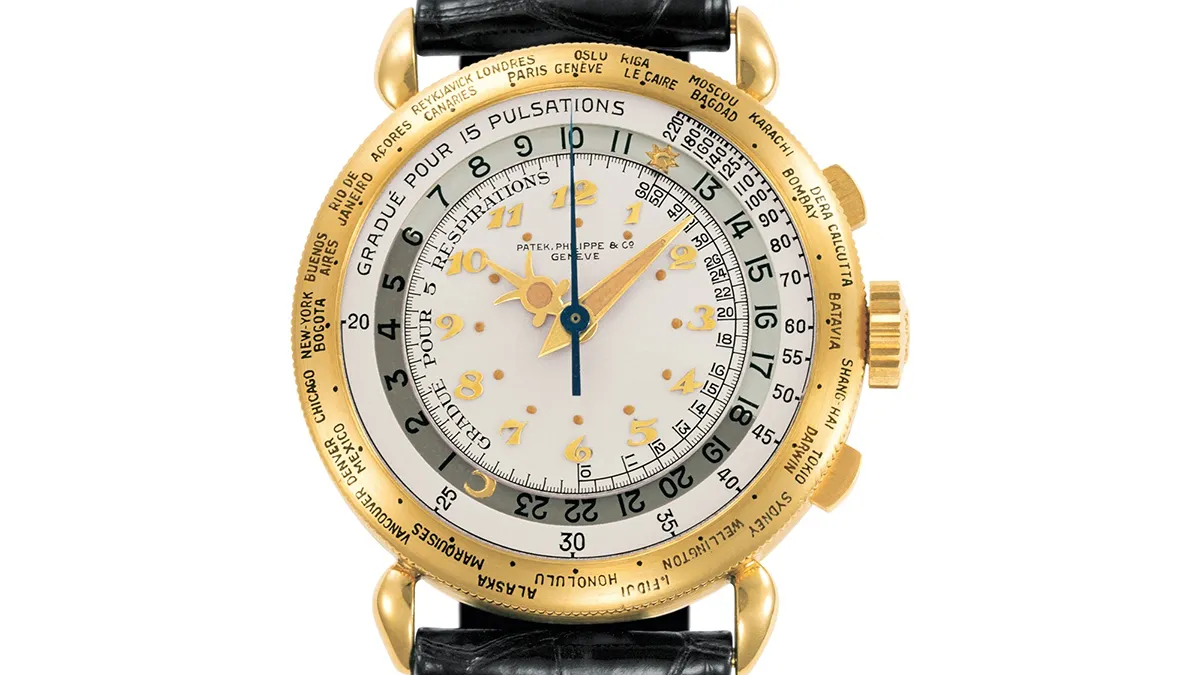
This World Time wristwatch with chronographChronographA watch complication that incorporates a stopwatch function, controlled by pushers on the case and displayed on small subdials. Originally developed for timing events, the chronograph remains popular for itsGo to Chronograph Glossary and pulsometer scale was made to order for Dr. P. Schmidt of Geneva. Sold to him on 2 October 1940, it is a unique piece. Philippe Stern explained: “Being a doctor he particularly requested a pulsometer. Responding to this request, we crafted this watch to the most exacting standards.” The watch indicates 24 time zones, with revolving bezel displaying the names of 33 cities, regions or countries around the world.
James Ward Packard’s Astronomical Pocket Watch
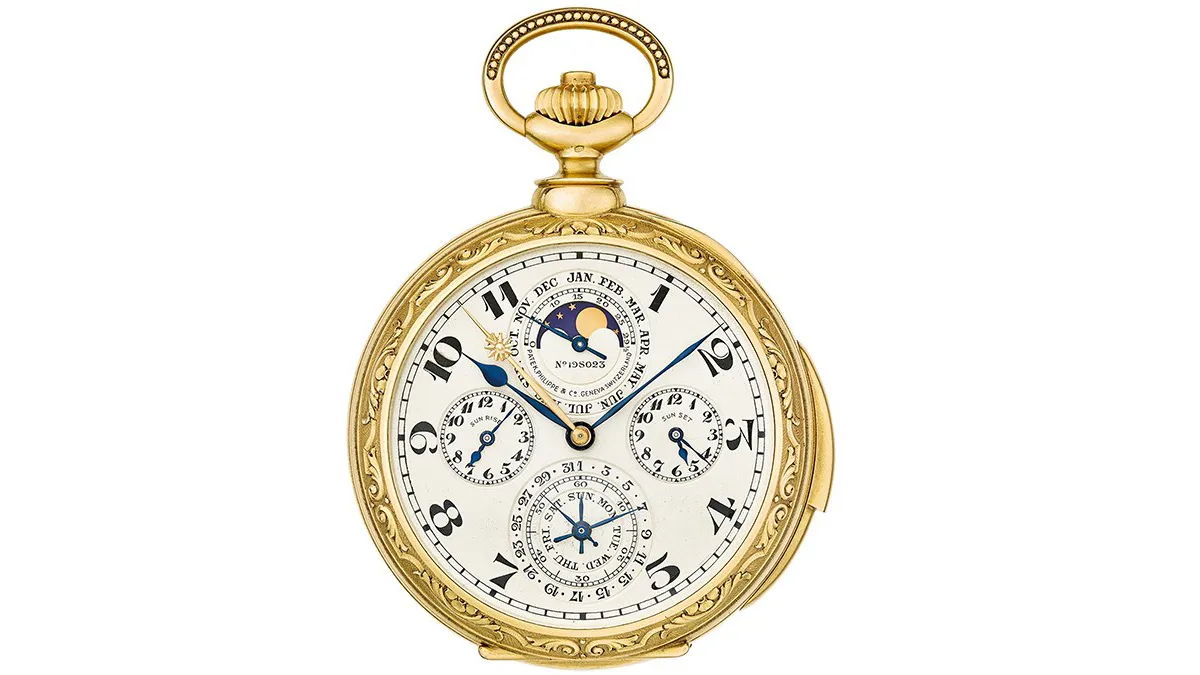
This double-faced high complication features 10 complications, including a perpetual calendar and a minute repeater. It was commissioned by famous collector and automobile manufacturer James Ward Packard, and delivered in 1927. It was the first Patek Philippe to feature an astronomical display. A sky chart showed the night sky as it appeared from the owner’s birthplace, Warren, Ohio.
World Time Chronograph Ref. 1415-1 HU
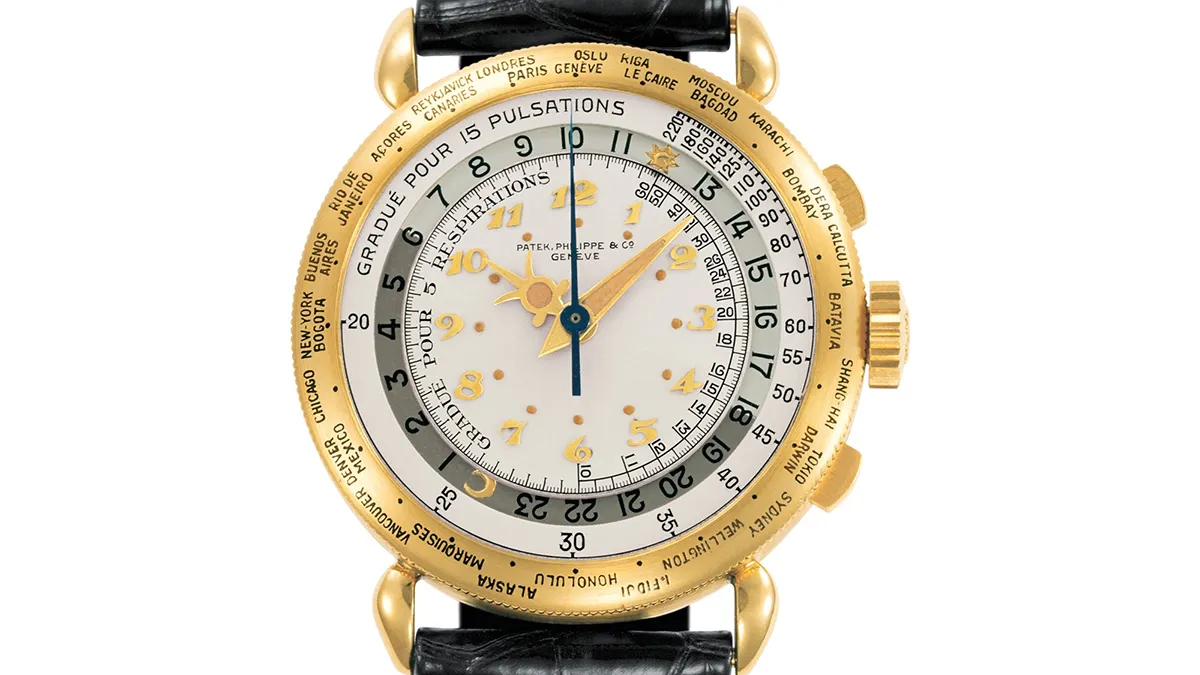
This World Time wristwatch with chronograph and pulsometer scale was made to order for Dr. P. Schmidt of Geneva. Sold to him on 2 October 1940, it is a unique piece. Philippe Stern explained: “Being a doctor he particularly requested a pulsometer. Responding to this request, we crafted this watch to the most exacting standards.” The watch indicates 24 time zones, with revolving bezel displaying the names of 33 cities, regions or countries around the world.
This article originally appeared in Robb Report US.
FAQs
The Patek Philippe Museum in Geneva traces the history of watchmaking from the 16th century to the present. Its collection includes around 2,500 watches, automata, precious objects, and miniature enamel portraits.
Highlights include the Calibre 89, the Grandmaster Chime Ref. 5175, James Ward Packard’s astronomical pocket watch, the Henri Stern Ref. 1527, and two unique double-movement pocket watches from the John Motley Morehead III collection.
Created for Patek Philippe’s 150th anniversary, the Calibre 89 has 33 complications and was the world’s most complicated timepiece from 1989 to 2015. It took nine years to develop and produce.
Only seven examples of the hand-engraved rose-gold watch were made. It features 20 complications, two dials, five striking functions, and a chimed alarm capable of reproducing the full sequence of a minute repeater.
Yes. The museum currently has an exhibition celebrating 50 years of the Nautilus, with milestone models and original sketches among the displays.