Oh My God!




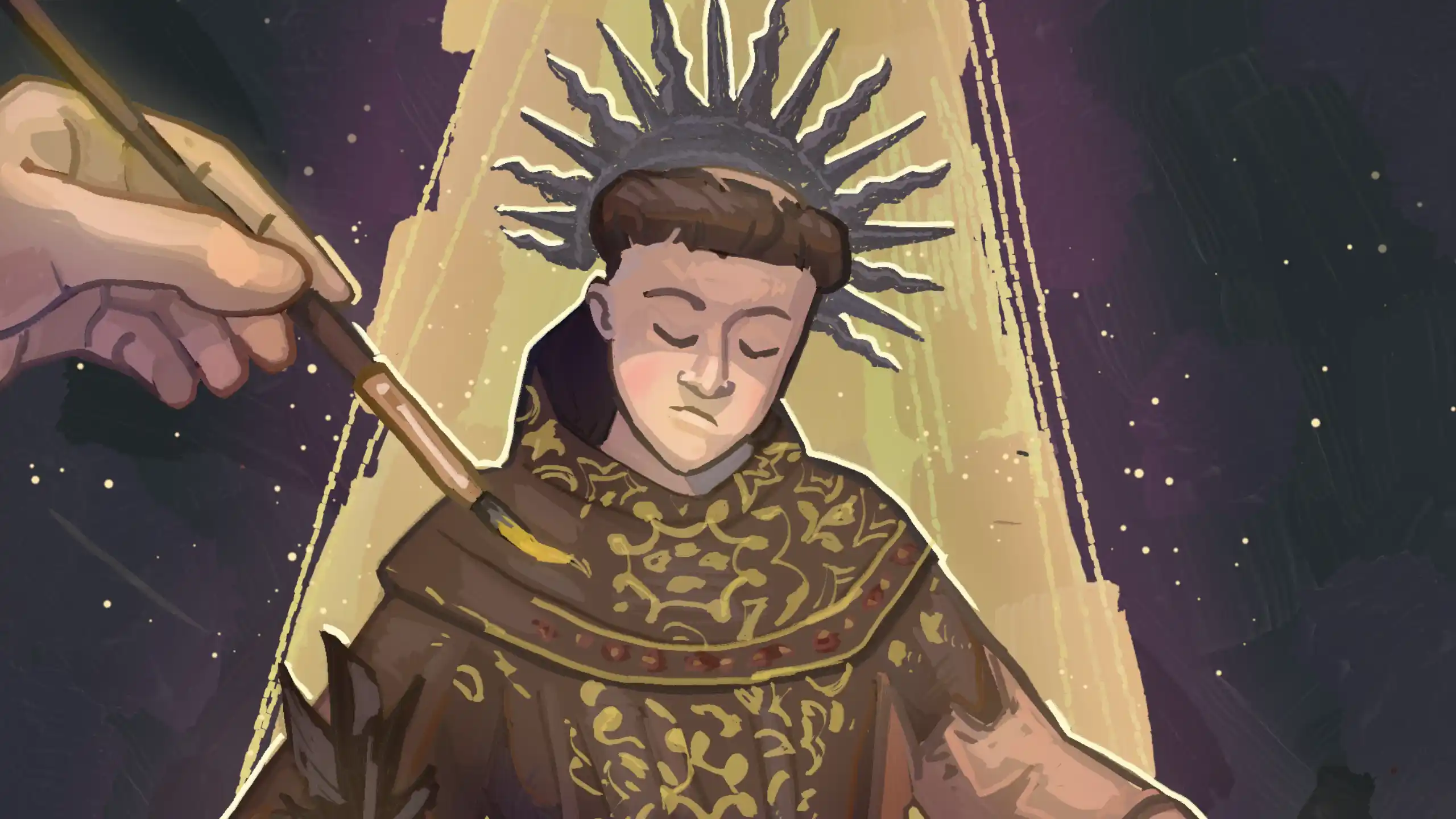
Crystal eyes. I’m very particular about crystal eyes. The way light enters them and finds no bottom.
When I brought my first Sto. Niño home, courtesy of a deceased santorero’s family from Paete, Laguna, I couldn’t stop looking at its glass pupils. No bubbles, no cloudy tint. Just luminous depth, the kind of gaze that pierces the observer and summons something ancient through sheer transparency. The family had kept it since the 1950s, I was told.
Everything outside those eyes, though, was a wreck. Right thumb, scepter, and globe nowhere to be found. Rusty, crooked nails. Blackened gold and striations scored by years in what I imagine was a humid storage room. The grime and distress (what restorers may politely call “scarring”) made itself known through every crack.
Paete, whose very name, some say, derives from the local word for “chisel,” is full of such things: saint sculptures and taka, workshop rejects, and antiques scavengers, good and honest craftsmen settled somewhere along Juan V. Quesada Street, named after a native son who wrote the town’s history, where the sacred and the secondhand have always coexisted without apology.
My apartment has filled almost accidentally with such “castoffs.” A pair of bululs from the 1970s, their bodies dense with residue from some other life, inherited from somebody’s Ifugaoan grandfather. This San Pedro bust, its face fixed in an expression I can never quite name. A century-old Nazareno from voluminous Quiapo, dark and heavy batikuling with the weight of too many desperate hands.
Not really a tastefully “curated” collection, more like a slow accretion of arrivals, each one finding me more than I found it. Now I’m hunting for ivory hands: just the hands, severed at the wrists. What I’ll do with them, I can’t say. I’m comfortable sitting with the lacuna. Content, too, with the possibility that they’re destined for some art project I haven’t named yet, toward a shape I can only dimly make out from here.
These aren’t saints in any strict taxonomy. The Sto. Niño is the Christ child. The bulul, a Cordilleran rice deity. The Nazareno, a penitential icon. What unites them is harder to name than any of that. Objects made, I think, to receive whatever people couldn’t carry alone.
You know, the last time I prayed, I was 18. In June 2015, I remember pleading with God to take my aunt’s cancer away on the day we went to the Padre Pio Shrine in Batangas as a kind of last-ditch effort for mercy. By November, she was gone. Did I think my prayers had dissolved, unheard? Maybe. Or maybe—and this is the more generous truth I try to hold—God was busy answering the deeper cries of those who needed it more. I haven’t prayed since. And yet here I am, ringed by figures built precisely for prayer, drawn irresistibly to the shape belief leaves behind in molave, ivory, and glass.
I’d like to think of these objects as expeditions into the gray, that particular space between faith and rationality where paradox and doctrine can coexist without demanding resolution from each other. I’m not a believer in any formal sense. But I do remain curious about mystery, about the devotional impulse, about what it means to press your hands together in the dark and speak to something that may or may not be listening.
“The broken thing is more honest precisely because it has stopped performing wholeness.”
Nor do I approach them through a collector’s lens, exactly. The average collector wants pristine condition: perfect surfaces, intact gilding, unbroken form. I want the opposite (Ah, the filthier, the better, kid!). There’s a texture to objects that have lived through something and emerged still standing, however barely, that such immaculate things simply cannot offer.
Is mystery quantifiable? The auction market, at least, tries. In 2024, for instance, Casa de Memoria sold a solid ivory Santo Niño Dormido adorned with 14K rose gold for roughly PHP 1.4 million, likely the work of a Chinese or Filipino artisan during the galleon trade period, an 18th-century piece carrying the authority of a master’s hand in every anatomically precise cut.
More arresting was the October 2022 Christie’s auction in Paris, where a bulul fetched approximately PHP 37 million, more than double its pre-sale estimate, much of that premium riding on, there’s that word again, provenanceProvenanceThe documented history of an object's ownership, origin, and authenticity, particularly important for classic cars, watches, art, and wine. Strong provenance can dramatically raise an item's value, and collectors andGo to Provenance Glossary. The figure had moved through the Beyer family since 1918, through successive collectors, until it reached the block carrying a documented life as impressive as its carved one.
ProvenanceProvenanceThe documented history of an object's ownership, origin, and authenticity, particularly important for classic cars, watches, art, and wine. Strong provenance can dramatically raise an item's value, and collectors andGo to Provenance Glossary, the more I’ve come to understand, is cultural capital wearing the costume of history. It tells us where an object has been, but more precisely, it tells us who held the authority to keep it, name it, price it, and return it to the world as something worth keeping. Taste operates by the same violence. It decides which scratches become patina and which become damage, when age is dignified and when it is merely dirt, when a wound is elegant enough to hang a price tag on.
I distrust objects that arrive a little too cleanly. There’s something suspicious about the saint with all its grief buffed out, the bulul polished into good behavior. Such figures feel trained to perform in front of capital, their stories disciplined into presentation.
These objects have “aura” in the older sense, before the internet hollowed out the word. Walter Benjamin described the phenomenon as the strange authority an object accumulates through its singular passage through time. In many cases, the market has learned to bottle aura and sell it back through paperwork. Provenance becomes the receipt of mystery. “Good” taste, after all, is usually just fear that has learned to dress itself. It wants the sacred without the blood and transgression framed, catalogued, and insured.
Which is why I’m drawn to the less obedient objects. The chipped and overpainted ones. The “amateurish” rejects. The santos with missing limbs and collapsed gilding, the bululs whose bodies have absorbed smoke, soil, and hunger across decades, no document recorded. The broken thing is more honest precisely because it has stopped performing wholeness.
Adorno argued that the root of all philosophizing is the felt necessity of resolving pain. I suspect the same is true of collecting, and perhaps of devotion, too. We light candles before wooden saints not because we believe in them, necessarily, but rather because the act itself is a small argument against the dark.
I’m never quite sure whether God exists. But I keep these glass eyes anyway, and the thumbless hand, and the blackened gold, and the unsparing stare that looks through me rather than at me. Something in these objects resists my disbelief without demanding my faith. They hold the question open. There’s something to be said for the scars and the wrinkles, the places where the thing broke and was never quite put back together. God, it’s been said, enters through the wound.
This article originally appeared in Robb Report Philippines’ Design Issue.
FAQs
Suralta is drawn to objects that show age, wear, and repair because their imperfections preserve evidence of the lives they have passed through. To him, broken santos and weathered bululs feel more honest than pristine pieces restored to appear untouched.
A santo is a carved religious image, usually depicting Christ, the Virgin Mary, or a Catholic saint. In the Philippines, santos are often made from wood or ivory and may feature glass eyes, gilding, fabric garments, and other decorative details.
A bulul is a carved Cordilleran figure associated with rice, harvests, and ancestral protection, particularly among the Ifugao. Although it differs from a Catholic santo, the essay connects both as objects created to carry belief, memory, and human need.
Paete is widely associated with generations of woodcarvers, santoreros, religious sculptures, and papier-mâché taka. Its workshops and antiques trade have made the town an important center for Filipino devotional and folk art.
Provenance documents an object’s ownership and history, often increasing its cultural and market value. The essay also questions how provenance gives collectors and institutions the authority to decide which marks of age are treated as valuable patina and which are dismissed as damage.