The Father, the Son, and the Site: Ed Calma Remembers the Lessons From His Father, Lor Calma




The First House
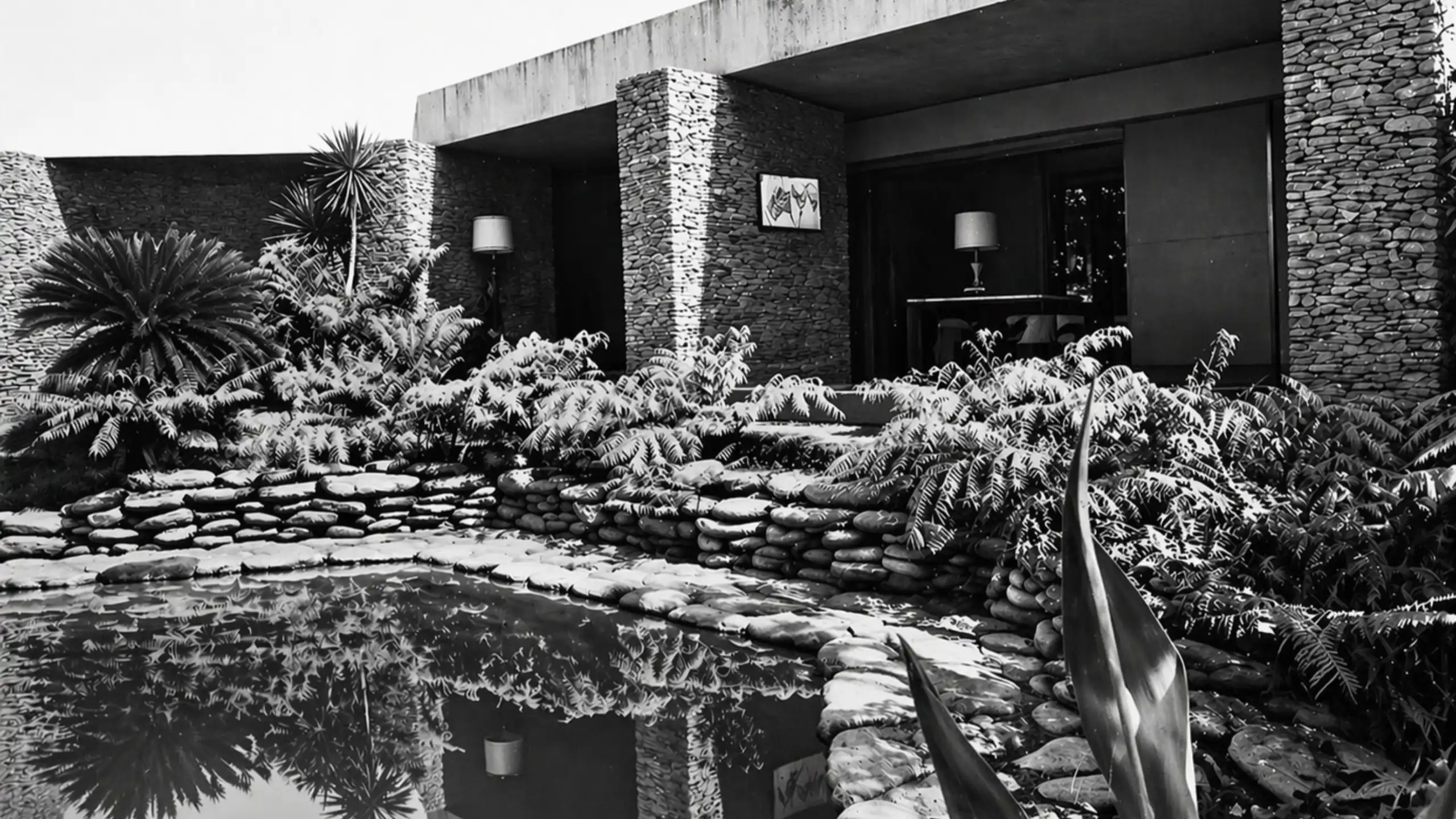
Architect Lorenzo “Lor” Calma designed for his family sat beside a creek in Sunrise Hill, New Manila, back when the water was still worth something to a fish. He could have leveled the site and started clean, but he didn’t. Calma clad the columns in creek stone. A boulder became an accent in the living space. He arranged the garden to envelop the water so that anyone approaching the house would encounter the landscape first, then the creek, then the building itself, never the other way around.
His son Ed was two years old when they moved in, and grew up flying kites from the top of that boulder. When heavy rains came and the creek overflowed into the pool, fish would get in, and the family would scoop them out. The garden was terraced in geometric mounds, and the children played on them like small hills.
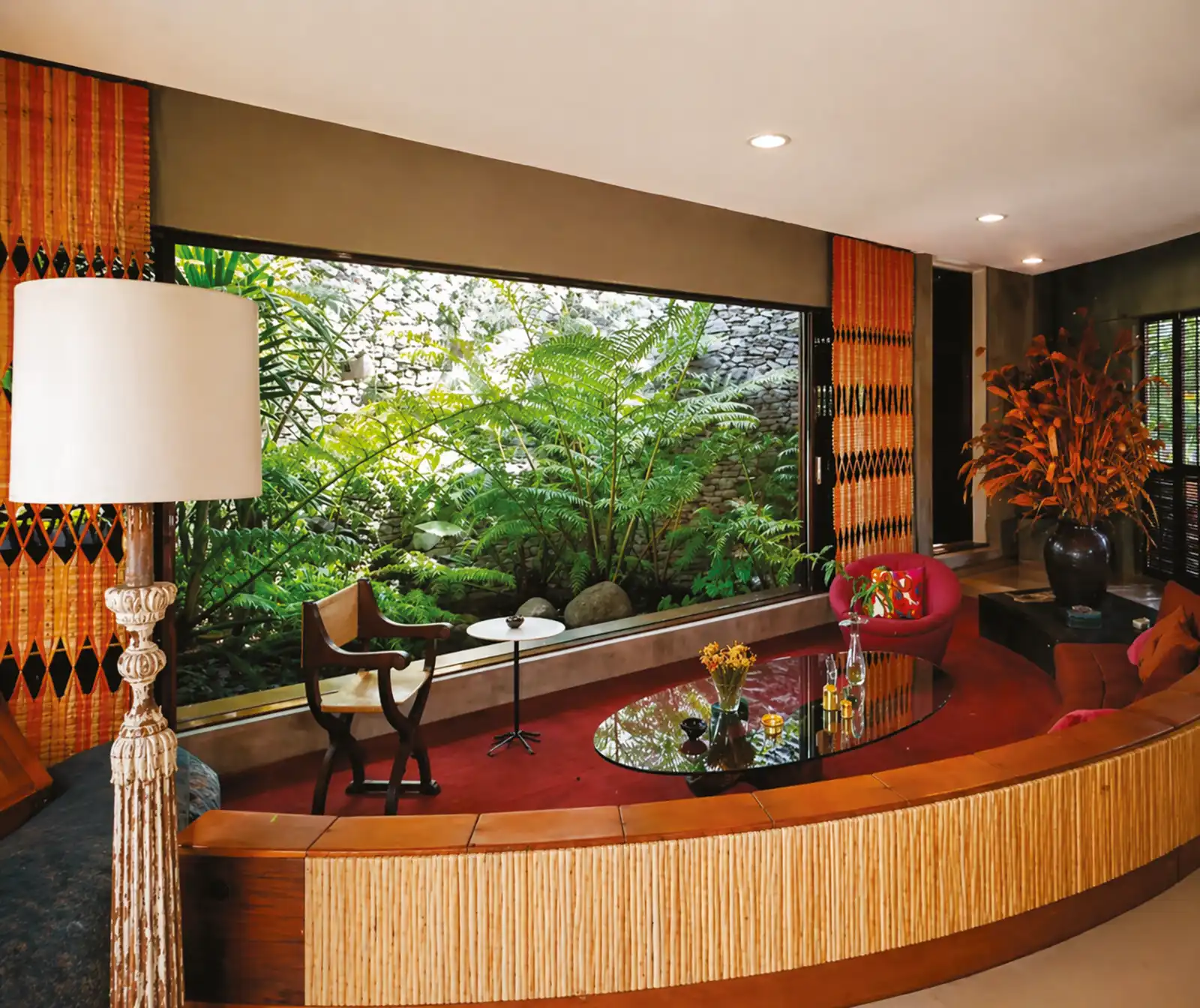
There was no real front door, just a concrete perimeter wall, a pivoting metal door, and a covered lanai you passed through before entering the house proper. Lor had floated the structure, so wind moved underneath it, up through gaps in the floor, and along the walls. During typhoons, the family never even needed to turn on the air conditioning.
It was, as Ed says simply, quite the design experience.
“He came from Magalang, Pampanga, and he lived in the fields when he was young,” he remembers. “He loved the natural setting, and he never wanted to lose that.”
A modernist on local terms
Before he became one of the defining figures of Philippine modernism, Lor trained at the Mapúa Institute of Technology, in a tradition that leaned technical, almost engineering. His sensibility, though, pulled him somewhere else entirely.
In the postwar years, Manila’s architects and artists circulated through the same restaurants and cafés, talking about form and what design could mean in a country with its own traditions to reckon with.
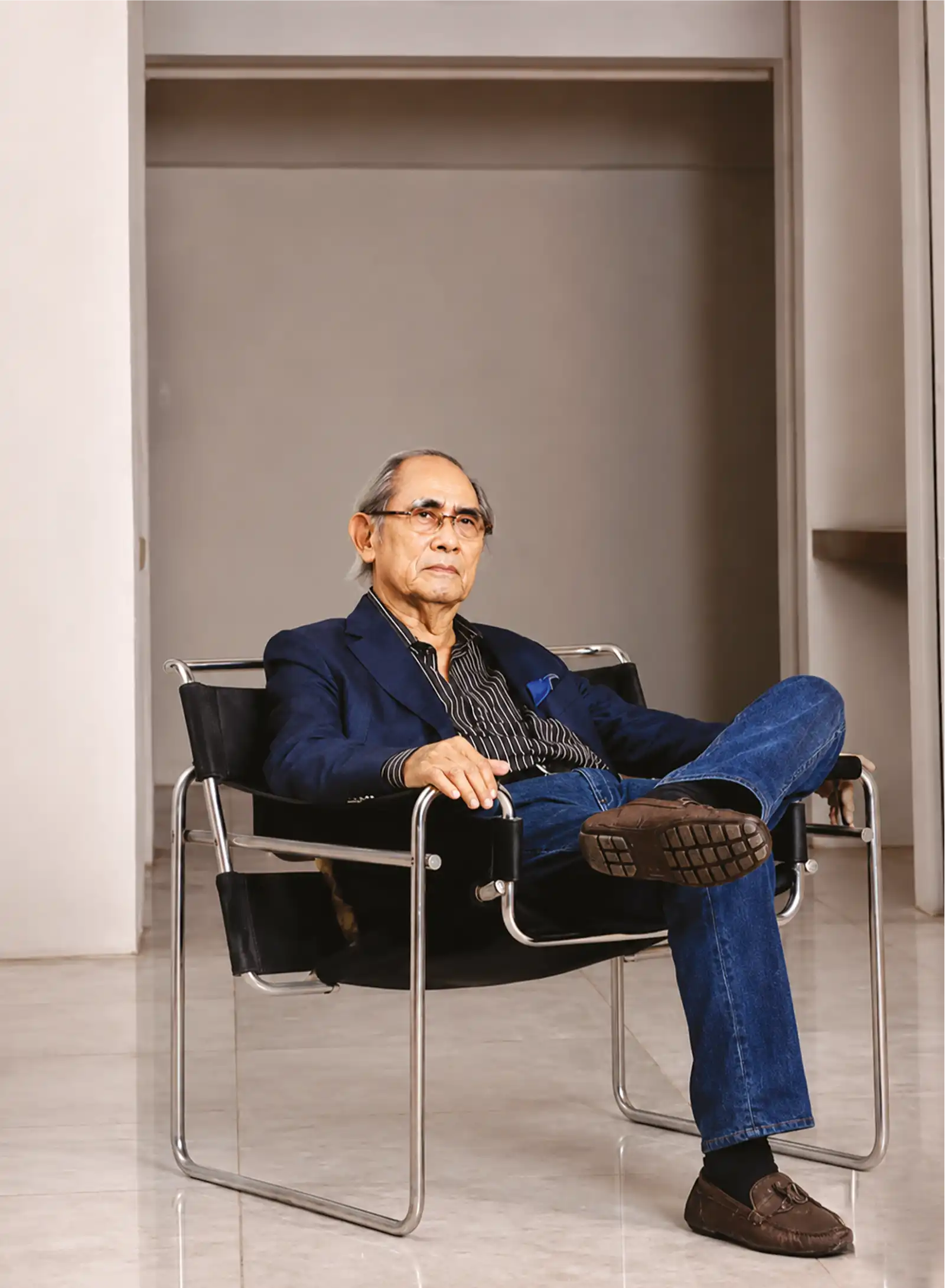
Lor was in those rooms. He hung out with would-be National Artists Arturo Luz and Leandro Locsin, and even traded furniture for early works by another would-be National Artist, Ang Kiukok. What always interested him was how to practice modernism—the Bauhaus impulse to strip form to its elements—while remaining rooted in place.
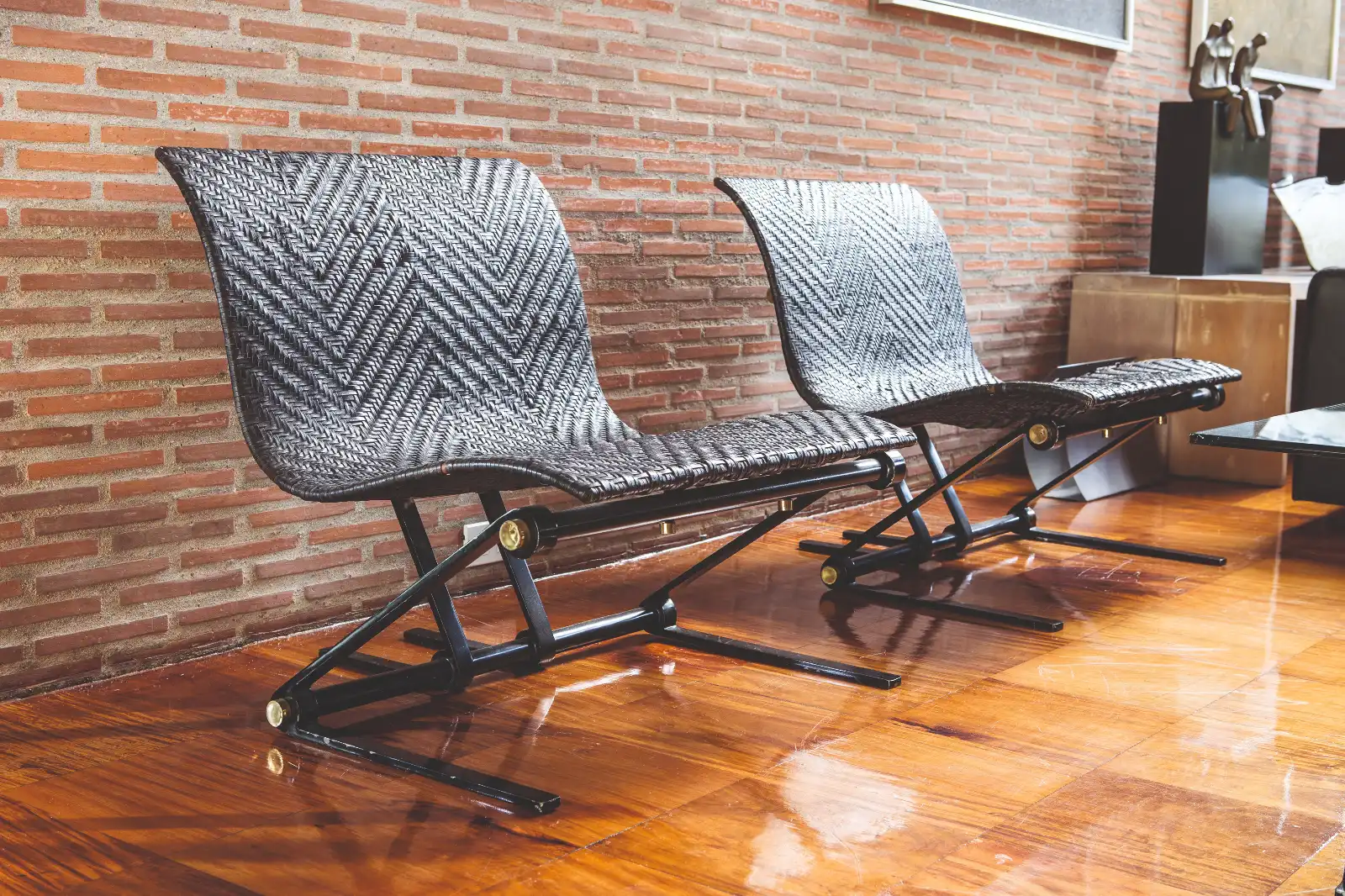
The work bore it out. The Cancio-Calma Building in Makati went up fast (30 days, to be exact) on the strength of a precast concrete curtain wall that had no precedent in the neighborhood. By 1962, he was applying the same thinking to the Manila International Airport’s interiors. And in at least one early house, capiz pressed into raw concrete produced a shimmer that spread quietly through the city’s idea of what a wall could do.
He was doing, without a name for it, what architects across the world were attempting in parallel: taking modernism’s stripped-down language and rooting it in local climate, craft, and memory. Luis Barragán did it in Mexico. Mario Botta did it in Switzerland. Lor Calma did it in the Philippines.
“Nobody was defining it,” Ed says. “But architects then were so theoretical. They wanted to create boxes—very abstract boxes, expressing the new philosophy derived from the Industrial Revolution. Everything is reduced to its production elements.
“But that became cold. And so a lot of architects who studied under that teaching went home to their own countries and used the elements of their place, the materials, the climate, and they kind of localized that modernist aesthetic.”
Lor localized it through craft. He believed in modernist furniture, mass-produced and industrial, but also in the traditions still active around him: weaving, woodworking, and the skilled carpenters from Pampanga. He brought those methods into modern form, and a generation of practitioners followed.
Pure Instinct
Ed didn’t exactly set out to become an architect. As a boy, he was painting scale models and assembling cardboard constructions, absorbed in the pleasure of making without fully understanding what it was preparing him for.
His father didn’t teach him formally. But Lor did take Ed to places such as the Luzon chapel, for Ed to see as an architect does: the overall image first, then the spatial drama, then, slowly, the details.
“He would pinpoint things to me,” Ed reflects. “That was my introduction to architecture.”
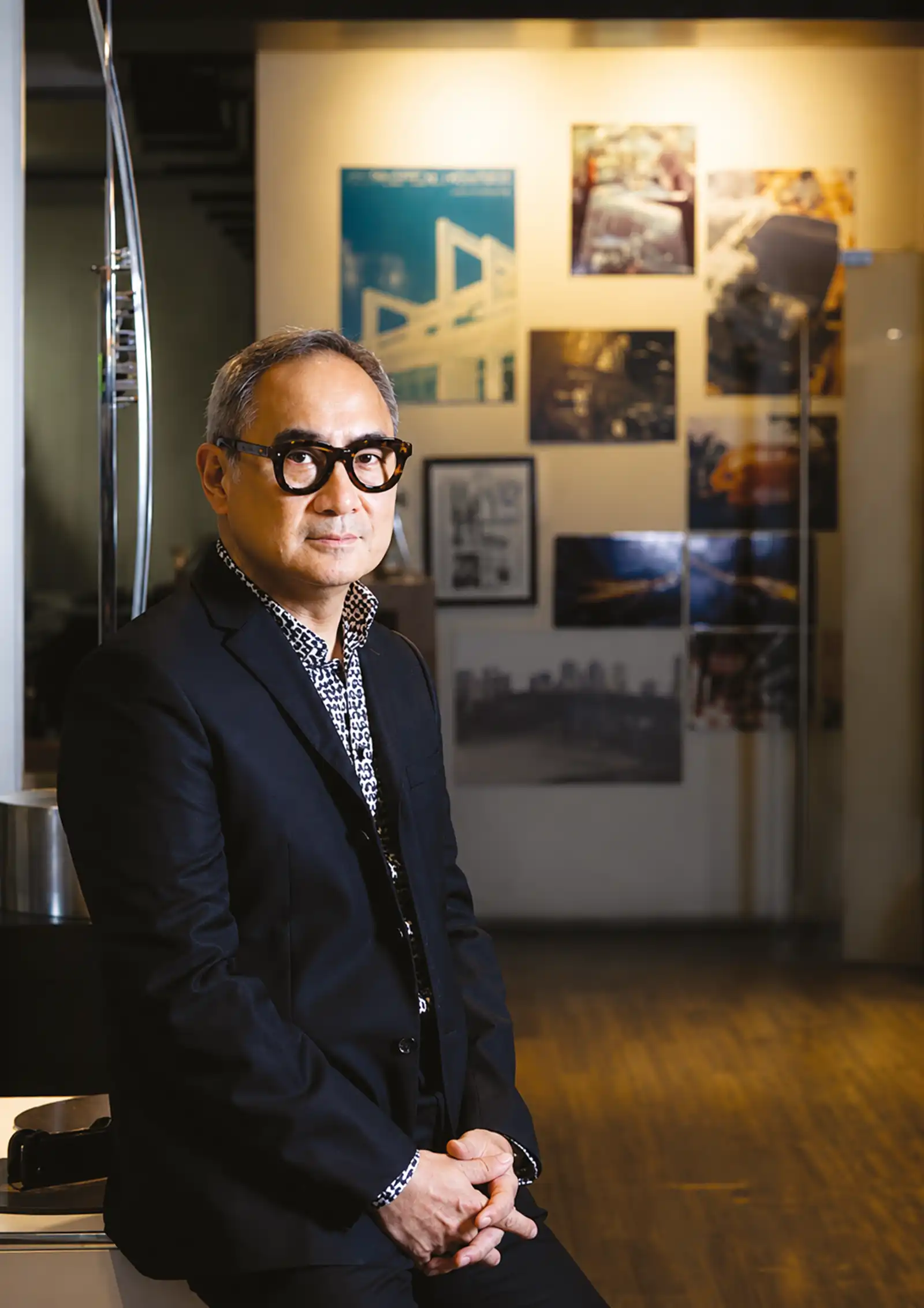
When Ed studied at Columbia University in New York, he realized that what his professors were teaching in class were concepts his father had already been practicing in Manila.
The instinct toward the site. Material honesty—wood should read as wood, form without embellishment should already communicate something, and if the raw concrete doesn’t resonate, you’ve failed before the finishes go on. The understanding that structure and aesthetic aren’t separate questions at all.
These were the core values. They had come to him twice over: first, through his childhood home, the old house beside the creek; and again, at school.
Ed returned to Manila in 1995, after Pratt Institute and Columbia, and joined what would become Lor Calma and Partners. Sharing an office with his father was never going to work—two architects, two strong senses of design, after all.
Lor knew it, too, and stepped back without much ceremony.
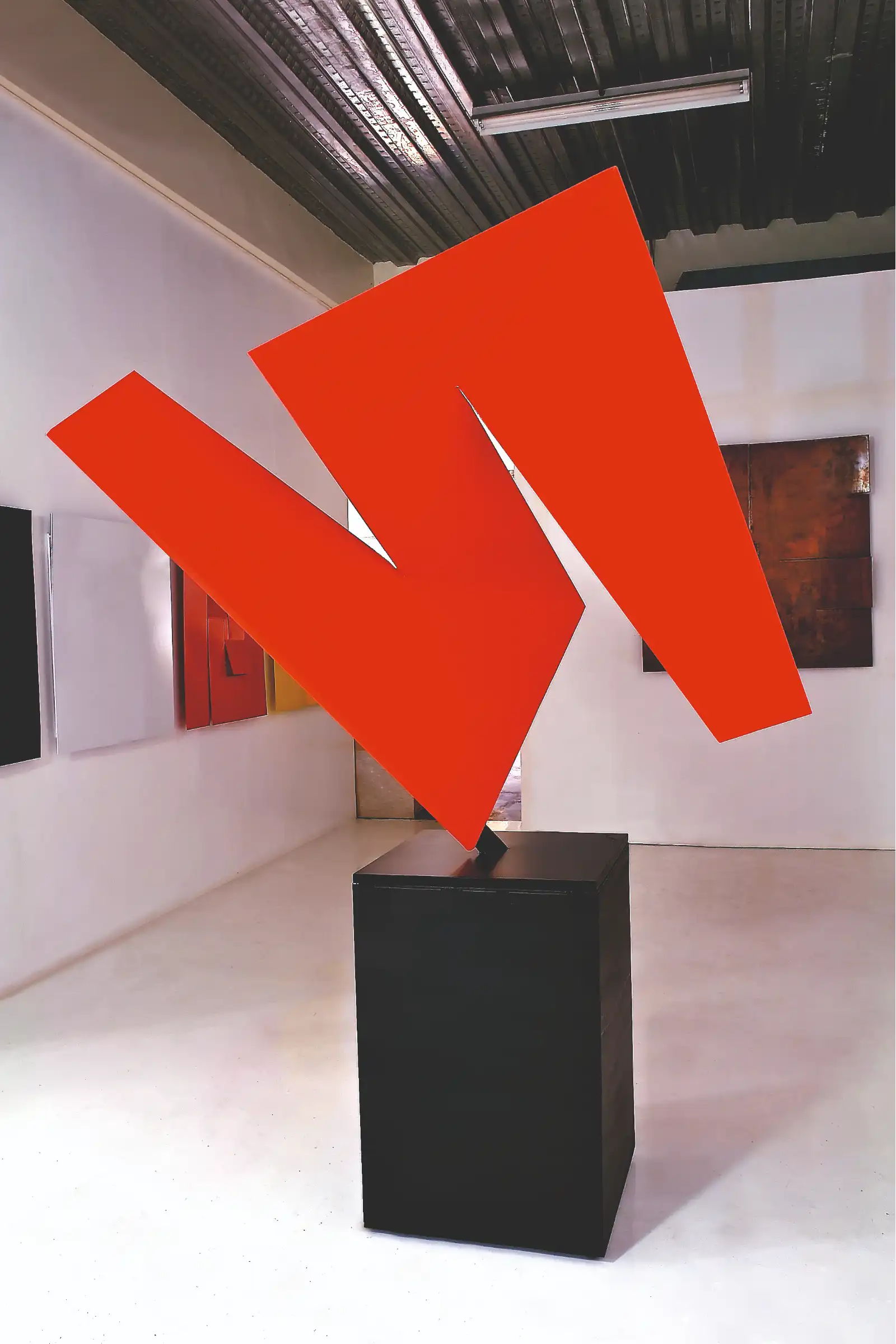
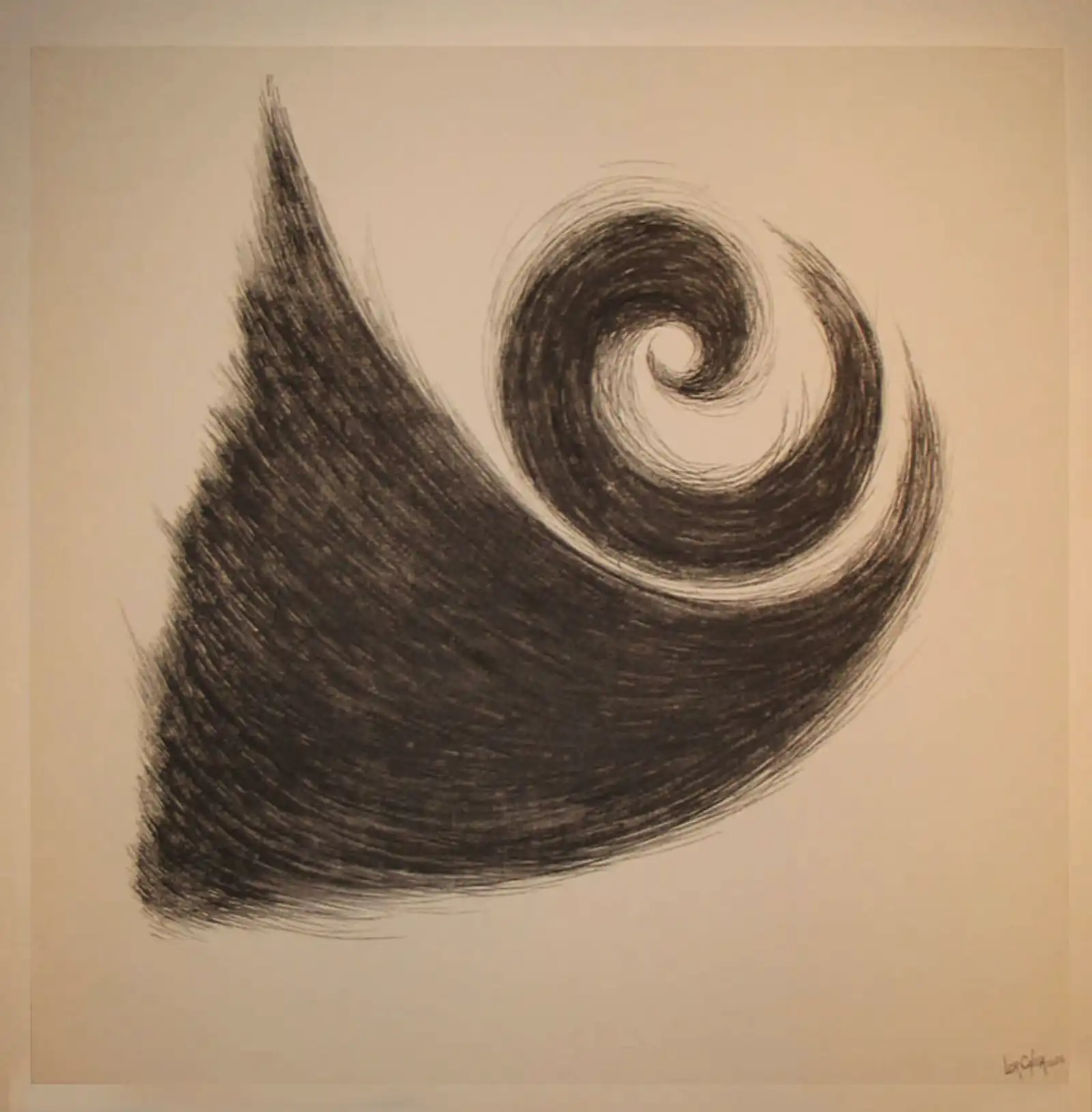
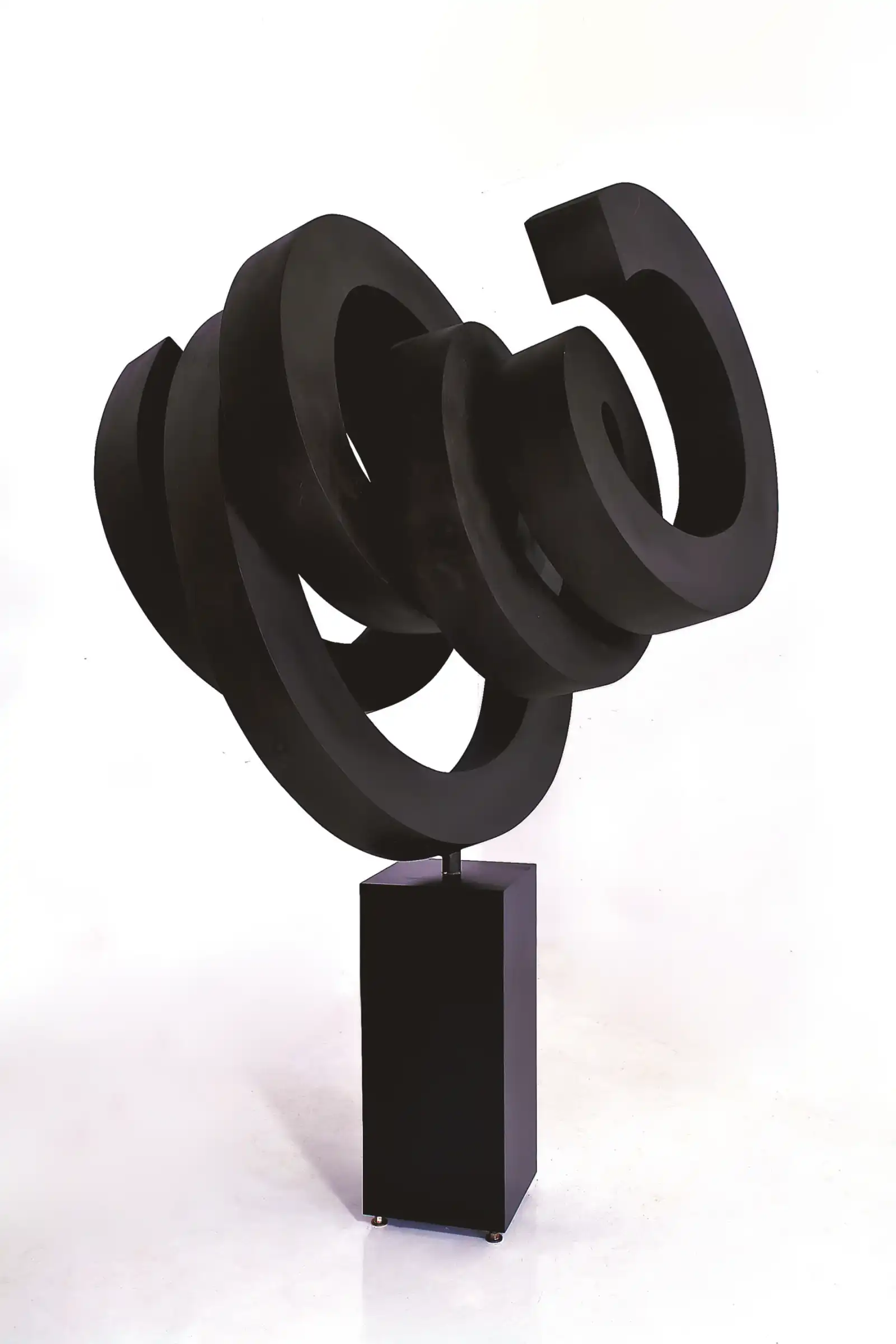
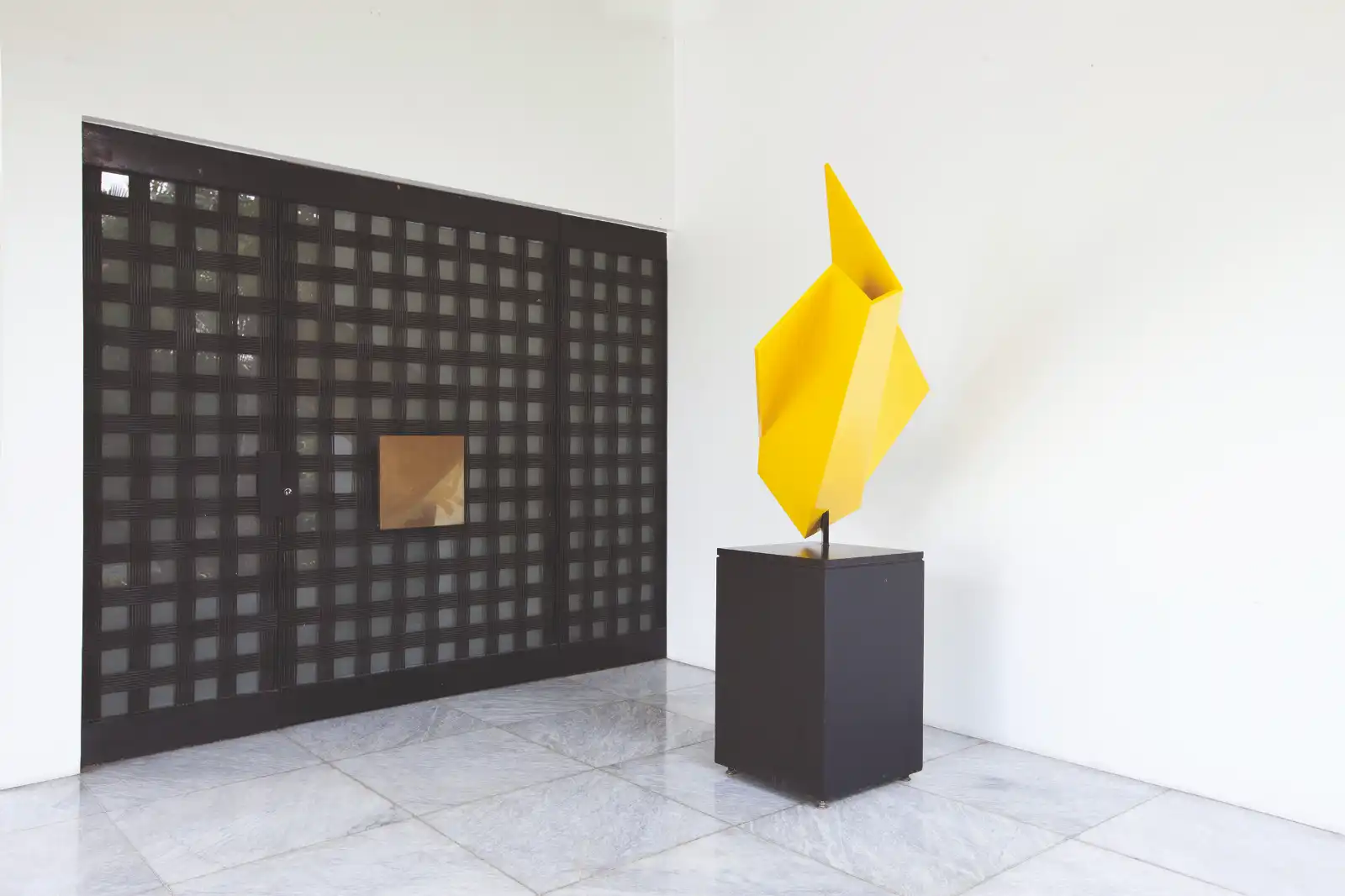
He turned to sculpture instead, bending metal into forms and handing drawings to a fabricator who executed them at scale. He made the gates and main doors for some of Ed’s clients. He seemed to enjoy it, the directness of it. It was form taking shape without the machinery of a full commission around it.
“Pure instinct,” Ed calls it.
Ed’s own practice carried the philosophy forward in more public terms. The De La Salle–College of Saint Benilde School of Design and Arts building—white and deliberately irregular, turning a glass rear toward the grayer blocks beyond—announced a sensibility that was unmistakably his own while remaining legible as a Calma.
The Mind Museum in Bonifacio Global City, completed in 2012 and awarded LEED Gold, pushed further still: grass roofing for insulation, a solar-reflective exterior, natural wind ventilation threaded through a structure with no single readable façade.
In an interview with the Philippine Daily Inquirer, Ed described the approach as letting the site and its pressures determine the form, not the other way around.
The logic, interestingly, traces back to a house beside a creek.
The final form
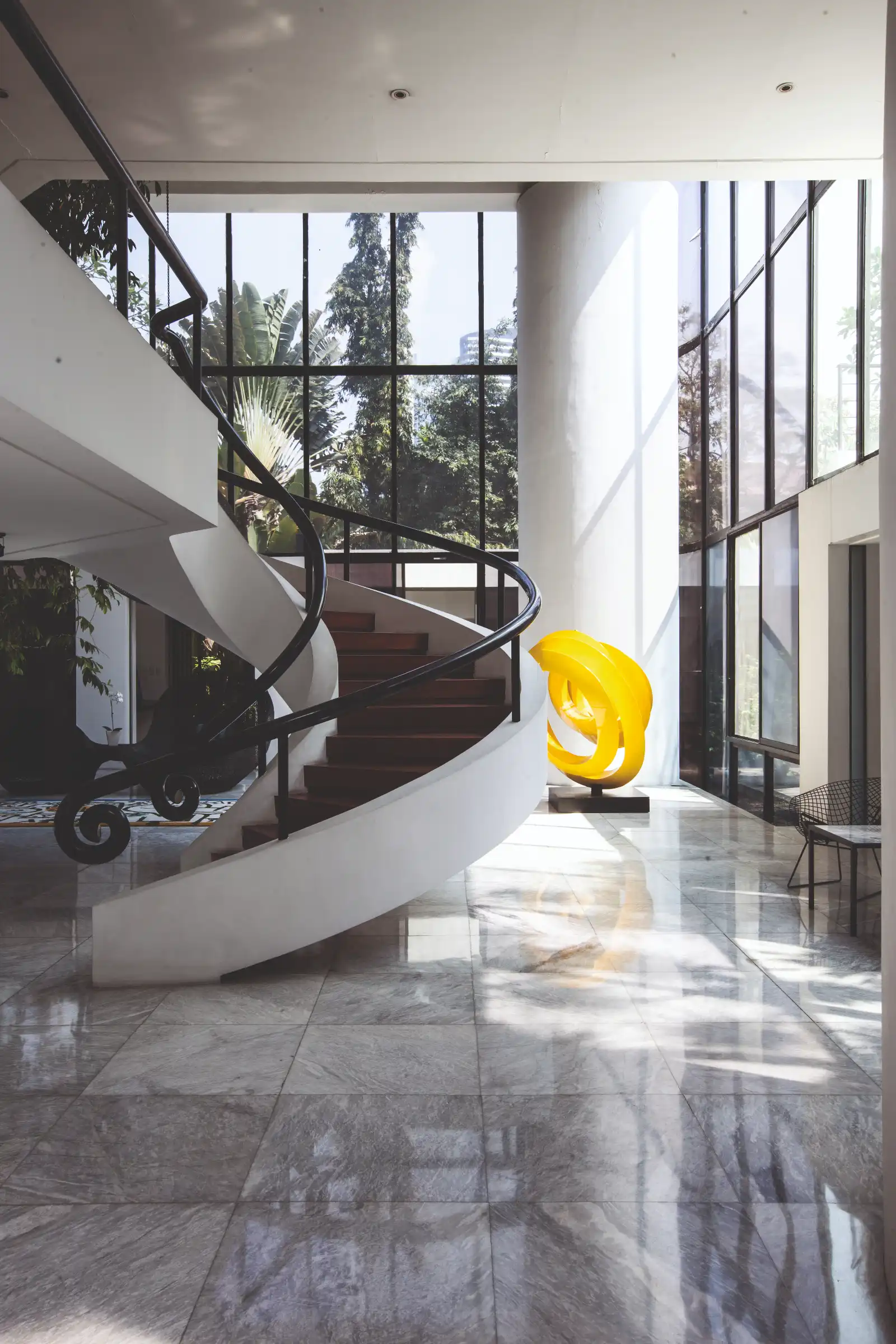
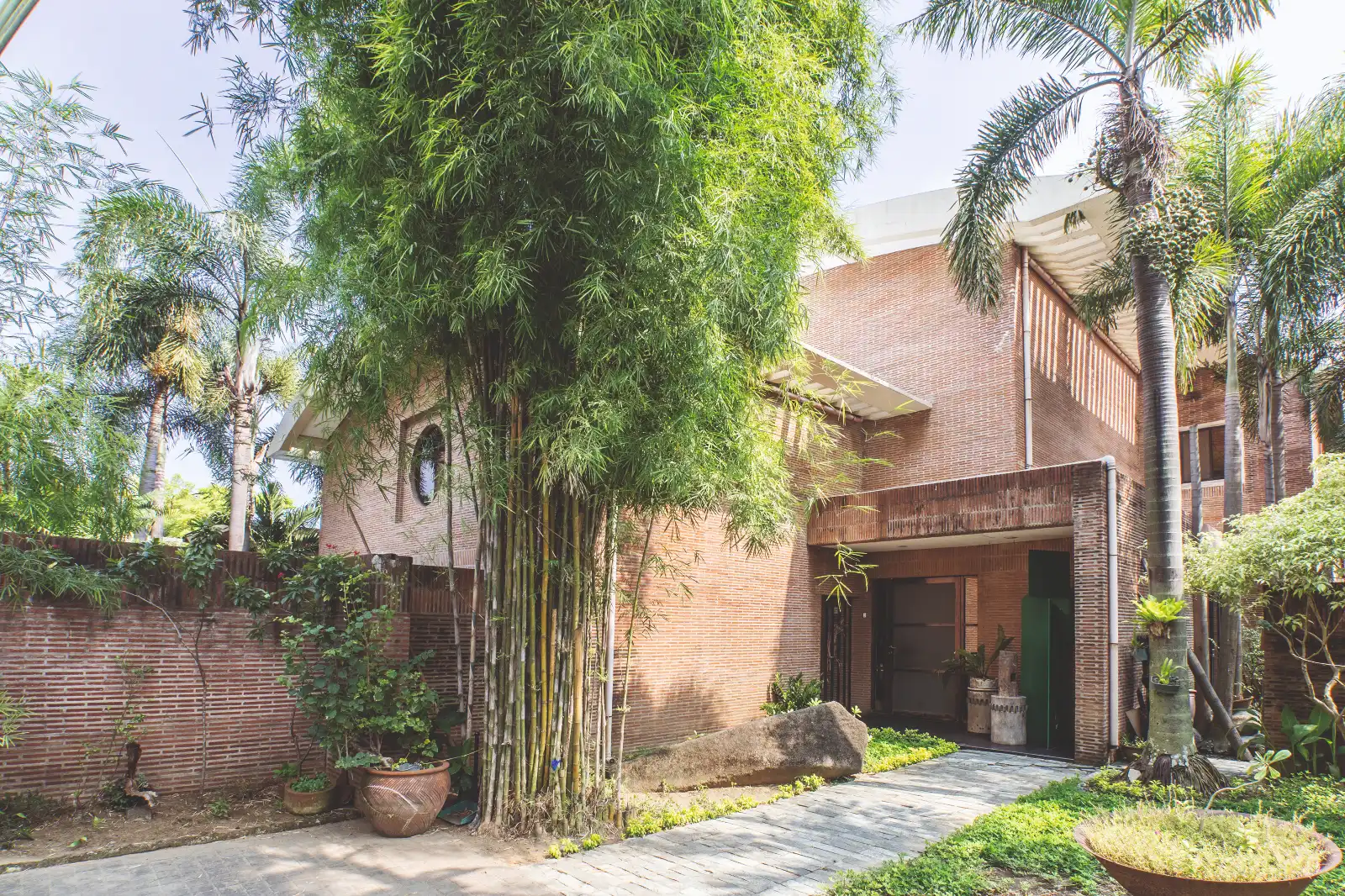
The last house Lor designed was in Forbes Park, near the end of his life. That lot had mature kalachuchi trees, and he built around them rather than through them. Volumes arranged in a pinwheel, an atrium separating the living spaces, pocket gardens where the trees stood, their canopy doing the work of curtains and shade.
He gambled on glass. In the tropics, it can be a risk, of course. But Lor understood climate, and he understood what modernism had made possible. Reinforced concrete and steel had opened up the wall, making spans of glass achievable that simply hadn’t existed before.
None of it had changed. Respect the site, honor what you build with, let the form do the work before the finish arrives.
Lor had told Ed to go his own direction, find new ground. The instincts followed anyway. He reads the space before he designs it, letting what is already there determine what comes next.
“Now you buy everything in China,” Ed quips, with the flatness of someone who has watched some things disappear. “Nobody invents things anymore. It’s all magazines, trends, and Pinterest. It’s rare to find an architect with an idea that comes from the site, from the context. That’s different. You’re supposed to invent something there—an experience, a form that really fits.”
Years later, Ed returned to the house in Sunrise Hill and found that the city had done what cities do. The creek was no longer clear. The house had been altered and walled in against flood and intrusion, and the openness that once made it remarkable had largely disappeared.
What remained was the memory of it, which may be the more durable thing anyway.
Architecture at its best is an education of the senses. For Ed, it began in a house where the garden came before the door, where a boulder anchored the living room, where typhoon winds passed under the floor, and where modernism learned to breathe.
Lor Calma never had to lecture his son. He had built the lesson around him.
This article originally appeared in Robb Report Philippines’ Design Issue, June 2026.